How To Adjust A Peep Sight Without A Bow Press
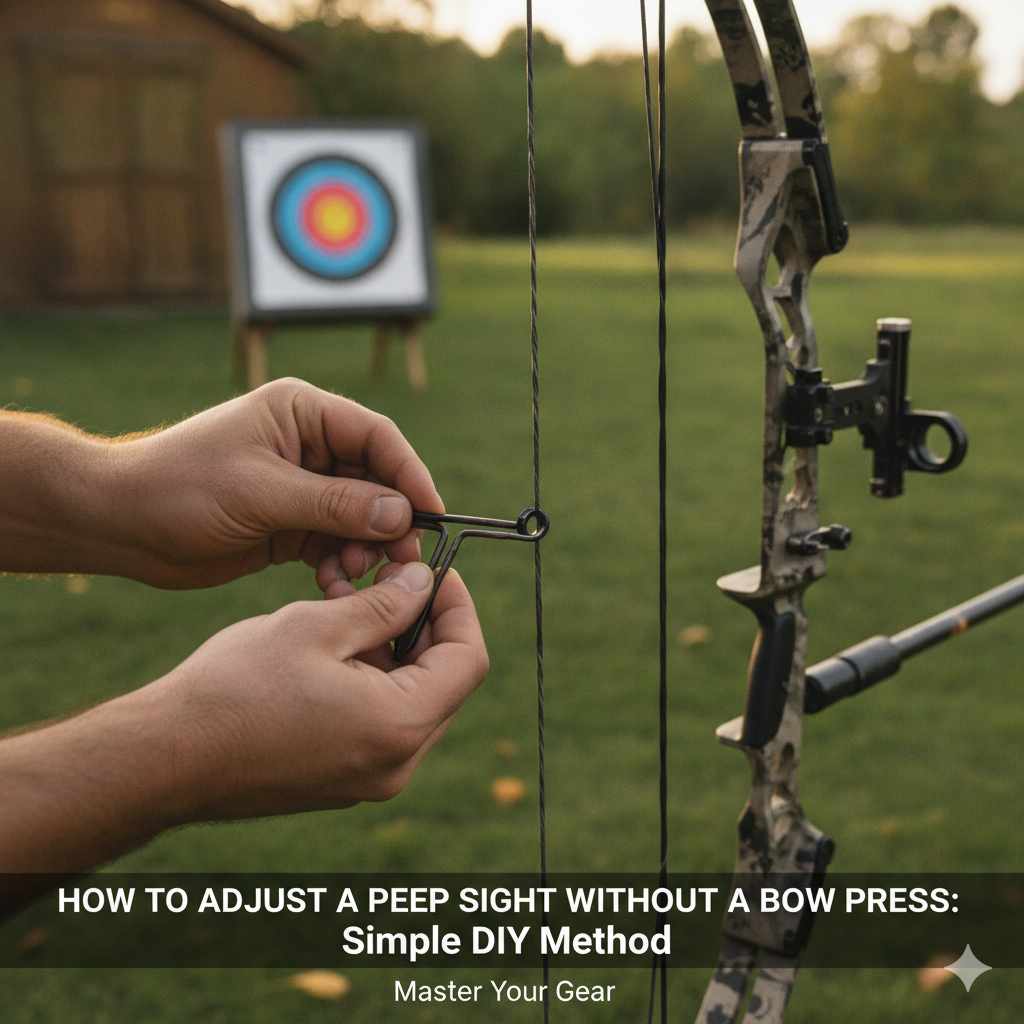
Adjusting a peep sight without a bow press often involves using a bow square or ruler to measure cam rotation and making small, incremental adjustments to the string loop and serving. This allows for slight changes in peep height while minimizing the need to de-string the bow. Always ensure the bow is safely supported and make gradual shifts to avoid over-adjustment.
Understanding Your Peep Sight
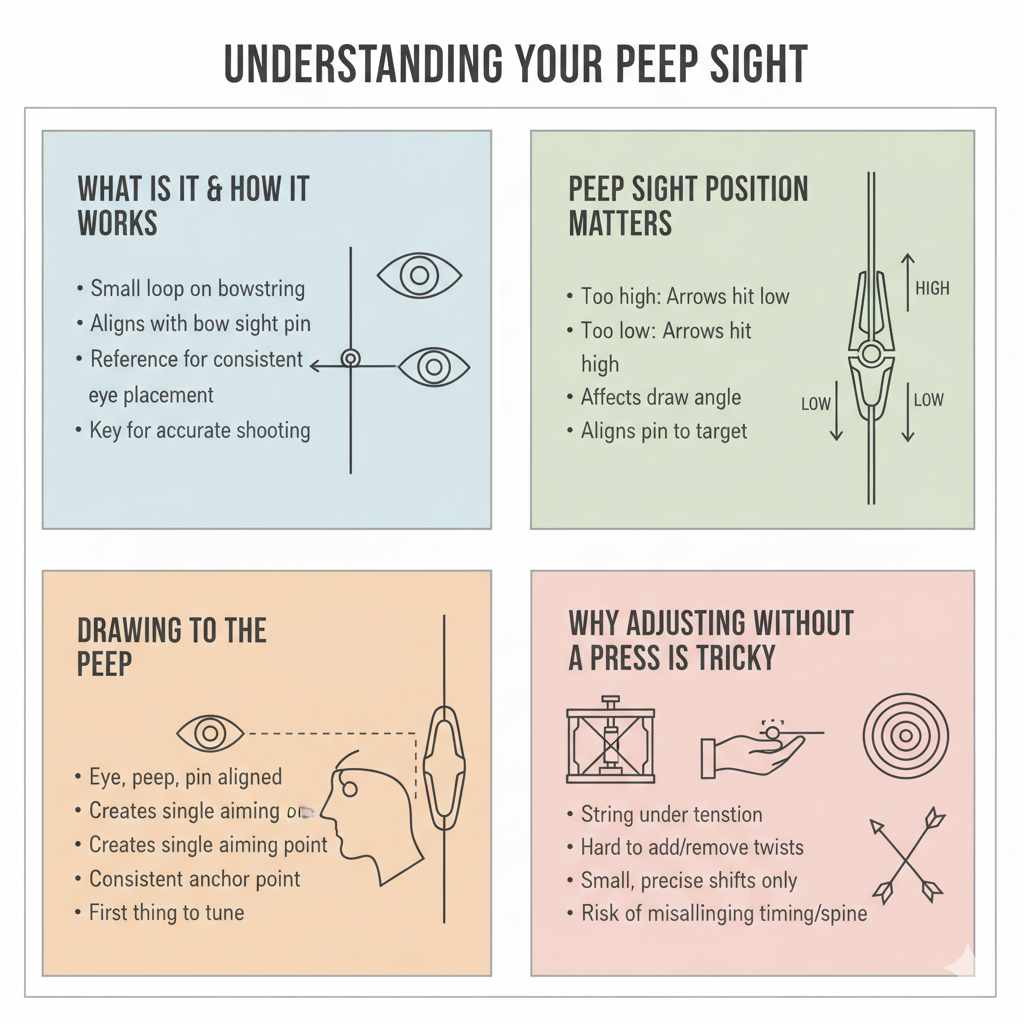
So, what exactly is a peep sight? It’s a small loop, often made of rubber or plastic, that’s inserted into your bowstring. When you draw your bow, this peep aligns with your bow sight’s aiming pin. It acts as a crucial reference point. It helps you keep your eye in the same spot every single time. This consistency is key for accurate shooting. Think of it like a gun’s rear sight. It guides your eye to the front sight. Without it, aiming would be much harder.
The peep sight’s position on the bowstring is vital. If it’s too high, your arrows will hit low. If it’s too low, your arrows will hit high. This is because it changes the angle of your draw. It affects where your eye is in relation to the rest of the bow. Getting this perfect means your pin will be centered on your target when your eye is centered in the peep. It’s a simple system that makes a big difference.
When you’re shooting, the goal is to have your eye, the peep sight, and the sight pin all line up perfectly. This creates a clear, single aiming point. This is often called “drawing to the peep.” The consistent anchor point it provides is fundamental. Many archers spend a lot of time getting their peep perfectly placed. It’s one of the first things we tune.
Why Adjusting Without a Press Can Be Tricky
The main challenge is that the bowstring is under a lot of tension. A bow press is designed to safely relieve that tension. It holds the limbs of the bow compressed. This allows you to safely remove the string or make significant changes. Without one, you’re working with the string under full tension. This means you have to be extra careful.
Making big moves is hard without a press. You can’t easily add or remove twists from the string. You also can’t easily move the string from the cam. This is why adjustments usually need to be small. They focus on tiny shifts. These shifts can change where the peep sits on the string.
Also, remember that a bow is a finely tuned machine. Even small changes can have a big effect. You want to be precise. You don’t want to accidentally throw off your timing or your arrow spine. That’s why patience is a big part of this process.
Tools You Might Need
Don’t worry, you likely have some of these already. The key is precision. You’ll need a few items to help you make these adjustments safely and accurately. Having the right tools makes all the difference. It prevents frustration.
- Bow Square or Ruler: This is super important. It helps you measure the position of your peep. You want to know exactly where it is on the string. You can also use it to check cam timing.
- Serving Thread or Strong Cord: You might need this to make small adjustments. Sometimes you add a little extra thread. This can nudge the peep up or down.
- Allen Wrenches: Your bow sight might need small adjustments. These wrenches are handy for that.
- Bow Wax: Keeping your string in good shape is important. Apply a little wax. It helps prevent fraying.
- Arrow Rest Adjustment Tool: Sometimes the arrow rest needs a tweak. This tool helps with that.
Having a stable place to hold your bow is also a good idea. A bow vise or even a sturdy workbench can be helpful. You don’t want the bow moving around while you’re working. Safety first, always.
Method 1: The “Nudge” Method (Small Adjustments)
This method is for when you need to move the peep just a tiny bit. We’re talking maybe a millimeter or two. This is the safest way to adjust without a press. It relies on adding or removing very small amounts of material. Or slightly changing the serving around the peep.
First, draw your bow. Make sure you are at full draw. Look at where your peep sits on the string. You want to see if it’s centered between the serving that holds the cams. Use your bow square. Measure the distance from the peep to the serving on both sides.
If you need to move the peep UP, you need to make the string that goes OVER the peep slightly shorter. If you need to move it DOWN, you need to make the string that goes UNDER the peep slightly shorter. This sounds confusing, so let’s break it down.
Adjusting with Serving Thread
To move the peep UP (arrow hits low): Carefully add a small amount of serving thread. Wrap it around the string just ABOVE the peep. Use a serving tool or needle. Do this just a few times. Then, draw and check. You might need to re-tie it securely.
To move the peep DOWN (arrow hits high): Add a small amount of serving thread just BELOW the peep. Again, only a few wraps. Draw and check. This method is slow. It requires patience. But it’s very safe.
The key here is tiny. You are making very small changes. Each time you add thread, draw your bow. Check your sight picture. See where your arrows are hitting. Make another tiny adjustment if needed. This process can take a few shooting sessions.
What if your peep is already snug and has no room for more thread? Sometimes the peep itself can be slightly shifted within its housing. If you can slightly loosen the peep housing, you might be able to slide it a hair. Then re-tighten. This is rare, but possible.
Method 2: Using the String Loop
This is another common method for fine-tuning. It involves adjusting the knot that attaches your release aid to the bowstring. This knot is called the string loop. Small changes to how this loop is tied can affect the peep’s position.
When you draw your bow, the string loop pulls on the bowstring. If you tie the loop a bit higher on the string, it will pull the string up slightly. This means the peep moves down relative to your eye. If you tie the loop lower, it pulls the string down. The peep moves up.
Here’s how to think about it. Imagine your string is a rope. The loop is tied around it. When you pull the loop, the rope moves. Where you tie the loop on the rope matters. It changes the point where you are pulling.
String Loop Adjustment Steps
To move the peep UP (arrow hits low): You need to make the loop tie point LOWER on the string. This means the loop will pull the string UP, thus moving the peep UP. Untie your string loop knot. Re-tie it slightly lower on the bowstring. Don’t make a big change. Just a small shift.
To move the peep DOWN (arrow hits high): You need to make the loop tie point HIGHER on the string. This means the loop will pull the string DOWN, thus moving the peep DOWN. Untie your string loop knot. Re-tie it slightly higher on the bowstring. Again, small changes are best.
After each adjustment, tie your loop securely. Draw your bow. Check your sight picture. Shoot a few arrows. See if your point of impact has changed. This method also requires patience. It’s about small, repeatable steps.
It’s important to use good quality string loop material. This material is designed to be strong and durable. It also holds knots well. Make sure your knots are tight and neat. A loose knot can cause real problems.
My Experience with Loop Adjustments
I remember one time I was at an outdoor range. The wind picked up more than I expected. My arrows were drifting a bit left. I knew my peep was okay, but my sight was slightly off. I adjusted the sight a tiny bit. Then I shot again. It was still not perfect. I realized my anchor point felt slightly different. That’s when I noticed my string loop felt a little loose. I’d been practicing a new release technique. I decided to re-tie my loop. I made it a tiny bit shorter. Just a few millimeters. I drew, aimed, and shot. Suddenly, everything clicked. The arrow flew true. It was a great reminder that sometimes it’s the small things.
Checking Cam Timing and Sync
While adjusting the peep without a press, it’s a good idea to also check your cam timing. This is the synchronization between the two cams on your bow. If they are not working together, it can affect arrow flight and bow performance. You usually need a bow square for this.
When you draw your bow back to full draw, the cams should be timed so that they are supporting the limbs equally. The string should be at the same point on both cams. If one cam is slightly ahead or behind the other, this is called being out of sync.
How to Check Cam Timing
Safely draw your bow to full draw. Use a bow square. Place the square against the riser. Look at where the string touches each cam. The string should be at the same mark on both cams. If there’s a difference, your bow is out of time.
Minor timing issues can sometimes be fixed by adding or removing twists from the control cables. This is a more advanced adjustment. It’s often best left to a pro shop. But being aware of it is important. A significant timing issue can make peep sight adjustments less effective.
Why does this matter for peep sight adjustments? If your cams are out of sync, the string will twist and untwist as you release. This inconsistent movement can affect your peep’s position slightly. It might feel like your peep is moving when it’s not. Or your arrow impacts might be inconsistent.
For most minor peep adjustments, you can often get away with small loop or serving tweaks. But if you notice your timing is off, that should be your priority. Fixing timing issues will make all other adjustments more predictable.
The Role of Your Bow Sight
Don’t forget your bow sight itself! Sometimes, what feels like a peep sight problem is actually a sight problem. The peep aligns your eye. The sight pin is what you aim with. They work together.
If your arrows are consistently hitting too high, and you’ve confirmed your peep is at a good height, then you need to adjust your sight DOWN. Conversely, if arrows are consistently hitting too low, adjust your sight UP.
Sight Adjustment Basics
Most bow sights have adjustment screws for up/down and left/right. These are usually marked with arrows or letters (U, D, L, R).
Arrows hitting HIGH: Adjust your sight PIN DOWN. This moves the sight housing UP. This sounds counter-intuitive, but it’s correct. Think about it: if the pin is too high, you move the whole sight down to bring the pin down. No, wait. If the arrows are hitting HIGH, you need to move the SIGHT DOWN. So adjust the vertical screw to move the sight housing DOWN.
Arrows hitting LOW: Adjust your sight PIN UP. Move the sight housing UP.
Arrows hitting LEFT: Adjust your sight RIGHT. Move the sight housing RIGHT.
Arrows hitting RIGHT: Adjust your sight LEFT. Move the sight housing LEFT.
Always make small adjustments to your sight. One click at a time. Shoot. Observe. Adjust again. It’s a process. Ensure your sight is securely tightened after adjustments. You don’t want it moving during your shot.
When you adjust your sight, you’re changing the point of reference. The peep sight is still your eye’s consistent anchor. The sight is just where you place the aiming dot. It’s about aligning those two things perfectly for your shooting distance.
Real-World Scenarios and Considerations
Let’s talk about some common situations you might encounter. Things don’t always go perfectly. You might be adjusting your peep for the first time. Or maybe you’ve changed something else on your bow.
Scenario: New Bow Setup
When you get a new bow, or new strings, the peep sight will almost always need adjustment. It might not be installed perfectly from the factory. Or the strings might stretch a bit after initial use. Take your time during the initial setup. Make small adjustments. Shoot at short distances first. Then move to longer distances. This helps you dial it in without getting frustrated.
Scenario: Weather Changes
Humidity can affect your bowstring slightly. In very humid conditions, strings can swell a tiny bit. This can change the exact position of your peep. While usually minor, extreme changes might require a small sight adjustment. If you shoot in varied climates, you might need to check your sight settings. Bow wax helps protect your string from extreme moisture.
Scenario: Arrow Spine Issues
Sometimes, your arrows might not be the right spine for your bow. This means they are too stiff or too weak. This can cause erratic arrow flight. Your arrows might fly left or right unpredictably. This is often called “fishtailing.” If you’ve checked your peep and sight and still have issues, consider your arrow setup. A bow tuning guide or a pro shop can help with this.
Remember, a bow is a complex system. Everything works together. The string, cams, limbs, rest, sight, and arrows all play a role. When you adjust one thing, it can affect others. This is why making adjustments slowly and methodically is so important.
What This Means for You (Implications)
Learning to adjust your peep sight without a press gives you independence. You can fine-tune your bow’s performance. You don’t always need to rely on a shop. This is great for practice sessions. It’s also helpful if you’re in the field and notice a slight issue.
It empowers you as an archer. You gain a deeper understanding of your equipment. This understanding can lead to better shooting. You’ll become more aware of how small changes impact your accuracy. This can build your confidence.
When It’s Normal to Adjust
After installing new strings or cables.
When you notice your arrows are consistently hitting off-target.
If you change your draw length.
After making any other significant bow adjustments.
When to Seek Professional Help
If you’re unsure about any step.
If your cam timing is significantly off.
If you notice damage to your strings or cables.
If you’ve made multiple small adjustments and still can’t get it right.
Think of it like tuning a musical instrument. You make small adjustments until it sounds perfect. Your bow is similar. Small tweaks can make a big difference in its performance. This process is rewarding. It connects you more to your gear.
Quick Fixes and Tips
Here are some quick tips to keep in mind. These can make the whole process smoother. They help avoid common pitfalls. Everyone can use a few good tricks.
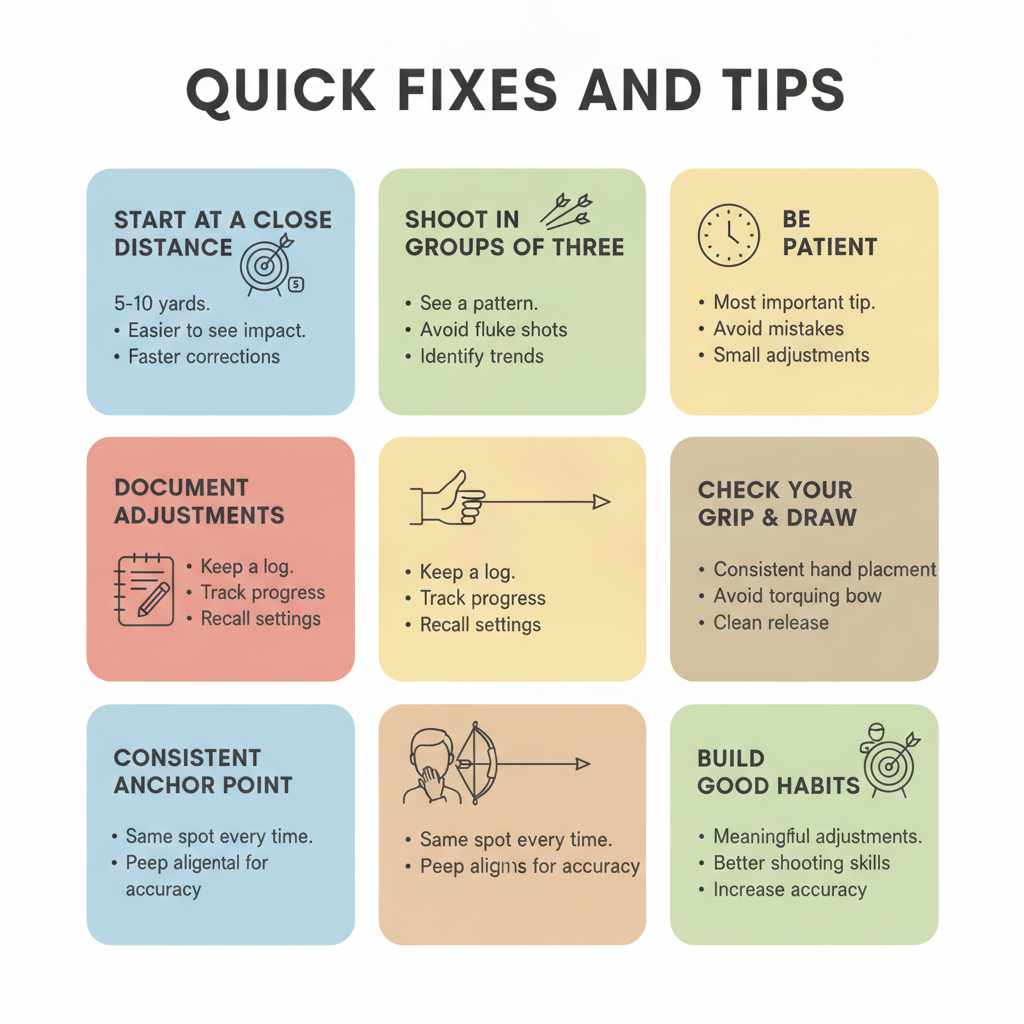
- Start at a Close Distance: Always begin your tuning process at a short distance, like 5 or 10 yards. It’s easier to see where you’re hitting. You can make bigger corrections faster.
- Shoot in Groups of Three: Fire three arrows at a time. This helps you see a pattern. One arrow can be a fluke. Three shows you a trend.
- Be Patient: This is the most important tip. Rushing will lead to mistakes. Take your time. Make small adjustments.
- Document Your Adjustments: Keep a small notebook. Write down what you changed and how far you moved the sight or peep. This helps you track your progress.
- Check Your Grip: A consistent grip is crucial. If your grip changes, your anchor point can change. This will affect your shot placement.
- Draw Straight Back: Pull your bowstring straight back. Don’t torque your bow. This ensures a clean release.
- Consistent Anchor Point: Always bring your drawing hand to the exact same spot on your face or jaw. This is your anchor point. It helps your peep align correctly.
These simple practices can make a world of difference. They ensure that your adjustments are meaningful. They help you build good shooting habits.
Frequently Asked Questions
How far can I move my peep sight without a bow press?
Click to reveal answer
You can only make very small adjustments without a bow press. We’re talking about fractions of an inch, maybe 1/8 inch at most. This is done by slightly altering the serving around the peep or adjusting the string loop knot. For larger adjustments, a bow press is needed.
Will adjusting my peep sight affect my cam timing?
Click to reveal answer
Minor peep adjustments usually do not significantly affect cam timing. However, if you’re making larger adjustments or if your bow is already slightly out of time, these adjustments could become more noticeable. It’s always good practice to check your cam timing after making any string or cable adjustments.
How do I know if my peep sight is the right size?
Click to reveal answer
The right size peep sight allows your sight pin to be seen clearly through it. If the peep is too small, it can be hard to find your pin. If it’s too large, it can make aiming feel less precise. You should be able to see your pin and the target without your eye feeling strained.
What’s the difference between peep sight adjustment and sight adjustment?
Click to reveal answer
The peep sight helps align your eye consistently behind the bowstring. Adjusting it changes your shooting point. The bow sight’s pins are what you aim with. Adjusting the bow sight changes where the pin is relative to the peep. You adjust the peep for eye position and the sight for the aiming point.
Can I remove my peep sight without a bow press?
Click to reveal answer
Removing the peep sight itself is usually difficult and not recommended without a bow press. The peep is integrated into the bowstring. To properly remove or replace it, the string needs to be taken off the bow. This requires a bow press. Trying to force it can damage your bowstring.
What if my arrows are flying erratically?
Click to reveal answer
Erratic arrow flight can be caused by many things, including incorrect arrow spine, issues with the arrow rest, cam timing problems, or inconsistent form. If your peep and sight are correctly adjusted and you still have problems, it’s worth checking these other factors. Consulting a pro shop can help diagnose these complex issues.
Conclusion
Adjusting your peep sight without a bow press is definitely achievable. It requires patience and careful attention to detail. By using simple tools and making small, deliberate changes, you can significantly improve your bow’s accuracy. Remember to always prioritize safety. Small, incremental adjustments are key. This process can make you a more capable archer.