How To Adjust Peep Sight Rotation On A Bow Correctly
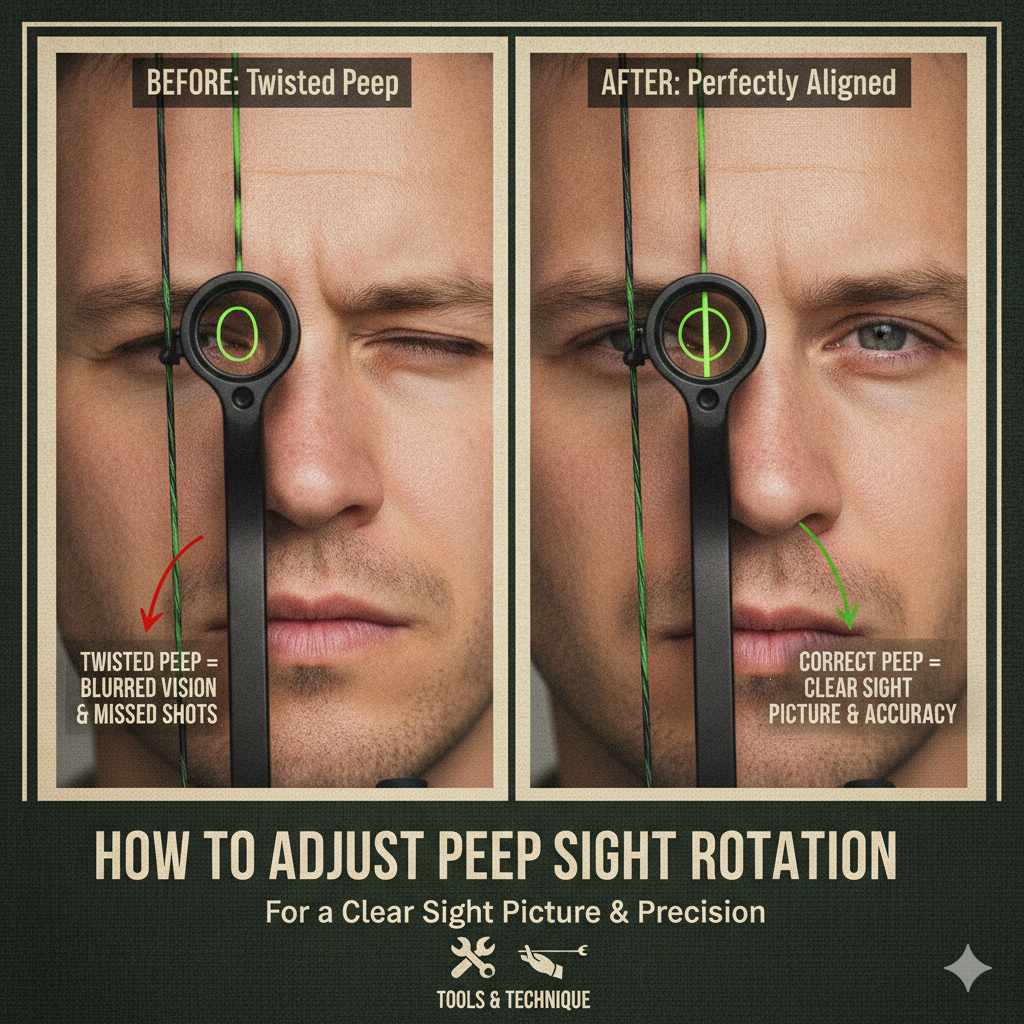
Adjusting peep sight rotation on a bow involves ensuring the peep opening is perfectly vertical at full draw. This means the string loop is rotating correctly on the cams. Proper alignment provides a clear, unobstructed view of your sight pins, leading to better accuracy and a more consistent shot.
It’s a foundational step for any archer aiming for precision.
Understanding Peep Sight Rotation
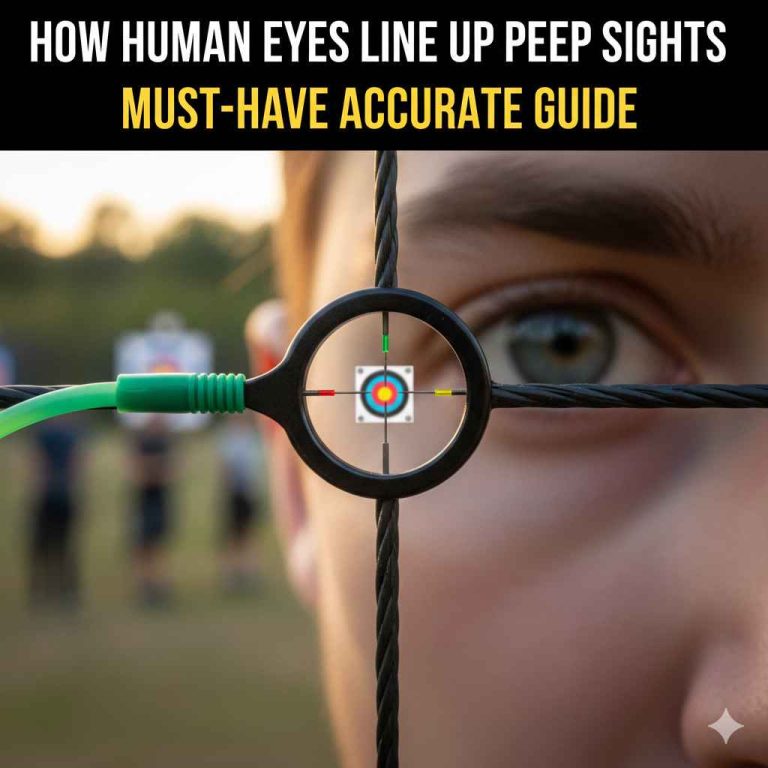
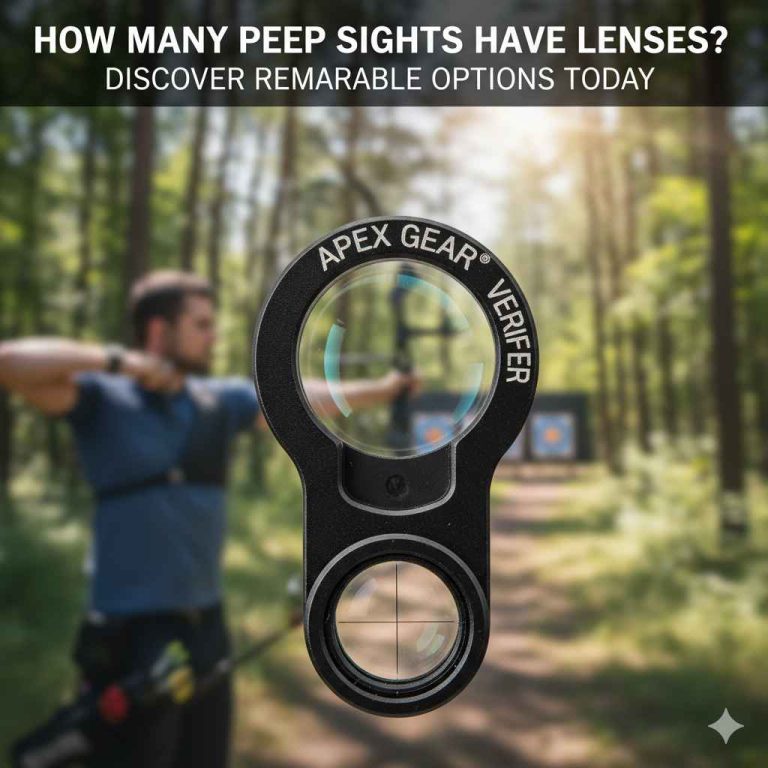
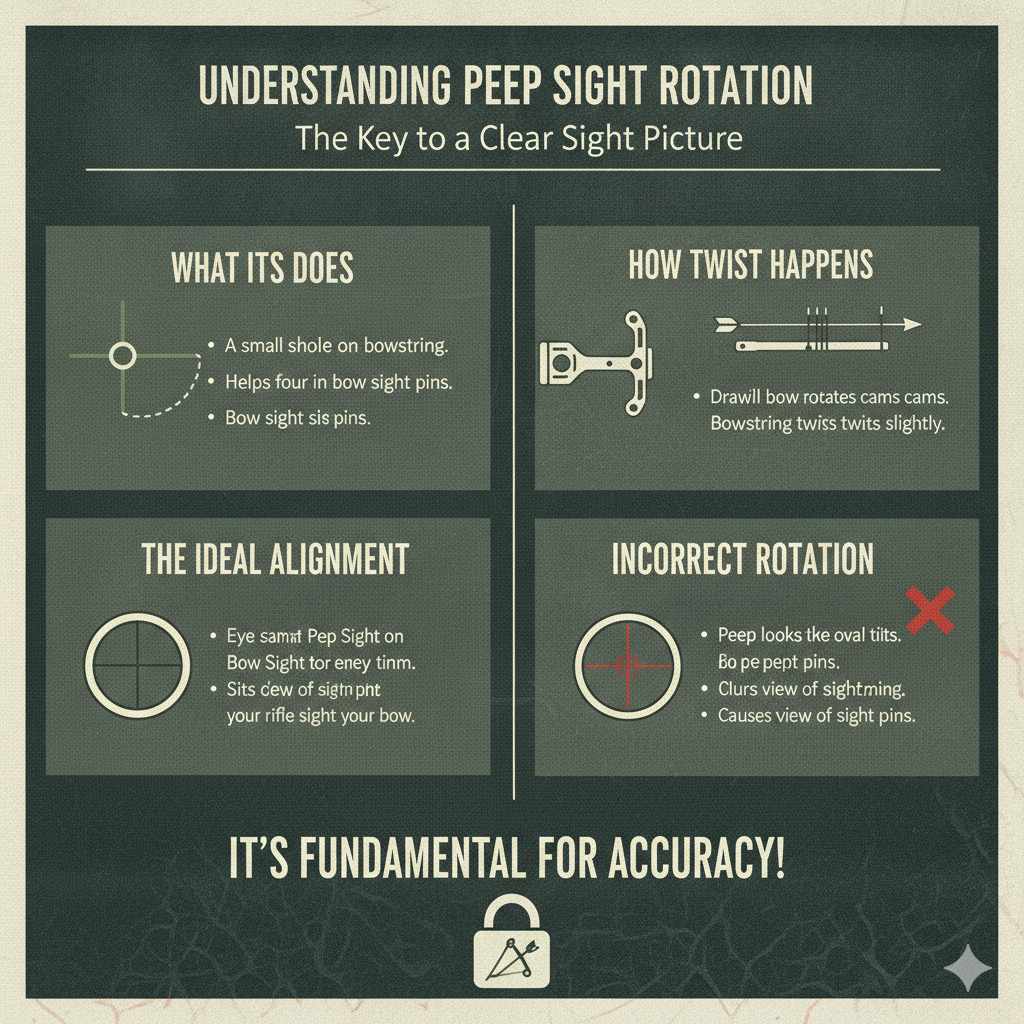
Your bow’s peep sight is a small, circular device attached to your bowstring. Its main job is to help you line up your shot. You look through it to see your sight pins.
Think of it as a guide. It helps you keep your bowstring and sight perfectly aligned every time you draw back.
When you draw your bow, the string pulls back. The cams on your bow’s limbs rotate. This rotation causes the bowstring to twist slightly.
This twist can make the peep sight itself rotate. Ideally, at full draw, the peep should sit perfectly straight up and down. The hole should be a perfect circle when you look through it.
If the peep sight rotates too much, the hole might look like an oval. It could even tilt to the side. This tilted or oval shape makes it harder to see your sight pins clearly.
It can blur your target. It can cause you to aim inconsistently. This is what we call incorrect peep sight rotation.
Why Does Peep Sight Rotation Matter So Much?
Accuracy is the big one here. When your peep is rotated, your line of sight is skewed. You might think you’re looking straight, but you’re not.
This slight change can throw your shot way off. Especially at longer distances. It’s like trying to read a book with the pages tilted.
It’s not ideal.
Consistency is also a huge factor. Archery is all about repetition. You want to do the same thing every time.
If your peep is rotating differently each time, your aim will change. This makes it impossible to build a repeatable shooting form. Your arrows will fly all over the place.
It’s a recipe for frustration.
Comfort plays a role too. A twisted peep can feel awkward. It can even feel like it’s digging into your eye.
This discomfort can distract you from making a good shot. A properly aligned peep feels natural. It lets you focus on your target and your aim.
Think about it like this: a car’s alignment is crucial for smooth driving. If the wheels are off, the car pulls to one side. It wears out the tires faster.
Your peep sight is like your bow’s alignment. It needs to be spot on for everything else to work right. Getting the peep sight rotation correct is a fundamental skill.
Real-World Scenario: The Frustrated Archer
I remember a time when I was helping a buddy, Mark, tune his new compound bow. He was getting really upset. He kept saying, “My shots are all over the place!
I can’t hit the broad side of a barn.” He had spent a fortune on this bow and the best accessories. He was following all the online tutorials on how to sight it in.
He’d get his sight pins set perfectly at 20 yards. Then he’d move back to 30, and his arrows would be way off. He’d adjust his sight, and the problem would repeat.
He was feeling defeated. He even considered selling the bow. It was clear something deeper was going on than just sight tape issues.
I asked him to draw the bow so I could see his setup. As soon as he drew back, I saw it. His peep sight was tilted noticeably to the left.
It was like a crooked smile on his bowstring. He was trying to look through this tilted hole. His sight pins were centered in that tilted view.
He thought he was aiming straight, but his line of sight was clearly angled.
I pointed it out, and he was surprised. He hadn’t even noticed. He thought the peep was just a simple hole.
He didn’t realize its orientation was so critical. We spent the next hour adjusting his string slightly. We made small twists.
We drew back repeatedly. We looked for that perfect vertical alignment. It made a world of difference.
That feeling when he hit the bullseye dead center? Priceless. It showed me how crucial even small details are in archery.
Peep Sight Rotation: Quick Check Steps
What to Look For:
- Draw your bow fully.
- Look straight through your peep.
- Is the hole a clear circle?
- Or does it look like an oval or tilted shape?
Ideal State:
The peep should be perfectly vertical. This means the edges of the hole are straight up and down. Your sight picture will be clear.
What Causes Peep Sight Rotation?
The main reason for peep sight rotation is how the bowstring twists. When you pull the string back, the cams pull on the string. Cams are not simple circles.
They have a shape that rotates the string. This rotation is supposed to be consistent. But sometimes, it’s not quite right.
The string itself can be a factor. If your bowstring is old, it might stretch unevenly. Or it might have been served in a way that causes it to twist.
The serving is the thread wrapped around the string. It holds the peep and the nock point in place. A poorly served string can lead to bad rotation.
The peep sight itself can also be the issue. Some peeps are not perfectly round. Or the hole might not be drilled perfectly in the center.
This can happen with lower-quality parts. Or sometimes, the peep can shift slightly in the string.
Your bow’s timing is another element. The timing refers to when the cams reach their peak. If the cams are not in sync, it can cause the string to twist unevenly.
This uneven twist affects the peep’s position. This is more common in compound bows.
Finally, how you hold your bow and string matters. Some archers grip the string too tightly. Or they might torque the bow in their hand.
This can add extra twist. But typically, the primary cause is the bowstring’s natural twist from the cam rotation.
How to Correct Peep Sight Rotation
Correcting peep sight rotation usually involves making small adjustments to the bowstring. The goal is to add or remove twists from the string. This changes how the string rotates the peep.
You’ll need a few tools for this. A bow vise is very helpful. It holds your bow securely.
You’ll also need a string loop or a bowstring serving jig. This helps you add or remove twists without damaging the string.
First, you need to identify if you need to add twists or remove them. Draw your bow and look at your peep. If the top of the peep is tilted forward (away from you), you need to add twists to the string.
If the bottom of the peep is tilted forward, you need to remove twists from the string.
To add twists, you’ll carefully unwrap a small section of the string’s serving. Then, you twist the string itself. You do this by turning the string clockwise.
After twisting, you re-serve the section. Then, you check the rotation again. You repeat this process in very small increments.
To remove twists, you do the opposite. You unwrap a section of serving. Then, you twist the string counter-clockwise.
You then re-serve the area. Again, make very small adjustments. You don’t want to overdo it.
It’s important to make these adjustments in tiny steps. A few twists here or there can make a big difference. You want to get to that perfect vertical alignment.
It may take several tries to get it just right. Be patient with the process.
Adjusting Twist: A Visual Guide
Scenario 1: Top of Peep Tilts Forward
Action: Add twists to the bowstring (turn clockwise).
Scenario 2: Bottom of Peep Tilts Forward
Action: Remove twists from the bowstring (turn counter-clockwise).
Important Note: Make adjustments in very small increments. Check after each adjustment. Ensure the serving is re-applied neatly.
If you don’t have the right tools or feel unsure, it’s best to take your bow to a qualified archery shop. They have the specialized equipment. They have the experience to do this safely and correctly.
They can ensure your bowstring is not damaged in the process. This is especially true if you have a modern compound bow with complex cam systems.
When to Seek Professional Help
While correcting peep sight rotation is a common task for archers, there are times when you should definitely head to a pro shop. If you’re new to bow tuning, it can be intimidating. Bowstrings are under a lot of tension.
Mishandling them can cause damage to the bow or injury to yourself.
If you don’t have a bow vise, it’s really hard to do this work safely. Trying to hold a drawn bow and twist the string is a recipe for disaster. A professional has the proper tools to safely hold the bow and manage the string tension.
Also, if your bowstring looks worn or frayed, don’t try to twist it. A worn string can break. You need to replace the string first.
A pro shop can assess the condition of your string and cables. They can advise you on replacements if needed.
If you’ve made several adjustments and still can’t get the peep to sit right, there might be a deeper issue. The cams could be out of time. The string could be installed incorrectly.
Or there could be a problem with the peep itself. A skilled archery technician can diagnose these more complex problems.
Don’t let a small issue turn into a big one. If you’re ever in doubt, seek expert advice. It’s better to pay a little for a tune-up than to risk damaging your equipment or yourself.
Signs Your Bow Might Need Professional Tuning
- Uneven cam timing.
- Excessive vibration after the shot.
- Arrows consistently fishtailing (wobbling side to side).
- Bowstring or cables appear frayed or damaged.
- Inability to achieve proper peep sight alignment after multiple attempts.
- Significant inconsistencies in arrow point of impact.
Factors Affecting Bowstring Twist
Several things can influence how much your bowstring twists. Understanding these can help you maintain proper bow function. The design of your bow’s cams is a primary factor.
Cams are rarely simple circles. They are shaped to provide a smooth draw cycle and efficient energy transfer. This shape inherently causes the string to rotate as it moves.
The length of your bowstring and cables matters. If the string or cables are not the correct length, it can affect the timing. This incorrect timing can lead to improper cam rotation and, consequently, peep rotation.
Manufacturers specify exact lengths for a reason.
The material of your bowstring is also a consideration. Modern bowstrings are made of synthetic materials like BCY X. These materials have varying degrees of stretch.
Some stretch more than others. As the string stretches over time, it can change its twist characteristics. This is why periodic restringing or serving is important.
The serving on your bowstring plays a role too. The serving is the tough, thread-like wrapping. It protects the string from wear, especially where it contacts the cams and the peep.
If the serving is loose, uneven, or damaged, it can cause the string to twist in an unnatural way. This is why proper serving is crucial for consistent peep sight rotation.
Finally, the actual peep sight can have an impact. The size of the peep’s hole and its construction can influence how the string interacts with it. Some archers prefer different peep sizes or shapes.
However, all should aim for a consistent, vertical alignment at full draw. The fit of the peep within the string is also important. A peep that’s too loose can move around.
A peep that’s too tight can put undue stress on the string.
Optimizing Your Sight Picture for Accuracy
Once your peep sight rotation is correct, you can focus on optimizing your sight picture. This is what allows you to aim with precision. A clear, unobstructed sight picture is key.
You want to see your pins perfectly centered within the peep’s opening.
The size of your peep is a big part of this. If the peep is too small, it can be hard to see your pins, especially in low light. If it’s too large, it can be hard to center it consistently.
Many archers find a peep size that offers a good balance. It should allow them to see their pins clearly, but the peep itself shouldn’t be so large that it’s hard to keep steady.
Your sight itself is also important. Ensure your sight pins are properly aligned. They should be at the correct height for your aiming distance.
Many sights have multiple pins. You need to make sure they are all visible through the peep without having to move your head or bow unnaturally.
The way you hold your bow and aim is critical. This is often called your anchor point. Your anchor point is where you consistently bring your drawing hand to your face.
This could be your jawbone, your cheek, or your ear. A solid, repeatable anchor point is vital for consistency. It ensures your eye is in the same position relative to the peep and sight every time.
When you draw your bow to your anchor, your eye should naturally look through the peep. You shouldn’t have to strain or move your head to see your pins. If you do, it often means something is off with your peep rotation, your sight height, or your anchor point.
Fine-tuning these elements leads to a much better and more accurate shooting experience.
Your Sight Picture Checklist
- Peep Alignment: Is the peep perfectly vertical at full draw?
- Pin Visibility: Can you see all your sight pins clearly through the peep?
- Anchor Point: Is your anchor point consistent and repeatable?
- Eye Position: Does your eye naturally align with the peep and pins at your anchor?
- Clarity: Is your target clear and in focus?
Common Mistakes to Avoid
One of the most common mistakes is not understanding that peep rotation is a thing. Many new archers think the peep is just a passive hole. They don’t realize it can twist and affect their aim.
This can lead to a lot of wasted time and frustration trying to fix sight issues that are actually peep issues.
Another mistake is making adjustments too quickly. Trying to fix peep sight rotation often requires small, incremental changes. Rushing the process can lead to over-correction.
You might add too many twists. Then you have to take them out. Be patient and make one small adjustment at a time.
Then check your results.
Using the wrong tools is also a problem. Trying to twist a bowstring without the proper serving jig or bow vise can damage the string. It can also be unsafe.
It’s like trying to fix a car engine with a butter knife. The right tools make the job easier and safer.
Ignoring your bowstring’s condition is another error. If your bowstring is old, frayed, or showing signs of wear, it’s not reliable. Trying to tune a worn-out string can lead to inconsistent results.
It can even lead to a string failure. Always ensure your bowstring is in good shape. Consult a pro if you’re unsure.
Finally, not knowing when to ask for help is a mistake. Archery tuning can be complex. If you’re struggling, don’t get discouraged.
A visit to a reputable archery shop can save you time, money, and a lot of headaches. Professionals have seen it all and can usually diagnose and fix issues quickly.
The Role of Cam Timing
Cam timing is critical for the proper function of a compound bow. It refers to the synchronization between the two cams on the bow. For peak performance, both cams should reach their full draw position at the same time.
This ensures the string and cables are pulling evenly.
When the cams are perfectly timed, the bowstring will rotate in a predictable manner. This predictable rotation is what allows for consistent peep sight rotation. If the cams are out of time, one cam might reach its peak before the other.
This uneven pull causes the string to twist more on one side than the other.
How do you know if your cams are out of time? A common symptom is arrow inconsistency. Your arrows might fly erratically.
Another sign is that you can’t seem to get your peep sight to align correctly, no matter how much you adjust the string twists. Or, one of your cams might be touching the limb differently than the other.
Correcting cam timing usually involves adjusting the length of the cables or the string. This is a more advanced tuning procedure. It often requires specialized tools.
This is definitely a job best left to experienced archery technicians. They can use timing marks on the cams or measure the draw force curve to ensure perfect synchronization.
Getting your cam timing right is a foundational step for all other bow tuning. If the timing is off, trying to fix peep rotation or sight alignment can feel like chasing your tail. It’s a complex interplay of mechanics, and getting it right makes a huge difference in how your bow shoots.
Quick Cam Timing Indicators
- Visual Check: Observe the cams at full draw. Do they look like they’re at the same point of their rotation?
- Cable Wear: Uneven wear on cables or strings can indicate timing issues.
- Peep Rotation Issues: Persistent peep rotation problems despite string adjustments.
- Arrow Flight: Erratic arrow flight that doesn’t improve with other tuning.
The Importance of a Consistent Anchor Point
We touched on this, but it’s worth emphasizing. Your anchor point is not just a place to rest your hand. It’s the consistent reference point that locks your aim in place.
When you draw your bow, your drawing hand moves back until it touches a specific point on your face. This is your anchor point.
For absolute consistency, this point must be the same every single time you draw. It could be the knuckles of your hand against your jaw. It could be your thumb tucked behind your earlobe.
Some archers use the corner of their mouth. Whatever point you choose, it must be firm and repeatable.
Why is this so tied to peep sight rotation and overall accuracy? Because your anchor point dictates where your eye is relative to your sight and peep. If your anchor point shifts even slightly, your eye’s position changes.
This means you’re looking through the peep and at your sight pins from a different angle.
When your peep sight is perfectly vertical, and your anchor point is consistent, your eye will naturally look through the center of the peep. Your sight pins will appear centered. This creates a stable, repeatable sight picture.
Without a solid anchor, even a perfectly aligned peep won’t guarantee accuracy.
Practicing drawing to your anchor and holding steady is as important as practicing your shot. Many archers focus only on aiming. But the setup – draw, anchor, and release – is just as crucial.
A consistent anchor point is the bedrock of good archery form. It helps make the most of your perfectly aligned peep and sight.
What This Means for Your Shooting
Understanding and correctly adjusting your peep sight rotation translates directly into better shooting. You’ll notice a significant improvement in accuracy. Arrows will start hitting where you aim.
This is because your line of sight is no longer compromised.
You’ll also find your shooting becomes more consistent. Gone are the days of hitting the bullseye one shot and the next being ten inches wide. With a properly aligned peep, your form becomes more repeatable.
This consistency builds confidence and enjoyment.
Shooting will feel smoother and more natural. When your peep is correct, you don’t have to fight to see your pins. You can simply draw, aim, and let the arrow fly.
This removes a layer of physical and mental effort. It allows you to focus on the shot itself.
For hunters, this means more ethical shots. For target archers, it means higher scores. For anyone who enjoys shooting a bow, it means a more rewarding experience.
It’s a fundamental step that unlocks the true potential of your bow and your aiming system.
When is Peep Rotation Normal?
It’s important to understand that some degree of string twist is inherent in compound bows. The cams are designed to rotate the string. The goal isn’t to eliminate all rotation, but to ensure the peep is vertical at full draw.
So, if you see some rotation when the bow is un-drawn, that’s perfectly normal.
The key is what happens when the bow is fully drawn and ready to shoot. At that precise moment, the peep should be perfectly upright. If it’s sitting straight up and down, giving you a clear circular view of your sight pins, then your peep sight rotation is correct for your setup.
You don’t need to force it into a different position.
Sometimes, archers get confused by advice or see other setups. They might think a slight tilt is okay or that a specific angle is “normal.” However, the universal standard for optimal sight picture is a vertical peep at full draw. Any deviation from this means it’s affecting your sight alignment.
It needs adjustment.
So, don’t worry if your string looks a bit twisted when the bow is un-drawn. Focus your attention solely on that moment of full draw. That’s when the peep’s position matters most for your accuracy.
If it’s vertical then, you’re good to go!
Quick Fixes and Tips
Here are some quick tips to help you maintain good peep sight rotation and overall accuracy:
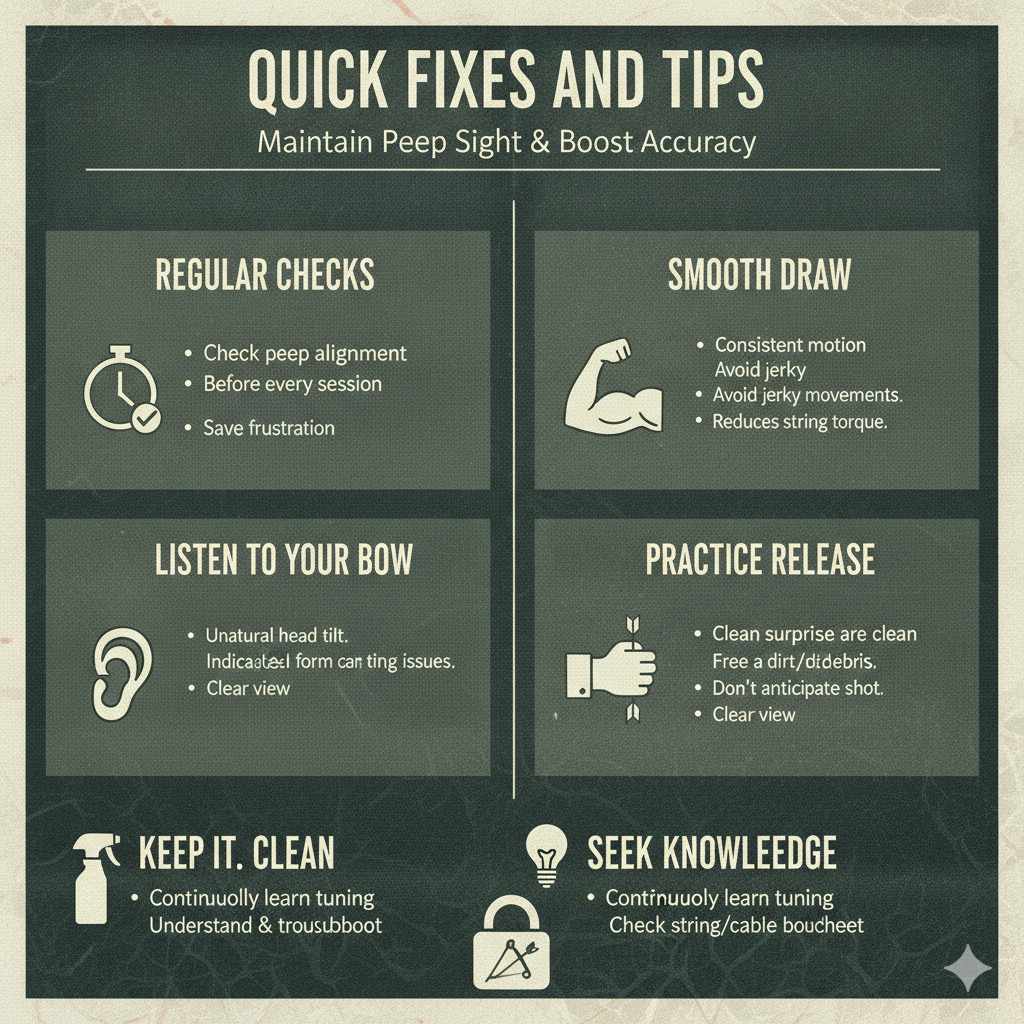
- Regular Checks: Make it a habit to check your peep alignment before every shooting session. A few seconds can save you a lot of frustration.
- Listen to Your Bow: Pay attention to any new sounds or vibrations. These can be indicators of underlying issues, including cam timing problems that affect peep rotation.
- Keep it Clean: Ensure your peep sight and sight pins are clean and free of debris. Dirt can obstruct your view.
- Smooth Draw: Focus on drawing your bow smoothly and consistently. Avoid jerky movements that can cause unnecessary string torque.
- Practice Release: Work on a clean, surprise release. This means you don’t anticipate the shot. A good release is crucial for accuracy.
- Bow Maintenance: Follow the manufacturer’s recommended maintenance schedule for your bow. This includes checking string and cable condition.
- Seek Knowledge: Continuously learn about bow tuning. The more you understand, the better you can troubleshoot and maintain your equipment.
Frequently Asked Questions
What is the primary purpose of a peep sight?
The primary purpose of a peep sight is to provide a consistent aiming point. It helps the archer align their eye with the sight pins and the target, ensuring a clear and repeatable sight picture.
Can I adjust my peep sight rotation myself?
Yes, you can adjust your peep sight rotation yourself if you have the right tools and knowledge. It involves adding or removing twists from your bowstring. However, if you are unsure, it is best to seek help from a professional archery technician.
How much should the peep sight rotate at full draw?
The peep sight should be perfectly vertical at full draw. This means the hole appears as a clear circle, not an oval or tilted shape. This vertical alignment ensures your line of sight is straight through the peep and over your sight pins.
What happens if my peep sight is rotated?
If your peep sight is rotated, it will create an inconsistent and often obstructed view of your sight pins. This can significantly reduce your accuracy, especially at longer distances, as your line of sight is no longer straight.
How do I know if my bow cams are out of time?
Signs that your bow cams may be out of time include inconsistent arrow flight, difficulty achieving proper peep sight alignment, uneven wear on cables, and a general feeling that the bow isn’t shooting efficiently. Professional assessment is recommended.
Should I use a peep sight that is too large or too small?
You should aim for a peep sight size that allows you to see your sight pins clearly without the peep itself being too large to consistently center. A common recommendation is a peep that fits comfortably in your eye socket, allowing for easy alignment.
Conclusion
Mastering peep sight rotation is a fundamental step for any archer serious about accuracy and consistency. It’s a detail that makes a world of difference. By understanding why it matters and how to adjust it, you unlock a clearer, more reliable aiming system.
This leads to more rewarding shots and greater confidence in your abilities. Don’t let a twisted peep hold you back!