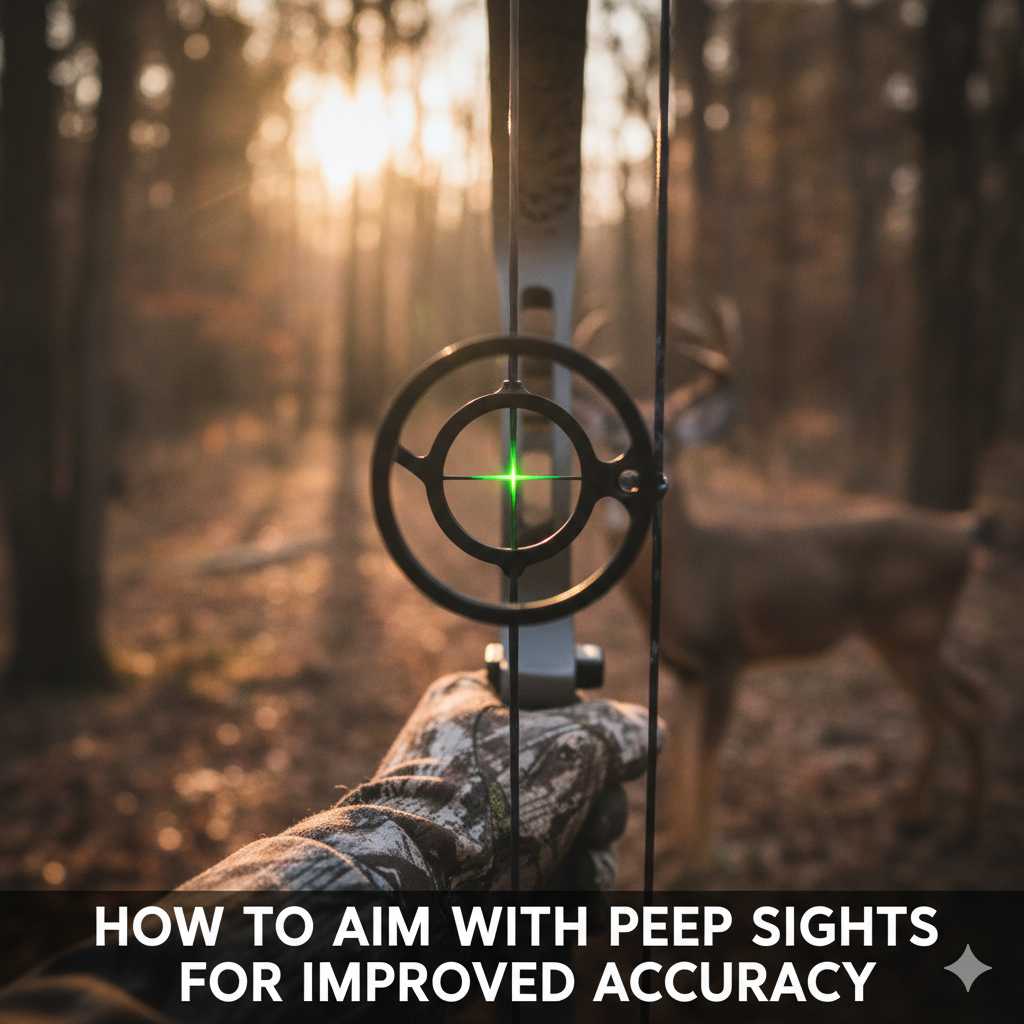
How To Aim With Peep Sights For Improved Accuracy
It can be really frustrating when your shots don’t go where you want them to. You might be doing everything right, but something feels off. Often, the way we aim makes a big difference.
That’s where understanding peep sights comes in. They can help you focus better and hit your target more often. Let’s dive in and make aiming simpler.
Peep sights work by guiding your eye to a specific point. This helps you align your sight, the target, and your eye. Proper use leads to much better accuracy. It’s about training your eye to see things in a particular way. This simple tool can unlock your shooting potential.
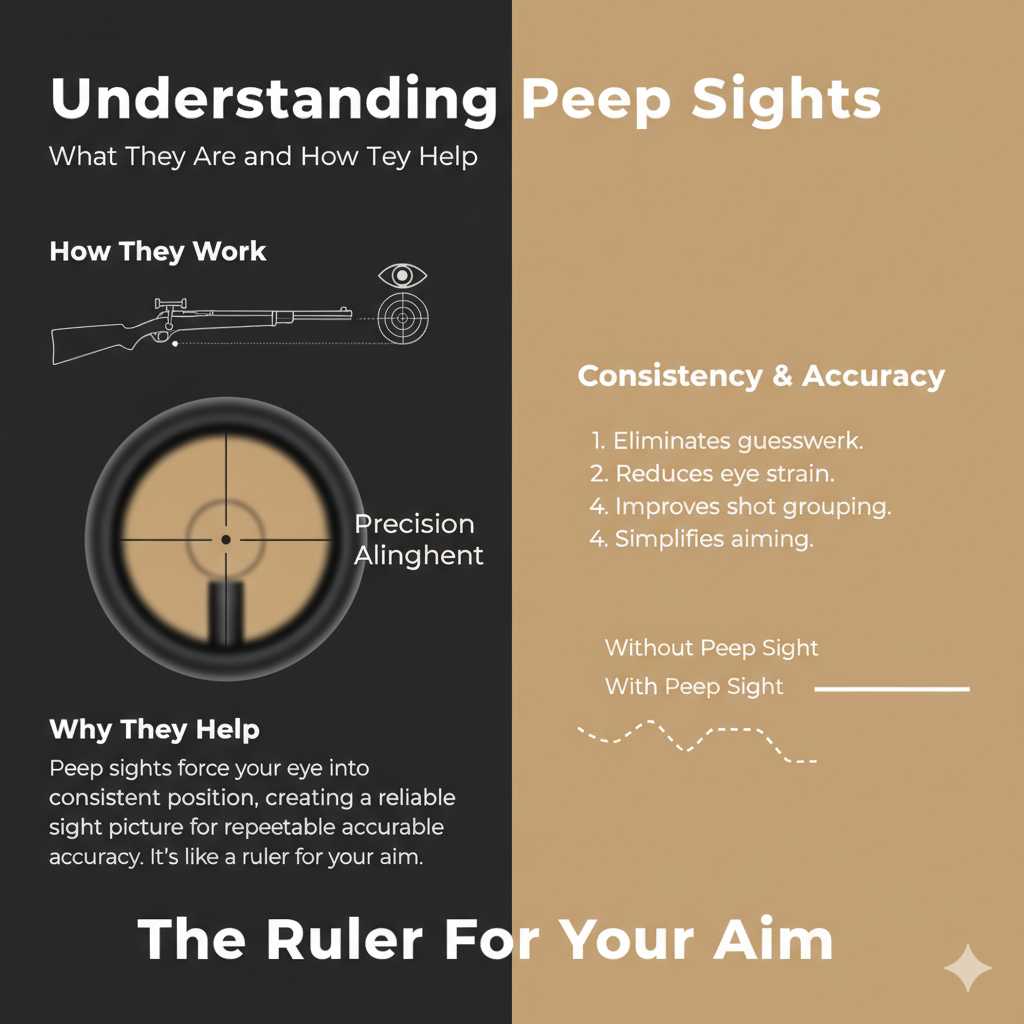
Understanding Peep Sights: What They Are and How They Help
A peep sight is a simple aiming device. It usually has a small hole. You look through this hole.
Your front sight post needs to line up in the middle of the hole. Then, you line up the target with the front sight. This makes aiming much more precise.
It’s like a tunnel vision effect for your target.
Why do they help? Our eyes aren’t perfect aiming tools on their own. They can wander.
They can focus on the wrong thing. A peep sight acts like a guide. It forces your eye into a consistent position.
This consistency is key for hitting the same spot over and over. It removes a lot of guesswork from your aim.
Think about it like this. If you try to draw a straight line without a ruler, it’s hard. Your hand might shake.
Your eye might not track perfectly. A ruler gives you a straight edge. A peep sight is like a ruler for your aim.
It provides that steady reference point. This makes your shots more reliable.
My Own Peep Sight Journey: A Story of Frustration and Focus
I remember one crisp autumn morning. I was out hunting, my heart pounding. I had a new rifle with a fancy scope.
I’d practiced, but I felt a knot of doubt. The deer were distant. My first shot felt good.
It hit the dirt way too low. Panic set in. The deer bolted.
I felt a wave of disappointment wash over me.
Later, back home, I was cleaning my gear. I looked at that rifle. The scope seemed overwhelming.
I started researching simpler aiming methods. That’s when I found peep sights. They seemed so basic.
Could something so simple really make a difference? I decided to try them on a different rifle, an older one.
Setting them up felt a bit strange at first. It took some fiddling. The first few shots were a mess.
I was used to a wide field of view. This felt… confined. But then, something clicked.
I lined up the front post in the peep. Then I lined up the target. The world seemed to narrow down to just that.
My shots started finding the center of the target.
Peep Sight Basics: A Quick Scan
What is it? A small hole to look through for aiming.
How it works? Guides your eye for consistent sight alignment.
Main benefit? Improves shooting accuracy and focus.
Best for? Rifles, shotguns, bows, and some pistols.
It wasn’t magic. It took practice. But that feeling of knowing I was aiming right was powerful.
The frustration of missed shots faded. It was replaced by a quiet confidence. This experience taught me that sometimes, simpler is better.
Especially when it comes to hitting your mark.
How to Aim with Peep Sights: A Step-by-Step Guide
Aiming with peep sights involves a few key steps. It’s about creating a clear, consistent picture. Let’s break it down.
It’s not as hard as it sounds. You just need to follow the process.
Step 1: Proper Sight Alignment
This is the most crucial part. You need to get the front sight post centered in the peep sight’s hole. Imagine the peep is a window.
You want the front sight to be dead center in that window. It should look like a perfect circle around the post.
Your eye is the key here. Your eye will naturally center the post. You don’t need to try too hard.
Just focus on the front sight. The peep will help your eye find the right spot. It’s a learned skill.
The more you do it, the easier it becomes.
Step 2: Focus on the Front Sight
This is where many people get confused. Should you focus on the target? Or the front sight?
With a peep sight, you focus on the front sight post. Yes, the one closest to you.
When you focus on the front sight, it will appear sharp and clear. The peep sight will be a blur. The target will also be a blur.
This might seem odd at first. But this is how you get the best alignment. Your brain will naturally center the blurry peep around the sharp front sight.
Why does this work? Your eye has a limited focal range. It can only focus sharply on one distance at a time.
By focusing on the front sight, you create a fixed reference point. This sharp front sight, centered in the blurry peep, tells you exactly where your gun is pointed.
Step 3: Aligning the Target
Once the front sight is centered in the peep, you bring the target into view. The target will appear blurry. This is normal.
Remember, you are focused on the front sight. The centered front sight post acts as your aiming point on the blurry target.
You might have a front sight with a bead or a post. You place this blurry front sight on the blurry target. Where you put it is where the bullet will go.
Because your front sight is perfectly aligned in the peep, this means your shot will be precise.
It’s like using a crosshair. The crosshairs appear sharpest. The target is usually focused through them.
With peep sights, the front sight is your sharp aiming point. The peep is the background guide. The target is the object of your focus.
Step 4: The Shot
Now, squeeze the trigger. Don’t jerk it. A smooth trigger pull is vital.
It prevents you from disturbing your aim. Keep your eye on the front sight as you shoot. You want that consistent picture right through the shot.
The recoil will move the gun. But if your aim was solid, the bullet should be where you intended. After the shot, re-acquire the sight picture.
See where you ended up. This helps you learn and adjust for the next shot.
Key Takeaways for Peep Sight Aiming
- Focus is on the front sight. This is critical.
- Center the front sight post in the peep. A blurry peep around a clear post.
- Target will be blurry. This is expected and correct.
- Smooth trigger pull. Don’t disturb your aim.
- Practice makes perfect. Consistency comes with repetition.
Common Mistakes When Using Peep Sights
Even with clear instructions, people make mistakes. These can undo all the benefits of peep sights. Knowing these common pitfalls can help you avoid them.
It saves you frustration and wasted ammo.
Mistake 1: Focusing on the Target
This is the #1 mistake. People instinctively want to see the target clearly. They focus on the target instead of the front sight.
When you do this, the front sight becomes blurry. It’s hard to center a blurry object. Your aim becomes shaky and inconsistent.
Remember the rule: Focus on the front sight. The front sight must be sharp and centered in the peep. The target can be blurry. Your eye will naturally put the sharp front sight onto the blurry target.
Mistake 2: Not Centering the Front Sight
You look through the peep. You see the front sight. But it’s off to one side.
Or too high. Or too low. You think, “Close enough.” But “close enough” isn’t good enough for accurate shooting.
The front sight needs to be precisely in the middle of the peep.
Take the time. Adjust your hold. Adjust your eye position.
Get that front sight dead center. This small effort makes a huge difference. It’s the foundation of your aim.
If the base is off, the whole structure is wobbly.
In real homes, I’ve seen people rush this. They are excited to shoot. They skip the careful alignment.
Then they wonder why their shots are scattered. It’s that moment of perfect centering that matters most. It creates the repeatable aiming picture.
Mistake 3: Jerking the Trigger
You have a perfect sight picture. Front sight centered in the peep. Target in view.
Then, WHAM! You punch the trigger. This sudden movement jerks the gun.
It moves it off target just as you fire. Your shot goes wild.
A smooth trigger pull is essential. Think of it as a slow squeeze. You are just applying gentle pressure.
You want to surprise yourself with the shot. Your finger moves the trigger, not your whole hand. This keeps the gun steady.
Common Errors to Avoid
Focusing error: Target vs. Front Sight. Always front sight!
Alignment error: Front sight not centered. Take your time.
Trigger error: Jerking the trigger. Squeeze gently.
Eye fatigue: Taking breaks helps maintain focus.
Mistake 4: Ignoring Eye Dominance
Most people have a dominant eye. This is the eye your brain prefers to use for vision. If you are right-handed, your right eye is usually dominant.
If you are left-handed, your left eye is often dominant.
When you use peep sights, your dominant eye should be the one looking through the peep. If you try to use your non-dominant eye, it can lead to aiming difficulties. It feels unnatural.
Your brain struggles to reconcile the two views.
You can test your eye dominance. Extend your arms. Make a small triangle with your hands.
Look at a distant object through that triangle. Close one eye. Then the other.
The eye that keeps the object aligned is your dominant eye. It’s a simple check that can fix a lot of aiming issues.
Types of Peep Sights and Their Uses
Peep sights aren’t all the same. Different designs suit different firearms and shooting styles. Understanding these variations can help you choose the right one for your needs.
They can be found on many types of gear.
1. Aperture Sights (Hunting/Plinking)
These are common on hunting rifles and lever-action guns. They usually have a larger aperture (the hole) and a post or bead front sight. The larger hole makes it easier to acquire the target quickly.
This is good for moving targets or low-light conditions.
They offer better accuracy than open iron sights. But they are not as precise as target-style aperture sights with very small holes. They strike a good balance for general shooting.
2. Target Aperture Sights (Competition/Precision)
These are often found on competition rifles and pistols. They have very small apertures. This significantly increases the depth of field.
It forces extreme precision in sight alignment. The front sight post is often very fine, like a thin blade or a small dot.
These sights require more effort to use. You need good lighting. And steady hands.
But for competition shooters, they offer the highest level of accuracy. They allow for minute adjustments.
Peep Sight Styles at a Glance
| Type | Typical Use | Aperture Size | Focus |
|---|---|---|---|
| Hunting/Plinking Aperture | Rifles, Shotguns | Medium to Large | Quick target acquisition |
| Target Aperture | Competition, Precision Rifles | Very Small | Extreme accuracy |
| Archery Peep | Bows | Small, specialized | Bowstring alignment |
3. Archery Peep Sights
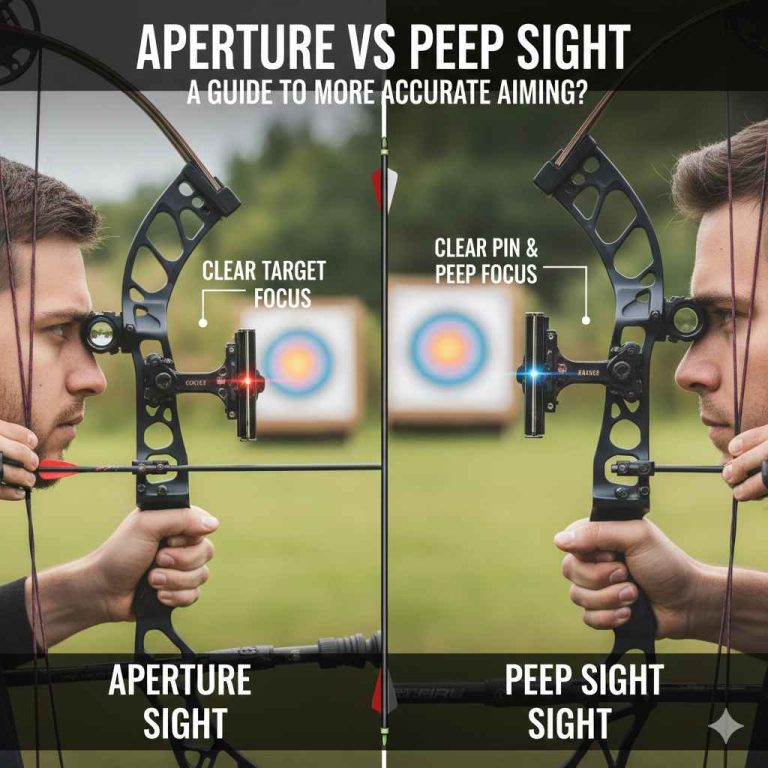
These are used on compound and recurve bows. They attach to the bowstring. When the bow is drawn, the peep sight comes back to the archer’s eye.
The archer then aligns the bow sight (which is on the bow riser) through the peep.
It’s a different application but the principle is similar: a sight within a sight for alignment. The archer focuses on the bow sight. The peep helps them position their eye consistently.
4. Adjustable Peep Sights
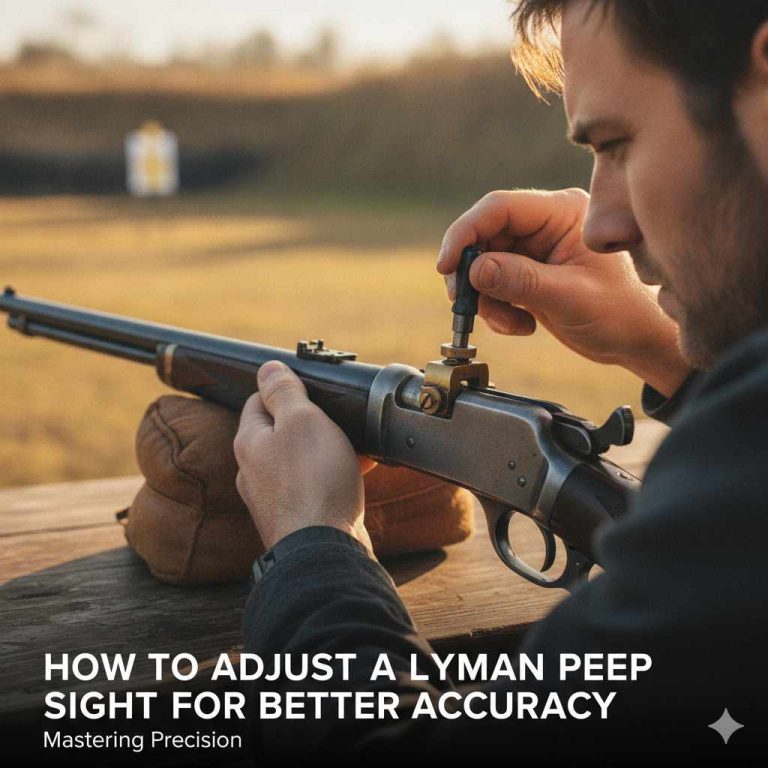
Many modern peep sights are adjustable. You can often adjust windage (left/right) and elevation (up/down). This is done with small screws or knobs.
These adjustments allow you to fine-tune your aim to match your ammunition and shooting conditions.
This adjustability is what makes peep sights so versatile. You can zero your rifle or pistol. Then you can make minor tweaks as needed.
This is a feature found on both hunting and target styles.
Setting Up Your Peep Sights for the First Time
Getting your peep sights installed and ready can seem daunting. But it’s usually a straightforward process. Here’s what to expect.
It’s important to do it right from the start.
Installation on Firearms
For rifles and shotguns, peep sights often replace the rear open sight. Or they mount on a rail system. Some are screw-on.
Others might require drilling and tapping. It’s best to consult your firearm’s manual or a qualified gunsmith if you’re unsure.
Front sights can also be replaced or added. Many attach to a barrel band or a dovetail slot on the barrel. Ensure the front and rear sights are compatible.
They need to be roughly the same height when installed. This is called bore sighting. It gets you close before fine tuning.
Initial Zeroing Process
Once installed, you need to “zero” your sights. This means adjusting them so your shots hit the intended point of impact at a specific range. Start at a short distance, like 25 yards.
Fire a group of shots. Look at where they land. If they are low, you need to adjust the rear sight up.
If they are high, adjust it down. If they are left, adjust the rear sight right. If they are right, adjust left.
The key is to make small, deliberate adjustments. One click on a target sight might move the point of impact by an inch at 100 yards. Know what your sight adjustments do.
This avoids overcorrection.
Zeroing Your Peep Sights: Key Steps
1. Install sights correctly. Ensure compatibility and alignment.
2. Choose a range. Start close, like 25 yards.
3. Fire a group. Aim for the same spot multiple times.
4. Analyze impact. Where did the shots land?
5. Adjust rear sight. Move it in the direction you want the bullet to go.
6. Repeat. Move to your desired range (e.g., 100 yards) and fine-tune.
Once you are close at 25 yards, move to 50 or 100 yards. You will need to make further adjustments. It’s a process.
Be patient. Every rifle and ammo combination is slightly different. This is where the real learning happens.
Factors Affecting Aiming with Peep Sights
Several things can influence how well you aim with peep sights. It’s not just about the sights themselves. Your environment and your own body play a big role.
Understanding these factors can help you shoot better.
Lighting Conditions
Good lighting is crucial for peep sights. Especially for smaller apertures. In bright daylight, the contrast between the front sight and the background is clear.
This makes aiming easy.
However, in low light, the peep hole and front sight can become less distinct. The target might also be harder to see. This is why hunting at dawn and dusk can be challenging.
Some peep sights have different aperture sizes. You can swap them out. A larger aperture lets in more light.
It can be better for low-light situations.
I’ve found that on very dim mornings, I sometimes struggle to see the front sight clearly in the peep. It makes me want to rush. But the best approach is to slow down.
Wait for a bit more light. Or use a different aperture if possible. Patience is key when the light isn’t perfect.
Distance to Target
The distance to your target matters. For very distant targets, you need precise sight alignment. This is where smaller apertures shine.
They help you focus intently on the aiming point.
For closer targets, a larger aperture might be faster. You can acquire the target and aim more quickly. However, the core principle remains the same: focus on the front sight and center it.
When shooting at different distances, you might need to adjust your point of aim. This is called holdover or holdunderthe bullet’s trajectory. Your peep sights, once zeroed, will consistently point the gun.
You just need to know where that point is in relation to the target at that distance.
Environmental Influences on Aiming
Light: Bright is best. Low light makes sights harder to see.
Distance: Affects required precision and holdover.
Wind: Can push your bullet off course. Requires compensation.
Shooter’s Position: A stable stance is vital for consistency.
Wind
Wind is an external factor that affects bullet trajectory. Even with perfect aiming, wind can push your bullet left or right. You need to account for wind drift.
This involves knowing how much your bullet will drift at a certain range in a given wind speed. Experienced shooters learn to estimate wind. They will then aim slightly into the wind.
This makes the wind push the bullet back onto the target.
Windage adjustments on your peep sight can help. But they are for zeroing. For wind compensation, you often make a mental adjustment or a slight shift in your hold.
It’s another layer of skill to develop.
Your Own Physical State
Your physical condition matters more than you might think. Are you tired? Stressed?
Cold? These can all impact your ability to aim steadily.
Blood sugar levels can affect steadiness. Extreme temperatures can make your hands shake. Fatigue leads to sloppy technique.
It’s important to be aware of your own body. Take breaks when needed. Stay hydrated.
And don’t try to push yourself too hard when you’re not feeling your best.
In my own experience, after a long day of hiking, my hands felt less steady. Trying to take a precise shot became much harder. I learned that sometimes, the best shot is no shot at all.
Resting and coming back later is often the smarter choice.
When is a Peep Sight the Right Choice?
Peep sights aren’t for everyone or every situation. But they excel in certain areas. Knowing these can help you decide if they are right for you.
For Improved Accuracy Over Standard Open Sights
If you find standard open sights (like a blade front and U-notch rear) are hard to use, peep sights are a great upgrade. The peep sight system inherently forces better alignment. It creates a consistent aiming point.
This leads to tighter groups. Especially for shooters who struggle with focusing.
Many people find the simple post-in-notch of open sights too forgiving. The peep sight system demands more from your eye and brain. It’s a small step up in complexity but a big leap in results for many.
For Fast Target Acquisition in Many Conditions
While target aperture sights demand precision, hunting-style peep sights are surprisingly fast. The aperture helps guide your eye. This allows you to quickly find the front sight and place it on the target.
This speed is useful for hunting scenarios where opportunities are fleeting.
Think about a quick shot at a running rabbit or a bird in flight. The peep sight system can help you lock onto the target faster than trying to line up a standard open sight. It’s a trade-off: slightly less precise than a tiny aperture, but much faster to use.
Peep Sights Shine When
Accuracy is a priority. They offer more precision than open sights.
Fast aiming is needed. Hunting situations benefit from quick sight alignment.
Consistency is desired. They help your eye find the same aiming point.
Shooting in various conditions. Different types suit different lights.
For Shooters Who Struggle with Focus
As we’ve discussed, the key to peep sights is focusing on the front sight. This can actually simplify aiming for some people. Instead of juggling focus between front sight, rear sight, and target, you only focus on one thing: the front sight.
Your eye’s natural tendency to center things helps the peep sight fall into place. This can be a revelation for shooters who have always found aiming difficult. It’s a more intuitive system for many.
I’ve had friends who could never quite master iron sights. They would try to focus on the target and blur everything else. When I showed them the peep sight method, they finally “got it.” The sharp front sight in the blurry peep clicked for them.
It opened up their shooting.
When Peep Sights Might Not Be Ideal
On the flip side, peep sights aren’t always the best. For extreme long-range shooting, magnified scopes offer far more precision. For very close-quarters self-defense, a red dot sight might be faster and more forgiving.
Also, if you prefer a very wide field of view, the tunnel vision effect of a peep sight might feel constricting. It’s a tool, and like any tool, it has specific applications where it performs best.
Maintaining Your Peep Sights
Like any part of your gear, peep sights need some care. Basic maintenance ensures they last and continue to perform. It’s not complicated.
A little effort goes a long way.
Cleaning
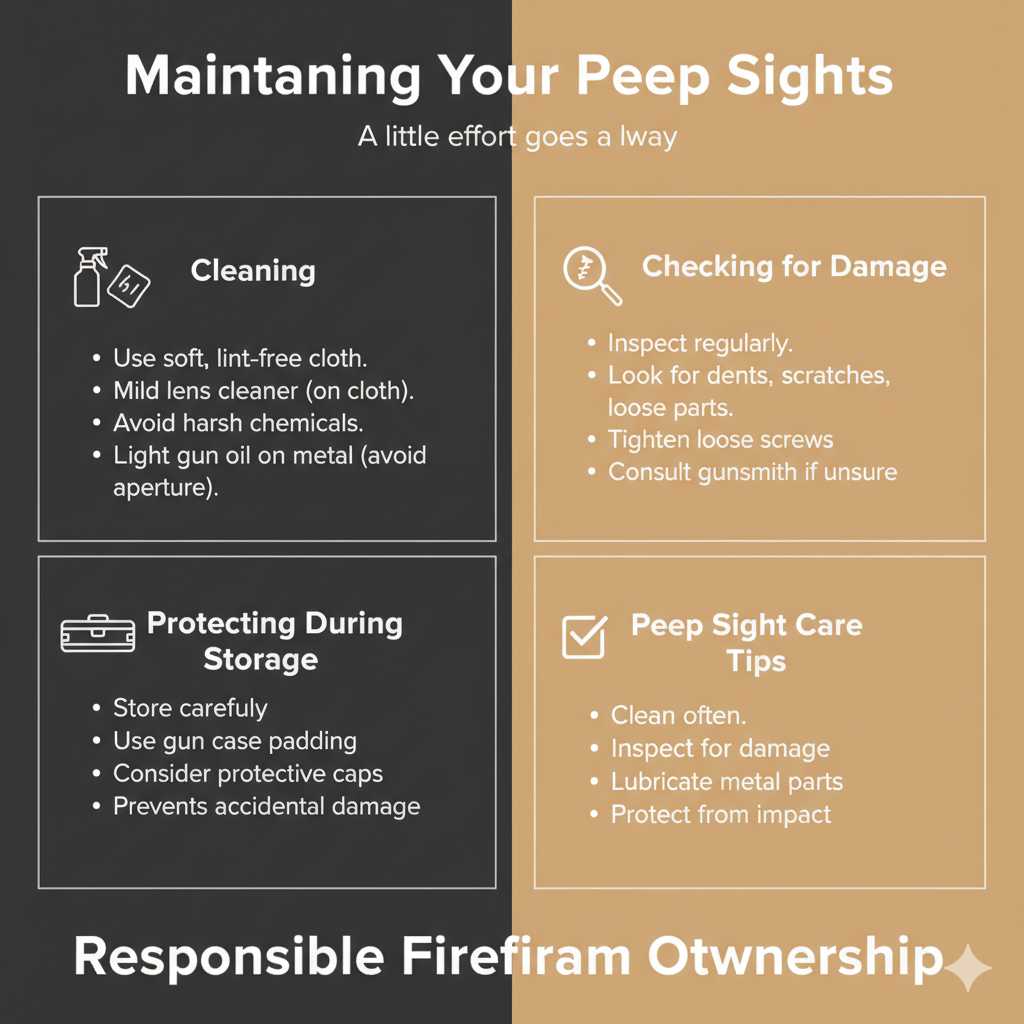
Keep your sights clean. Dust, dirt, and grime can obscure your view. Use a soft, lint-free cloth.
A lens cleaning cloth works well. For stubborn dirt, a mild lens cleaner can be used. Apply it to the cloth, not directly to the sight.
Avoid harsh chemicals. They can damage coatings or finishes. For metallic parts, a light application of gun oil on a cloth can prevent rust.
But be careful not to get oil on the aperture itself, as it can cause glare or obscure your vision.
Checking for Damage
Periodically inspect your peep sights. Look for any signs of damage. Dents, scratches, or loose parts.
If you notice anything, address it before your next shooting session.
Loose screws can cause your sights to shift. A damaged aperture can make aiming difficult or impossible. If you’re unsure about any damage, it’s always best to seek advice from a gunsmith.
Peep Sight Care Tips
- Clean often: Use soft cloths, avoid harsh chemicals.
- Inspect for damage: Look for dents, loose parts.
- Lubricate metal parts: Light oil to prevent rust.
- Protect from impact: Store them carefully when not in use.
Protecting Them During Storage
When your firearm is stored, protect the sights. If you use a gun case, ensure the sights aren’t pressed against anything. Some shooters even use small protective caps for their sights, especially if they are exposed.
Proper storage prevents accidental damage. It keeps your sights in good working order for when you need them. This is part of responsible firearm ownership and maintenance.
Frequently Asked Questions About Peep Sights
Can I use a peep sight with both eyes open?
Yes, many people shoot effectively with peep sights using both eyes open. Your brain will naturally favor your dominant eye looking through the peep. The non-dominant eye will help with peripheral awareness.
It takes practice to get comfortable, but it can lead to faster target acquisition.
Are peep sights hard to install?
Installation difficulty varies. Simple aperture sights might screw directly onto an existing sight base. More complex systems might require specialized tools or gunsmith help.
Always check your firearm’s manual and consider professional installation if you’re not comfortable.
What is the best peep sight for hunting?
For hunting, a medium to large aperture size is often preferred. This allows for quicker target acquisition and better performance in lower light conditions common during dawn and dusk. Adjustable sights offer the most versatility for different ranges.
How do I adjust the windage on a peep sight?
Most adjustable peep sights have a windage adjustment screw or knob. Turning this screw moves the sight’s position left or right. You typically adjust the rear sight in the direction you want the bullet to go.
For example, if your shots are hitting left, you adjust the rear sight left.
Can I use a peep sight with a scope?
No, you generally cannot use a peep sight and a scope simultaneously on the same firearm. They serve as alternative sighting systems. You choose one or the other.
Some firearms might allow for a peep sight on the rear and a globe front sight, but this is different from a scope.
What does “focus on the front sight” really mean?
It means your eye should be adjusted to see the front sight post as clearly as possible. The peep sight will be a blur around it, and the target will also be a blur. This sharp front sight, centered in the peep, is your consistent aiming point.
Your brain naturally puts the sharp aim on the blurry target.
Conclusion: Mastering Your Aim with Peep Sights
Peep sights are a fantastic tool for enhancing shooting accuracy. They simplify the aiming process by guiding your eye. This leads to more consistent sight alignment.
Remember to focus on the front sight. Center it perfectly in the peep. And practice, practice, practice.
With a little patience and understanding, you can master aiming with peep sights. You’ll likely see your groups tighten. And your confidence grow.
It’s a skill that pays off with every well-aimed shot.