How to Make a Moving Target Stand: A DIY Step-by-Step
To make a moving target stand, build a simple wooden frame with a top track. Attach a small motor, like a windshield wiper motor, to a pulley system that pulls a trolley back and forth along the track. Mount a lightweight foam target to the trolley, and you’ll have an affordable, effective moving target for practice.
For a related target setup, How To Make A Rifle Target Stand: The Essential Genius Plan gives readers another practical build or practice option.
For a related target setup, How to Make a Gong Target Stand: A Genius, Essential gives readers another practical build or practice option.
For a related target setup, How To Make A Target Stand Out Of Conduit Fast gives readers another practical build or practice option.
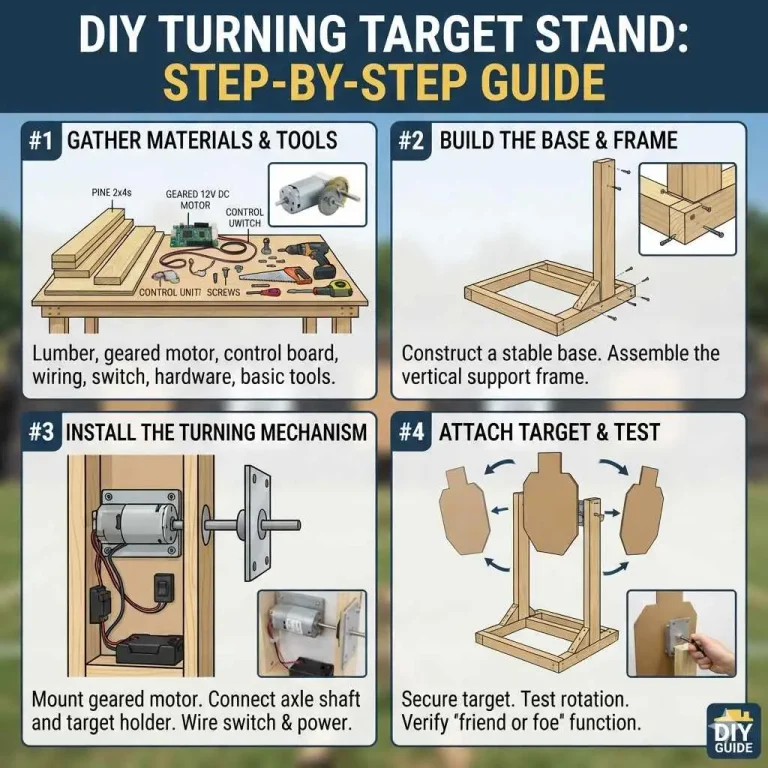
For a related target setup, Diy Turning Target Stand gives readers another practical build or practice option.
For a related target setup, How To Make A Uspsa Target Stand Like A Pro gives readers another practical build or practice option.
For a related target setup, Minecraft: How To Make A Moving Archery Target gives readers another practical build or practice option.
Shooting at a stationary target is great practice. But what happens when you want to take your skills to the next level? A moving target can feel like a huge challenge. It tests your timing, focus, and instincts. Many people think building one is too complex or expensive. I’m here to tell you it’s easier than you think! This guide will walk you through every simple step. You will build your own moving target stand safely and without breaking the bank. Let’s get started!
Why Bother Building a Moving Target?
You might wonder if a moving target is really worth the effort. The answer is a big yes! Practicing with a moving target does more than just make shooting more fun. It sharpens skills that a static target can’t.
- Improves Your Timing: You learn to anticipate where the target will be and release your arrow at the perfect moment. This is a key skill for more advanced archery.
- Sharpens Your Focus: A moving object demands your full attention. This practice helps you block out distractions and concentrate on your shot process.
- Builds Instinctive Shooting Skills: It forces you to trust your instincts. You rely less on aiming for a long time and more on a smooth, natural release.
- Makes Practice More Engaging: Let’s be honest, shooting at the same spot can get a little repetitive. A moving target adds an exciting new challenge that keeps you coming back for more.
Building your own stand is not just a project; it’s an investment in your archery journey. It’s a satisfying process that ends with a tool to make you a better, more confident archer.

Safety First: Your Most Important Step
Before we pick up a single tool, let’s talk about safety. This is always rule number one in archery and in any DIY project. A moving target introduces new things to think about, so we need to be extra careful. Your safety and the safety of others is the top priority.
Here are the non-negotiable safety rules:
- Know Your Backstop: Always have a large, reliable backstop behind your entire target area. This backstop must be big enough to catch any stray arrows, even if you miss the moving target completely. A large hill, a thick row of hay bales, or a purpose-built arrow curtain works well.
- Clear the Area: Make sure no people or pets can wander into the shooting lane or behind the target. The area should be completely clear and secured before you begin.
- Inspect Your Equipment: Always check your bow, arrows, and your new moving target stand before each use. Look for loose screws, frayed cables, or any other signs of wear and tear.
- Start Slow: When you first use your moving target, set it to the slowest possible speed. You can gradually increase the speed as your skill and confidence grow.
- Wear Safety Glasses: When building and testing your stand, always wear safety glasses. Wood splinters or small mechanical parts can be a hazard.
Remember, a fun hobby is a safe hobby. Taking a few extra moments to think about safety ensures you can enjoy your new creation for years to come. For more general workshop safety tips, resources like the National Safety Council provide excellent guidelines.
Gathering Your Tools and Materials
Ready to build? The first step is getting all your supplies together. This project uses common materials you can find at most hardware stores. Having everything ready before you start makes the whole process smoother and more enjoyable. You won’t have to stop and run to the store midway through.
The Essentials Checklist
Here is a table with everything you will likely need. Don’t worry if you don’t have every single tool; many can be rented or borrowed.
| Category | Item | Notes |
|---|---|---|
| Lumber | 2×4 wood studs (8 feet long) | You will need about 4-5 of these for the frame. |
| 1×4 wood board (8 feet long) | One board for the track. | |
| Plywood sheet (small piece) | For the motor mount and target trolley. A 2×2 foot piece is plenty. | |
| Hardware | Wood screws (2.5-inch and 1.5-inch) | A box of each will be more than enough. |
| Small pulleys | You need at least two. Small clothesline pulleys work great. | |
| Small wheels or casters | Four small, fixed wheels for the trolley. | |
| Eye hooks | To guide the cable. | |
| Strong cord or thin cable | Nylon rope or steel picture-hanging wire works well. | |
| Electronics | 12V DC Motor | See the motor comparison table below. |
| 12V Power Source | A battery or a wall adapter (power supply). | |
| Toggle switch | To easily turn it on and off. | |
| Electrical wire | A small spool of 16-18 gauge wire. | |
| Tools | Drill with bits | For making holes and driving screws. |
| Saw | A hand saw, circular saw, or miter saw will work. | |
| Measuring tape and pencil | For accurate cuts and placement. | |
| Square | To make sure your frame is straight. | |
| Wrench or socket set | For tightening bolts. |
Choosing the Right Motor
The motor is the heart of your moving target. You don’t need anything fancy or powerful. A small, high-torque, low-speed motor is perfect. Here are two popular and affordable options for beginners.
| Motor Type | Pros | Cons | Best For |
|---|---|---|---|
| Windshield Wiper Motor | Very strong (high torque), cheap (can be found at auto salvage yards), and durable. Often has multiple speeds. | Can be bulky. May require a bit more creativity to mount. Needs a good 12V power source. | A robust, powerful build that can handle a slightly heavier target. |
| Rotisserie Motor | Designed for constant, slow rotation. Easy to mount. Quiet operation. Often comes with a power cord. | Lower torque (not for heavy targets). Usually only one speed. | A simpler, lighter-duty build with a lightweight foam target. |
For this guide, we will focus on using a common 12V DC windshield wiper motor because it offers great power and flexibility for a very low cost.
Step-by-Step: Let’s Build Your Moving Target Stand
Now for the fun part! We will go through the build one step at a time. Take your time, measure twice, and cut once. Remember, this is your project, so feel free to adjust dimensions to fit your space and needs.
Step 1: Construct the Main Frame
The frame is the skeleton of your stand. It needs to be stable and strong. We will build a simple “H” frame with feet for stability.
- Cut Your Wood: Using your saw, cut your 2×4 lumber. You will need:
- Two pieces at 5 feet long (these are the vertical uprights).
- One piece at 8 feet long (this is the top crossbeam where the track will go).
- Four pieces at 2 feet long (these will be the feet for stability).
- Assemble the Feet: Take two of the 2-foot pieces and arrange them in a “T” shape. The end of one piece should meet the center of the other. Screw them together. Repeat this for the other two pieces. You now have two stable feet.
- Attach the Uprights: Stand one of the 5-foot uprights in the center of a foot base. Make sure it is straight using your square. Attach it securely with 2.5-inch wood screws, driving them up from the bottom of the foot into the upright. Repeat for the other upright and foot.
- Connect with the Crossbeam: Lay your 8-foot crossbeam across the top of the two uprights. Make sure it is level and centered. Attach it firmly with 2.5-inch screws. Your basic frame should now be standing and look like a wide goalpost.
Step 2: Build the Track and Trolley System
The track allows the target to move smoothly from side to side. The trolley is the little cart that will ride on the track and hold your target.
- Create the Track: Take your 1×4 board. This will serve as the surface for the trolley to roll on. Lay it flat on top of your 8-foot crossbeam and secure it with 1.5-inch screws.
- Build the Trolley Base: Cut a small piece of plywood, about 6 inches by 8 inches. This is the base for your trolley.
- Attach the Wheels: Flip the plywood base over. Attach your four small wheels, one at each corner. Make sure they all face the same direction so the trolley rolls straight.
- Test the Trolley: Place the trolley on the track you just made. It should roll back and forth easily without wobbling or getting stuck.
A great source for project materials like lumber and hardware is your local home improvement store, and you can often check inventory online at sites like The Home Depot to save time.
Step 3: Install the Motor and Pulley System
This is where the magic happens. The motor and pulleys will create the motion.
- Mount the Motor: Decide which end of the crossbeam you want the motor on. Cut another small piece of plywood to serve as a motor mount. Attach this mount to the side or top of the crossbeam. Secure your 12V motor to this mount using bolts or heavy-duty screws.
- Create a Drive Wheel: You need something on the motor shaft to grip the cord. A simple way is to use a large bolt, wrap it with electrical tape to build up the diameter, and create a groove. Attach this to the motor’s output shaft.
- Install the Pulleys: Install one pulley on the opposite end of the crossbeam from the motor. Install the second pulley near the motor. These will guide the cord in a loop.
- String the Cord: Tie one end of your cord to one side of the trolley. Run the cord all the way down to the far pulley, around it, and back towards the motor. Wrap the cord around your drive wheel on the motor a few times, then run it to the second pulley. Finally, bring it back and tie it to the other side of the trolley. You should have a continuous loop that moves the trolley when the motor turns.
Step 4: Wire the Motor and Power Source
Wiring is simpler than it sounds. We just need to connect the motor to the power source with a switch in between. For any electrical work, always ensure the power source is disconnected.
- Connect the Switch: Run a wire from the positive (+) terminal of your 12V battery or power supply to one terminal on your toggle switch.
- Connect to the Motor: Run another wire from the other terminal on the toggle switch to the positive (+) connection on your motor.
- Complete the Circuit: Run a final wire from the negative (-) connection on the motor directly back to the negative (-) terminal on your power source.
- Secure the Wires: Use electrical tape or zip ties to keep the wires neat and out of the way of any moving parts.
If you’re new to basic circuits, this guide from Georgia State University’s HyperPhysics project is a great resource for understanding the fundamentals.
Step 5: Attach Your Target and Final Touches
We are almost there! Now we just need something to shoot at.
- Build a Target Holder: Screw a vertical piece of 2×4, about 2-3 feet long, to the top of your trolley. This will hold the target.
- Mount the Target: Use a lightweight foam target. You can buy a small square block or a bag target. Do not use a heavy or dense target, as it will strain the motor. Attach the foam block to the holder with long screws.
- Add Directional Stops: To make the target change direction automatically, you can add limit switches at each end of the track. For a simpler, beginner-friendly version, you can use a reversing polarity switch that you flip manually to change the target’s direction.
Step 6: Test, Adjust, and Have Fun!
The moment of truth! It’s time to see your creation in action.
- Power On: With everyone safely behind the shooting line, connect your power source and flip the switch. The motor should turn, and the target should start moving along the track.
- Check the Tension: If the cord is slipping, you may need to tighten it or add more wraps around the motor’s drive wheel.
- Observe the Movement: Does the trolley move smoothly? If it wobbles, check that the wheels are aligned and the track is clear of debris.
- Start Shooting: Once you are happy with the movement, it’s time to practice! Start with a slow speed and stand at a comfortable distance. Enjoy the new challenge!
Ready for an Upgrade? Fun Customization Ideas
Once you’ve mastered the basic build, you might want to add some cool new features. Here are a few ideas to take your moving target stand to the next level:
- Variable Speed Control: Add a Pulse Width Modulation (PWM) speed controller to your circuit. This cheap and simple device allows you to adjust the motor’s speed with a simple knob.
- Remote Control: For ultimate convenience, you can wire in a wireless remote control relay. This allows you to start, stop, and even reverse the target from the shooting line.
- Add a Second Axis: Feeling ambitious? You could design a system that not only moves the target side-to-side but also “peeks” out from behind a barrier.
- Different Target Shapes: Create different target holders for various types of targets, like small foam animal shapes or hanging targets that swing when hit.

Frequently Asked Questions (FAQ)
Is this project safe for a beginner to build?
Yes, absolutely! As long as you follow basic safety rules for using tools and handling simple wiring, this project is very beginner-friendly. The design uses common materials and doesn’t require any complex skills like welding or advanced electronics.
What is the best type of target to use?
The best target is a lightweight foam block. A heavy or dense target, like one made for broadheads, will be too heavy for the small motor and could cause it to burn out. A simple bag target can also work if it is not too heavy.
How much does this project cost to build?
The cost can vary, but you can build this very affordably. If you use a salvaged windshield wiper motor and scrap wood, you might spend as little as $30-$50. If you buy everything new, you can expect to spend around $75-$125.
Can I use this stand for firearms?
No, this design is strictly for archery. It is not built to withstand the force of bullets, and shooting at the frame or mechanical parts with a firearm would be extremely dangerous due to the risk of ricochet.
How fast should the target move?
Start very slow, about the speed of a slow walk. This allows you to get used to the timing. As you improve, you can increase the speed for a greater challenge. A variable speed controller makes this much easier.
What if the trolley gets stuck or moves unevenly?
First, check that your track is smooth and level. Make sure there are no screws sticking up. Second, check the trolley wheels to ensure they are aligned and can spin freely. Finally, check the tension of the drive cord; it should be taut but not overly tight.
Conclusion: You Did It!
Congratulations! You now have a complete guide to building your very own moving target stand. By following these steps, you’ve not only created a fantastic training tool but also gained valuable hands-on experience. This project proves that you don’t need to spend a lot of money to seriously upgrade your archery practice.
Remember to always prioritize safety, start slow, and most importantly, have fun with it. Your new moving target will challenge you in new ways, build your confidence, and make every practice session more exciting. So get out there, enjoy your creation, and watch your archery skills reach a whole new level.