How To Adjust Peep Sight Height For Perfect Alignment
Getting your archery gear just right can feel like a puzzle. You want that arrow to fly true every time. A key part of this is your peep sight.
It helps you line up your shot. But sometimes, it’s just not feeling perfect. Maybe your sight picture is off, or your arrows are hitting a little high or low.
Adjusting the peep sight height is a common fix. It’s not as hard as it sounds, and getting it right makes a big difference. Let’s walk through how to do it, step-by-step.
Adjusting peep sight height involves changing its position on the bowstring. This changes where you see the target through the peep. Proper adjustment ensures your eye, the peep, and the sight all line up.
This helps you aim more accurately for better shooting. It’s a key step for any archer wanting to improve their game.
Understanding Your Archery Peep Sight
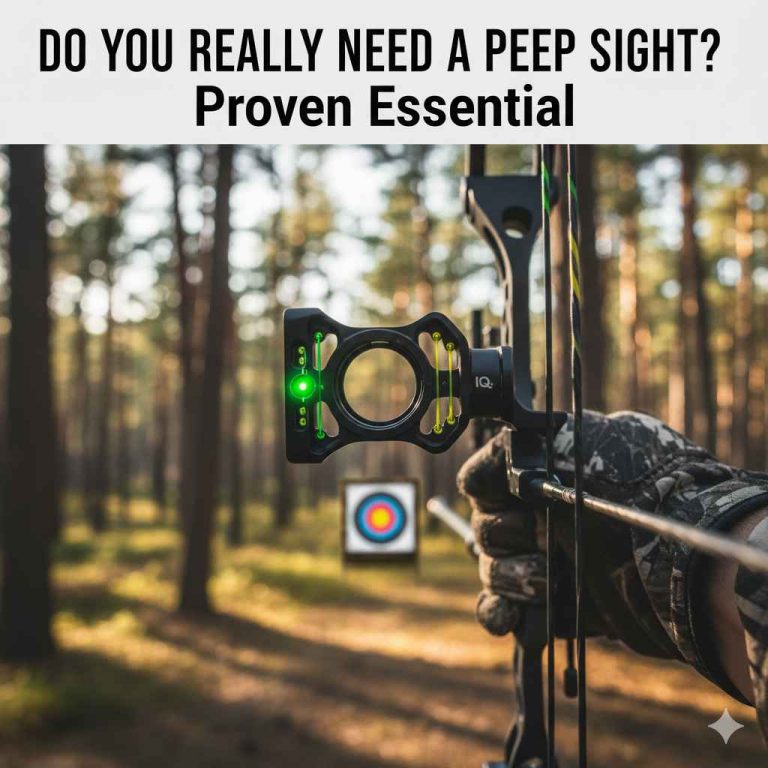
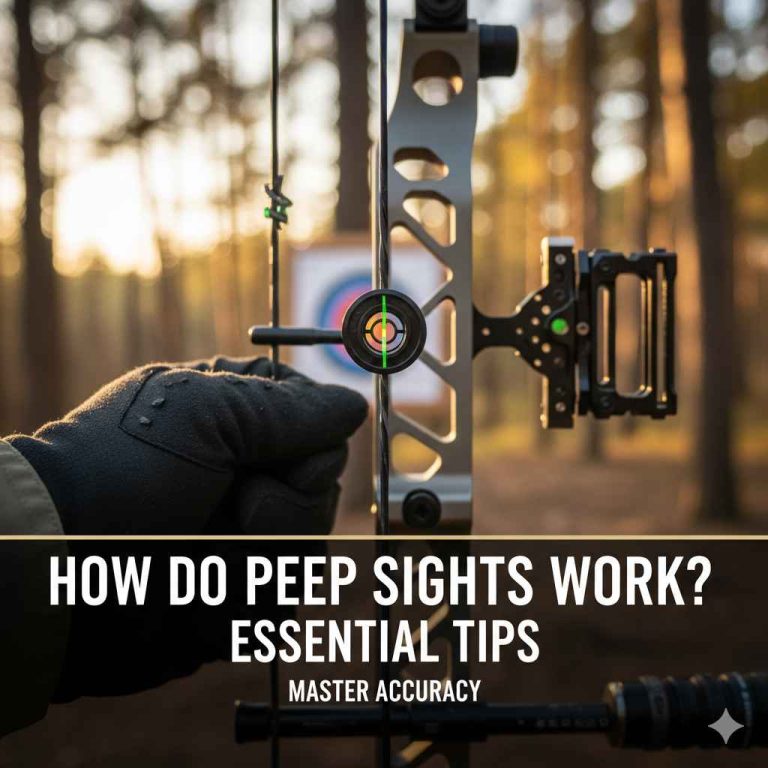
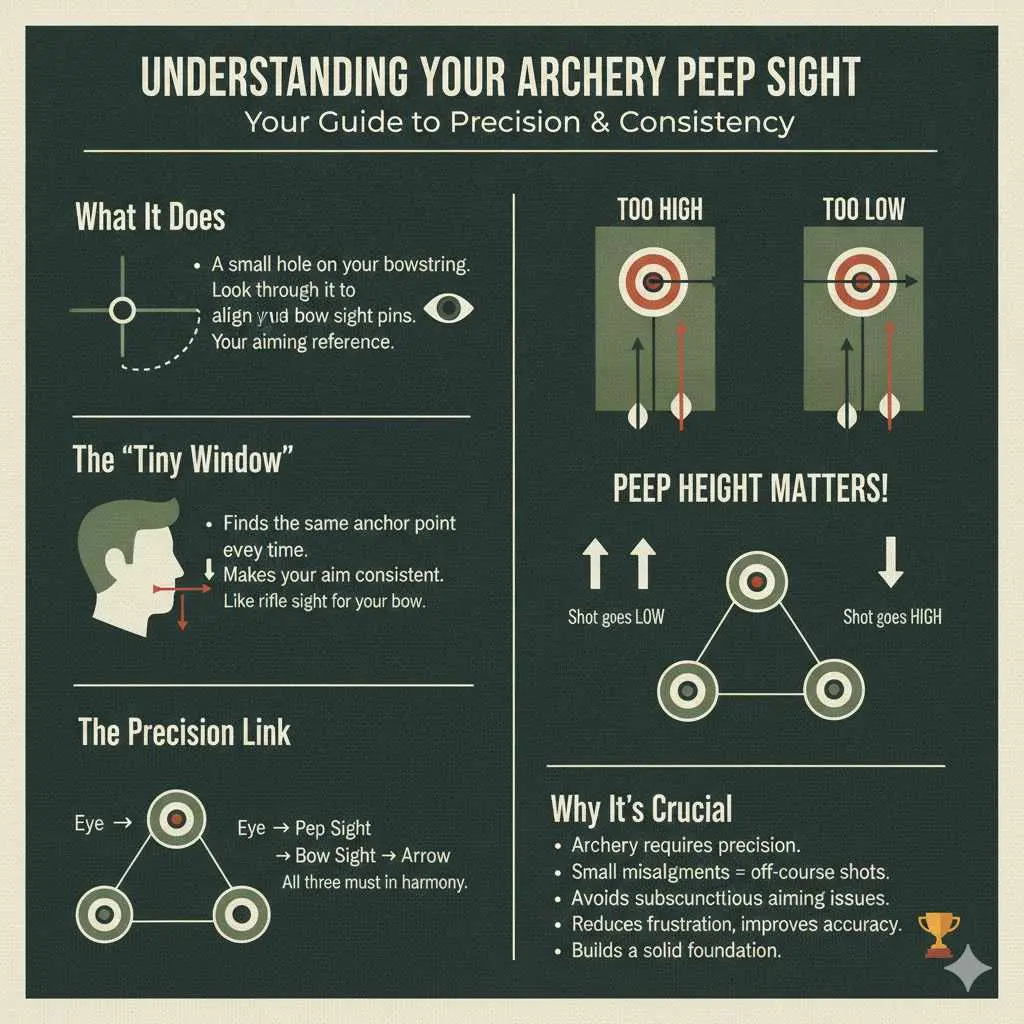
First, let’s talk about what a peep sight actually does. It’s a small hole. You find it on your bowstring.
When you draw your bow, you look through this hole. Your bow sight’s pins should line up through it. This is how you aim.
It’s like looking through a tiny window. It helps your eye find the same anchor point every time. This means your aim becomes more consistent.
The height of this peep hole matters a lot. If it’s too high, your shot might go low. If it’s too low, your shot might go high.
Think of it like aiming a rifle. The sight needs to be lined up with your eye. Your archery setup is similar.
The peep sight helps your eye get into that perfect shooting position. It works with your bow’s sight and your arrow. All three need to be in harmony.
Why is this alignment so crucial? Archery requires precision. Even small misalignments can send your arrow off course.
Your peep sight is a critical link. It connects your eye to the aiming system. Getting the peep height wrong means you’re fighting your own gear.
You might be subconsciously adjusting your aim. This leads to frustration and missed shots. Making sure the peep sight height is correct is a fundamental step.
It builds a solid foundation for better accuracy.
My Peep Sight Adjustment Story
I remember my first season with a new compound bow. I was so excited. I spent hours tuning it.
I thought I had everything perfect. I went out to shoot at my favorite spot in the woods. My arrows were flying okay, but something felt off.
My shots were consistently a few inches high at 20 yards. I’d adjust my sight pins down. But then my grouping would spread out.
It was confusing.
I checked my arrow spine, my nock set, my rest. Everything seemed right. I was getting a bit frustrated.
One evening, a seasoned archer at the range saw me. He asked what was up. I explained my problem.
He watched me shoot a few arrows. Then he said, “Your peep is a little too low.” I was surprised. I hadn’t even considered that.
He showed me how to check. When I drew the bow, my eye was looking under the sight pin a bit. It wasn’t a huge amount, maybe a hair’s breadth.
But it was enough. We made a tiny adjustment to the peep position. The next few shots were amazing.
The sight picture felt natural. The arrows hit right where I was looking. It was a real ‘aha!’ moment.
That day taught me how vital that small peep hole is. It was a simple fix for a big problem.
Peep Sight Basics in a Nutshell
What it is: A small hole on your bowstring.
Its job: Helps your eye line up with your bow sight.
Why height matters: Affects where your arrow hits (high or low).
The goal: Perfect alignment for consistent aiming.
What Does Peep Sight Height Adjustment Really Do?
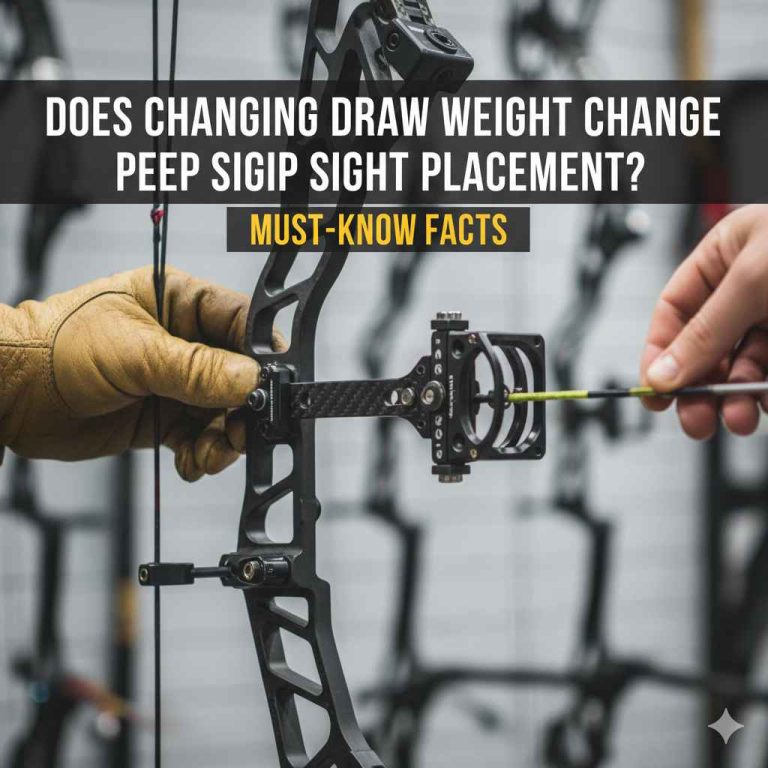
Adjusting your peep sight height changes the position of that little hole relative to your eye. When you draw the bow and settle into your anchor point, your eye naturally looks through the peep. The sight itself is usually mounted on a bracket extending from your bow riser.
When the peep is at the correct height, the sight’s aiming pin will be perfectly centered within the peep hole as you look through it.
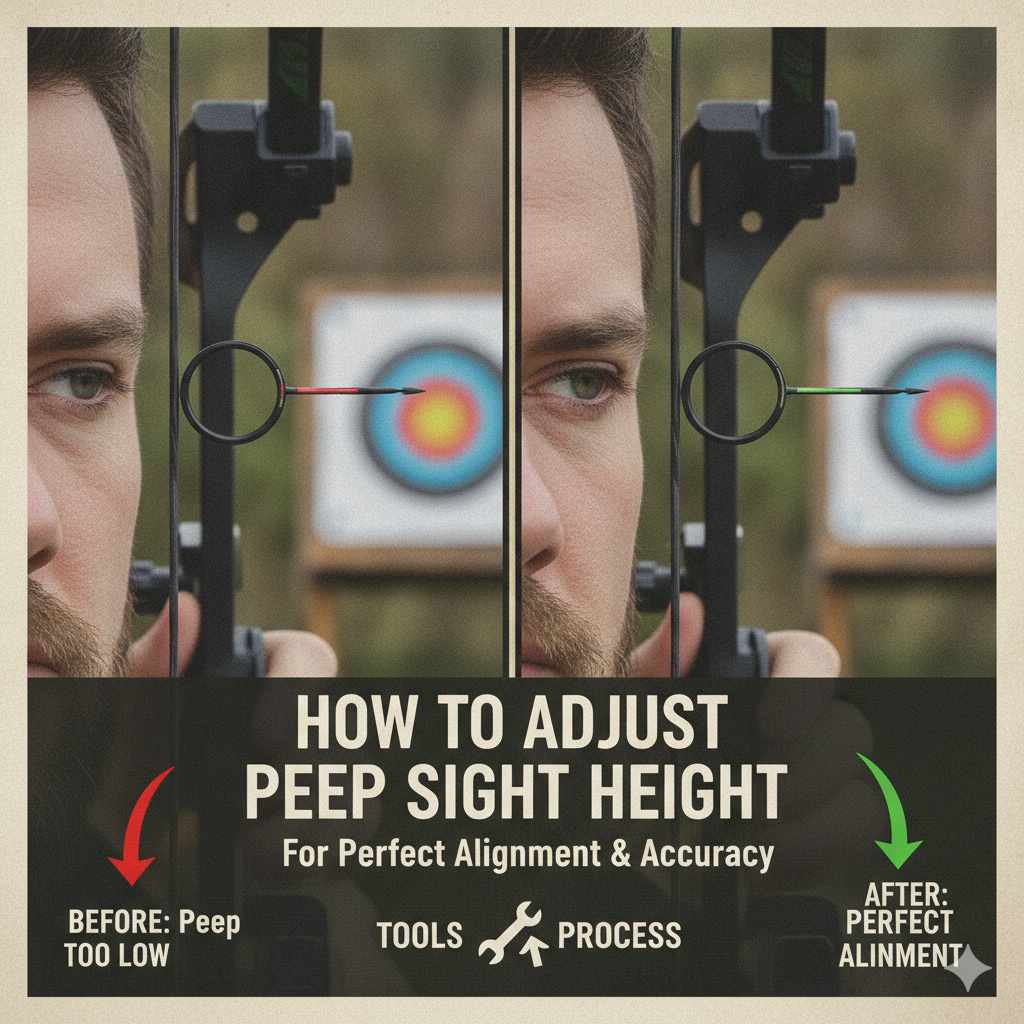
If the peep is too low on the string, you’ll have to tilt your head down slightly to see the pin centered. This forces your shot to go lower than you’re aiming. Conversely, if the peep is too high, you’ll tilt your head up.
This makes your shot go higher. It’s all about creating a straight line. This line goes from your eye, through the peep, through the sight pin, and to your target.
The goal is to achieve a “no-tuck” or “no-crimp” sight picture. This means your eye is in a neutral position. You aren’t forcing it up or down.
Your head is relaxed and level. This natural alignment is key to repeatable accuracy. It ensures that when you aim at a spot, your arrow goes there.
This makes shooting much more enjoyable and successful. The archery peep sight adjustment is a fine-tuning process.
Your Step-by-Step Guide to Adjusting Peep Sight Height
This might sound technical, but it’s quite manageable. You’ll need a few things. A bow square is helpful.
It measures distances on your bowstring. A bow press is also very useful. It allows you to safely take tension off the string.
If you don’t have a bow press, some archery shops can help. Or you can use a string loop and a release aid to make small adjustments.
Step 1: Get into Position. Draw your bow. Find your natural anchor point. This is where you bring the string or release to your face.
It should be the same spot every time. Now, look through your peep sight. See where your sight pins appear.
Are they centered? Are you tilting your head up or down?
Step 2: Understand Your Current Sight Picture. If your sight pin appears high in the peep when you’re at full draw, your peep is too low on the string. You’ll need to move the peep up on the string. If the sight pin appears low in the peep, your peep is too high on the string.
You’ll need to move the peep down on the string.
Step 3: Making the Adjustment (with a Bow Press). Carefully place your bow in a bow press. This releases tension on the string. You can then manually move the peep up or down the string.
Small movements are best. Move it a tiny bit, then let off the press. Draw the bow again to check.
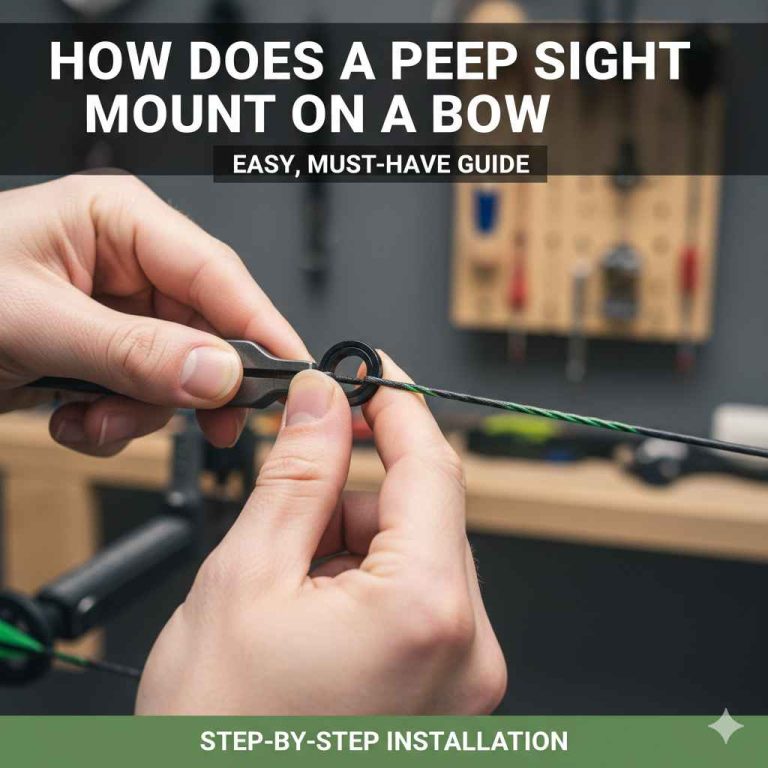
Step 4: Making the Adjustment (without a Bow Press – String Loop Method). This is trickier and requires care. You can sometimes loosen the string servings near the peep. This might let you slide the peep up or down.
You can also use a thin cord tied above and below the peep. Then, use this cord to inch the peep up or down the string. Some archers use a specialized tool.
Be very careful not to damage your string. Always check for string wear after this.
Step 5: Check Your Alignment. After each small adjustment, draw your bow to your anchor point. Look through the peep. Is the sight pin now centered in the peep?
If it is, great! If it’s still a little off, repeat the adjustment process. Move the peep only a tiny bit at a time.
Patience is key here. The goal is a perfectly centered sight picture without craning your neck.
Step 6: Test Fire. Once you think it’s aligned, shoot a few arrows. Focus on aiming at a specific spot. See where they hit.
If they’re still off, re-evaluate your sight picture. You may need a few more tiny adjustments. Remember, the bow peep sight adjustment is about subtle changes.
Quick Check: Sight Picture Test
Draw your bow to full anchor.
Look through your peep.
Observe your sight pin:
- Pin is HIGH in peep: Peep is too LOW on string. Move peep UP.
- Pin is LOW in peep: Peep is too HIGH on string. Move peep DOWN.
- Pin is CENTERED: Perfect!
Common Mistakes During Peep Sight Adjustment
It’s easy to get a little ahead of yourself. One mistake is making big jumps. You might move the peep too much at once.
This can throw off your whole setup. You then have to go back and forth. Small, incremental adjustments are always best.
Think millimeters, not inches.
Another pitfall is not holding at full draw. You need to draw your bow fully. Find your consistent anchor point.
Only then can you accurately judge the peep’s position. Drawing partially won’t give you the right feedback. You’re not getting a true reading of your alignment.
Not checking your string is also a problem. After fiddling with the peep, especially without a press, inspect your bowstring. Look for any fraying or damage.
You don’t want to shoot with a compromised string. Safety first, always. If you’re unsure, take it to a pro.
Finally, don’t forget your bow sight. If your peep is perfectly aligned, but your arrows are still hitting off, check your bow sight’s adjustments. The peep aligns your eye to the sight.
The sight itself needs to be calibrated to your arrow’s trajectory. One doesn’t fix the other completely. Each has its role.
When is Your Peep Sight “Just Right”?
Your peep sight is “just right” when you can draw your bow to your anchor point and your eye naturally looks through the peep. When you see your sight pin through the peep, it should appear perfectly centered. You shouldn’t feel like you’re tilting your head up or down.
Your head and neck should feel relaxed and in a natural position. This is often called a “neutral” or “comfortable” sight picture.
The aiming pin should sit right in the middle of the peep. It shouldn’t be hugging the top or bottom edge. It also shouldn’t be way off to one side.
It should be a clean, clear view of the pin within the hole. When this alignment is achieved, your aiming becomes much more subconscious. You’re not thinking about lining up the peep and pin.
You’re just aiming.
Achieving this perfect alignment means your arrow will fly true to where you’re pointing. If you aim at the center of a target, your arrow should land there. This is the foundation of good archery.
If your peep is off, you’re essentially fighting your gear. You’ll never achieve consistent accuracy. The perfect peep sight alignment is a critical goal.
Myth vs. Reality: Peep Sight Adjustment
Myth: You need to see the entire sight housing in the peep.
Reality: You only need to see the aiming pin clearly centered in the peep. The sight housing is usually much larger.
Myth: Peep sight adjustment is complicated and requires special tools.
Reality: While a bow press helps, small adjustments can often be made with patience and basic tools, or by a pro.
Myth: If my arrows are high, I just need to move my sight down.
Reality: If your peep is too low, it will cause arrows to hit high, even with the sight adjusted down. Check peep height first.
What About Different Types of Peep Sights?
There are a few common types of peep sights. The most basic is a simple hole drilled through a piece of plastic or metal. These are often called “simpler” or “standard” peeps.
They work well for many archers.
Some peeps have a wider aperture (the hole itself). This can make it easier to see the sight pin, especially in low light. Others might have a smaller aperture for more precise alignment.
The size of the peep can affect how much of the sight housing you see around the pin. Most archers find a balance that works for them.
There are also “clarifier” and “reducer” lenses you can add to peep sights. Clarifier lenses make the target clearer. Reducer lenses make the sight pin appear larger.
These are not about adjusting the height. They are about improving your vision through the peep. They can be very helpful for archers with vision challenges.
The method for adjusting height is generally the same for most peep sights. It’s about moving the peep up or down the bowstring. The material or specific design of the peep doesn’t change the fundamental physics of sight alignment.
The key is that the peep is securely attached to your bowstring. It must also be correctly sized for your eye and sight combination.
Adjusting Peep Sight Height for Different Bow Types
The principles of adjusting peep sight height are the same whether you shoot a traditional recurve, a longbow, or a modern compound bow. However, the method of adjustment will differ significantly. Most compound bows use a “peep sight” that attaches to the bowstring.
Traditional bows typically don’t use peep sights at all.
For modern compound bows, the process we’ve described is standard. It involves accessing the bowstring to move the peep. This might require a bow press for safety and ease.
Different brands of bows might have slightly different string materials or serving types. This can affect how easy it is to move the peep. But the core idea remains the same: your eye needs to be level with the sight pin when viewed through the peep.
Some archery setups use what’s called a “string loop.” This is a short piece of cord tied around the bowstring. Your release aid attaches to this loop. When you draw the bow, the string loop pulls the main bowstring back.
This setup can make peep sight adjustments a bit easier. Sometimes, you can adjust the string loop’s position slightly. This can indirectly affect the perceived peep height.
However, the direct adjustment is still on the peep itself.
If you shoot a bow with a very short draw length or a very long draw length, the required peep height might be different. This is because the angle of your bow arm and how you hold the bow can change. Always ensure you find your natural anchor point.
This is the most critical step, regardless of your bow type or draw length. The goal is always that comfortable, repeatable sight picture.
Peep Sight: Normal vs. Concerning
Normal:
- Your sight pin appears centered in the peep at full draw.
- Your head and neck are in a comfortable, relaxed position.
- You can easily see your target through the peep and pin.
- Arrows are hitting where you aim after sight adjustments.
Concerning:
- You have to crane your neck up or down to see the pin centered.
- Your sight picture feels strained or unnatural.
- Your arrows consistently hit high or low, and sight adjustments don’t fully correct it.
- The peep seems loose or damaged on the bowstring.
How to Check if Your Peep Sight is the Right Size
Peep sight size is as important as its height. The size of the hole (aperture) affects how much you see. Too small a peep can obscure your vision.
This makes it hard to see the target. It can also make it difficult to get the sight pin centered. This is especially true in challenging lighting conditions.
Too large a peep can make it harder to get a precise alignment. You might see too much of the sight housing or surroundings. This can lead your eye to wander.
It can also make it harder to get that perfect “pin-in-peep” alignment. You might feel like the pin is rattling around inside the peep hole.
How do you know if your peep is the right size? It’s largely a matter of personal preference and shooting conditions. However, a good starting point is a peep that allows you to see your aiming pin clearly centered.
It should also let you see enough of your target. You shouldn’t feel like you’re looking through a pinhole. But you also shouldn’t feel like you’re looking through a dinner plate.
In low light, a slightly larger peep might be beneficial. This lets in more light. In bright sunlight, a smaller peep might be fine.
Many archers settle on a specific size that works for most situations. Common peep sizes range from 1/8 inch to 3/16 inch. Some archers even use peep inserts.
These allow them to change the aperture size without changing the entire peep.
Ultimately, the “right” size is one that allows for consistent, comfortable aiming. If you’re struggling to get your sight pin centered, or if your vision feels obscured, consider trying a different peep size. This is another adjustment that can be made at an archery shop.
It’s not about height, but it’s a critical part of your aiming system. Getting the right peep sight size is important.
Can I Adjust My Peep Sight Height Without a Bow Press?
Yes, it is often possible to adjust your peep sight height without a specialized bow press, but it requires extra caution. This is a crucial point for many archers. If you don’t have access to a bow press, you need to be extra careful to avoid damaging your bowstring or yourself.
One common method involves using a release aid and a sturdy anchor point. You draw the bow back just enough to take tension off the string strands around the peep. Then, carefully use pliers or a similar tool to grip the peep.
You can then inch it up or down the string. Be gentle. You only need to move it a very small amount at a time.
Another technique involves using a strong cord or string tied above and below the peep. You can then use this cord to gently slide the peep along the bowstring. This method can be fiddly and requires patience.
Always work on a bowstring that has some tension on it, but not full draw tension. Full tension makes it impossible to move the peep.
Some archers use a “strap wrench” or “string-only bow press.” These are lighter-duty tools. They can take enough tension off the string to allow for peep adjustments. They are not as robust as a full bow press but can be useful for field adjustments.
It’s vital to inspect your bowstring for any signs of wear or damage after making adjustments without a press. If you notice any frayed strands, or if the serving around the peep feels disturbed, it’s best to stop and take it to an archery professional. They have the proper tools and expertise.
Safety is paramount. A broken bowstring can cause serious injury. If you’re in doubt, always seek professional help for your bow peep sight adjustment.
Quick Fixes & Tips for Peep Sight Adjustment
- Start Small: Move the peep only a tiny bit at a time.
- Use a Bow Square: Measure distances from the nock point. This helps track your adjustments.
- Consistent Anchor: Always use the exact same anchor point when checking alignment.
- Check Lighting: How does your sight picture change in different light?
- Practice Makes Perfect: Don’t rush. Get it right for consistent results.
- Professional Help: If unsure, visit an archery shop. They have the right tools.
What Happens if I Don’t Adjust My Peep Sight?
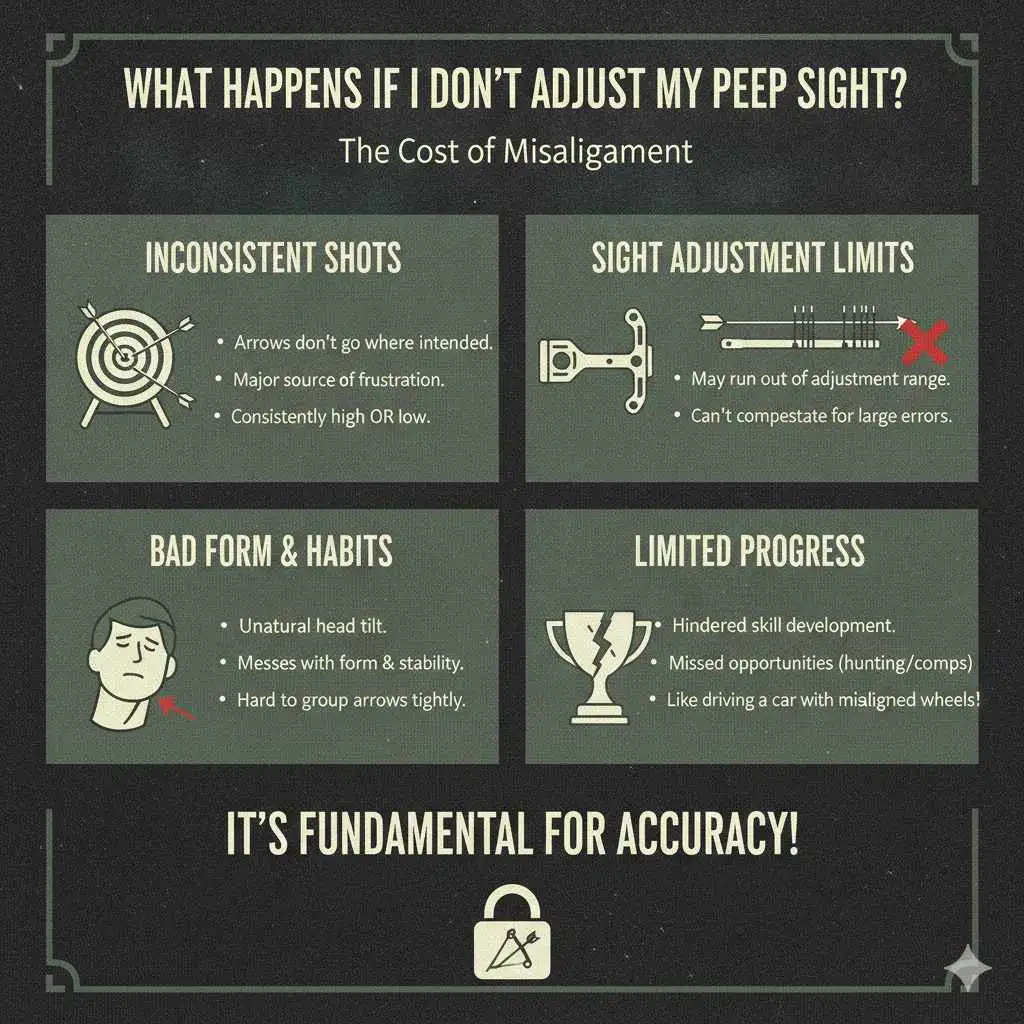
If you don’t adjust your peep sight for proper alignment, you’re essentially setting yourself up for inconsistent shooting. Even if you’re holding your bow perfectly steady and aiming carefully, your arrows will likely not go where you intend them to. This is a major source of frustration for archers.
Your shots will probably be consistently high or low. This might seem like a simple problem you can fix just by moving your sight pins. However, if your peep is significantly off, you might reach the limits of your sight’s adjustment range.
You might not be able to move your sight pins far enough to compensate.
Furthermore, forcing yourself to tilt your head unnaturally to see the sight pin can lead to bad habits. It can mess with your form and your ability to hold the bow steady. This inconsistency will make it hard to group your arrows.
You’ll struggle to achieve that tight cluster that shows good shooting skill.
In the long run, an improperly adjusted peep sight can hinder your progress as an archer. You might miss out on hunting opportunities or not perform as well in competitions. It’s like trying to drive a car with misaligned wheels.
It’s still drivable, but it’s less efficient, harder to control, and can cause problems down the road. Ensuring your peep sight height is correct is fundamental.
Frequent Questions About Peep Sight Adjustment
How often should I check my peep sight alignment?
It’s a good idea to check your peep sight alignment periodically, especially if you notice your shooting consistency changing. Some archers check it at the start of each hunting season or before a major competition. If you’ve had any work done on your bowstring or cables, it’s also wise to re-check.
Can I shoot without a peep sight?
Yes, it’s possible to shoot a compound bow without a peep sight, but it’s much harder for most people. Traditional archery bows like recurves and longbows are typically shot without peeps. For compound bows, the peep sight is designed to aid in consistent aiming.
Shooting without one requires developing a very precise and repeatable anchor point and sight picture. It’s not generally recommended for beginners.
What if my peep sight moves on its own?
If your peep sight is moving on the bowstring by itself, this is a serious problem. It could indicate that the serving on your bowstring is loose or that the peep itself is not properly secured. This can be dangerous.
Stop shooting immediately and take your bow to a qualified archery technician. Do not try to adjust it yourself if it’s moving unexpectedly.
How do I know what my correct anchor point should be?
Your anchor point is where a part of your drawing hand (usually your index finger or the corner of your mouth) consistently touches your face when you draw the bow. It needs to be the same every single time. Your bow sight pin should align through the peep at this exact point.
Experiment to find a comfortable, repeatable spot. Many archers find that touching their nose to the string and their anchor finger to their jawbone works well.
Does peep sight height affect arrow drop?
The peep sight’s height itself doesn’t directly affect how much your arrow drops due to gravity. Arrow drop is primarily determined by the arrow’s speed, the distance to the target, and the bow’s setup. However, an incorrectly adjusted peep sight can make it seem like your arrow is dropping differently.
This is because you are aiming inaccurately. The peep is about alignment, not trajectory compensation.
What is the best peep sight for a beginner?
For beginners, a simple, standard peep sight is usually best. Avoid overly complicated or specialized peep sights. Focus on getting the height and size correct.
A peep with a comfortable aperture size that allows for easy sight pin acquisition is ideal. Most archery shops can recommend a good, reliable peep sight for new archers. The brand isn’t as critical as proper installation and adjustment.
Conclusion: Achieving Your Perfect Shot
Getting your peep sight height just right is a critical step for any archer. It might seem small, but it has a huge impact on your accuracy. By understanding how the peep works with your sight and eye, you can make precise adjustments.
This leads to a more consistent and enjoyable shooting experience. Remember to take your time, make small changes, and always prioritize safety. With a little patience, you’ll achieve that perfect alignment and be hitting your mark with confidence.