Are Muzzleloader Peep Sight Legal In Montana? Proven
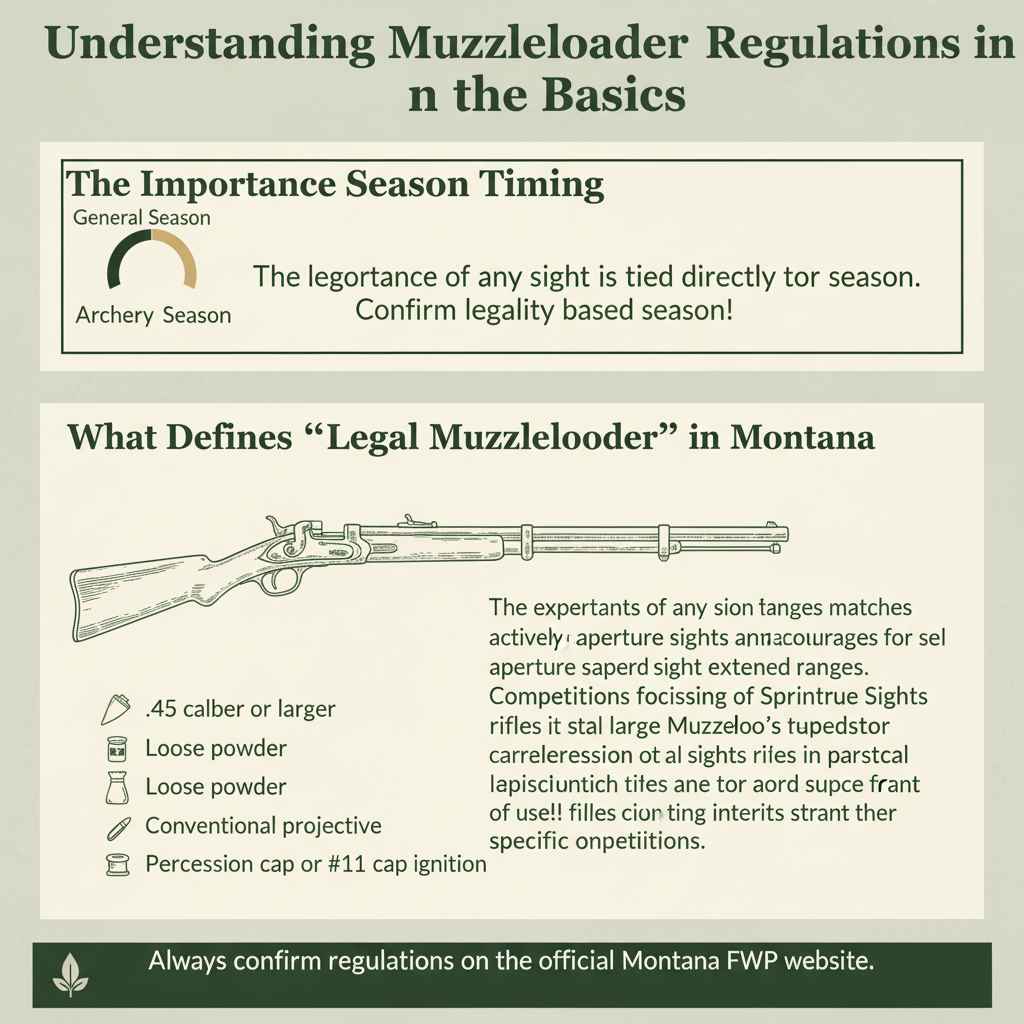
Understanding Muzzleloader Regulations in Montana: The Basics
The Importance of Season Timing
What Defines a “Legal Muzzleloader” in Montana?
Are Muzzleloader Peep Sights Legal in Montana? The Definitive Answer
Iron Sights vs. Scopes: The Crucial Difference
Traditional Iron Sights (Generally Allowed on Muzzleloaders)
Magnified Optics (Scopes – Generally NOT Allowed on Muzzleloaders)
Checking the Official Montana FWP Stance
What About Magnifying Peep Sights? (The Gray Area)
Table: Sighting Device Legality in Montana Muzzleloader Season
Key takeaway for beginners: If it makes the target look bigger through the sight, it is probably illegal for the muzzleloader season. Stick to sights that simply help you line up the front and rear sight better without zooming in.
Installing Your Peep Sight: A Beginner’s How-To
Now that you know they are legal, you might want to install one. Installing a peep sight can dramatically improve your precision, especially as the light starts to fade. It helps your eye focus on one precise aiming point.
Tools You Might Need
Getting the right tools prevents scratches and frustration. Since many muzzleloaders are traditional firearms, installation often requires drilling and tapping, which can be daunting for beginners. However, many modern muzzleloaders come with scope bases already installed, making installation easier.
Here is a list of common tools depending on your rifle model:
- The Peep Sight Kit (check compatibility with your rifle model!)
- Small Precision Screwdrivers (for mounting blanks)
- Blue Loctite (to secure screws—use sparingly!)
- Tap and Die Set (Only if drilling/tapping is required—consider a gunsmith for this step!)
- Cleaning cloth and solvent
Step-by-Step Installation Guide (General)
This is a general overview. Always follow the specific instructions provided by the sight manufacturer for your particular rifle.
- Consult Your Rifle Manual: Determine if your receiver or barrel already has pre-drilled holes for mounting standard aperture sights. If it doesn’t, stop and contact a qualified gunsmith.
- Remove Existing Hardware: If you have a simple buckhorn or fixed rear sight, carefully remove the screws holding it in place. Keep these screws safe in case you ever want to revert to the original setup.
- Clean Mounting Surface: Wipe down the area where the new sight will sit with a little solvent to ensure the base makes good contact.
- Mount the Base: Place the peep sight base over the mounting holes. If required, apply a tiny drop of blue Loctite to the threads of the mounting screws. This prevents vibration from knocking your sight loose during shooting.
- Secure the Sight: Hand-tighten the screws first, ensuring the sight is straight. Then, tighten them down evenly, using a torque wrench if you have one, to the manufacturer’s specified tightness. Do not overtighten!
- Sight In Verification: Once mounted, you must take the rifle to the range and sight it in properly. The sight is only as good as your zero.
Why Choose a Peep Sight for Your Montana Muzzleloader?
If scopes are banned for the dedicated season, why bother with a peep sight instead of standard iron sights? The answer comes down to simplicity, ruggedness, and superior aiming mechanics.
Pros of Using Peep Sights for Muzzleloading
For a beginner, the advantages are immediate and confidence-boosting:
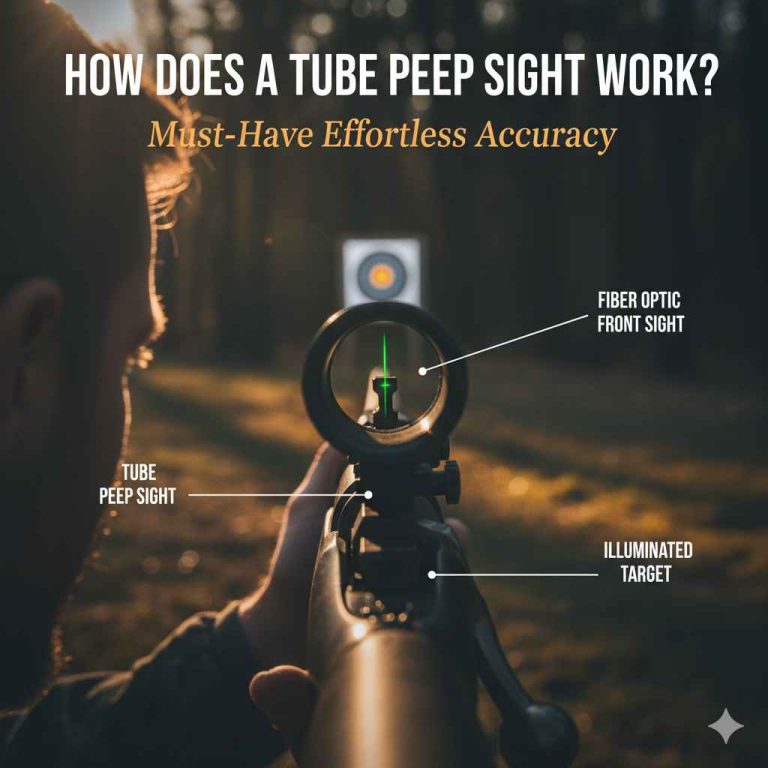
- Improved Target Acquisition: The small aperture forces your eye to focus sharply on the front sight blade. This creates a clearer, more defined sight picture than typical open iron sights.
- Better Low-Light Performance: Because they gather more ambient light than very small notch sights, aperture sights can make it easier to see your target when the sun is low—common during early morning or late evening hunts.
- Durability and Reliability: Peep sights, especially quality metallic ones, have no batteries, no glass elements that can break easily (like scopes), and they hold their zero very well against harsh weather and recoil.
- Legality: They are compliant with Montana’s restrictions against magnified optics during muzzleloader seasons.
Cons to Consider
While great, they aren’t perfect for every situation:
- Installation Complexity: As mentioned, some older guns require drilling, which increases cost and risk if done incorrectly.
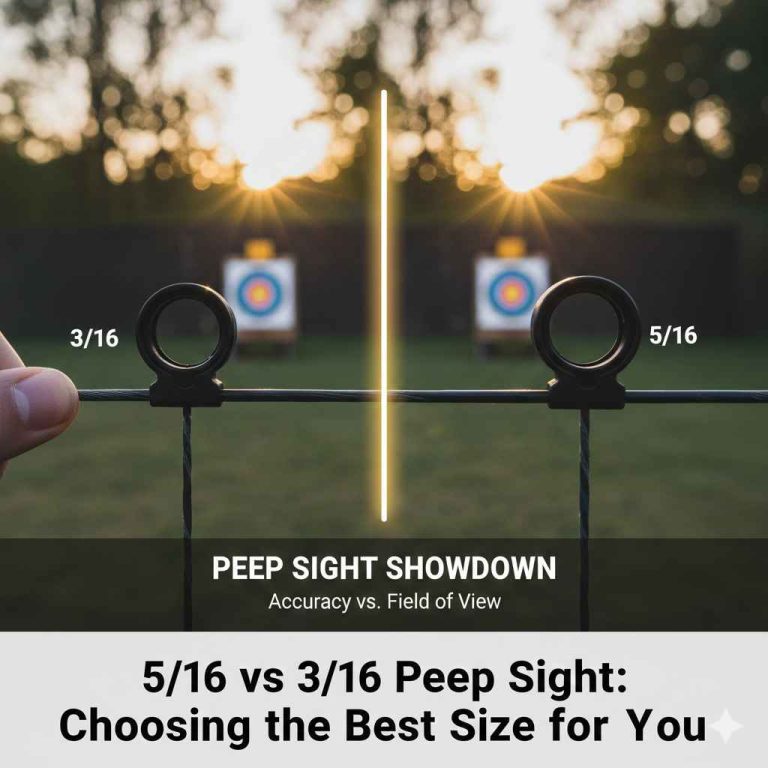
- Field of View: The small aperture can slightly restrict your peripheral vision compared to open sights, though this is rarely an issue when aiming carefully.
- Cost: Quality aperture sights can cost more upfront than a very basic set of buckhorn sights.
Sighting In Your Peep Sight: Essential Steps Before the Hunt
Getting your rifle zeroed is the single most important thing you can do after legally mounting your sight. A sight that isn’t zeroed is just decoration! This process is the same whether you are using traditional irons or a peep sight.
1. Gather Your Supplies
You need a safe place to shoot (a designated range is best!) and the right ammunition. Since muzzleloaders are sensitive to powder charge, bullet weight, and the patch material, expect to spend time finding the right combination for your rifle.
2. Establish a Baseline Distance
For most big game hunting in Montana, a standard zero of 100 or 150 yards is common for muzzleloaders. Set up your target at 50 yards first to get on paper reliably, then move back.
3. The Shooting Process
Always shoot from a stable rest, such as a bench bag or shooting sticks.
- First Shots (Rough In): Fire three shots at your target, aiming at the bullseye. Don’t worry about the group size yet; you just need to know where the center of your impact cluster is relative to your aim point.
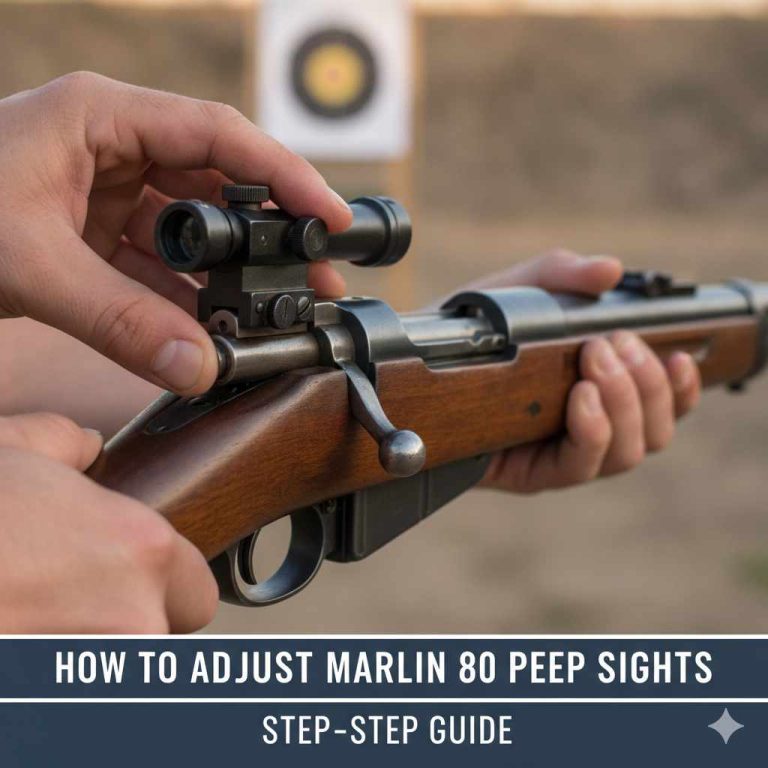
- Adjust Rear Sight: If your impact is low, move the peep sight UP (or adjust the elevation turret down). If your impact is high, move the peep sight DOWN (or adjust the elevation turret up). Remember: Move the rear sight in the direction you want the bullet to go.
- Adjust Windage: If your impact is left, move the peep sight LEFT (or adjust the windage turret right). If your impact is right, move the peep sight RIGHT (or adjust the windage turret left).
- Fine Tuning: Once you are hitting close to the bullseye at 50 yards, move to 100 or 150 yards. Repeat the adjustment process until your shots consistently group where you aim.
- Confirm Zero: Shoot a final 3-shot group at your maximum intended hunting distance to confirm your zero holds.
Factors Influencing Muzzleloader Accuracy (Beyond the Sight)
While a peep sight is a great tool, remember that the muzzleloader shooting experience involves more variables than a modern cartridge rifle. Confidence comes from controlling these variables.
Powder Choice and Charge
The type of powder (black powder vs. substitutes like Pyrodex or Triple Seven) dramatically affects performance. A charge that groups well with Pyrodex might shoot five inches wide with loose black powder.
Beginner Tip: Stick to one reliable powder substitute until you master the rifle. Always measure charges carefully—never guess!
Projectile and Sabot Combination
The bullet and the sabot (the plastic cup holding the bullet) must fit the bore tightly enough to engage the rifling but not so tight that they create excessive pressure.
A good muzzleloader often prefers heavier, modern bullets (like 250-grain or 300-grain .45 or .50 caliber bullets) driven by a modern, approved powder charge.
Barrel Cleanliness
Muzzleloaders foul (leave residue) quickly. A clean barrel shoots better. You must clean the barrel thoroughly between shooting sessions. A dirty barrel leads to inconsistent fouling and erratic groups shot-to-shot.
For best results, consult resources like those provided by reputable manufacturers or shooting organizations for load data specific to your rifle’s twist rate and caliber. For instance, knowing your rifle’s twist rate (e.g., 1:28 or 1:48) helps you select a bullet that stabilizes properly, which is crucial for accuracy at distance.
Local Considerations: Hunting Units and Special Regulations
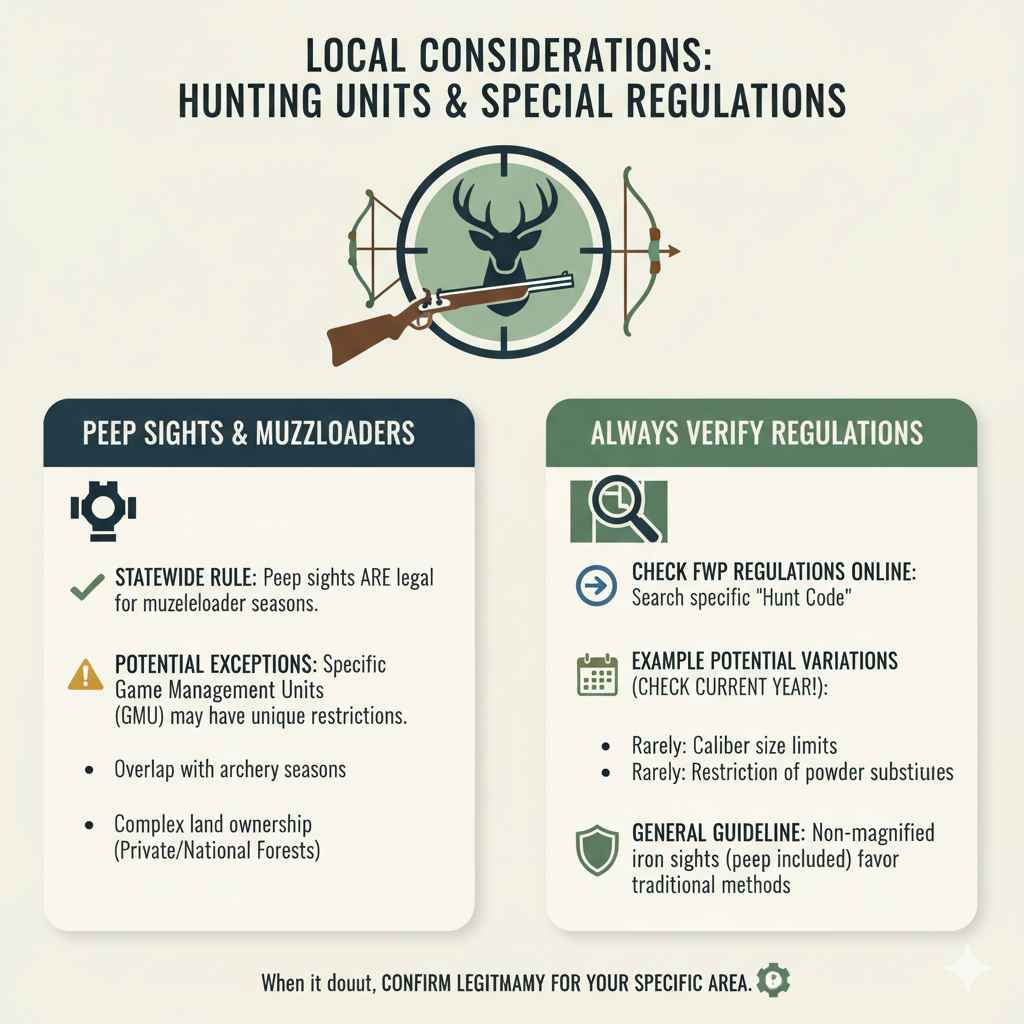
While the statewide rule is clear—peep sights are legal for muzzleloader seasons—there is always a chance a specific Game Management Unit (GMU) might have unique restrictions, especially in areas where archery and muzzleloader seasons overlap or where land ownership is complex (like on certain private land or national forests).
Always verify the specific regulations for the GMU you plan to hunt in. You can usually find this information quickly by searching the official FWP regulations online for that specific hunt code.
Example of Potential Variation (Check Current Year!)
While uncommon for sights, sometimes specific areas might limit caliber size or restrict the use of substitutes. By confirming the base muzzleloader legality for your area, you confirm the legality of your allowed sighting equipment.
When in doubt, if the sight is clearly an iron sight without magnification, it should be compliant with the general muzzleloader season guidelines, which historically favor traditional methods over modern optics for that specific time frame.
FAQ: Muzzleloader Sights and Montana Hunting Laws
Here are some quick, friendly answers to common beginner questions about sights and Montana laws.
Q1: Can I use a scope on my muzzleloader during the general rifle season in Montana?
A: Yes. During the general big game season, if you are legally hunting with a muzzleloader during that general period, you are typically allowed to use a magnified scope, as the restrictions on optics usually only apply to the dedicated* muzzleloader seasons.
Q2: Are fiber optic pins legal on a muzzleloader peep sight in Montana?
A: Generally, yes. Fiber optic inserts or pins on iron sights are acceptable because they only enhance visibility; they do not provide magnification of the target. They are still considered a form of iron sight.
Q3: Do peep sights require a special license endorsement in Montana?
A: No. The type of sight you use does not usually require an extra endorsement or license beyond the basic hunting license and the appropriate big game tag (e.g., a deer or elk tag valid for that season).
Q4: If I use a peep sight, can I hunt during the archery season?
A: No. Muzzleloaders, even with iron sights, can only be used during the established muzzleloader hunting seasons or the general rifle season (if rules permit). You must use a legal archery device during archery season.
Q5: What is the most common reason a sight might be deemed illegal?
A: The most common reason is magnification. If your rear sight has glass that magnifies the target view (even 1x), it is classified as a scope and is illegal during traditional muzzleloader seasons.
Q6: Do I need to take my peep sight off if I decide to hunt deer during the general season with a modern rifle?
A: Not necessarily, but it’s best practice to use the appropriate sights for the season you are hunting. If you switch to a modern rifle, you will likely use a different sighting system (like a scope) anyway. For consistency, stick to what is legal for the firearm you are currently carrying.
Final Thoughts on Peep Sights and Montana Law
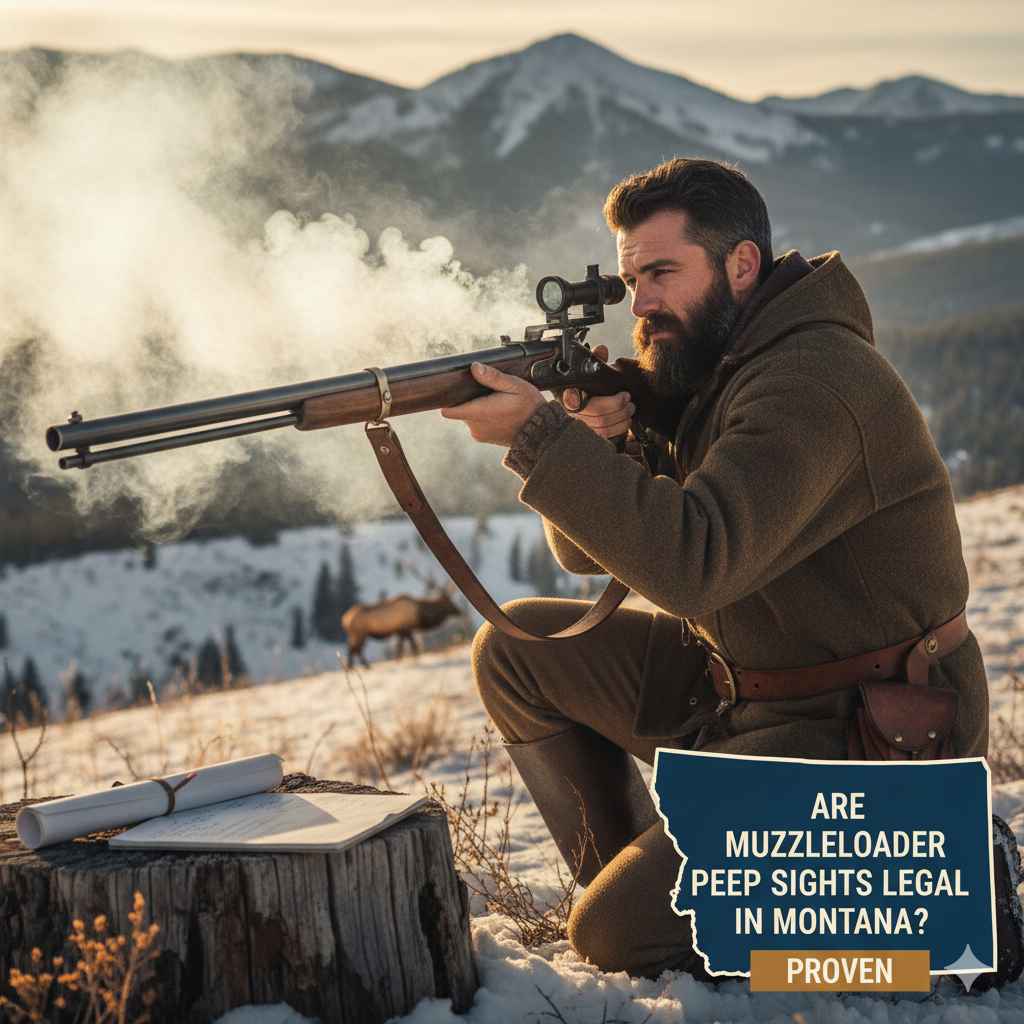
Yes, muzzleloader peep sights are legal in Montana during the dedicated muzzleloader hunting season. Montana Fish, Wildlife & Parks allows non-magnified iron sights, and a standard peep sight falls into that category.
The key rule is simple: no magnification is allowed. If the sight contains a lens or magnifies the target, it will likely be considered a scope and not permitted during the muzzleloader season.
For many hunters, peep sights are a great option because they improve accuracy, work well in low light, and remain fully compliant with traditional muzzleloader regulations.
Before hunting, always check the current Montana FWP regulations handbook to confirm rules for the specific season or hunting unit. Staying informed ensures you hunt legally, safely, and confidently in Montana’s muzzleloader season. 🎯