How To Aim A Rifle With Peep Sights Like A Marksman
Peep sights. They might seem simple, maybe even old-fashioned. But for many shooters, they’re a trusted tool.
Getting good with them takes practice. And understanding the basics is key. If you’ve ever felt a bit lost aiming with these sights, you’re not alone.
It can be tricky at first. Let’s break it down so you can aim like a pro.
Learning to aim a rifle with peep sights involves proper sight alignment and focus. It requires practice to achieve accuracy and consistency, just like any shooting skill. Understanding the mechanics behind peep sights helps improve your shots.
What Are Peep Sights?
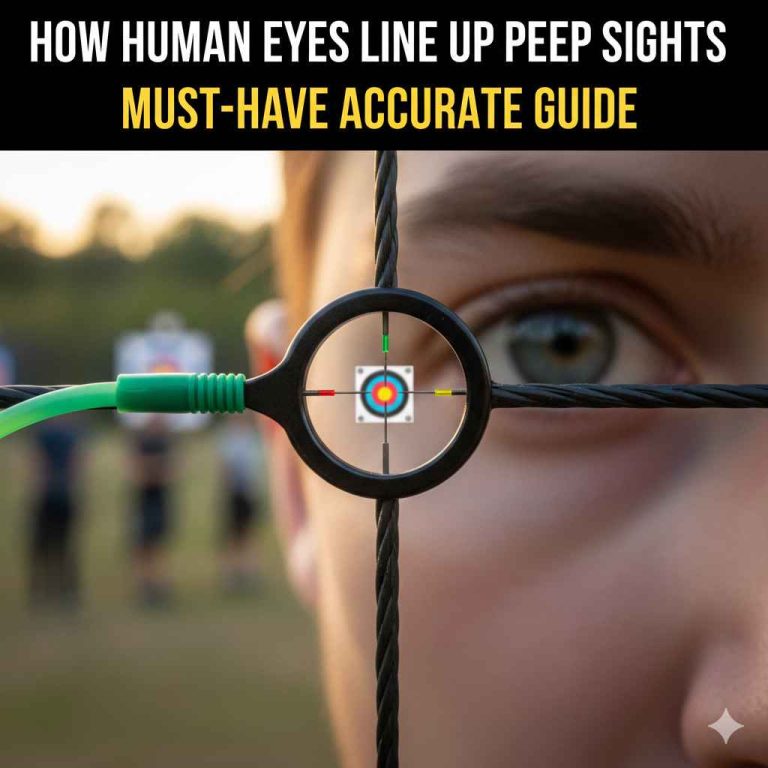
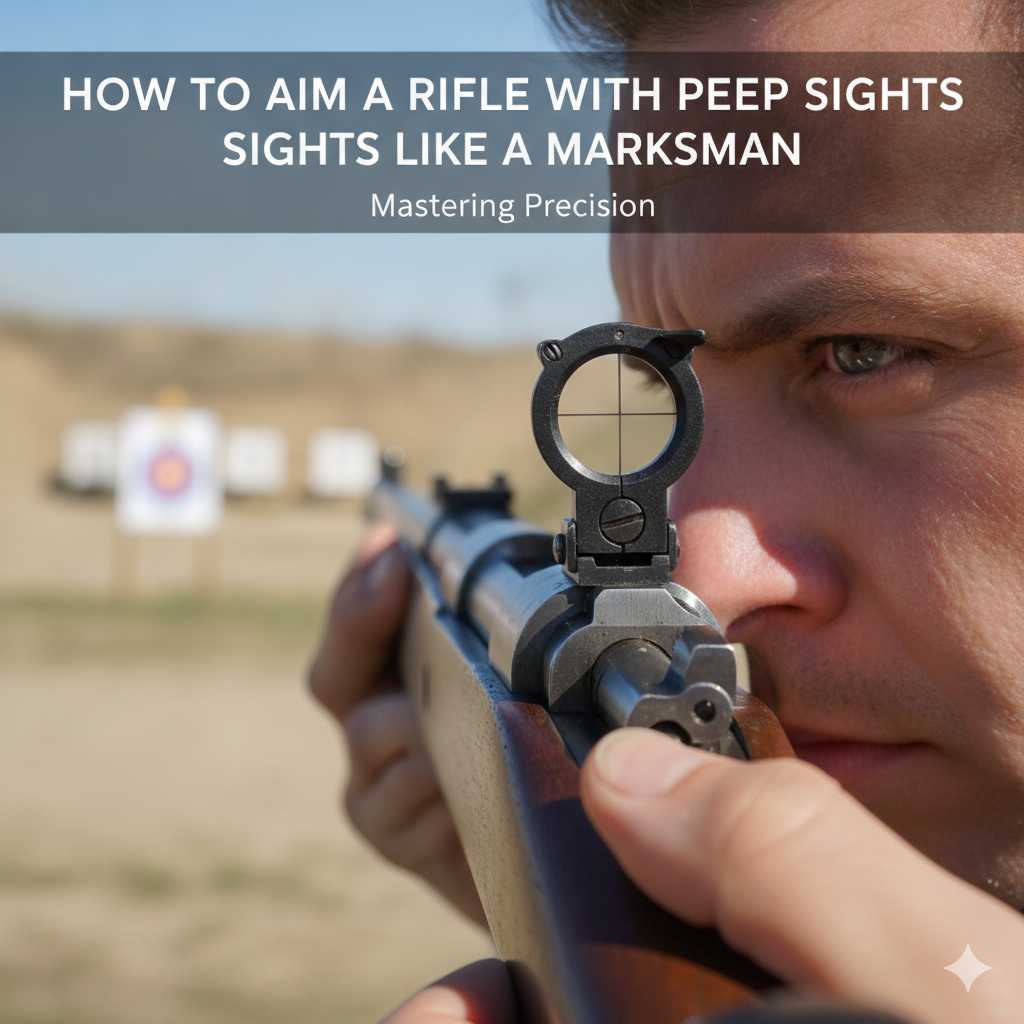
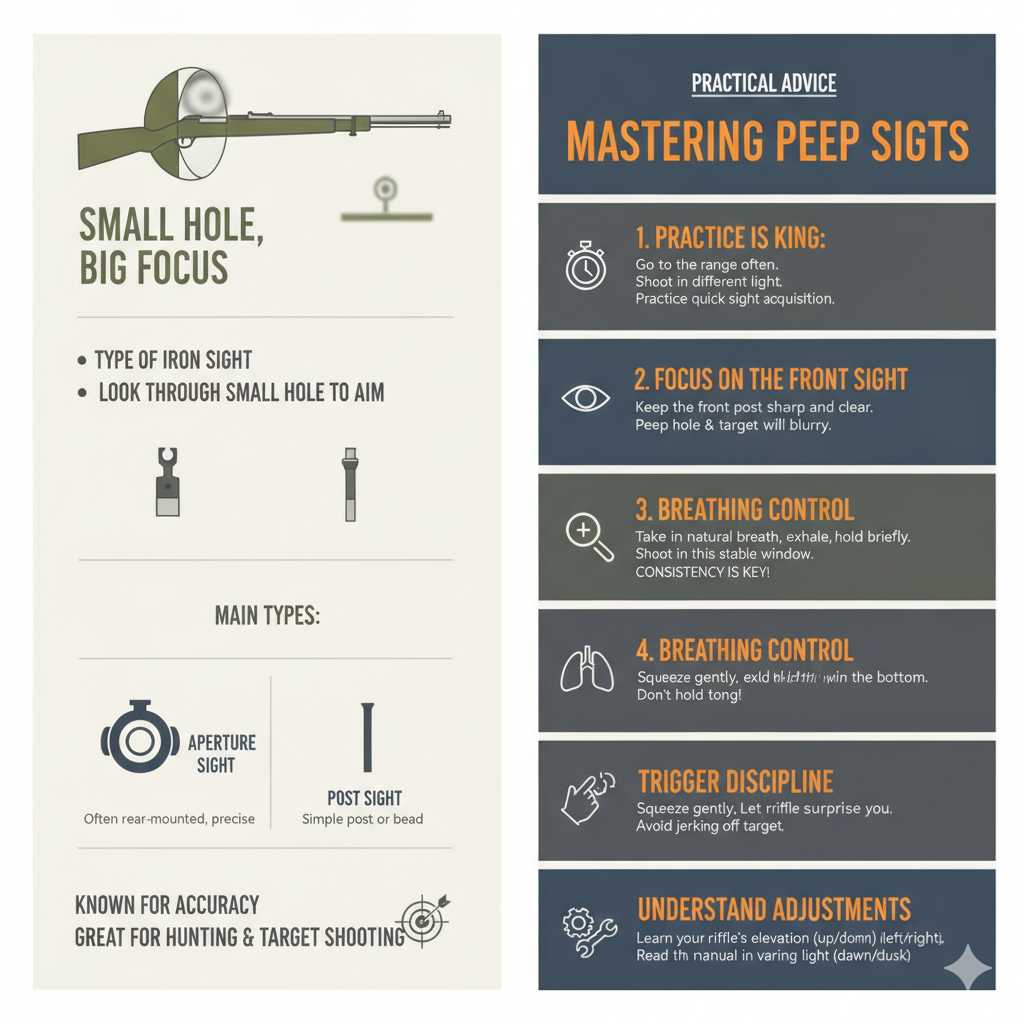
Peep sights are a type of iron sight. They use a small hole. You look through this hole to aim.
There’s usually a post in front of the hole. This post is called the front sight. You line up the front sight with the target.
The small hole helps you focus. It also makes it easier to see what you’re aiming at.
There are two main types. One is the aperture sight. This is often mounted on the rear of the rifle.
It has a small hole. The other is the post sight. This has a simple post.
Sometimes it’s a bead. Peep sights are known for being quite accurate. This is especially true when you need to make precise shots.
They are great for hunting or target shooting.
Why Are Peep Sights Used?
People use peep sights for several good reasons. They are very good for shooting in low light. The hole lets in more light.
This helps you see the target better. They are also very rugged. They don’t have many moving parts.
This means they can take a beating. They are less likely to break than other sights.
Another big plus is their simplicity. They are easy to understand. They are also very forgiving.
Once you get the hang of them, they are quick to use. Many shooters find them more intuitive. They help you focus on the front sight.
This is a core principle of good shooting. For many, they offer a direct connection to the target. This can feel very satisfying.
The Core Principle: Sight Alignment
The most important thing with peep sights is sight alignment. This means lining things up just right. You have three things to line up.
First, there’s your eye. Then, the peep sight’s hole. Next, the front sight post.
Finally, the target.
The goal is to have the front sight centered in the peep hole. It should look like a perfect circle. The front sight post should be centered.
It should also be the same height in the hole. Imagine the hole is a clock face. The front sight post is the hand.
You want the hand to be dead center. It should point straight up.
Many people new to peep sights make a mistake. They focus too much on the target. Or they focus too much on the hole.
The key is to focus on the front sight. Let your eye relax. The peep hole and the target will become clearer.
But the sharpest focus must be on the front sight post. It needs to be clear and crisp.
When the front sight is clear and centered in the peep, and the target is visible, you are aligned. This alignment is what you want for every shot. It takes practice.
But once you get it, your shots will be much more on target. Think of it as building a solid foundation for your aim. Without this, nothing else matters.
My First Time with Peep Sights: A Humbling Experience
I remember my first time trying out a rifle with peep sights. It was an old lever-action .30-30. My uncle had given it to me.
He swore by its peep sight. He said it was deadly accurate for deer. I felt pretty confident.
I’d shot other rifles before. But this was different. The front sight was a simple blade.
The rear sight had a small aperture. It looked so basic.
I went out to the range. I set up my target about 50 yards away. I held the rifle up.
I looked through the peep. I saw the front sight. But it was blurry.
The target was a bit clearer. I squeezed the trigger. Thwack.
The bullet hit the dirt way off to the side. I tried again. Thwack.
Another miss.
Frustration started to bubble. My uncle’s words echoed in my head. “Just focus on the front sight,” he’d said.
I was trying, but it wasn’t clicking. The front sight kept dancing around. It felt like I was trying to thread a needle in a windstorm.
I spent a whole afternoon like that. My shoulders ached. My eyes felt strained.
By the end, I was ready to give up. It felt like I was aiming a toy, not a real rifle.
That evening, I called my uncle. I explained my woes. He chuckled.
He told me I was trying too hard. He reminded me to relax my eye. He said to let the front sight be the star.
The next weekend, I went back. I took a deep breath. I focused on the front sight.
I let it settle in the rear aperture. Suddenly, it just felt right. The front sight was clear.
It was centered. The target looked good. I shot.
It was a decent group. It wasn’t perfect, but it was a huge improvement. That day taught me the hard way that mastery of peep sights is all about focusing on that front sight.
Quick Sight Alignment Steps
1. Position: Get into your normal shooting stance.
2. Mount Rifle: Bring the rifle to your shoulder and cheek.
3. Eye Focus: Look through the rear peep sight.
4. Front Sight Clarity: Concentrate on the front sight post. Make it sharp.
5. Centering: Move the rifle slightly until the front sight is centered in the peep.
6. Target View: The target should be visible and clear enough. But it will be slightly softer than the front sight.
Understanding the Mechanics: How Peep Sights Work
Peep sights work by creating a smaller, more defined aiming point. Think about trying to hit a tiny dot with a wide paintbrush. It’s hard.
Now imagine using a fine-tipped pen. It’s much easier. The peep sight’s aperture acts like that fine tip.
The small hole in the rear sight forces your eye to align with its center. It’s like a natural guide. When you look through it, your eye naturally seeks the brightest part.
This is usually the center. Then, you bring the front sight post into this centered view. This creates a consistent aiming picture.
The front sight is usually a post. It can be simple or have markings. Some have a bead on the end for extra visibility.
When you line up the front sight with the target through the peep, you’re creating a precise aiming solution. The clearer and more centered the front sight is, the more accurate your shot will be. The peep sight makes this process more repeatable.
This consistency is what shooters look for.
Unlike open sights (like a simple notch and post), the aperture of the peep sight actually helps your eye. It naturally centers the front sight. This reduces the chance of you off-centering the front sight yourself.
This is a major reason why peep sights are considered very accurate. They guide your eye to the right place.
Peep Sight Benefits at a Glance
- Enhanced Accuracy: Small aperture forces precise alignment.
- Low Light Performance: Lets in more light for better target visibility.
- Durability: Simple design with fewer parts means they are tough.
- Speed: Once mastered, they can be very fast to acquire a sight picture.
- Eye Relief: Generally offer more forgiving eye relief than scopes.
Factors Affecting Your Aim with Peep Sights
Several things can influence how well you aim with peep sights. One big factor is light. As mentioned, they do well in low light.
But extremely bright, direct sunlight can cause glare. This can make it hard to see the front sight clearly. Sometimes a bit of shade helps.
Or angling your body.
The size of the peep aperture matters. A smaller aperture gives more precision. But it needs more light.
A larger aperture is better in low light. It’s also faster to get the front sight in. But it offers less fine detail for aiming.
Many peep sights are adjustable. You can change the aperture size.
The design of the front sight is also important. A post with a sharp, clear edge is best. A bead sight can be good for fast acquisition.
But it might be less precise than a fine post. Some sights have a white or colored outline on the front sight. This can help it stand out.
But it can also be distracting for some shooters.
Your own vision plays a role. As eyes age, focusing on close-up sights can get harder. If you have trouble seeing the front sight clearly, you might need to try different sights.
Or perhaps consider corrective lenses for shooting. Don’t let your eyes be the bottleneck. It’s worth getting them checked.
Front Sight Styles and Their Impact
- Post Sight: A simple vertical blade. Offers good precision.
- Bead Sight: A small ball at the tip of the post. Excellent for quick aiming.
- Post with Square Tip: A very precise post for fine aiming.
- Post with Round Bead: Common on many hunting rifles. Good balance of speed and accuracy.
- Post with U-notch: The rear sight is a U-shape, and the front is a post.
Peep Sights vs. Other Sights
It’s helpful to see how peep sights compare to other common aiming systems. This helps you understand their place. And why you might choose them.
Peep Sights vs. Open Sights (Blade/Notch): Open sights often have a simple post or bead at the front and a notch at the rear. You line up the top of the post with the top of the notch.
And then you align that with the target. They are simple and rugged. But the notch can obstruct your view of the target.
Peep sights offer a clearer view through the aperture. This generally leads to higher precision.
Peep Sights vs. Red Dot Sights: Red dot sights project a red dot onto a lens. You look through the lens and see the dot.
You place the dot on the target. Red dots are very fast for target acquisition. They are excellent for moving targets.
They are also good in low light. However, they require batteries. And they can be more fragile.
Peep sights require no batteries and are extremely robust. For extreme precision at longer ranges, a good peep sight might still have an edge over some red dots.
Peep Sights vs. Telescopic Sights (Scopes): Scopes magnify the target. They offer the highest precision for long-range shooting.
They are essential for spotting small details at great distances. However, scopes have a smaller field of view. They can be delicate.
They don’t perform as well in very low light conditions as some peep sights. They also add significant weight and bulk to a rifle. Peep sights are lightweight, simple, and excel in situations where a scope might be overkill or impractical.
Each sight system has its strengths. Peep sights fill a valuable niche. They offer a great balance of accuracy, simplicity, and durability.
They are often the preferred choice for certain types of hunting and practical shooting.
A Quick Comparison Table
| Sight Type | Pros | Cons |
| Peep Sights | Accurate, durable, good in low light, simple. | Requires practice, slower than red dot, no magnification. |
| Open Sights | Simple, rugged, fast for close range. | Less precise, notch can block target view. |
| Red Dot Sights | Very fast acquisition, good in low light, easy to use. | Requires batteries, can be fragile, no magnification. |
| Telescopic Sights | High magnification, extreme long-range accuracy, detailed view. | Bulky, delicate, poor in very low light, slower acquisition. |
Real-World Scenarios: Where Peep Sights Shine
Peep sights aren’t just for the range. They are practical tools for real-life situations. Think about hunting in dense woods.
The light is often dim. You might have a quick shot at a deer. You need to be fast and accurate.
A peep sight excels here. You can quickly get on target. The aperture helps you see the front sight.
And the target is clear enough for a humane shot.
Consider classic lever-action rifles. Many of these are set up with excellent peep sights. They are often used for deer hunting in brush country.
Or for general-purpose shooting. These rifles are designed to be carried in the field. And their peep sights match that philosophy.
They are reliable companions.
Another area is historical firearms. Many older rifles and shotguns came equipped with simple iron sights. Often, these included peep sights.
For collectors and historical reenactors, using these sights is part of the experience. They offer an authentic way to shoot.
Even in modern applications, peep sights find a place. Some competition shooters prefer them. Especially in disciplines that emphasize iron sight shooting.
They can be a great equalizer. They test a shooter’s fundamental skills. They prove that you don’t always need fancy optics to be accurate.
Common Rifle Types with Peep Sights
- Lever-Action Rifles: Classic hunting and plinking rifles (e.g., Marlin, Winchester).
- Bolt-Action Hunting Rifles: Many are drilled and tapped for them.
- Shotguns: Some slug shotguns use peep sights for better accuracy.
- Muzzleloaders: Popular for their accuracy and simplicity.
- AR-15 Style Rifles: Many aftermarket peep sights are available.
What This Means For You: When Peep Sights Are Right
So, when should you consider using peep sights? If you value simplicity and robustness, they are a great choice. If you hunt in varied light conditions, they can be a lifesaver.
If you want to improve your fundamental shooting skills, peep sights will force you to. They demand good technique.
If you’re getting a rifle for general use, like plinking or some hunting, peep sights are a strong contender. They are often less expensive than a good scope. And they are much less prone to damage.
You can bang them around a bit. And they’ll likely keep working.
However, if your main goal is extreme long-range precision (hundreds of yards), a magnified scope is usually a better tool. If you need to shoot very fast at moving targets in all conditions, a red dot might be more your speed. Peep sights are fantastic, but they aren’t the perfect answer for every single shooting scenario.
The best way to know is to try them. Find a rifle with peep sights. Or get an aftermarket set installed on your own rifle.
Spend some time at the range. Practice sight alignment. See how they feel for you.
You might be surprised at how effective they are.
Tips for Mastering Peep Sights
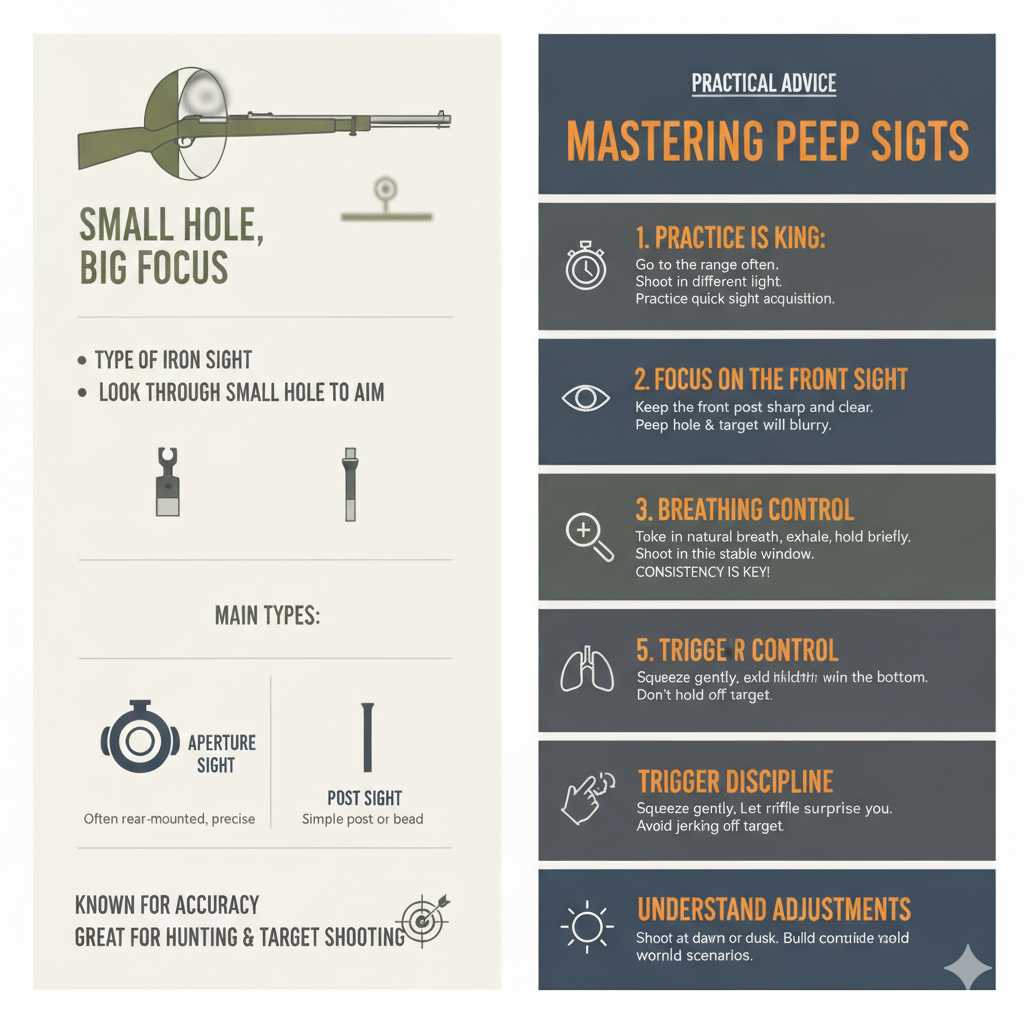
Here are some practical tips to help you get the most out of your peep sights. Practice is king. This is the most important tip.
Get to the range often. Shoot in different light conditions. Practice drawing your rifle up to your shoulder and acquiring the sight picture quickly.
Consistency is key.
Focus on the Front Sight: I can’t stress this enough. Let your eye relax. The front sight should be sharp and clear.
The peep hole will be a blur around it. The target will be a blur in the distance. Your focus must be on that front sight post.
Breathing Control: Good shooting involves managing your breath. Take a natural breath. Let it out slowly.
Then, hold your breath for a moment at the bottom of your exhale. This is when you should take your shot. It provides a stable platform.
Don’t hold your breath too long. It will make you shaky.
Trigger Discipline: A smooth trigger pull is vital. Don’t jab or snatch at the trigger. Squeeze it gently.
Let the rifle surprise you when it fires. This prevents you from jerking the rifle off target. Especially when you’re focused on lining up your peep sight.
Understand Your Rifle’s Adjustments: Most peep sights can be adjusted for elevation (up/down) and windage (left/right). Learn how your specific sights move. Usually, a small click or turn of a screw moves your point of impact.
Remember which way to turn them. For example, if your shots are too high, you’ll need to adjust the rear sight down. This sounds backward, but it’s how they work.
Read your rifle’s manual.
Practice in Varying Light: Don’t just shoot on a bright sunny day. Try shooting at dawn or dusk. See how your peep sights perform.
This will build your confidence for real-world hunting scenarios. You’ll learn how to adapt.
Achieving a Proper Sight Picture
- Your Eye: Relaxed and looking through the peep.
- The Peep: A blurry ring around the front sight.
- The Front Sight: Sharp, clear, and perfectly centered within the peep.
- The Target: Visible, but slightly softer focus than the front sight.
Frequently Asked Questions About Peep Sights
Are peep sights harder to aim with than scopes?
Yes, they can be harder to learn at first. Scopes magnify the target, making it seem easier. Peep sights require you to focus intently on the front sight.
This takes practice. But once learned, many find them very effective and intuitive.
Can I put peep sights on any rifle?
Most rifles can accept peep sights. Many have pre-drilled holes for them. For others, you might need a gunsmith to drill and tap the receiver or barrel.
Check if your rifle model has aftermarket peep sight options available.
How do I adjust my peep sight for windage and elevation?
Most adjustable peep sights have screws or knobs. Turning these moves the sight’s position. Generally, turning a screw left moves the impact point right, and vice versa for windage.
For elevation, moving the sight up typically makes the bullet hit lower, and moving it down makes it hit higher. Always consult your sight’s manual.
What is the best front sight for a peep sight?
The “best” front sight depends on your needs. A fine post is good for extreme precision. A bead sight is faster for hunting.
Some shooters prefer a post with a colored dot or line for better contrast. Experiment to see what works for your eyes and shooting style.
Are peep sights good for long-range shooting?
Peep sights can be surprisingly accurate at longer ranges. They offer a very precise aiming point. However, for extreme long distances (hundreds of yards) or when detailed target observation is needed, a magnified telescopic sight usually offers superior performance.
How do I clean and maintain my peep sights?
Keep them clean and dry. Use a soft cloth to wipe away dust and debris. A small amount of gun oil can be applied to moving parts if they are stiff, but avoid over-oiling.
Protect them from extreme moisture to prevent rust.
Conclusion
Peep sights are a testament to simple, effective design. They demand skill and focus. But they reward the shooter with accuracy and reliability.
Mastering them is a journey. It’s one that builds a strong foundation in marksmanship. Embrace the practice.
Focus on that front sight. You’ll be aiming like a seasoned marksman before you know it.