How To Aim With A Peep Sight: Beginner’S Guide
It’s a common feeling. You’ve got the bow in your hands, the arrow nocked, and you’re looking at your target. But that tiny hole in your peep sight?
It feels like it’s fighting you. You can’t seem to get it lined up right. This can be frustrating, especially when you just want to hit the bullseye.
Many new archers struggle with this. They wonder if they’re doing something wrong or if this just isn’t for them. But mastering the peep sight is totally doable.
It just takes a little patience and understanding. This guide will walk you through it step-by-step. We’ll break down how to aim with a peep sight.
You’ll learn how to get that perfect sight picture. We’ll also cover tips and common issues. By the end, you’ll feel much more confident.
You’ll know how to aim with your peep sight so you can enjoy shooting more.
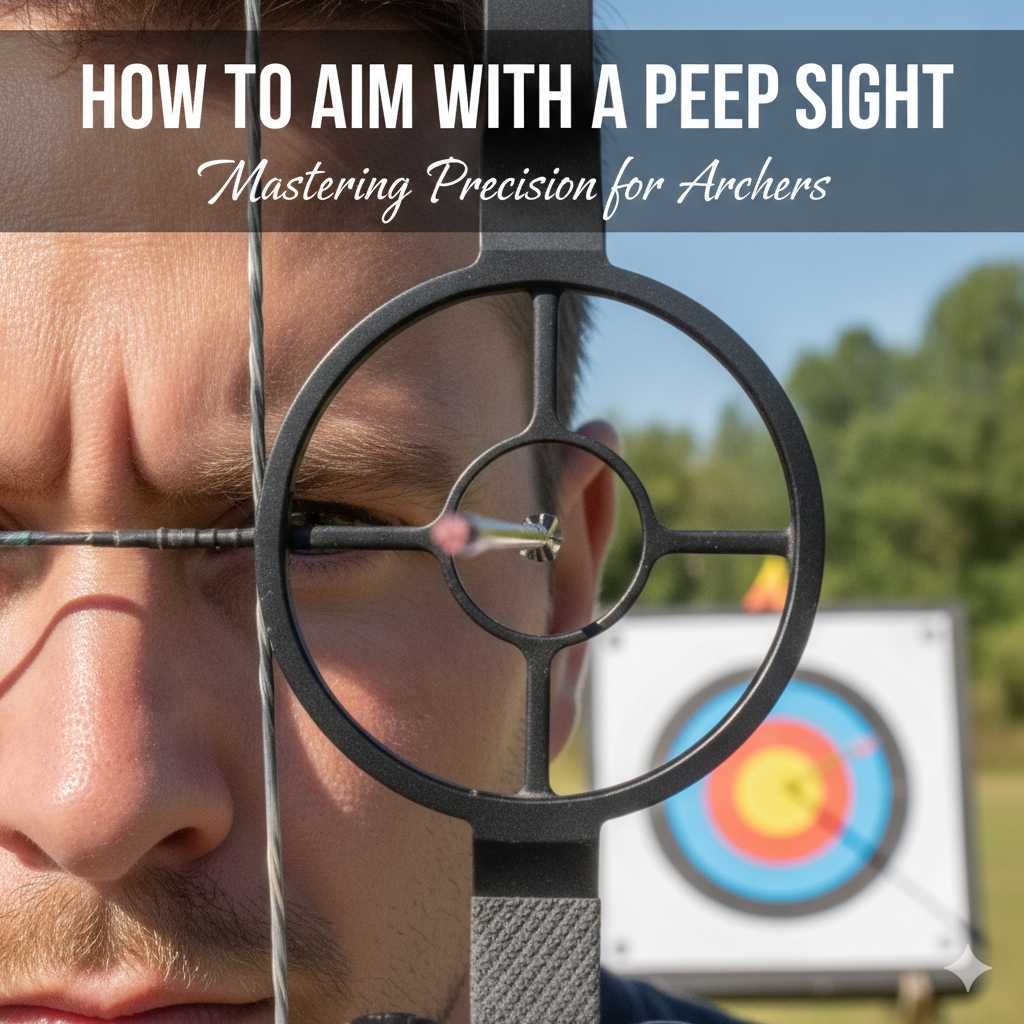
Aiming with a peep sight involves aligning the peep hole with your front sight pin while keeping both your eye and the target in focus. This creates a consistent aiming point for increased accuracy in archery.
What is a Peep Sight and Why Use One?
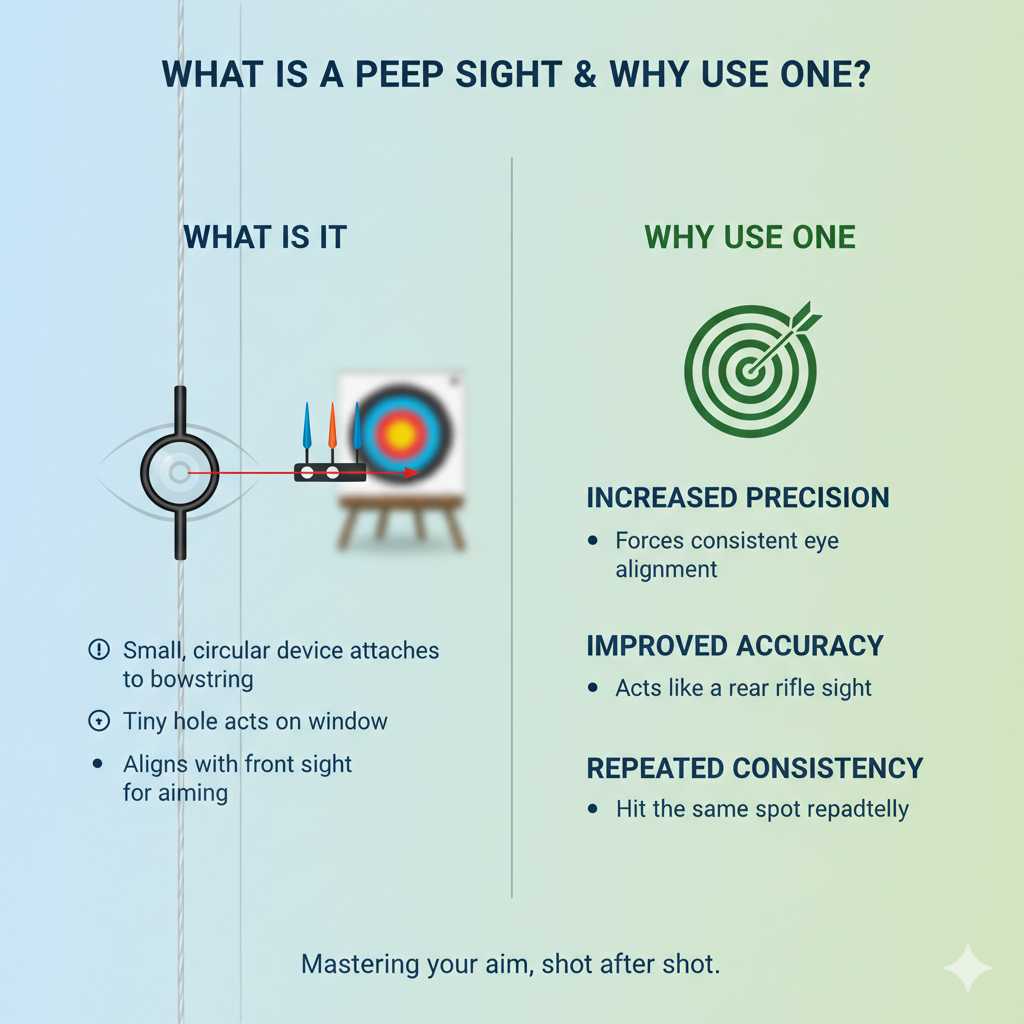
A peep sight is a small, circular device. It attaches to your bowstring. It has a tiny hole in the center.
Think of it like a little window for your eye. Its main job is to help you aim your bow and arrow. It works with your front sight.
This sight has pins on it. Each pin is usually set for a different distance. When you draw your bow, the peep sight comes back with the string.
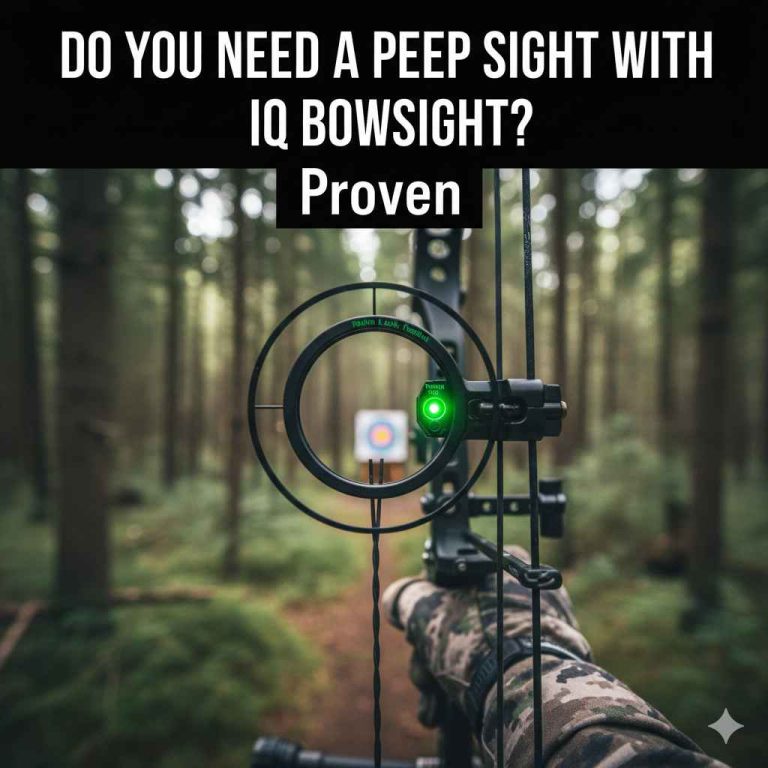
Your eye looks through the peep hole. You then line up the front sight pin you want to use in that hole. The target is what you see through the pin and the peep.
Why use one? Well, it makes aiming much more precise. Without a peep, you might just try to put the pin on the target.
But your eye can wander. You might not get the pin exactly where you want it. The peep sight forces your eye into a consistent position.
It acts like a rear sight on a rifle. This means the front sight pin will always be in the same spot relative to your eye. This consistency is key to hitting the same spot over and over.
It really helps with accuracy, especially at longer distances. It’s a tool that helps bridge the gap between you, your bow, and your target. It makes hitting what you aim at much more likely.
Understanding the Sight Picture
Getting the right sight picture is super important. It’s what you see when you’re aimed and ready to shoot. For a peep sight, it’s a special kind of view.
You look through the peep. You see your front sight pin floating in the middle of that peep hole. The target is visible through the pin.
The goal is to have the front sight pin perfectly centered inside the peep. And the pin should be on the spot you want to hit on the target.
There are a few ways this can look. The ideal sight picture is when the front sight pin is centered within the peep. This gives you a clear view of your target.
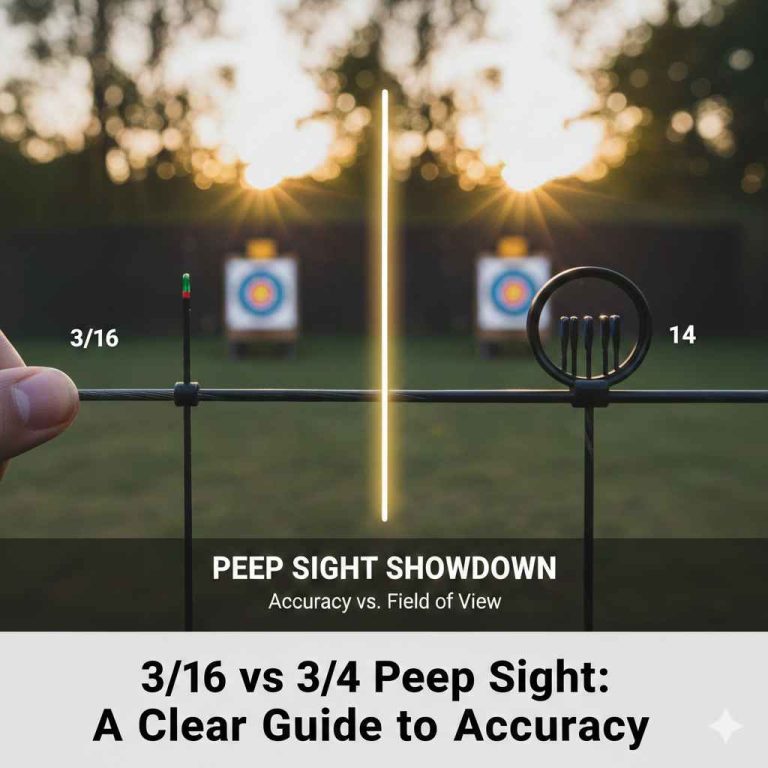
The pin is right where you want it. Sometimes, the peep might be too big or too small. This can make it hard to center the pin.
A peep that’s too large lets the pin move around too much. A peep that’s too small makes it hard to see the pin and the target clearly. Finding the right size peep is a big part of this.
You want a peep that lets the pin sit nicely. It shouldn’t be so tight you can’t see it. It shouldn’t be so loose that it rattles around.
Think about it like looking through a small window. You want the thing you’re looking at to be centered in that window. And you want the window itself to be clear.
With a peep sight, the peep is the window. The front sight pin is what you’re looking at. The target is what you see beyond the pin.
Getting this alignment right every single time is the goal. It’s what helps you shoot straight. It’s about making that connection solid between your eye, your sight, and your target.
My First Time Struggling with the Peep
I remember my first real bowhunting trip. I’d practiced a lot. I felt pretty good with my setup.
I had a new bow with a peep sight and a multi-pin slider. I was in my stand, and this nice buck walked into view. My heart started pounding.
I drew my bow, trying to stay calm. I looked through the peep, trying to get my sight pin on the buck’s shoulder. But it was a mess.
My eye kept wanting to look at the buck, not the peep. The sight pin seemed to jump around. I’d try to center it, and then the peep would be off.
Or I’d get the peep centered, and the pin would be way off to the side.
Panic started to set in. I felt this knot in my stomach. The buck was moving slightly.
I knew I only had a short window. I ended up trying to force it. I squeezed my eyes shut, trying to “will” the pin into the peep.
It was awful. I missed my chance because I couldn’t get a clear, steady sight picture. When I finally lowered my bow, I was so disappointed.
I felt like a total failure. All that practice, and I couldn’t even make a simple shot. That experience taught me how crucial it is to understand and trust your peep sight.
It’s not just about the hardware; it’s about training your eye and brain to work together. It took some dedicated practice afterward to overcome that feeling of being rushed and confused.
How to Properly Aim: Step-by-Step
Okay, let’s get to the good stuff. How do you actually aim with a peep sight? It’s a process, but once you get it, it clicks.
Follow these steps, and you’ll be well on your way.
Step 1: Proper Bow Grip and Anchor Point
Before you even think about aiming, your bow grip and anchor point must be solid. Hold the bow loosely. Let the bow hang in your hand.
Don’t grip it tight. A tight grip makes your arm shake. Your anchor point is where your drawing hand touches your face.
This should be the same every time. Common anchor points are the corner of your mouth or under your jawbone. Find one that works for you.
Keep it consistent. This is the foundation for good aiming. Without a good anchor, your peep will move.
Your sight picture will change.
Step 2: Draw the Bow Smoothly
Draw your bowstring back slowly and steadily. Use your back muscles. Don’t pull with your arm muscles.
A smooth draw is key. It helps you settle into your anchor point without jerking. As you draw, bring your eye up towards the peep sight naturally.
You don’t want to strain your neck. Let your eye find the peep.
Step 3: Find the Peep with Your Eye
This is where the magic starts. As you reach full draw and your anchor, your eye should naturally find the peep. Don’t force it.
If your anchor is good, your eye will want to go to the peep. You might need to adjust your head slightly. Tilt it a little up or down.
Or move it left or right. You are looking for that round opening. It’s like your eye is drawn to it.
If you can’t see the peep, check your anchor point and your draw length. Are they consistent?
Step 4: Center the Front Sight Pin
Once you see the peep hole, look through it. You should see your front sight pin. Your goal is to get this pin centered within the peep.
This is the tricky part for beginners. Don’t move your head too much. Try to move the bow slightly.
Move it left or right. Or up or down. Use tiny movements.
You are adjusting the bow’s position relative to your eye. Think of it as aligning the pin inside the peep. You want a clear, consistent circle.
The pin should be right in the middle. Many people try to move their eye too much. That throws off the consistency.
Keep your eye in the same spot relative to the anchor.
Step 5: Align Pin with Target
With the pin centered in the peep, now look at your target. The front sight pin should be on the spot you want to hit. If it’s not, you need to adjust your sight.
You do this by moving the front sight itself. Turn the adjustment screws on your sight. Move the pin up, down, left, or right.
Remember: “Screws move the pin, not your head.” If you hit high, move the sight pin up. If you hit left, move the sight pin left. This is a bit different from centering the pin in the peep.
Centering is about your form. Adjusting the sight is about tuning your bow.
Step 6: Hold Steady and Release
Once everything is aligned – peep, pin, and target – hold steady. Take a breath. Then, use a surprise release.
Don’t punch the trigger or pull the string. Let the release aid do its work. This means you don’t anticipate the shot.
Just let the arrow go when it’s ready. This helps avoid any last-second movements that throw off your aim.
Common Mistakes and How to Avoid Them
Even with clear steps, it’s easy to fall into common traps. Understanding these mistakes can save you a lot of frustration. Let’s look at what often goes wrong and how to fix it.
Mistake 1: Trying to Look at the Target and the Pin Simultaneously
This is the biggest one for beginners. Your eyes can only truly focus on one thing at a time. When you try to see both the pin and the target equally clearly, you get a blurry mess.
The peep sight is designed to help you with this. Focus on the front sight pin. Let the peep sight and the target be slightly less clear.
The peep acts as a frame. The pin is your focus.
Mistake 2: Moving Your Head Instead of Your Bow
When the pin isn’t centered in the peep, your first instinct might be to move your head. Don’t! Your head position should be fixed at your anchor point.
Instead, make tiny adjustments with your bow. Move the bow left or right. Or slightly up or down.
This keeps your eye position consistent. It’s like adjusting the picture frame, not your eyes.
Mistake 3: Inconsistent Anchor Point
If your anchor point changes even a little bit, your peep sight will move relative to your eye. This means your sight picture will change every time. Make sure you’re hitting the same spot on your face every single draw.
This is non-negotiable for consistent aiming. Feel where your string hand touches your face. Make it the same every shot.
Mistake 4: Peep Sight Size Issues
If your peep is too large, the front sight pin will feel loose inside it. It will be hard to keep it centered. If it’s too small, you might not be able to see the pin clearly.
Or you might feel like you’re forcing your eye into it. Peep sight size is often adjusted by adding or removing different inner rings. Experimenting with different sizes can make a big difference.
Most archers find a balance where the pin sits nicely within the peep without excessive movement.
Mistake 5: Rushing the Shot
Archery is a game of patience. When you rush, you skip steps. You make mistakes.
You tense up. Take your time. Draw smoothly.
Find your peep. Center your pin. Align with the target.
Breathe. Release. Rushing will always lead to frustration and missed shots.
Practice being calm under pressure.
The Role of Your Eye and Brain
Your eye and brain work together in aiming. It’s a partnership. Your eye sees the light.
It sends signals to your brain. Your brain interprets these signals. It tells your muscles what to do.
With a peep sight, your brain learns a new pattern. It learns to find the peep. It learns to center the pin.
It learns to connect that to the target.
This takes practice. Your brain is very good at adapting. But it needs repetition.
When you first start, it feels awkward. Your brain is trying to figure out this new way of seeing. It’s trying to coordinate your eye, hand, and bow.
Over time, this becomes automatic. You stop thinking about it. You just do it.
This is called muscle memory. It’s when your body performs a task without conscious thought. This is what you want for archery.
Think about driving a car. When you first learned, it was hard. You had to think about every pedal, every turn.
Now, you probably drive without thinking about it. Your brain has learned the pattern. Aiming with a peep sight is similar.
With consistent practice, your brain will learn the process. It will become second nature. You’ll find the peep easily.
You’ll center the pin without trying. And you’ll hit your mark.
Environmental Factors Affecting Aim
Sometimes, it’s not just you. The environment can play a role too. Understanding these factors can help you adapt.
Light Conditions
Bright sunlight can be great. It makes your pins stand out. But it can also cause glare.
This can make it hard to see the peep. Or it can wash out your target. Dim light or twilight is tougher.
Your pins might be harder to see. Your target might be faded. Using bright fiber optic pins can help.
Some archers use lighted pins for low light. These have a small battery. They illuminate the pins.
This makes a big difference in dim conditions.
Wind
Wind is a big factor for archers. It can push your arrow off course. It can also affect your aim.
When it’s windy, you might feel unsteady. The target might seem to sway. You need to aim into the wind a bit.
This means aiming slightly upwind of your target. How much you aim into the wind depends on the wind speed. It also depends on your bow’s speed and arrow weight.
Practice in windy conditions. You’ll learn to feel how much correction you need. Sometimes, it helps to aim at a steady part of the target.
Don’t focus on the movement caused by the wind.
Distance and Target Size
Aiming is harder at longer distances. The target looks smaller. Any small error in your aim is magnified.
A tiny movement can cause a big miss. Also, the smaller the target, the harder it is. A regulation target face is large.
A small practice dot is much tougher. As you practice, gradually increase your distances. Also, try aiming at smaller spots.
This builds your precision. It makes sure your peep sight alignment is spot on.
Sight Picture Variations: What’s Normal?
It’s important to know that not every sight picture will be perfectly identical. Our bodies are not machines. Small variations are normal.
What matters is consistency. Let’s look at some variations and when they might be a concern.
Contrast Matrix: Normal vs. Concerning Sight Pictures
| Normal Sight Picture | Concerning Sight Picture |
| Pin is very close to the center of the peep. It might be a hair off sometimes, but you can easily correct it by moving the bow slightly. | Pin is far from the center. It takes large movements of the bow to center it. Your eye feels strained trying to see it. |
| You can clearly see the front sight pin. The target is visible through the pin. | The pin is blurry. You can’t see the target clearly through the pin. Or the pin is so large it obscures the target. |
| The peep sight is a clear circle. It’s not perfectly round every single time, but it’s generally a good shape. | The peep sight looks oval or misshapen. This could mean your bowstring is twisting or your peep is not installed correctly. |
| You feel comfortable and relaxed at full draw. Your anchor is solid. | You feel tension or strain in your neck, shoulder, or back. Your anchor point feels unstable. |
Remember, your goal is to have the front sight pin centered in the peep. But what does “centered” really mean? It means the pin is in a consistent place relative to your eye.
If the pin is slightly to the left or right, but it’s always slightly to the left or right, that’s consistent. You can then adjust your sights to match that. The problem comes when the pin jumps around randomly.
Real-World Context: When Does it Matter Most?
Understanding the peep sight’s importance comes into focus during specific situations. It’s not just about target practice on a sunny day. It’s about when it counts.
The Importance in Bowhunting
For bowhunters, the peep sight is non-negotiable. Animals don’t stand still like targets. They move.
They present brief windows of opportunity. You need to be able to draw, aim, and shoot quickly and accurately. The peep sight ensures your front sight pin is always in the same place relative to your eye.
This allows for quick target acquisition. You can focus on aiming the pin at the vital zone. Without it, your aiming process would be much slower and less precise.
You might miss that once-in-a-lifetime shot.
Target Archery Competitions
In competitive archery, precision is everything. Every point matters. Bowhunters often use peep sights, but target archers might use different sights.
Some prefer dedicated target sights that offer more adjustments. However, many still use peep sights. Especially in disciplines like 3D archery or indoor target shooting.
The consistency a peep sight provides is crucial. It allows archers to focus on their shot execution. They can trust that their sight is aligned correctly.
Beginner Practice Sessions
For beginners, the peep sight might seem daunting. But it’s the best tool to learn good habits. Trying to learn without one can lead to bad aiming habits.
You might develop an inconsistent anchor or eye position. Learning with a peep sight from the start helps you develop precision. It teaches you the importance of a fixed anchor and a clear sight picture.
It makes the transition to hunting or competition much smoother.
What This Means for Your Aim and Accuracy
So, what’s the big takeaway? How does mastering the peep sight affect your shooting? It’s all about consistency.
And consistency is the bedrock of accuracy. When you can reliably get the same sight picture every single time, your shots will group together. Instead of shots scattered everywhere, you’ll start seeing tight clusters.
This is true for any archery discipline.
It means less frustration on the range. More confidence when you’re out in the field. You’ll spend less time wondering if you aimed correctly.
You can trust your setup. This allows you to focus on other aspects of shooting. Like form, breathing, and release.
It’s about building a system that works for you. A system that you can trust. And that system starts with that little hole in your bowstring.
Quick Tips for Better Peep Sight Aiming
Here are some quick hits to keep in mind as you practice. These are simple things you can do to improve.
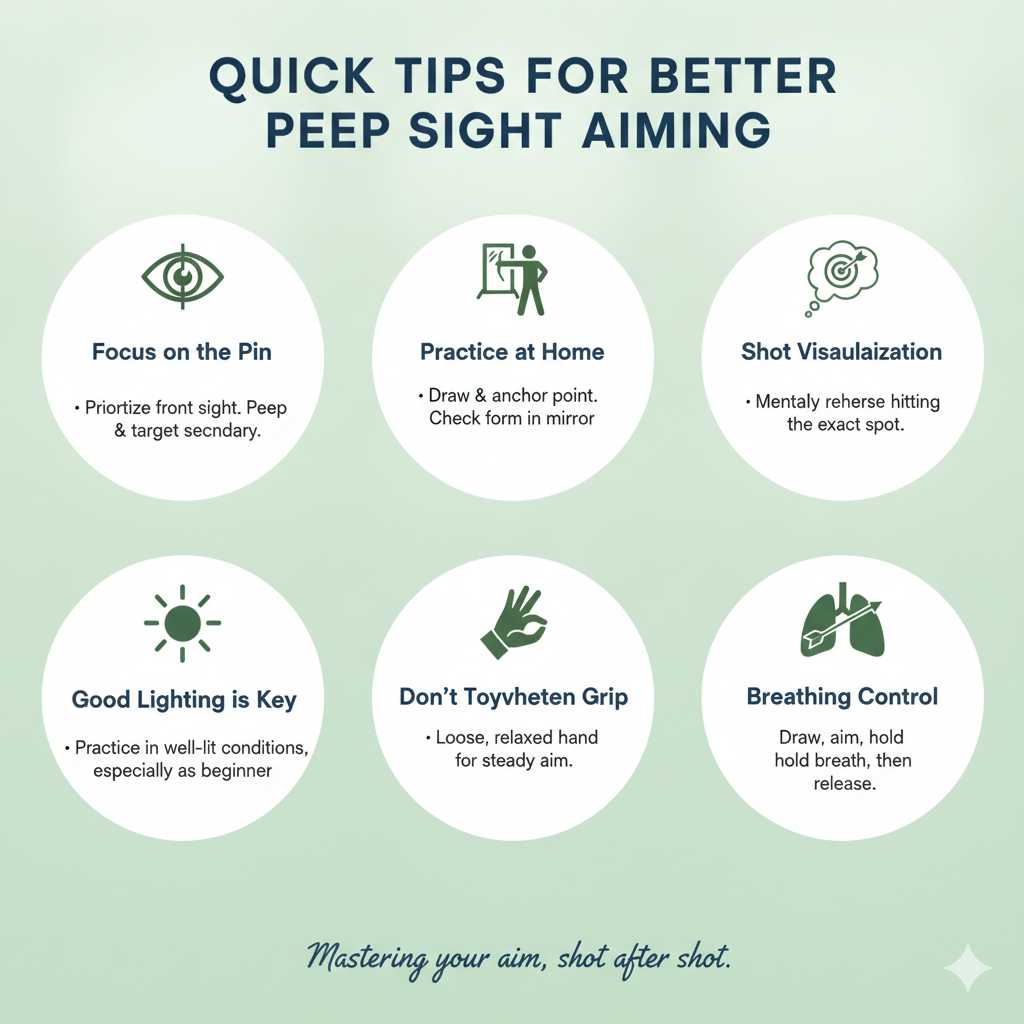
- Focus on the Pin: Always prioritize focusing on your front sight pin. Let the peep and target be secondary.
- Practice at Home: You can practice drawing and finding your anchor point even without shooting. Do this in front of a mirror. Check your form.
- Use a Release Aid: For peep sights, a release aid is almost always used. It helps you achieve a clean, surprise release.
- Shot Visualization: Before you shoot, visualize the arrow hitting the exact spot you’re aiming at.
- Good Lighting is Key: If possible, practice in good light conditions, especially when you’re starting out.
- Don’t Overtighten Your Grip: A loose, relaxed grip on the bow is essential for a steady aim.
- Breathing Control: Learn to control your breathing. A common technique is to draw, aim, hold your breath for a few seconds, and release.
Frequently Asked Questions About Peep Sights
What is the best size peep sight for beginners?
There isn’t one single “best” size. For beginners, a slightly larger peep is often recommended. This gives you more room to get the pin centered.
It’s less frustrating. As you gain experience, you can try smaller peeps for more precision. Most archers find a balance where the pin fits comfortably and centrally.
How do I know if my peep sight is installed correctly?
A correctly installed peep sight will look like a perfect circle when you’re at full draw. It shouldn’t be oval or twisted. Your string should twist evenly.
If it looks off, have a bow technician check it. The peep should also be the right height. When you draw to your anchor, your eye should naturally find the peep.
Can I shoot a bow without a peep sight?
Yes, you can. Some archery styles don’t use peep sights. For instance, traditional archery often uses instinctive aiming.
However, for modern compound bows and for hunting, a peep sight greatly improves accuracy and consistency. It helps create a repeatable aiming point.
What if the peep sight moves when I draw?
If the peep sight moves, it means your anchor point is likely inconsistent. Or your draw length might be changing. Ensure you have a solid, repeatable anchor.
Your draw length should be the same every time you draw the bow. Bowstring stretch can also cause peep height changes over time. In that case, the string might need adjustment or replacement.
How do I adjust my front sight pin?
Your front sight will have adjustment screws. These usually move the pin up, down, left, or right. Always adjust the sight itself, not your head or bow position.
If you shoot high, move the sight pin up. If you shoot left, move the sight pin left. Refer to your sight’s manual for specific instructions.
Make small adjustments and shoot again to see the effect.
Is it okay if the front sight pin is a little blurry?
Yes, it is okay for the front sight pin to be slightly blurry. The primary focus should be on the pin itself. You want to see its shape and position clearly within the peep.
The target will be less clear, and the peep sight itself might be a bit fuzzy. This is normal and how the system is designed to work. Trying to focus on both the pin and the target equally will make everything blurry.
Conclusion
Mastering the peep sight is a journey. It requires patience and practice. But the reward is significant.
You’ll gain accuracy and confidence. Remember to focus on your form, anchor, and that perfect sight picture. Every shot is a chance to learn.
Enjoy the process of becoming a better archer.