How To Aim A Bow With A Peep Sight For Better Accuracy
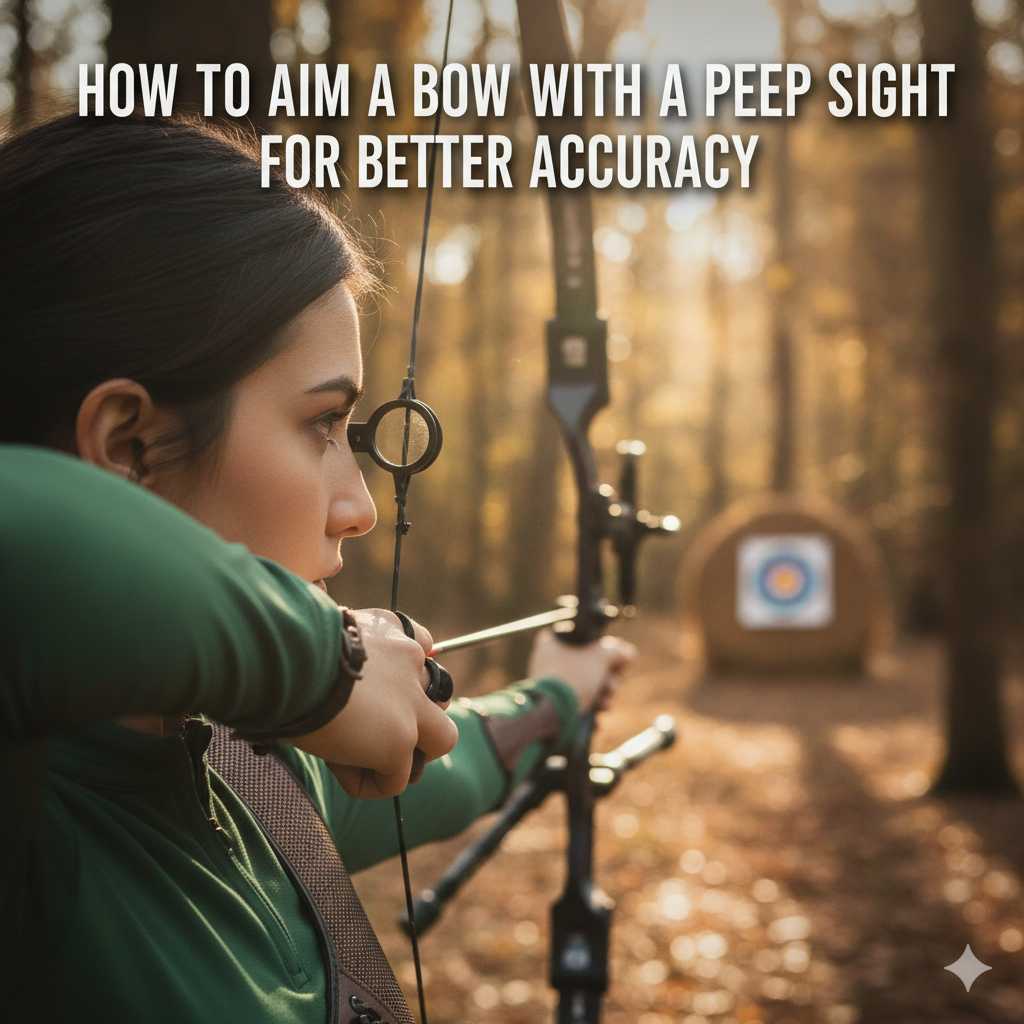
Aiming a bow with a peep sight involves aligning your eye through the peep hole, the front sight pin, and the target. This creates a consistent anchor point and sight picture for greater accuracy in archery.
What is a Peep Sight and Why Use One?
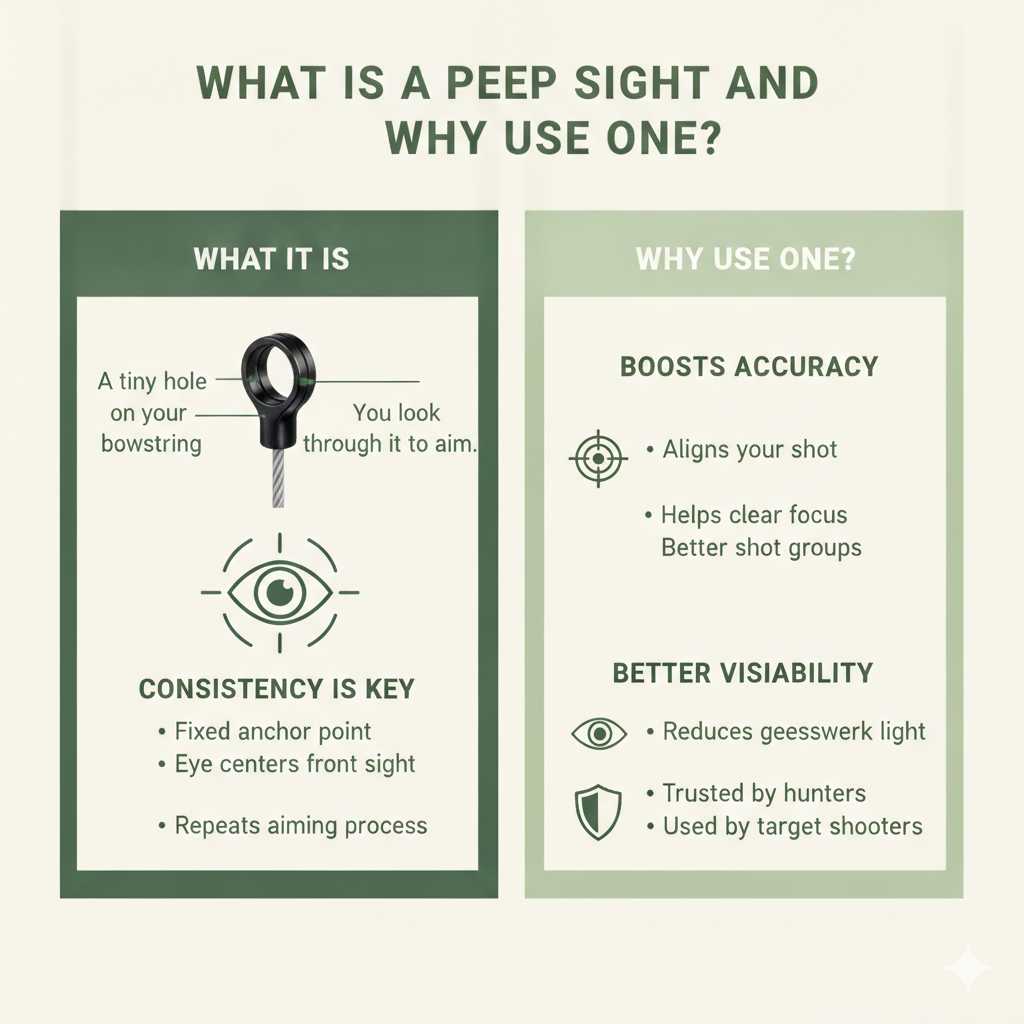
A peep sight is a tiny hole. It sits on your bowstring. You look through it to aim.
Think of it like the back sight on a rifle. It helps you line up your shot. It makes your aiming much more steady.
Using a peep sight is all about consistency. When you draw your bow, the peep is always in the same spot relative to your eye. This creates a fixed anchor point — one of the 7 fundamentals in our full guide on how to shoot a bow and arrow accurately.
Your eye naturally centers the front sight pin within the peep hole. This makes it easier to focus on the target. It helps you repeat the same aiming process every time.
This is key for hitting the same spot on your target.
Archers use them because they boost accuracy. They help you see your target and front sight clearly. This is true even in different light.
It makes your aim more precise. You can shoot better groups with practice. It’s a small part but makes a big difference.
Many hunters and target shooters rely on them.
How Does a Peep Sight Work?
The peep sight is a small loop. It’s usually made of metal or plastic. It attaches to the bowstring.
It sits just above your arrow nock. When you pull the string back, the peep comes to your eye. This forms your aiming point.
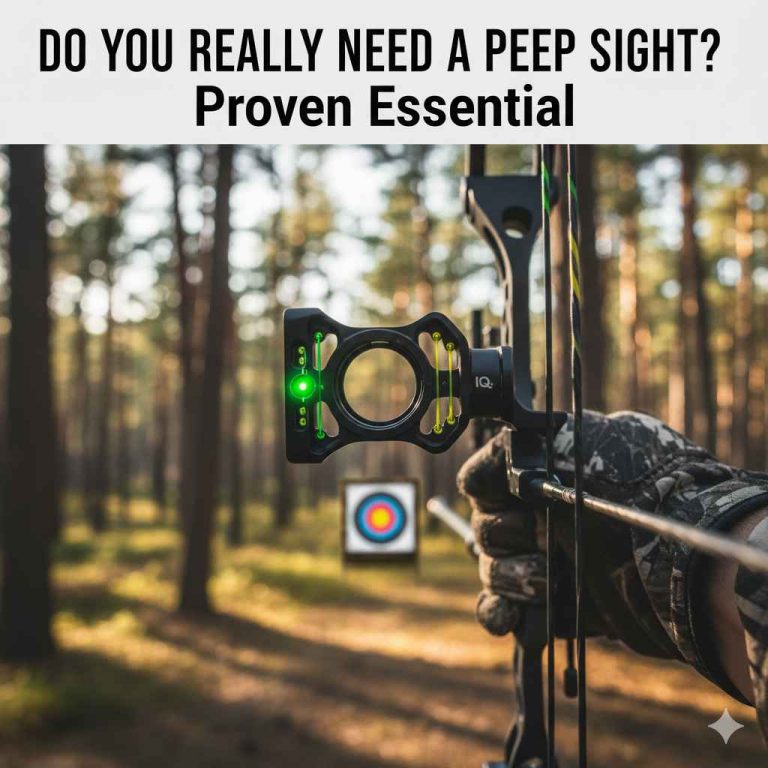
Your bow also has a front sight. This is usually a pin. It is mounted on your bow riser.
It has a small opening or a colored fiber optic. You want this front sight pin to be centered in the peep hole. You then line up the front sight pin with your target.
Your eye should naturally center the pin in the peep.
The magic happens with your eye. Your eye is very good at finding the center of a hole. When you look through the peep, it guides your eye to the front sight pin.
The pin then appears centered within the peep. This makes it feel like you’re looking through a tunnel. The target is at the end of that tunnel.
This alignment system helps you aim straight.
The size of the peep matters. A smaller peep makes it harder to see. But it can also make your sight picture sharper.
A larger peep is easier to see through. It might be better for low light. It can also be more forgiving if your anchor point shifts slightly.
Most archers find a size that works for them.
Choosing the Right Peep Sight
There are a few types of peep sights. Some are simple. Others have features for different needs.
The material is important. Metal peeps are very durable. Plastic ones are lighter.
Some come in different colors. This can help with visibility.
Peep diameter is a big choice. Smaller diameters (like 1/8 inch) offer a very precise sight picture. They can be harder to see through in low light.
They also require a more perfect alignment. Larger diameters (like 3/16 inch or 1/4 inch) are easier to see through. They give you more light.
They can be a bit more forgiving of small aiming errors. Many beginners start with a medium size.
Some peeps are angled. This helps keep the peep perpendicular to your eye as you aim. This is called “curving.” It reduces shadow.
It keeps the sight picture clear. This is especially helpful if your bow has a lot of cam lean. An angled peep can also make it easier to see your front sight in different shooting positions.
You also need to consider the aperture. This is the opening of the peep. Some have a sharp edge.
Others have a rounded edge. The shape can affect how your eye perceives the sight picture. It’s a small detail but can matter for some archers.
Finally, think about the installation. Some peeps are installed with a bow press. This is the safest way.
It ensures the string is properly tensioned. Others can be tied in. This method is less common now.
It’s important to have your peep installed correctly. A bad installation can affect your bow’s timing.
Peep Sight Anatomy and Key Features
Peep Material: Common options include aluminum, brass, and polymer (plastic). Aluminum is light and strong. Brass is heavier and can help with string balance.
Polymers are lightweight and often less expensive.
Diameter: This is the size of the hole. Ranges from very small (e.g., 3/32″) for precision to larger (e.g., 3/16″ or 1/4″) for better visibility. Smaller is often preferred for target shooting.
Angle (Curving): Some peeps are angled to match your eye’s natural line of sight. This helps keep the peep opening clear and prevents shadows, especially with compound bows.
Aperture Shape: The edge of the peep’s hole. Can be sharp or rounded. Affects how light enters and how your eye sees the sight.
Installation Method: Most modern peeps require a bow press for secure and accurate installation.
Setting Up Your Peep Sight
Setting up a peep sight correctly is vital. It’s not just about putting it on. It’s about placing it at the right height.
It needs to work with your front sight and your draw length.
First, you need to find the peep height. This is often done with the bow at full draw. Your instructor or a friend can help.
You can use a peep-sighting tool. This tool has a small lens. It helps you see where the peep should be.
The goal is for your eye to be centered in the peep.
A good starting point for peep height is when the peep is level with your pupil. When the bow is at full draw, your eye should be able to look through the peep naturally. You shouldn’t have to tilt your head up or down much.
If the peep is too high, you’ll have to crane your neck. If it’s too low, you’ll have to stoop. Both affect your anchor point.
Many archers use a “peep tuner.” This is a small string. It loops around your D-loop. You pull the bow back.
The tuner goes through your peep. It has a bright colored bead. You can see if the peep is centered.
You adjust the peep’s position on the string until the bead is centered in the peep.
Your draw length also plays a role. If your draw length is adjusted, your peep height might need to change. This is why it’s good to get a professional setup.
A pro shop can ensure everything is tuned. This includes your draw length, peep height, and rest position.
Once the peep height is set, you need to align it with your front sight. This is usually done at a close distance. Start at 5 yards.
Draw your bow. Look through the peep. See your front sight pin.
Adjust your front sight so it is in the center of the peep. Shoot a few arrows. Make small adjustments to the front sight.
The goal is to have your front sight pin centered in the peep hole every time. When you achieve this, you have a good sight picture. Your front sight should look like a dot.
The peep should be a larger circle around it. The target is beyond that.
The Process of Aiming with a Peep Sight
Aiming with a peep sight involves a specific sequence. It’s a mental and physical process. It requires focus and repetition.
First, get into your stance. Stand comfortably. Your feet should be shoulder-width apart.
Your body should be facing the target at a slight angle.
Next, nock an arrow. Place the arrow onto the string. Make sure it’s seated on the rest.
Then, engage the D-loop with your release aid. If you’re using fingers, use your string fingers.
Now, begin to draw the bow. Pull the string back smoothly. Use your back muscles.
As you draw, bring the bow up towards your aiming eye. Bring the peep sight up to your eye.
Find your anchor point. This is where your string hand or release meets your face. It should be the same spot every time.
Common anchor points are under the jawbone or at the corner of the mouth. This is crucial for consistent aiming.
Once you are at full draw and anchored, focus on your sight picture. Look through the peep sight. Your eye will naturally try to center the front sight pin within the peep hole.
You want the pin to appear as a clear dot. The peep should be a defined circle around it.
Now, focus on the target. Your eye should be focused on the target. The front sight pin will appear slightly blurred.
This is normal. The peep sight will also appear slightly blurred. This is also normal.
The clarity comes from focusing on the target itself.
Gently move the front sight pin to the spot you want to hit. Make small movements. Breathe and relax.
When you are ready, execute your shot. For a release aid, squeeze the trigger smoothly. For fingers, let off the string smoothly.
After the shot, maintain your form. This is called follow-through. Keep your eye on the target.
Keep your body still. This helps ensure you shot as intended. It also helps you analyze your shot placement.
Repeat this process. Every arrow should be shot with the same attention to detail. This builds muscle memory.
It improves your consistency over time.
The Aiming Sequence – A Quick Checklist
1. Stance: Comfortable and balanced.
2. Nock & Draw: Smoothly draw the bowstring.
3. Anchor: Find your consistent anchor point.
4. Sight Center front sight pin in peep.
5. Focus: Eyes on the target.
6. Execution: Smooth release.
7. Follow-Through: Maintain form.
Common Problems and How to Fix Them
Even with a peep sight, aiming can be challenging. Many archers face similar issues. Knowing these problems helps you fix them.
One common issue is the “shadow” in the peep. This happens when the peep isn’t perpendicular to your eye. Your eye might be too high or too low.
Or your bow’s cam lean is causing it. A curved peep can help. Adjusting your anchor point slightly might also fix it.
Another problem is not seeing the front sight pin clearly. This often means you’re focusing too much on the peep itself. Remember, your eye finds the center of the peep.
Your focus should be on the target. The front sight pin should be a clear indicator of where you’re aiming. If it’s blurry, try re-adjusting your anchor or draw length.
Some archers struggle with “peep sight wobble.” This is when the front sight pin bounces around a lot. It’s often caused by tension in your drawing arm. It can also be a sign of an inconsistent anchor point.
Relaxing your grip and focusing on a solid anchor can help reduce wobble.
Sometimes, the peep is just the wrong size. If it’s too small, you might feel rushed. You can’t see the target well enough.
If it’s too big, you might feel like your front sight is too loose. Experimenting with different peep sizes can make a difference.
If your shots are consistently off, check your alignment. Is your front sight centered in the peep? Are you anchoring in the same spot?
Are you releasing the string smoothly? These small details add up. They greatly impact your accuracy.
Make sure your bow is also tuned correctly.
Low light conditions can also be tough. If you’re hunting, dusk and dawn are prime times. A larger peep or one with a brighter aiming element can help.
Some archers use a peep with an “clarifier” lens. This lens magnifies the front sight. It helps in low light but can make the target appear closer.
Personal Experience: The Night I Couldn’t See the Pin
I remember one crisp autumn evening. The leaves were turning beautiful shades of red and gold. I was out in my backyard. I was practicing for an upcoming bowhunting trip. The sun was starting to set. The light was fading fast. I pulled my bow back, settled into my anchor, and looked through my peep. That’s when it happened. The front sight pin seemed to just… disappear. It was like a tiny ghost.
Panic started to bubble up. I was supposed to be honing my skills, not fumbling in the dark. I tried to force it.
I squeezed my eyes shut and tried to aim. My arrows were going everywhere. One even hit the fence.
My frustration grew with each wild shot. I felt a knot of annoyance in my stomach. This wasn’t how it was supposed to go.
I put the bow down. I took a few deep breaths. I walked over to the target.
I could see the holes were way off. I realized I was trying too hard to see the pin. I was focusing on the peep and the pin, not the target.
My brain was confused by the dim light. I remembered what my old archery coach used to say: “Focus on the dot on the target.
I picked the bow back up. I drew it slowly. This time, I forced myself to look past the peep and the pin.
I found the faint outline of my target’s center. I let my eye naturally bring the pin into view. It was still dim, but it was there.
I focused on that tiny spot on the target. I held steady and released. Thwack.
The arrow was much closer. It wasn’t perfect, but it was progress. That evening taught me a valuable lesson: trust your eye and focus on the destination, not just the journey.
Low Light Aiming Tips
Use a Larger Peep: More light enters, making it easier to see.
Brighter Front Sight: Fiber optic pins with bold colors (like green or yellow) stand out more.
Clarifier Lens: Some peeps can take a magnifying lens. This brightens the sight pin.
Practice at Dusk: Regularly shoot in low light to build confidence and adjust your focus.
Know Your Limits: Don’t attempt shots you can’t make confidently. Safety first.
Real-World Context: Hunting vs Target Archery
The way you aim with a peep sight can differ slightly between hunting and target archery. Both aim for accuracy, but the situations are not the same.
In target archery, you shoot at a known distance. The target is usually large and stationary. You have time to set up your shot perfectly.
You can afford to be very deliberate. You might use a very small peep and a fine front sight pin. This gives you maximum precision.
Your focus is entirely on repeatable form and a perfect sight picture.
Hunting is different. You might be in uneven terrain. The animal could be moving.
The distance might be unknown. Light conditions can change rapidly. You need to be able to aim quickly and accurately.
You might opt for a slightly larger peep. This helps you see your sight better in dappled forest light. You might also use a front sight with multiple pins.
Each pin is set for a different distance. This allows you to quickly select the correct pin for the range. You still center the chosen pin in the peep.
But the time you have to do this is much less. You need to be comfortable and confident in your setup. You need to be able to make a good shot under pressure.
For hunters, accuracy is about ethical shots. This means a quick, clean kill. A well-placed shot is essential.
The peep sight is a tool that helps achieve this. But it’s part of a larger system. Your bow draw weight, arrow weight, and broadhead choice all matter.
For target archers, it’s about score. Every point counts. Minute adjustments make a difference.
The competition is often fierce. They might spend hours fine-tuning their bow. This includes the peep sight, sights, and rest.
They strive for the smallest possible arrow groups.
What This Means for You: Normal vs Concerning Signs
When you’re learning to aim with a peep sight, you’ll notice certain things. Most are perfectly normal. Some might signal a problem you need to address.
Normal signs:
- Slight blurriness of the peep and front sight pin when focusing on the target.
- A feeling of your eye naturally centering the front sight in the peep.
- Needing to adjust your front sight slightly after changing shooting positions.
- Small variations in your arrow grouping as you learn.
Concerning signs:
- Persistent shadows in the peep sight that you can’t eliminate.
- Inability to see your front sight pin clearly even when you feel you’re aiming correctly.
- A significant change in your anchor point without trying.
- Constant wobble of the front sight pin that doesn’t decrease with relaxation.
- Arrows consistently hitting in the same area, but it’s far from your aim point (this indicates a sight adjustment is needed).
- Difficulty drawing the bow smoothly or a feeling of strain.
If you notice concerning signs, it’s best to seek help. Talk to an experienced archer or visit a pro shop. They can spot issues you might miss.
They can ensure your bow is set up correctly. This prevents bad habits from forming.
Quick Fixes and Tips for Better Peep Sight Aiming
Here are some simple tips to improve your aiming with a peep sight:
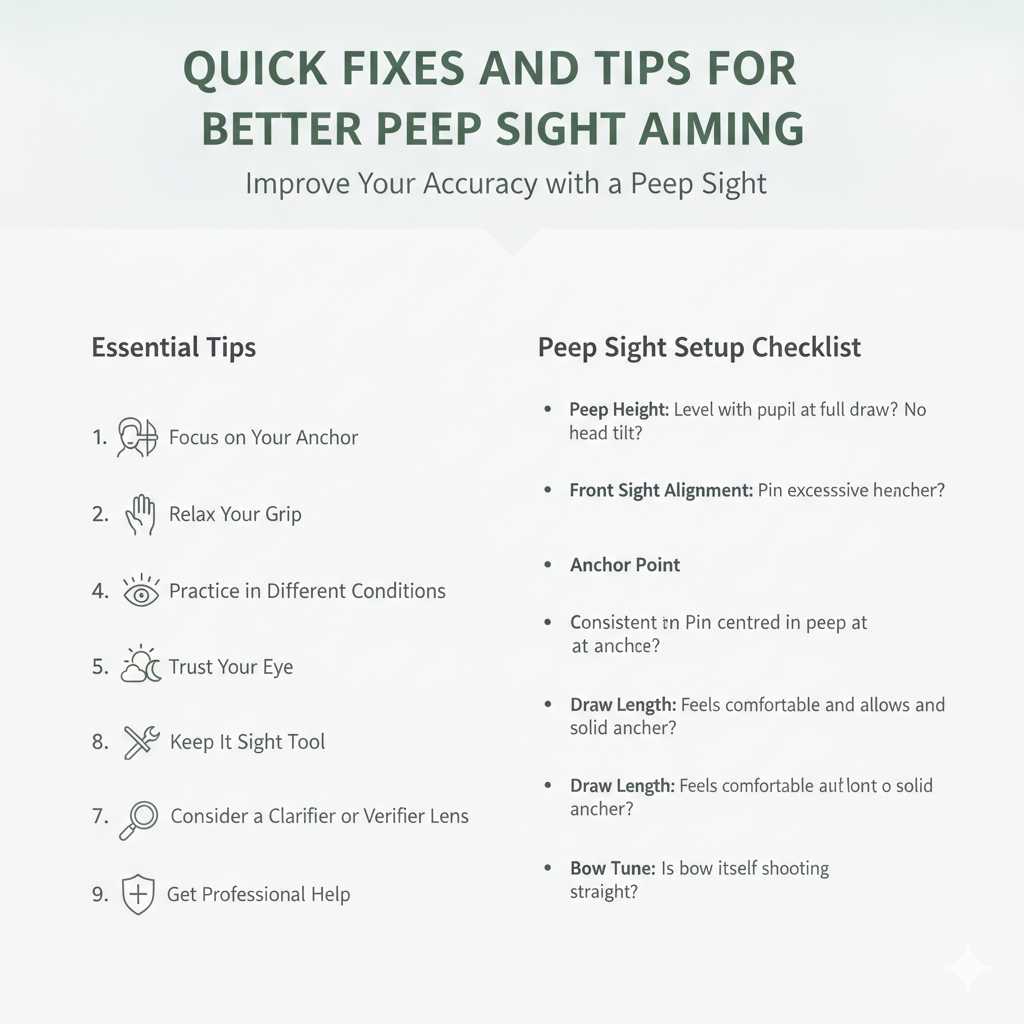
1. Focus on Your Anchor: This is non-negotiable. Make sure your hand or release is in the exact same spot every time.
This consistency is the foundation of good aim.
2. Relax Your Grip: A death grip on the bow will cause tension. This leads to wobble.
Hold the bow lightly. Let the bow’s weight rest in your palm.
3. Breathe: Don’t hold your breath while aiming. Take a natural breath.
Hold it briefly at the peak of your draw. Release the arrow. Then exhale.
4. Trust Your Eye: Your eye is smart. It wants to find the center.
Let it do its job. Don’t try to force the front sight into the peep. It should happen naturally.
5. Practice in Different Conditions: Shoot in bright sun, shade, and low light. This prepares you for real-world scenarios, especially for hunting.
6. Keep It Clean: A dirty peep or front sight can obscure your view. Wipe them down occasionally.
7. Use a Peep Sight Tool: If you’re installing or adjusting your peep height, a tool helps immensely. It ensures you’re not over-stretching or under-drawing.
8. Consider a Clarifier or Verifier Lens: If you struggle with low light or seeing your front sight, these can be game-changers. A clarifier magnifies the sight pin, while a verifier magnifies the target.
Talk to a pro about which is best for you.
9. Get Professional Help: If you’re struggling, don’t hesitate to go to a reputable archery shop. A qualified technician can tune your bow and help you set up your sights correctly.
This is an investment in your shooting.
Peep Sight Setup Checklist
Peep Height: Level with pupil at full draw? No excessive head tilt?
Front Sight Alignment: Pin centered in peep at anchor?
Anchor Point: Consistent and repeatable?
Draw Length: Feels comfortable and allows for a solid anchor?
Bow Tune: Is the bow itself shooting straight?
Frequently Asked Questions about Peep Sights
What is the best peep sight size for beginners?
For beginners, a good starting point is usually a medium-sized peep, around 3/16 inch or 1/4 inch in diameter. These sizes let in more light and are a bit more forgiving if your aim isn’t perfect yet. As you get more experienced, you might try smaller ones for more precision.
Do I need a peep sight for bowhunting?
Many bowhunters use peep sights because they significantly increase accuracy. They provide a consistent aiming point, which is crucial when you have limited time to make a shot. However, some hunters prefer to use other aiming methods like sights without a peep, especially in very low light or for specific hunting styles.
How do I know if my peep sight is installed correctly?
A correctly installed peep sight should be secure on your string. When you draw your bow to your anchor point, the peep should be at a height that allows your eye to look through it naturally, without tilting your head up or down too much. The bowstring should also be properly timed and balanced.
Can a peep sight affect my bow’s performance?
Yes, a peep sight can affect your bow’s performance, especially if it’s not installed correctly. It adds a small amount of weight to the string, which can change the bow’s timing. This is why it’s crucial to have it installed by a professional with the right equipment, like a bow press, to ensure proper tuning.
What is the difference between a clarifier and a verifier peep sight?
A clarifier peep sight has a lens that magnifies your front sight pin. This makes the pin appear larger and brighter, which is very helpful in low light conditions. A verifier peep sight has a lens that magnifies the target.
This can help you see small details at a distance, but it can also make the front sight pin appear further away.
How often should I check my peep sight?
You should check your peep sight regularly, especially before each hunting trip or important shooting session. Look for any signs of wear, fraying on the string around the peep, or if it seems loose. If you notice any damage or uncertainty, it’s best to have it inspected by a professional archer or bow technician.
Conclusion
Learning to aim with a peep sight is a journey. It takes patience and practice. But the reward is a significant boost in your archery accuracy.
By understanding how it works and how to set it up properly, you’re building a strong foundation. Focus on consistency in your draw, anchor, and sight picture. Don’t be afraid to seek advice when you need it.
Enjoy the process of improving your aim. Happy shooting!