How to Beat Archery Competition: Mental and Form Tactics
To beat archery competitions, focus on consistent practice, a solid mental game, understanding your equipment, and knowing the competition rules. Mastering your shooting form, staying calm under pressure, and strategizing your shots are key elements for success on the archery range.
Welcome, aspiring archers! Ever feel a flutter of nerves before picking up your bow for an archery competition? It’s completely normal! Many beginners feel the same way. The good news is that success in archery isn’t just about natural talent; it’s built on smart preparation and a clear strategy. Whether you’re aiming for your first local match or a bigger event, having a plan can make a huge difference. Forget feeling overwhelmed.
This guide will walk you through proven steps, from perfecting your shot to winning over those competition jitters. Let’s get you ready to hit the mark and feel confident as you step up to the shooting line. We’ll cover everything you need to know to give your best performance.
Mastering the Fundamentals for Competition Success
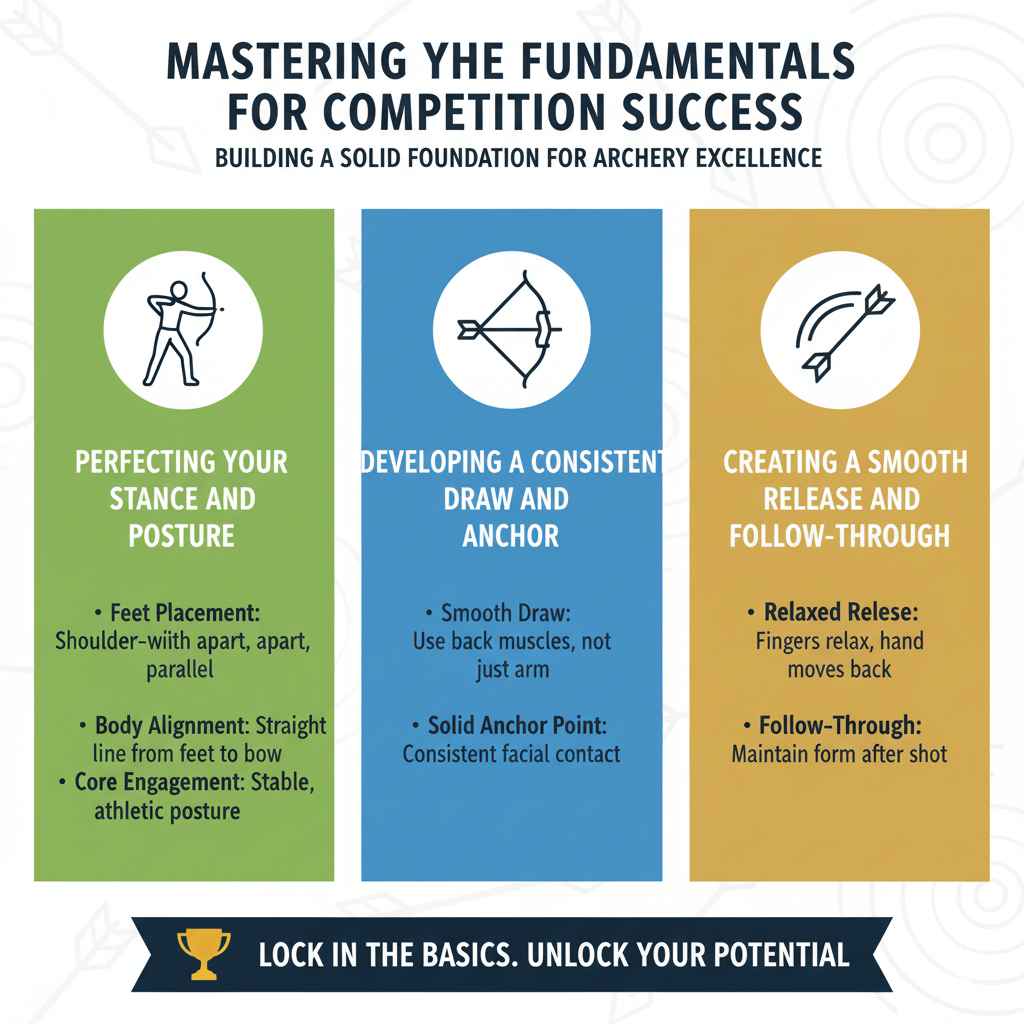
Before diving into competition-specific strategies, it’s crucial to have a strong foundation. Think of this as building a solid house – you need a firm base before you can even think about the roof! For archery, this means having your basic shooting skills locked in.
Perfecting Your Stance and Posture
Your stance is where every shot begins. A stable, balanced stance allows for consistent body alignment, which is essential for accuracy.
Feet Placement: Stand with your feet shoulder-width apart, parallel to the shooting line. Some archers prefer a slightly open stance (one foot a little further forward), but consistency is key. Find what feels natural and stable for you.
Body Alignment: Your shooting side (the side your bow arm is on) should be slightly forward. Your head should be up, and your shoulders relaxed, not tensed. Imagine a straight line running from your feet, up through your hips, shoulders, and finally to your bow.
Core Engagement: Gently engage your core muscles. This helps maintain stability and prevents your body from swaying. It’s not about a tense, rigid posture, but a stable, athletic one.
Developing a Consistent Draw and Anchor
The draw and anchor are critical phases where you bring the bowstring back and hold it. Consistency here directly impacts where your arrow goes.
Smooth Draw: Pull the string smoothly and steadily back. Avoid jerky movements. Your drawing motion should come from your back muscles, not just your arm.
Solid Anchor Point: Find one or two consistent points on your face where your drawing hand rests when the bow is fully drawn. Common anchor points include touching your chin, the corner of your mouth, or under your jawbone. This anchor point tells your body you’re at full draw and ready to shoot. It helps ensure your draw length is always the same.
Creating a Smooth Release and Follow-Through
The release and follow-through are the final moments of your shot, but they have a huge impact on accuracy.
Relaxed Release: When you’re at your anchor point and ready, relax the muscles in your drawing hand’s fingers. Let the string slip away cleanly. Don’t pluck the string; allow your hand to move naturally backward.
Follow-Through: After the string is released and the arrow has left the bow, maintain your shooting form for a moment. Keep your bow arm pointed towards the target and your drawing hand moving back slightly. This ensures you don’t interfere with the arrow’s flight.
The Mental Game: Your Secret Weapon
Archery is as much a mental sport as it is a physical one. Competitions can be noisy, distracting, and pressure-filled environments. Learning to manage your mind is a game-changer.
Managing Competition Nerves
Everyone gets nervous, but you can learn to use that energy positively.
Deep Breathing Techniques: Before your turn, take slow, deep breaths. Inhale through your nose, hold for a few seconds, and exhale slowly through your mouth. This calms your nervous system. Experts at the Harvard Health Publishing recommend diaphragmatic breathing for stress reduction.
Visualization: Before the competition, visualize yourself shooting perfectly. See yourself calm, focused, and hitting the target consistently. During the competition, visualize each shot before you take it.
Focus on Process, Not Outcome: Instead of worrying about hitting a perfect score or beating someone, focus on executing each step of your shot routine perfectly. Trust that good execution will lead to good results.
Developing Focus and Concentration
In a competition, distractions are everywhere – other archers, noise, wind. You need to train your focus.
Pre-Shot Routine: Develop a consistent routine for every single shot. This routine could include: checking stance, drawing, finding anchor, aiming, executing the release, and follow-through. When you stick to this routine, it becomes automatic and helps block out distractions.
Target Focus: When you’re aiming, focus intensely on the spot you want to hit. Train your eyes to lock onto that point. As you get closer to the release, your peripheral vision should fade away.
Positive Self-Talk: Replace negative thoughts with positive affirmations. Instead of “Don’t miss,” tell yourself “You’ve got this,” “Steady aim,” or “Smooth release.”
Dealing with Pressure and Mistakes
It’s not about never making mistakes; it’s about how you recover.
Acceptance: Understand that some shots won’t be perfect. It happens to every archer. Don’t let one less-than-ideal shot derail your entire competition.
Reset and Re-focus: After a miss or a low score, take a moment. Take a deep breath, shake out your drawing hand, and consciously reset your focus on the next shot. Remind yourself of your positive self-talk and your pre-shot routine.
Learning from Errors: Instead of dwelling on mistakes, analyze them briefly and constructively. Was it your stance, draw, or aim? Use that information to make a small adjustment for the next shot, but not so big that it disrupts your form.
Understanding Your Equipment and the Competition Rules
Your bow and arrows are your tools. Knowing they are set up correctly and understanding the rules of the game ensures you’re not disadvantaged.
Bow Setup and Maintenance
A well-maintained and properly tuned bow will perform more consistently.
String and Cables: Ensure your bowstring and cables are in good condition, with no fraying. They should be properly lubricated at the cams/wheels.
Arrow Spine: Arrows need to match the draw weight of your bow. Using arrows that are too stiff or too weak can lead to poor arrow flight and grouping. Your local archery shop can help you determine the correct spine.
Sight and Rest: Make sure your sight is secure and your arrow rest is functioning correctly. Simple checks can prevent equipment failure during a competition.
Regular Checks: A quick pre-competition check of all parts of your bow can save you a lot of stress.
For more in-depth equipment knowledge, resources like the USA Archery website offer great insights into equipment standards and regulations.
Knowing the Competition Format and Rules
Every competition has its own rules and format. Knowing these beforehand is crucial.
Scoring: Understand how the target is scored. Different competitions use different scoring systems (e.g., cumulative score over multiple ends, or points based on grouping).
Shooting Order: Are you shooting in a squad? Is there a set shooting order within the squad? When is it your turn to shoot?
Distance and Target Size: Know the distances you will be shooting from and the size of the target faces. This helps you practice at similar conditions.
Time Limits: Many competitions have time limits for shooting an end (a set of arrows). Practice shooting within these limits.
Equipment Regulations: Some competitions have specific rules about the type of bow, arrows, or accessories you can use.
Here’s a quick look at common differences in competition formats:
| Competition Type | Typical Distances | Target Face Size | Number of Arrows per End | Key Features |
|---|---|---|---|---|
| FITA/World Archery Outdoor | 30m, 50m, 70m (depending on age/division) | Varies, typically 122cm or 80cm | 6 arrows | Olympic style, requires precision at longer ranges. |
| Field Archery | Varies (10-80 yards) over uneven terrain | Varies, often smaller targets | 3 or 4 arrows | Testing accuracy and adaptability in natural settings; often unmarked distances. |
| 3D Archery | Varies (10-60 yards) | Animal-shaped targets | 1 arrow | Simulates hunting scenarios; scoring zones mimic vital organs. |
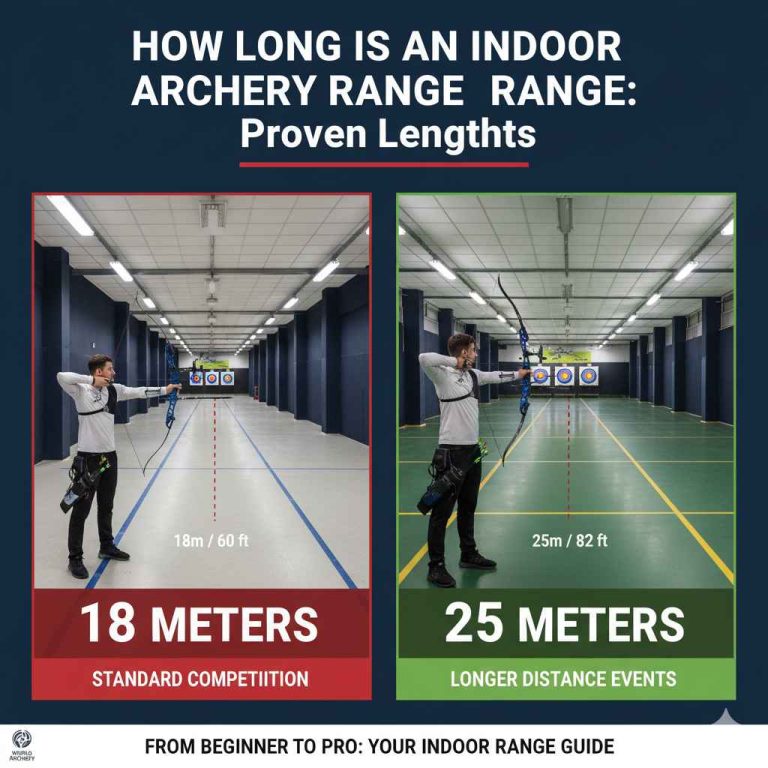
| Indoor Archery | 18m or 25m | Smaller targets (e.g., 40cm for 18m) | 3 or 5 arrows | Controlled environment, focuses on tight groupings. |
Note: The above table provides general examples. Always check the specific rules for the competition you are entering.
Practice Smart, Not Just Hard
Simply shooting a lot of arrows isn’t always the most effective way to improve. Make your practice sessions count, especially with a competition in mind.
Structured Practice Sessions
Treat your practice like a mini-competition.
Simulate Competition Conditions: Shoot at the same distances and with the same number of arrows per end that you’ll encounter in a competition.
Incorporate Pressure: Sometimes, have a friend or family member time you, or use a smartphone app for timing. This adds a bit of pressure.
Focus on Weaknesses: Identify what’s not working well in your shots and dedicate specific practice time to correcting it. If your grouping is wide, focus on your anchor and release.
Endurance Training
Competitions can be long. You need to maintain form and focus throughout.
Shoot More Arrows: Gradually increase the number of arrows you shoot in a single practice session.
Shoot Multiple Ends: Practice shooting several “ends” (sets of arrows) back-to-back with minimal rest. This builds your physical and mental stamina.
Using Training Aids and Drills
Various drills and aids can help refine specific aspects of your shooting.
Blank Bale Shooting: Shooting at a blank target (or a target with no scoring rings) at close range. This drill forces you to focus solely on your form and release without the pressure of aiming.
One-Arrow Drills: Shooting only one arrow per end repeatedly. This makes each shot more deliberate and emphasizes perfect execution.
Anchor Point Drills: Without drawing all the way back, practice drawing to your anchor point repeatedly to ensure it’s always the same.
Release Drills: With the bow unstrung or using a training tab, practice the back-tension release motion.
Pre-Competition Routine: Setting Yourself Up for Success
The day before and the morning of a competition are critical for setting a positive tone.
The Day Before
Equipment Check: Do a thorough check of your bow, arrows, and accessories. Make sure everything is clean, secure, and functioning.
Light Practice: A short, light practice session can help keep your muscles loose and your mind sharp, but avoid overdoing it. You don’t want to be sore or fatigued on competition day.
Rest and Nutrition: Get a good night’s sleep. Eat a balanced, familiar meal the night before. Avoid trying anything new with your diet.
Pack Smart: Prepare your gear bag with everything you might need: bow, arrows, release aid, armguard, finger tab/glove, tools for minor adjustments, water, snacks, sunscreen, hat, appropriate clothing.
Competition Day Morning
Hydration and Nutrition: Have a light, energizing breakfast. Stay hydrated throughout the day by sipping water.
Arrive Early: Give yourself plenty of time to get to the venue, check in, and set up your equipment. Rushing adds unnecessary stress.
Warm-up: This is your chance to get your body and mind ready.
Equipment Setup: Set up your bow and accessories at your assigned shooting position.
Arrow Fletching Check: Ensure all your arrows are in good condition.
Target Familiarization: If permitted, shoot a few arrows at the competition target to get a feel for the distance and lighting.
Physical Warm-up: Simple stretches for your shoulders, back, and arms can help prevent stiffness.
Mental Warm-up: Engage in your pre-shot routine for a few practice arrows, focusing on smooth execution.
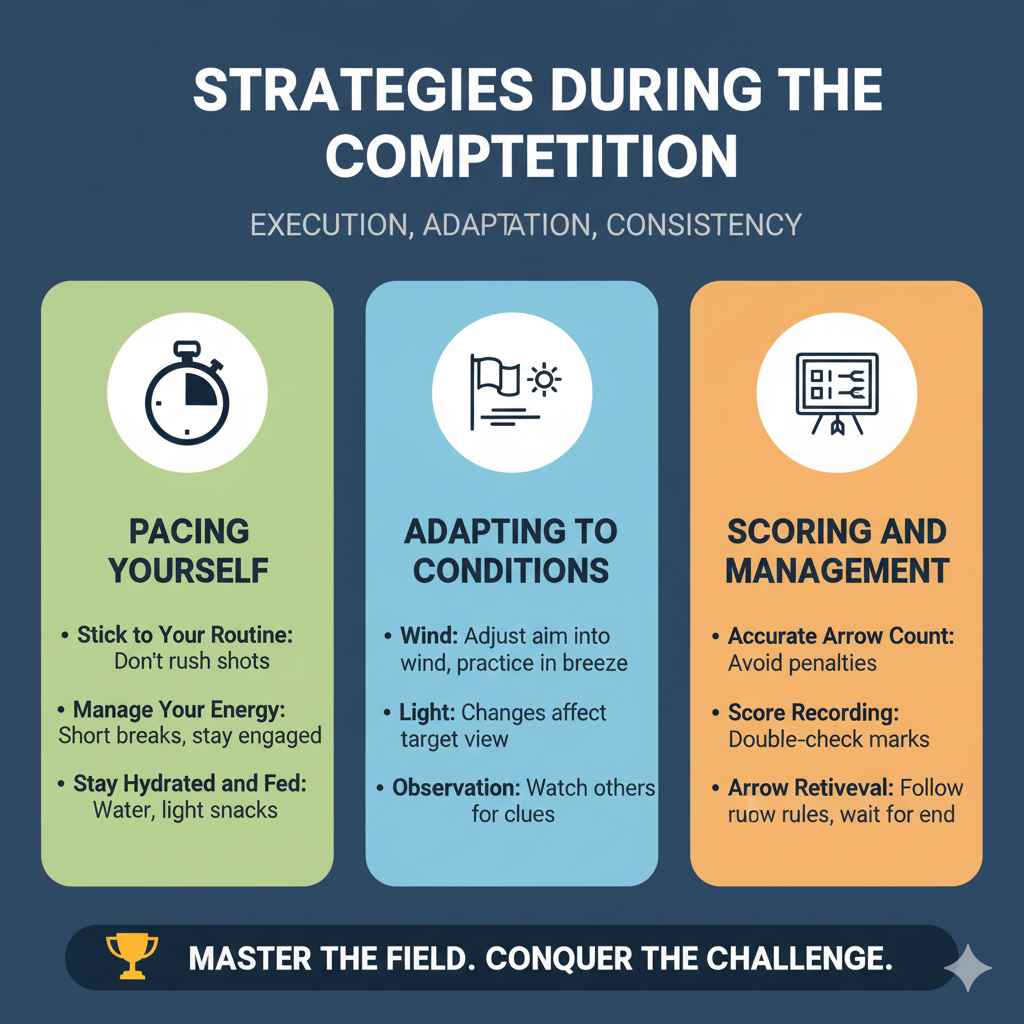
Strategies During the Competition
Once the competition begins, focus on execution, adaptation, and consistency.
Pacing Yourself
Archery competitions can be long, involving multiple ends and potential waiting times.
Stick to Your Routine: Don’t rush your shots, even if you’re waiting for others. Stick to your established pre-shot routine for every arrow.
Manage Your Energy: Take short breaks when you can. Sip water, avoid strenuous activity between shooting turns, and try to stay mentally engaged without getting fatigued.
Stay Hydrated and Fed: Small sips of water and light, energy-boosting snacks can help maintain your focus and physical energy.
Adapting to Conditions
Weather can change, and that affects how your arrows fly.
Wind: If it’s windy, you’ll need to adjust your aiming point or potentially your bow setup slightly. Generally, aim slightly into the wind. Your practice sessions should have included some wind experience.
Light: Changes in light can affect how you perceive the target. Adjust your aiming accordingly.
Observation: Watch how other archers are shooting. Are their arrows behaving differently? This can give you clues about how the conditions are affecting shots.
Scoring and Arrow Management
Accurate Arrow Count: Always ensure you shoot the correct number of arrows per end. Shooting too many can result in penalties or disqualification.
Score Recording: Record your scores accurately immediately after each end, if required. Double-check your marks.
* Arrow Retrieval: Be aware of the rules regarding arrow retrieval. Usually, you wait until everyone in your end has shot.
FAQ: Your Archery Competition Questions Answered
Here are some common questions beginners have about archery competitions.
Q1: How many arrows do I need for a competition?
A1: You’ll need enough arrows to shoot the number of ends required for your competition. It’s wise to bring at least one spare arrow in case one is damaged. Some archers bring a full dozen arrows, just to be safe.
Q2: What should I wear to an archery competition?
A2: Wear comfortable, non-restrictive clothing. Avoid loose sleeves on your bow arm that could catch the string. Layers are good, as temperatures can fluctuate. Flat-soled shoes are recommended for stability.
Q3: How can I practice for different wind conditions?
A3: Whenever possible, practice outdoors on windy days. Pay attention to how the wind affects your arrow flight at various distances. Try aiming into the wind slightly to see how it compensates. You can also ask experienced archers for tips.
Q4: What’s more important: accuracy or consistency?
A4: Both are crucial, but consistency often leads to accuracy. If your shots are always grouped closely together, even if they’re not perfectly centered on the target, it’s easier to make minor adjustments and achieve a high score. Focus on making every shot feel the same.
Q5: Should I adjust my bow before a competition?
A5: It’s generally not recommended to make major adjustments to your bow right before a competition, especially if you haven’t tested those changes thoroughly. Stick with equipment you know and trust. Minor tweaks for things like arrow rest or sight may be okay if you’ve practiced with them.
Q6: What if I forget something important for my competition?
A6: Don’t panic! Most archers are very friendly and supportive. Many are willing to lend a spare part, like a release aid or a set of allen wrenches, if you’ve genuinely forgotten something. It’s always good to check in with your squad mates.
Q7: How do I handle a bad end during a competition?
A7: It’s natural to feel discouraged, but try not to. Take a deep breath, focus on your full pre-shot routine for the next arrow, and treat each shot independently. Remind yourself that it’s part of the game and you can recover on the next end.
Moving Forward: Beyond Your First Competition
Winning an archery competition is a fantastic feeling, but the journey is just as rewarding. Every competition you participate in, whether you win or lose, is a learning opportunity.
Keep practicing those fundamentals. Revisit your stance, draw, anchor, release, and follow-through regularly.