Why is Composite Bow Significant: Unveiling Its Historic Power
For thousands of years, the composite bow has left a powerful mark on history. Its unique design changed warfare, hunting, and even cultural traditions across continents. But why is this ancient weapon so significant? The answer goes far beyond its unusual look or the materials used to make it. To understand the true impact of the composite bow, we must explore its origins, technology, and influence on societies from ancient empires to modern enthusiasts.
The Origins Of The Composite Bow
The story of the composite bow begins over 3,000 years ago, in Central Asia. Early steppe cultures, such as the Scythians and the Mongols, lived in wide, open grasslands. Here, speed and mobility were crucial. Carrying large, heavy weapons was not practical. The composite bow emerged as a solution: small enough to use on horseback, yet powerful enough to hunt large animals and defeat armored enemies.
Unlike simple wooden bows, the composite bow used a layered design. Craftsmen glued together wood, horn, and animal sinew in a precise way. This was more than just clever engineering, it was a reflection of the materials available and the needs of these nomadic societies. The design spread to other regions, including China, the Middle East, and even Eastern Europe.
Unique Construction: What Makes A Composite Bow Different?
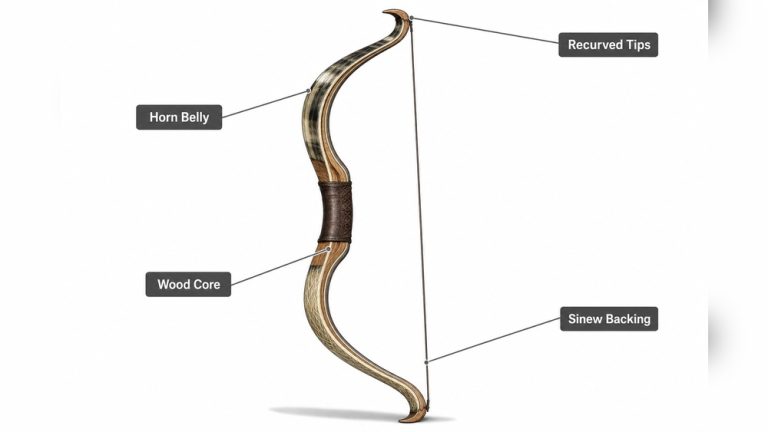
The composite bow stands out because of its laminated structure. While a regular “self bow” is made from a single piece of wood, the composite bow combines three main materials:
- Wood forms the core, providing shape and some flexibility.
- Horn is glued to the belly (the side facing the archer), which compresses well under tension.
- Sinew (animal tendon) is glued to the back, which stretches easily and adds power.
This combination allowed the bow to store much more energy than wood alone. The process of making a composite bow was complex, often taking months or even years. Craftsmen needed to understand humidity, glue recipes, and the way each material reacts to stress.
Comparing Composite Bows And Self Bows
To see why the composite bow was so significant, it helps to compare it with the more common self bow:
| Feature | Composite Bow | Self Bow |
|---|---|---|
| Main Materials | Wood, horn, sinew | Single piece of wood |
| Size | Short (often 90, 120 cm) | Long (often 150, 180 cm) |
| Power | Very high for size | Moderate |
| Draw Weight | Can be very high | Usually moderate |
| Weather Sensitivity | Vulnerable to moisture | Less sensitive |
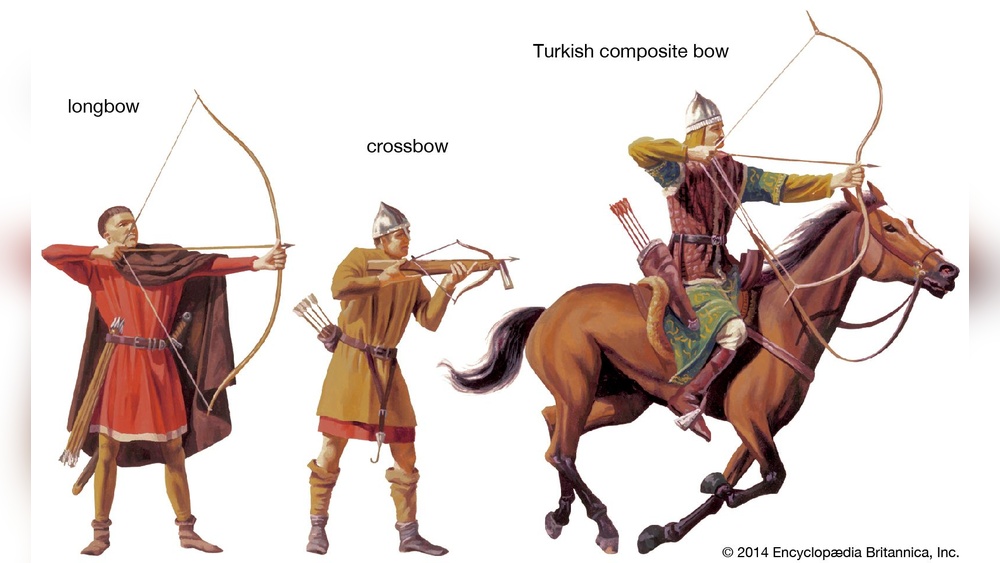
The short length of the composite bow made it perfect for archers on horseback, while its power rivaled (or surpassed) much longer bows.
Advantages That Changed Warfare
Why did the composite bow matter so much in military history? Its advantages were not just technical; they changed the way armies fought.
Mobility And Horse Archery
Mounted archers were nearly unstoppable on open ground. The composite bow let them shoot with deadly force even while riding at full speed. No other weapon of the time offered this mix of power and convenience. Steppe armies could strike quickly, rain arrows on their enemies, and retreat before they could be caught.
Superior Range And Penetration
Even though composite bows were small, they could shoot arrows hundreds of meters. In skilled hands, they could pierce armor or shields that stopped weaker arrows. This gave users a huge advantage over foot soldiers with less powerful weapons.
Psychological Impact
Facing a swarm of arrows from fast-moving horsemen was terrifying. Many armies broke and fled before a single sword was drawn. The Mongol Empire is a famous example, their archers used composite bows to conquer much of Eurasia, defeating larger armies again and again.
Adaptation By Many Civilizations
The Persians, Turks, Chinese, and Egyptians all adopted the composite bow. Each culture made small changes, but the core design stayed the same. For example, the Ottoman Turks developed some of the most powerful versions, using them in both war and sport.
Engineering Marvel: The Science Behind The Power
The composite bow’s power comes from more than just its materials. Its shape is also special. Most composite bows are recurve bows, the tips curve away from the archer. This shape adds even more energy to the shot.
How Recurve Works
When you draw a recurve bow, the curved tips store extra energy. When you release the string, this energy pushes the arrow faster than a straight-limbed bow of the same size.
How Energy Is Stored And Released
The combination of horn and sinew makes the bow very “springy. ” Horn compresses, and sinew stretches, creating a powerful snap when the string is released. This means arrows fly faster and hit harder.
Example: The Mongol Bow
The famous Mongol composite bow could shoot arrows at speeds over 150 feet per second. Archers could hit targets over 300 meters away, further than most European longbows of the same era. This was a key reason for Mongol victories.
Credit: www.ebay.com
Cultural And Social Significance
The influence of the composite bow is not limited to the battlefield. It shaped traditions, sports, and even religious beliefs.
Symbol Of Skill And Status
In many societies, skill with the composite bow was a sign of nobility. Kings, nobles, and warriors were expected to master it. In Persia, archery contests were as important as poetry or music.
Sports And Ceremonies
The legacy of the composite bow survives in modern sports. In Turkey, “Turkish archery” uses traditional composite bows in competitions. In Korea, ceremonial archery remains part of royal rituals.
Myths And Legends
Many epic tales feature heroes who wield composite bows. For example, the Persian hero Arash the Archer is said to have fired an arrow so far it marked the border of a nation. These stories highlight the bow’s place in the imagination as well as reality.
Technological Challenges And Craftsmanship
Making a composite bow was not easy. The process required deep knowledge and patience.
Material Preparation
- Horn came from animals like buffalo or goat. It had to be cut thin and carefully shaped.
- Sinew was soaked, separated into fibers, and glued to the bow’s back.
- Wood was often maple, mulberry, or elm.
Gluing And Curing
The layers were glued with natural adhesives, like fish bladder or hide glue. The bow was then wrapped and left to cure for months. Any mistake could ruin the weapon.
Warping And Climate Issues
Composite bows are sensitive to humidity. If exposed to rain or soaked, the glue could fail, or the bow could warp. Archers carried special cases to protect them.
Pro Tip: If you own a composite bow today, avoid exposing it to wet or very humid conditions. Always store it in a dry place and inspect the joints for signs of separation.

Credit: www.ebay.com
Comparing Composite Bows With Other Ancient Bows
To understand the composite bow’s place in history, compare it with other famous bows:
| Bow Type | Main Region | Typical Length | Max Range | Notable Features |
|---|---|---|---|---|
| Composite Bow | Asia, Middle East, Eastern Europe | 90, 120 cm | Over 300 meters | Short, powerful, recurve tips |
| Longbow | England, Wales | 150, 180 cm | About 250 meters | Simple, very long, all-wood |
| Japanese Yumi | Japan | 200, 240 cm | About 200 meters | Asymmetrical, bamboo/wood |
| Self Bow | Worldwide | Varies | Varies | Single wood piece |
The composite bow’s compact size and high power were unmatched for mounted combat.
Decline And Survival: Why Did The Composite Bow Fade?
For centuries, the composite bow dominated battlefields from China to the Mediterranean. But by the 17th century, its use began to fade. Why?
The Rise Of Gunpowder
Firearms changed warfare forever. Muskets and cannons could pierce armor at longer ranges. Training an archer took years, but anyone could learn to use a gun in weeks. Armies switched to guns for practical reasons.
Industrialization And Standardization
Making composite bows was time-consuming and required skilled artisans. Guns could be mass-produced in factories. As nations modernized, bows became less common.
Survival In Sport And Tradition
Despite its decline in warfare, the composite bow survives in traditional sports and ceremonies. Modern archers study its construction and technique, keeping the craft alive.
Non-obvious Insight
Many assume gunpowder “killed” the composite bow immediately. But in regions like the Middle East, bows and guns were used side by side for centuries. The bow’s silence, speed, and reliability in certain conditions kept it relevant longer than most people realize.
Modern Relevance And Revival
Today, the composite bow is not just a historical artifact. It inspires modern bowyers and archers around the world.
Historical Reenactment And Sport
Archery clubs and reenactment groups use replica composite bows to experience ancient warfare and sport. International competitions, such as the World Traditional Archery Festival, attract thousands of participants.
Engineering And Material Science
The design principles of the composite bow, combining materials for strength and flexibility, are used in modern products. For example, high-end sporting equipment and some aerospace components use layered materials in a similar way.
Lessons In Craftsmanship
The patience, skill, and creativity needed to make a composite bow are respected by craftsmen today. Learning to build one teaches lessons about natural materials, engineering, and the value of tradition.
Composite Bows In Popular Culture
The image of the composite bow still appears in movies, books, and video games. Characters like Mongol horsemen or Persian warriors are rarely shown without their signature recurved bows.
Example: The Mongol Archer In Film
Films like “Mongol: The Rise of Genghis Khan” show the dramatic effect of composite bows in battle scenes. The speed and accuracy of mounted archery are highlighted as key to military success.
Influence On Modern Archery
Some Olympic recurve bows borrow the shape and energy storage ideas from ancient composite bows, even if the materials are now fiberglass and carbon. The legacy lives on, even in high-tech sports.
Two Insights Beginners Often Miss
- Making a composite bow is a slow, risky process. Even skilled bowyers lose bows to warping or glue failure. Newcomers expect a fast build, but patience is key.
- Draw length matters more than draw weight. Because composite bows are short, proper technique is vital. Pulling too far can break the bow or ruin its power. Many beginners focus only on strength, but precision is just as important.
The Composite Bow’s Enduring Influence
The composite bow is more than a tool or weapon. It’s a symbol of human ingenuity, blending art, science, and culture. From the Mongol steppes to Persian poetry, its story is woven into the history of entire civilizations. Even as technology moves forward, the lessons of the composite bow remain relevant: the right materials, used with skill and patience, can change the world.
Frequently Asked Questions
What Is The Main Difference Between A Composite Bow And A Recurve Bow?
A composite bow refers to its construction: layers of wood, horn, and sinew glued together. A recurve bow describes the shape, where the limbs curve away from the archer at the tips. Many composite bows are also recurve bows, but not all recurve bows are composite, modern recurves are often made from fiberglass or carbon.
How Do Composite Bows Perform In Cold Or Wet Climates?
Composite bows can become fragile in wet or humid conditions because natural glues may weaken. In cold, dry climates, they perform well, which is why they were popular in Central Asia. Modern versions use synthetic glues, making them more resistant to weather.
Are Composite Bows Still Used For Hunting Today?
Some traditional hunters use composite bows, especially in regions with a strong archery heritage, like Mongolia or Turkey. However, most modern hunters use compound or recurve bows made from modern materials for reliability and convenience.
What Does It Take To Learn To Shoot A Composite Bow?
Learning to shoot a composite bow requires practice and good instruction. The short length and high draw weight mean proper technique is crucial. Beginners should start with lower draw weights and focus on form, aiming, and safe handling.
Where Can I Learn More About The History And Making Of Composite Bows?
To dive deeper, check out resources like the Wikipedia page on the composite bow. You’ll find detailed history, diagrams, and links to further reading.
The story of the composite bow is not just about arrows and battles, it’s about human creativity and adaptability. Whether you’re a historian, an archer, or simply curious, the significance of the composite bow continues to inspire today.