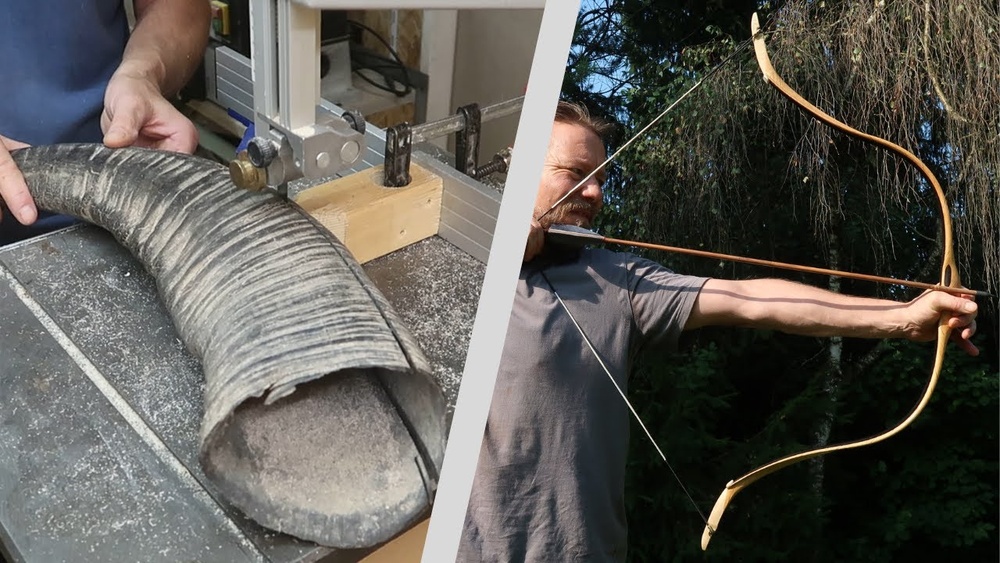
Where was the Composite Bow Made: Unveiling Its Ancient Origins
The story of the composite bow is a journey through time, geography, and culture. This ancient weapon, made from layers of different materials, changed the way people hunted and fought. But where did the composite bow first appear? And how did it spread across continents? Many have heard of the legendary bows of Mongol horsemen or Egyptian warriors, but few know the complex origins and evolution of this tool. By looking at archaeology, ancient texts, and modern research, we can trace the roots of the composite bow and understand its impact on human history.
Understanding The Composite Bow
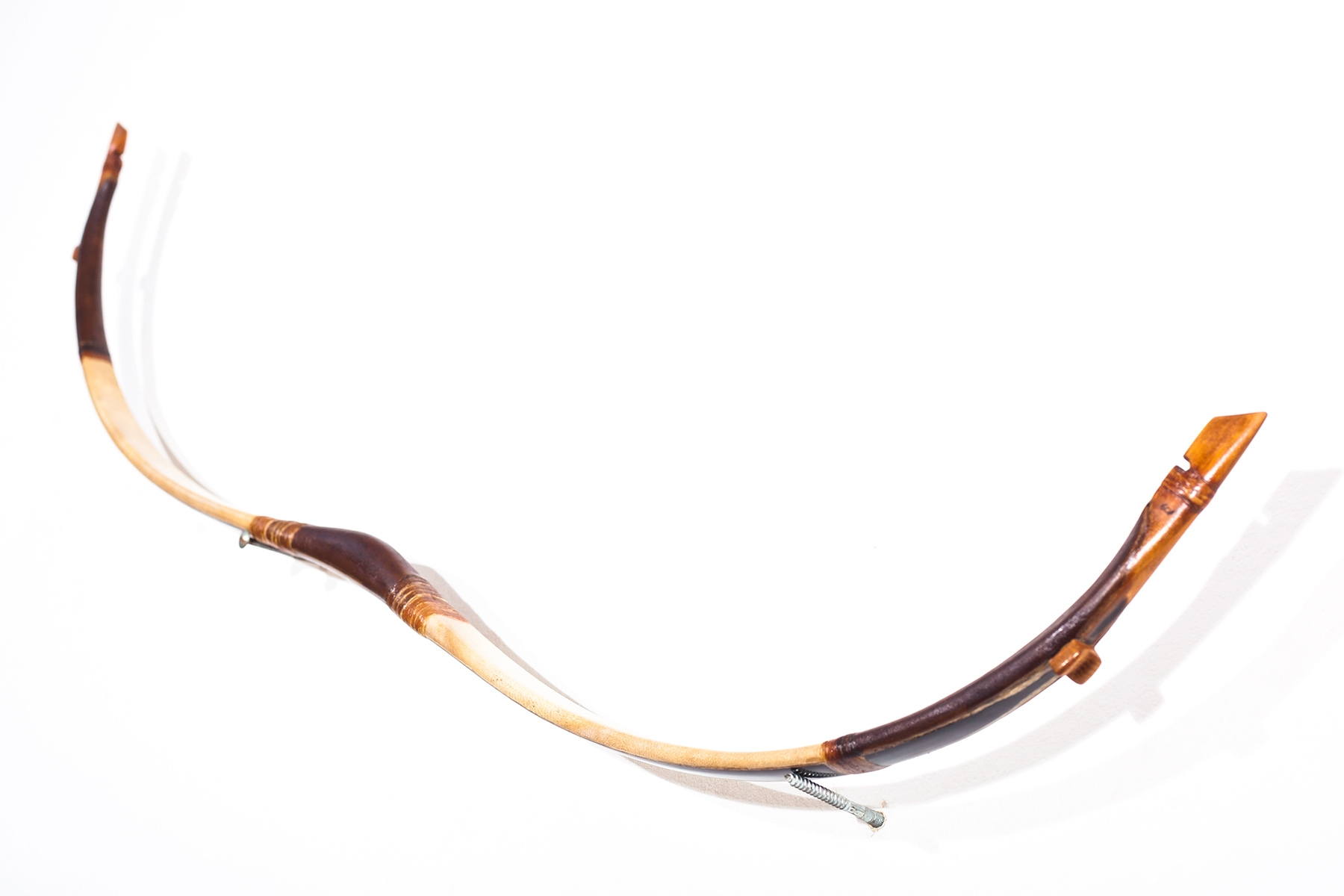
The composite bow is not just a simple wooden bow. It is a complex weapon, typically made by combining wood, horn, and sinew. These materials are glued together to create a bow that is both strong and flexible. The result is a bow that is smaller than a traditional wooden longbow but can shoot arrows with much greater force. This construction allows archers to use the bow on horseback or in tight spaces, making it ideal for mounted warriors.
The term “composite” refers to the bow’s construction from more than one material. Each part plays a special role: wood provides structure, horn adds compression strength, and sinew (animal tendon) gives tension power. The glue, often made from animal hide or fish bladders, binds these layers. This combination creates a bow that stores more energy than a single-material bow of the same size.
The Earliest Origins: Where Was The Composite Bow Made?
Archaeological Evidence
The oldest known composite bows come from the Eurasian Steppe. Archaeologists have found fragments of these bows in tombs and settlements dating back over 4,000 years. The earliest clear evidence comes from the Sintashta culture (about 2100, 1800 BCE), located in what is now southern Russia and northern Kazakhstan. Fragments of bows found in burial sites suggest that these people understood the technique of combining materials for increased power.
Another early example is from Ancient Egypt. Composite bows appear in Egyptian art and tombs from around 1700 BCE. The famous tomb of Pharaoh Tutankhamun (ruled c. 1332, 1323 BCE) contained several composite bows, showing the value placed on this technology.
The Birthplace Debate
While the steppe cultures and Egypt both show early use, most experts agree the composite bow likely originated in the Eurasian Steppe. This vast grassland, stretching from Eastern Europe through Central Asia to China, was home to nomadic horse-riding peoples. These groups needed powerful, portable weapons that could be used on horseback. The composite bow, small but strong, was perfect for their needs.
Researchers point to the Sintashta-Petrovka and Andronovo cultures as likely inventors. These cultures had access to the needed materials, horn from cattle or sheep, sinew from hunted animals, and strong woods from local forests. The technology then spread outward, through trade, conquest, and migration.
Spread To Other Regions
The composite bow did not remain a steppe secret. Its use soon appeared in Mesopotamia, Egypt, the Levant, and later in India and China. Each region adapted the design to local materials and needs, but the essential idea remained.
| Region | Earliest Evidence | Materials Used | Notable Users |
|---|---|---|---|
| Eurasian Steppe | ~2100 BCE | Wood, horn, sinew | Sintashta, Scythians |
| Egypt | ~1700 BCE | Wood, horn, sinew | Pharaohs, Chariot warriors |
| China | ~1200 BCE | Bamboo, horn, sinew | Shang, Han dynasties |
| India | ~1000 BCE | Bamboo, horn, sinew | Vedic warriors |

Credit: www.youtube.com
Why Did The Composite Bow Develop In The Steppe?
Environmental Reasons
The Eurasian Steppe is an open, grassy region, perfect for horse riding. The people here became expert horsemen. A long wooden bow, like those in Western Europe, was too big and awkward for use on horseback. The composite bow, compact and powerful, fit the needs of mounted archers perfectly.
The steppe environment also offered the raw materials. Herds of cattle and sheep provided horn and sinew. Forests, though not as dense as in Europe, gave enough wood for the bow’s core. The ability to make glue from animal products completed the toolkit.
Social And Military Needs
Steppe societies were often in conflict, either raiding neighbors or defending against invaders. Speed and mobility were keys to survival. The composite bow allowed warriors to shoot accurately while riding fast. This gave them an advantage over foot soldiers with simple bows or spears.
In my experience, understanding how technology fits a society’s needs is key to seeing why it spreads. The composite bow is a perfect example: it met the unique challenges of steppe life in a way no other weapon could.
Composite Bow Technology: How Was It Made?
Making a composite bow is a complex, time-consuming process. The bowyer (bow maker) must shape the wood core, usually from a tough, elastic wood like maple or birch. Thin strips of horn are glued to the belly (the side facing the archer), and layers of sinew are glued to the back. The glue must be strong and flexible, often made from boiled animal hide.
The bow is then bound with thread or sinew and left to cure for several months. This curing period is critical: if rushed, the bow will break when drawn. Once ready, the bow is sometimes covered with bark, leather, or painted to protect it from moisture.
Design Variations
Different cultures made unique changes to the composite bow. For example, Scythian bows were short and deeply curved, while Turkish bows had long, elegant tips (called “siyahs”) for more power. Chinese bows sometimes used bamboo for the core, making them even lighter.
| Culture | Bow Shape | Unique Feature |
|---|---|---|
| Scythian | Short, double-curved | Extreme reflex for compact power |
| Turkish | Short, recurved with long tips | High arrow speed |
| Chinese | Medium, flat-limbed | Bamboo core for lightness |
| Mongol | Short, wide limbs | Great for horseback archery |
Pro Tip:
Making a composite bow is not for beginners. The process can take six months or more, and small mistakes in gluing or curing can ruin the bow. If you want to try, start with a simple wooden bow first.
The Spread Of Composite Bow Technology
From The Steppe To The World
Once perfected in the steppe, the composite bow spread quickly. Scythians, fierce nomads of the Black Sea region, used them to dominate their neighbors. Persian armies, facing Scythian raids, adopted the bow for their own cavalry. Egyptian pharaohs imported composite bows from the Hyksos, a group of invaders from Western Asia.
In the Near East, the bow became a symbol of power and skill. Assyrian kings boasted of their archers’ abilities. By 1000 BCE, nearly every advanced army in the region used some form of composite bow.
Arrival In East Asia
China learned about the composite bow around 1200 BCE, probably through contact with steppe nomads. Chinese craftsmen added their own touches, such as the use of bamboo and silk wrappings. By the time of the Han Dynasty (206 BCE, 220 CE), Chinese archers were famous for their skill with the composite bow.
In Korea and Japan, similar bows were developed, sometimes with local differences. Japanese bows (yumi) are famous for their length and asymmetry, but early forms were influenced by the composite design.
India And Beyond
Composite bows appear in ancient Indian texts like the Mahabharata and the Vedas. These bows were made with local materials, like bamboo, and used by elite warriors. Indian archers valued the bow for its power and ease of use from chariots or horseback.
Eventually, the technology reached the Middle East, North Africa, and parts of Europe. Each region adjusted the design for its own style of warfare and available resources.
Impact On Warfare And Society
Military Advantages
The composite bow changed warfare. Its power and range allowed mounted archers to attack from a distance and retreat quickly. Armies equipped with these bows could defeat larger forces of infantry. The Mongol conquests in the 13th century are a famous example: Genghis Khan’s horsemen, armed with composite bows, conquered much of Asia and Eastern Europe.
The bow’s design also made it easy to carry on horseback. Soldiers could move quickly, shoot while riding, and avoid close combat when needed.
Social And Cultural Effects
The prestige of the composite bow was high. In some cultures, owning one was a sign of nobility. Training with the bow became a rite of passage for young warriors. The bow also appears in myths and legends, from the epic of Gilgamesh to the exploits of Robin Hood (though Robin used a longbow, not a composite).
The skills needed to use and make these bows created specialist jobs. Bowyers and fletchers (arrow makers) held respected positions in many societies.
Example:
The Mongol Empire, at its height, controlled the largest land empire in history. Their success was due in part to the composite bow, which allowed their horsemen to outshoot and outmaneuver enemies.
Credit: classic-bow.com
Composite Bow Vs. Other Bows
How did the composite bow stack up against other ancient bows? The most common rivals were the self bow (made from a single piece of wood) and the longbow (a tall, powerful self bow, popular in medieval England).
| Type | Materials | Size | Draw Weight | Ideal Use |
|---|---|---|---|---|
| Composite Bow | Wood, horn, sinew | Short | High | Horseback, mobile warfare |
| Self Bow | Wood | Medium to long | Medium | Foot soldiers, hunting |
| Longbow | Yew wood (often) | Tall (up to 6 ft) | Very high | Infantry, massed volleys |
The composite bow’s main advantages were its small size and power. A longbow, while powerful, was much harder to use on horseback. Self bows were easier to make but lacked the range and punch of a composite.
Common Misconceptions About The Composite Bow
Many people think the composite bow was always used by nomads or horsemen. While that is often true, it also found use with foot soldiers, chariot warriors, and even in sieges. Another misconception is that making a composite bow is only about layering materials.
In reality, the process is highly skilled, and a poorly made bow will fail quickly.
Some believe the composite bow was always superior to other bows. In fact, it needed careful maintenance. If left in damp conditions, the glue could fail. This is one reason why the English longbow, made from a single piece of yew, became popular in rainy Britain, while the composite bow thrived in drier climates.
The Composite Bow In Modern Times
Today, the composite bow is mostly seen in historical reenactments, archery sports, and museums. Modern materials, like fiberglass and carbon fiber, have replaced horn and sinew in most sports bows, but traditional makers still build composite bows using ancient methods.
Interest in these bows is growing, thanks to movies, video games, and a renewed appreciation for traditional skills. Some archers train in horseback archery, using replica composite bows to experience the challenge of ancient warriors.
Non-obvious Insights Beginners Usually Miss
- Climate matters: The composite bow’s glue is sensitive to moisture. That’s why these bows were less common in wet regions like England or Western Europe.
- Bow size is deceptive: Beginners may think a small bow is weak. In fact, the composite design allows a short bow to store and release more energy than a much larger self bow.
Frequently Asked Questions
What Is The Main Difference Between A Composite Bow And A Recurve Bow?
A composite bow is defined by its construction, layers of different materials (wood, horn, sinew) glued together for strength and flexibility. A recurve bow is defined by its shape, the tips curve away from the archer. Many composite bows are also recurve bows, but modern recurve bows can be made from a single material or modern composites like fiberglass. Not all recurve bows are composite, and not all composite bows are recurve.

Credit: www.amazon.com
How Long Did It Take To Make A Traditional Composite Bow?
Making a traditional composite bow was a time-consuming process. Bowyers often spent several weeks shaping and gluing the materials. After assembly, the bow had to cure for up to six months to prevent warping and breaking. The entire process could take up to a year, depending on climate and technique.
Why Did Some Cultures Never Adopt The Composite Bow?
Some cultures, especially in Western Europe, stuck with self bows or longbows due to climate and available resources. The animal glue used in composite bows can dissolve in wet conditions