When Did the First Composite Bow Appear? A Historical Timeline
The story of the composite bow is more than a tale of ancient technology, it’s a window into the minds of people who learned to solve problems with creativity and skill. If you look at the history of weapons, the composite bow stands out because it changed how armies fought, how hunters hunted, and how cultures spread their influence. But when did the first composite bow actually appear? The answer is not simple, but tracing the history brings us face-to-face with some of the world’s oldest civilizations and their unique challenges.
Most people think of bows as simple sticks with a string. But a composite bow is much more complex. It uses different materials, often wood, horn, and sinew, all glued together to make a bow that is both powerful and compact. This innovation allowed people to shoot arrows farther and with more force, even from horseback. For many, the composite bow is connected with legendary warriors like the Mongols or the Huns. However, its roots are much older.
If you want to understand when the first composite bow appeared, you need to look at archaeology, old texts, and the practical needs of ancient societies. In this article, you’ll discover the timeline, the cultures involved, the reasons behind the invention, and how the composite bow spread across continents.
You’ll also see how experts debate its origins, and why the composite bow still fascinates historians and archers today.
What Is A Composite Bow?
A composite bow is not just a better version of a wooden bow. It is a product of smart engineering, combining materials that each serve a purpose.
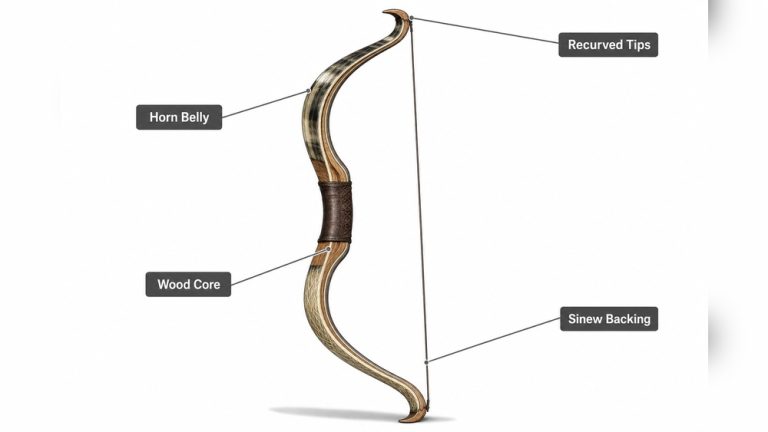
The main parts of a composite bow are:
- Wood: Forms the core, giving structure.
- Horn: Used on the belly, stores compression energy.
- Sinew: Applied to the back, resists stretching and adds strength.
- Glue: Often made from animal sources, binds the materials.
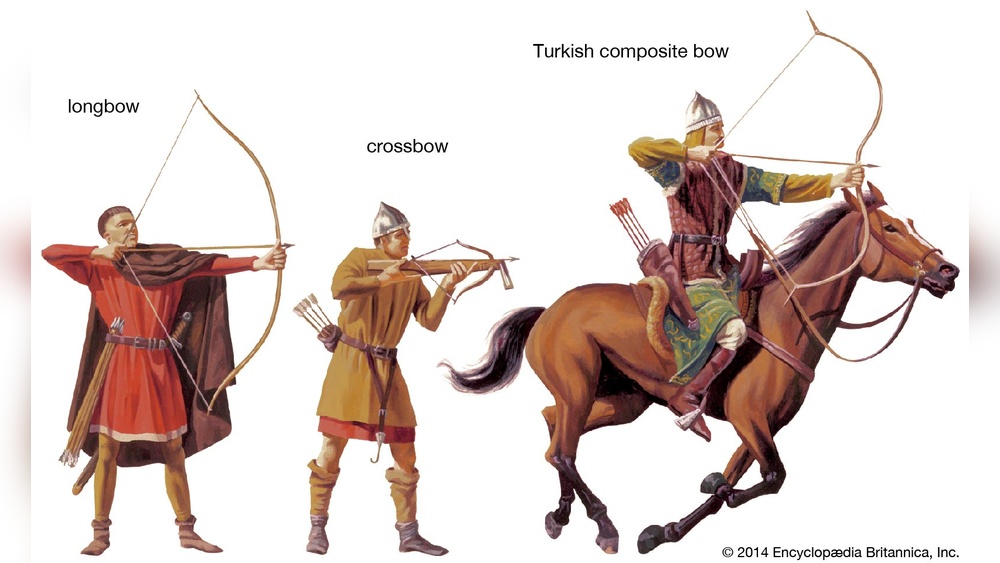
The reason to use these materials is simple: together, they create a bow that is shorter, stronger, and more efficient than a single-material bow. Composite bows can be used on horseback, which was essential for nomadic societies.
Example: Imagine a horse archer fighting in open fields. A long wooden bow is hard to use while riding. A compact composite bow can be drawn and fired with ease, even while moving fast.
Early Bow Technology: Before The Composite Bow
To understand when the first composite bow appeared, you need to know what came before it.
Simple Self Bows
The self bow is made from a single piece of wood. It is easy to make and was used by many early cultures.
- Oldest bows: The oldest known bows are from the Holmegaard bows in Denmark, dating to around 7000 BCE.
- Materials: Yew, ash, elm, or other local woods.
Self bows work well, but they have limitations. They are usually long, making them hard to use from horseback or in dense forests. They also lack the power and durability of composite bows.
Why Invent Composite Bows?
The need for a better bow came from changing environments and lifestyles. When people started to ride horses, hunt bigger animals, or fight larger battles, a new type of bow was needed.
Pro Tip: The composite bow’s ability to combine power with a short design made it ideal for mounted archers. This is one reason it spread quickly among steppe nomads.
Earliest Evidence: When Did Composite Bows First Appear?
The big question is: when did the first composite bow appear? Archaeologists and historians have debated this for decades, but most agree on some key points.
Ancient Egypt And Mesopotamia
Some of the earliest evidence comes from Mesopotamia and Egypt.
- Mesopotamia: Written records and art show composite bows used by warriors as early as 2400 BCE.
- Egypt: Tomb paintings and artifacts suggest composite bows appeared around 2000 BCE, especially among the Hyksos, a group known for their advanced weaponry.
The Steppe Nomads
The Eurasian steppes are often called the birthplace of the composite bow.
- Archaeological finds: Remains of bows from the Sintashta culture (around 2100, 1800 BCE) show evidence of composite construction.
- Materials found: Horn and sinew fragments, along with glue traces.
Comparison: Bow Technology Timeline
Here is a summary of the main bow types and their estimated dates:
| Bow Type | Region | Approximate Date |
|---|---|---|
| Self Bow | Europe, Africa | 7000 BCE and earlier |
| Composite Bow | Mesopotamia, Egypt, Eurasian Steppes | 2400, 1800 BCE |
| Recurve Bow | Worldwide | Later, after composite bow |
Warning: Dating ancient bows is difficult because organic materials decay quickly. Most evidence comes from art, written records, and fragments.
The First Composite Bow: Key Cultures And Innovations
Several cultures contributed to the development and spread of the composite bow.
Mesopotamian Innovations
Mesopotamia was home to some of the world’s earliest cities and armies. Written records, like the Epic of Gilgamesh, mention powerful bows. Artifacts from Sumerian and Akkadian sites show bows that were likely composite.
- Sumerians: Used bows in warfare, but unclear if composite or self bows.
- Akkadians: More evidence of composite bows in use by military elites.
Example: The famous Assyrian reliefs show archers with bows that have recurved tips, a sign of composite construction.
Egyptian Adoption
The Egyptians learned about composite bows from their neighbors.
- Hyksos: A group that invaded Egypt around 1700 BCE, introduced composite bows.
- Pharaohs: After defeating the Hyksos, Egyptians adopted the composite bow, using it for hunting and war.
Egyptian bows were often richly decorated, showing the importance of the weapon in society.
The Eurasian Steppes
The steppe nomads, including the Scythians, Sarmatians, and later the Huns, were famous for their horse archers.
- Bow fragments found in ancient graves show horn and sinew construction.
- The design was passed from generation to generation, with improvements over time.
Pro Tip: Steppe bows were usually shorter than Egyptian or Mesopotamian bows, making them perfect for horseback archery.
Materials And Construction: What Made The Composite Bow Special?
The genius of the composite bow is in its materials and how they are put together.
Wood
The core of most composite bows is wood. The type of wood matters:
- Maple, birch, elm, and ash are common.
- The wood must be strong but flexible.
Horn
Horn (usually from sheep or antelope) is used on the belly, the part facing the archer.
- Horn stores energy under compression.
- It adds power to the bow without making it longer.
Sinew
Sinew is made from animal tendons.
- Applied to the back of the bow.
- Sinew resists stretching, letting the bow bend farther.
Glue
Ancient bowyers used natural glues, often made from fish or animal hides.
- Glue must be strong and waterproof.
Comparison: Composite Vs. Self Bow
Here’s a quick look at the differences:
| Feature | Composite Bow | Self Bow |
|---|---|---|
| Materials | Wood, horn, sinew | Wood only |
| Length | Short (30, 48 inches) | Long (up to 72 inches) |
| Power | High | Moderate |
| Use | Horseback, foot | Foot only |
Spread And Impact: How Composite Bows Changed Warfare
The composite bow was not just a tool, it was a force that changed how battles were fought.
The Rise Of Mounted Archers
Mounted archers became the terror of ancient battlefields. With composite bows, they could shoot with deadly force while moving quickly.
- Scythians: Used composite bows to dominate the steppes.
- Huns: Famous for lightning raids across Europe.
Armies And Empires
Empires grew as their armies used composite bows.
- Egyptians: Won battles by adopting the composite bow.
- Persians: Used composite bows in their famous cavalry units.
- Mongols: Later perfected the design, conquering much of Asia.
Comparison: Range And Power
Composite bows were famous for their range and power.
| Bow Type | Average Range | Draw Weight | Mobility |
|---|---|---|---|
| Composite Bow | Up to 300 meters | 60, 100 lbs | High (horseback) |
| Self Bow | 150, 200 meters | 40, 70 lbs | Low (foot) |
Example: In my experience, shooting a replica Scythian composite bow, I found it easier to handle and more powerful than a long self bow, especially in tight spaces.

Credit: archery360.com
Challenges In Dating The First Composite Bow
Pinpointing the exact year or culture for the first composite bow is hard for several reasons.
Decay Of Materials
Composite bows are made from organic materials. Wood, horn, and sinew decay quickly, leaving little for archaeologists to find.
- Most evidence is indirect: Art, written records, fragments.
Interpretation Of Art And Texts
Ancient art often shows bows, but the details are not clear.
- Some images show recurved tips, but this does not always mean composite construction.
- Written records may mention “strong bows” or “great bows,” but not the materials.
Disagreements Among Experts
Some experts argue that the first composite bow appeared in Mesopotamia. Others point to the Eurasian steppes.
- The lack of direct evidence means that new finds can change the timeline.
Warning: Some claims about the composite bow’s age are based on guesses, not hard evidence. Always check the source.
Modern Research And Discoveries
Archaeologists continue to find new clues about the composite bow’s origins.
Recent Finds
- Sintashta Culture: Bow fragments found in graves suggest composite construction as early as 2100 BCE.
- Egyptian Tombs: Well-preserved bows show horn and sinew layers.
Scientific Studies
Modern studies use radiocarbon dating and material analysis to understand ancient bows.
- Tests show that glue formulas and horn layers were carefully designed.
- Some studies suggest that composite bows were used in multiple regions at the same time.
External Resource
For a detailed overview of ancient archery, see Wikipedia.

Credit: www.bow-international.com
The Composite Bow In Different Cultures
The composite bow was not a single invention. Different cultures made their own versions.
Mesopotamian And Egyptian Bows
- Longer design: Used mainly from foot.
- Decorative: Often covered in gold or silver.
Steppe Nomad Bows
- Short and recurved: Designed for horseback.
- Simple decoration: More focus on function.
Chinese And Persian Bows
- Complex layering: Multiple layers of horn and sinew.
- Used by elite troops: Often seen in royal armies.
Non-obvious Insights About Composite Bows
Many beginners miss some key points about composite bows:
- Climate sensitivity: Composite bows are very sensitive to humidity and heat. Ancient warriors had to protect their bows from rain and sun.
- Long crafting process: Making a composite bow could take months, sometimes over a year, as glues needed to cure slowly.
- Repair and maintenance: Unlike self bows, composite bows could be repaired with new sinew or horn, making them valuable for nomads.

Credit: warfarehistorynetwork.com
Why The Composite Bow Remains Important
The composite bow’s influence is still felt today. Modern archers and historians study it to learn about ancient technology and warfare.
Archery Sports
Some traditional archery competitions use composite bows. Their power and compact size make them popular.
Historical Reenactment
Many reenactors and museums build replica composite bows. These replicas help us understand how ancient warriors fought.
Military History
The composite bow is a key subject in military history books. Its role in the rise and fall of empires is well documented.
Frequently Asked Questions
What Makes A Composite Bow Different From A Recurve Bow?
A composite bow combines different materials like wood, horn, and sinew. A recurve bow describes the shape, the tips curve away from the archer. Many recurve bows are composite, but some are made from a single material. The composite design gives extra power and flexibility that a simple recurve bow may not have.
How Long Did It Take To Make A Composite Bow In Ancient Times?
Crafting a composite bow was a slow process. Bowyers needed to shape wood, glue layers of horn and sinew, and let the glue dry for months. Some bows took six months to a year to finish, depending on climate and materials. The long time was worth it for the performance and durability.
Which Ancient Civilization Used Composite Bows First?
Most experts believe the Mesopotamians and Eurasian steppe nomads were the earliest to use composite bows, around 2400, 1800 BCE. However, new finds could shift this timeline. Egyptians adopted the technology soon after, following invasions by the Hyksos.