Why Your Archery Glove Slips and How to Stop It
If your archery glove slips after about 2–4 ends, the cause is often sweat, stretch, a weak closure, or worn finger tabs; address the matching fault rather than replacing the whole glove. Let it slide, and your anchor feel changes, release timing drifts, and finger protection becomes less reliable. This guide shows how to pin down each cause and stop the slip.
Why your glove slips after a few ends
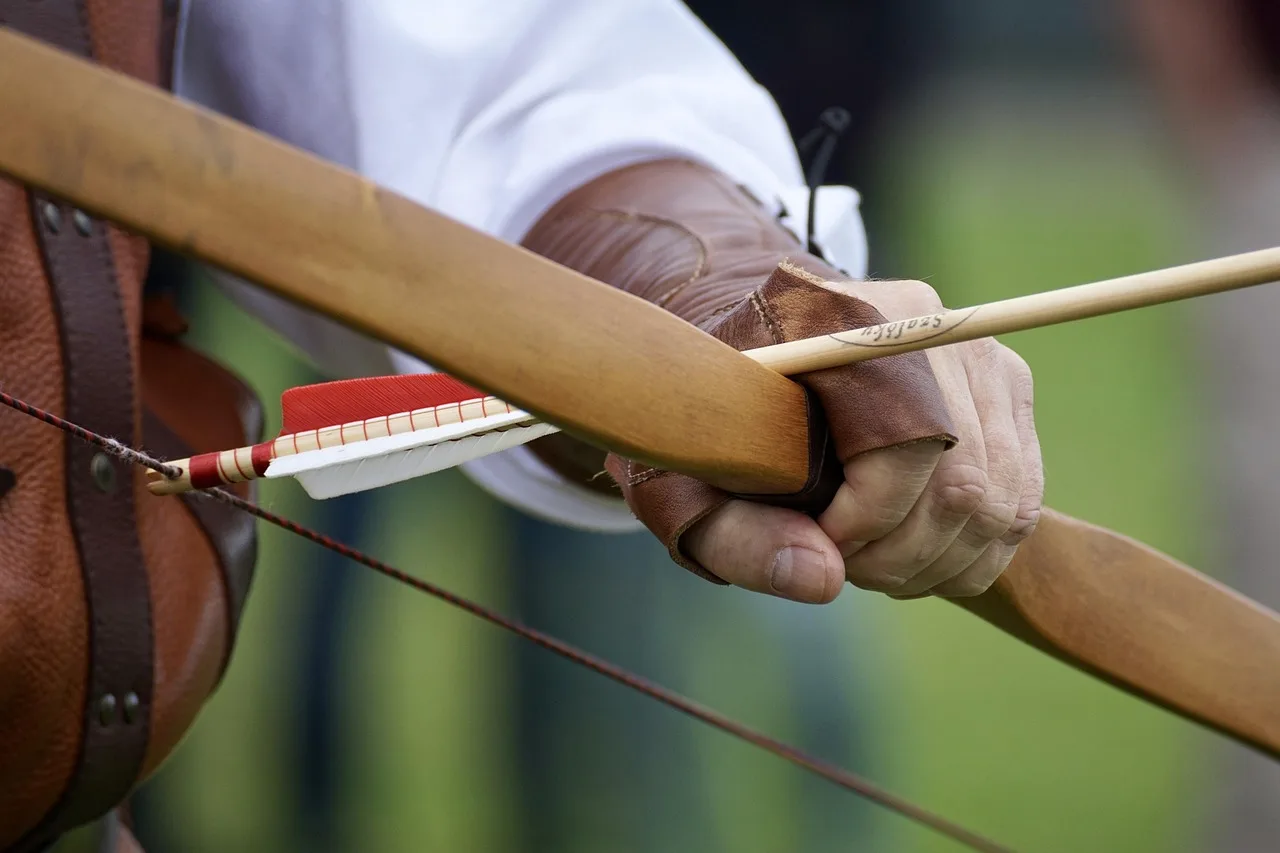
The first end tells you little. By about the third or fourth end, hand perspiration, humidity, and leather give can change how the glove fits, so later slip may come from moisture rather than size. Start by noting where the movement begins: wrist, fingers, or palm.
If the glove loosens at the wrist first, the closure is likely the weak point. If the fingertips drift, the finger stall length or taper fit is off. If the whole glove twists on the hand, palm shape and seam placement are usually involved.
What you’ll need
- Archery glove in the size you normally shoot
- Dry cloth or microfiber towel
- Finger tape or athletic tape
- Optional thin liner glove for fit testing
- Notebook or phone notes for tracking the slip point
What kind of slip are you seeing?
The symptom matters more than the label. A glove that loosens at the wrist needs a different fix from one that creeps on the fingers or rotates across the palm. Use the table below to sort the fault before changing size or buying a new glove.
| Slip symptom | Likely cause | Fast fix | Long-term fix | Replacement threshold |
|---|---|---|---|---|
| Wrist loosening | Closure tension is fading or the strap is too long | Reset the wrist closure one notch tighter | Replace worn hook-and-loop, buckle, or elastic closure | When the closure will not hold through one end |
| Fingertip migration | Finger stalls are too long or taper does not match | Try thin finger tape at the tips | Choose a glove with shorter stalls or better taper | When the tips shift on every end despite adjustment |
| Palm rotation | Palm fit is too wide or seam placement sits off-center | Re-seat the glove and snug the wrist first | Move to a different cut for your hand shape | When the glove twists before the third end |
| Wet leather stretch | Moisture softens leather and changes shape during shooting | Dry hands and glove between ends | Switch to a quicker-drying material or alternate gloves | When fit changes only after the glove gets damp |
| Worn closure | Fastener no longer holds a set tension | Re-close and clear debris from the fastening area | Replace the closure or the glove | When it opens or slips open under normal use |
Check the glove before you shoot
A glove that is wrong at the start will usually get worse later. Before the first end, confirm finger stall length, seam placement, palm fit, and wrist closure tension. Also check left-hand and right-hand variants; the cut is not always interchangeable.
Step 1
- Slide each finger fully into the stall and check that the seam sits along the side of the finger, not across the pad.
- Close the wrist strap so the glove stays put without pinching circulation.
- Open and close the hand once. If the stalls pull across the fingertips, the size or taper is off.
- Confirm the glove matches the shooting hand: left-hand and right-hand models are cut differently.
Fix moisture before it changes the fit
Sweat, humidity, and rain change fit over a session. Leather absorbs moisture and softens; synthetic materials usually shed it faster, but they can still get slick when wet. If the glove only slips after heat builds, treat moisture first before changing size.
Step 2
- Wipe the hand and glove dry between ends with a cloth.
- Leave the glove open to air for a few minutes if conditions allow.
- If sweat is the driver, add finger tape or a thin liner glove and recheck fit.
- In rain or high humidity, expect slower drying time and plan a second glove for rotation.
Say your glove fits cleanly on the first end, then the fingertip stalls begin to creep forward by the fourth end in warm weather. That pattern points more to moisture-driven fit change than to a bad starting size, so drying and a thin tape layer are the first fixes to test.
Suppose a medium glove feels correct in a cool indoor range, but the same glove starts to slide at the wrist during a humid outdoor session. The size may be acceptable, while the closure cannot keep tension once the material softens. Tighten the closure first, then inspect the fastener for wear.
Why does my archery glove rotate or loosen?
Rotation usually means the glove does not match the hand’s shape, even if the overall size looks close. A narrow glove on a wide palm can twist. A wide glove on slender fingers can migrate. Long fingers can also push the stalls out of line.
Finger taper and knuckle articulation matter here. If the stalls narrow too quickly for the finger shape, the glove pulls sideways during draw and release. If the cut is too straight, the glove may slide around the knuckles instead of following the hand.
Step 3
- Look at where the rotation starts: fingertip, knuckle, or palm.
- Match the glove to hand circumference and finger length before sizing up.
- If one finger pulls harder than the others, test a different stall length or taper.
- Use a thin liner only if it does not crowd the stalls or reduce finger bend.
Glove fit matrix
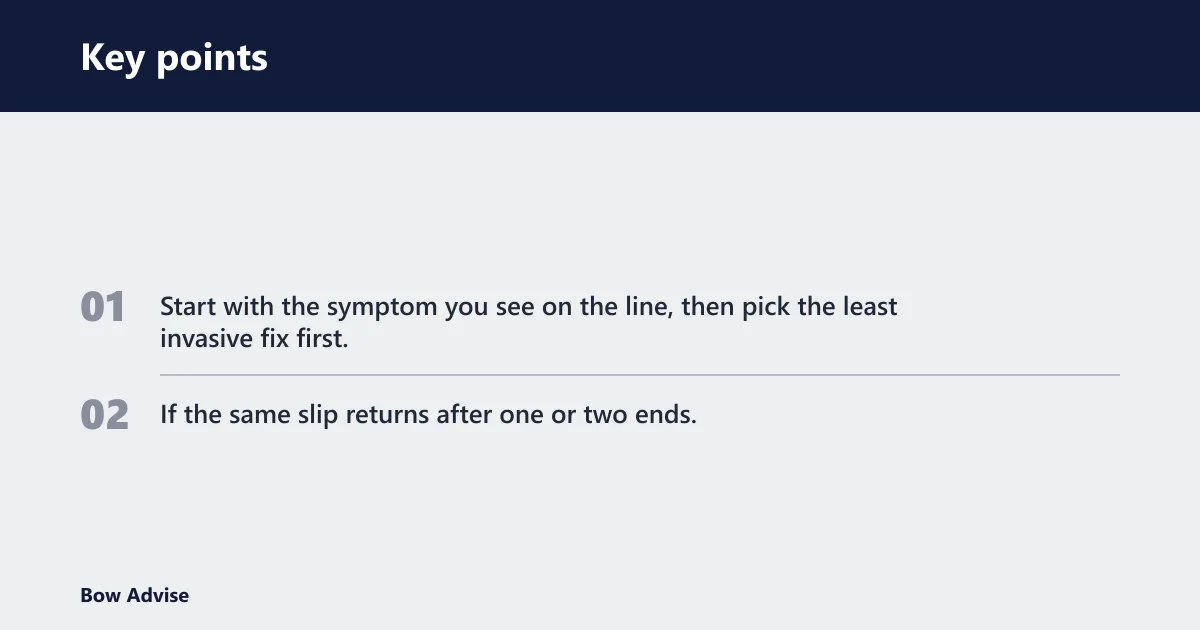
Use the matrix as a quick decision aid. Start with the symptom you see on the line, then pick the least invasive fix first. If the same slip returns after one or two ends, move down the ladder to the longer-term fix or replacement threshold.
| Symptom | Likely cause | Fast fix | Long-term fix | Replacement threshold |
|---|---|---|---|---|
| Wrist loosening after 2–4 ends | Closure tension fades as sweat softens the glove | Tighten the wrist closure one notch or one hole | Replace a stretched strap or weakened fastener | When the wrist opens again in the next end |
| Fingertip migration | Finger stalls are long, or taper does not match slender fingers | Add one layer of finger tape to the slipping fingertips | Choose a smaller stall length or a different cut | When tape fixes it only for one session |
| Palm rotation | Palm is too wide or seam placement is off-center | Re-seat the glove and reset the wrist closure | Move to a glove with a better palm fit | When rotation appears before the third end |
| Wet leather stretch | Moisture changes the leather shape during shooting | Dry hands, dry the glove, and pause briefly between ends | Switch to material that keeps shape better in wet use | When fit changes every time the glove gets damp |
| Worn closure | Hook-and-loop, buckle, or elastic no longer holds tension | Clean the fastening area and close it fully | Replace the closure or the glove body | When the closure slips open under normal draw cycles |
Common mistakes
Do not size up too far to solve sweat. That can hide the moisture problem and create fingertip migration instead. Do not add thick tape everywhere; extra bulk can block knuckle articulation and make the glove feel loose in a different place.
Over-conditioning leather is another mistake. Too much conditioner can soften the glove and speed up stretch. Keep the glove clean, dry it flat or hung in open air, and use conditioner only when the leather feels dry and stiff, not after every session.
Also avoid keeping a worn closure in service too long. If the strap no longer holds a set tension, no amount of re-seating will fix it for long.
What if that didn’t work?
If the first fix fails, move one step deeper in the cause chain. Start with moisture control, then the closure, then fit geometry, then replacement. That order avoids buying a new glove when the real fault is a damp stall or a weak wrist strap.
Step 4
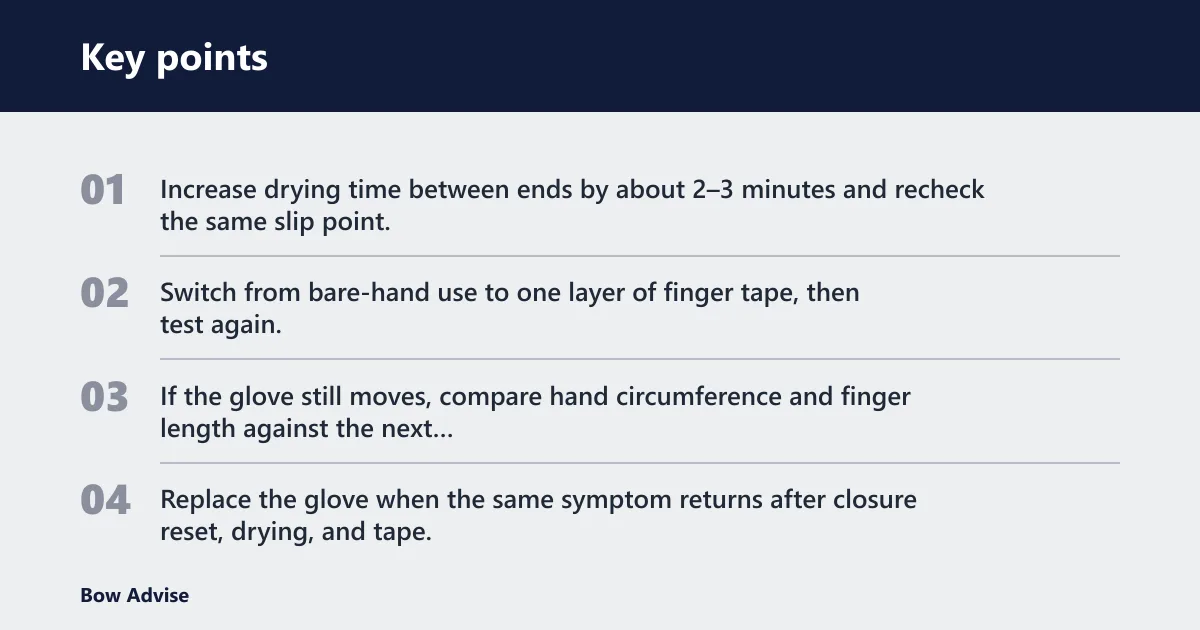
- Increase drying time between ends by about 2–3 minutes and recheck the same slip point.
- Switch from bare-hand use to one layer of finger tape, then test again.
- If the glove still moves, compare hand circumference and finger length against the next size up and down.
- Replace the glove when the same symptom returns after closure reset, drying, and tape.
Store the glove dry and open, not folded tight in a damp pouch. That helps the material keep its shape and delays stretch at the fingers and wrist.
Frequently asked questions
Why does my archery glove start slipping after a few ends?
That pattern usually points to moisture or gradual stretch, not a bad fit at the start. Check whether the movement begins at the wrist, fingertips, or palm, then correct that point first. If the glove is dry but still slips, the closure or size match is more likely at fault.
Is my glove too big if it only slips when my hands get sweaty?
Not always. Sweat can reduce friction enough to make a close-fitting glove move. Try drying the glove between ends and adding one layer of finger tape before changing size. If the same slip happens when the glove is dry, then sizing becomes the stronger suspect.
How do I stop my archery glove from rotating on my fingers?
Rotation usually means the finger taper or palm shape does not match the hand. Start by checking whether the seams sit off-center and whether the stalls pull sideways during draw. A glove with a better finger length match often works better than a tighter wrist strap alone.
Does glove material affect grip and fit over a long session?
Yes. Leather commonly changes shape more as it absorbs moisture, while synthetic materials may hold shape longer and dry faster. Neither is automatically better. Choose the material that matches your weather, session length, and how quickly your hands perspire during practice.
Should I change glove size for winter or summer shooting?
Sometimes. Winter can make a glove feel looser if the hand shrinks slightly and the glove stays stiff, while summer sweat can make the same size feel more slippery. Before changing size, test the closure and one layer of tape, then move size only if the fit still shifts.
When should I replace a glove that keeps slipping?
Replace it when the same problem returns after drying, closure adjustment, and a tape test. If the wrist strap will not hold, the fingertips migrate every end, or the palm keeps rotating despite a correct size, the glove has moved past adjustment and into replacement territory.