How Finger Tab Face Thickness Affects Fit and Release
A thinner finger tab face often improves anchor repeatability because it moves the string a little closer to your face. Start with the thinnest face that still gives clean, repeatable string contact and no pinch, then move thicker only if the release gets sloppy. Too much thickness shifts your anchor point, changes crawl or face reference, and can hide finger tension problems that hurt grouping. This guide explains how tab face thickness changes fit, anchor geometry, and release quality, and how to choose the right thickness for split-finger and three-under recurve shooting.
Measuring finished face stack and wear compression

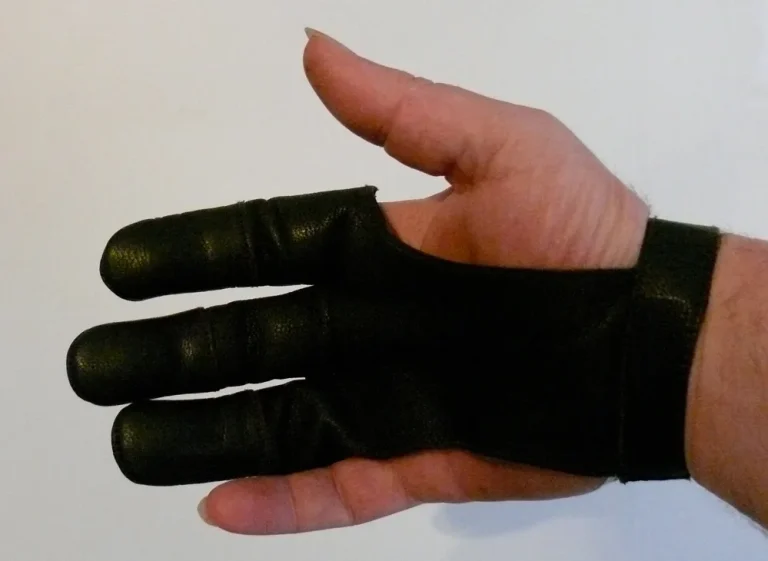
Finger tab face thickness is the total stack between the string and the fingers at full draw. That stack includes the face material, any padding, and sometimes wear compression that changes the usable thickness over time. The number that matters is the finished stack in millimeters, not the label on the material alone.
What face thickness means in mm
Most tab faces seem to fall in a fairly narrow working range, often around about 1 mm to 4 mm before backing and padding are counted. A 1.5 mm face and a 3 mm face can feel very different at anchor because the string sits farther from the fingers and face with the thicker option. That changes contact points before release even starts.
How layer count and padding change effective thickness
Layer count matters because a single thick hide, a double layer of leather, or a face with foam or felt underneath all change stack height. A leather backing adds structure. Foam or felt adds cushion, but it can compress more than leather, so the face that feels thick on day one may settle after several ends.
That compression is part of fit. If a tab uses a 2 mm face with a soft felt pad, the effective thickness at anchor can drop as the padding packs down. The result is a small but real change in string contact and anchor geometry.
Why wear compression matters over time
Wear does not only smooth the surface. It also changes thickness, stiffness, and how much the face deforms under load. A worn cordovan face often stays smooth for a long time, while suede and some synthetic leathers can lose height faster and feel less consistent as the surface fibers flatten.
That is why a tab can feel right when new and slightly different a month later. If the anchor has started to drift without any change in form, worn thickness is one of the first things to check.
How thickness changes your anchor
Tab thickness changes where the string meets the face, so it changes the geometry of the anchor. Even a small stack change can move the jaw anchor, corner-of-mouth contact, and index-finger-to-cheek reference enough to alter vertical position and facial tension at full draw.
Jaw anchor and corner-of-mouth contact
A thicker face places the string farther from the face, which can push the jaw anchor slightly lower or farther out. Corner-of-mouth contact can also become less distinct because the tab fills more space between the string and the face. That shifts the reference point the archer uses to settle under the jaw line.
A thinner face usually brings the string in closer, which can sharpen the corner-of-mouth feel and make the jaw reference easier to repeat. The tradeoff is that too little stack can feel harsh and make finger pressure more obvious.
Index-finger-to-cheek contact and vertical position
Many archers use the index finger or the tab edge against the cheek as part of their vertical check. Added thickness can move that contact point outward, which may raise or lower the apparent anchor depending on tab shape and hand rotation. The result is a small change in vertical position that shows up as face reference drift.
Suppose a shooter changes from a 1.5 mm face to a 3 mm face and keeps the same jaw touch. The string may now sit a few millimeters farther from the cheek, enough to change the visual string picture and the way the tab settles under the chin.
How added stack height can shift face reference points
Stack height changes where the face, chin, and string meet as one system. A thicker tab can hide a slight collapse of the drawing hand, while a thinner tab can expose it. That is why thickness should be treated as a tuning variable, not only as comfort padding.
Does tab thickness change release quality?
Yes. Tab thickness changes the timing and path of string slip, the amount of pinch the fingers feel, and how cleanly the string separates from the face. A softer-feeling tab can still release poorly if its thickness delays slip or changes how the string rolls off the fingers.
String slip timing and clean separation
Release quality depends on when the string starts to move and how it leaves the fingers. A thicker face can delay slip a little, especially if the surface is soft and the fibers grip the serving. That delay can make the release feel calm while the actual string exit becomes less crisp.
Clean separation means the string leaves without hanging on one finger longer than the others. If thickness creates extra drag, the separation can be uneven even though the tab feels more cushioned.
Pinch, torque transfer, and string path
More thickness often reduces sharp pressure, but it can also change pinch angle and torque transfer. If the face is too thick for the hand position, the string path may roll off at a slightly different angle, which can change how much side load reaches the arrow on release.
That side load is usually small, but repeatability matters. A tab that feels soft and still twists the string path is not a clean solution.
Why a softer face can still release less cleanly
Softness and release quality are not the same thing. A soft suede face may feel easier on the fingers than a firm cordovan face, yet still create more drag or more variation in slip timing if the surface texture is too grabby. Smoothness and controlled thickness matter together.
Split-finger vs three-under tabs
Thickness matters in both setups, but not in the same way. Split-finger tabs use two fingers below the arrow, so stack height and finger spacing are centered around a different load pattern than three-under tabs, where crawl impact and string angle become more sensitive to face thickness.
Split-finger stack height and finger spacing
In split-finger shooting, the tab face affects how the string settles between the fingers and the shelf position under the arrow. If the face is too thick, the anchor can move enough to change the feeling of the two fingers sharing load. A finger spacer also matters because width and spacing tolerance affect alignment under the string.
When the spacer is too narrow for the fingers, extra thickness can make the tab feel crowded. When the spacer is too wide, the face may sit less square on the hand, which can tilt the string picture.
Three-under crawl impact and string angle
Three-under shooting tends to react more strongly to thickness because the crawl is already part of the aiming system. Extra face stack can change the apparent crawl, alter under-finger pressure, and shift string angle enough to change the sight picture or face reference. Small changes are easier to notice here.
A common first-timer mistake is changing to a thicker face because the tab feels sharp, then wondering why the crawl feels different at the same sight mark. The thickness did not move the sight; it changed the anchor geometry that the crawl depends on.
Tab face materials and backing
Material choice changes how thickness feels at anchor and how the string leaves the fingers. Cordovan, suede, and synthetic leather can all work, but they differ in stiffness, smoothness, and wear rate. Backing and padding add another layer to that decision.
Cordovan, suede, and synthetic leather
Cordovan is usually smoother and stiffer than suede, so it can feel cleaner at release with less surface drag. Suede is softer and grippier, which can help some archers who want more comfort but may slow string slip if the surface is too fuzzy. Synthetic leather varies more, so stiffness and smoothness should be checked carefully.
The best material thickness is the one that preserves clean separation without adding unwanted stack height. Smooth does not always mean thin, and thick does not always mean messy.
Leather backing, foam, and felt layers
Leather backing gives structure and keeps the face from folding under pressure. Foam or felt layers add cushioning, but they compress over time and can change the finished thickness more than a dense leather layer would. That compression can slowly move the anchor and alter release feel.
If a tab has both a face and a soft pad, its real thickness should be judged at full draw, not just by looking at the build.
Surface texture and stiffness tradeoffs
Texture affects how quickly the string slips. Stiffness affects how much the tab deforms before release. A stiff, smooth face often gives a cleaner string path, while a softer, rougher face may feel forgiving but can hold the string a moment longer. The best choice depends on whether the priority is comfort, anchor stability, or both.
Tab face thickness decision table
Use the finished stack, not the material label, when comparing options. These ranges are common working bands, not fixed rules, and the best choice depends on anchor style, finger spacer width, and how much crawl or face reference you want to preserve.
| Face thickness range | Comfort | Anchor shift risk | Release cleanliness | Best-fit shooting style |
|---|---|---|---|---|
| 1.0-1.8 mm | Low to moderate cushion; sharper string feel | Lowest risk of anchor movement if form is stable | Often very clean if the surface is smooth | Precision-focused split-finger or any archer who wants a tight anchor feel |
| 2.0-2.8 mm | Balanced cushion and feel | Moderate risk; usually easy to tune | Usually clean if texture and stiffness are matched well | Most recurve shooters who want a middle ground |
| 3.0-4.0 mm | High cushion; softer finger pressure | Higher risk of anchor drift and crawl change | Can be clean, but more dependent on surface smoothness | Archers with sensitive fingers or those who need more padding |
On-range fit test checklist
This check is meant to show whether a new thickness changed anchor point, crawl, or release timing. Use the same bow, the same tab shape, and the same distance for both faces. Change only the face thickness during the comparison.
- Draw to full anchor and note jaw contact, corner-of-mouth contact, and index-finger-to-cheek position before shooting.
- Hold the same anchor for several seconds and compare whether the string picture sits higher, lower, closer, or farther from the face.
- Check crawl or sight mark with the same setup and note whether the reference changes when the face changes.
- Watch for release timing differences, especially any delay in string slip or any feeling of the string hanging on one finger longer.
- After several ends, confirm whether the anchor returns to the same point without extra facial adjustment or hand rotation.
If a thicker face causes the jaw touch to move but the release becomes cleaner, the tab may be masking a setup problem rather than fixing it. If a thinner face restores anchor repeatability but feels too sharp, a middle thickness or a different material may be a better answer than more padding alone.
Frequently asked questions
How does finger tab face thickness change anchor position?
Thickness changes how far the string sits from the face, so the jaw anchor, corner-of-mouth contact, and vertical position can all shift slightly. A thicker face usually moves the contact points outward; a thinner face usually brings them in and can make the anchor feel more exact.
What thickness finger tab face is best for a consistent release?
The best thickness is the thinnest finished stack that still gives clean string slip, no pinch, and repeatable anchor contact. For many recurve shooters, that lands in the middle range rather than the thickest option. Clean separation matters more than padding alone.
Can a thicker finger tab help if my tab feels too sharp on the fingers?
Yes, a thicker face can reduce sharp pressure and make the tab more comfortable. The tradeoff is possible anchor drift, crawl change, or a softer release that is less precise. If comfort improves but anchor repeatability drops, a different material or a slightly firmer backing may work better.
Does tab face thickness affect crawl or string picture with a tab?
Yes, especially in three-under shooting where crawl is part of the aiming system. Added thickness changes stack height and the angle at which the string meets the face, which can shift the string picture and make the same crawl feel different. Split-finger is usually less sensitive, but still affected.
How do I know if my finger tab is too thick for my anchor?
Signs include a higher or lower jaw reference than before, less distinct corner-of-mouth contact, altered crawl, and a release that feels delayed or vague. If the anchor only feels stable after you press harder into the face, the tab may be carrying too much thickness for that setup.
Should I change tab face thickness for indoor or outdoor shooting?
Sometimes, yes. Indoor shooting may reward a more repeatable anchor and a little more cushion if fingers get sore during long ends. Outdoor shooting often benefits from a cleaner, thinner, more stable face if the goal is tighter anchor control in varying conditions. The same tab does not have to serve both jobs equally well.