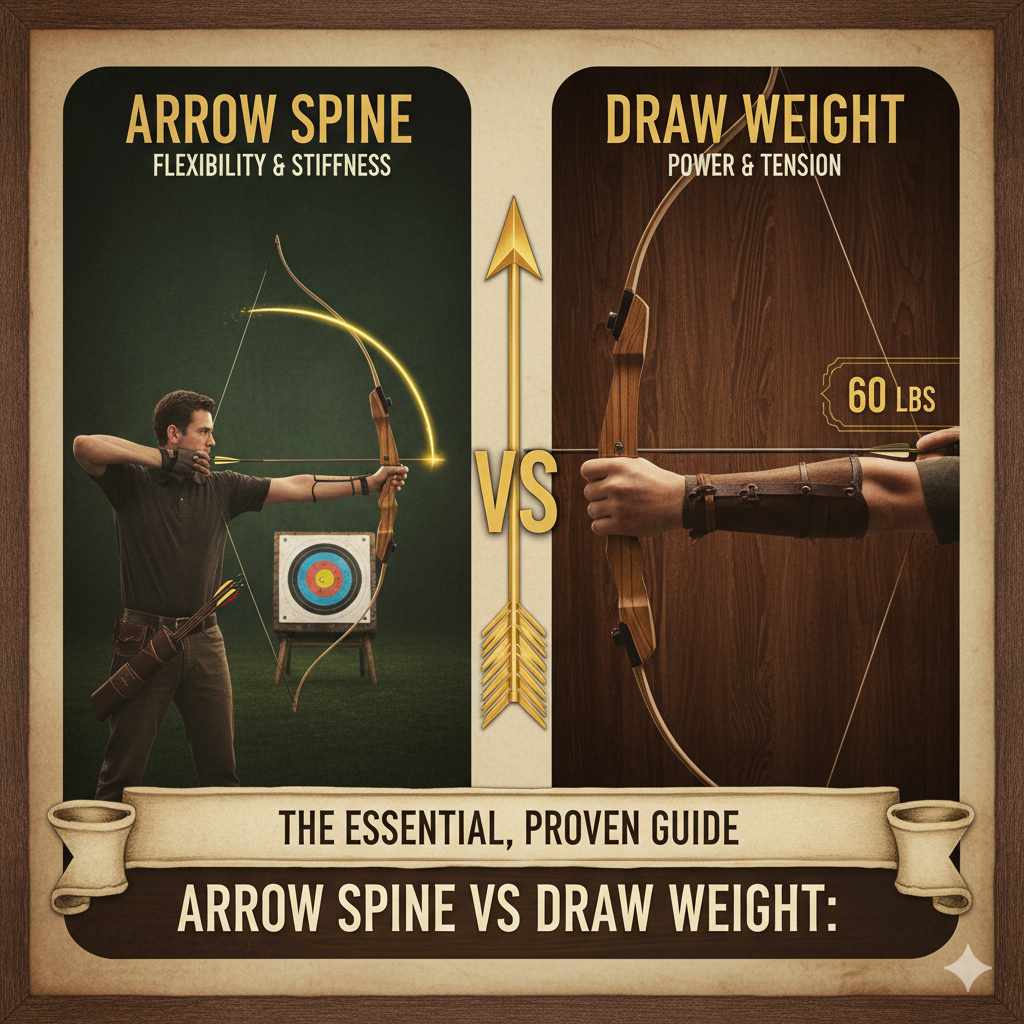
For most beginners and hobbyist archers, BCY 8190 is the proven winner over Fast Flight. 8190 offers superior stability and forgiveness, which makes tuning your arrow spine much easier. While Fast Flight is slightly faster, 8190 provides the consistency you need to build good form and confidence.
Welcome to the world of archery! It’s an amazing sport, but sometimes the gear can feel a little confusing. You hear words like “spine,” “brace height,” and names like “8190” or “Fast Flight.” It can feel like a lot to learn. But don’t worry, I’m here to help make it simple.
One of the most common questions I get is about bowstrings. Does the material really matter? The answer is a huge YES! Your bowstring is the engine of your bow. The type of string you use directly affects how your arrow flies. Today, we’re going to look at two popular string materials, 8190 and Fast Flight, and find out which one is the true winner for you.
What is Arrow Spine and Why Does It Matter?
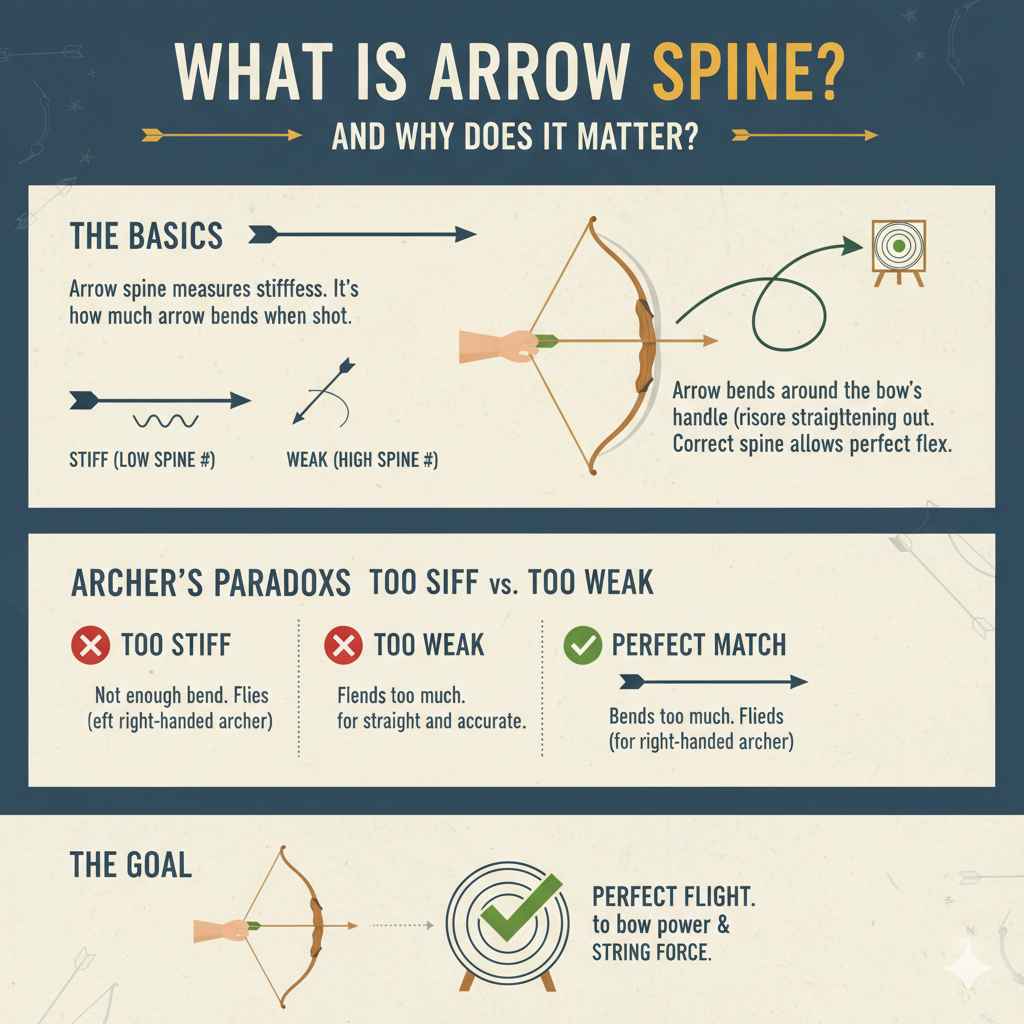
Before we talk about strings, we need to understand arrow spine. Think of an arrow not as a perfectly stiff stick, but as something that bends and flexes when you shoot it. Arrow spine is simply a measurement of how stiff that arrow is.
Imagine trying to throw a wet noodle. It would just flop around, right? Now imagine throwing a dry spaghetti stick. It would fly straight, but snap easily. An arrow needs the perfect amount of flex—not too much, not too little—to fly correctly.
This bending is part of something called the “Archer’s Paradox.” When you release the string, the arrow has to bend around the bow’s handle (the riser) before straightening out and flying to the target. If the arrow is too stiff (too low of a spine number, confusingly), it won’t bend enough. If it’s too weak (too high of a spine number), it will bend too much. Both situations lead to poor arrow flight and bad accuracy.
Your goal is to match your arrow’s spine to the power of your bow and the force of your bowstring. A perfect match means a perfectly flying arrow.
Your Bowstring: The Engine of Your Bow
Your bowstring does more than just hold the arrow. It stores all the energy you put into the bow when you draw it back, and then transfers that energy to the arrow upon release. Different materials do this job in different ways.
Modern bowstrings are made from high-tech materials that are incredibly strong and lightweight. They stretch very little, which means more of the bow’s energy goes into the arrow. This is what makes modern bows so efficient. The two materials we are focusing on, 8190 and Fast Flight, are both excellent examples of this technology. However, they have key differences that impact your shooting and your arrow choice.
Meet the Contenders: 8190 vs. Fast Flight
Let’s get to know our two main players. They are both made by the top-tier company BCY Fibers, but they are designed for slightly different results.
BCY 8190: The Stable and Forgiving Choice
BCY 8190 is a blended material. It’s made from two different types of fibers: Dyneema and Vectran. Think of this like a secret recipe for the perfect string.
- Dyneema is known for being incredibly strong, lightweight, and fast.
- Vectran is known for having virtually zero stretch or “creep” (we’ll cover creep later).
By blending them, you get the best of both worlds. 8190 is extremely stable. This means once it’s settled in, it doesn’t stretch. Your brace height and peep sight stay exactly where you set them. This stability makes it incredibly consistent and forgiving for the archer.
Pros of 8190:
- Extremely stable with almost no creep.
- Very durable and long-lasting.
- Provides a consistent shot every time.
- More forgiving of small mistakes in your release.
- Generally quieter than other high-performance strings.
Cons of 8190:
- Slightly heavier and a tiny bit slower than pure Dyneema strings.
Fast Flight: The Original Speed Demon
Fast Flight (and its modern equivalents like D97) is made from 100% Dyneema fiber. This was one of the first “high-performance” materials that revolutionized archery. Before Fast Flight, most strings were made of Dacron, which is much stretchier and slower.
Because it’s made of pure Dyneema, Fast Flight is very lightweight and very, very fast. It transfers energy to the arrow with incredible efficiency. This quest for speed is its main selling point. However, this comes with a small trade-off: a tiny bit of stretch over time, which is called “creep.” It’s not a lot, but it can mean you need to make small adjustments to your bow’s tuning over the life of the string.
Pros of Fast Flight:
- Extremely fast arrow speeds.
- Lightweight material.
- Proven performance over many years.
Cons of Fast Flight:
- Can experience some “creep” over time, requiring retwisting.
- Can be less forgiving and harsher on the bow and archer.
- Not recommended for older bows that don’t have reinforced limb tips.
The Head-to-Head Comparison: 8190 vs. Fast Flight
Seeing the details side-by-side makes the choice much clearer. Here is a simple breakdown of how these two materials stack up against each other.
| Feature | BCY 8190 | Fast Flight (or D97) |
|---|---|---|
| Material Composition | Dyneema & Vectran Blend | 100% Dyneema |
| Speed | Very Fast | Extremely Fast |
| Stretch / Creep | Almost Zero | Minimal, but some creep can occur |
| Stability | Excellent (rock solid) | Very Good (may need minor adjustments) |
| Forgiveness | High | Moderate |
| Bow Compatibility | Safe for all modern bows | Requires bows with reinforced limb tips |
| Best For | Beginners, Target Archers, Hunters | Experienced Archers chasing speed |
How Your String Choice Changes Your Arrow Spine
This is the most important part. How does a string material affect which arrow you should choose? It all comes back to energy transfer.
A faster string, like Fast Flight, transfers energy to the back of the arrow more aggressively. It’s like hitting the gas pedal harder and faster. This sudden, powerful push makes the arrow bend more as it leaves the bow. Because it bends more, the arrow is acting “weaker.”
A more stable, slightly smoother string, like 8190, has a powerful but controlled energy transfer. The push is firm but not quite as sharp. This causes the arrow to bend a more predictable amount, just as the spine charts suggest.
Here’s a simple rule to remember:
- A faster, more aggressive string (Fast Flight) makes your arrow act weaker. To fix this, you would need a stiffer arrow (a lower spine number).
- A smoother, more stable string (8190) makes your arrow act true to its spine rating. This makes it much easier to select the right arrow from a chart.
Let’s use an example. Say you have a bow that shoots perfectly with a 500 spine arrow and an 8190 string. If you switch to a Fast Flight string, that 500 spine arrow might suddenly start flying erratically, acting as if it’s too weak. To get perfect flight again, you might need to switch to a stiffer 400 spine arrow.
For a beginner, adding this extra variable is just confusing. You want to eliminate as many complications as possible so you can focus on learning good form.
So, Who is the “Proven Winner”?
Now we get to the final verdict. Based on everything we’ve discussed, the winner depends on who you are as an archer.
For Beginners and Most Hobbyists: 8190 is the Proven Winner
There is no contest here. If you are new to archery or simply enjoy shooting for fun and want to improve, 8190 is your best friend. Here’s why:
- It Simplifies Tuning: Because 8190 is so stable, you can trust the standard arrow selection charts. This takes the guesswork out of finding the right arrow spine. You set up your bow, and it stays set up.
- It Builds Confidence: Consistency is key to learning archery. An 8190 string gives you a consistent, reliable shot every single time. This helps you know that if a shot is off, it was likely due to your form, not your equipment. This is crucial for learning.
- It’s More Forgiving: A slightly imperfect release is less likely to ruin your shot with a more stable string. This forgiveness helps keep frustration down and makes shooting more fun.
For Owners of Vintage or Older Bows: 8190 is the Safer Winner
Fast Flight was a game-changer, but it was also harsh on older bows that weren’t built for it. The sharp energy transfer can damage or even break the limb tips on a bow that isn’t specifically marked as “Fast Flight compatible” or doesn’t have reinforced tips. 8190 is still a no-stretch material, but it’s generally considered gentler. If your bow is not explicitly approved for high-performance strings, you should use Dacron. But for any modern bow, 8190 is perfectly safe.
For Advanced Competitive Archers: Fast Flight Might Be the Winner
If you are an expert archer who has mastered form and tuning, and you are trying to squeeze every last foot-per-second of speed out of your setup for long-distance shooting, then Fast Flight might be for you. These archers have the skill to manage the sensitive tuning and re-tune when the string creeps. For them, that tiny bit of extra speed can mean a flatter trajectory and a competitive edge. But for 95% of archers, this is an unnecessary complication.
Putting It All Together: A Simple Guide for Beginners
Feeling confident? Here are the simple steps to take.
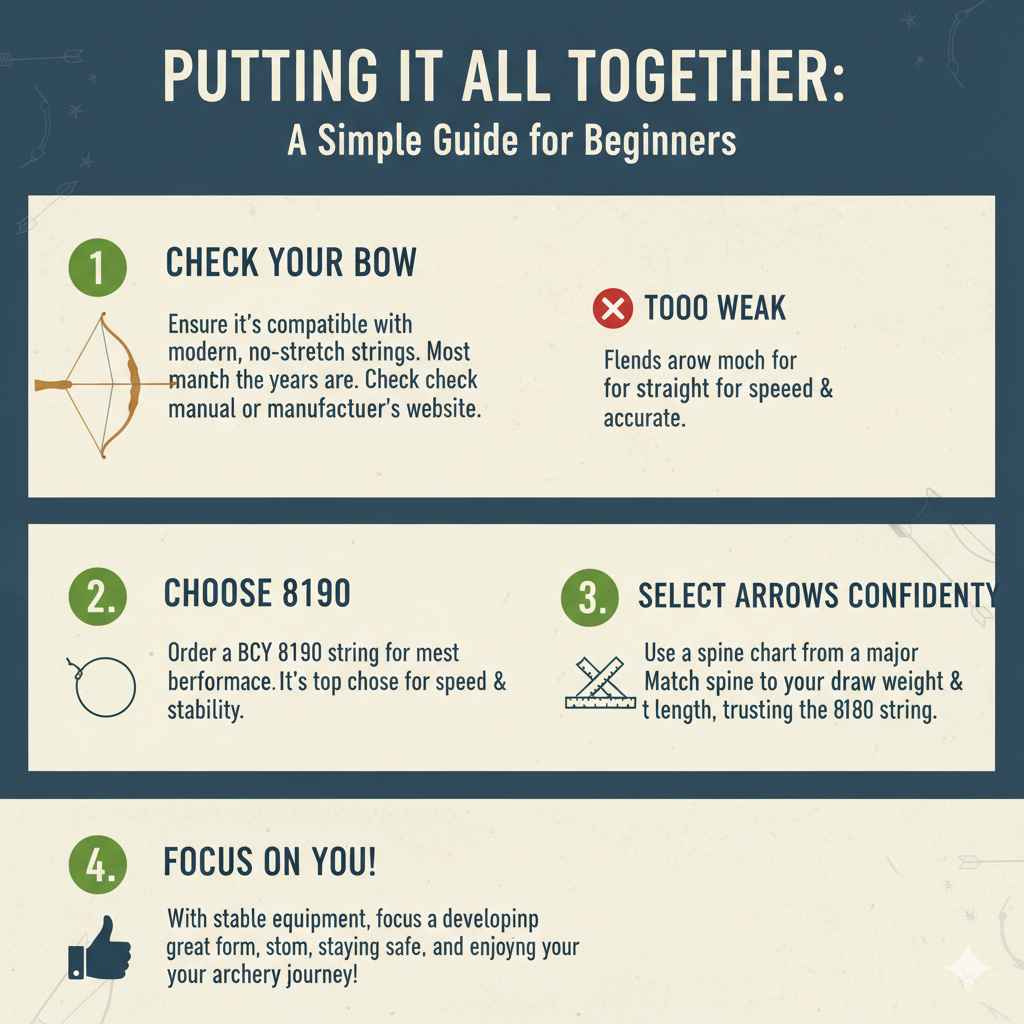
- Check Your Bow: Make sure your bow is designed for modern, no-stretch string materials. Almost any bow made in the last 20 years will be, but it never hurts to check the manual or manufacturer’s website. You can find information from major archery organizations like World Archery on equipment standards.
- Choose 8190: When ordering a new string or a new bow, ask for a BCY 8190 string. It will provide the best foundation for your archery journey.
- Select Your Arrows Confidently: Use a reliable arrow spine chart from a major manufacturer. With your 8190 string, you can trust that the chart’s recommendation will be accurate for your draw weight and draw length.
- Focus on You: With your equipment set up for stability, you can put all your energy into what really matters: developing great shooting form, staying safe, and having fun!
Frequently Asked Questions (FAQ)
Can I put a Fast Flight string on any bow?
No. You should only use Fast Flight or other 100% Dyneema strings on bows that are specifically rated for them. These bows have reinforced limb tips to handle the extra force. Using it on an older or non-rated bow can cause serious damage.
Is 8190 a “slow” string?
Not at all! 8190 is a very fast, high-performance material. It is miles faster than older Dacron strings. It is only marginally slower than Fast Flight—a difference that most archers would never even notice. What you gain in stability and forgiveness is far more valuable than the tiny bit of speed you give up.
What is “string creep”?
String creep is the slow, permanent elongation of a string over time and use. It’s different from the stretch-and-return that happens with every shot. Creep means your string actually gets a little longer, which can change your bow’s brace height and nocking point. The Vectran in 8190 is specifically added to eliminate creep.
How do I know what string material I have now?
If you bought your bow from a pro shop, you can ask them. Otherwise, modern materials like 8190 and Fast Flight look smooth and waxy. Older Dacron strings often look a bit fuzzy. If you are unsure, it’s always best to ask an expert at a local archery shop.
Will switching to 8190 make me a better archer?
It won’t magically fix your aim, but it will give you a more stable and reliable tool. By removing equipment inconsistencies, it allows you to focus purely on improving your form. This stable foundation is one of the best things you can have when learning archery.
How often should I change my bowstring?
A good rule of thumb is to replace your string every one to two years, or after about 2,000 shots. You should also inspect it regularly for any signs of fraying or broken strands, especially around the loops and serving areas. Always keep your string waxed to prolong its life.
Does the color of the string matter?
No, the color is purely for looks! It has no effect on performance. So feel free to pick colors that match your bow and show off your personal style.
Conclusion: Choose Stability to Build Your Skill
In the showdown between 8190 and Fast Flight, the “proven winner” for the vast majority of archers is clear: BCY 8190. It provides the perfect blend of speed, durability, and most importantly, unmatched stability.
By choosing 8190, you are choosing a string that makes arrow selection simple and gives you a rock-solid platform to build your skills. It takes the guesswork out of your equipment so you can focus on the pure joy of sending arrows right where you want them to go. Archery is a journey of patience and precision, and starting with the right gear makes that journey smoother, more rewarding, and a lot more fun.
Now, go out there, stay safe, and enjoy every shot!