
Yes, bow hunters often must wear blaze orange during youth hunting seasons, even if they are only using archery equipment. The requirement exists primarily when the youth season involves firearms or overlaps with a mandatory firearm season. Always check your specific state’s Department of Natural Resources (DNR) rules, as safety regulations vary by location, ensuring maximum visibility and safety in the field.
Hunting is a thrilling and rewarding activity, especially when you bring a young archer into the field. But when the youth season arrives, confusion about safety gear often pops up. Do bow hunters need to wear blaze orange? It’s a crucial question, and the answer isn’t always simple, depending on your location.
As your archery guide, Salman, I’m here to simplify these essential safety rules. We will walk through exactly when, why, and how much orange you need to keep everyone safe and compliant. Let’s make sure your youth hunting experience is safe, stress-free, and fun!
Safety is the most important component of any successful hunt. While bowhunting typically has different clothing requirements than firearm hunting, youth seasons often introduce complex variables. These seasons are designed to give young hunters an opportunity to learn, but they usually occur when other types of hunting (often involving rifles or shotguns) are also permitted, or soon will be. This overlap changes everything for bow hunters.
Why Visibility Matters: Safety First in the Woods
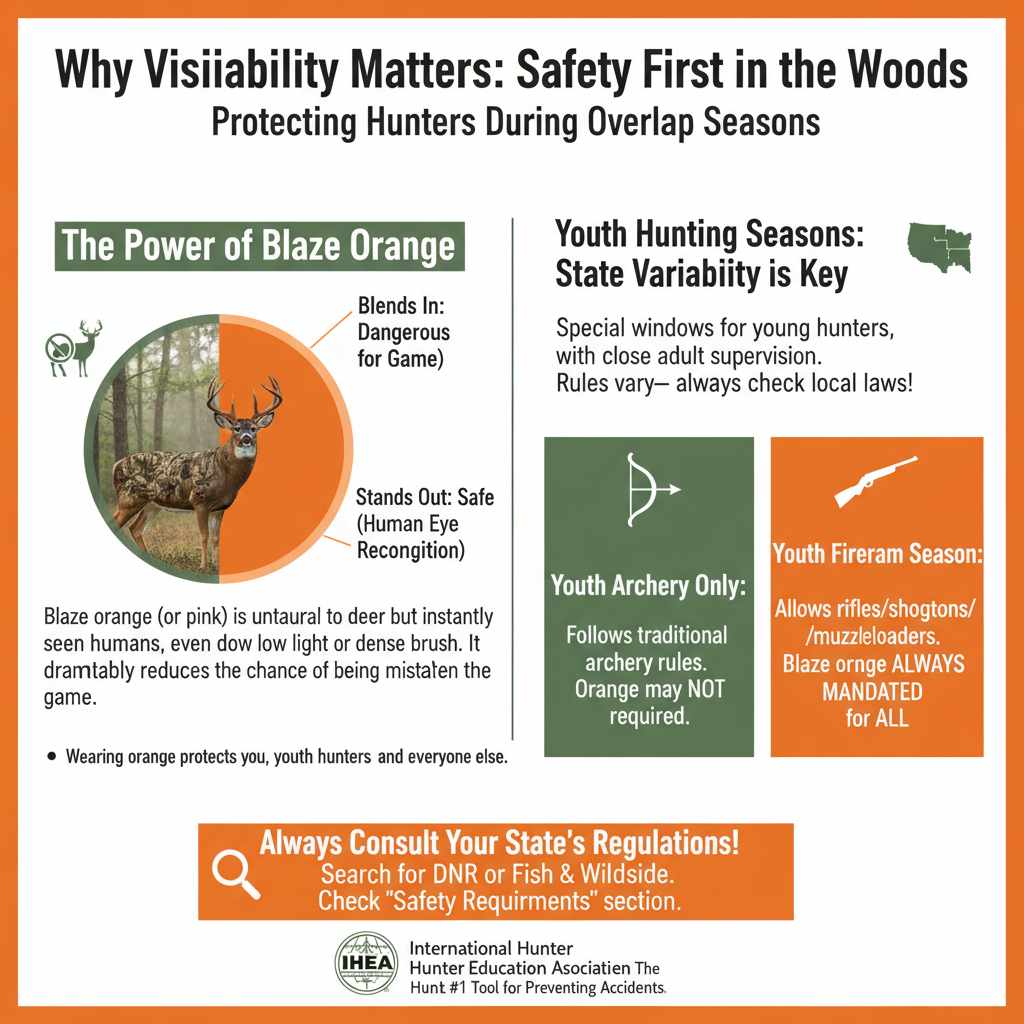
When you are bow hunting, your goal is often concealment. You want to blend in perfectly with your surroundings, using camouflage to approach game unnoticed. However, during periods when firearm hunters are active, blending in can be dangerous. Blaze orange (or sometimes blaze pink) is the standard safety color because it doesn’t appear natural to deer, but it is instantly recognizable to the human eye, even in low light or dense brush.
The core philosophy behind blaze orange is simple: it dramatically reduces the chance of a hunter being mistaken for game. Even if you are sitting perfectly still in a tree stand, a flash of movement seen by a firearm hunter who is not clearly identifying their target can lead to tragedy. Wearing orange protects you, your youth hunter, and everyone else sharing the woods.
Understanding Youth Hunting Seasons (State Variability is Key)
Youth seasons are special windows provided by state wildlife agencies. They are designed to introduce young people to the sport under close adult supervision. Because these seasons often feature flexible rules or precede the general firearm season, the clothing requirements can be tricky.
Remember this golden rule: Safety regulations are determined by the state or province where you are hunting. Before planning any trip, you must consult the current hunting regulations provided by your local wildlife agency. You can usually find this information easily by searching for your state’s DNR (Department of Natural Resources) or Fish and Wildlife service. For example, many regulations are detailed on official state websites, such as the U.S. Fish & Wildlife Service (FWS) pages which link to state-specific information.
In many states, the youth season is split into two types:
- Youth Archery Only: Typically follows traditional archery regulations, where orange might not be required.
- Youth Firearm Season: This often allows the use of rifles, shotguns, or muzzleloaders, and always mandates blaze orange for everyone in the party, including the supervising adult bow hunter.
The Critical Question: Do Bow Hunters Need Orange?
For most bow hunters operating during the standard, standalone archery season (when only bows are permitted), the answer is generally “No.” However, the moment that season overlaps with any firearm activity, whether it’s a general season or a specific youth firearm season, the requirement usually switches to “Yes.
Why the strict requirement during youth firearm season? It is often mandated that the supervising adult (who might be carrying only a bow or supervising an archer) must meet the same visibility standards as the young firearm hunter. This ensures 100% visibility for the entire group.
The General Rule vs. The Exception: When Orange is Required
To help you navigate these rules, let’s look at a common breakdown. Keep in mind that these are generalizations, and you must check your local laws!
| Hunting Scenario | Required Gear | Reasoning |
|---|---|---|
| Standalone Archery Season (No firearms permitted) | Blaze Orange Usually NOT required. | Focus is on concealment; low risk of crossfire from firearm users. |
| Youth Firearm Season (Supervising Adult Bow Hunter) | Blaze Orange REQUIRED for ALL participants. | High visibility required due to firearm use in the field. |
| Archery Season Overlapping with Muzzleloader or Small Game Firearm Season | Blaze Orange REQUIRED. | Any concurrent firearm use necessitates maximum visibility. |
| Tracking Wounded Game During Firearm Season | Blaze Orange REQUIRED. | Mandated for safety whenever you are moving through the woods during peak firearm activity. |
Mandatory Orange Rules: Focus on Youth Firearm Season Overlap
Let’s dive deeper into the scenario most confusing for bow hunters: when you are carrying only a bow, but the youth season allows rifles.
Imagine you are guiding your young son or daughter during a special two-day youth deer hunt. Your child might be using a .243 rifle, but you, as the supervising adult, prefer your traditional recurve or compound bow. Even though you are an archer, the safety rules of the youth firearm season apply to you, the mentor, without exception.
This is designed to protect not just you and your child, but other hunters who may be moving through the area. They need to see you both clearly.
For instance, in states like Pennsylvania or Michigan, during any season designated as a firearm deer season (which often includes youth hunts), the law mandates that hunters wear a minimum amount of visible blaze orange on the head and torso. The goal is 360-degree visibility.
Minimum Requirements: How Much Orange Is Enough?
Once you’ve determined that blaze orange is required, you must meet the legal minimums. These minimums are strictly enforced and are designed to ensure you are highly visible from every angle.
While the exact square inch requirements vary by state, the general principles for visibility remain consistent. Always remember to wear the orange on the outermost layer of your clothing.
The Three Key Placement Areas:
- The Hat/Cap: You must wear a solid blaze orange cap. This is crucial because the head is often the highest point and the first thing visible above tall grass, brush, or rolling terrain. A baseball cap style is typical, but beanies work well in cold weather, as long as they are 100% solid blaze orange.
- The Torso (Vest or Jacket): A blaze orange vest or jacket must cover your chest and back. Crucially, it must be the outermost garment. You cannot wear a camouflage jacket over your orange vest.
- 360-Degree Visibility: Many states legally require orange to be visible from the front, back, and sides. This means a vest with thin straps might not be enough; you might need solid shoulder coverage or specific minimum square inches on both the front and back panels.
Pro-Tip from Salman: Never rely on camouflage patterns that incorporate tiny strips of orange. If blaze orange is legally required, it almost always means solid, uninterrupted blaze orange on the mandated garments. When in doubt, wear more orange than the law requires.
Advanced Safety Planning: Beyond the Legal Minimum
As a guide, I always encourage my students to treat the legal minimum as just that—the bare minimum. When hunting with youth, we need to aim for maximum safety. This means incorporating blaze orange into your routines, even when it might technically be optional.
For example, if you are bow hunting in an archery-only season but are tracking game after sunset, consider wearing a blaze orange vest. Why? Because other people might be using the woods (hikers, bird watchers, or even trespassers), and visibility increases overall safety.
Teaching Youth Hunters About Visibility
When you are teaching a beginner, safety habits start early. Make the act of putting on blaze orange just as important as nocking an arrow or checking the safety on a firearm. It should be non-negotiable and routine.
Steps for Instilling Good Orange Habits:
- The Pre-Hunt Discussion: Before you even leave the truck, discuss why you are wearing the orange. Explain simply: “We wear this so other hunters know we are people, not deer. It’s the most important safety gear.”
- The Visibility Check: Have the youth hunter stand ten yards away. Ask them to verify that they can see a continuous strip of orange on your front, back, and head. Make it a game.
- Gear Responsibility: Teach them to pack their orange gear first. If the hunt is paused, the orange vest stays on. If they climb into a stand, ensure the orange is still fully visible and not bunched up.
- Orange for Gear: Consider attaching a small piece of blaze orange ribbon or material to gear items you might move, like your bow case, ground blind perimeter markers, or the drag rope. This helps identify your position to approaching hunters.
Gear Check: Selecting the Right Blaze Orange
Not all blaze orange is created equal. The quality and color intensity matter greatly for safety. You want a color that pops, even on a cloudy day or in deep shadows.
Color Degradation and Care
Blaze orange is made from fluorescent dyes, which are highly sensitive to UV light and harsh detergents. Over time, the color can fade, making the garment less effective and potentially non-compliant with state laws.
| Gear Checklist Item | Best Practice for Safety | Why It Matters |
|---|---|---|
| Color Intensity | Must be bright, neon, and unfaded. | Faded orange looks brown or white in low light, reducing visibility. |
| Material Type | Durable, waterproof, or breathable fabric appropriate for the weather. | Comfort ensures the hunter keeps the garment on at all times. |
| Fit | Should fit snugly over outer layers but not be restrictive for drawing a bow. | Loose fabric can snag strings or interfere with archery mechanics. |
| Washing Instructions | Wash with non-UV brighteners (hunting-specific detergent is best) and air dry. | Standard laundry detergents contain UV brighteners that cause fading and can make the orange glow unnaturally, which can spook game. |
| Headwear | Avoid mesh or partially orange hats; choose 100% solid blaze orange. | Ensures maximum visibility at the highest point of the body. |
When selecting gear, look for brands that specialize in hunting safety and ensure the material is rated for hunting use. Check your gear every year for fading. If the color seems dull compared to a new garment, it’s time to replace it.
When Can Bow Hunters Skip the Blaze Orange?
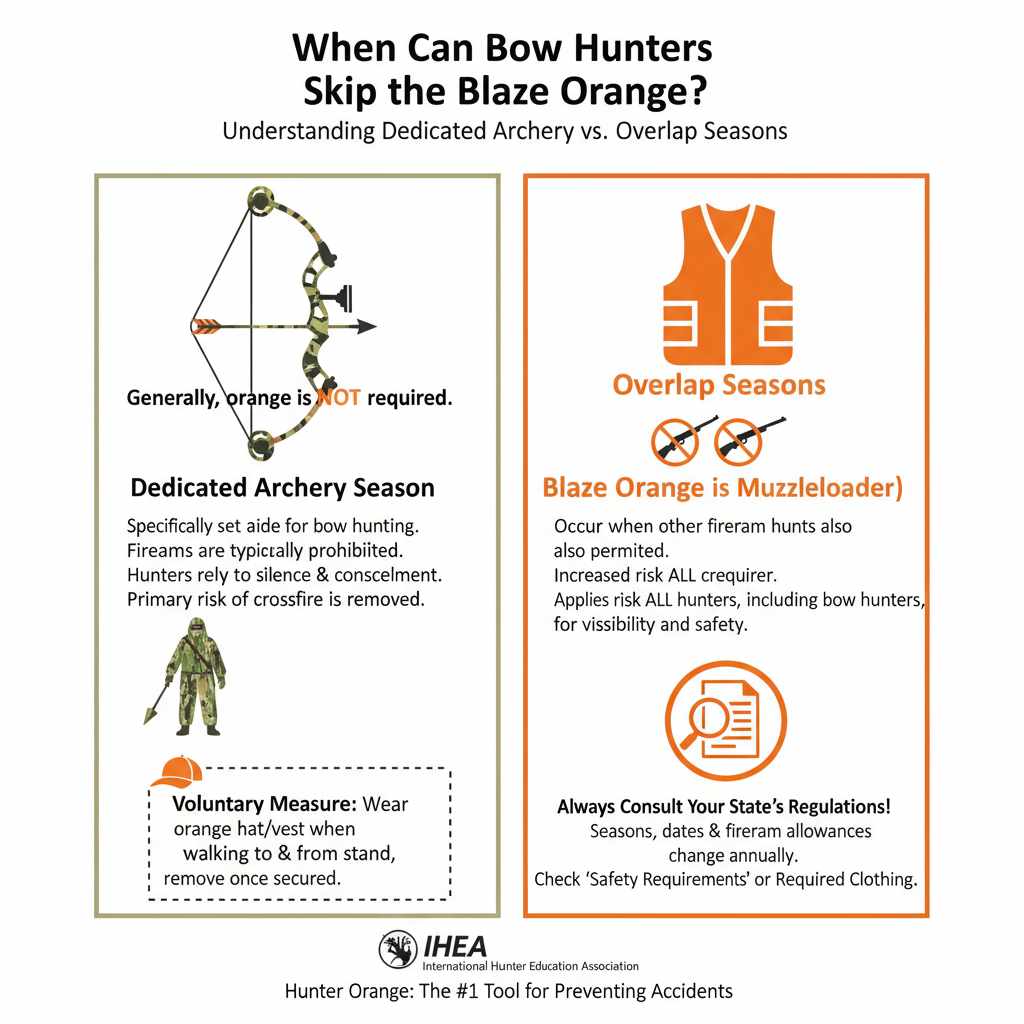
While I always recommend carrying a blaze orange vest in your pack during any season (just in case you need to track game or walk out after sunset), there are scenarios where bow hunters are legally allowed to wear full camouflage.
Generally, orange is not required during the traditional, dedicated archery season. This season is specifically set aside for bow hunting and typically prohibits the use of firearms entirely (though some exceptions might exist for specific small game or sidearms—always check!).
In this standalone season, archers are permitted to use camouflage because they rely on silence and concealment to get close to their target. The primary risk of crossfire from firearm hunters is removed.
However, many archery organizations and safety experts still recommend wearing a small amount of orange—perhaps a hat or vest—when walking to and from your stand, and only removing it once you are secured in your location. This is a voluntary measure of courtesy and safety when moving in the woods before dawn or after dusk.
Always Consult Your State’s Regulations
I cannot stress this enough: hunting regulations change constantly. Seasons shift, dates are adjusted, and firearm allowances are modified every year. The information in this article serves as a strong guideline, but your hunting license and safety rely on your knowledge of the local law.
Before any youth hunt or overlap season, visit your state’s official wildlife website. Download the current year’s regulation pamphlet. Pay special attention to the section titled “Safety Requirements,” “Required Clothing,” or “Deer Hunting Regulations.”
Here’s an example of how seriously safety organizations take this. The International Hunter Education Association (IHEA) provides resources that emphasize that hunter orange is the single most effective tool for preventing hunting accidents and must be used whenever legally mandated.
Understanding the difference between the bow season and the firearm season (even a youth firearm season) is the key to compliance. If there is a legal pathway for a rifle, shotgun, or muzzleloader to be in the woods during your hunt, you and your youth hunter should be wearing blaze orange.
Frequently Asked Questions (FAQ)
We know these rules can be confusing, especially when introducing a new hunter to the sport. Here are simple answers to common questions about blaze orange and bowhunting safety.
1. Does blaze orange scare deer away when I’m bow hunting?
Studies show that blaze orange does not scare deer. Deer vision is dichromatic, meaning they see two primary colors (similar to a human with red-green color blindness). While they can detect movement, the bright orange color appears dull or grayish to them, making it blend into the background much better than white or blue. Your movement or scent is far more likely to spook a deer than a properly worn blaze orange vest.
2. If I’m in a ground blind during youth season, do I still need to wear orange?
If you are legally required to wear orange due to an overlap with a firearm season, the rule usually applies even if you are in an enclosed ground blind. However, some states allow you to remove the orange once inside the blind, provided the blind itself has a large patch of blaze orange visible from 360 degrees. Always confirm the specific requirements for stationary hunters in blinds with your local DNR.
3. Can I use blaze pink instead of blaze orange?
In many states, yes. A growing number of jurisdictions recognize blaze pink as an acceptable alternative to blaze orange. Blaze pink is highly visible to the human eye and meets the same safety standards. Check your state’s regulations, as the approval of blaze pink is a relatively recent change in many areas.
4. What if I am only walking to my tree stand before light?
It is strongly recommended, and often legally required, to wear blaze orange whenever you are walking or moving on public lands or shared hunting areas during any firearm season. This includes walking in and walking out, especially during low light when visibility is poor. You are most vulnerable to accidents when you are moving.
5. Does the required orange need to be solid, or can it have camo patterns?
If the law specifies a minimum square inch requirement for blaze orange, the requirement is almost always for solid, uninterrupted orange. Camouflage patterns that incorporate small orange sections usually do not meet the legal requirement for visibility and should not be used when orange is mandatory.
6. Can my youth hunter wear camouflage if I, the mentor, wear blaze orange?
No. If blaze orange is required for the hunt (due to firearm use or overlap), every single participant in the hunting party must meet the minimum visibility requirements, including the youth hunter. Both the supervisor and the youth must be protected equally.
7. What is the difference between blaze orange and international orange?
Blaze orange (also called hunter orange or fluorescent orange) is a specific, bright, fluorescent color designed to maximize visibility in natural environments. International orange is a deeper, more reddish-orange color often used by NASA or for maritime safety. Only blaze orange or blaze pink meets the requirements for hunter safety.
Conclusion: Safety Is Always In Season
Bow hunting is about precision, patience, and safety. When you introduce a young hunter to the field, you take on the crucial role of safety instructor. Understanding and following the blaze orange rules during youth season is non-negotiable, particularly because these seasons often involve overlap with firearm activities.
Remember Salman’s simple checklist: check your state regulations, always default to wearing orange if there is any question of overlap, ensure you and your youth hunter have 360-degree visibility, and maintain the brightness of your gear.
By prioritizing safety and visibility, you guarantee that your time in the woods is spent enjoying the hunt, building confidence in your young archer, and creating memories—all while ensuring everyone comes home safely. Happy hunting!