

Bow Sight: Essential One Pin Vs. Multi Pin Genius
For beginners, understanding the “Bow Sight one pin vs multi pin” debate is key! A single-pin sight offers simplicity for close-to-medium range accuracy, perfect for learning. Multi-pin sights provide versatility for various distances, ideal once you’re comfortable. Choose based on your current skill and hunting/shooting needs.
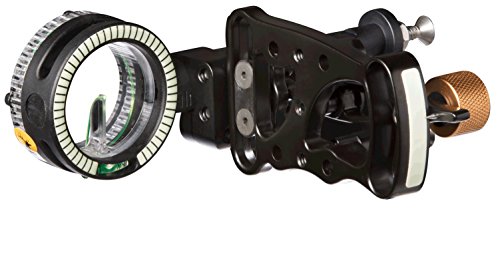
Trophy Ridge
Trophy Ridge Drive Slider Bow Sight ,…
- INCREADED PRECISION: Adjustable indicator pin allows for ultra-precise adjustments to compensate for uncertain environmental condi…
- PREMIUM MATERIALS: Nylon bushings create smooth, quiet movement with no metal-to-metal contact
- INCREASED PRECISION: Properly align shots with the precision installed bubble level
As an Amazon Associate I earn from qualifying purchases.
Welcome, aspiring archers and seasoned enthusiasts alike! Are you standing at the archery counter, gazing at a wall of bow sights, completely bewildered by the options? You’re not alone. The quest for the perfect bow sight can feel like trying to hit a bullseye in the dark sometimes. One of the biggest puzzles for newcomers is the choice between a single-pin and a multi-pin sight. Which one is right for you? Let’s break it down, hunter to hunter, shooter to shooter.
It’s a common question: “Do I really need multiple pins, or is one enough?” This decision can significantly impact your accuracy and confidence downrange. Don’t worry; we’ll make this as clear as a crisp autumn morning. By the end of this guide, you’ll know exactly which bow sight setup will best suit your archery journey.
The Heart of the Matter: Why Bow Sights Matter
Before we dive into the single-pin versus multi-pin showdown, let’s quickly chat about why a bow sight is so crucial. Think of it like the aiming system on a rifle. Without it, you’re essentially free-aiming, which is incredibly difficult and unreliable, especially when you’re trying to make that perfect shot. A bow sight provides a fixed or adjustable point of reference, helping you align your eye, the arrow, and the target.
For beginners, a good sight is your best friend in building consistent shooting habits. It helps you focus on form and a solid anchor point, knowing that your aim is dialed in. As you progress, the right sight can help you extend your effective range and adapt to different shooting scenarios.
The Spartan Simplicity: Understanding the Single-Pin Bow Sight
Imagine a minimalist approach to aiming. That’s the essence of a single-pin bow sight. It features just one aiming point – a single pin – that you adjust vertically for distance. This makes it incredibly straightforward and intuitive, especially for those just starting their archery adventure.
How a Single-Pin Sight Works
You typically set your single-pin sight for a “dead-on” range at a specific distance (e.g., 20 yards). For shots closer than that, you aim a little lower than the bullseye. For shots farther away, you aim a little higher. When you need to shoot at a different distance, you manually (or sometimes with a quick adjustment lever) move the pin up or down to the new yardage.
Pros of a Single-Pin Sight
- Simplicity: Fewer moving parts and no visual clutter means it’s easy to learn and use.
- Accuracy at Known Ranges: When precisely set, it can be incredibly accurate for your most commonly used shooting distances.
- Less Visual Clutter: Only one pin to focus on reduces distraction, which is great for beginners and hunting in low-light conditions.
- Lightweight: Often lighter than their multi-pin counterparts.
- Cost-Effective: Generally less expensive than feature-rich multi-pin sights.
Cons of a Single-Pin Sight
- Adjustment Time: You have to manually adjust the pin for each different distance, which takes time. This can be a disadvantage in fast-paced hunting situations.
- Potential for Error: If you forget to adjust the pin or misjudge the distance, your shot will be off.
- Limited Range Versatility: While adjustable, it’s not as instantly versatile for rapid shots at widely varying distances.

The Versatile Virtuoso: Exploring the Multi-Pin Bow Sight
Now, let’s shift gears to the multi-pin sight, often called a “slider” or “tape yardage” sight. This type of sight has multiple pins (usually 3, 5, or even 7) that are pre-set to specific yardages. The magic here is that you can often set these pins and then rely on them without needing to make major adjustments in the field, at least for a certain range.
How a Multi-Pin Sight Works
With a multi-pin sight, you’ll typically set your bottom pin (often for 20 yards) and then adjust the subsequent pins (above it) for farther distances (e.g., 30, 40, 50 yards). Some advanced multi-pin sights also feature a “slider” mechanism. With a slider, you can set one pin to a specific yardage, loosen a knob, and then move the entire sight housing up or down to a predetermined mark corresponding to another distance. This essentially allows you to have multiple “dead-on” pins accessible with a quick slide. You can find more information on how to set up your sight at reputable sources like the Archery Trade Association, which offers resources for hunters and shooters.
Pros of a Multi-Pin Sight
- Rapid Adjustments: You can switch between pre-set pins for different distances quickly, ideal for hunting when an animal might move or you encounter varying yardages.
- Confidence at Multiple Distances: Having pins for various ranges can boost confidence, especially if you’re not perfectly practiced at judging distances.
- Versatility: Excellent for situations where shots might be at unpredictable distances, like hunting from a treestand or a blind.
- Slider Technology: Advanced slider sights offer a blend of single-pin adjustability with the quick access of multiple pins.
Cons of a Multi-Pin Sight
- Visual Clutter: Multiple pins can be distracting for beginners, making it harder to focus on the correct aiming point.
- Complexity: Setting up and sighting in multiple pins can be more time-consuming and require more initial understanding.
- Weight and Size: Generally heavier and bulkier than single-pin sights.
- Potential for Pin Gaps: If not set correctly, the gaps between your pins might not line up with your most common shooting distances.
- Cost: Often more expensive than basic single-pin sights.
The Great Debate: One Pin Vs. Multi Pin Genius for Beginners
Now, let’s get down to the nitty-gritty for YOU, the beginner archer. When you’re just starting out, the learning curve is steep enough without adding unnecessary complexity. The primary goal for a beginner is to develop solid shooting form, a consistent anchor point, and a good understanding of how your arrow flies.
Why Single-Pin is Often King for Newcomers
For most beginners, a single-pin sight is the way to go. Here’s why:
- Focus on Fundamentals: With only one pin, your entire focus can be on your form, breathing, and release. You’re not worried about which pin to pick or if you’ve adjusted correctly. The intention is to learn correct aiming and shot execution at a familiar distance.
- Simplicity Builds Confidence: Learning archery can be humbling. A simple sight system reduces potential frustration. As you achieve good groups at your chosen range, your confidence will grow, which is essential for further progress.
- Teaches Distance Estimation: While you have to adjust, a single pin reinforces the importance of knowing your range. You’ll naturally start to learn how to estimate distances better because you have to make that adjustment yourself.
- Easier to Master: Mastering one pin is much easier than mastering five. Once you’re comfortable and accurate, moving to a multi-pin setup later becomes a natural progression.
When a Multi-Pin Might Still Be Considered
However, there are exceptions. If you are:
- Taking a Course with a Multi-Pin Sight: Some archery courses or hunting schools might use multi-pin sights to teach specific doctrines.
- Hunting Whitetail from a Treestand: If your primary hunting scenario involves very close-range shots with occasional slightly longer shots and you’re already comfortable with bowhunting basics, a multi-pin could offer an edge.
- Already Confident with Basic Shooting: If you’ve already spent significant time practicing and are confident in your fundamental shooting skills, you might feel ready to tackle the complexity of multiple pins.
Ultimately, the best sight for a beginner is the one that allows them to focus on learning and building good habits without overwhelming them. The general consensus, and my recommendation, leans heavily towards the single-pin for starting out.
Setting Up Your Bow Sight: A Beginner’s Guide
No matter which type of sight you choose, proper setup is crucial. This is where accuracy truly begins. We’ll focus on the foundational steps that apply to both single and multi-pin sights, with specific notes for each.
Step 1: Basic Bow Setup & Safety First!
Before you even think about sighting in, ensure your bow itself is properly set up. This includes the correct draw weight for you, a comfortable draw length, and a properly tuned arrow. Always wear an armguard to protect your forearm and a finger tab or release aid to protect your fingers and ensure a clean release. Never dry fire your bow (draw and release without an arrow).
Step 2: Choosing Your Shooting Spot
Find a safe shooting range with a stable target butt. For initial sighting in, a distance of 10 or 20 yards is ideal. Ensure you have a clear line of sight and a safe backdrop that can stop arrows.
Step 3: The Weaver Stance
Achieve a stable and consistent shooting stance known as the Weaver stance. This involves placing your feet shoulder-width apart, with your front foot slightly open (about 45 degrees) and your back foot perpendicular to the target. This provides a solid base for consistent shots.
Step 4: Mounting Your Sight
If you haven’t already, mount your sight securely to your bow’s riser. Ensure all screws are tight and there’s no wobble. For beginner sights, this is usually a straightforward process.
Step 5: Initial Sighting (The “Paper Tuning” Phase)
This is where sight adjustment begins.
- Single-Pin Sight: Rest your bow on a stable shooting rest or have someone hold it steady. Place a large paper or cardboard target at 10 yards. Aim your bare bow (without the sight) directly at the center of the target. Now, place one arrow on your string and loosely attach your sight’s aiming pin directly over where your bare bow was aiming. This gives you a ballpark starting point.
- Multi-Pin Sight: For multi-pin sights, you’ll typically start by sighting in your closest pin (usually 20 yards) using a similar method.
Step 6: The First Shot and Adjustment
Draw your bow, focus on your form, anchor consistently, aim, and make a clean shot.
- Analyze the Shot: Look where your arrow hit the target.
- Adjust Your Sight: Now, here’s the key: you need to move your sight pin towards where your arrow hit. For example, if your arrow hit 2 inches high and 2 inches left, you need to move your sight housing 2 inches up and 2 inches left (relative to your sight’s adjustment screws). Read your sight’s manual for specific up/down and left/right adjustments.
- Repeat: Shoot another arrow. Make further fine-tuning adjustments until your arrow hits consistently where you are aiming.
Step 7: Extending Your Range
Once you’re grouping tightly at 10 or 20 yards, move your target back to 30 yards.
- Single-Pin Sight: Now you’ll start adjusting your single pin for this new distance. Loosen the adjustment mechanism, aim at the bullseye, and move your pin up until it is on the bullseye. Tighten your sight. Shoot again. Make fine adjustments.
- Multi-Pin Sight: If you have a multi-pin sight, you would now sight in your second pin (e.g., 30 yards) using the same method as in Step 6, adjusting this second pin until it’s on the bullseye at 30 yards.
Step 8: Fine-Tuning and Practice, Practice, Practice!
Continue this process for each subsequent pin on a multi-pin sight, or for longer distances with a single-pin sight, as desired. The key is patience and consistency. For hunting, learn to estimate yardage quickly and accurately. Resources like Outdoor Life offer great tips on distance estimation. Remember, the bow sight is a tool, but your skill is paramount.
Key Features to Look For in a Beginner Bow Sight
When you’re browsing the extensive selection of bow sights, keep these features in mind, especially if you’re leaning towards the simpler single-pin option:
For Single-Pin Sights:
- Adjustability: Look for a sight that allows for smooth, precise vertical micro-adjustments. Some have a quick-adjust lever for faster yardage changes.
- Pin Size and Brightness: A .010 or .020 inch pin is common. In low light, a brighter pin (often with a built-in light or rheostat) can be a lifesaver. Make sure it’s not too bright, which can be distracting.
- Durable Construction: You want something that can withstand the bumps and knocks of being in the field.
For Multi-Pin Sights (Good to Know for Future Upgrades):
- Number of Pins: 3 to 5 pins are most common and cover most hunting scenarios.
- Slider Mechanism: If you opt for a slider, ensure it moves smoothly and locks securely.
- Pin Brightness and Rheostat: Similar to single pins, adjustable brightness is key.
- Level: Many multi-pin sights include a bubble level to help ensure your bow is held perfectly vertical, which is critical for accuracy at longer ranges.
Table: Single-Pin Vs. Multi-Pin – A Quick Comparison
To help you visualize the differences, here’s a handy comparison table:
| Feature | Single-Pin Sight | Multi-Pin Sight |
|---|---|---|
| Complexity | Low | Medium to High |
| Setup Ease | Easy | More Involved |
| Visual Clutter | None | Moderate to High |
| Adjustment Speed in Field | Slower (manual adjustment needed) | Faster (pre-set pins) |
| Ideal For Beginners | Highly Recommended | Generally Not Recommended Initially |
| Ideal For Experienced | For specific applications (e.g., fixed-range shooting) | Versatile hunting & shooting |
| Cost | Generally Lower | Generally Higher |
| Potential Drawbacks | Slower adjustments for varying distances | Distracting pins for new shooters, more complex setup |

Frequently Asked Questions (FAQ)
Here are some common questions beginner archers have about bow sights.
Q1: What is the easiest bow sight for a beginner?
A1: A simple, single-pin vertical adjustment sight is generally the easiest for beginners. It minimizes visual clutter and allows you to focus on developing your shooting form without being overwhelmed by too many aiming points.
Q2: How many pins do I really need on a bow sight?
A2: For a beginner, one pin is usually all you need. Once you become more experienced and comfortable shooting at various distances, a multi-pin sight with 3 to 5 pins can offer more versatility for different shooting scenarios.
Q3: Should I use a single-pin sight for hunting?
A3: Yes, many hunters find single-pin sights excellent for hunting, especially if they are good at estimating distances and practice their shots. They offer less visual clutter, which can be beneficial in the field. For situations where animals might move quickly between different distances, a multi-pin or slider sight can offer faster adjustments.
Q4: How do I know which pin to use on a multi-pin sight?
A4: On a multi-pin sight, each pin is set to correspond to a specific yardage. Your lowest pin is usually set for the shortest distance (e.g., 20 yards), and subsequent pins are set for increasingly farther distances (e.g., 30, 40, 50 yards). You select the pin that matches the distance to your target. Always double-check which pin you are using before you shoot.
Q5: What size pin (e.g., .010, .019) is best for a beginner?
A5: For beginners, a .019-inch pin is often a good starting point as it’s more visible and easier to acquire in your sight picture. As you gain experience and your shooting groups tighten, you might consider a smaller .010-inch pin for greater precision at longer distances. Ultimately, visibility and personal preference play a big role.
Q6: How do I sight in my bow sight without a chronograph?
A7: You don’t need a chronograph to sight in your bow sight. All you need is your bow, arrows, a sight, a target, and some patience. The process involves shooting your bow, observing where the arrow hits, and adjusting your sight so the pin aligns with the arrow’s impact point at your chosen distance. This is done at 10-20 yards initially and then extended outwards.
Conclusion: Your Archery Sight, Your Journey
Choosing between a single-pin and a multi-pin bow sight is a significant step in your archery journey. For beginners, the simplicity and focus offered by a single-pin sight are invaluable. It allows you to concentrate on building strong fundamentals without the distraction of multiple aiming points. As your skills grow, you might find yourself drawn to the versatility of a multi-pin or slider sight, and that’s perfectly alright!
Remember, the goal is to become a confident and accurate archer. Don’t rush the process. Take your time, practice consistently, and choose the equipment that best supports your learning and development. Whether you opt for the elegant simplicity of one pin or the comprehensive capability of many, the most important thing is that you’re out there, drawing back, and enjoying the incredible sport of archery. Happy shooting!
Related pick: Check today's price on Amazon


