

.10 vs .19 Bow Sight: Essential Guide
Choosing between .10 and .19 bow sight pins hinges on your shooting style, target distance, and lighting conditions. Smaller .10 pins offer precision for long-range shots, while larger .19 pins are more visible in low light and for closer targets. This guide helps you pick the best fit for your accuracy needs.
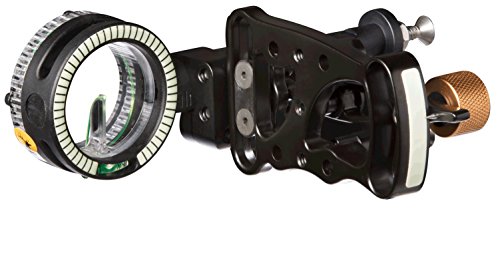
Trophy Ridge
Trophy Ridge Drive Slider Bow Sight ,…
- INCREADED PRECISION: Adjustable indicator pin allows for ultra-precise adjustments to compensate for uncertain environmental condi…
- PREMIUM MATERIALS: Nylon bushings create smooth, quiet movement with no metal-to-metal contact
- INCREASED PRECISION: Properly align shots with the precision installed bubble level
As an Amazon Associate I earn from qualifying purchases.
.10 vs.19 Bow Sight Pins: Your Essential Beginner’s Guide
As you dive into the exciting world of archery, you’ll quickly realize that a good bow sight can make a huge difference in your accuracy. It’s like having a trusty helper guiding your arrow right where you want it to go. One question that often pops up for beginners is about the size of the sight pins, specifically the choice between a .10 and a .19. It might seem like a small detail, but it can actually impact how well you aim and shoot. Don’t worry if you’re scratching your head; we’re here to break down what these numbers mean in simple terms.
Many new archers feel a bit overwhelmed by all the equipment choices. You want the gear that will help you improve without being too complicated. Understanding the difference between .10 and .19 sight pins is a fantastic step toward making informed decisions. We’ll walk through each one, look at when to use them, and help you figure out which is right for your archery adventures. Let’s make sure you’re set up for success!
Why Sight Pin Size Matters
Think of your bow sight pins as little beacons of accuracy. Their size plays a crucial role in how you see your target and how precisely you can align your shot. It’s not just about having a pin; it’s about having the right pin for the job. The goal is to have a pin that is visible enough to see clearly but small enough to allow for fine aim. Too large, and it can obscure your target; too small, and it might be hard to see, especially when you need it most.
Different pin sizes are designed to meet different shooting demands. For instance, a hunter might need a pin that stands out in dim forest light, while a target archer on a sunny range might prefer a sharper, smaller pin for maximum precision. Understanding these nuances will help you choose a sight that enhances your natural aiming abilities. We’ll explore the specific benefits and drawbacks of both .10 and .19 pins so you can make a confident choice.
The “.10” Sight Pin: Precision for the Focused Archer
The .10 diameter sight pin is often favored by archers who prioritize pinpoint accuracy, especially at longer distances. The smaller size of the pin means that less of your target is covered by the aiming point. This allows for very fine adjustments, which can be critical when you’re aiming at a small spot or shooting from a considerable distance away.
Imagine you’re trying to hit a dime from 30 yards. A .10 pin would cover less of that dime, giving you a clearer view of the exact spot you want to aim for. This is why many competitive target archers and those shooting with high-poundage bows at extended ranges often choose this size.
Pros of a.10 Sight Pin
- Enhanced Precision: The small size minimizes target obstruction, leading to more precise aiming.
- Fine-Tuning: Ideal for making tiny sight adjustments for long-range accuracy.
- Less Distraction: The subtle pin can be less distracting for archers who prefer a minimalist aiming point.
Cons of a.10 Sight Pin
- Visibility Challenges: Can be difficult to see in low-light conditions (dawn, dusk, heavy cover).
- Less Ideal for Closer Shots: On very close targets, the small pin might be harder to acquire quickly compared to a larger one.
- Requires Steady Hand: Any slight hand tremor is amplified with a smaller aiming point.
The “.19” Sight Pin: Visibility and Versatility
The .19 diameter sight pin is a popular choice for a broader range of archers, particularly hunters and recreational shooters, due to its superior visibility. Being larger, the .19 pin is easier to spot in various lighting conditions, from bright sun to the dimmer environments often encountered in the field. This visual advantage can significantly speed up your aiming process and boost confidence, especially when every second counts.
Think about a hunting scenario where you might have limited time to make a shot. A brighter, more easily visible .19 pin helps you acquire your target and align your shot faster and more reliably. It provides a robust aiming point that doesn’t get lost as easily, making it versatile for different shooting situations. For many, this size strikes an excellent balance between being visible enough and still allowing for good accuracy.
Pros of a.19 Sight Pin
- Excellent Visibility: Stands out well in various lighting conditions, including low light.
- Faster Target Acquisition: Easier to see and pick up quickly for faster shooting.
- Good for General Use: Versatile for hunting, 3D archery, and casual shooting at various distances.
- More Forgiving: Slightly less sensitive to minor hand movements compared to a .10 pin.
Cons of a.19 Sight Pin
- More Target Obscuration: Covers a larger portion of the target, which might hinder extreme precision at very long ranges.
- Less Ideal for Ultra-Long Range: For the most demanding long-range target shooting, a smaller pin might be preferred.

Comparing.10 vs.19 Bow Sight Pins
The choice between a .10 and .19 bow sight pin isn’t about which one is inherently “better,” but rather which one is better suited to you and your specific shooting environment. They cater to different needs and preferences. Let’s break down how they stack up side-by-side across key factors.
To help visualize the differences, consider this comparison table. It highlights the core characteristics that differentiate these two popular pin sizes.
| Feature | .10 Sight Pin | .19 Sight Pin |
|---|---|---|
| Pin Diameter (Approx.) | 0.010 inches | 0.019 inches |
| Visibility (Low Light) | Lower | Higher |
| Visibility (Bright Light) | Good, but smaller | Very Good, more prominent |
| Precision for Long Range | Higher | Good, but less precise than .10 |
| Speed of Target Acquisition | Slower, requires more focus | Faster, easier to see |
| Target Obscuration | Minimal | Moderate |
| Best Suited For | Long-range target shooting, demanding precision. | Hunting, 3D archery, general recreational shooting, low-light conditions. |
| Forgiveness to Hand Movement | Less forgiving | More forgiving |
Factors to Consider When Choosing
When you’re standing at the archery shop or browsing online, a few key questions will guide you toward the right pin size. Think about where you’ll be doing most of your shooting and what your primary goals are. This personal assessment is crucial for making a decision you’ll be happy with when you’re out on the range or in the field.
- Your Primary Shooting Environment: Will you be hunting in a dense forest where light can be a challenge, or will you be shooting on an open, well-lit outdoor range?
- Your Target Distance: Do you primarily shoot at close range (under 20 yards), or are you interested in stretching your accuracy to 40, 60, or even 100 yards?
- Your Eyesight and Perceived Brightness: How well do your own eyes pick up fine details? Some people naturally see smaller objects better than others.
- Your Shooting Discipline: Are you aiming for competitive target archery, bowhunting, or casual backyard practice? Each has different demands.
- Your Preference for Aiming: Do you prefer a very sharp, almost needle-point aim, or do you appreciate a more substantial, bold aiming point? Sometimes, it’s just a matter of personal feel.
Which Pin Size for Hunting?
For bowhunting, visibility is often king. You might encounter a challenging shot opportunity at dawn or dusk, or in a shaded area. In these situations, a .19 pin shines. Its larger size makes it easier to pick up quickly and keep in your sight picture when the pressure is on and light conditions are less than ideal. Many seasoned hunters choose .19 pins for this very reason – they provide a reliable aiming point when you need it most, helping to ensure a quick and ethical shot.
However, some hunters who scout and shoot only in very open areas with ample light, and who often take shots at longer distances, might still lean towards a .10 pin for its added precision. The key is to match the pin to the most common scenario you expect to face.
Which Pin Size for Target Archery?
Target archery, especially at longer distances, often calls for maximum precision. When you’re aiming at a small bullseye or a specific aiming point on a target face, even a slight deviation can mean the difference between a bullseye and an X-ring miss. This is where the .10 pin often takes the lead. Its smaller profile covers less of the target, allowing archers to align their shot with incredible accuracy. Many professional archers and serious target shooters will opt for .10 pins to give them that extra edge in precision.
That said, some target archery disciplines or individual preferences might still favor slightly larger pins for clarity, especially in mixed lighting conditions. It’s always a good idea to experiment if possible.
Which Pin Size for Beginners?
For beginners, especially those still developing their shooting form and aiming consistency, the .19 sight pin is often the more forgiving and user-friendly choice. Its superior visibility helps new archers to more easily acquire their target and develop a consistent sight picture. This can lead to quicker progress and build confidence on the range. Learning to shoot with a pin that is easy to see and track allows you to focus more on your shot execution rather than struggling to find your aiming point.
Once you’ve established a solid foundation and feel comfortable with your aiming process, you might then experiment with smaller pins if you feel the need for greater precision. But for most newcomers, starting with a .19 pin is a great way to build a positive learning experience.
Understanding Pin Brightness: Fiber Optics
The numbers .10 and .19 refer to the diameter of the fiber optic that creates the pin. Fiber optic sights gather ambient light and channel it to the end of the fiber, making the pin glow. The effectiveness of this glow, and how large the pin appears, is also influenced by the thickness of the fiber optic itself and the quality of the sight. Thicker fibers (like those used for .19 pins) generally appear brighter because they can channel more light.
When you’re looking at bow sights, you’ll often see options for single-pin sights or multi-pin sights. A single-pin sight is often adjustable, allowing you to dial in specific distances. Multi-pin sights come with a set number of pins, typically pre-sighted for different yardages. Both types can come with .10 or .19 pins, or even a mix.
Adjustable vs. Fixed Pins
Your choice of pin size can interact with your sight type. Adjustable single-pin sights are becoming increasingly popular. They allow you to set the pin for a precise distance and then move it up or down for other distances. When using an adjustable sight, the pin size is still important for its visibility and precision, but you have the flexibility to move the aiming point precisely where you need it for any given range.
Fixed multi-pin sights, where you have, for example, 3 or 5 pins pre-set for different yardages (e.g., 20, 30, 40 yards), also come with different pin sizes. It’s common to see a configuration where the closest pin (e.g., 20 yards) might be a slightly larger, brighter .19 pin for quick acquisition, while longer-distance pins might be .10 for greater precision at those ranges. Manufacturers sometimes offer these combinations to provide the best of both worlds.
The quality and design of the sight itself also plays a role. A well-engineered sight will effectively transfer light to the fiber optics and hold them securely, ensuring consistent performance.
Tips for Selecting Your Bow Sight Pins
Choosing the right bow sight pins is a personal journey. Here are a few practical tips to help you navigate the decision process and make a choice that will serve you well.
- Test if Possible: If you have friends who shoot, see if you can try their bows with different pin sizes. Even a quick shot can give you a feel for what works best for your eyes.
- Consider Your Dominant Eye: Sometimes, how you perceive the pin can be influenced by your dominant eye and how you naturally focus.
- Start Versatile: If you’re unsure, a .19 pin is generally a safe bet for most beginners and general-purpose shooting due to its visibility. You can always try a .10 later if you find yourself needing extreme precision at long ranges.
- Think About Lighting: Be honest about the typical light conditions you’ll be shooting in. If dim light is common, prioritIze a brighter pin.
- Focus on Form First: Remember that the sight pin is a tool to help you aim. Your fundamental archery form – stance, grip, anchor, and release – are the most critical factors for accuracy. A great pin won’t fix poor form.

FAQ: Your.10 vs.19 Bow Sight Questions Answered
Here are some common questions beginners have about .10 and .19 bow sight pins, answered in a clear, straightforward way.
Q1: Can I mix.10 and.19 pins on the same sight?
A1: Yes, absolutely! Many multi-pin sights are designed with a combination of sizes. For example, you might have a .19 for your 20-yard pin and .10 pins for longer distances like 30, 40, and 50 yards. This allows you to leverage the visibility of a larger pin for closer shots and the precision of a smaller pin for longer ones.
Q2: Which pin size is better for low-light hunting?
A2: For low-light hunting, the .19 pin is generally the better choice. Its larger diameter and ability to gather more light make it much easier to see when the sun is low or when you’re in dense shade. This helps you acquire your target faster and more confidently.
Q3: Will a.10 pin obscure my target at short distances?
A3: It can, depending on the target. For very small targets at close range, the .10 pin does cover more of the target than a strictly theoretical point. However, most archers find they can still aim precisely because the pin itself is small. The potential for obscuring is greater than with a .19, but it’s often manageable, especially if you’re accustomed to fine aiming.
Q4: Is it worth upgrading my sight pins?
A4: If you’re currently using old or basic pins that are hard to see, upgrading to either .10 or .19 pins (or newer fiber optic pins of good quality) can definitely improve your accuracy and shooting experience. A small investment in better pins can make a noticeable difference, especially if your current ones are hindering your aim.
Q5: How do I know if my sight pins are bright enough?
A5: A good test is to bring your bow up to a safe aiming position (without an arrow loaded or in a way that ensures safety) in the lighting conditions where you normally shoot. If you can easily and quickly see your pin and acquire your target, it’s likely bright enough for you. If you find yourself squinting, struggling to see the pin, or taking too long to aim, your pins might not be bright enough for those conditions.
Q6: Are there other pin sizes besides.10 and.19?
A6: Yes, while .10 and .19 are the most common, you might also find pins in sizes like .015. This intermediate size can offer a balance between the precision of a .10 and the visibility of a .19. Manufacturers offer a range of options to cater to very specific preferences.
Conclusion: Finding Your Perfect Aiming Point
Navigating the world of bow sights can seem daunting, but understanding the core differences between .10 and .19 pins is a significant step toward making an informed choice. The .10 pin excels in situations demanding extreme precision, particularly at longer distances, by minimizing target obstruction. Conversely, the .19 pin offers superior visibility across various lighting conditions, making it a versatile favorite for hunters and recreational shooters who value quick target acquisition and a clear aiming point.
For beginners, starting with a .19 pin is often recommended due to its ease of use and visibility, which can build confidence and speed up learning. However, as your skills develop and your shooting disciplines become more defined, you might find yourself drawn to the pinpoint accuracy of a .10, or perhaps a clever combination of both on a multi-pin or adjustable sight.
Ultimately, the best pin size is the one that allows you to aim comfortably, confidently, and accurately in your preferred shooting environment. Don’t hesitate to experiment if the opportunity arises, and remember that consistent practice with any good sight will be your greatest ally in improving your archery skills. Happy shooting!
Related pick: Check today's price on Amazon


