
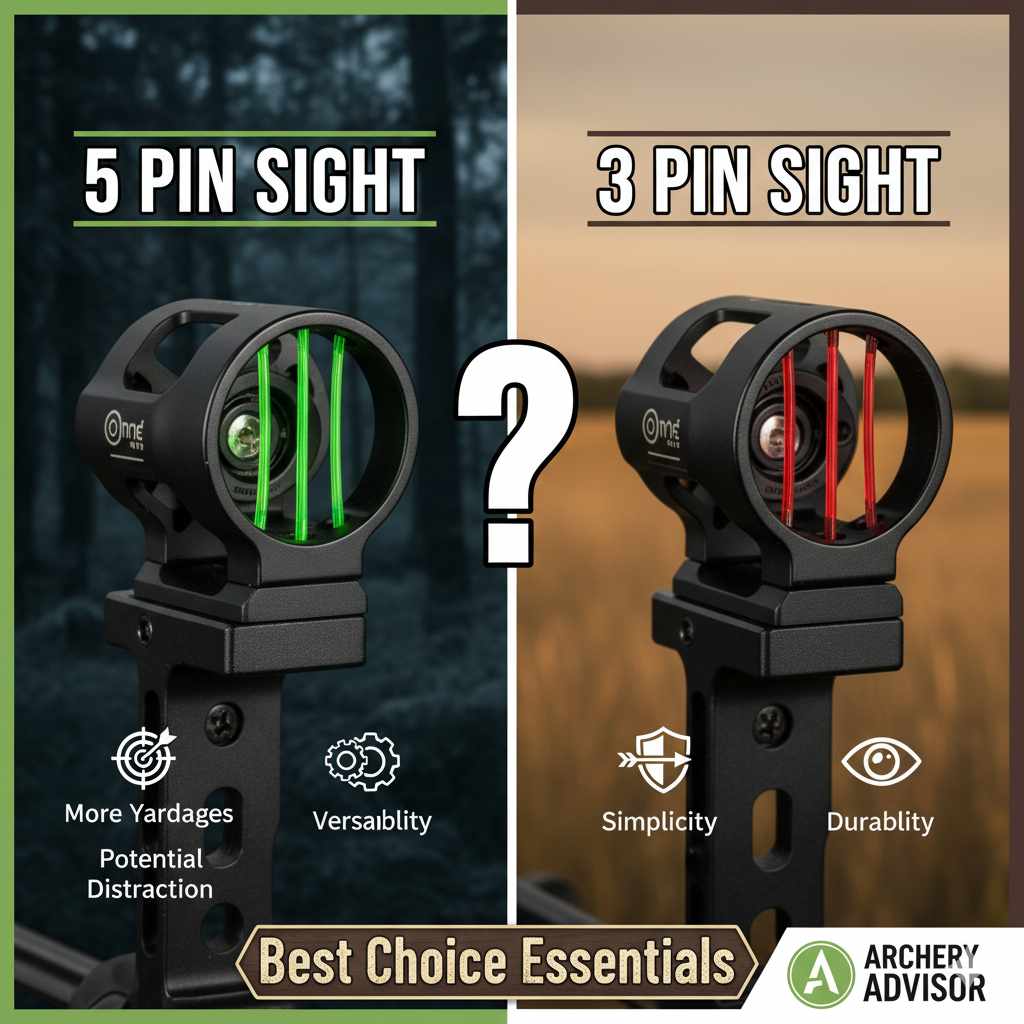
5 Pin vs 3 Pin Bow Sight: Best Choice Essential
For beginners, a 5-pin bow sight often offers more versatility and forgiveness in judging distance, while a 3-pin sight can simplify aiming for closer distances. The ‘best’ choice depends on your primary hunting or target shooting range and personal preference. We’ll break down which might suit you best.
Choosing the right bow sight can feel a bit overwhelming when you’re just starting out in archery. You’ve seen the different kinds, and maybe the “pin count” is a question mark. Which one is right for you, and what’s the big difference between a 5-pin and a 3-pin bow sight? Don’t worry; it’s simpler than it sounds! Finding the perfect sight helps you aim better, feel more confident, and enjoy your archery experience a lot more. Let’s clear up the confusion and figure out which pin setup will be your best archery buddy.
Understanding Bow Sights: Your Aiming Partner


A bow sight is like the viewfinder on a camera, but for your arrows. It’s an accessory mounted on your bow that helps you line up your shot accurately. The “pins” you see on many sights are tiny illuminated dots that you align with your target. Each pin is typically set for a specific distance, making it easier to hit your mark without having to guess or constantly adjust your sight.
Think of it this way: if you’re shooting at a target 20 yards away, you’ll aim using your 20-yard pin. If you move to a target 30 yards away, you’ll switch to your 30-yard pin. This system takes a lot of the “hold steady and hope” out of archery, especially for new shooters. The number of pins tells you how many different distances your sight is pre-set to help you with.
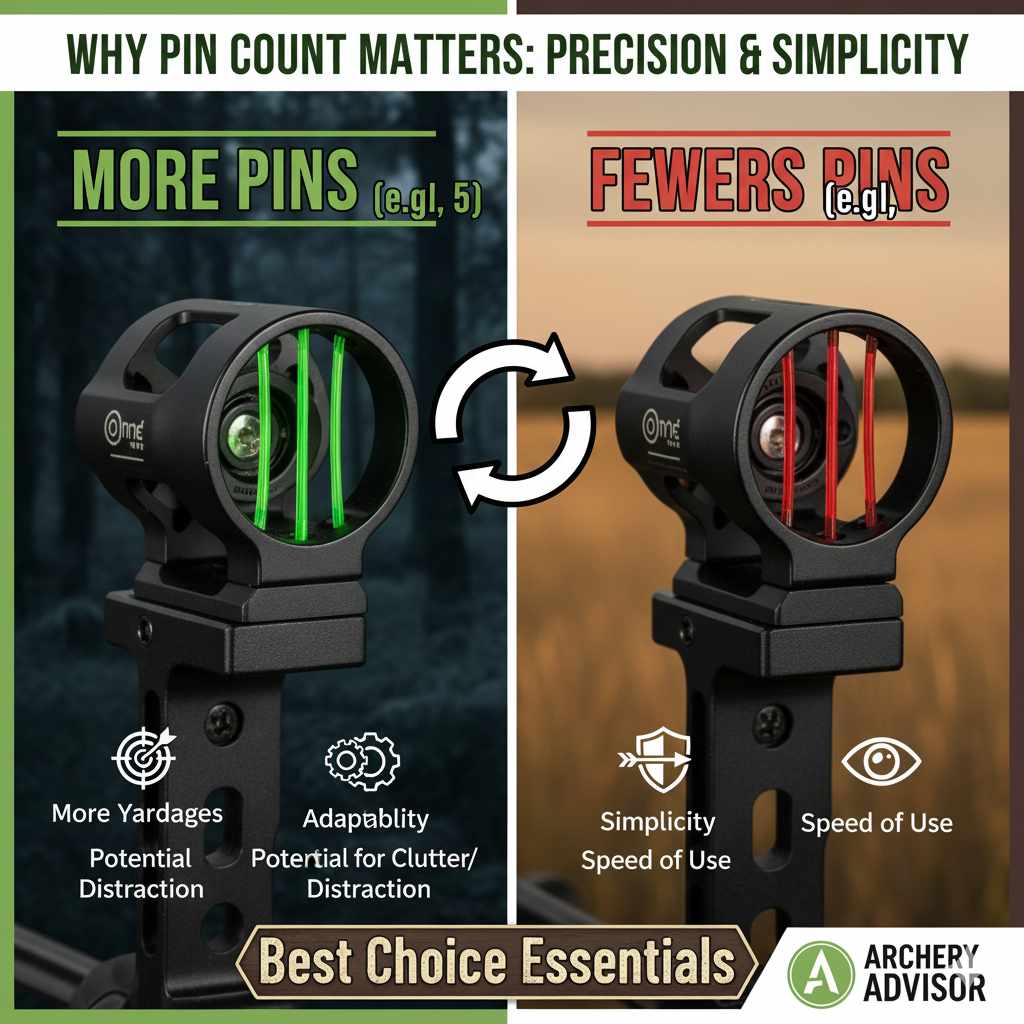
Why Pin Count Matters: Precision and Simplicity
So, why is there a difference in the number of pins? It comes down primarily to two factors: versatility and simplicity. More pins generally mean more versatility, allowing you to accurately shoot at a wider range of distances without re-sighting your bow. Fewer pins can mean greater simplicity, making it easier to focus on the shot without being overwhelmed by choices.
For any archer, especially those who are new, mastering the basics is key. A sight’s pin configuration directly impacts how you’ll approach aiming and how quickly you can become proficient. We’ll dive into the specifics of 5-pin and 3-pin sights to help you make an informed decision.
The 5-Pin Bow Sight: Versatility for Every Distance
A 5-pin bow sight comes equipped with five individual pins, usually arranged vertically. Each pin is meticulously set to correspond with a specific yardage. Most archers will set their pins for common shooting distances, such as 20, 30, 40, 50, and 60 yards. Some might adjust these based on their typical hunting scenarios or target shooting preferences.
Pros of a 5-Pin Sight
- Enhanced Versatility: The biggest advantage! With five pins, you’re prepared for a wider array of shooting distances. This is incredibly useful if you hunt in varied terrain or shoot at different ranges frequently. You can confidently engage targets at 20 yards and then, with minimal adjustment, at 50 or 60 yards.
- Forgiveness for Beginners: For newer archers, having pre-set distances can be a real confidence booster. It reduces the mental load of figuring out how high or low to hold. You just pick the right pin for the known distance and focus on your form.
- Precise Aiming at Distance: As you progress, you’ll appreciate the finer tuning a 5-pin sight allows for. You can establish precise aiming points for longer shots, which is crucial for ethical hunting or achieving high scores in target archery.
- Future-Proofing: If you plan to get more serious about archery or hunting, a 5-pin sight provides room to grow. You won’t outgrow its capabilities as quickly.
Cons of a 5-Pin Sight
- Potential for Sight Picture Clutter: In a high-pressure situation, especially up close, seeing five pins might feel a bit busy. Some archers find it distracting when they only need to worry about a very close shot.
- More Complex Setup: Sighting in five pins requires more time and attention than sighting in three. You’ll need a longer range or more patience to set each pin accurately.
- Slightly Heavier and Bulkier: Generally, a 5-pin sight will be a bit larger and heavier than a comparable 3-pin model. For most bows, this difference is minimal but worth noting.
- More Expensive: With additional pins and potentially more adjustment features, 5-pin sights can sometimes be more costly than their 3-pin counterparts.
The 3-Pin Bow Sight: Simplicity and Speed
A 3-pin bow sight features three pins, typically also set vertically for common shooting distances. A common setup for a 3-pin sight might be 20, 30, and 40 yards. This configuration prioritizes simplicity and speed, often preferred by hunters who expect shots within a more predictable, shorter range.
Pros of a 3-Pin Sight
- Simplicity and Reduced Clutter: The biggest draw! With only three pins, your sight picture is cleaner. This can make it easier to focus, especially for beginners or in quick-shooting scenarios where you don’t want to be overwhelmed by options.
- Faster Aiming: Less to look at means quicker target acquisition. If you’re in a situation where the animal presents itself quickly at a known short range, a 3-pin sight can help you make that shot with confidence.
- Easier Sight-In: Sighting in three pins takes less time and fewer shots than a 5-pin sight. This is a significant advantage when you’re first setting up your bow or making minor adjustments.
- Lighter and More Compact: Generally, 3-pin sights are smaller and lighter than 5-pin models, which can be a small but appreciated benefit for those mindful of bow weight.
- Often More Affordable: Due to fewer pins and simpler construction, 3-pin sights are often less expensive, making them a great entry-level option.
Cons of a 3-Pin Sight
- Limited Range: The primary drawback. If you hunt in open fields or situations where longer shots are common, a 3-pin sight might not be sufficient. You’ll need to learn to hold over for distances beyond your last pin, which takes practice.
- Less Versatile for Varied Shooting: If your archery activities often involve shooting at multiple, widely different distances (e.g., indoor target practice and outdoor hunting), you might find yourself wishing for more options.
- Requires More Estimating for Longer Shots: Beyond the last pin (e.g., 40 yards), you’ll have to estimate your holdover. While experienced archers can do this, it adds a layer of complexity for beginners that a 5-pin sight helps alleviate.
- Might Be Outgrown: As your skills develop and you take on more challenging shooting scenarios, you might feel limited by a 3-pin sight and wish you had opted for one with more pins from the start.
Comparison Table: 5-Pin vs. 3-Pin Bow Sight
To help visualize the differences, here’s a quick comparison:
| Feature | 5-Pin Bow Sight | 3-Pin Bow Sight |
|---|---|---|
| Number of Pins | Five | Three |
| Versatility | High (covers a wider range of distances) | Moderate (best for shorter to medium ranges) |
| Best For | Varied distances, long-range shooting, hunting in diverse terrain, archers wanting future growth. | Shorter-range hunting (e.g., tree stands, dense woods), simplicity, speed, beginners prioritizing ease of use. |
| Complexity | More complex setup and wider choices can feel busy. | Simple and clean sight picture, easy to learn. |
| Sight-In Time | Longer (requires setting multiple pins). | Shorter (fewer pins to set). |
| Cost | Potentially higher. | Often more affordable. |
| Weight/Size | Slightly larger and heavier. | More compact and lighter. |
Who Should Choose a 5-Pin Sight?
A 5-pin bow sight is an excellent choice for the following archers:
- The Ambitious Hunter: If you hunt in various environments, from dense woods with close shots to open fields where longer shots are likely, a 5-pin sight offers the flexibility you need. You can be prepared for anything the hunt throws at you.
- The Dedicated Target Archer: For those who enjoy shooting at paper targets or competing, having multiple pins allows for precise aiming at standardized distances like 20, 30, 40, 50, and 60 yards. This helps in achieving consistent scores.
- The Beginner with Long-Term Goals: Even if you’re just starting, if you know you want to get serious about archery and hunt or shoot at longer ranges in the future, starting with a 5-pin sight can save you from upgrading later. It lets you learn and grow with the equipment.
- Archers Using Advanced Rangefinders: If you plan on using a good rangefinder (which is highly recommended for ethical hunting), a 5-pin sight pairs perfectly. You can range your target, look at your sight, and instantly select the correct pin. Reputable rangefinders are essential tools for modern hunting ethics; consider exploring options from brands like Garmin for their accuracy and integrated features.
The key here is preparedness. A 5-pin sight says, “I’m ready for whatever distance this opportunity presents.” It’s about having options and the confidence that comes with them.
Who Should Choose a 3-Pin Sight?
A 3-pin bow sight is a fantastic option for these archers:
- The Novice Archer: If you’re brand new to archery, the simplicity of a 3-pin sight can significantly reduce the learning curve. Fewer pins mean fewer distractions, allowing you to focus on mastering your form, breathing, and aiming fundamentals.
- The Tree Stand Hunter: Many hunters spend their time in tree stands, where shots are often at predictable, relatively close ranges (e.g., 20-40 yards). A 3-pin sight is perfectly suited for this scenario, offering quick and easy aiming.
- The Treestand or Ground Blind Hunter in Dense Woods: If your hunting grounds are characterized by dense tree cover, you’ll likely be taking shots at shorter distances. The 3-pin sight excels here, providing a clean sight picture for those crucial moments. The USDA Forest Service offers resources on managing forest lands for diverse wildlife habitats, which can indirectly inform where such hunting might occur.
- The Bowfisherman: Bowfishing often involves shooting at targets that are relatively close and moving quickly. The speed and simplicity of a 3-pin sight can be a great advantage.
- Archers Prioritizing Simplicity and Speed: Some experienced archers simply prefer a less cluttered sight picture and can accurately estimate distances or only shoot at ranges they have meticulously pre-sighted for.
If your archery journey is focused on getting the basics right and mastering close-to-medium range shooting, a 3-pin sight is your reliable companion.
Setting Up Your Bow Sight: A Beginner’s Guide
No matter which sight you choose, proper setup is crucial for accuracy. Here’s a simplified, step-by-step process:
- Gather Your Gear: You’ll need your bow, your chosen sight (3-pin or 5-pin), a bow square, allen wrenches, and a solid target. For best results, use a stable shooting rest or an archery range with established distances. Archery ranges found at local archery clubs or outdoor recreation centers are ideal for initial tuning, as they provide the necessary space and often have knowledgeable staff available.
- Initial Mounting: Mount the sight securely to the riser of your bow according to the manufacturer’s instructions. Ensure it’s snug and doesn’t wiggle.
- Pre-Sight-In (Bare Shaft Tuning): Before you even shoot at a target, many experts recommend a “bare shaft tune.” This involves shooting unfletched arrows (arrows without fletching) alongside fletched arrows. If the bare shaft hits left or right of the fletched arrows, your sight needs to be adjusted horizontally to match the bare shaft’s impact. This step helps ensure your arrow is leaving the bow straightly.
- First Pin Sight-In (20 Yards): Set your sight so your closest pin (e.g., the bottom pin) is centered and as close to your intended target as possible. Shoot one arrow at 20 yards. Don’t worry about perfection yet.
- Adjusting the First Pin:
- If your arrow hit low, move your sight pin UP.
- If your arrow hit high, move your sight pin DOWN.
- If your arrow hit left, move your sight pin RIGHT.
- If your arrow hit right, move your sight pin LEFT.
Make small adjustments (usually 1/8 inch or less per click on the sight) and shoot again. Repeat until your pin is dead-on for 20 yards.
- Sighting-In Additional Pins (If Applicable): Once your first pin is set at 20 yards, move back to your next designated distance (e.g., 30 yards). Use your next pin.
- Adjusting Subsequent Pins:
- If your arrow hit low, move this pin UP.
- If your arrow hit high, move this pin DOWN.
- If your arrow hit left, move this pin RIGHT.
- If your arrow hit right, move this pin LEFT.
Continue this process for each pin, moving to your pre-determined distances (e.g., 30, 40, 50, 60 yards). For a 3-pin sight, you’d do this for your 20, 30, and 40-yard pins. For a 5-pin sight, you’d continue to 50 and 60 yards.
- Fine-Tuning and Verification: Once all pins are sighted in, shoot at each distance again to confirm accuracy. Make minor adjustments as needed. It’s also a good idea to shoot from different positions (standing, kneeling) to see how your sight holds up under varied circumstances.
Remember, patience is key! Don’t get discouraged if it takes several shots and adjustments to get each pin dialed in.
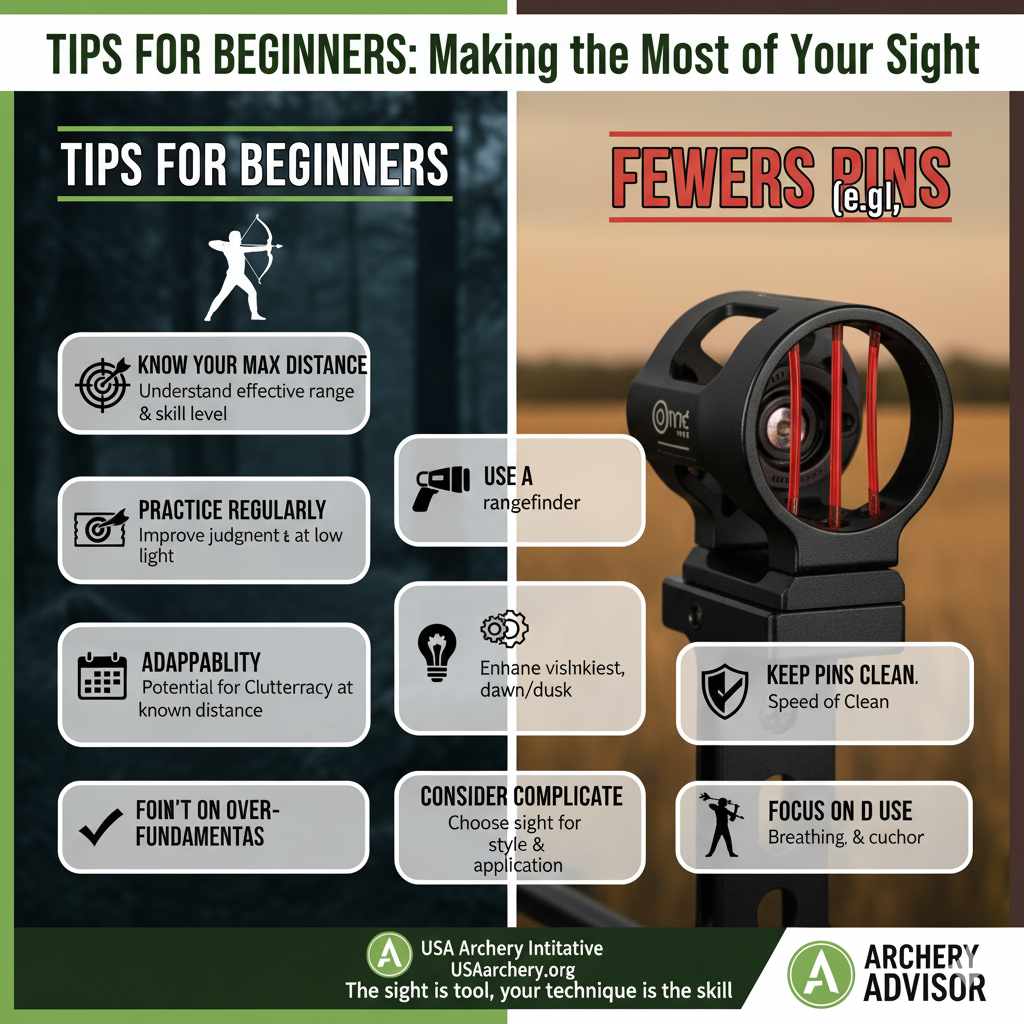
Tips for Beginners: Making the Most of Your Sight
Here are some practical tips to help you excel with your new bow sight:
- Know Your Max Distance: Understand the effective range of your bow and arrow setup, and your personal skill level. For beginners, this is usually closer.
- Practice Regularly: The more you shoot, the better you’ll become at judging distances and making accurate shots. Practice at known distances.
- Use a Rangefinder: For hunting or practice sessions where distances vary, a good rangefinder is an invaluable tool. It takes the guesswork out of yardage, allowing you to select the correct pin with confidence. Learning to use a rangefinder is a critical skill for ethical hunting and accurate shooting. Organizations like the USA Archery provide resources on fair chase hunting practices and ethical shot placement, where accurate distance estimation is paramount.
- Keep Your Pins Clean: Ensure your pins are visible. Some sights have fiber optic pins that are brighter in low light. Keep them clean of dirt and debris.
- Consider Lighted Pins: If you hunt in low-light conditions (dawn or dusk), lighted pins can make a huge difference in visibility.
- Don’t Over-Complicate It: Choose the sight that best fits your style of shooting and your primary application (hunting vs. target). Don’t feel pressured to get a 5-pin if a 3-pin will serve your needs perfectly well.
- Focus on Fundamentals: The sight is a tool, but your form, breathing, and consistent anchor point are what make the shot.
Frequently Asked Questions (FAQ)
Q1: What is the most important factor when choosing between a 5-pin and 3-pin bow sight?
A: The most important factor is where and how you plan to use your bow. If you anticipate shooting at a wide range of distances, especially longer ones, a 5-pin sight is more versatile. If you primarily hunt or shoot at closer, more predictable ranges, a 3-pin sight offers simplicity and speed.
Q2: Can a beginner use a 5-pin bow sight?
A: Absolutely! While a 5-pin sight might seem more complex, it can actually help beginners by providing pre-set distances. This reduces the need to constantly guess or hold over, allowing more focus on shooting form. However, some beginners find fewer pins less visually distracting when starting out.
Q3: Is it harder to sight in a 5-pin bow sight than a 3-pin bow sight?
A: Yes, it generally takes more time and shots to sight in a 5-pin sight because you have more pins to set accurately at different yardages. A 3-pin sight is quicker to set up.
Q4: Which type of sight is better for bowhunting?
A: It depends on the hunting scenario. For diverse hunting environments with variable distances, a 5-pin sight is generally preferred for its versatility. For hunting in dense woods or tree stands where shots are typically closer, a 3-pin sight can be faster and less cluttered. Many bowhunters use a rangefinder regardless of pin count.
Q5: Will I outgrow a 3-pin sight if I start with one?
A: It’s possible. If your archery goals expand to include longer-range shooting or you find yourself in more open hunting areas, you might feel limited by a 3-pin sight. However, you can always learn to estimate distances and hold over, or upgrade to a 5-pin sight later.
Q6: What are “lighting” pins, and do I need them?
A: Lighted pins have a small light source (often included with the sight or as an accessory) that illuminates the fiber optic pins. This greatly improves pin visibility in low-light conditions like dawn and dusk, which are prime hunting times. They are highly recommended for hunters but not essential for daylight shooting.
Q7: How far apart should my pins be set?
A: For typical setups, pins are set at 10-yard increments (e.g., 20, 30, 40 yards). This spacing can be adjusted. For example, if you commonly shoot 30 and 50 yards, you might set pins for those distances. Many bowhunters prefer to set their pins for 20, 30, 40, 50, and 60 yards as a standard practice for versatility.
Conclusion: Your Best Choice Depends on You
Deciding between a 5-pin and a 3-pin bow sight ultimately comes down to understanding your personal archery journey. If you crave versatility and the confidence to tackle a wide spectrum of shooting distances, the 5-pin sight is likely your best bet. It’s a robust tool that grows with you, offering precision for both close-range and those challenging long shots.
On the other hand, if simplicity, speed, and a clean sight picture are your priorities, especially for hunting in closer quarters like tree stands or dense woods, a 3-pin sight will serve you exceptionally well. It’s often more beginner-friendly and requires less setup time, allowing you to get shooting faster.
Whichever you choose, remember that proper setup, regular practice, and a good understanding of yardage are key to maximizing your accuracy. Both 3-pin and 5-pin sights are excellent tools when used correctly. Invest some time in sighting them in, practice diligently, and you’ll be hitting your mark with confidence. Happy shooting!


