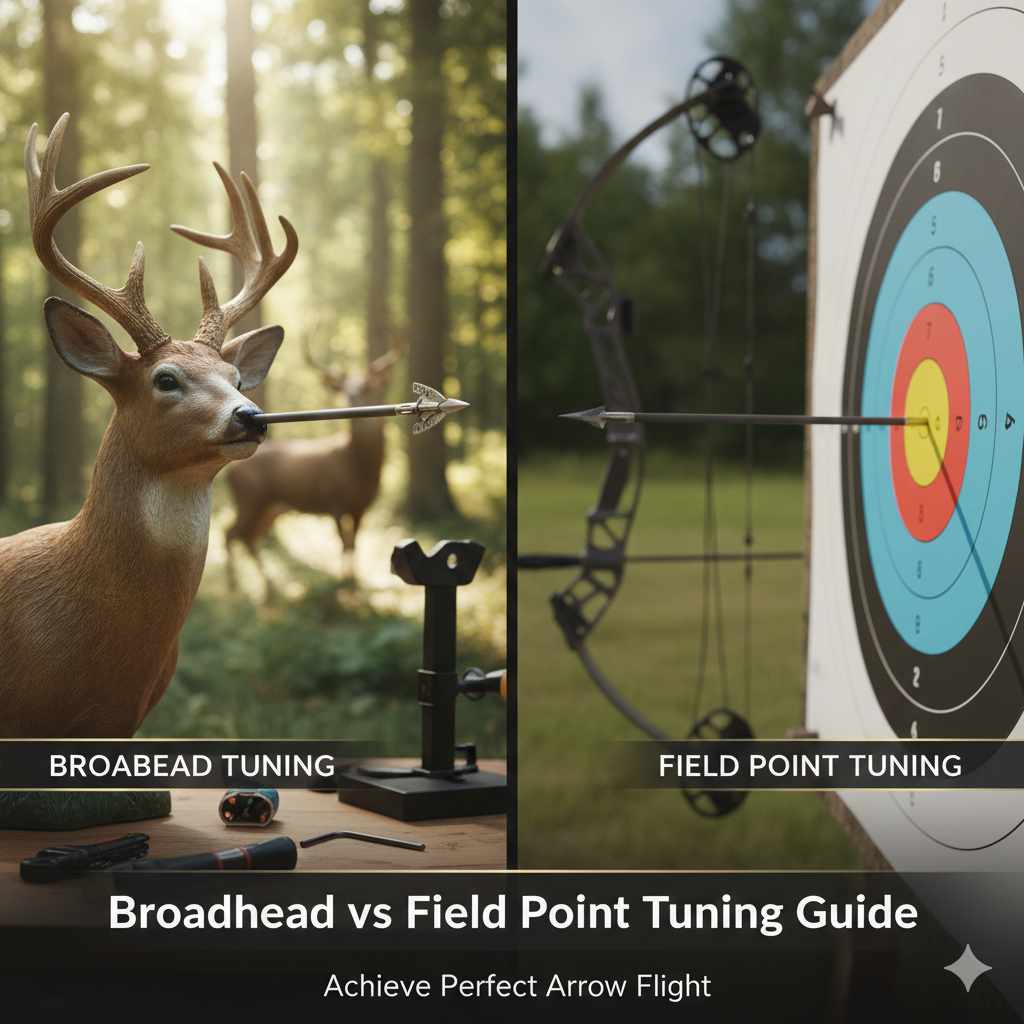
Figuring out how to tune your bow for the perfect arrow flight can feel tricky, especially when you start using broadheads. This is where a Broadhead vs Field Point Tuning Guide becomes essential. Many archers struggle because broadheads and field points often fly differently. This difference can lead to frustrating shots and missed targets. Don’t worry, though. We’ll break down the process step-by-step to make it easy to follow. Get ready to learn how to achieve pinpoint accuracy!
Choosing the Right Equipment
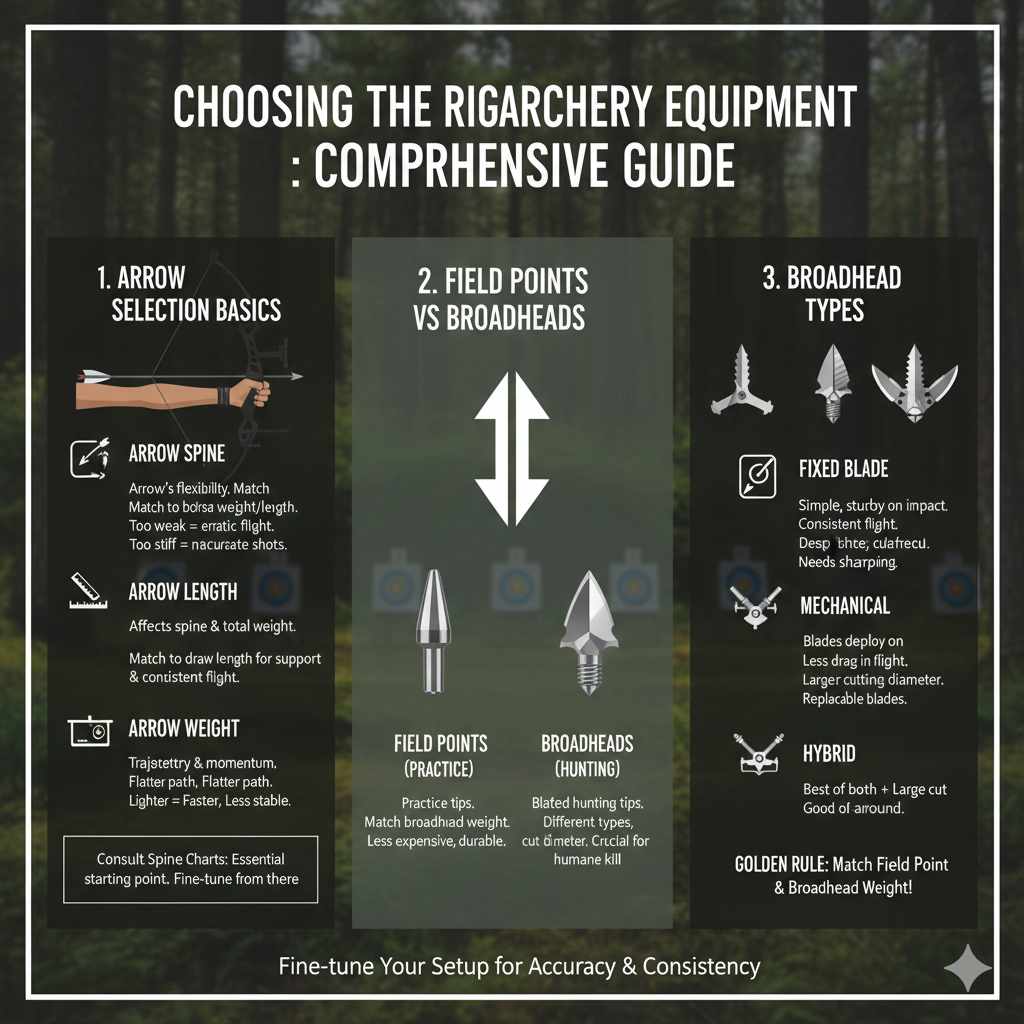
Before even thinking about tuning, it’s key to have the right gear. This means selecting arrows that match your bow’s draw weight and length, as well as choosing broadheads and field points that are similar in weight. Think of your archery setup like a team—each piece needs to work well with the others. If one part is off, it messes up the whole shot. A well-matched setup will make tuning much easier and improve your overall accuracy. Always check the manufacturer’s recommendations for both your bow and the arrows you’re using.
Arrow Selection Basics
The first step is selecting arrows. Arrow spine is a major factor. The spine is how much the arrow bends when it’s shot from your bow. Too weak and the arrow will flex too much; too stiff and it won’t flex enough. This can lead to erratic flight and inaccurate shots. Different arrow materials like carbon fiber or aluminum have different flex characteristics. Pay close attention to this. Also, the length of your arrow and the weight of your broadheads or field points will influence how your arrow performs. Proper arrow selection is the foundation for accurate shooting. Choosing the correct arrow is the first and the most important element for proper arrow flight.
- Arrow Spine: Arrow spine is the measure of an arrow’s flexibility. It’s measured by how much the arrow bends when a weight is applied. A correctly spined arrow bends and recovers properly. A spine that’s too weak will bend excessively, and a spine that is too stiff will bend too little. The bending causes the arrow to miss the target.
- Arrow Length: Arrow length affects the arrow’s spine and overall weight. A longer arrow will generally have a weaker spine, and vice versa. Matching the arrow length to your draw length is necessary for consistent arrow flight. This ensures that the arrow is properly supported by the arrow rest and the bow string.
- Arrow Weight: The weight of the arrow affects its trajectory and momentum. Heavier arrows tend to fly with more momentum, which is useful for hunting because it carries more energy to the target. However, they also have a flatter trajectory, meaning they drop less over distance. Lighter arrows have a flatter trajectory but less energy.
You can see how arrow spine, length, and weight all affect how an arrow flies. You’ll often find charts online to help you find the correct spine for your setup. These charts consider your bow’s draw weight and draw length. It’s important to remember that these charts are a good starting point and that you may need to adjust your arrow selection slightly to tune the bow and arrows precisely. Many archers also consider the total arrow weight, including the tip, inserts, fletching, and nock, to optimize performance.
Field Points vs. Broadheads
Field points and broadheads play a major role in the overall setup. Field points are used for practice and are typically the same weight as your broadheads. This allows you to practice without damaging your broadheads. Broadheads are made for hunting and have blades designed for cutting. Because of the blades, they often fly differently than field points. When choosing broadheads, consider the blade design (fixed or mechanical) and the cut diameter. Fixed blade broadheads are always out, while mechanical broadheads open upon impact. These choices influence arrow flight and your tuning process.
- Field Points: These are practice tips with a similar shape to the arrow shaft. They have a pointed tip. Field points are used for practice to help you hone your shooting skills without damaging your broadheads. They’re less expensive, making them great for consistent practice.
- Fixed Blade Broadheads: These have blades permanently fixed to the broadhead’s body. They offer great durability and are reliable because they don’t have moving parts. They can be more challenging to tune because of their larger surface area, which can catch the wind more.
- Mechanical Broadheads: These have blades that deploy upon impact. They offer a wider cutting diameter, which creates large wound channels. They’re often considered easier to tune than fixed blades. However, their moving parts mean there’s a higher chance of malfunction.
It’s important to make sure the field points and broadheads you are using have the same weight, or at least very close. This ensures that the arrow’s balance and flight characteristics are as consistent as possible during tuning. Most hunters opt for broadheads of the same weight as their field points to streamline the tuning process. Consistent weight is a major factor in proper arrow flight, whether practicing or hunting. Remember that even small differences in weight can affect your arrow’s flight, especially over longer distances.
Tuning Your Bow for Perfect Flight
Once you have selected the proper arrows and tips, it’s time to tune your bow. This means making adjustments so that your arrows hit the target consistently. Start with the basics, such as ensuring your bow is properly set up with a calibrated draw weight and draw length. Proper form and consistent shooting are also key. The tuning process may involve adjusting your arrow rest and nock point. It is best to start by shooting groups of arrows with field points and then switching to broadheads to see how the arrows fly. Correcting any issues you find with broadheads ensures precise hits.
Paper Tuning Your Bow
Paper tuning is an easy method to see how your arrow is leaving your bow. You will shoot arrows through a paper target. The holes made in the paper will show you if the arrow is flying correctly or if you need to make adjustments to your bow. You can use any paper to do this. The shape of the hole you see gives clues about how to correct the flight. Proper paper tuning is a skill that takes practice, but the outcome is improved accuracy.
- Setting up the Paper Tuner: To paper tune, set up a paper target a few feet in front of your bow. This is the first step. You’ll need to set the paper up so that you can shoot an arrow through it.
- Shooting Through Paper: Once you have the target in place, you need to shoot an arrow through the paper. It’s usually best to start with a field point to get a baseline. Look at the hole, and see the shape.
- Interpreting the Results: The shape of the hole tells you a lot. A perfect bullet hole means the arrow is flying straight. Tears or angled holes mean the arrow is not flying right and you may need to adjust your arrow rest or nock point.
- Making Adjustments: Depending on the tear you see, you can make adjustments. Vertical tears can be fixed by raising or lowering the nock point. Horizontal tears are usually fixed by adjusting the arrow rest’s position. Keep shooting and adjusting until you get a clean hole.
Using paper tuning will help you to identify problems that affect arrow flight. For example, if you see the arrow nock is too high or too low, you’ll need to adjust your nock point. If the arrow is hitting one side of the paper more than the other, you may need to adjust your arrow rest. The process can seem difficult at first, but with practice, it becomes simple to identify and fix issues. It’s best to keep practicing and make small adjustments until you get a clean hole every time. This shows your arrow is leaving your bow straight.
Walk-Back Tuning
Walk-back tuning involves shooting arrows at targets set at varying distances to find the center of your bow. It’s an easy process that helps you to make sure your arrows are hitting the target correctly at different distances. By walking back from the target, you can identify if your arrows are consistently hitting to the left or right. If your arrows are consistently hitting the same spot to the side, you know you need to adjust your bow. This method is practical for making sure your bow and arrows are aligned correctly and shooting straight.
- Set Up Your Targets: Start by setting up a single target at a short distance, like 5 yards. Then, place a second target a little farther away, maybe 10 yards. You can keep adding targets at increments of 5-10 yards.
- Shoot at the Closest Target: Shoot an arrow at the closest target. Aim at the bullseye. Then, do the same at the other targets.
- Observe Arrow Impact: If your arrows hit to the left at all distances, you need to move your arrow rest to the right. If the arrows hit to the right, you’ll move the rest to the left. If your arrows consistently hit high, you may need to lower your nocking point. If they hit low, you’ll raise it.
- Make Adjustments: Keep making these adjustments until your arrows hit the bullseye at all distances. Remember to make small adjustments, and don’t change too many things at once. This way, you can see what is working.
Walk-back tuning is useful for making sure your bow is tuned properly. By tuning your bow, you can achieve greater accuracy, especially when shooting at different distances. This method can help you spot problems that are difficult to see during paper tuning, especially for arrows that are flying off-center. Consistent practice and adjustments are the keys to successful walk-back tuning.
Broadhead Tuning: The Key to Accuracy
Broadhead tuning focuses on fine-tuning your setup to ensure that your broadheads and field points fly the same. This is essential for hunters who want to hit their target precisely. The main idea is that your broadheads should hit the target at the same spot as your field points, which indicates that your arrows are flying straight. Broadhead tuning might involve small adjustments to your bow or arrow setup to achieve perfect arrow flight with both types of tips. This step will ensure that your arrows will fly straight and true when you’re in the field.
Checking Broadhead Flight
Once you are confident with your setup, it’s time to shoot your broadheads. The goal is for your broadheads to hit the same spot as your field points. Start by shooting your broadheads at a target at a range you’re comfortable with. Check the groups and make notes of where your arrows are hitting. Note any differences between where your broadheads and field points impact the target. Repeat the shot process a few times to get an average impact point. This way, you can see if your arrows are hitting the same spot.
- Shoot at a Known Distance: Begin shooting at a distance you’re comfortable with, such as 20 yards. This gives you a clear baseline for comparing field point and broadhead impacts.
- Compare Field Point and Broadhead Groups: After shooting a group of arrows with field points, switch to broadheads. Then, compare the points of impact. Are the broadheads hitting in the same spot, or are they off to the side, up, or down?
- Note the Differences: Make sure to write down any differences in the points of impact. This note-taking will help you track any adjustments you make to your setup.
- Repeat and Adjust: Shoot multiple sets of arrows with both field points and broadheads, making sure to track the results. This way, you will be able to see consistent patterns.
Checking broadhead flight is a process that requires patience and observation. Accurate notes of your arrows’ impact are key to any adjustments you make. By checking the arrow groups, you can easily identify if your broadheads and field points are hitting the target at the same spot. This way, you can make the necessary adjustments to get the best arrow flight possible. Remember that this step is important to ensure that you are ready for a hunting situation.
Making Adjustments for Broadheads
If your broadheads don’t hit the same spot as your field points, you may need to make some adjustments to your bow or arrow setup. This might include tweaking your arrow rest, changing your nock point, or even selecting a different broadhead. Your goal is to get your broadheads hitting the target at the same spot as your field points, which ensures proper arrow flight. Keep in mind that making these adjustments might take several shooting sessions to be right.
- Arrow Rest Adjustments: If your broadheads are hitting left or right, you’ll need to adjust your arrow rest. Small adjustments can move the point of impact. Move the rest slightly in the direction you want the arrow to move.
- Nock Point Adjustments: If your broadheads are hitting high or low compared to your field points, you should adjust the nock point. Moving the nock point slightly up or down can change the vertical impact.
- Broadhead Rotation: Some broadheads may not fly straight because of how the blades are oriented. Try rotating the broadheads to see if it improves your arrow flight.
- Arrow Selection: In rare cases, the arrows may need to be changed to another model with the proper spine.
When making adjustments, make small changes, and test each one before making more. It’s best to make one change at a time, so you can see what is working. For example, if your broadheads hit to the left, move your rest slightly to the right. Then, shoot another group and see how they hit. Remember that adjusting your setup can require time and patience. Making gradual changes is the key to tuning your bow to achieve perfect broadhead flight.
Practical Examples and Scenarios
Seeing how broadhead tuning works in real life will help you better understand the process. Let’s explore a few case studies and examples to illustrate different tuning challenges and their solutions. These scenarios will give you a better idea of how to apply the principles we’ve discussed to your own bow setup. Archery is all about understanding the details, and real-life examples offer key insights.
- Case Study 1: The Left-Right Broadhead Impact. An archer is shooting a compound bow and notices that his broadheads consistently hit 2 inches to the left of his field points at 20 yards. After paper tuning, they find a slight tail-left tear. The archer adjusts the arrow rest slightly to the right. After a few shots, the arrows hit the target in the same spot. The solution was a minor arrow rest adjustment to correct the horizontal impact.
- Case Study 2: The High-Low Broadhead Impact. Another archer’s broadheads hit 3 inches low compared to their field points at 25 yards. The archer adjusts the nock point on the bowstring upward, using a D-loop adjustment. After several tests, the broadheads begin to impact the target at the same point as their field points. The solution was a nock point adjustment to address the vertical impact.
- Case Study 3: The Broadhead Rotation Issue. An archer is struggling with broadhead flight, but paper tuning reveals a good arrow flight. After trying different adjustments, the archer rotates the broadheads on the arrow, and the broadheads suddenly group with the field points. This solution was as simple as changing the broadhead orientation.
These scenarios highlight some of the common tuning problems archers face. The key is to address the issue systematically. For instance, you should start by paper tuning to see the arrow’s flight. Then, adjust your rest or nock point to correct the flight. By using this approach, you can learn how to fix the most common broadhead issues.
The Importance of Consistent Practice
Practice is key to improving your archery skills and keeping your bow and arrows properly tuned. Regular practice helps you develop muscle memory, which is essential for consistent shooting. It also allows you to test any adjustments you have made to your bow and arrows. Dedicating time to practice allows you to identify problems and make necessary corrections. It doesn’t matter if you’re a beginner or a seasoned archer; consistent practice is necessary to get better.
Developing Muscle Memory
Muscle memory is key to consistent shooting in archery. It’s about your body learning the correct motions and techniques so that your shots become more accurate. Through repetition, your body learns to repeat the same motions every time. To develop muscle memory, focus on your form and make the same movements each time you shoot. This includes how you stand, draw the bow, anchor, and release the arrow. As you practice more, these actions will become more natural. Consistently practicing the proper form will help you develop muscle memory, leading to better shots.
- Consistent Form: Make sure your form is consistent every time. Pay attention to how you stand, draw the bow, and release the arrow.
- Regular Practice: Practice often. The more you practice, the more your body will get used to the right movements.
- Focus and Relaxation: Try to relax and focus. Being tense can make you more likely to get bad shots. Take deep breaths.
- Record Your Shots: Keeping track of your shots can help you see your progress. You can see how your form and accuracy improve.
Developing muscle memory takes time and effort. It is a process of repetition and refinement. The goal is to build an automatic and reliable shooting motion. As your muscle memory improves, your shots will become more consistent and accurate. By focusing on your form, practicing often, and recording your progress, you’ll see your skills improve. Consistent practice can transform the way you shoot. As your body learns the motions, your shots will become more reliable.
Testing Your Setup During Practice
Practice is a great time to test your bow and arrows to ensure they’re tuned correctly. During practice, you can check that your arrows are flying straight. This helps you to adjust your bow or arrows, if needed. Keep an eye on how your arrows hit the target. If you notice any issues with the arrow flight, you can start troubleshooting right away. This way, you can fix issues and improve your accuracy. You’ll quickly see the value of practice as you tune your bow.
- Check Arrow Flight: During practice, make sure your arrows are flying straight. You can use paper tuning or walk-back tuning techniques to see if you need to adjust your bow.
- Try Different Distances: Practice shooting at different distances. This will help you identify any problems at various ranges.
- Experiment with Broadheads: Shoot with your broadheads to make sure they are hitting the same spot as your field points.
- Make Small Adjustments: Keep a close watch on your practice and adjust your bow as needed. This will help you make sure your bow is always properly tuned.
Testing your setup during practice is very important for consistent shooting. By closely watching how your arrows fly, you can find any problems and solve them. Always start with field points to check your shooting form and bow tune. This will give you a good base before you test with broadheads. This proactive approach will help you make sure your bow is in perfect tune. Regular practice and adjustments can make your shooting experience much better.

Frequently Asked Questions
Question: What is the main difference between field points and broadheads?
Answer: Field points are used for practice and have a pointed tip, while broadheads are used for hunting and have sharp blades.
Question: How do I know if my arrows are spined correctly?
Answer: Use a spine chart based on your bow’s draw weight and draw length, or watch your arrows fly through paper or at a target for flexing.
Question: Why do broadheads often fly differently than field points?
Answer: Broadheads have blades that can catch the wind, and they have a larger surface area, leading to differences in arrow flight.
Question: What do I do if my broadheads don’t hit the same spot as my field points?
Answer: You can make small adjustments to your arrow rest, nock point, or even try rotating your broadheads, until they hit the same spot.
Question: How often should I practice to maintain my archery skills?
Answer: It’s best to practice often, even a few times a week. The more you practice, the more your form and accuracy will improve.
Final Thoughts
Mastering a Broadhead vs Field Point Tuning Guide is important for all archers who want to be accurate. You’ve now explored the key areas: selecting the right arrows, paper tuning, walk-back tuning, and the adjustments required to get your broadheads flying true. Remember that the journey to perfect arrow flight includes selecting arrows with the right spine and understanding how to tune your bow effectively. With consistent practice and careful adjustments, you can achieve accuracy. Do not give up if your broadheads and field points don’t match immediately; this is normal. Take your time, make small adjustments, and soon you’ll have arrows flying perfectly. Happy shooting!