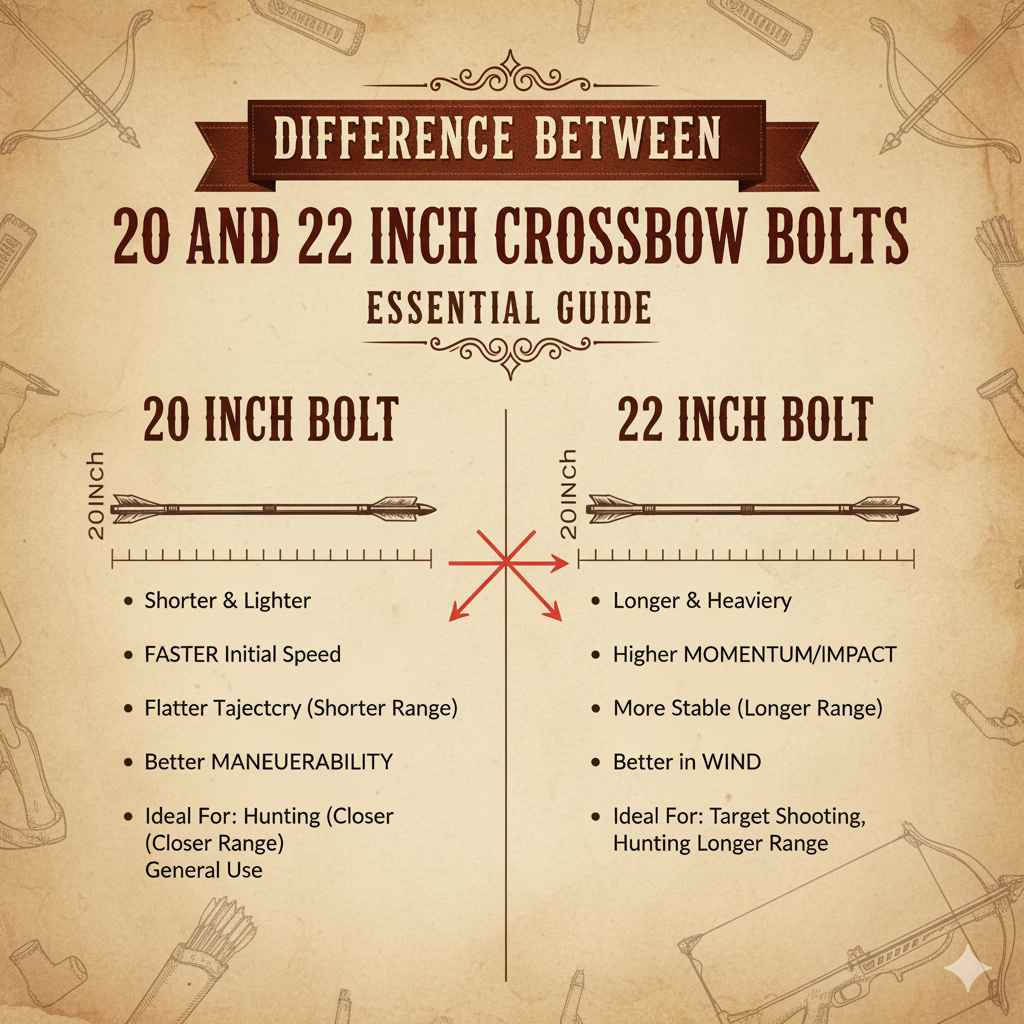
The core difference between 20-inch and 22-inch crossbow bolts lies in slight variations in velocity, arrow spine, and compatibility with your specific crossbow model. Always choose the length recommended by your crossbow manufacturer to ensure safety, ideal tuning, and consistent accuracy.
Welcome, fellow archers! If you are new to crossbow shooting, choosing the right arrows—or bolts, as they are called—can feel like a puzzle. You look at the options, and suddenly, you see 20-inch bolts and 22-inch bolts right next to each other. Which one is right for your bow? It is a very common question that can cause real confusion.
Don’t worry! I am Salman, and I promise to break this down simply. We will look past the numbers and focus only on what matters for safe, fun, and accurate shooting. Choosing the wrong bolt length can affect how your crossbow performs, and even impact safety. We will make sure you walk away knowing exactly how to pick the perfect length for your setup.
Ready to clear up the mystery of bolt length? Let’s dive into the essentials that separate 20-inch from 22-inch crossbow bolts.
Why Bolt Length Matters: The Beginner’s Guide
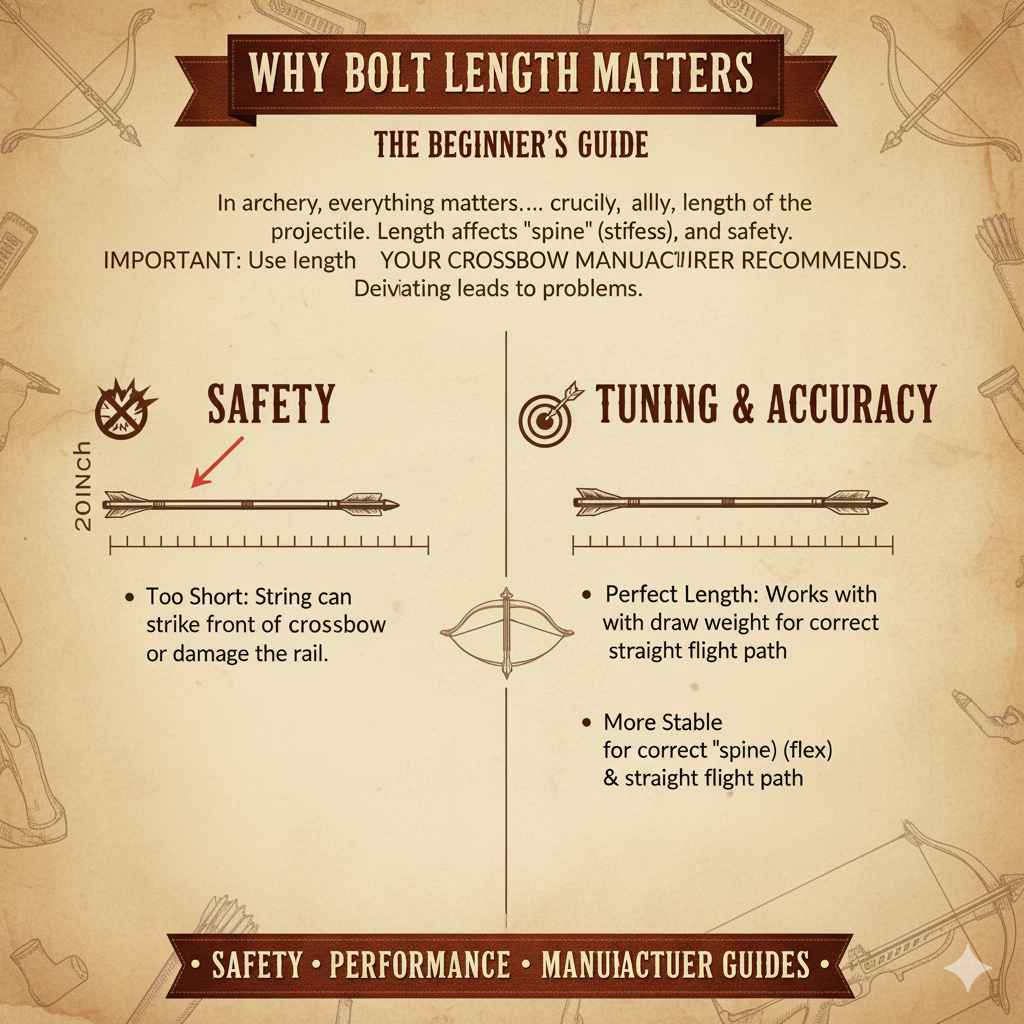
In archery, everything matters—the weight of the bow, the type of string, and, crucially, the length of the projectile you launch. When we talk about crossbow bolts, length isn’t just about how far it sticks out; it affects the bolt’s “spine” (stiffness), its speed, and how safely it interacts with the crossbow mechanism.
For beginners, the most important takeaway is this: Your crossbow manufacturer tells you what length to use. Deviating from this recommendation is where problems start.
Let’s explore the two main reasons why length is a big deal:
- Safety: Using a bolt that is too short can cause the string to strike the front of the crossbow or damage the rail when fired.
- Tuning and Accuracy: The perfect length works with the bow’s draw weight to give the bolt the right amount of flex (spine) for a straight flight path.
Understanding Crossbow Bolt Anatomy (A Quick Refresher)
Before comparing 20 and 22 inches, let’s quickly confirm what we are looking at. A crossbow bolt is made of a few key parts:
- Shaft: The main body, usually aluminum, carbon, or a mix. Length is measured from the nock groove to the tip of the shaft (not including the field point or broadhead).
- Fletchings (Vanes): The fins near the back that stabilize the bolt in flight.
- Nock: The plastic piece at the very back that locks onto the string.
- Point/Tip: Where you screw on your target point or hunting head.
The key measurement we are discussing—20 inches versus 22 inches—refers only to the shaft length.
The Core Difference: 20-Inch vs. 22-Inch Crossbow Bolts
When you compare 20-inch and 22-inch bolts, you are usually looking at two bolts that are otherwise identical (same material, same spine rating, same fletchings). The two-inch difference creates subtle shifts in performance and compatibility.
1. Compatibility with Your Crossbow
This is the deciding factor. Most crossbows are engineered for a very specific bolt length. Why?
- Bolt Seating: The bolt rests on the trigger mechanism and the rail. If a bolt is too short for the rail, the string might not engage the nock correctly, leading to a dangerous misfire or a dropped bolt.
- Draw Length: The physical length of the crossbow’s draw stroke determines the optimal bolt length needed to achieve proper timing and spine deflection.
Actionable Tip: Check the owner’s manual for your crossbow. It will clearly state the required or recommended bolt length. For example, many high-powered compound crossbows designed for serious hunting often specify 20-inch bolts.
2. Speed and Kinetic Energy (KE)
Generally, for the exact same crossbow (same draw weight and draw length), a shorter bolt will be slightly faster than a longer bolt, all other factors being equal.
- The Logic: A shorter bolt weighs slightly less and has less surface area dragging against the rail during the shot. This means more energy is transferred into forward velocity.
- The Reality Check: While this is true on paper, the difference between a 20-inch and a 22-inch bolt might only be 5 to 15 feet per second (FPS). For a beginner shooting targets at 30 yards, this difference is negligible.
Speed is important for long-range hunting, but consistency matters more for learning accuracy. If your bow is tuned for 22-inch bolts, using 20-inch bolts might actually throw off your tune because the spine rating might no longer match the bow’s power.
3. Spine Rating and Stiffness
This is the most technical, yet most vital, part. The “spine” of an arrow or bolt refers to its stiffness. It is measured by how much the shaft bends under a specific weight.
When you move from a 22-inch bolt to a 20-inch bolt (using the same material and diameter):
- The 20-inch bolt will be inherently stiffer.
- This is because there is less length to flex under the immense force of the bowstring.
The Problem: If your crossbow requires a certain spine rating (say, 300 spine) to handle its draw weight, using a shorter, stiffer bolt might cause it to fly erratically or, worse, even crack under the stress of an improper spine match. Always match the bolt spine to the manufacturer’s recommendation for the length you choose.
| Feature | 20-Inch Crossbow Bolt | 22-Inch Crossbow Bolt |
|---|---|---|
| Typical Use Case | Often used on faster, higher-poundage crossbows requiring a stiffer shaft. | Commonly found on entry-level or slower crossbows, offering slightly more forgiveness. |
| Weight | Slightly lighter (all else equal). | Slightly heavier (all else equal). |
| Potential Speed | Marginally faster FPS due to less drag/weight. | Marginally slower FPS. |
| Spine Stiffness | Stiffer (less flex) for the same material/diameter. | Slightly more flexible than the 20-inch version. |
| Rail Clearance | Can cause clearance issues if the bow is designed for 22 inches. | Can be too long for compact crossbows, potentially interfering with the string/rail. |
How to Decide: Follow the Manufacturer’s Rule
As your guide, Salman, I must stress this above all else: Forget about what your buddy shoots. Your decision must be based on what your specific crossbow is designed for. Crossbow manufacturers spend significant time testing to find the sweet spot for speed, spine, and safety.
Step 1: Locate Your Manual
Grab the owner’s manual that came with your crossbow. Look for sections titled “Ammunition,” “Specifications,” or “Recommended Accessories.” This information is non-negotiable for safe operation.
For example, TenPoint or Barnett often recommend specific carbon bolt lengths corresponding to their model’s draw weight range. You can often find this information publicly on their support websites as well, though verifying your specific model year is key. For reliable safety standards, you can check guidelines from organizations like the Pope and Young Club, though they focus more on hunting harvest rules than specific equipment tuning.
Step 2: Inspect Your Current Bolts (If Applicable)
If you already have bolts that came with the crossbow, measure them carefully. Measure from the very end of the nock (where the string sits) to the tip of the shaft, before the point screws in. This measurement should match the recommended length.
Step 3: Understand the Spine Trade-off
If your manufacturer says you can safely use either 20-inch or 22-inch bolts (this is rare, but happens on some universal models), you need to consider spine:
- If you choose the 20-inch bolt, you must buy a bolt with a stiffer spine rating (a lower number, like 300 or 340).
- If you choose the 22-inch bolt, you can usually use a slightly less stiff spine rating (a higher number, like 380 or 400), as the extra length allows for more flex.
Why this matters: If the bolt is too flexible (too weak of a spine for the force applied), it can snap upon release, leading to a catastrophic failure known as a “dry-fire” effect on the arrow itself, which can damage your bow and certainly injure you.
Practical Impact: Accuracy and Tuning for Beginners
For the beginner archer, the immediate impact of selecting the correct length relates heavily to tuning. Tuning is the process of making sure the bolt flies straight off the string.
If the Bolt is Too Short (e.g., using 20″ when 22″ is needed)
If you use a 20-inch bolt on a bow designed for 22 inches, you might:
- Experience the string hitting the front end of the rail or sight assembly upon release.
- Notice poor vertical grouping because the bolt isn’t seated correctly when released.
- Potentially damage the nock area or the crossbow string itself over time.
If the Bolt is Too Long (e.g., using 22″ when 20″ is needed)
If the bolt extends too far forward, it might:
- Cause the front of the bolt to hit the foot stirrup or any attached cage/riser before it leaves the rail completely.
- If the bolt is extremely long and heavy, it will slow down noticeably, causing significant drop at longer distances.
The Confidence Booster: Once you select the manufacturer-approved length, stick with it! Buy a dozen matching bolts, use the same type of field points, and practice. Consistency in length is the first step to consistent accuracy.
The Role of Weight and Material in Bolt Length Choice
While length is the primary difference we are discussing, it’s impossible to ignore the weight that comes with that length. Generally, longer bolts weigh more than shorter bolts of the same material.
This brings us to Kinetic Energy (KE), which is the energy the bolt carries upon impact. KE is what matters most for hunting, but speed (FPS) is also crucial for flat trajectory.
| Factor | Impact of Shorter (20-inch) Bolt | Impact of Longer (22-inch) Bolt |
|---|---|---|
| Kinetic Energy (KE) | Slightly lower KE transfer due to lower overall mass, but higher velocity. | Can result in higher overall KE if the bow can handle the increased spine load safely. |
| Trajectory Flatness | Very fast initially; trajectory drop becomes apparent sooner than a heavier, slower bolt. | |
| Wind Drift | Shorter, faster bolts can be slightly less affected by crosswinds at very close range, but the difference is minor. |
For the beginner focused on learning how to shoot accurately at typical backyard or range distances (under 50 yards), the difference in KE between a 20-inch and 22-inch bolt is negligible. Focus on matching the shaft to the bow’s recommended spine first.
Practical Shopping Guide: What to Look For
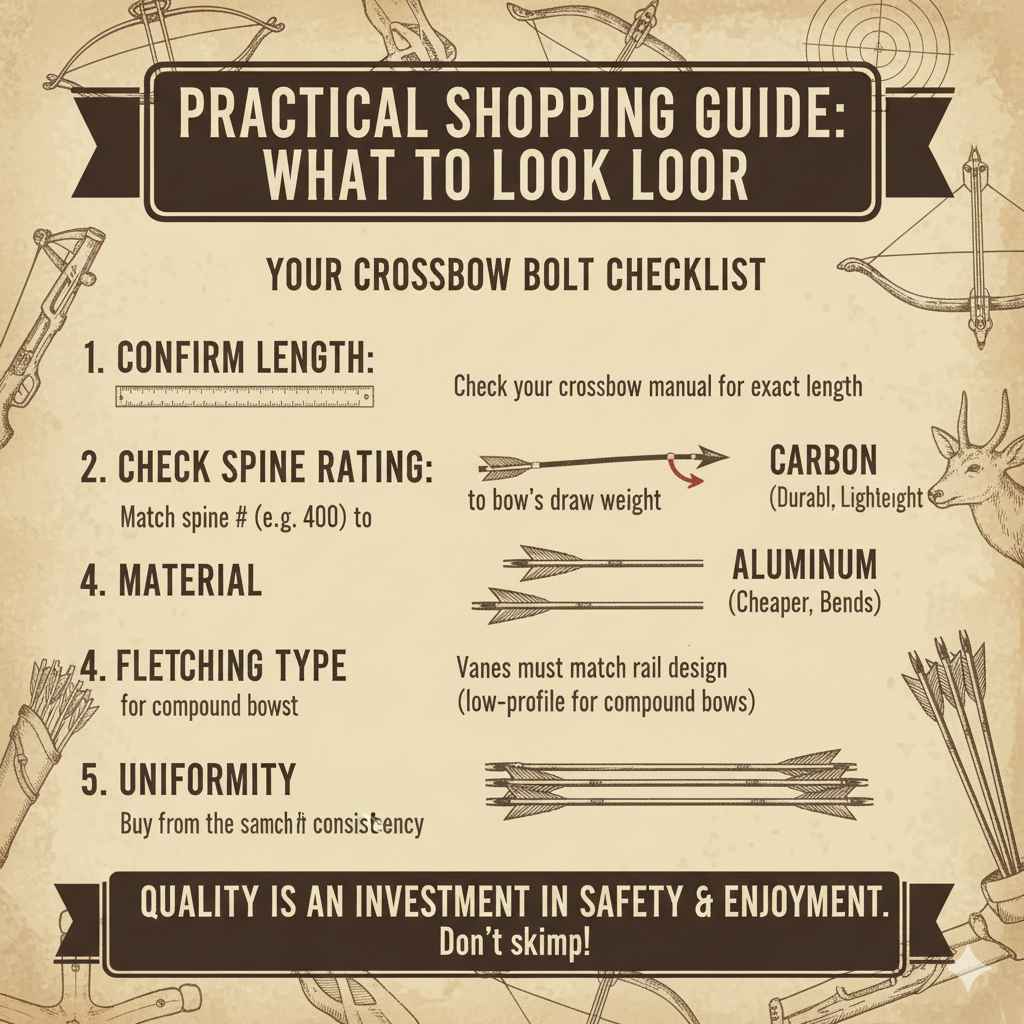
When you head to the pro shop or browse online, here is the checklist to ensure you buy the right set of bolts, whether you lean toward 20 or 22 inches:
- Confirm Length: Write down the exact length required by your crossbow manual.
- Check Spine Rating: Verify the required spine number (e.g., 400, 340). This rating must match the manufacturer’s needs for that specific length and your bow’s draw weight.
- Material: Carbon bolts are the modern standard—durable and lightweight. Aluminum is cheaper but can bend if mishandled.
- Fletching Type: Look for vanes that match the configuration required by your crossbow’s rail design (low-profile vanes are often best for compound crossbows to prevent rubbing).
- Uniformity: Buy all your bolts from the same batch if possible. Even minor manufacturing variances can affect how they fly.
Remember, a quality bolt is an investment in your safety and enjoyment. Don’t skimp here. Using consistently straight, correctly spined bolts is far more important than saving a few dollars on a cheaper set.
Frequently Asked Questions (FAQs) for New Crossbow Owners
Q1: Can I safely use 20-inch bolts if my bow recommends 22-inch bolts sometimes?
A: No, this is generally unsafe. A bolt that is too short may not seat correctly on the trigger mechanism, risking damage to your crossbow or a dangerous misfire. Always follow the manufacturer’s stated length requirement.
Q2: Does a longer bolt (22-inch) always mean better accuracy?
A: Not necessarily. Accuracy comes from the correct spine, weight, and consistency. If your bow is tuned for a 20-inch bolt, using a 22-inch bolt will likely make your accuracy worse because the tuning will be off.
Q3: What is “spine” and why does it change between 20 and 22 inches?
A: Spine is the stiffness of the bolt. A 20-inch bolt made of the same material as a 22-inch bolt will be naturally stiffer because there is less shaft length to flex when the string hits it. This difference in stiffness must match what your crossbow needs.
Q4: If I switch from 20-inch to 22-inch bolts, do I need to re-sight my scope?
A: Yes, almost certainly. Even a small change in bolt weight and flight characteristics (like velocity) will shift your point of impact. Always re-zero your scope or sights when changing bolt length or weight.
Q5: How do I measure my bolt length correctly?
A: Measure from the bottom of the nock groove (where the string rests) straight to the end of the carbon/aluminum shaft. Do not include the field point or broadhead screwed onto the front.
Q6: Can I shoot a 20-inch bolt out of a crossbow designed for 22-inch bolts if I use a heavier tip?
A: While adding weight (like a heavier broadhead) can sometimes compensate for a slightly off-spec bolt, it is strongly discouraged. It adds unnecessary complexity and risk. Stick to the length recommended by the bow maker for the simplest and safest path to accuracy.
Final Thoughts from Your Archery Coach
Choosing between 20-inch and 22-inch crossbow bolts boils down to safety, compatibility, and performance tuning. For the beginner archer, this decision isn’t about hunting prowess or achieving record speeds; it’s about ensuring a safe and enjoyable experience at the range.
Think of your crossbow like a finely tuned musical instrument. The manufacturer has specified the exact ‘note’ (bolt length and spine) it needs to sound right. If you try to use a slightly different note, the whole instrument will sound off, and potentially break.
My strongest piece of advice is this: Trust the manual. Find out what length your specific crossbow model requires, buy the matching spine rating, and then focus your energy on mastering your shooting form. Once you have that perfect, consistent setup, you will find accuracy comes much faster.
Go get those bolts, practice safely, and enjoy the satisfying thud when your bolt hits exactly where you aimed. Happy shooting!