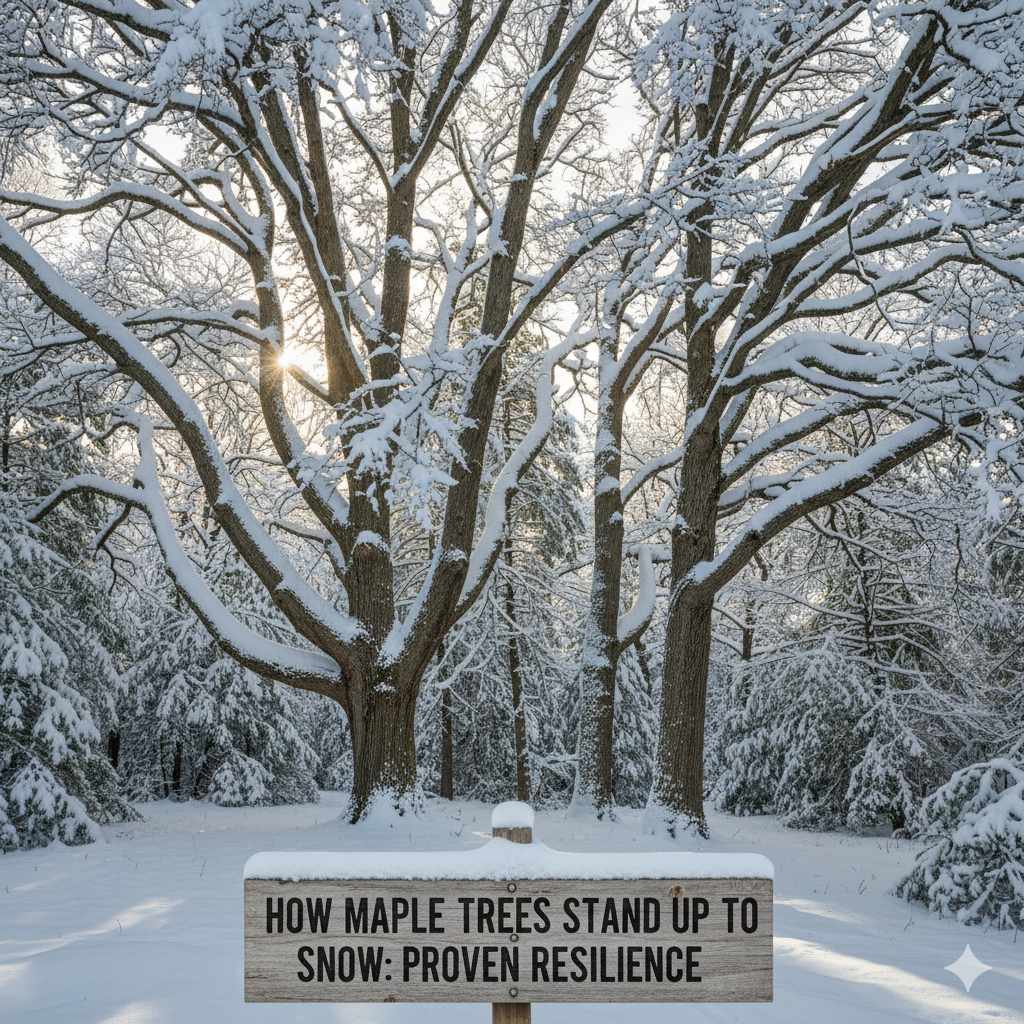
How Maple Trees Stand Up To Snow: Proven Resilience
Maple trees are remarkably strong and flexible, allowing them to withstand heavy snow loads by bending, shedding snow, and having strong root systems. For more on this, see our guide on How Do You Insert Arrows In Word.
Winter can be tough on trees, and seeing branches bowed low or even broken under a blanket of snow can be a common, frustrating sight. You might wonder how some trees seem to handle it so gracefully while others struggle. If you’ve ever looked at a maple tree after a snowstorm and admired its persistence, you’re not alone. It’s a testament to nature’s amazing design.
But how exactly do they do it? It’s not by magic, but by a combination of clever adaptations that make them true survivors of the cold. This guide will break down the science behind their strength, making it easy to understand why maple trees are so resilient year after year. Get ready to appreciate these hardy trees even more!
Understanding the Challenge: Snow and Trees
Snowfall isn’t just beautiful; it’s a significant weight. For trees, especially those with broad leaves or rigid branches, heavy snow can spell disaster. Imagine a large, flat surface covered in a thick layer of snow – it creates a lot of pressure.
When snow accumulates, it exerts downward force on a tree’s branches. If branches are brittle or inflexible, they are prone to cracking or snapping under this weight. Ice, which can form when snow melts and refreezes, adds even more mass and can bind branches together, making them even more vulnerable to breakage. This is especially true for trees with narrow angles between their branches, as these V-shaped crotches tend to collect more snow and ice.
The sheer volume of snow, combined with its density, means that trees need specific mechanisms to endure these winter conditions. Not all tree species are equally equipped to face these challenges, which is why you might see some trees battered while others appear almost unfazed.
Maple Trees’ Secret Weapons: Resilience in Action
Maple trees possess a fascinating set of characteristics that allow them to not just survive but to thrive through harsh winter conditions. Their ability to stand up to snow isn’t down to a single trait, but a synergy of physical properties and growth patterns.
1. The Power of Flexibility
One of the most crucial adaptations of maple trees is their inherent flexibility. Unlike trees with very stiff, brittle wood, maple branches have a degree of elasticity. This allows them to bend significantly under the weight of snow without permanently deforming or breaking.
Think of it like a sturdy but flexible fishing rod. When a fish pulls hard, the rod bends to absorb the tension, preventing it from snapping. Maple branches act similarly. They will droop and sway under heavy snow, distributing the weight and preventing concentrated stress on any single point. This bending is a controlled response, not a sign of weakness.
This flexibility is often due to the cell structure of the wood and the way the branches are connected to the trunk. The fibers are designed to stretch and recoil, a remarkable engineering feat provided by nature.
2. Strategic Branch Angles
The way maple branches grow from the trunk and from each other plays a vital role. Maple trees often have a more upright growth habit, with branches that form a wider angle relative to the trunk. These wider, U-shaped crotches are less likely to trap large amounts of snow and ice compared to the narrow, V-shaped crotches found in some other tree species.
When snow does accumulate, these wider angles allow it to slide off more easily. Imagine trying to pile snow onto a wide, gently sloped roof versus a steep, narrow one – the snow is more likely to shed from the wider roof. This natural design minimizes the weight load on a given branch.
This isn’t to say that all maple branches are immune to heavy snow. A severe storm can still overwhelm even these advantages, but on average, their branch structure gives them a significant edge.
3. Shedding Snow Efficiently
Beyond just bending, maple trees are also adept at shedding snow. The combination of their branch structure and the texture of their bark and twigs helps snow lose its grip. As temperatures fluctuate, or with strong winds, snow can become dislodged.
The branching pattern, as mentioned, is key. Widespread branches offer less of a “catch” for snow. Furthermore, the slight coarseness of some maple bark can help break up large snow deposits. When a section of snow does begin to slip, the flexibility of the branch allows it to move, encouraging the rest of the snow mass to slide off.
This shedding process is crucial because it prevents the prolonged, maximum weight from resting on the branches. A tree that can shed even a portion of its snow load is significantly reducing stress.
4. Strong Root Systems
A tree’s resilience isn’t just about what happens above ground; it’s equally about what’s happening below. Maple trees are known for developing robust and extensive root systems. These strong roots anchor the tree firmly in the ground, providing a stable base against the forces that snow and wind impose.
When snow accumulates on the canopy, it adds significant weight. This weight can create leverage that tries to tip the tree over. A well-developed root system acts like a counterweight and an anchor, preventing the tree from being uprooted or severely leaned to one side.
The ability to absorb sufficient water and nutrients throughout the growing season contributes to the overall health and strength of the tree, including its root development. A healthy tree is a strong tree, both above and below the soil surface.
Comparing Maple Resilience to Other Trees
To truly appreciate how maple trees stand up to snow, it helps to see how they compare to other tree types. This comparison highlights the specific advantages that maples possess.
For instance, broad-leaved deciduous trees like oaks can also be susceptible, especially when they retain old, dry leaves into winter, which can act like large snow-catchers. Coniferous trees, like pines and spruces, often have a more conical shape designed to shed snow naturally due to their naturally downward-sloping branches and flexible needles. However, even they can suffer, especially if snow and ice combine and weigh down their branches excessively.
Trees with very brittle wood, such as willows or some ornamental fruit trees, are often the most visibly damaged by heavy snow events. Their branches snap more easily, leading to significant structural damage. The maple’s balance of strength and flexibility, coupled with its shedding capabilities, often places it in a favorable position.
Table: Tree Resilience to Snow Load
| Tree Type | Typical Branch Angle | Wood Flexibility | Snow Shedding Ability | Common Snow Damage |
|---|---|---|---|---|
| Maple | Wider (U-shaped) | Good | Good | Moderate |
| Pine | Downward sloping | Moderate | Excellent | Low to Moderate |
| Oak | Variable | Moderate | Fair | Moderate to High |
| Willow | Variable | High | Fair | High |
| Spruce | Downward sloping | Moderate | Very Good | Low |
This table illustrates that while many trees have strategies, the maple’s combination of branch angle, flexibility, and shedding ability provides a well-rounded defense against snow.
Factors Affecting Maple Tree Resilience
While maple trees are generally resilient, several factors can influence just how well an individual tree withstands snow and ice.
- Tree Age and Health: Young trees might still be developing their full strength and root systems, making them more vulnerable. Older trees, especially those in declining health due to disease or pests, will also be weaker. A healthy, mature maple is typically the most robust.
- Species of Maple: There are many species of maple, and they can have slight variations in wood density, bark texture, and growth habit that influence their snow tolerance. For example, Sugar Maples (Acer saccharum) are known for their strong wood.
- Pruning Practices: Improper pruning, especially leaving stubs or making cuts that create weak V-shaped crotches, can significantly compromise a maple’s ability to handle snow. Regular, proper structural pruning by an arborist can greatly improve a tree’s snow defense. For more on best practices, you can consult resources from university extension services, such as those provided by University of Wisconsin-Madison Horticulture.
- Environmental Conditions: Factors like soil drainage, exposure to wind, and the type of soil the tree is growing in all play a role in its overall health and robustness, impacting its ability to withstand snow.
- Branch Architecture: Even within the same species, individual trees can have different branch structures. Trees with multiple leaders or a history of previous damage might be more susceptible to snow breakage.
How to Help Your Maple Trees Through Winter
While maples are built for resilience, there are steps you can take to help them cope even better with winter’s challenges.
1. Proper Planting and Site Selection
Ensuring your maple tree is planted correctly from the start is fundamental. Choose a location that offers good drainage and adequate space for the mature tree. Avoid planting closely near structures or power lines where snowmelt or falling branches could cause damage.
A healthy start leads to a stronger tree. Understand the mature size and shape of the maple species you are planting to give it the best chance to develop its natural strengths without undue environmental constraints.
2. Regular and Correct Pruning
One of the most impactful things you can do is ensure your maple trees are pruned correctly. This means:
- Removing crossing or rubbing branches.
- Correcting narrow V-shaped crotch angles to wider U-shaped ones when the tree is young.
- Eliminating dead, diseased, or damaged branches promptly.
- Maintaining a single, strong central leader on young trees.
Consulting a certified arborist is highly recommended for pruning mature trees. They can assess the tree’s structure and perform cuts that promote strength and good snow shedding. The Tree Care Industry Association (TCIA) website offers resources to find qualified arborists in your area.
3. Mulching
Applying a layer of organic mulch around the base of your maple tree (keeping it a few inches away from the trunk) helps retain soil moisture, regulate soil temperature, and protect the roots from extreme cold. A well-mulched tree is generally a healthier, more resilient tree.
4. Monitoring for Pests and Diseases
Trees weakened by pests or diseases are more susceptible to snow damage. Regularly inspect your maple trees for any signs of trouble, such as unusual leaf discoloration, wilting, or presence of insects. Early detection and treatment can prevent significant damage that could later be exacerbated by snow loads.
5. Snow Removal (with Caution)
In most cases, maple trees are best left to handle snow on their own. However, if you see a branch heavily laden with snow and ice that appears to be in danger of significant breakage, you can help. Gently sweep snow off the branch with a broom, working from the bottom up. Never try to force a bent branch upright, and avoid excessive shaking, which can cause ice to shatter and brittle wood to break.
The goal is to reduce the weight just enough to alleviate extreme stress, not to reshape the branch. Be extremely cautious, as wet snow and ice can make everything slippery and branches can break unexpectedly.
When Snow Damage Happens: What to Do
Even the most resilient maple trees can suffer damage during severe winter storms. If you find broken branches after a snow event, here’s how to address it.
Minor Breakage: For small, cleanly broken twigs or small branches, you can use clean, sharp pruning shears to make a proper cut back to the nearest healthy branch or bud. This helps the tree heal cleanly and prevents future issues.
Major Breakage: If a large branch has broken, potentially leaving a jagged wound or a hanging section, it’s time to call a professional. A International Society of Arboriculture (ISA) certified arborist can safely remove the damaged limb, make appropriate cuts to promote healing, and assess the overall health and stability of the tree.
Leaving broken branches can invite pests and diseases. Prompt and correct action is key to the tree’s recovery and long-term health. Arborists have the expertise and equipment to handle these situations safely and effectively.
FAQ: Maple Trees and Snow
How heavy can snow get on a maple tree?
The weight can vary immensely depending on the snow’s density. Wet, heavy snow can weigh significantly more than light, powdery snow. In extreme cases, a thick layer of wet snow can exert hundreds of pounds of pressure on a single branch, or even more on the entire canopy.
Why do some maple branches break while others don’t?
This is due to a combination of factors: the angle of the branch attachment (narrow V-crotches trap more snow), the flexibility of the wood, pruning history (weak pruning cuts create weak points), and overall tree health.
Can the sap from maple trees freeze and cause damage?
While maple sap freezes, it doesn’t typically cause structural damage to the tree. The sap is mostly water and sugar, and its freezing and thawing cycles are a normal part of winter. The wood itself is adapted to withstand freezing temperatures.
Are all maple trees equally good at handling snow?
No, there are differences between species. Maples with naturally wider branch angles and more flexible wood tend to be more resilient. For example, Sugar Maples are often considered very hardy.
What’s the best way to protect a young maple tree from snow?
For very young, delicate maples, you might consider staking them or loosely wrapping them to provide some support. Ensuring they are planted in a sheltered location can also help. However, the best protection for young trees is to ensure they are healthy and developing a strong, central leader through proper early pruning.
Should I try to remove ice off my maple tree branches?
It’s generally not recommended. Trying to remove ice can often do more harm than good by causing branches to snap or be pulled down due to the bending force. It’s usually best to let the ice melt naturally.
How do I know if my maple tree is healthy enough to withstand winter?
A healthy maple tree will have good leaf coverage in the fall, a full canopy, responsive growth (new shoots), and a strong, upright form. If you notice declining vigor, significant deadwood, or signs of disease or pests, the tree may be less resilient to winter stress.
Conclusion: A Study in Natural Strength
The resilience of maple trees against the weight of snow is a beautiful example of natural engineering. Their flexible branches, strategically angled growth patterns, efficient snow-shedding capabilities, and robust root systems work in concert to help them endure winter’s harshest tests. While they possess remarkable inherent strength, understanding these adaptations allows us to better care for them and appreciate their standing power.
By practicing proper planting, thoughtful pruning, and consistent monitoring, we can further support the natural resilience of our maple trees. When you look at a maple standing tall after a snowfall, you’re witnessing a marvel of survival, a testament to the enduring power and adaptable genius of nature. It’s a reminder that sometimes, the best approach is built-in flexibility and strength.