
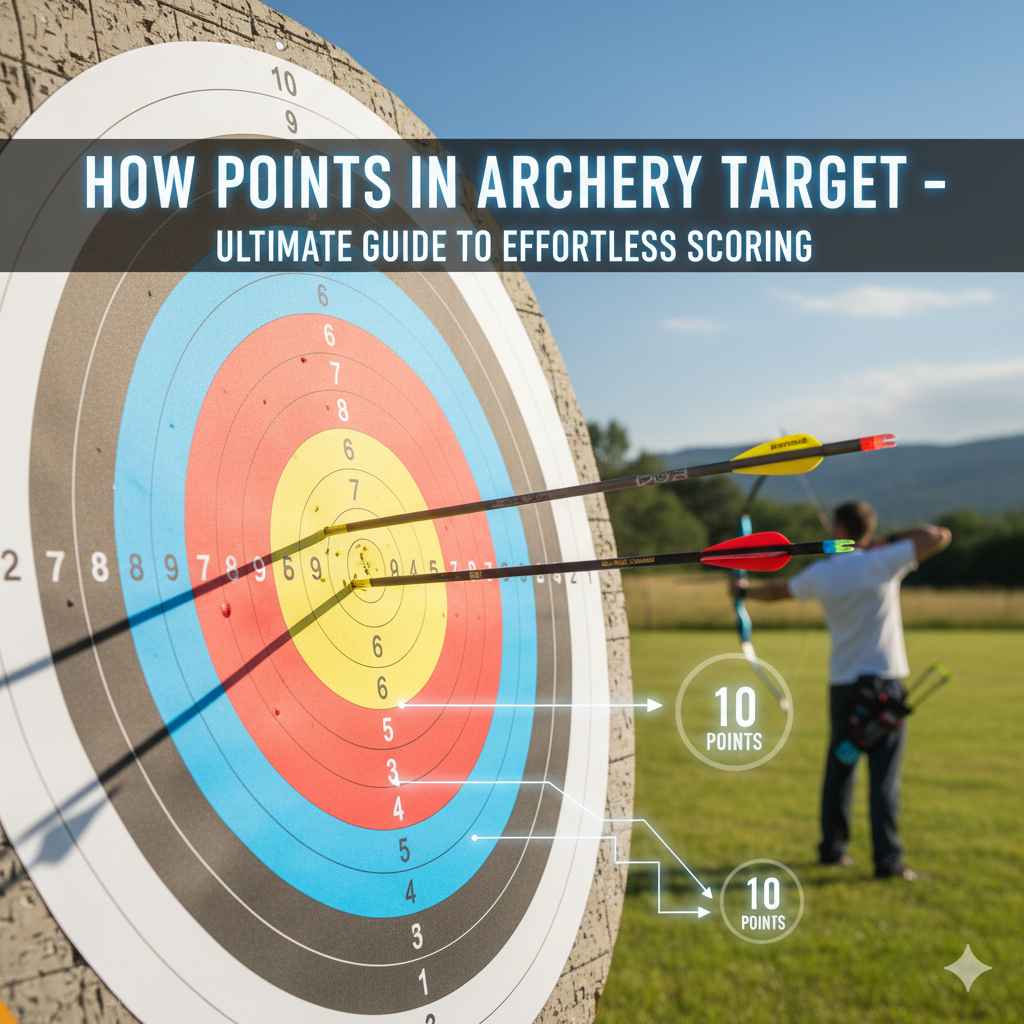
Understanding how points in Archery Target are scored is essential for both beginners and seasoned archers who want to improve their game and enjoy the sport more fully. Accurate scoring in archery is not just about knowing which rings carry which points, but also understanding the rules, scoring methods, and nuances involved in target archery competitions. This guide will unlock the secrets of archery scoring, helping you track your progress and refine your skills with ease.
The Basics of How Points in Archery Target are Calculated
At its core, the archery target is a set circular board divided into multiple colored rings, each with a designated point value. When an arrow hits the target, the score assigned depends on the location of the arrow’s impact relative to these rings.
Structure of the Archery Target
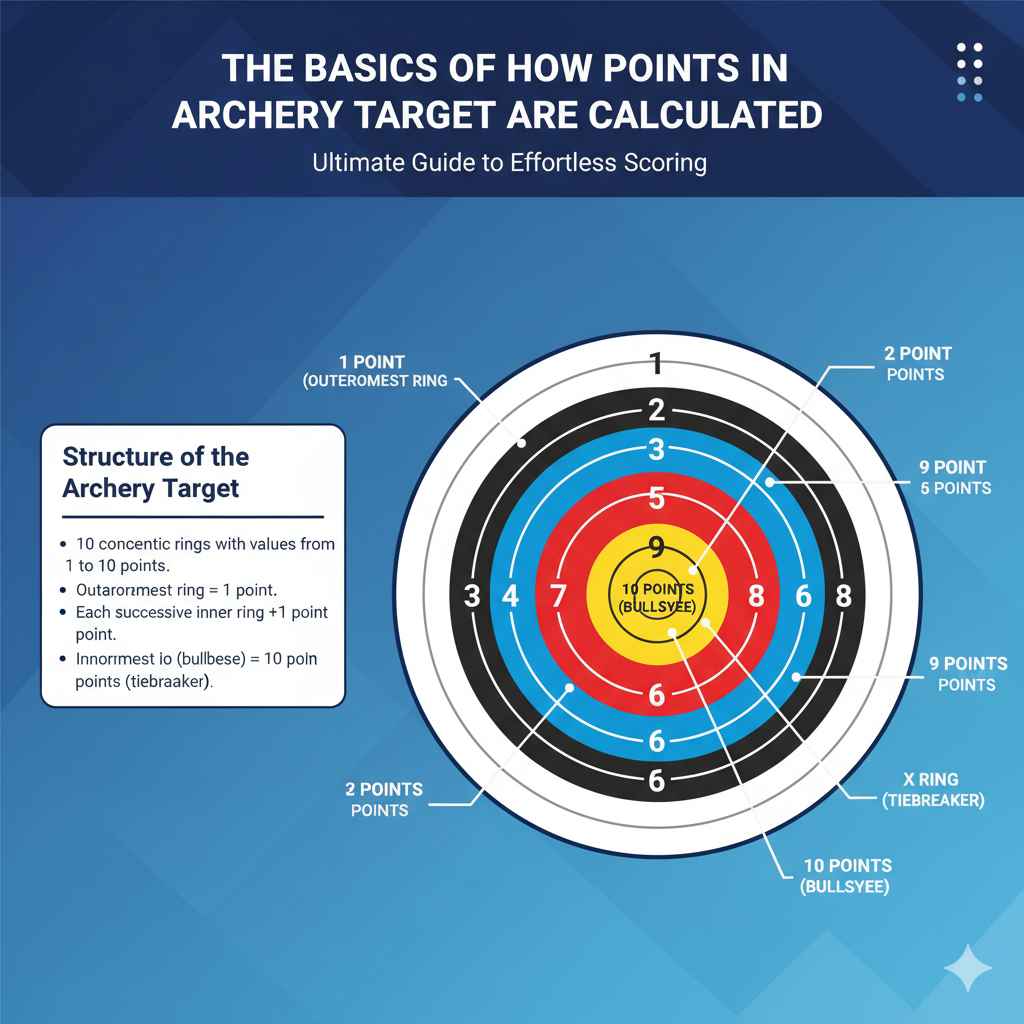
A standard target face typically consists of 10 concentric rings with values from 1 to 10 points:
– The outermost ring scores 1 point.
– Each successive ring moving inward adds one more point.
– The innermost ring, often called the bullseye, scores the maximum: 10 points.
In addition to the basic 10-point scoring system, there may also be an “X” ring, a smaller circle inside the 10-point area that counts as 10 points but is used as a tiebreaker in competitions.
Detailed Point Distribution on the Target
Each ring on the target is a different color and corresponds to a specific point value:
– Gold/Yellow: 9 and 10 points (center rings)
– Red: 7 and 8 points
– Blue: 5 and 6 points
– Black: 3 and 4 points
– White: 1 and 2 points
An arrow hitting on the line between two rings is usually given the higher score. This rule rewards precision at the edges of ring boundaries.
How Points in Archery Target Are Recorded
After shooting, archers or officials score each arrow by noting which ring the arrow penetrated. The process is as follows:
1. Arrow Retrieval: Arrows are removed carefully to avoid damage.
2. Scoring: Scores for each arrow are recorded on a score sheet.
3. Total Calculation: The sum of all arrows in an end (a set of arrows shot consecutively) is added for the round score.
In some competitions, archers shoot multiple ends, and the combined total is used to determine the winner.
Understanding Scoring Systems in Competitive Archery
There are various formats and rules depending on the competition type:
1. Target Archery Scoring for Beginners
Beginners often shoot at shorter distances with larger targets to gain confidence. Scoring follows the classic 10-ring system but might focus more on learning consistency than detailed scorekeeping.
2. World Archery Federation Rules
The World Archery Federation, the governing body for international competition, uses the 10-zone scoring with detailed rules about arrow positioning, line breaks, and tie-break procedures.
3. Compound vs. Recurve Scoring Differences
While the structure of the target remains the same, compound archers typically shoot smaller 6-ring targets (scoring from 5 to 10 points only) to increase difficulty.
Tips for Effortless Scoring During Practice and Competition
Knowing how points in Archery Target work means you can track your performance better and improve faster. Here are some strategies:
– Learn to Identify Scoring Rings Quickly: Familiarize yourself with the colors and point values so you can score arrows rapidly after shooting.
– Use Clear Score Sheets: Keep organized records for every end, reducing mistakes and confusion.
– Practice Consistently: The more you shoot, the better you’ll understand how to visually appraise arrow positions.
– Know the Scoring Rules for Your Event: Different competitions may have unique scoring protocols.
– Mark Your Arrows: If allowed, marking your arrows can help you distinguish your shots from competitors’.
Advanced Insights: Handling Special Scoring Scenarios
Sometimes, particular scenarios arise during scoring that novices might find confusing:
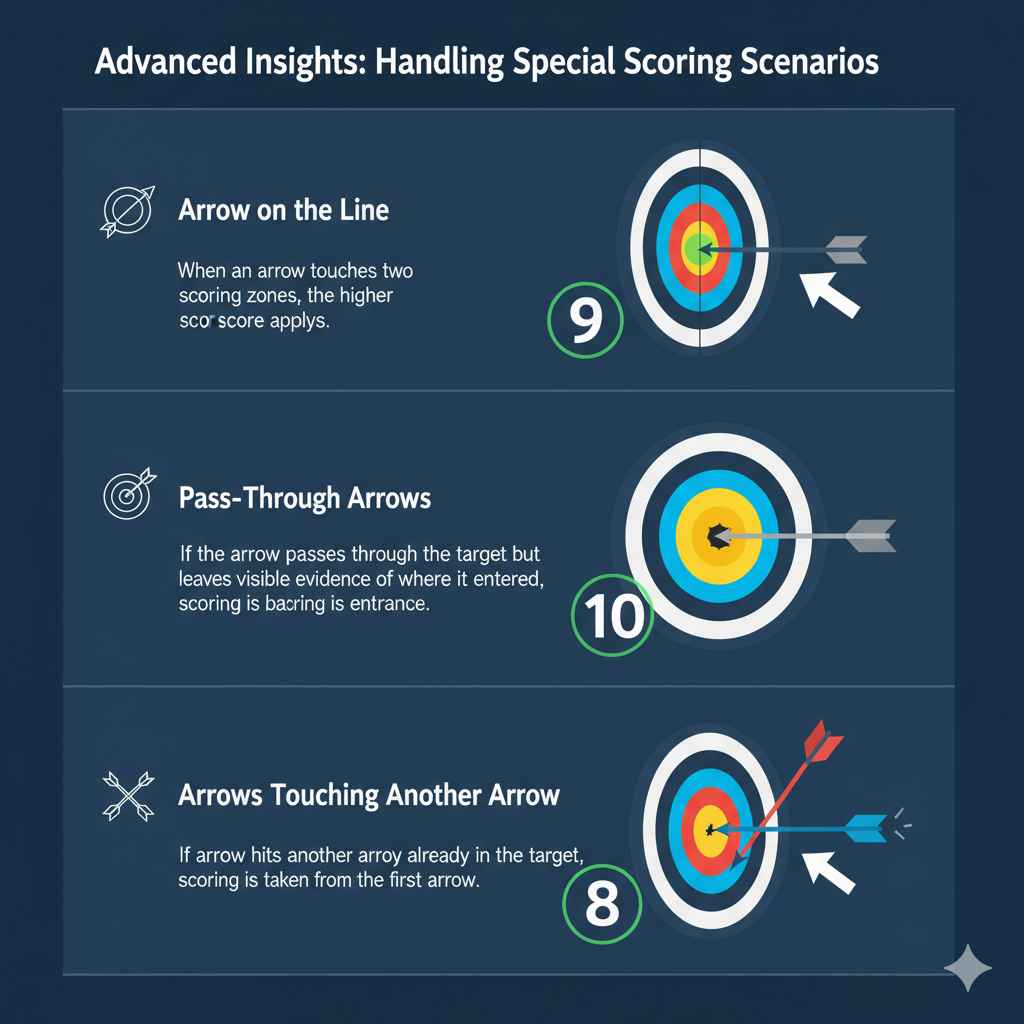
– Arrow on the Line: When an arrow touches two scoring zones, the higher score applies.
– Pass-Through Arrows: If an arrow passes through the target but leaves visible evidence of where it entered, scoring is based on the entrance.
– Arrows Touching Another Arrow: If an arrow hits another arrow already in the target, scoring is taken from the first arrow.
Conclusion
Mastering how points in Archery Target are determined is fundamental for anyone wanting to progress in archery. By understanding the scoring rings, rules, and best practices for recording scores, you can take the guesswork out of your practice sessions and competitions. Whether you’re aiming for a perfect bullseye or simply improving your consistency, this guide gives you the tools for effortless scoring and a more enjoyable archery experience. Remember, consistent scoring is a reflection of precise shooting, and every point counts on your path to becoming a skilled archer.