How To Archery
Archery, an ancient art that seamlessly blends focus, technique, and physical discipline, has experienced a remarkable resurgence among modern enthusiasts. Whether for sport, competition, or recreation, learning how to archery offers both a mental challenge and a rewarding physical pursuit.
From Olympic-level contests to backyard practice, mastering the bow and arrow connects us with centuries of tradition while providing a fulfilling, skill-building experience.
For those new to the discipline or seeking to refine their skills, archery can seem complex, encompassing equipment choices, posture, safety protocols, and nuanced techniques. Yet, with the right guidance, anyone can develop the precision and consistency required for success.
This comprehensive guide demystifies how to archery, equipping you with actionable knowledge to start shooting arrows safely and skillfully.
Key Takeaways
- Archery is accessible to beginners with the right equipment, safety knowledge, and training.
- Proper stance, grip, and aiming are foundational skills for consistent performance.
- Regular practice, goal-setting, and understanding equipment maintenance are essential for progress.
- Safety measures and etiquette are crucial for both personal and group archery settings.
- Advancements in equipment and technology have diversified archery styles and competitions.
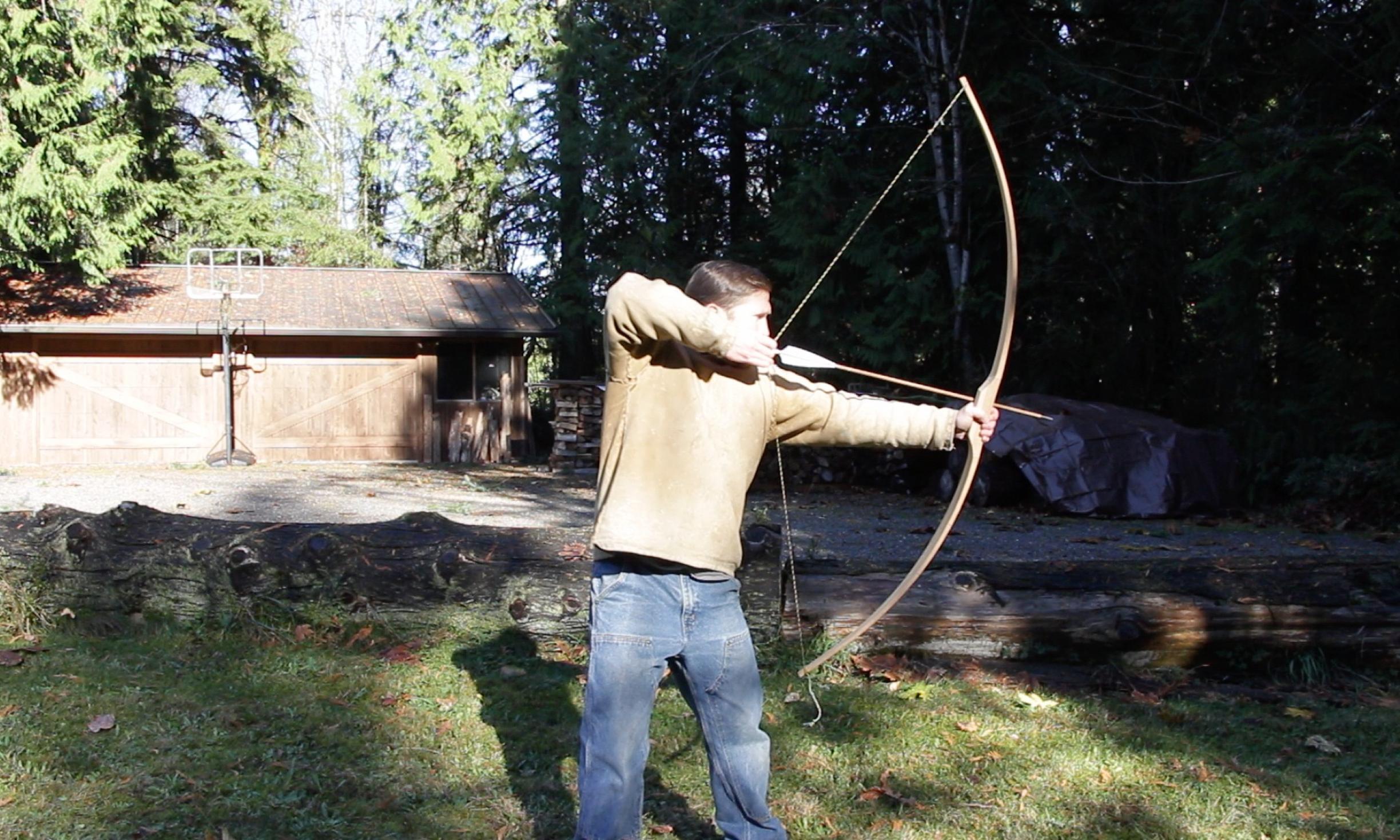
Credit: wildernessawareness.org
Understanding Archery: Types, Styles, And Equipment
Archery is more than simply shooting arrows at a target, it encompasses a range of styles and specialized equipment suited for various disciplines. Understanding these distinctions is the first step to choosing your path in archery.
Types Of Archery
Archery is categorized into several styles, each with its unique rules and required gear:
- Target Archery: The most recognized form, practiced both recreationally and competitively, including the Olympics. Arrows are shot at stationary, circular targets set at specific distances.
- Field Archery: Shooters navigate a course, firing at targets of varying distances and elevations, often in wooded or natural terrain.
- 3D Archery: Involves shooting at three-dimensional animal-shaped targets at unmarked distances, simulating hunting scenarios.
- Traditional Archery: Focuses on historical or primitive bows, such as longbows and recurves, without modern accessories.
- Bowhunting: Uses archery equipment for hunting live game, regulated by local laws and ethical guidelines.
Archery Equipment Overview
Selecting the right equipment is critical for safety and performance. Below is a comparison of common bow types:
| Bow Type | Features | Best For |
|---|---|---|
| Recurve Bow | Curved limbs, simple design, Olympic standard | Beginners, Olympic archery, traditionalists |
| Compound Bow | Pulleys/cams, reduced holding weight, high accuracy | Hunting, competitive target archery |
| Longbow | Single, straight limb, historical design | Traditional archery, historical reenactment |
| Crossbow | Horizontal limb assembly, trigger mechanism | Hunting, target shooting (where legal) |
Essential Accessories
Beyond the bow and arrows, archers typically use:
- Arm guard: Protects the forearm from string slap.
- Finger tab or glove: Shields fingers during the draw.
- Quiver: Holds arrows securely.
- Bow sight: Aids in aiming (optional for traditional styles).
- Arrow rest: Supports the arrow when drawing and releasing.
Example: Choosing The Right Bow
For someone just starting, a recurve bow is often recommended due to its simplicity and versatility. When I first began, I opted for a 25-pound draw weight recurve, which allowed me to focus on form without struggling with excessive force.
This decision accelerated my learning curve and reduced the risk of injury.
Mastering The Fundamentals: Stance, Grip, And Draw
Perfecting archery fundamentals lays the groundwork for consistent, accurate shooting. Each step, from how you stand to how you release the string, affects your performance.
Stance And Posture
A stable, balanced stance is essential for repeatability and accuracy.
- Square Stance: Stand with feet shoulder-width apart, perpendicular to the target. Distribute your weight evenly on both feet.
- Open Stance: The front foot angled slightly outward, providing more stability, commonly used by advanced archers.
- Posture: Keep your back straight, shoulders relaxed, and head upright. Avoid leaning toward or away from the target.
Pro Tip: Mark your foot positions with tape during practice for consistent stance placement.
Grip Technique
A proper grip on the bow minimizes torque and enhances accuracy.
- Hold the bow loosely, letting it rest in the “V” between your thumb and index finger.
- Avoid wrapping your fingers tightly, this causes torque, shifting arrow flight.
- The knuckles should form a 45-degree angle to the riser.
Drawing The Bow
The draw involves smoothly pulling the string back to a consistent anchor point.
- Nocking the Arrow: Place the arrow on the rest and snap the nock onto the string below the nocking point.
- Drawing: Use your back and shoulder muscles to pull the string, not just your arm.
- Anchor Point: Draw the string to a consistent point on your face, commonly the corner of your mouth or chin.
Example: Anchor Consistency
Olympic gold medalist Ki Bo-bae attributes her accuracy to a precise anchor point, always drawing to the same spot on her jawline. This consistency minimizes variation in arrow release and improves grouping.

Credit: www.wikihow.com
Aiming, Releasing, And Follow-through
Once the fundamentals are mastered, focusing on aiming and release technique is crucial for precision. Each step in the shot process builds on the last, culminating in the arrow’s flight.
Aiming Methods
Archers use several aiming techniques depending on equipment and preference:
- Sighted Aiming: Using a bow sight, align the sight pin with the target’s center.
- Gap Shooting: Estimate the gap between the arrow tip and target for aiming, common in traditional archery.
- Instinctive Shooting: Relies on muscle memory and subconscious alignment; the archer focuses solely on the target.
The Release
A clean, controlled release is essential for accurate arrow flight.
- Relax your fingers, allowing the string to slip from your grip without jerking.
- Maintain your anchor position until the string leaves your fingers.
Follow-through
A proper follow-through ensures you don’t disturb the shot:
- Keep your bow arm extended toward the target.
- Let your release hand move naturally backward, following the string’s path.
- Maintain focus on the target until the arrow lands.
Example: Release Flaws
When I first practiced, I noticed a tendency to pluck the string, causing erratic arrow flight. By recording my shooting and slowing down my release, I improved my accuracy and arrow grouping significantly.
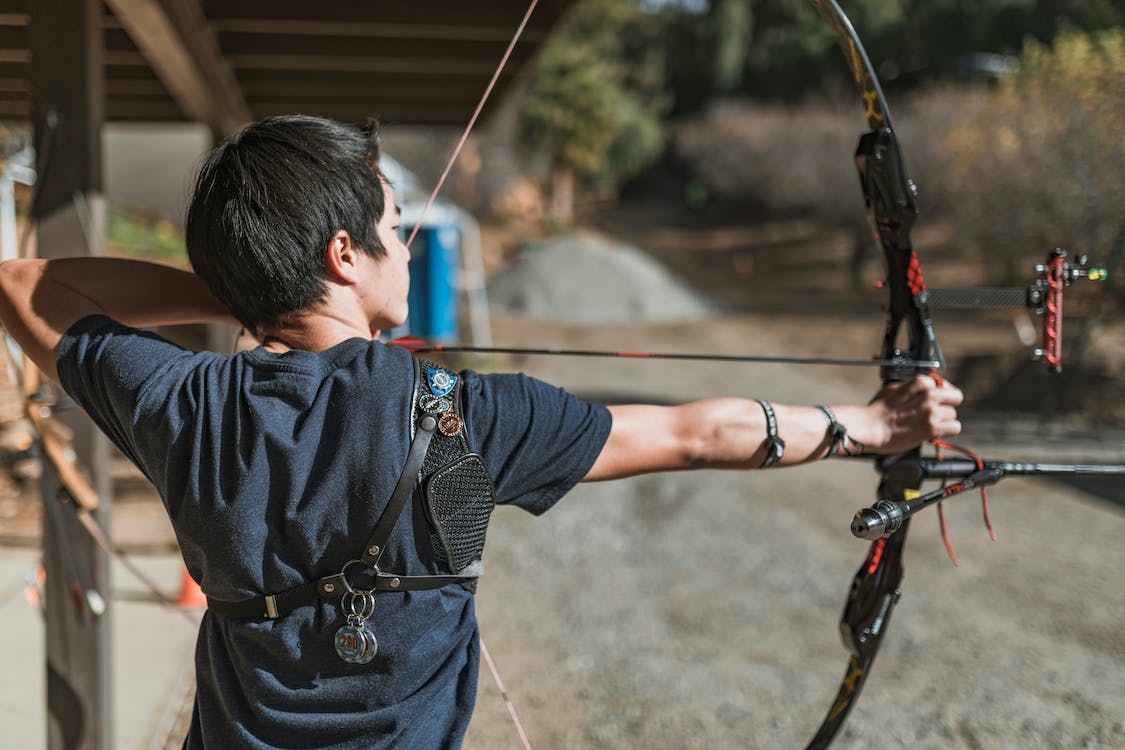
Credit: legendarchery.com
Safety, Etiquette, And Range Protocol
Archery is inherently safe when proper protocols are followed. Understanding and respecting safety measures protects you and those around you.
Range Safety Rules
- Always point arrows downrange, never at people.
- Only nock an arrow when ready to shoot, and after confirming the range is clear.
- Shoot from the designated shooting line.
- Wait for a clear signal before retrieving arrows.
Essential Equipment Safety
- Inspect bows and arrows for damage before each session.
- Never “dry fire” (release the string without an arrow), as this can damage the bow.
- Wear appropriate protective gear, including arm guards and finger tabs.
Range Etiquette
- Be mindful of others’ space and concentration.
- Do not distract or approach archers on the line.
- Respect the pace of group shooting; retrieve arrows only when everyone has finished.
Example: Group Shooting Scenario
During a local club session, a newcomer crossed the shooting line prematurely. The coach promptly reminded everyone of the safety protocol: never retrieve arrows until the all-clear whistle. Adhering to these rules prevents accidents and builds trust among participants.
Training, Practice Routines, And Goal Setting
Progress in archery depends on consistent, purposeful practice. Effective routines and realistic goal-setting foster skill development and motivation.
Structuring Practice Sessions
- Warm up with stretching and light shooting.
- Focus on one aspect per session, stance, release, or aiming.
- Track scores or groupings to measure improvement.
A typical hour-long session might include:
- 10 minutes: Stretching and warm-up shots.
- 20 minutes: Drills focusing on form.
- 20 minutes: Scored shooting at varying distances.
- 10 minutes: Cool down and review.
Setting Achievable Goals
- Begin with short-term goals, such as grouping arrows within a certain diameter.
- Progress to longer distances and higher scores.
- Record achievements and adjust goals regularly.
Overcoming Plateaus
Skill plateaus are common but manageable:
- Vary distances and target sizes to challenge yourself.
- Seek coaching or feedback on technique.
- Incorporate video analysis to identify subtle flaws.
Example: Practice Log
A study in the *Journal of Sports Sciences* found that archers who kept detailed practice logs improved their scores by up to 15% over three months. Recording shot groups, weather conditions, and equipment settings helps identify patterns and drive improvement (Taylor & Francis Online).
Equipment Selection, Tuning, And Maintenance
Choosing and maintaining your gear is integral to performance and safety. Proper tuning ensures consistent arrow flight and extends equipment lifespan.
Selecting Arrows
Arrow choice depends on bow type, draw length, and archer strength.
- Spine: Refers to arrow stiffness; must match bow draw weight.
- Length: Arrows should extend 1, 2 inches past the front of the bow at full draw.
- Material: Aluminum, carbon, and wood are common; carbon is favored for durability and consistency.
Tuning Your Bow
- Adjust brace height (distance from string to bow grip) for optimal performance.
- Set nocking point position to ensure arrow leaves the bow straight.
- Fine-tune arrow rest and sight for alignment.
Maintenance Checklist
- Regularly wax bowstrings to prevent fraying.
- Inspect limbs, riser, and cams (for compound bows) for cracks or wear.
- Store bows in a cool, dry place away from direct sunlight.
- Replace arrows with damaged fletching or splintered shafts.
Example: Equipment Failure
A friend neglected to check for cracks in his limb after dropping his bow, resulting in a sudden failure during practice. Routine inspections can prevent accidents and costly repairs.
Competitive Archery: Pathways, Scoring, And Real-world Examples
For those seeking to test their skills, competitive archery offers structured pathways, from local tournaments to international championships.
Competition Formats
- Indoor Archery: Typically at 18 meters, with smaller targets.
- Outdoor Target Archery: Distances range from 30 to 90 meters, with larger targets.
- Field and 3D Competitions: Varying distances and terrain, often unmarked.
Scoring Systems
Target archery uses a standardized scoring system:
| Ring Color | Score Value |
|---|---|
| Gold | 10, 9 |
| Red | 8, 7 |
| Blue | 6, 5 |
| Black | 4, 3 |
| White | 2, 1 |
Advancing In Competition
- Join local clubs and participate in beginner tournaments.
- Progress to regional and national events as your skills improve.
- Compete in specialized disciplines, field, 3D, or bowhunting, based on your interests.
Example: Youth Archery Success
The National Archery in the Schools Program (NASP) has introduced over 18 million students to archery since 2002, with participants showing improved focus, confidence, and academic performance (National Archery in the Schools Program). Many alumni go on to compete nationally and internationally.
Archery For All: Accessibility, Adaptations, And Community
Archery’s appeal lies in its accessibility. With minimal adaptations, nearly anyone can participate and thrive.
Inclusive Archery
- Para-Archery: Adapted for athletes with physical disabilities, including wheelchair users and those with limb differences.
- Clubs and organizations provide specialized equipment and coaching to ensure inclusivity.
Youth And Senior Participation
- Archery is suitable for children as young as six with supervision and appropriately sized equipment.
- Seniors benefit from the sport’s low-impact nature and emphasis on technique over brute strength.
Building Community
- Local clubs foster camaraderie, mentorship, and shared learning.
- Online forums and resources offer support and knowledge exchange.
Example: Veteran Archers
Programs like the U. S. Department of Veterans Affairs’ adaptive sports initiatives use archery as rehabilitation for wounded veterans, improving both physical and mental well-being.
Advancements And Trends In Modern Archery
The evolution of archery continues, driven by technology, research, and changing participation trends.
Equipment Innovation
- Carbon fiber and machined aluminum have replaced wood in many bows for increased strength and reduced weight.
- Advanced sighting systems offer micro-adjustments and digital feedback.
- Release aids and stabilizers improve consistency, especially in compound archery.
Data-driven Training
- High-speed cameras and motion analysis help archers fine-tune form.
- Wearables and mobile apps track shot data, enabling targeted improvements.
Growth In Pop Culture And Media
- Films and TV shows featuring archery heroes, such as “The Hunger Games” and “Brave,” have sparked increased interest, particularly among youth.
- Social media and YouTube channels provide free tutorials and inspiration.
Example: Olympic Archery Popularity Surge
Following the 2012 Olympics, archery club memberships in the UK rose by over 20%, attributed to increased media coverage and public interest, according to Archery GB.
Frequently Asked Questions
What Is The Best Age To Start Learning Archery?
While children as young as six can begin learning archery under supervision, the ideal starting age depends on the individual’s physical development and attention span. Some clubs offer introductory programs for youths, emphasizing safety and fun over competition. For adults, it’s never too late to start, archery is a lifelong sport enjoyed at every age.
How Do I Determine The Correct Draw Weight For My Bow?
Draw weight should be based on your strength and experience level. Beginners typically start with a lower draw weight (15, 25 pounds) to develop form and avoid strain. A certified archery coach or pro shop can assess your physique and recommend the appropriate weight for your needs and goals.
Can Left-handed People Shoot With Standard Bows?
Yes, but left-handed archers should use bows designed for left-handed use, where the arrow rest and sight are on the opposite side. Many manufacturers produce both left- and right-handed models. It’s important to select equipment that matches your dominant eye and hand for optimal comfort and accuracy.
What Are Common Mistakes New Archers Make?
New archers often grip the bow too tightly, draw inconsistently, or neglect follow-through. Over-aiming and anticipating the shot can also cause errors. Regular feedback from an experienced coach and video analysis can help identify and correct these issues early.
How Should I Store My Archery Equipment?
Bows and arrows should be stored in a cool, dry place away from direct sunlight and excessive humidity. Remove tension from recurve and longbows when not in use. Use a case for transport and storage to protect against dust, impacts, and moisture.
Archery offers a unique blend of physical challenge, mental focus, and community. By following these guidelines and committing to consistent practice, anyone can develop the skills necessary to enjoy and excel in this timeless sport. Whether your aim is recreation, competition, or personal growth, the journey into archery promises enduring satisfaction and discovery.