Peep Sight Size for Draw Length: Which One Fits?
A common starting point is a 1/8-inch peep for many 27–31 inch draw lengths, 3/32 can suit bright target setups with a repeatable anchor, and 5/32 may be needed if the sight picture remains too dim. A wrong peep size or angle can blur the housing, force head tilt, and open groups at distance. This guide shows how draw length, bow geometry, and anchor style work together to set peep aperture and rotation for hunting or target shooting.
Peep size decision matrix
The right starting peep size comes from draw length first, then bow geometry, anchor consistency, and use case. The hole size is the inside diameter of the aperture. Smaller openings give a tighter view but a darker sight. Larger openings give more light and more housing in the ring.
| Draw length | ATA | Anchor style | Primary use | Starting aperture | Starting angle | Troubleshooting clue |
|---|---|---|---|---|---|---|
| 27–28 inches | Short ATA | Corner of mouth | Hunting | 3/16 | 37 degree | Dark ring or oval view usually means the angle is wrong or the hole is too small. |
| 27–28 inches | Short ATA | Side of face | Target | 1/8 | 37 degree | If the housing looks oversized, move down in aperture before changing the sight. |
| 29–31 inches | Mid ATA | Corner of mouth or under chin | Hunting | 1/8 | 37 degree or 45 degree | Too much housing visible points to a peep that is too large for the string angle. |
| 29–31 inches | Mid ATA | Side of face | Target | 3/32 | 45 degree | If the sight picture feels cramped, the hole may be too small for the lighting. |
| 32+ inches | Long ATA | Corner of mouth or under chin | Hunting | 1/8 or 3/16 | 45 degree | An oval peep or blocked housing often means the angle or serving height is off. |
| 32+ inches | Long ATA | Side of face | Target | 3/32 or 1/8 | 45 degree | Bright light but poor centering usually means the aperture is too open for the setup. |
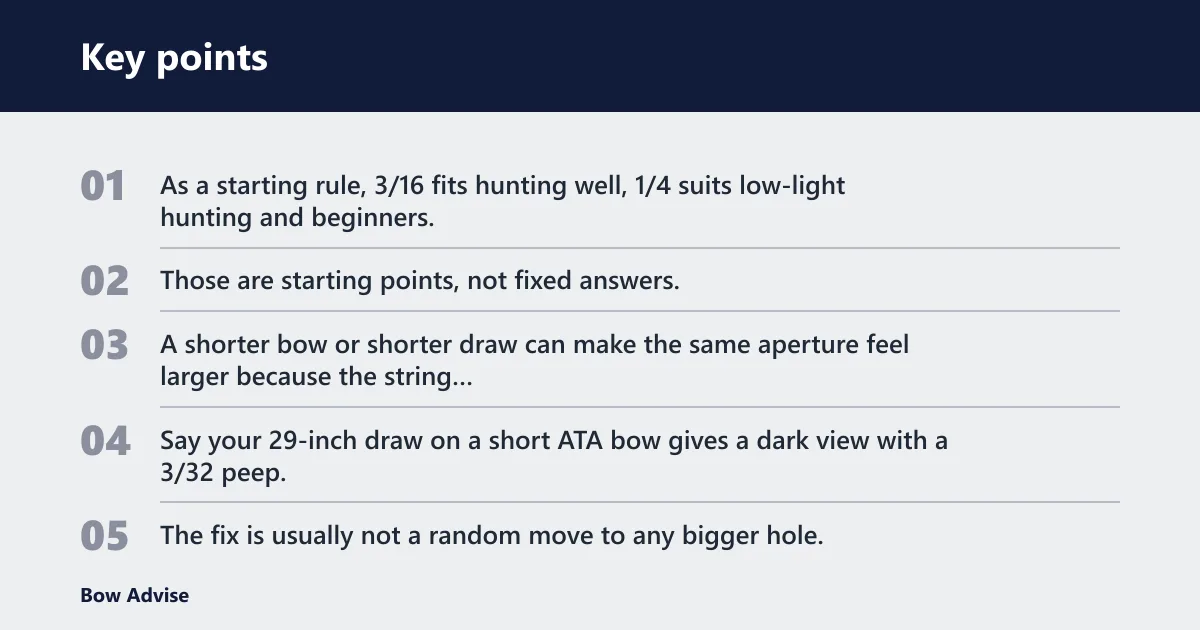
As a starting rule, 3/16 fits hunting well, 1/4 suits low-light hunting and beginners, 1/8 fits outdoor target and 3D, and 3/32 fits indoor target precision. Those are starting points, not fixed answers. A shorter bow or shorter draw can make the same aperture feel larger because the string angle steepens.
Say your 29-inch draw on a short ATA bow gives a dark view with a 3/32 peep. The fix is usually not a random move to any bigger hole. Step to 1/8 first, then verify that the sight housing still centers cleanly at full draw.
What peep size changes in the sight picture
The opening size changes brightness and sight picture precision at the same time. Smaller apertures tighten the view around the housing and pins. Larger apertures admit more light and show more of the housing ring. Hunting setups often accept a little less precision to keep the picture visible at dawn or dusk.
Hunting setups
For hunting, a 3/16 or 1/4 peep is common when the goal is a visible pin picture in low light. A brighter aperture helps when the shot comes in timber, legal shooting light, or shaded cover. The trade-off is that more housing can appear in the ring, which may reduce the feeling of a hard center.
Target setups
For target work, 3/32 or 1/8 often gives a tighter and cleaner window. The sight picture can look more precise because less extra housing fills the ring. That works best when anchor pressure, release hand position, and head position stay highly repeatable.
Picture a 3D course in the evening. A 3/32 peep may look sharp, but the housing can disappear into shadow. In that case, moving to 1/8 usually helps more than changing the sight, because the real issue is light transmission.
How does draw length affect peep choice?
Draw length changes the string angle at full draw, and that changes how the peep presents to the eye. A longer draw generally opens the angle and can make the same aperture feel easier to center. A shorter draw steepens the angle and can make the sight look darker or more compressed.
Why anchor consistency comes first
Draw length only helps if the anchor is the same every time. Corner of mouth, under chin, and side of face all create different head and string relationships. If the anchor drifts, the peep may appear to change size, when the real issue is position at full draw.
ArcheryCalculators lists draw length, ATA, anchor point, and release type as calculator inputs for peep height. That matters because the correct aperture size can still look wrong if the anchor changes. Verify the anchor before deciding the peep is too small or too large.
Why a D-loop changes the answer
A D-loop can change effective draw length and may shift peep position by roughly half an inch in some setups. Install the D-loop before final peep height checks. If the loop goes on after the peep is set, the peep can end up high or low even when the aperture choice is correct.
Suppose a bow is tuned with no D-loop, then the loop is added later. The peep may move enough that the housing no longer centers at full draw. The fix is not to blame the aperture first. Recheck height after the loop is installed.
How does axle-to-axle length change the rule?
Axle-to-axle length changes string geometry just as much as draw length does. Short bows create steeper string angles, so they often need a peep setup that faces the eye more aggressively and sometimes a slightly larger aperture to keep the housing visible. Long bows are more forgiving.
Short bows
On shorter ATA bows, a 37 degree peep is often the first place to start. The steeper string angle can make the aperture look oval if the angle is wrong, and it can crowd the housing inside the ring. If the view is dim and the bow is short, the aperture may simply be too tight.
Long bows
Longer ATA bows often work well with 45 degree peeps. TitleX recommends 45 degree peeps for longer ATA bows and longer draws. The flatter string angle usually makes centering easier and gives more room to size the aperture for the lighting and anchor style.
ArcheryCalculators also notes that peep-size calculators use ATA as an input. That is the reason a “best peep” chart cannot ignore bow length. Two archers with the same draw length may need different apertures if one shoots a compact hunting bow and the other a long target rig.
Which peep angle should you start with?
Start with the angle that matches the bow geometry, then confirm that the hole is round at full draw. The same source lists 37 degree and 45 degree peep angles. TitleX also recommends 37 degree peeps for shorter ATA bows and shorter draws, and 45 degree peeps for longer ATA bows and longer draws.
How to tell if the angle fits
The peep should face the eye at full draw. The same source says the hole should be round at full draw, and an oval view means the angle or serving height is off. If the opening looks stretched, the angle does not match the string path or the serving was set wrong.
A common first-timer mistake is choosing aperture size first and angle second. That can leave the archery setup with a hole that looks correct on paper and tilted in the string. Match angle before the final serving lockup.
How do you confirm the sight housing fits the peep?
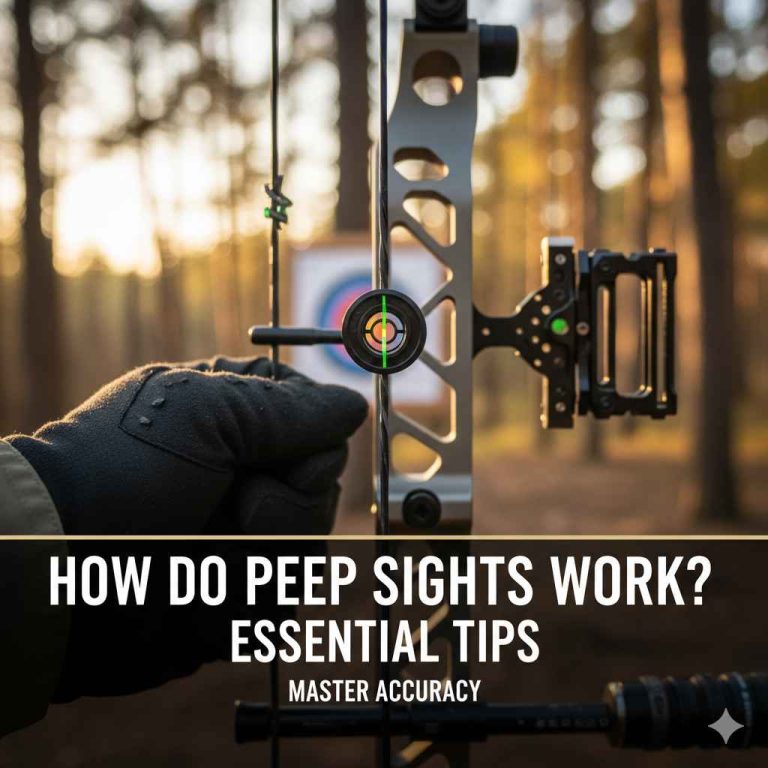
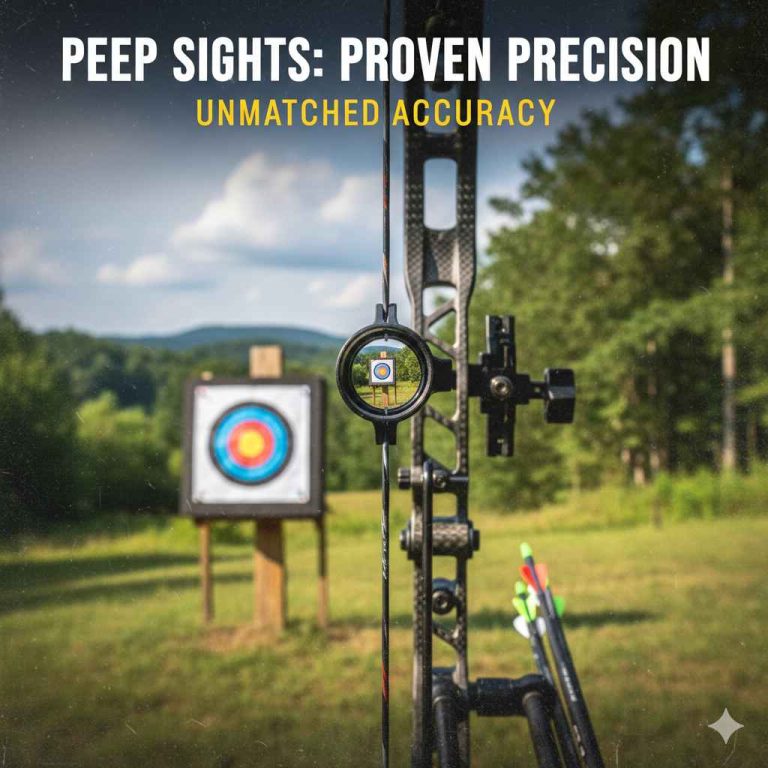
The housing should sit centered inside the peep ring at full draw. If too much housing shows, the aperture is often too large or the bow angle is too open for the setup. If too little housing shows, the peep is likely too small, too low, or not rotated correctly.
Too much housing showing
More housing in the ring usually means the opening is too large for the string angle and anchor. That can be fine for low-light hunting, but it often costs sight picture precision. Move down one aperture step when the housing looks loose and the pin ring feels oversized.
Too little housing showing
When the housing nearly disappears, the peep may be too small or the light is too low for that aperture. A 1/8 hole can feel sharp on a bright target range yet too dark in the woods. If the pins vanish, the next step up is usually the better fix.
How should a peep be installed and served?
A bow press is needed for many peep installations, because the string must be split cleanly to insert the peep. Serving thread then holds the peep in place. Both sides of the peep need enough serving length to keep the install durable and stable under shooting stress.
- Set the D-loop first, then check full-draw anchor and peep height.
- Use a bow press to open the string enough to insert the peep safely.
- Place the peep so it faces the eye at full draw.
- Serve both sides with tight, durable thread and enough serving length to lock the peep in place.
- Check the view at full draw and confirm the hole is round, not oval.
- If the housing is still off-center, change angle or aperture before re-serving.
Many archers can do the simple check at home, but a pro shop is the safer choice if the bow needs a press and the string setup is unfamiliar. That is especially true when the peep must be moved more than once or when the string serving already looks worn.
Our picks by need
Short ATA hunting: SHARROW 37 degree hooded peep
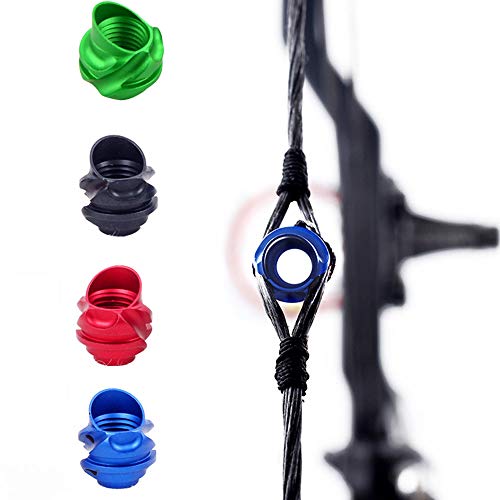
This 37 degree hooded option fits the short-bow starting point well when the goal is a cleaner hunting picture. Based on the listed specs and buyer feedback, the black aluminum alloy body should stay light and resist rust. The drawback is simple: one fixed angle limits flexibility if the bow geometry later changes.
For a compact hunting bow, this is the kind of peep that can help keep the pin stack readable in poor light. It still needs correct serving and a full-draw check, because a good angle alone will not fix a bad anchor or a mismatched aperture size.
Flexible hunting or setup tuning: HNZMDY 37/45 Degree Aperture Kit

This kit is the most practical choice when the setup may still change. The three inner core sizes make it easier to move between brighter and tighter sight pictures without changing the whole peep. The drawback is that more options can tempt a rushed install if the anchor and draw length are not settled first.
It suits archers who want to compare a 3/32, 1/8, and larger opening against the same bow geometry. That makes it useful for confirming whether the problem is aperture size, angle, or sight housing fit.
Low-light hunting and beginner use: RUOERSISI 45 Degree Hooded Kit

This 45 degree kit fits longer ATA bows and longer draws better than a short-bow setup, and the multiple replacement peeps help when a brighter picture is needed. The drawback is that a 45 degree starting point may be wrong on a short bow, so it should not be treated as universal.
For low-light hunting, a brighter peep can help the housing stay visible without forcing a hard head tilt. It is also a reasonable option for beginners who need a larger, easier-to-find view before moving to a tighter aperture later.
Mistakes to avoid
The most common mistake is choosing size without checking draw length at full draw. The second is changing the D-loop after the peep is already set. The third is assuming an oval peep means the aperture itself is bad, when the angle or serving height may be the real issue.
Do not judge fit from the bow at rest. Judge it at anchor, with the same release, same anchor point, and same head position you will use in practice or in the field. If the housing only centers when the head is tilted, the setup still needs work.
When the picture is dark, move one aperture step larger and recheck. When the housing looks oversized, move one step smaller. If the ring looks oval, correct angle before chasing aperture changes. That order avoids fixing the wrong problem.
Frequently asked questions
What peep sight size should I use for my draw length?
Use draw length as the starting point, then verify anchor and ATA before finalizing the size. A 1/8-inch peep is a solid middle starting point for many 27–31 inch draw lengths. Step larger for low-light hunting, or smaller for target precision if the housing still centers well.
Does draw length change peep sight size?
Yes. A longer draw usually opens the string angle and can make a smaller aperture easier to see through. A shorter draw steepens the angle and may require a larger hole or a different peep angle. Recheck the size after any draw-length change or D-loop change.
Should I use a 3/16 or 1/4 peep sight?
Choose 3/16 when you want a hunting-friendly balance of light and a clean sight picture. Choose 1/4 when low-light visibility or beginner ease matters more than tight precision. If the sight housing looks too loose inside the ring, 3/16 is usually the better starting point.
How does axle-to-axle length affect peep sight choice?
Short ATA bows create steeper string angles, so they often need a peep angle and aperture that keep the view round and visible. Longer ATA bows are easier to center and often work with tighter apertures. Check ATA alongside draw length instead of treating one number as enough.
How do I know if my peep sight is too small?
If the sight picture turns dark, the pins disappear in low light, or the housing feels cramped, the peep is probably too small. Move up one size and check again at full draw. If the view is still oval after that, the angle or serving height still needs correction.