How to Install a Peep Sight on a Compound Bow with a Bow Press
Install a peep sight by pressing the bow, setting the peep at your correct draw-length mark, and serving it in while the string is relaxed. If it sits off-center at full draw, the draw length or yoke needs correction. A poor install can leave you chasing rotation, low accuracy, and a peep that shifts under tension. This guide covers safe setup, installation, and how to diagnose common alignment problems from the symptom you see.
What you’ll need
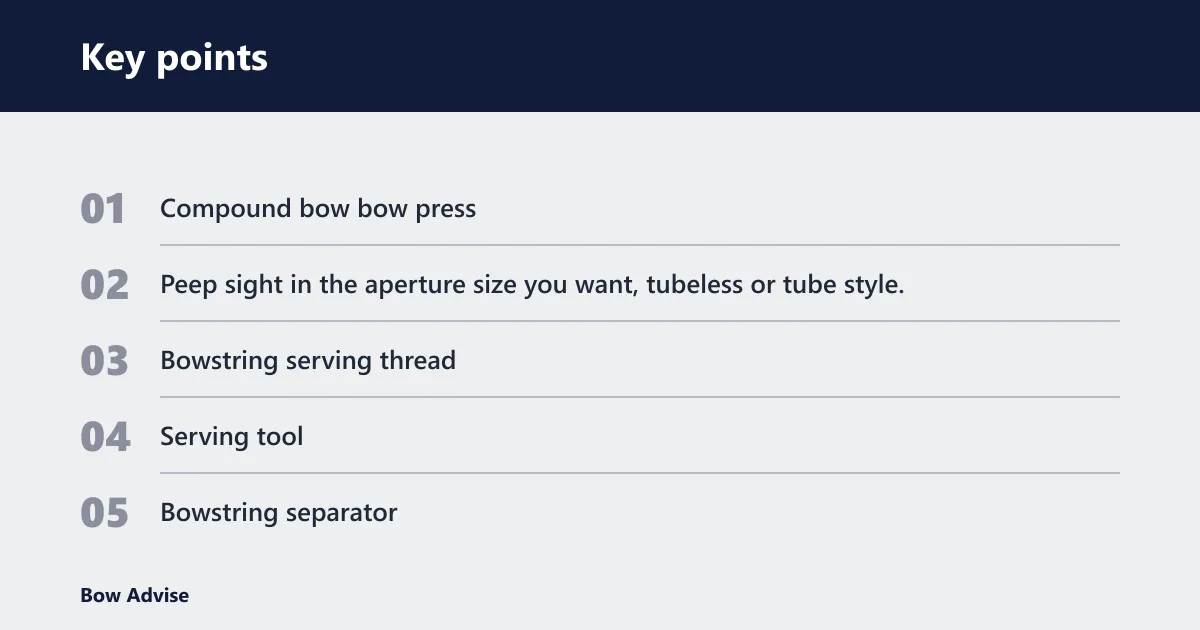


- Compound bow bow press to relieve string and cable tension before the peep goes in.
- Peep sight in the aperture size you want, tubeless or tube style.
- Bowstring serving thread to lock the peep in place on both sides.
- Serving tool to wrap tight, even serving around the peep.
- Bowstring separator to open strands without cutting or fraying fibers.
- Marker to mark the initial peep location at eye height.
- Optional D-loop material if the D-loop is not already installed or needs replacement before final tuning.
Bow press and safe pressure release
A bow press is commonly used for peep installation because it takes string and cable tension off the bow enough to work safely. Use the press only the way the bow maker allows. Too much pressure can damage cams and cables, so follow the bow manual and the press instructions for the specific model.
Peep sight, serving thread, separator, and marker
The peep sits in the bowstring at full-draw eye height and should line up with the sight housing at anchor. Serving thread keeps it from moving. A string separator opens space for the peep between strands; it should not cut into the string. A marker helps record the starting point before anything is served.
Optional items for final tuning
A D-loop should already be installed before final peep tuning because it changes effective draw length and can move the peep’s position. A second person can help mark the string at eye level, and a controlled draw board or other safe holding method is best for the full-draw check. Keep low-light needs, glasses, and sight housing size in mind when choosing the aperture.
How do you install the peep sight on a compound bow?
Press the bow, open the string strands with a proper separator, insert the peep, orient it correctly, and serve it tightly on both sides. The peep should end up centered between the string bundles evenly and line up with the sight housing at anchor. Do not lock it in until you check full-draw alignment.
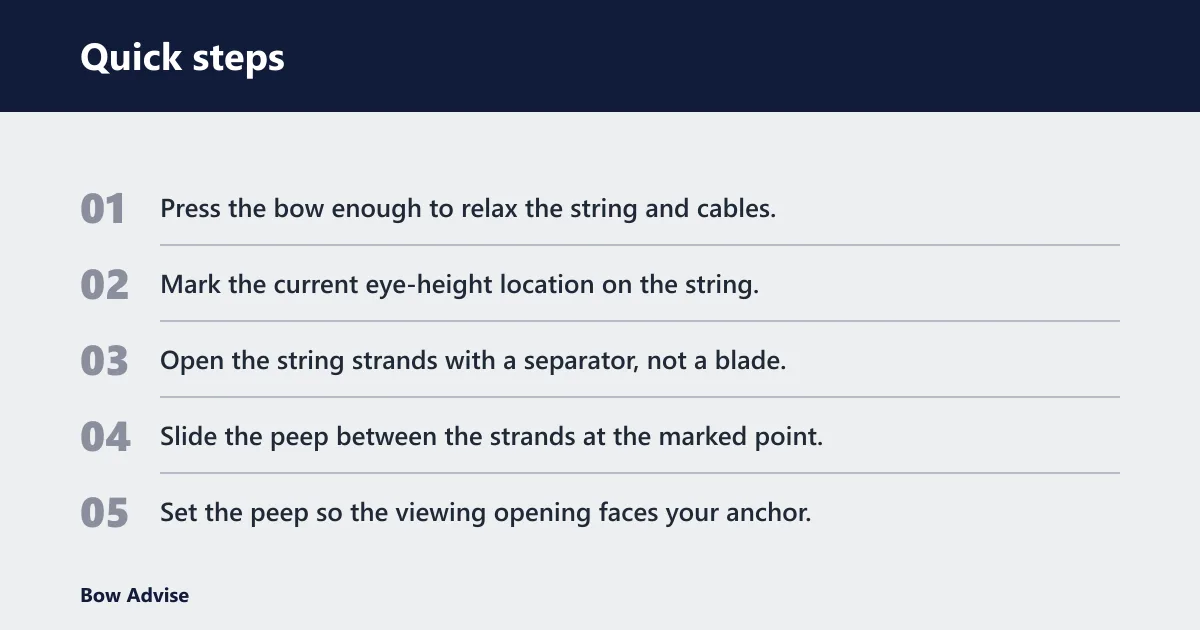
- Press the bow enough to relax the string and cables.
- Mark the current eye-height location on the string.
- Open the string strands with a separator, not a blade.
- Slide the peep between the strands at the marked point.
- Set the peep so the viewing opening faces your anchor.
- Serve tightly on both sides of the peep.
- Recheck at full draw with the bow at your anchor point.
Press the bow and relieve tension
Start with the bow in a press so the string and cables are relaxed enough to work on safely. This is the cleanest way to install a peep sight on a compound bow with a bow press. If the bow needs major adjustment or the string looks worn, a pro shop is the safer choice.
Open the string strands without damaging fibers
Use a bowstring separator to create a gap between strands. Do not cut, fray, or split the main fibers. The goal is to make room for the peep without weakening the string. A clean separation keeps the string intact and gives the peep a stable seat. Separate the strands evenly so the peep can sit centered between them instead of being forced to one side.
Insert and orient the peep
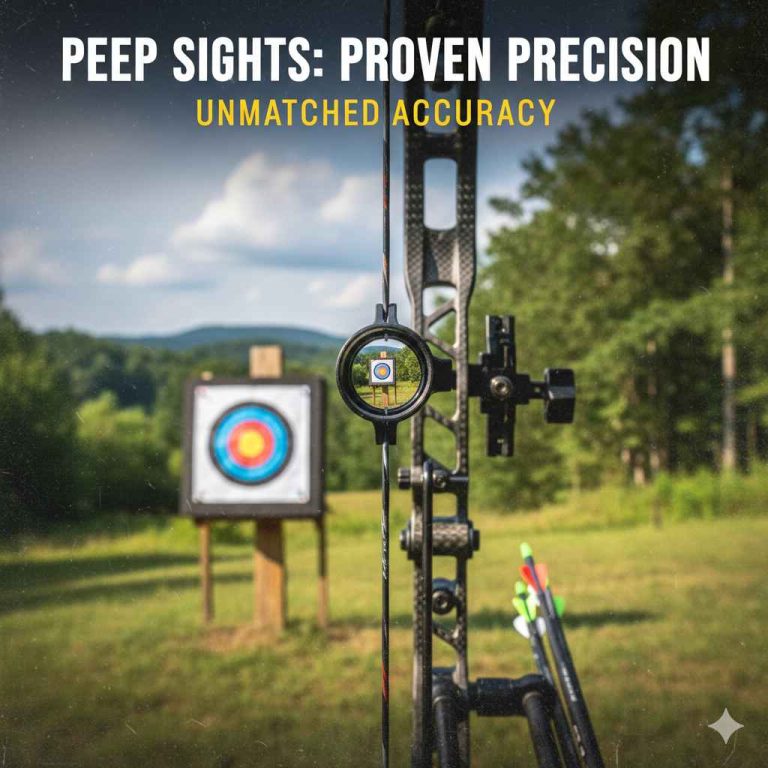
Place the peep in the string so the aperture sits where your eye will naturally find it at anchor. The guide calls for the peep to be placed evenly between the string strands. Set the opening so it frames the sight housing evenly when the bow is at full draw.
Serve the peep on both sides
Wrap serving tightly on both sides of the peep so it cannot migrate or twist easily. The serving should hold the peep firmly, with at least 0.5 inches of serving on each side, and the wraps should finish with a secure knot or lock so the serving does not unwind. That tight lock is what keeps the peep from drifting when the bow cycles.
Check alignment at full draw
Draw the bow to your normal anchor and confirm that the peep frames the sight housing evenly. That circle-in-circle look is the goal. Use a controlled method such as a draw board or have a helper oversee the check, since drawing a recently adjusted bow alone can be hazardous. If the housing is off-center, the problem may be anchor inconsistency, draw length, torque, string or cable twist imbalance, or a peep that needs to move before final serving is locked down.
Peep sight troubleshooting table
Use the symptom first, then check the likely cause. That is faster than guessing. A peep that looks wrong at full draw often points to anchor repeatability, draw length, bow torque, or string and cable twist imbalance rather than a bad peep alone.
| Symptom | Likely cause | Quick check | Fix |
|---|---|---|---|
| Peep sits too high | Draw length is too long, or anchor is lower than expected | Check whether your jaw or string contact point changes from shot to shot | Confirm draw length first, then move the peep after the bow is pressed |
| Peep sits too low | Draw length is too short, or the D-loop changed the effective position | Draw to anchor and see whether the peep falls below your eye line | Recenter the peep after verifying the D-loop and draw length |
| Housing is off-center | Anchor is inconsistent or the bow is being torqued at full draw | Repeat the draw and check whether the sight picture changes side to side | Fix anchor consistency first; then confirm the peep position again |
| Peep rotates after serving | Serving is loose or the string was not seated before final wrap | Watch the peep during several slow draws | Re-serve both sides tightly after rechecking strand seating |
How do you choose peep height and size?
Set peep height from your repeatable anchor point, not from a guessed string mark. Draw length and axle-to-axle length both affect where the peep ends up. Then choose aperture size based on sight housing size, light, glasses, and how much of the pin gap you want to see.
Match the peep to your anchor point
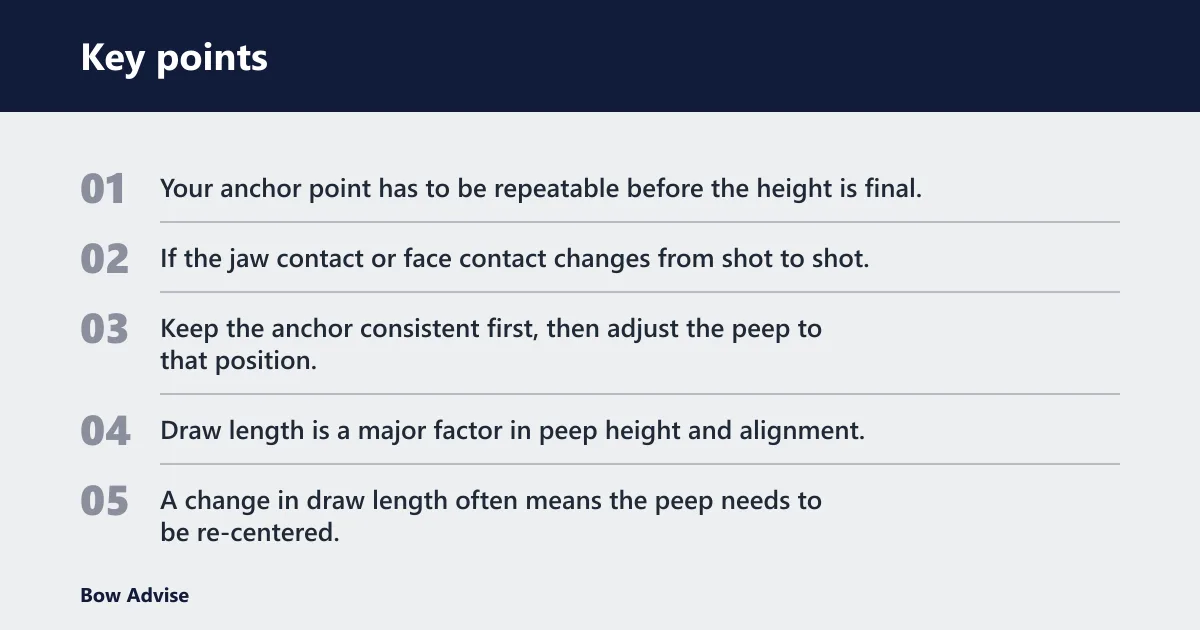
Your anchor point has to be repeatable before the height is final. If the jaw contact or face contact changes from shot to shot, the peep can look “wrong” even when the install is close. Keep the anchor consistent first, then adjust the peep to that position.
Use draw length and axle-to-axle length to set the starting height
Draw length is a major factor in peep height and alignment. A change in draw length often means the peep needs to be re-centered. Axle-to-axle length also matters: shorter bows usually need higher peep placement because the string angle is steeper, while longer bows are generally less severe.
Choose aperture size for hunting, target use, and light conditions
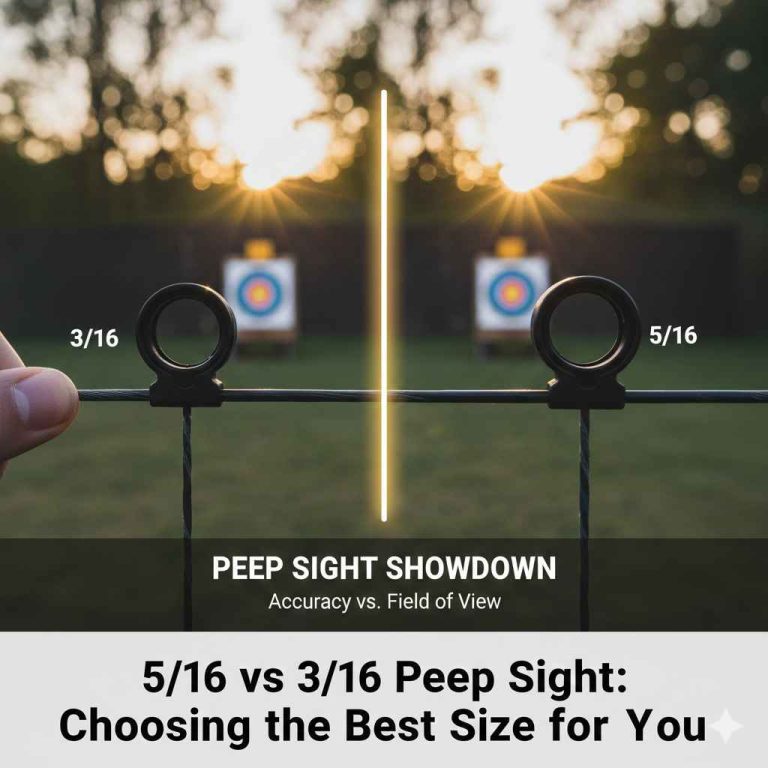
Peep sizes are not universal. Larger apertures admit more light. Smaller apertures can tighten the view for precision. Common sizes include about 1/16, 1/8, 3/16, and 1/4 inch. Hunters often choose 3/16″ or even 1/4″, and 1/4″ is often a practical choice for low-light hunting or beginners. Target shooters often prefer a smaller opening if the housing and eye distance still give a clean picture. If you wear glasses or run a large sight housing, a slightly larger peep can help keep the housing visible without crowding the view.
What changes after a D-loop or draw-length adjustment?
Yes, a D-loop can change where the peep sits. Final peep tuning should wait until the D-loop is installed, because it can change effective draw length and move the peep relationship to your eye. Any draw-length change may require re-centering the peep and checking alignment again before serving it for good.
Why the peep can move after a D-loop install
The D-loop changes where the string is drawn from, so it can shift the eye-to-peep relationship. Even a small change can make the housing look higher or lower at anchor. If the bow was set before the D-loop went on, expect to recheck the peep rather than assume it is still correct.
Why draw-length changes can require re-centering
Changing draw length changes the string angle and the peep’s relationship to the anchor. That is why peep height is not a one-time decision. If the bow is shortened or lengthened, draw to full anchor and check whether the housing still centers in the aperture. If not, move the peep and re-serve it.
How to recheck alignment before serving again
Press the bow again, shift the peep only after confirming the new anchor, and test at full draw before tightening the final serving. If the circle-in-circle view is off, change one variable at a time. A common first-timer mistake is moving both the peep and the anchor reference at once, which hides the real cause.
Common mistakes
Most peep problems come from rushing the setup. The fix is usually simple, but only if the root cause is clear. Use this short list before you lock the peep in place.
- Serving the peep before the anchor is repeatable.
- Using a knife or blade instead of a string separator.
- Ignoring bow torque when the housing sits off-center.
- Skipping the full-draw check after a D-loop or draw-length change.
- Choosing peep size without checking sight housing size and eye distance.
Picture a hunter with a large sight housing and a 1/8″ peep. The housing may feel cramped and dim at dawn. Moving to a larger aperture can improve the view, but the real test is still whether the housing centers cleanly at anchor.
Suppose the peep looks centered on the bench but shifts low after a D-loop swap. That is a setup change, not a random failure. Recheck draw length and full-draw anchor before you serve anything permanently.
Do you need to take a compound bow to a pro shop to install a peep sight?
You should if the bow must be heavily adjusted, the string needs correction, or the setup feels uncertain. A pro shop can install and serve a peep, and that can be worth it when press work or alignment is beyond your comfort level. Incorrect pressing can damage cams and cables.
When a pro shop is the better call
Use a pro shop if the bow needs string correction, if the peep keeps rotating, or if the bow press setup is unfamiliar. That is also the safer move when the bow model has a specific press requirement. A clean professional install is better than forcing a bad one.
Frequently asked questions
How do you install a peep sight on a compound bow with a bow press?
Press the bow, open the string with a separator, insert the peep at the marked eye-height point, and serve it tightly on both sides. Then draw the bow to anchor and confirm that the sight housing frames evenly inside the peep. If it does not, correct the position before finalizing the serving.
How do you find the right peep sight height on a compound bow?
Start from your repeatable anchor, then check the peep at full draw. The right height is the one that lets the sight housing center in the opening without stretching your face position. If the bow length or draw length changes, the peep height may need to move too.
How do you keep a peep sight from twisting after installation?
Serve it tightly on both sides and make sure the string is seated correctly before you lock it in. A peep that rotates after serving often points to loose serving or a setup change that was not rechecked. If it still twists, re-press the bow and reset the peep.
What size peep sight is best for hunting versus target archery?
Hunting often favors a larger aperture because it lets in more light, and common choices include 3/16″ and 1/4″. Target archery often uses a smaller opening if the sight housing, glasses, and eye distance still allow a clean view. Match the size to the picture you can repeat.
Can a D-loop change where the peep sight sits?
Yes. A D-loop changes the effective draw length and can move the peep’s relationship to your eye. That is why the D-loop should be installed before final peep tuning. If the loop changes later, recheck the peep at full draw before serving it for good.
What should you check before serving in a peep sight?
Check anchor repeatability, draw length, D-loop position, and whether the sight housing centers evenly inside the peep at full draw. Also confirm that the string strands were opened without damage. If any of those are off, fix the setup first and serve only after the peep sits correctly.