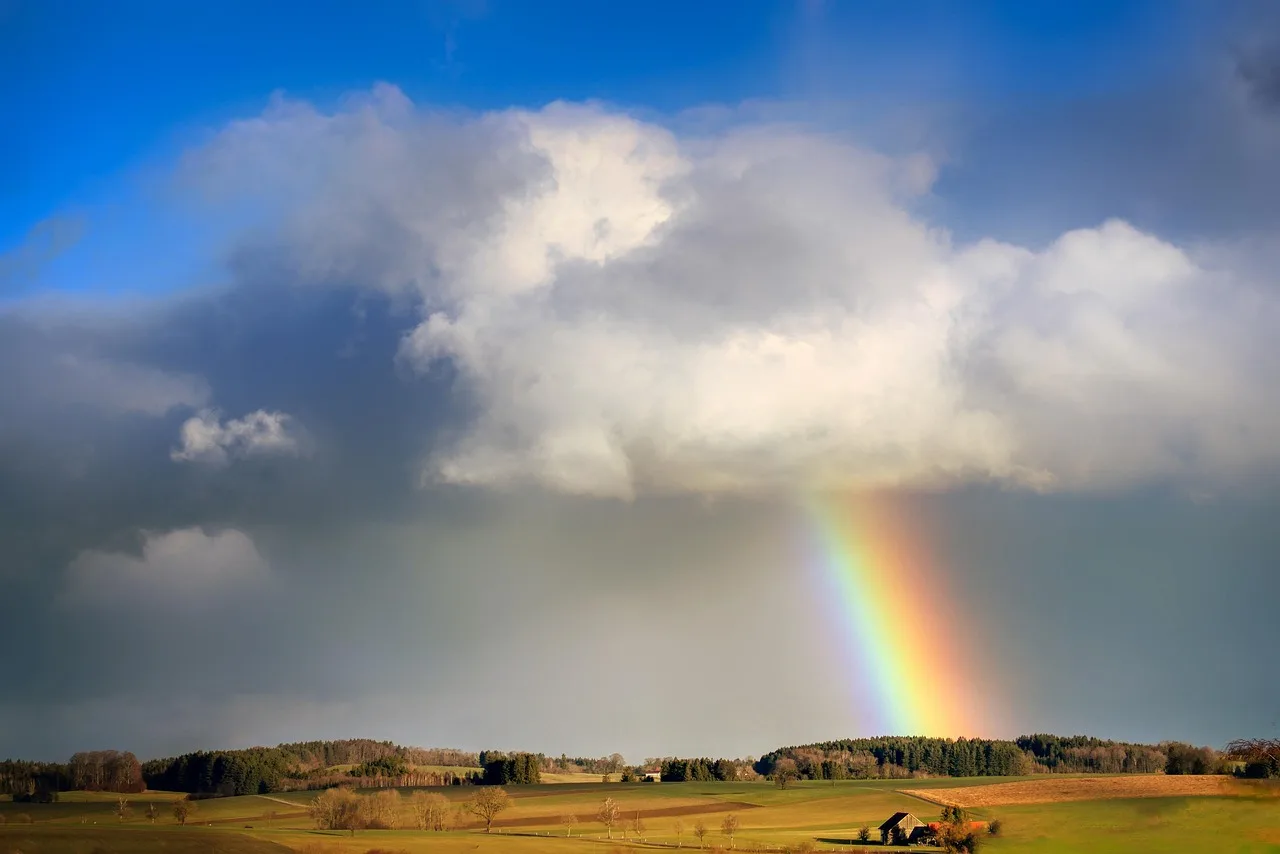
How Fog, Rain, and Snow Affect Peep Sight Visibility
Fog scatters light. Rain coats the peep like a wet lens. Snow blows out the background. Match the problem first, then adjust peep size or aperture. Skip that step, and the sight picture turns dim, bloated, or ghosted right when a clean anchor matters most. This guide separates fog, rain, and snow, then pairs each failure with the setup change that helps most.
Peep sight visibility in bad weather
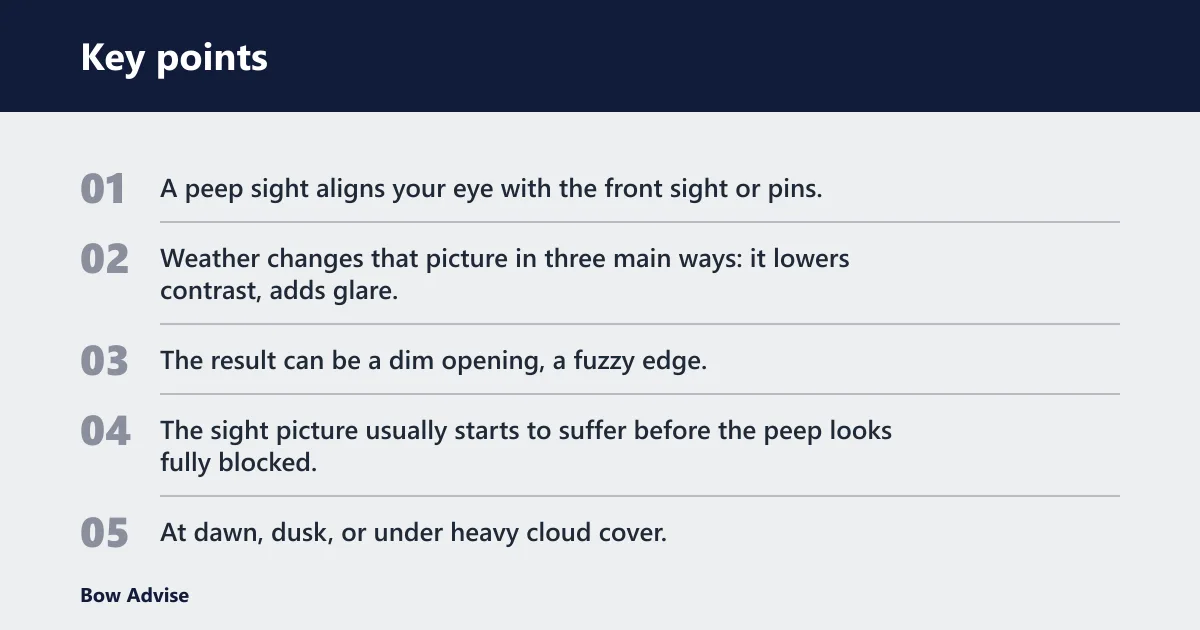


A peep sight aligns your eye with the front sight or pins. Weather changes that picture in three main ways: it lowers contrast, adds glare, or bends the view with moisture. The result can be a dim opening, a fuzzy edge, or a peep that looks misshapen at full draw.
The sight picture usually starts to suffer before the peep looks fully blocked. At dawn, dusk, or under heavy cloud cover, the opening can seem smaller because the eye loses edge definition. In wet or cold air, condensation can add a film to the peep, string, or even glasses, which changes what the archer thinks is centered.
Why visibility loss starts to matter
Visibility loss matters when the eye can no longer center the peep without guessing. A peep that was clear at midday may feel too dark at last light, and a peep that was fine in dry air may look softer once moisture lands on it. That shift matters more for bowhunters because the shot window is short.
Bow setup still comes first. If the peep height is off, the anchor point changes, or the string twist leaves the peep rotating, bad weather makes the error more obvious instead of causing it.
How do fog, rain, and snow affect peep sight visibility?
Fog typically reduces contrast and sharpness, rain can create droplet distortion and glare, and snow can wash out the target background while adding bright reflection. Those are different failures, so the fix should be different too. Treating them all as “low light” leaves the real cause untouched.
Fog
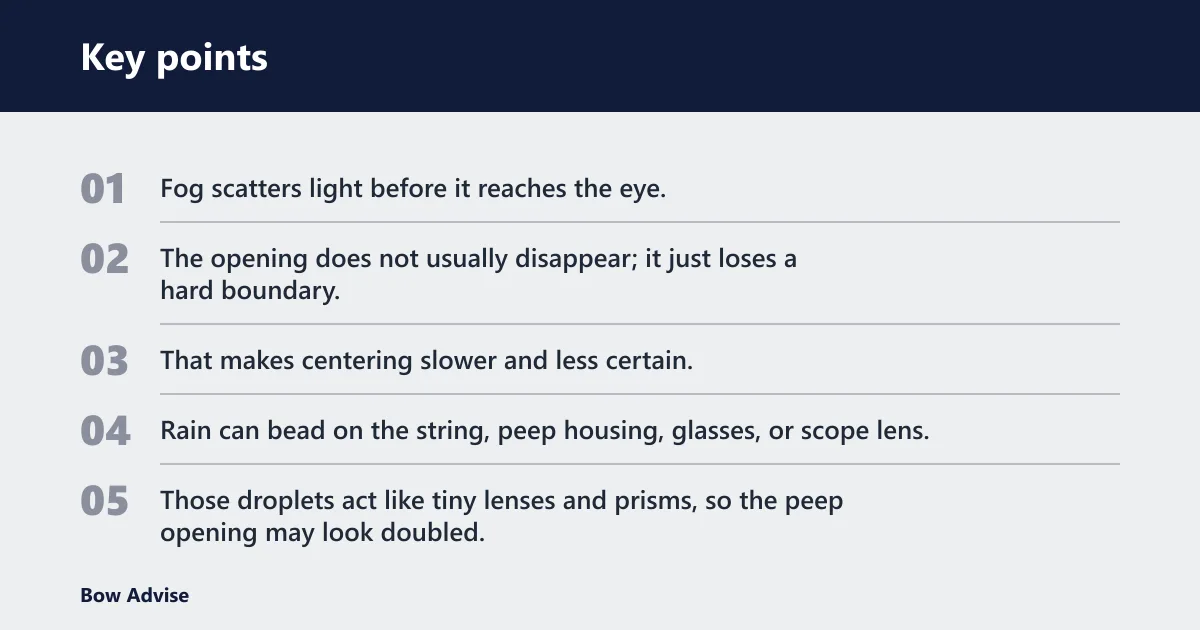
Fog scatters light before it reaches the eye, so the peep edge and the front sight both look softer. The opening does not usually disappear; it just loses a hard boundary. That makes centering slower and less certain, especially at dawn and dusk when ambient light is already weak.
Rain
Rain can bead on the string, peep housing, glasses, or scope lens. Those droplets act like tiny lenses and prisms, so the peep opening may look doubled, warped, or edged with glare. Wet matte surfaces help, but standing water on the peep or lens still distorts the picture.
Snow
Snow creates a different problem. Fresh snow and bright flakes raise background brightness so much that the peep and target can lose contrast. Heavy snowfall also interrupts the sight picture by passing through the line of sight, which can make the peep seem to vanish and reappear with each breath or slight head movement.
Say your 3/16-inch peep looks fine at the trailhead, then a light snow starts and the open field turns white. The peep has not changed size, but the background has become much brighter, so the opening feels harder to see even though the bow setup stayed the same.
| Condition | Contrast loss | Glare | Droplet distortion | Ideal peep size direction | Best field fix |
|---|---|---|---|---|---|
| Fog | High | Low to moderate | Low unless condensation forms | Larger if the peep feels too dark | Dry the lens surfaces, keep anchor steady, use anti-fog treatment |
| Rain | Moderate | Moderate to high | High | Often neutral; size change helps less than drying | Clear droplets from peep, string, and eyewear; use a matte, dry peep |
| Snow | High from washed-out background | High | Moderate from melting flakes and condensation | Larger only if the peep is too dark after glare control | Reduce glare, keep lenses dry, and protect the bow from snow buildup |
Should you change peep size for bad weather?
Sometimes, but not first. A larger peep lets in more light, which can help at dawn, dusk, under overcast skies, in fog, and in some snow conditions. A smaller peep tightens the aiming picture, but it also darkens the sight picture. The better choice depends on whether the main problem is darkness or distortion.
Common hunting sizes
Common hunting peep sizes often include 1/8, 3/16, and 1/4 inch. Smaller apertures usually tighten the sight picture and can make the pin or front sight look more precise. Larger apertures admit more light, which helps in poor ambient light, but they also reduce the visual reference that keeps the eye centered.
A 1/8-inch peep often suits archers who want a very crisp pin gap and shoot in brighter conditions. A 3/16-inch peep is a common middle point for many hunters. A 1/4-inch peep can help when the light is poor, though the larger opening may make fine centering less exact.
Brightness versus precision
The tradeoff is simple. Bigger opens the view, smaller tightens it. If the peep feels blacked out at last light, a larger opening is a better field fix than forcing a tiny peep to work in the dark. If the image is bright enough but sloppy, smaller may help more than any weather tweak.
Do not expect a size change to cure rain distortion. Droplets on the peep or glasses still blur the view even with a larger aperture. In that case, cleaning and drying beat a size swap.
What peep sight material works best in wet or snowy conditions?
No single material is best for every shooter. Aluminum, plastic or resin, and rubber or soft inserts each behave differently when wet. Surface finish matters too. A glossy peep can throw more stray reflection into the eye, while a matte finish usually cuts glare better in rain or snow.
Material and finish
Aluminum peeps are common because they are rigid and can be finished to reduce glare. Plastic or resin peeps are light and can work well, but the finish and edge quality matter. Rubber or soft inserts can be forgiving and quiet, though they may wear differently and can change shape more than a hard insert.
If glare is the issue, the finish often matters more than the base material. A dull, nonreflective surface is usually easier to live with in wet weather than a polished one.
Bow setup and alignment
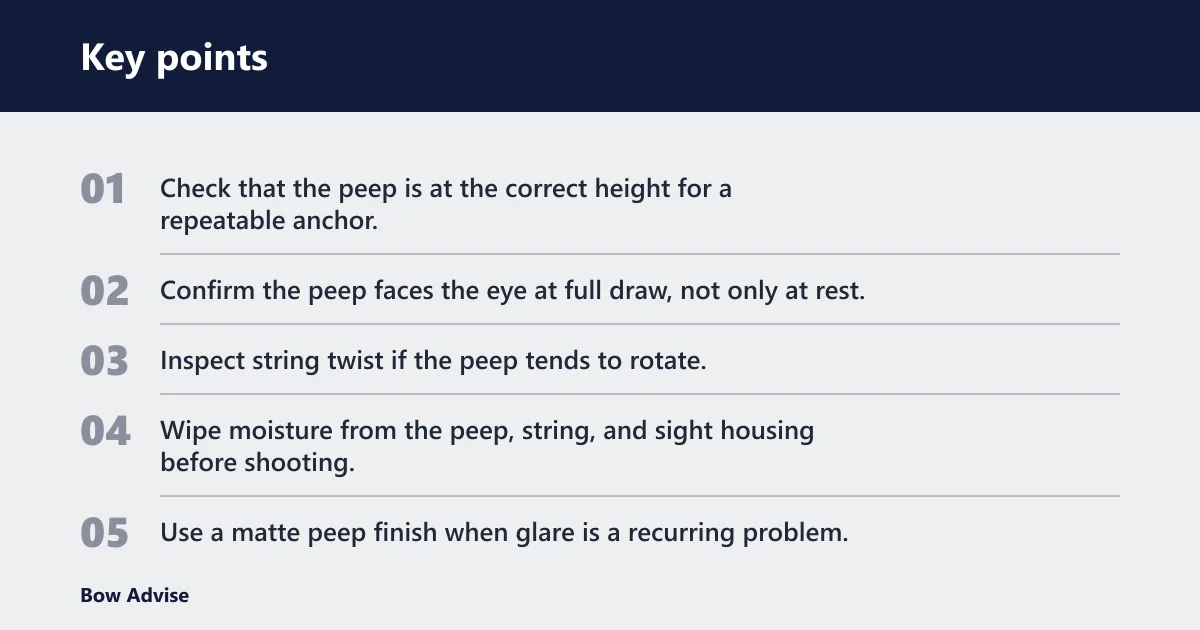
Peep height, anchor point consistency, string twist, and peep rotation all affect how clear the sight picture feels. If the peep rotates off center, weather will make that flaw more obvious. A consistent anchor keeps the eye in the same place every time, which helps the peep and front sight line up cleanly.
String twist changes peep timing. Too much rotation and the opening may not face the eye at full draw. Too little and the peep can sit awkwardly after the shot. Wet weather does not cause those issues, but it makes them harder to ignore.
A practical checklist
- Check that the peep is at the correct height for a repeatable anchor.
- Confirm the peep faces the eye at full draw, not only at rest.
- Inspect string twist if the peep tends to rotate.
- Wipe moisture from the peep, string, and sight housing before shooting.
- Use a matte peep finish when glare is a recurring problem.
- Practice with the setup in the same light and weather you expect in the field.
A common first-timer mistake is blaming fog for a peep that is actually out of alignment. Suppose the peep is a 3/16-inch model and the anchor drifts by a small amount at full draw; the opening can look off-center even on a dry day. Add mist, and that same error feels much larger.
How eyewear, clarifiers, and lighted peeps change visibility
Glasses, clarifier lenses, and lighted peeps can each help, but only if they match the setup. Prescription glasses may add another surface that fogs or beads water. Clarifiers can sharpen a peep-and-scope setup. Lighted peeps can help in dim conditions, though they add battery or lamp maintenance and do not fix distortion from droplets.
Prescription glasses and anti-fog coatings
Prescription glasses can make peep visibility worse if the lenses fog or carry droplets. Anti-fog coatings help, but they work best when the lenses are clean and dry. The distance from the eye to the peep at full draw also matters, because glasses change where the eye sits and can shift the apparent center of the aperture.
If glasses sit too close to the peep, the shooter may see more lens fog and a smaller apparent opening. If they sit too far back, the sight picture can feel less stable. Consistent eye relief matters as much as the glasses themselves.
Clarifier lenses with magnified scopes
Clarifier lenses are used with magnified scopes to sharpen the sight picture. They are meant to match the scope lens power and pin size, so the image stays crisp rather than blurry. A mismatch can leave the pins soft or the target hazy, which defeats the point of a peep-and-scope setup.
That is why a clarifier is not a universal fix for bad weather. It helps optical sharpness, but it will not remove rain droplets, heavy fog on a lens, or snow glare in the background.
Battery-powered and tritium-style lighted peeps
Lighted peeps can help when the view gets too dark at dawn, dusk, or under thick cloud cover. Battery-powered versions are common, and tritium-style options are another route for dim light. They can make the peep easier to locate, but they also add maintenance, and they do not solve moisture distortion by themselves.
Use a lighted peep when darkness is the main issue. Use drying, glare control, and better alignment when the problem is moisture or rotation.
How do I keep my peep sight clear in rain or snow?
Keeping the peep clear in rain or snow starts with keeping the whole line of sight dry. Wipe the peep, string, and eyewear with a microfiber cloth, then use anti-fog wipes or spray where fogging is a recurring issue. A bow sock or case helps the bow dry instead of trapping moisture after the hunt.
Field steps that help
- Carry a microfiber cloth in a dry pocket.
- Use anti-fog wipes or spray on glasses and other lens-like surfaces.
- Dry the peep housing and string before a shot.
- Keep the bow in a sock or case that can dry out later.
- Do not let melting snow sit on the peep or scope lens.
- Check the peep again after moving through brush or standing in falling snow.
Suppose rain starts after the bow has been out in the truck bed for an hour. The first shot may look clear enough, but a few droplets on the peep or glasses can bend the sight picture right before release. A quick dry wipe usually helps more than changing the peep size in that moment.
When does bad weather make a peep sight unusable?
Bad weather makes a peep sight unusable when the archer cannot center it repeatably or cannot see the front sight or pins well enough to hold a clean aim. Heavy fog, bright snow glare, dense rain, or fogged glasses can reach that point fast. If the image is ghosted, doubled, or too dark to center, stop and fix the cause.
In that case, a larger peep may help only if darkness is the issue. If moisture or glare is the real problem, the better move is drying, anti-fog treatment, or a different optical setup. When the peep itself rotates or the anchor shifts, setup correction matters more than weather gear.
Frequently asked questions
Is a smaller peep sight better in low light and bad weather?
Not always. A smaller peep can improve precision in bright conditions, but it also reduces brightness. In low light, fog, or snow glare, a 3/16- or 1/4-inch peep may be easier to see than a tight 1/8-inch opening if brightness is the limiting factor.
Can moisture on the peep sight distort my sight picture?
Yes. Water droplets on the peep, string, housing, or glasses can act like tiny lenses and make the opening look warped or doubled. Condensation can do the same. Drying the parts first often clears the picture more effectively than changing peep size.
Should I use a clarifier or lighted peep for hunting in low visibility?
Use a clarifier if you shoot a magnified scope and the issue is optical blur. Use a lighted peep if the problem is that the opening is too dark to find. Neither one fixes raindrops, fogged glasses, or snow glare by itself, so the setup still needs drying and alignment.
Does wearing glasses make peep sight visibility worse in fog or rain?
It can. Glasses add another surface that can fog or bead with water, which reduces contrast and may hide the peep edge. Anti-fog coatings help, but consistent eye relief and keeping the lenses dry matter just as much as the coating choice.