Peep Sight Installation Mistakes That Wear Strings
A peep sight wears a string fastest when the serving is loose, the peep is clamped at an angle, or the peep sits on a twist point that keeps shifting under draw. Those mistakes flatten serving fibers first, then cut into the wrap and, in worse cases, the strands beneath it. This guide shows the installation errors that create that wear and the early signs to catch before the serving frays.
Why a peep can wear a string


A peep sight can damage a bowstring over time if it is installed or maintained incorrectly. The wear usually starts on the bowstring serving, the protective wrap around the strands near the peep contact point. If that wrap is not tight and secure, the peep rubs, pinches, or creeps instead of sitting in one stable place.
The key split is this: serving abrasion shows up as fuzzing, flattening, or gaps in the wrap, while strand damage means the protective layer has failed enough to mark the string underneath. A misaligned peep sight is one of the most common compound bow problems, but alignment trouble alone does not equal wear. Wear begins when the misalignment keeps forcing contact at the same spot.
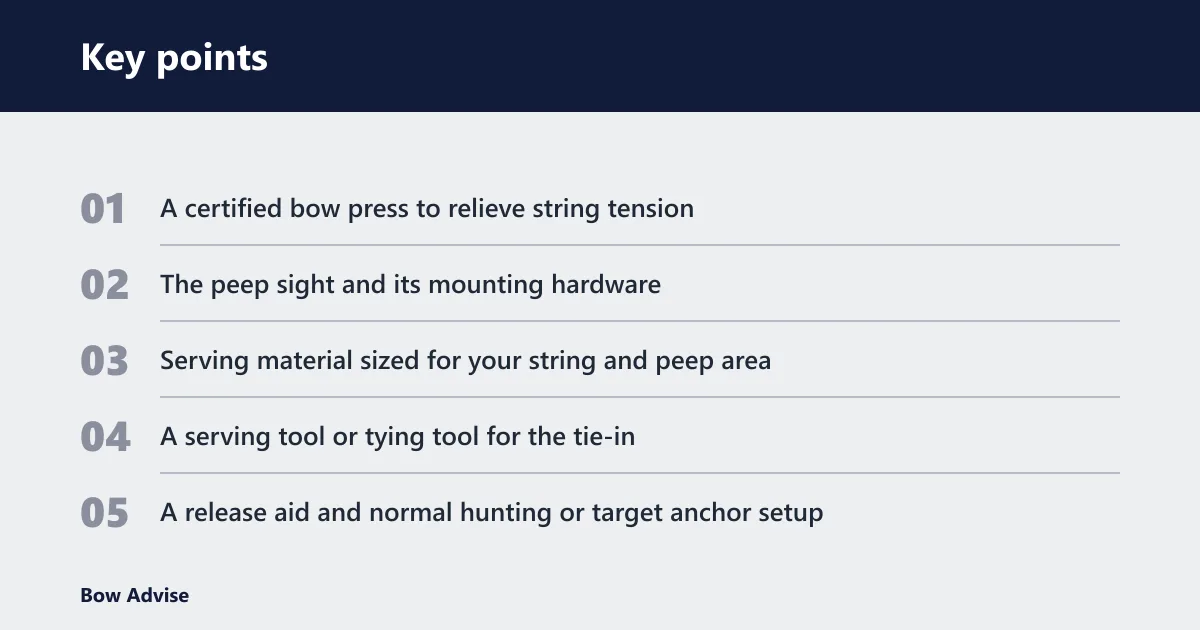
What you need before touching the setup
- A certified bow press to relieve string tension
- The peep sight and its mounting hardware
- Serving material sized for your string and peep area
- A serving tool or tying tool for the tie-in
- A release aid and normal hunting or target anchor setup
- A helper or shop support for full-draw checks
How do you install a peep without creating wear?
Use a bow press, set the peep after the D-loop is in place, and verify alignment at full draw before finalizing the tie-in. That order matters because string tension, draw length, and anchor position all affect where the peep sits when the bow is actually shot.
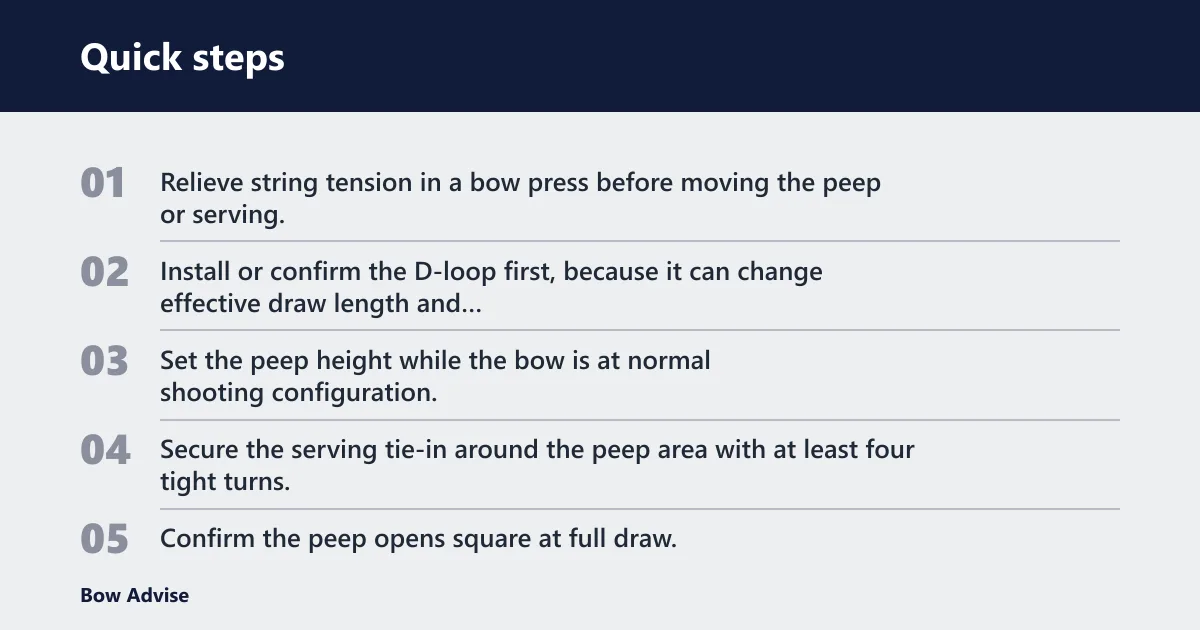
- Relieve string tension in a bow press before moving the peep or serving.
- Install or confirm the D-loop first, because it can change effective draw length and anchor feel.
- Set the peep height while the bow is at normal shooting configuration, then check it at full draw.
- Secure the serving tie-in around the peep area with at least four tight turns, starting about one inch from the peep on the serving run that needs support.
- Confirm the peep opens square at full draw, then fine-tune with small string twists instead of large changes.
Use micro-rotations only after the peep is installed and the bow is drawn for a sight check. One full twist is about 1/8 peep rotation, so even one twist can move the sight picture enough to change how the peep rides against the serving. Big changes can also shift timing and draw length farther than expected.
Suppose the peep is centered at brace height but drifts left under draw. That usually points to rotation or anchor change, not a fixed height problem. If the serving starts polishing shiny on one edge after a few dozen shots, the peep is rubbing the same spot every cycle.
Can a D-loop change peep alignment?
Yes. A D-loop can affect peep alignment and string wear because it changes the shooter’s release connection and can add about half an inch to effective draw length, though the exact change varies by loop length, release setup, and anchor. That is why final peep height should be checked with the same release setup that will be used in actual shooting.
If the loop is added after peep height is locked in, the anchor may shift enough to make the peep look rotated when the true issue is geometry. That can push the peep against the serving at a different angle and create repeating pinch points. The right fix is to confirm the whole setup together, not the peep alone.
Set the loop before final peep height
- Install the D-loop first, then draw the bow and check eye position behind the peep.
- Mark the peep height, repeat the draw three times, and average the result if the sight picture changes slightly.
- Recheck after any loop-length change, release change, or anchor change.
A common first-timer mistake is moving the peep to fix a bad anchor. If the anchor is inconsistent shot to shot, the peep can look wrong even when the string is correct. Repeatable anchor position matters because it keeps the eye in the same place relative to the peep.
Peep wear failure table
| Mistake | Visible symptom | Wear mechanism | How fast damage appears | How to fix | Re-serve or replace? |
|---|---|---|---|---|---|
| Loose peep tie-in | Serving fuzz, peep shifts after a few draws | Peep creeps and saws the same spot | Often within 20 to 50 shots | Rebuild the tie-in tighter and retest at full draw | Re-serve first; replace if strands are marked |
| Tie-in starts too short | Gap near the peep body, wrap walks toward the peep | Edge loading concentrates contact on a small area | Can show up in one range session | Extend the support area and rebuild the wrap | Re-serve unless the string core is flattened |
| Peep installed on a twist point | Alignment changes from shot to shot | Rotation shifts contact angle and pinches serving | Immediately after draw cycles | Move the peep or adjust string twists in micro steps | Re-serve if fuzzing started; replace if the core is exposed |
| Wrong peep height | Bad sight picture, head tilt, inconsistent anchor | Indirect wear from forced head and eye position | Usually slow unless the peep is also rubbing | Reset height with full-draw checks after the D-loop is set | Re-serve only if rubbing damaged the wrap |
| Anchor inconsistency | Peep appears rotated on some draws only | Eye moves relative to the peep, creating false wear cues | Can seem random from shot to shot | Standardize anchor points and face contact | Usually neither, unless rubbing is already visible |
| Poor serving quality around the peep | Loose ends, gaps, or uneven compression | Serving strands move and fray under peep contact | Often within the first 30 shots | Rebuild the serving with even tension and tighter turns | Replace string if the serving cannot hold tension or strands are nicked |
Common mistakes
Loose or short tie-ins cause the peep to rock. That rocking is what turns a normal setup into a wear problem. The fix is not just “more wraps”; the support has to be tight, centered, and long enough that the peep cannot tip under draw.
Another error is chasing anchor inconsistency instead of fixing the setup. If the anchor point changes, the peep can seem to rotate even when the string is fine. A bad anchor can mimic a peep problem and send the bow into repeated unnecessary adjustments.
Large string-twist changes are the next trap. Use 1/8-turn increments, then draw and check again. Big twists can move draw length and timing enough to hide the real cause of wear.
Ignore early fuzzing at your own risk. If the serving looks polished flat, the wrap is already losing its protective job. If the strands show under the serving, stop shooting until the area is repaired.
Picture a bow with a clean peep picture at 10 shots, then a fuzzy serving spot after 30. That is a classic sign of movement at the contact point, not just a cosmetic issue. If the same spot keeps changing color or texture, the setup needs attention before the serving opens up further.
When should you recheck peep setup?
Recheck after roughly 30 shots, and sooner if the peep turns, the anchor changes, or the sight picture shifts. A peep sight can cause bowstring wear over time if not installed or maintained correctly, so the goal is to catch movement before the serving frays into a repair job.
Peep sight installation mistakes inspection checklist
- Pass: peep opens square at full draw.
- Pass: serving around the peep feels tight and does not lift or gap.
- Pass: no fuzz, flat spots, or shiny pinch marks at the contact area.
- Fail: peep rotates, shifts, or leans under draw.
- Fail: serving looks loose, frayed, or compressed on one edge.
- Fail: anchor varies enough to change the sight picture from shot to shot.
Peep sight installation mistakes inspection checklist
- Pass: peep position matches the pre-shot check.
- Pass: serving still looks even after the shot cycle.
- Pass: no new fuzz, cuts, or exposed strands appear.
- Fail: the peep moved enough to change the opening angle.
- Fail: the serving shows new shine, flattening, or broken fibers.
- Fail: the peep must be rotated repeatedly to look correct.
If that failed, try this next: stop using the bow, press it, and rebuild the tie-in before any more shots. If the serving only looks fuzzy, re-serve the area. If the string strands are marked, flattened, or nicked, replace the string instead of trying to save it with a new wrap.
Frequently asked questions
Why is my peep sight wearing my string so fast?
Fast wear usually means the peep is moving against the serving instead of sitting in one stable line. The most common causes are a loose tie-in, a misaligned peep, or a setup that changed after the D-loop or anchor was finalized. Check for fuzzing or flat spots after 30 shots.
Can a peep sight damage a bowstring over time?
Yes. A peep sight can wear the serving first and then the string beneath it if the wrap is loose, pinched, or allowed to creep. Once the serving no longer protects the strands, the wear becomes more serious and the string may need replacement instead of another tie-in.
What peep sight installation mistakes cause fraying?
Common causes are a short or loose serving tie-in, a peep installed on a twist point that changes under draw, and final height set before the D-loop and anchor are confirmed. Any of those can make the peep rub the same spot repeatedly until the serving fibers start to lift.
How tight should peep serving be to avoid string wear?
The serving should be tight enough that it does not shift, gap, or lift when the bow is drawn. As a practical check, the peep area should feel locked in place and the wrap should look even from edge to edge. If it moves under load, rebuild it.
Does wrong peep height cause extra string wear?
Wrong peep height usually causes poor alignment first. Wear becomes part of the problem only if the bad height forces repeated head tilt, anchor compensation, or peep rubbing at an angle. Set height with the D-loop installed and verify at full draw before locking it in.
How many shots should I wait before rechecking peep alignment?
Recheck after roughly 30 shots, then again any time the anchor, release, or D-loop changes. Use the same full-draw anchor each time. If the peep picture shifts, mark the new setting and confirm it three times before averaging the result.
Can a D-loop affect peep alignment and string wear?
Yes. The loop can change effective draw length and move the anchor position, which changes where the eye sits behind the peep. That is why the loop should be in place before final peep height is set, and why any loop change should trigger another full-draw check.
When should I replace a serving around a peep sight?
Replace the serving when fuzz turns into broken wraps, when the area keeps creeping after retieing, or when the serving no longer compresses evenly around the peep. If the string strands are visible, flattened, or nicked under the damaged wrap, replace the string rather than only the serving.