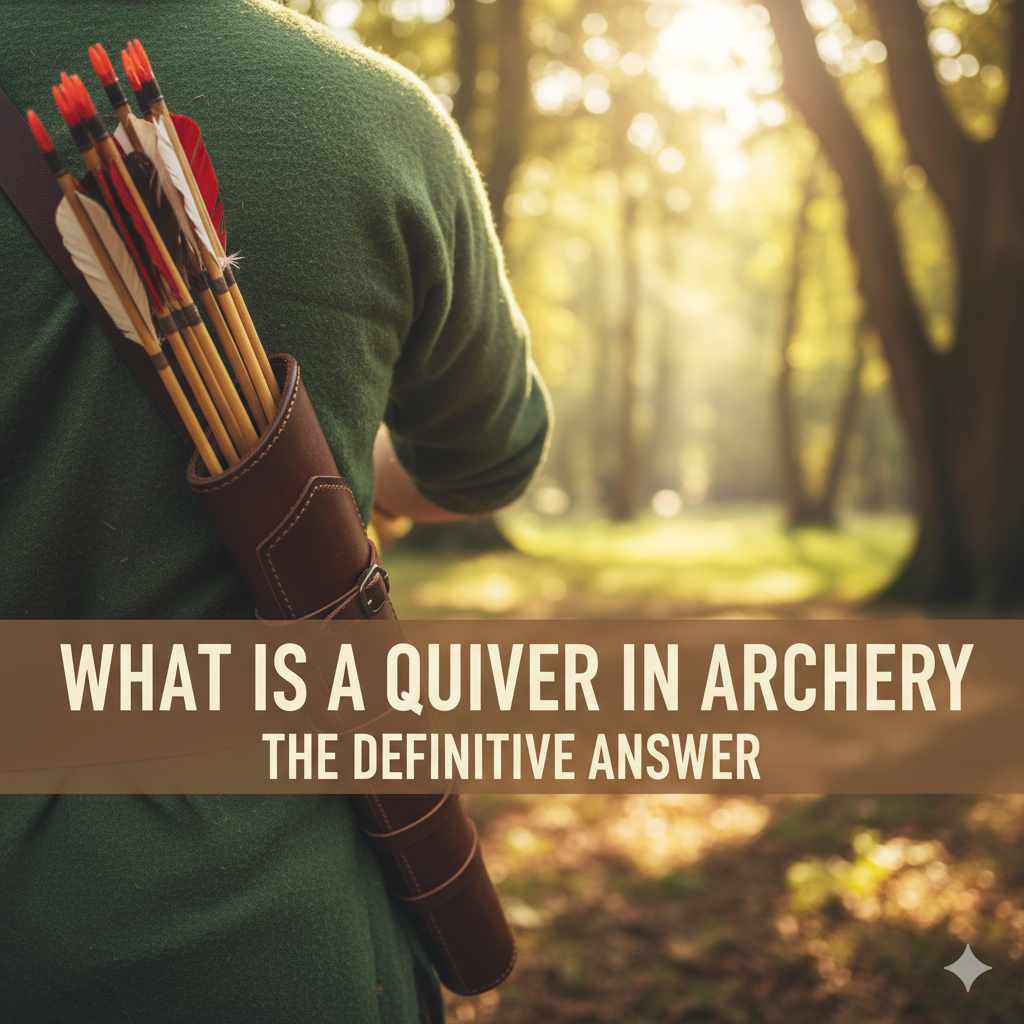
A quiver in archery is a container designed to safely hold your arrows. It keeps them secure, protected, and easily accessible while you shoot, practice, or hunt. Think of it as a holster for your ammunition, essential for convenience, safety, and protecting your equipment from damage.
Hello, fellow archers! Salman Arfeen here. When you first pick up a bow, your focus is on the bow itself and the arrows. But soon, you’ll ask yourself, “Where do I put these arrows?” That’s where a quiver comes in. It might seem like a simple piece of gear, but the right one makes a huge difference.
Choosing a quiver can feel confusing with so many styles available. Don’t worry! I’m here to walk you through everything you need to know. We’ll break down the different types, help you find the perfect match for your needs, and make sure you feel confident and ready for the range. Let’s get started!
The Simple Answer: Your Arrow Holder
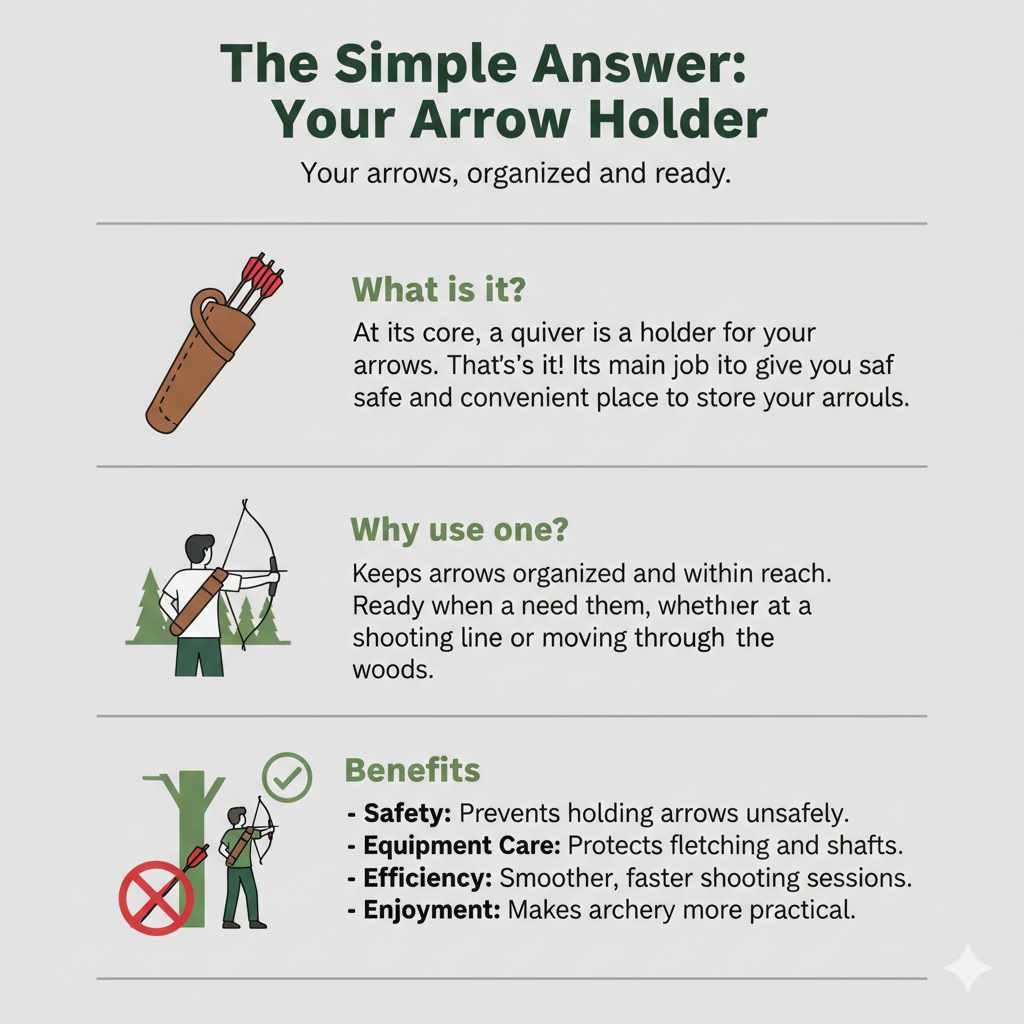
At its core, a quiver is a holder for your arrows. That’s it! Its main job is to give you a safe and convenient place to store your arrows so they are ready when you need them. Whether you’re standing at a shooting line or moving through the woods, a quiver keeps your arrows organized and within reach.
Without one, you’d be stuck holding arrows in your hand or leaning them against a tree, which is both unsafe and bad for your equipment. A good quiver is one of the most practical accessories an archer can own, making your shooting sessions smoother, safer, and much more enjoyable.
Why Do You Even Need a Quiver?
You might be thinking, “Can’t I just stick my arrows in the ground?” While you can for a shot or two in your backyard, it’s not a great habit. A dedicated quiver offers several key benefits that every archer, from beginner to expert, can appreciate.
- Safety: This is the number one reason. A quiver keeps the sharp points of your arrows (especially hunting broadheads) safely covered. This prevents you from accidentally injuring yourself, others, or your equipment.
- Convenience: A quiver keeps your next shot just a smooth motion away. You don’t have to bend down, turn around, or fumble for an arrow. This helps you stay focused on your target and maintain a consistent shooting rhythm.
- Arrow Protection: Arrows are an investment. Leaving them on the ground can damage the fletchings (the “feathers” at the end), bend the shaft, or get them dirty. A quiver protects them from wear and tear, helping them last longer.
- Organization: It keeps your gear tidy. You know exactly how many arrows you have and where they are at all times. This is especially helpful during practice or competitions.
The Main Types of Quivers: Finding Your Perfect Match
Not all quivers are created equal. They come in several different styles, each designed for a specific purpose or type of archery. Let’s explore the most common types so you can figure out which one is right for you.
Hip Quivers (or Belt Quivers)
As the name suggests, a hip quiver attaches to your belt and rests on your hip. This is one of the most popular styles, especially for target archery and competitions. They allow for very easy access to your arrows without much movement.
- Who It’s For: Target archers, 3D archers, and beginners practicing at a range.
- Pros: Very easy to grab arrows, comfortable for walking, often has extra pockets for accessories, and comes in many styles.
- Cons: Arrows can sometimes get snagged on branches if you’re walking through dense woods. They can also make a bit of noise as the arrows may rattle against each other.
Back Quivers
This is the classic “Robin Hood” style that everyone pictures. A back quiver is worn over the shoulder with a strap across your chest, and the arrows sit on your back. It’s a favorite among traditional archers who love its timeless look and feel.
- Who It’s For: Traditional archers, LARPers (Live Action Role Players), and archers who want a classic aesthetic.
- Pros: Can hold a large number of arrows, keeps them completely out of your way while walking, and looks very cool.
- Cons: Drawing an arrow can be tricky and requires practice to do smoothly. Arrows can also rattle loudly, making it a poor choice for hunting.
Bow Quivers
A bow quiver mounts directly onto the riser (the handle section) of your bow. It keeps your arrows attached to your bow at all times, making your entire shooting system a single, compact unit. This is the top choice for most bowhunters.
- Who It’s For: Bowhunters and many 3D archers.
- Pros: Arrows are always with the bow and ready to go. They are extremely quiet and secure, with grippers that hold each arrow individually.
- Cons: Adds weight and can change the balance of your bow. It also holds fewer arrows, typically between 3 and 7.
Ground Quivers
A ground quiver isn’t worn at all. It’s a simple stand or spike that you stick into the ground next to you. It holds your arrows upright and off the dirt, making them easy to grab when you’re shooting from a fixed position.
- Who It’s For: Backyard practice, teaching new archers, or any situation where you are not moving around.
- Pros: Very simple and affordable. Keeps arrows clean, organized, and protected without adding any weight to your body or bow.
- Cons: It’s completely stationary. You can’t use it for hunting, 3D archery, or any activity that involves walking.
Comparing Quiver Types at a Glance
Feeling a little overwhelmed by the choices? Don’t be! This table breaks down the key features of each quiver type to help you see the differences side-by-side.
| Quiver Type | Best For | Typical Capacity | Pros | Cons |
|---|---|---|---|---|
| Hip Quiver | Target Archery, Competitions, Range Practice | 6 to 20+ arrows | Easy arrow access, comfortable for walking, accessory pockets | Can be noisy, might snag on brush |
| Back Quiver | Traditional Archery, Recreational Shooting | 12 to 24+ arrows | High capacity, keeps arrows out of the way, classic look | Harder to draw arrows, can be noisy, arrows can fall out |
| Bow Quiver | Bowhunting, 3D Archery | 3 to 7 arrows | Very quiet, arrows are always ready, compact system | Adds weight to the bow, affects balance, low capacity |
| Ground Quiver | Backyard Practice, Stationary Shooting | 6 to 12 arrows | Simple, inexpensive, keeps arrows clean and safe | Not portable, only useful in one spot |
What to Look for When Choosing Your First Quiver
Now that you know the different types, how do you pick the one for you? It comes down to a few key factors. Answering these questions will point you in the right direction.
1. Your Archery Style
This is the most important question. What are you planning to do?
- Target Shooting at a Range: A hip quiver is almost always the best choice. It gives you easy access to your arrows and often has pockets for your scorecard, pen, and other gear.
- Bowhunting: A bow quiver is the industry standard. It’s quiet, secure, and keeps your arrows right where you need them for a quick follow-up shot.
- Backyard Fun: A simple ground quiver or an inexpensive hip quiver will work perfectly.
- Traditional Archery: Many traditionalists prefer a back quiver or a simple leather hip quiver to match their classic gear.
2. Capacity: How Many Arrows Do You Need?
Think about how many arrows you typically shoot in one “end” or round. A target archer might shoot 6 arrows before retrieving them, so a quiver that holds at least that many is ideal. A bowhunter might only need 3 to 5 arrows for an entire trip. Choose a capacity that matches your activity without being too bulky.
3. Material and Durability
Quivers are generally made from leather, nylon, or plastic.
- Leather: Durable, quiet, and has a classic look. It can be heavier and requires some care.
- Nylon/Cordura: Lightweight, weather-resistant, and often more affordable. It can be a bit noisier than leather.
- Molded Plastic: Common in bow quivers. It’s extremely durable, lightweight, and designed to grip arrows securely.
4. Arrow Security
Your quiver needs to hold your arrows firmly. You don’t want them rattling around or, even worse, falling out. Bow quivers use rubber grippers to hold each arrow shaft. Hip and back quivers often have individual tubes or dividers to keep arrows from clanking together. For hunting, it is critical that the quiver has a protective hood to cover the razor-sharp broadheads. According to the Pennsylvania Game Commission’s hunter education guide, broadheads must be kept in a covered quiver to prevent serious injury.
5. Comfort and Fit
If you’re going to wear it, it needs to be comfortable! Look for adjustable belts on hip quivers and adjustable straps on back quivers. If you’re considering a bow quiver, think about how the added weight will feel. It’s always a good idea to try one on if you can.
How to Use a Quiver Safely and Effectively
Using a quiver is straightforward, but a few tips can make the experience smoother and safer.
- Loading Your Quiver: Place arrows into the quiver one at a time. For most quivers, the nocks (the plastic tip that clips onto the bowstring) should be pointing up and easily accessible. Make sure they are seated properly so they don’t fall out.
- Drawing an Arrow: The motion should be smooth and natural. For a hip quiver, reach down with your drawing hand, grasp the arrow just below the nock, and pull it straight up. For a back quiver, reach back over your shoulder, find the nock, and draw the arrow forward. Practice this motion without a bow first to get the feel for it.
- Safety First: Always be aware of your arrows. When wearing a hip or back quiver, be mindful of people around you, especially when turning. If you are using broadheads, double-check that the protective hood is securely in place. As emphasized by archery safety programs at institutions like the Michigan State University Archery Club, maintaining control of your equipment at all times is key to preventing accidents.
A Quick Look at Quiver Materials
The material your quiver is made from affects its weight, durability, noise level, and appearance. Here’s a quick comparison.
| Material | Pros | Cons | Best For |
|---|---|---|---|
| Leather | Very durable, quiet, classic aesthetic, ages well | Heavier, more expensive, requires occasional conditioning | Traditional Archery, Bowhunting |
| Nylon/Cordura | Lightweight, water-resistant, affordable, lots of color options | Can be noisy when scraped, may not be as durable as leather | Target Archery, Recreational Shooting |
| Molded Polymer/Plastic | Extremely durable, lightweight, secure arrow grip | Less traditional look, can be noisy if bumped | Bowhunting (for bow quivers) |
Common Beginner Mistakes to Avoid
We all make mistakes when we’re starting out. Here are a few common quiver-related slip-ups to watch out for:
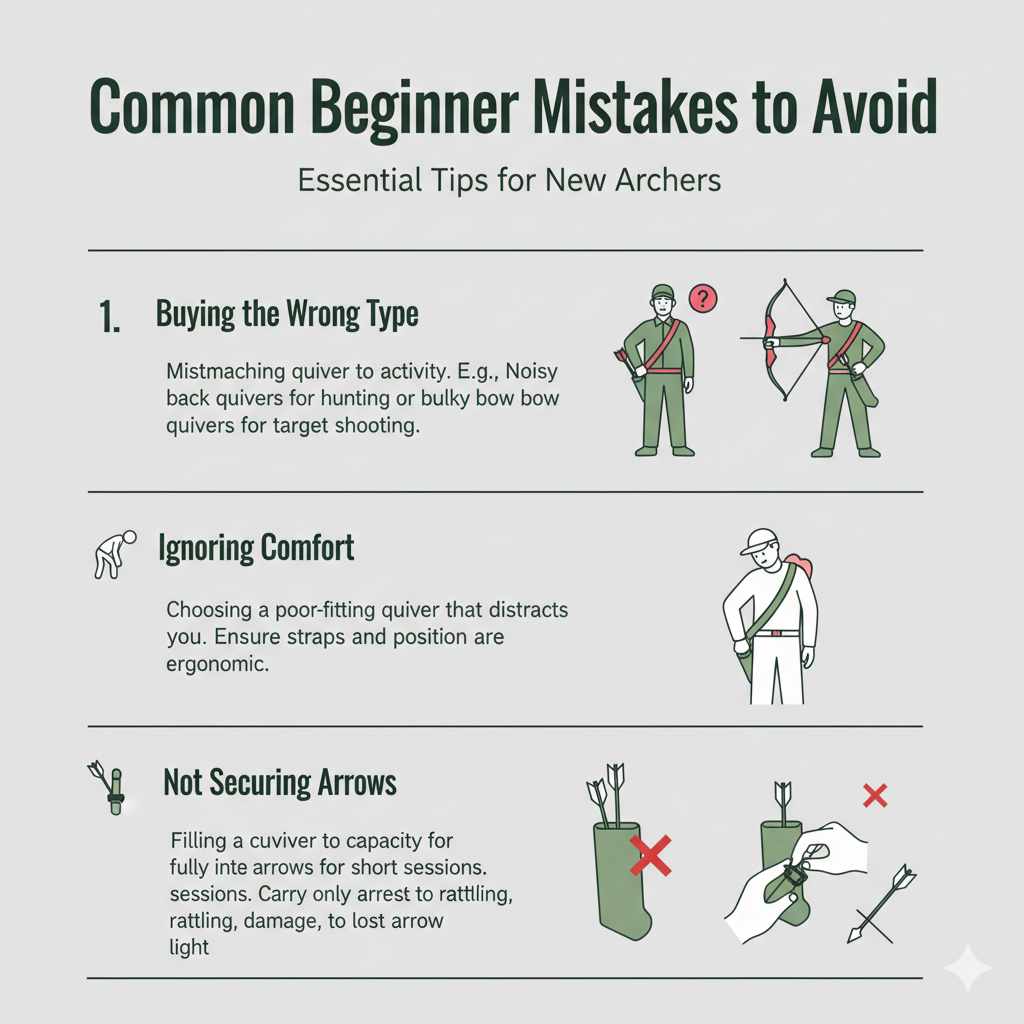
- Buying the Wrong Type: Getting a noisy back quiver for hunting or a bulky bow quiver for target competition. Match the quiver to your primary archery activity.
- Ignoring Comfort: Choosing a quiver that doesn’t fit well. An uncomfortable quiver will be a constant distraction.
- Overloading It: Just because a quiver can hold 20 arrows doesn’t mean you should fill it for a short practice session. Carry only what you need to keep it light and manageable.
- Not Securing Arrows: Forgetting to push arrows all the way into their grippers or tubes, leading to rattling or lost arrows.
Frequently Asked Questions (FAQ)
What is the thing that holds arrows called?
The device that holds arrows is called a quiver. They come in various styles, including hip quivers, back quivers, and bow quivers, all designed to keep arrows safe and accessible.
Do I need a quiver for backyard practice?
While not strictly necessary, a quiver is highly recommended. A simple ground quiver or an inexpensive hip quiver will protect your arrows from damage and save you from constantly bending over, making your practice sessions more fun and efficient.
What type of quiver is best for bowhunting?
The overwhelming choice for bowhunting is a bow quiver. It attaches directly to the bow, keeping arrows secure, silent, and ready at a moment’s notice without extra movement.
How many arrows should a quiver hold?
This depends on your activity. For bowhunting, 3 to 5 arrows are usually sufficient. For target archery or practice, a quiver holding 6 to 12 arrows is common. Some traditional back quivers can hold two dozen or more.
Are back quivers practical?
For traditional archery and recreational shooting, yes! They hold many arrows and keep them out of the way. However, for bowhunting (where noise is a factor) or competitive target archery (where speed and ease of access are key), a hip or bow quiver is often more practical.
How do I stop my arrows from rattling in my quiver?
For bow quivers, ensure the grippers are tight. For hip and back quivers, look for models with individual arrow tubes or dividers. You can also add soft foam or fleece to the bottom of the quiver to cushion the arrow points and dampen sound.
Can I use the same quiver for target points and broadheads?
You can, but only if the quiver is designed for it. A quiver used for broadheads must have a protective hood or deep foam base to safely contain the sharp blades. Never put exposed broadheads in a simple target quiver.
Conclusion: Your Next Shot Starts Here
So, what is a quiver in archery? It’s much more than just a bucket for your arrows. It’s a vital piece of equipment that provides safety, convenience, and protection for your gear. It streamlines your shooting process, allowing you to focus on what matters most: hitting the target.
The perfect quiver is the one that fits your style of archery and feels right to you. Whether it’s a sleek hip quiver for the competition line, a rugged bow quiver for the deep woods, or a classic back quiver for a day of traditional fun, your choice will become a trusted companion on your archery journey.
Don’t overthink it. Start with your primary archery activity, consider the key features we’ve discussed, and choose a quiver that will help you enjoy every shot. Happy shooting!