What is the Format of Olympic Archery Competition Explained
Every four years, the world turns its attention to a unique test of focus, calm, and skill, Olympic archery. While other Olympic sports may capture headlines with speed or power, archery is all about precision, nerves, and a format that rewards consistency and mental toughness. If you’ve seen the tense moments on TV, athletes drawing their bows in silence, then cheers erupting at a perfect ten, you might wonder what really happens behind the scenes. Understanding the format of Olympic archery competition gives a new appreciation for the sport’s drama and fairness. This guide breaks down each stage, explains the rules, and reveals details even many fans miss.
The Basics Of Olympic Archery
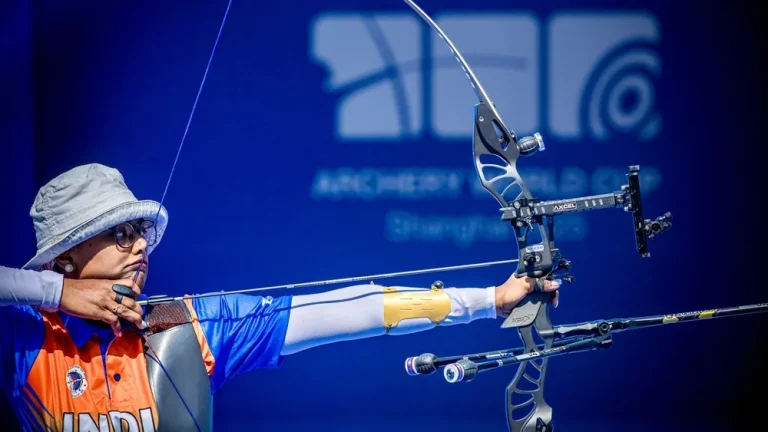
Olympic archery is contested with recurve bows, the only bow type permitted. All events are held outdoors, with competitors shooting at targets 70 meters away. The target’s gold center is just 12.2 centimeters wide, making each shot a test of absolute precision. Both men and women compete in individual, team, and mixed team events. Each event follows a strict format designed by World Archery, the global governing body.
Equipment Standards
Every athlete uses a recurve bow with a maximum draw weight of 60 pounds. Stabilizers, sights, and finger tabs are allowed, but electronic devices are strictly banned. Arrows must all be the same length and design for each archer during an event. This ensures a level playing field and keeps the focus on skill.
Competition Venue
Olympic archery events are always held outdoors, regardless of weather. The field is standardized: targets are placed at exactly 70 meters, and the shooting line is set up perpendicular to the targets. Each archer is given a designated shooting lane, marked clearly on the ground.
Structure Of Olympic Archery Events
The Olympic archery competition is divided into two main phases: the Ranking Round and the Elimination Rounds. This structure applies to all three event types: individual, team, and mixed team.
Ranking Round
The competition starts with the Ranking Round. All archers shoot 72 arrows (divided into 12 ends of 6 arrows each). The highest possible score is 720. The main purpose of this round is to rank athletes for the elimination brackets. There are no direct head-to-head matches yet, just archers against the target and themselves.
Key Points
- Each archer gets 40 seconds to shoot each arrow.
- Scores from this round decide seeding for all subsequent matches.
- In team events, the combined total of all team members’ ranking round scores determines team seeding.
Elimination Rounds
After the ranking round, the competition shifts to direct elimination. Here, archers face each other in head-to-head matches. The format changes slightly between individual, team, and mixed team events, but all use a set system rather than cumulative scores.
Set System Explained
Instead of adding up all arrows for a final score, matches are divided into sets:
- Individual: Each set consists of 3 arrows per archer. The winner of a set gets 2 points; if tied, both get 1 point. First to 6 points wins.
- Team: Each set has 6 arrows per team (2 per member). First to 5 set points wins.
- Mixed Team: Each set includes 4 arrows (2 per archer). Again, first to 5 set points wins.
Pro Tip: The set system means one bad arrow does not end your chances. Archers can recover from mistakes if they win later sets.

Credit: www.wired.com
Individual Events: Format And Flow
The men’s and women’s individual events follow the same structure.
Seeding And Brackets
After the ranking round, the 64 archers are seeded into a single-elimination bracket. The highest seed faces the lowest, second highest faces second lowest, and so on.
Example Of Seeded Matchup
- Seed 1 vs Seed 64
- Seed 2 vs Seed 63
- … and so on
Match Play
Each match is a best-of-5 sets contest. In each set, both archers shoot 3 arrows. The highest scoring archer in a set earns 2 points. The first archer to reach 6 points wins the match. If the score is tied at 5-5 after 5 sets, a single shoot-off arrow determines the winner, the closest arrow to the center wins.
Match Time Limits
- Each arrow: 20 seconds to shoot
- Total set: Must be completed within allotted time, or penalty points are given
Progression Through Rounds
Winners advance; losers are eliminated. The semifinals decide who moves to the gold medal match, while the losers compete for bronze.
Key Insights
- Nerves Matter: Since matches are short, one or two arrows can change everything.
- Seed Advantage: Higher seeds often face easier opponents early, but upsets are common.
Team Events: Working Together
Team competitions involve three archers from each nation (men’s and women’s teams). The process begins with the combined ranking round scores to determine seeding.
Team Match Structure
Each team match is best-of-4 sets. Every team member shoots 2 arrows per set, for a total of 6 arrows per set.
Sequence Example
- Archer 1: 1 arrow
- Archer 2: 1 arrow
- Archer 3: 1 arrow
- Repeat for second round within the set
Teams alternate after every 3 arrows. The team with the highest set score earns 2 points; ties give 1 point each. First to 5 points wins. If tied at 4-4 after four sets, a shoot-off is held. Each team member shoots one arrow; the highest combined score wins.
If tied again, the closest single arrow to the center decides it.
Substitution Rules
Teams cannot substitute archers during a match, but can switch their shooting order between sets. This adds a layer of strategy and flexibility.
Team Event Table
Here’s how team formats compare:
| Aspect | Individual | Team |
|---|---|---|
| Number of Archers | 1 | 3 |
| Arrows per Set | 3 | 6 (2 per archer) |
| Sets to Win | 6 points | 5 points |
| Shoot-off | 1 arrow | 3 arrows (1 per archer) |

Credit: www.usarchery.org
Mixed Team Event: A Recent Addition
The mixed team event is the newest Olympic archery discipline, introduced at the Tokyo 2020 Games. Each country’s top-ranked male and female archers (from the ranking round) form a mixed team.
Format Details
- Teams: 1 man + 1 woman per country
- Seeding: Based on combined ranking round scores
- Matches: Best-of-4 sets; each archer shoots 2 arrows per set (4 total per team per set)
- Set Points: 2 for a win, 1 for a tie, 0 for a loss
If the match is tied after four sets, a shoot-off occurs. Both team members shoot one arrow. The highest total wins; if still tied, the closest arrow to the center decides.
Why It Matters
The mixed team event brings a new dynamic, as it tests how well archers work together under pressure. Strategies differ from the individual and team events, making it unpredictable and exciting.
Scoring System: How Points Add Up
The core of Olympic archery scoring is the 10-ring target, with points from 1 (outer ring) to 10 (bullseye). Only the arrow’s shaft location counts, not the fletching (feathers).
Target Layout
- Gold (Center): 10 and 9 points
- Red: 8 and 7 points
- Blue: 6 and 5 points
- Black: 4 and 3 points
- White: 2 and 1 points
If an arrow lands on a line, the higher score counts, a rule that can change a match in tight situations.
Practical Example
If an archer shoots three arrows scoring 10, 7, and 8 in a set, their set score is 25. If their opponent scores 24, they win the set and earn 2 set points.
Tie-breakers
When a match ends in a tie after all sets, a single arrow from each archer (or each team member) decides the winner. The closest arrow to the center is the ultimate test of composure.
Olympic Archery Competition Schedule
Events are spread over eight days, with the ranking round on the first day. This is followed by several days of elimination matches, culminating in medal matches for each event.
Typical Schedule Breakdown
| Day | Event |
|---|---|
| Day 1 | Ranking Round (all archers) |
| Day 2-4 | Early Elimination Rounds (individuals, teams) |
| Day 5-6 | Quarterfinals & Semifinals |
| Day 7 | Team & Mixed Team Medal Matches |
| Day 8 | Individual Medal Matches |
Match Timing
Each match usually lasts 15, 30 minutes. Scheduling allows for TV broadcasts and weather delays, but matches proceed in all conditions except severe storms.
Rules And Penalties
Archery is strict about timing and conduct. Here are key rules that affect the competition:
Time Limits
- Individual: 20 seconds per arrow
- Team: 80 seconds per set (6 arrows)
- Mixed Team: 80 seconds per set (4 arrows)
If an archer or team exceeds the time limit, their next arrow is not scored.
Line Violations
Archers must keep their foot behind the shooting line until they finish their shot. Crossing early results in a warning, then point deduction.
Equipment Failures
If equipment fails mid-match, the archer can request a time-out (maximum 15 minutes). The clock stops, but the archer must fix the issue quickly.
How Athletes Qualify For The Olympics
Not every archer can compete at the Olympics. Qualification is a long process managed by World Archery.
Country Quotas
Each country can send up to 3 men and 3 women for individual events, but only if they earn team quota spots at qualifying tournaments. Otherwise, most nations send just one man and one woman.
Earning Spots
Spots are earned through:
- World Archery Championships
- Continental tournaments (Asia, Europe, Americas, Africa, Oceania)
- Final world qualification tournaments
In my experience, following the qualification process can be as dramatic as the Olympics themselves, with last-minute surprises and heartbreaks.
Athlete Selection
Countries with team quotas can decide which athletes to send, usually choosing their top national performers.
Olympic Archery: Unique Features And Strategies
Olympic archery is not just about shooting straight. The format creates unique challenges:
Weather As A Factor
Because events are outdoors, wind, rain, and sunlight can all affect performance. Some archers adjust their aim based on wind flags near the target. Others use mental routines to stay calm during weather interruptions.
Psychological Pressure
Short set formats and shoot-offs mean every arrow counts. Archers develop mental routines, such as deep breathing or visualization, to manage nerves. Many past champions credit their mental training as the biggest factor in their success.
Tactics In Team And Mixed Events
Teams discuss shooting order and strategy. For example, some teams start with their most consistent shooter to build confidence, while others save their best for last to handle high-pressure shots.
Rule Nuances
A little-known rule: If an arrow bounces off the target or goes through, the archer can reshoot that arrow, but only if the judge confirms it. This rarely happens but can decide a match.
Historic Olympic Archery Moments
Understanding the format adds meaning to some of the sport’s greatest moments:
- At London 2012, South Korea’s Im Dong-hyun set a world record during the ranking round, shooting 699 out of 720 with severe vision impairment.
- The 2016 Rio Games featured a dramatic mixed team shoot-off, showing how the format amplifies tension and excitement.
These moments are only possible because of the precise Olympic format, which rewards consistency but also allows for heroic comebacks.
How Olympic Archery Differs From Other Archery Formats
Olympic archery uses unique rules compared to other archery tournaments:
| Aspect | Olympic Archery | World Archery Field | Compound Events |
|---|---|---|---|
| Bow Type | Recurve only | Recurve & Barebow | Compound bows |
| Distance | 70 meters | Varies (10, 60 meters) | 50 meters |
| Target Face | 122 cm | Varies (20, 80 cm) | 80 cm (6-ring) |
| Scoring | Set system | Cumulative | Cumulative |

Credit: www.olympics.com
Where To Watch And Learn More
Olympic archery draws millions of viewers, but it is also accessible for newcomers to try. Local archery clubs often use similar formats to introduce beginners to the sport. For official rules and updates, visit the Olympics official site.