When First Competition Archery Talk: Expert Tips for Beginners
Stepping into your first archery competition can feel both exciting and intimidating. You have practiced for months, maybe even years, but competing is a whole new world. Many archers remember their first event as a mix of nerves, discovery, and valuable lessons, whether their goal is just to hit the target, meet fellow archers, or win a medal. Understanding what really happens at your first competition, what to expect, and how to prepare can help you avoid common mistakes and enjoy the journey.
This guide brings together practical advice, real experiences, and some surprising insights that most beginners miss. Whether you are a young archer, a parent, or an adult starting later in life, you’ll find clear steps for getting ready, handling the day, and learning from your performance.
Let’s look at what makes a first competition special, how to prepare, and what happens from start to finish.
Why Your First Archery Competition Matters
Archery is a sport of focus, routine, and self-improvement. The move from practice range to competition is a big step. At your first event, you do not just test your aim, you learn about rules, timing, and handling pressure. These are skills you cannot develop fully on your own.
More than 70% of experienced archers say their first tournament taught them lessons they could not get from practice alone (source: USA Archery survey). It’s normal to feel nervous, but most people find that the experience is less about winning and more about learning. Your first competition is a chance to challenge yourself, meet others, and see how far you have come. Even if you do not win, you build confidence for next time.
Common Competition Formats And What To Expect
Archery competitions come in different styles, and knowing what to expect removes a lot of anxiety. The most common formats for beginners are indoor target, outdoor target, and field archery. Each has its own rules and atmosphere.
Indoor Target Competitions
Indoor events are held in gymnasiums or sports halls, usually at 18 meters distance. The targets are circular, and scores are counted by ring value. These competitions are popular in winter and for youth or club beginners. You will shoot a set number of arrows per round, with breaks to score and collect.
Outdoor Target Competitions
Outdoor target events use longer distances (up to 70 meters for older youth and adults) and larger fields. These events are more exposed to wind and weather, which adds a new challenge. Outdoor competitions often run over a full day or weekend, with several rounds.
Field Archery
Field archery is less common for first-timers but growing in popularity. You shoot at targets placed in a natural setting, sometimes at uneven ground or with obstacles. Distances may vary and are often unmarked, making it more about instinct and quick adjustment.
How Events Usually Run
Most competitions follow a similar routine:
- Registration: Arrive early, check in, and get your scorecard.
- Equipment Inspection: Officials check your bow, arrows, and safety gear.
- Practice Ends: Warm up on the range for 2-3 rounds.
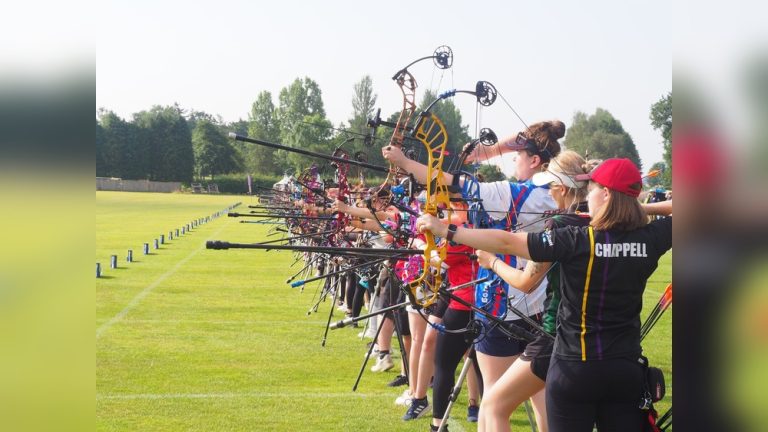
- Competition Rounds: Shoot ends of 3 or 6 arrows, depending on the format.
- Scoring and Breaks: After each end, walk to the target, score, and pull arrows.
- Results and Awards: Scores are tallied. Awards go to top performers in each division.
Not every event is identical, but this structure gives you a general idea. If you are unsure, check the event’s published rules or ask your coach.
Credit: www.echopress.com
Key Rules And Etiquette Every Beginner Should Know
Every sport has its own culture and etiquette, and archery is no different. Not knowing the rules can lead to penalties or even disqualification, but most mistakes are easy to avoid.
Range Commands
Archery ranges use whistle or verbal commands. The most common are:
- One whistle: Approach the shooting line and begin shooting.
- Two whistles: Collect your arrows.
- Three whistles: Score your arrows.
- Multiple or emergency whistles: Stop shooting immediately, something is wrong.
Always listen carefully, and never nock an arrow before the signal.
Scoring And Arrow Handling
- Only touch your own arrows when scoring.
- If you can’t agree on a score, call a judge. Do not argue with other archers.
- Write scores neatly and double-check them before signing.
- Never pull arrows while someone is still scoring.
Personal Etiquette
- Keep conversation quiet on the line, help everyone concentrate.
- Do not stand directly behind someone shooting.
- If you drop an arrow, leave it until the end unless it’s unsafe.
- Say “good shooting” to others; sportsmanship matters.
Pro Tip: If you make a mistake, ask for help. Most judges and fellow archers remember their first event and are happy to guide you.
Preparing For Your First Competition
Preparation is about more than just shooting practice. The biggest surprises for first-time competitors are often small details, like missing equipment, time pressure, or travel stress. Here’s how to get ready.
Gear Checklist
Pack your bag the night before and double-check everything. Include:
- Bow (with sight, rest, and stabilizer, if allowed)
- Arrows (at least 6, fletched and numbered)
- Finger tab or release
- Arm guard and chest protector
- Quiver
- Scorecard and pen
- Spare nocks, points, string, and tools
- Water bottle and snacks
- Weather-appropriate clothing
Missing a small item can end your day early. In my experience, forgetting extra nocks or a spare string is the most common first-timer mistake.
Mental Preparation
Nerves are normal, but you can manage them. The night before, visualize walking onto the line, hearing the commands, and shooting smoothly. Arrive early to get used to the environment. Take a few deep breaths before shooting your first arrow.
Practice Under Pressure
If possible, simulate competition at your club. Shoot timed ends, score your arrows, and practice with others watching. This builds comfort and helps you spot habits that break down under stress.
Understanding Archery Divisions And Age Groups
Archery competitions separate archers by division (bow style) and age group. This keeps things fair and lets you compete with similar shooters.
Bow Divisions
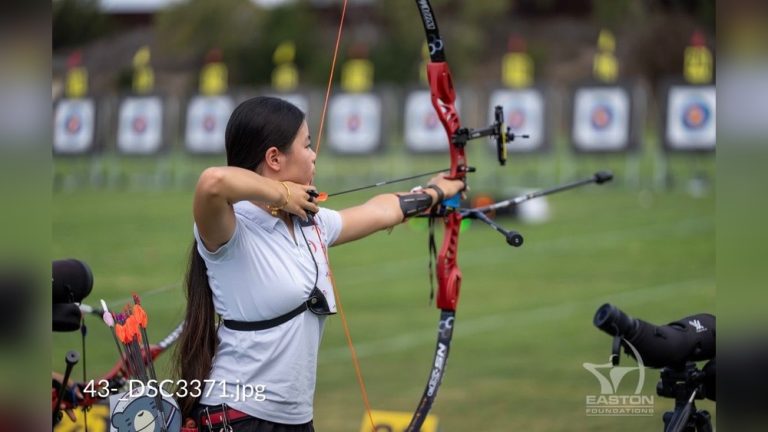
- Recurve: The Olympic-style bow, with a sight and stabilizers allowed.
- Compound: Uses pulleys and a release aid; faster and more technical.
- Barebow: No sights or stabilizers; relies on instinct.
- Longbow/Traditional: Simple bows, often with wooden arrows.
Age Groups
Common age divisions include:
- Cub: Under 13 years
- Cadet/Junior: 13, 17 years
- Senior/Adult: 18, 49 years
- Master: 50 years and up
Check the event’s rules, some use different cutoffs or combine groups if numbers are small.
Example Of Divisions At A Local Event
Here’s how a typical local event might separate entries:
| Division | Age Group | Distance (meters) | Target Size (cm) |
|---|---|---|---|
| Recurve | Cadet (13-17) | 60 | 122 |
| Barebow | Senior (18-49) | 50 | 122 |
| Compound | Master (50+) | 50 | 80 |
Knowing your category helps you practice at the right distance and with the correct equipment.
The Day Of The Competition: What Actually Happens
Arriving at the event, you’ll likely feel a mix of excitement and nerves. Here’s what most archers experience, step by step.
Registration And Equipment Check
Come early, usually 45, 60 minutes before start time. Sign in, pay any remaining fees, and present your equipment for inspection. Officials will check for safety and rule compliance. This is not a test, just a way to keep everyone safe.
Practice Ends
You will get a few rounds to warm up. Use this time to settle your nerves, check your sight marks, and get used to the range lighting or wind. Don’t make big changes to your setup now unless something is clearly wrong.
Shooting And Scoring
You’ll shoot in “ends”, groups of arrows, usually 3 or 6 at a time. There is a time limit, often 2 minutes for 3 arrows. After shooting, you walk to the target, score each arrow, and pull them. Be honest and careful with scoring, it’s common to check scores with your group.
Example: At my first event, I shot my first end too quickly, finished with 40 seconds left, and realized I hadn’t checked my stance. Next end, I slowed down and scored better.
Breaks And Downtime
There will be short breaks after each round and a longer one for lunch (in all-day events). Bring snacks and water, many first-timers underestimate how tiring a full morning of shooting can be.
Results And Awards
Scores are posted at the end. Even if you don’t win, check your final score against your training averages. This is your new benchmark.

Credit: www.archerytalk.com
Common Mistakes And How To Avoid Them
Even well-prepared archers make mistakes at their first competition. Here are some you can avoid.
1. Not Checking Equipment
Forgetting a small part, like a finger tab or a working string, can ruin your day. Always have a spare for anything that can break or get lost.
2. Shooting Too Fast Or Too Slow
Time pressure is real. Many beginners rush their shots and lose accuracy, or go too slow and run out of time. Practice with a timer at home.
3. Over-focusing On The Score
It’s tempting to check scores after every end, but this can distract you. Focus on your shot process, not the scoreboard.
4. Not Warming Up Properly
Even if you feel ready, do some light stretching and draw your bow a few times before shooting. This prevents injury and builds confidence.
5. Ignoring The Weather
Outdoor events can be cold, hot, or windy. Dress in layers, bring sunscreen, and protect your gear from rain or sun.
6. Forgetting To Eat And Hydrate
Energy drops can affect focus. Eat a good breakfast and bring snacks like granola bars or fruit.
What You Can Learn From Your First Competition
The main benefit of a first tournament is not the medal, it’s the experience. Here are two insights many beginners miss:
- Handling Pressure is a Skill: Most archers shoot lower scores under pressure at first. This is normal. The more you compete, the better you handle nerves.
- Routine Matters More than Talent: The best competitors are not always the most “talented,” but those with a strong routine, same stance, draw, aim, and release every time. Competitions reveal where your routine breaks down.
Use your score sheet to spot patterns. Did you shoot better at the start or end? Did nerves fade after a few rounds? Write these notes down; they matter more than your final ranking.
Comparing Practice Vs. Competition
Many new archers are surprised by how different competition feels from practice. Here’s a comparison:
| Practice | Competition |
|---|---|
| Flexible timing | Strict time limit per end |
| Shoot alone or with friends | Shoot with group, under observation |
| Can adjust after every shot | Adjustments only between ends |
| No official scoring | Official, signed scores |
| Low pressure | High nerves, at least at first |
The main takeaway: Competition is a different skill. The more you do it, the more it feels like practice.
How To Make The Most Of Your First Competition
Whether you win or finish in the middle, your first event is a learning experience. Here’s how to get the most value:
- Set Goals Other Than Winning: Try for a clean round, or to keep calm under pressure.
- Talk to Other Archers: Ask about their setup, routine, and experience. Most are happy to share tips.
- Take Notes: Write down what worked, what didn’t, and what you want to try next time.
- Celebrate the Day: Every competitor started somewhere. Finishing your first event is a real achievement.
Pro Tip: Take a photo with your scorecard or at the target. It’s a great memory and helps track your progress over time.

Credit: www.gettyimages.com
Where To Find Your First Competition
Most beginners start at local club events or community tournaments. You can find events through:
- Local archery clubs
- National federations (like USA Archery or Archery GB)
- Community centers or recreation departments
For more details on finding events and rules, check the national body in your country or visit Wikipedia’s Archery page.
Data: Growth Of Youth And Beginner Archery Events
The number of beginner and youth competitions is growing worldwide. According to the World Archery Federation, over 1,500 youth events were held in 2026, up 22% from the previous year. This shows that more clubs and communities are welcoming new archers every season.
Here’s a quick look at the growth:
| Year | Youth Events (Global) | Increase (%) |
|---|---|---|
| 2026 | 1,050 | – |
| 2026 | 1,230 | 17% |
| 2026 | 1,500 | 22% |