Who Took Gold in Olympic Archery? Winners by Event
The archery competitions at the 2016 Rio Olympics were intense, dramatic, and full of surprises. Fans from all over the world watched as athletes aimed for glory, precision, and the ultimate prize: the gold medal. The sport of archery might look simple, but Olympic-level archery is a test of nerves, skill, and focus under pressure. In 2016, new stars emerged, strong nations kept their dominance, and a few unexpected stories captured the spotlight. This article explores who took gold in Olympic archery 2016, how they achieved it, and why their victories mattered. If you’re curious about the winners, their backgrounds, and what made the 2016 games special for archery, this guide covers everything you need to know.
The Olympic Archery Events In 2016
Archery at the Rio 2016 Summer Olympics featured four main events: Men’s Individual, Women’s Individual, Men’s Team, and Women’s Team. Each event followed the recurve bow format, which is the only type used at the Olympics. The competition took place at the Sambadrome Marquês de Sapucaí, a venue famous for its carnival parades but transformed into an archery arena for the Games.
The structure of Olympic archery is straightforward but challenging. Archers shoot at a target 70 meters away, aiming for the highest score. The competition starts with a ranking round to seed the archers, followed by head-to-head elimination matches. For team events, three archers from each country work together, combining their scores.
The 2016 Olympics had a strong field, with top-ranked nations like South Korea, the United States, and China, as well as individual stars from various countries. The atmosphere was tense, and weather conditions added another layer of difficulty, with wind and rain sometimes affecting the shots.
Men’s Individual Gold: Ku Bon-chan’s Breakthrough
The Men’s Individual event is often seen as the purest test of an archer’s skill. In 2016, the gold medal went to Ku Bon-chan from South Korea. He was not the world’s most famous archer before Rio, but his performance changed that forever.
Ku Bon-chan had to face some of the world’s strongest competitors. In the final, he went up against Jean-Charles Valladont of France, a skilled and experienced archer. Ku kept his composure, shot consistently, and won with a score of 7, 3 in the set system used by Olympic archery.
What made Ku’s win special was not just his accuracy, but his ability to handle pressure. At only 23 years old, competing in his first Olympics, he showed a focus that even seasoned athletes struggle to match. His gold was part of a larger story: South Korea’s dominance in the sport.
Key Stats: Ku Bon-chan In Numbers
- Age at Rio: 23
- Final match score: 7, 3 (sets)
- Gold medal matches won: 5 in a row
In my experience following Olympic archery, it’s rare for a newcomer to take gold so confidently. Ku’s technique, especially his smooth release and steady aim, stood out even among top-level archers.

Credit: www.usarchery.org
Women’s Individual Gold: Chang Hye-jin’s Moment
The Women’s Individual competition saw another South Korean take the top prize. Chang Hye-jin captured gold after a close contest with Lisa Unruh from Germany. The final was tense, and Chang had to stay calm after dropping a set early in the match.
Chang’s victory was significant for several reasons. She was not the favorite, her teammates Ki Bo-bae and Choi Mi-sun had higher profiles coming into the Games. But Chang’s consistency carried her through. She won the gold match 6, 2, shooting strong scores in key moments.
Her journey to gold included beating some of the sport’s most dangerous competitors. Chang also became a symbol for patience and steady progress, she had competed for years without much global attention, but at Rio, she reached the top.
Why Chang Hye-jin’s Win Surprised Experts
Many experts expected another South Korean to win, but not Chang. Her calm under pressure, especially against Unruh’s aggressive style, was impressive. She showed that Olympic gold sometimes goes to the athlete who can stay focused, not just the one with the biggest reputation.
Men’s Team Gold: South Korea’s Continued Legacy
South Korea’s men’s team was the clear favorite in Rio, and they delivered. The team of Ku Bon-chan, Kim Woo-jin, and Lee Seung-yun took gold, continuing South Korea’s tradition of excellence in team archery.
Their path to gold included a dominant performance in the ranking round, followed by strong wins in each elimination match. In the gold medal match, they faced the United States, an experienced team that had won silver in London 2012.
South Korea’s teamwork was nearly flawless. They communicated well, supported each other, and adjusted quickly to changing weather conditions. Their final score against the USA was 6, 0, a shutout in the set system.
Team Roster And Roles
- Ku Bon-chan: Anchored the team, delivering strong shots under pressure
- Kim Woo-jin: Set the tone with high scores in the ranking round
- Lee Seung-yun: Provided consistency and support
This team’s gold was another chapter in South Korea’s archery dominance. Since archery returned to the Olympics in 1972, South Korea has won more team gold medals than any other nation.
Women’s Team Gold: South Korea’s Unbroken Streak
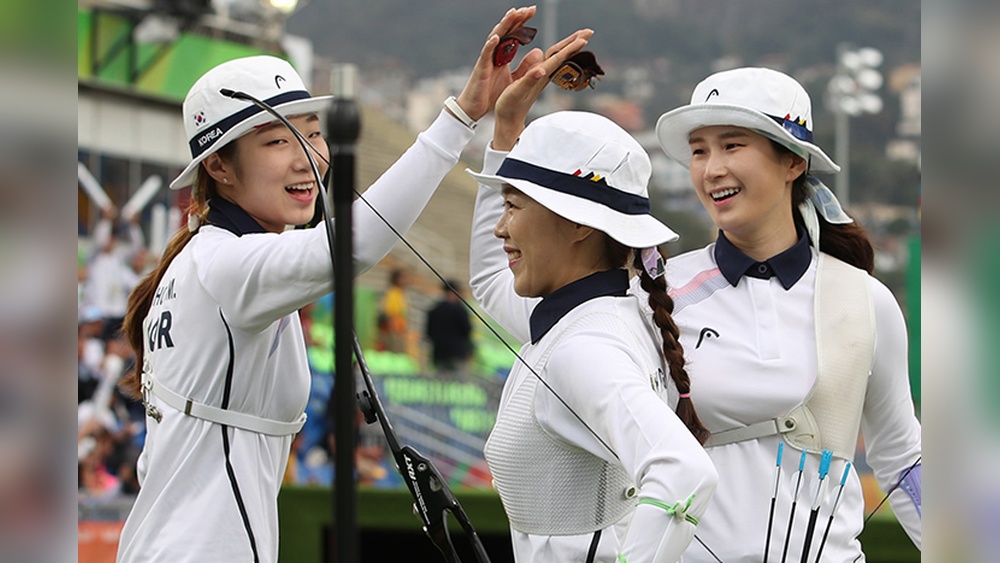
The women’s team event at Rio was historic. South Korea won their eighth consecutive gold medal in women’s team archery, a record in Olympic history. The team of Chang Hye-jin, Choi Mi-sun, and Ki Bo-bae continued a streak that began in 1988.
They faced Russia in the final, a strong opponent with experienced archers. The match was close at times, but South Korea pulled ahead with accurate shooting and smart strategy. They won the gold match 5, 1 in sets.
Secrets Behind The Streak
South Korea’s unbroken run of team gold medals is not just about raw talent. Their system for training archers is intense and competitive, with a focus on both mental and physical preparation. Even small mistakes are analyzed and corrected, which helps explain their unmatched consistency.
Pro Tip: If you want to learn from South Korea’s approach, focus on building a supportive team environment and practicing under different conditions, including wind and pressure.
Table: Gold Medalists In Olympic Archery 2016
Here’s a quick overview of who took gold in each event at the Rio 2016 Olympics:
| Event | Gold Medalist(s) | Country |
|---|---|---|
| Men’s Individual | Ku Bon-chan | South Korea |
| Women’s Individual | Chang Hye-jin | South Korea |
| Men’s Team | Ku Bon-chan, Kim Woo-jin, Lee Seung-yun | South Korea |
| Women’s Team | Chang Hye-jin, Choi Mi-sun, Ki Bo-bae | South Korea |
South Korea swept all four gold medals in Olympic archery at the 2016 Games.

Credit: www.youtube.com
The Set System: How Olympic Archery Decides Gold
Understanding how Olympic archery determines its champions helps explain why the 2016 results were so dramatic. The set system, used since 2012, adds excitement and gives archers more chances to recover from mistakes.
In individual matches, each archer shoots three arrows per set. The highest score wins the set, earning two points; a tie gives one point to each archer. The first to reach six set points wins the match. This system rewards consistency and mental strength.
Team matches use a similar format, with three archers each shooting two arrows per set. The first team to five set points wins.
This structure means a bad arrow or set does not end a match. Comebacks are possible, and pressure can shift quickly. In 2016, several matches were decided by just one arrow in the final set.
Example: A Close Call In The Women’s Individual
In the women’s bronze medal match, Ki Bo-bae of South Korea faced Mexico’s Alejandra Valencia. The match was tied after four sets, but Ki’s experience showed in the final set, where she scored a perfect 30 (three 10s). This clutch performance is what the set system is designed to highlight.
How South Korea Became The Archery Powerhouse
South Korea’s dominance in Olympic archery is well known, but it didn’t happen overnight. Several factors helped build their winning tradition:
- Intensive training: Archers train full-time, often starting as children. Practice sessions are long and highly structured.
- Talent selection: Only the best make the national team. The selection process is so tough that even world champions can be cut if they have a bad year.
- Mental preparation: Coaches teach athletes to handle pressure, using techniques like meditation and visualization.
- Equipment: South Korean archers use the latest technology in bows and arrows, with custom setups for each athlete.
- Support system: Government and sponsors invest heavily in archery, providing resources and stability.
One non-obvious insight is that the pressure inside South Korea to make the Olympic team is often higher than the pressure at the Olympics themselves. Many archers say the national trials are more stressful than the Games.
Credit: www.usarchery.org
Table: South Korea’s Olympic Archery Golds (1984, 2016)
For a better sense of their dominance, here’s a summary of South Korea’s gold medals in Olympic archery from 1984 to 2016:
| Year | Men’s Team | Women’s Team | Men’s Individual | Women’s Individual | Total Golds |
|---|---|---|---|---|---|
| 1984 | , | ✔ | , | ✔ | 2 |
| 1988 | ✔ | ✔ | , | ✔ | 3 |
| 1992 | ✔ | ✔ | , | ✔ | 3 |
| 1996 | ✔ | ✔ | ✔ | , | 3 |
| 2000 | ✔ | ✔ | , | ✔ | 3 |
| 2004 | ✔ | ✔ | ✔ | ✔ | 4 |
| 2008 | ✔ | ✔ | , | , | 2 |
| 2012 | , | ✔ | ✔ | ✔ | 3 |
| 2016 | ✔ | ✔ | ✔ | ✔ | 4 |
Note: ✔ = Gold Medal, = Did Not Win Gold
South Korea’s total of 23 gold medals (up to 2016) is unmatched in Olympic archery.
Notable Stories And Surprises From Rio 2016
While South Korea’s victories were the headlines, Rio 2016 had other memorable moments:
- Lisa Unruh (Germany) became the first German woman to win an individual archery medal at the Olympics, taking silver.
- USA Men’s Team won silver, confirming their position as a top team, even if they couldn’t match South Korea’s consistency.
- Iran’s Men’s Team reached the semifinals, showing that countries outside the traditional powerhouses can compete at the highest level.
- Alejandra Valencia (Mexico) came close to a medal, finishing fourth, showing the growing strength of Mexican archery.
Another non-obvious insight: the weather in Rio made matches unpredictable. Wind gusts and rain affected many scores. Archers who could adapt quickly, like those from South Korea, had a clear advantage.
What Gold Medalists Had In Common
After watching and analyzing the 2016 archery events, several traits stand out among the gold medalists:
- Mental toughness: The ability to focus and not let a bad arrow ruin the match.
- Consistent technique: Every shot looks the same, even under pressure.
- Team support: In team events, strong communication and trust are essential.
- Adaptability: Quick adjustments to wind and weather conditions.
It’s also clear that success in Olympic archery is rarely about one lucky shot. It’s the result of years of preparation, disciplined practice, and learning to perform when it counts most.
How To Train Like An Olympic Archer
If you’re inspired by the gold medalists of 2016, here are some practical steps for improving your own archery skills:
- Practice regularly: Top archers shoot hundreds of arrows every day.
- Work on mental focus: Use techniques like breathing exercises or visualization.
- Record your sessions: Video analysis helps spot small mistakes.
- Train in different conditions: Don’t always shoot in perfect weather, wind and rain practice is valuable.
- Compete often: Enter tournaments to experience pressure and learn to manage nerves.
Warning: Avoid