What Is the Distance for Archery Competition Rounds?
Archery is a sport that blends precision, focus, and tradition. The distance between an archer and the target is not just a matter of measurement, it shapes the challenge, the skills required, and even the type of equipment used. Whether you’re new to archery or have been watching competitions on TV, you might wonder: what is the standard distance for archery competition? The answer is more nuanced than a single number. Different types of archery, from Olympic to field to indoor, use various distances. Age groups, equipment, and competition levels all play a role. Understanding these differences can help both beginners and seasoned archers appreciate the sport’s rich diversity and why every meter counts.
How Distance Shapes Archery Competitions
The distance in archery competitions is not chosen randomly. It is set by organizations like World Archery, the National Field Archery Association (NFAA), and others to test specific skills. Short distances focus on accuracy and technique, while longer distances demand strength, consistency, and mental discipline. For instance, shooting at 70 meters outdoors requires not only perfect aim but also the ability to judge wind and weather.
Beyond skill-testing, standard distances help ensure fairness. By using the same distances, archers from around the world can compete on equal ground, whether at the Olympics or a local club event. These distances also make it easier for coaches to train athletes and for fans to understand the sport.
Standard Distances In Major Archery Styles
Archery competitions use several main formats, each with its own rules about distance. Let’s look at the most common styles.
Olympic (target) Archery
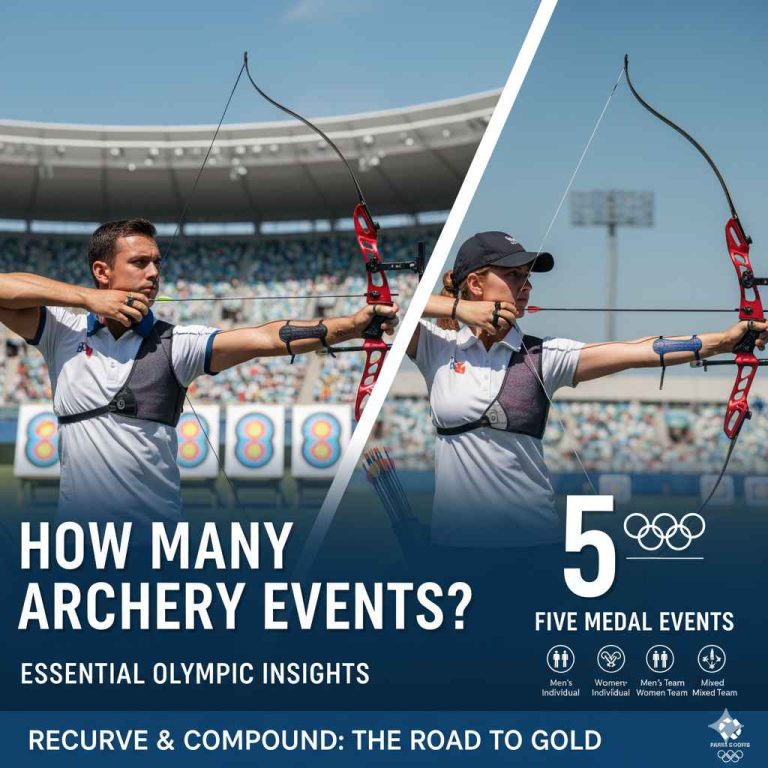
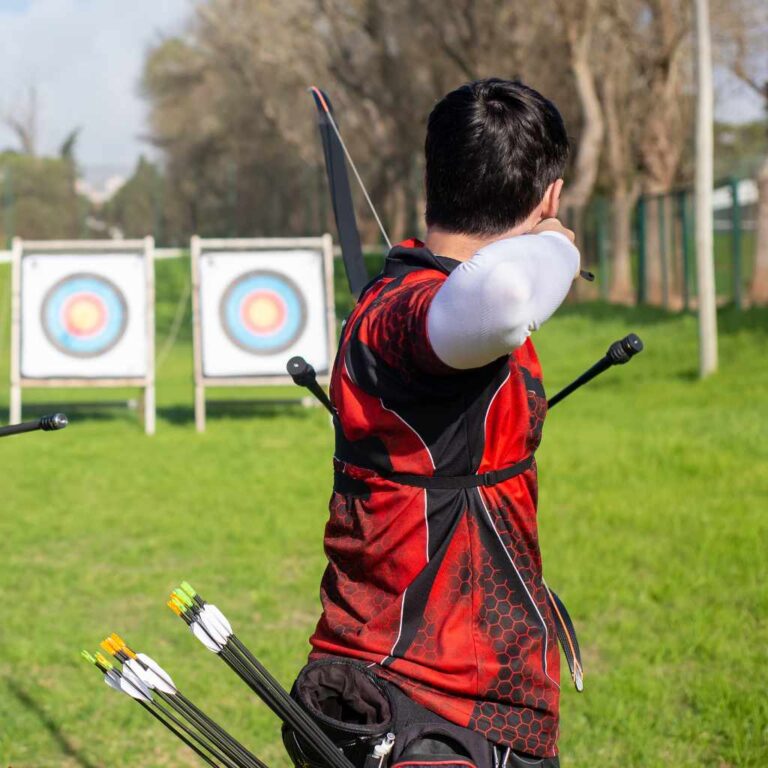
Olympic archery, governed by World Archery (formerly FITA), is the best-known style. It uses recurve bows and is featured in the Summer Olympics.
- Outdoor Olympic Distance: 70 meters for both men and women.
- Target Size: 122 cm diameter.
- Arrows per Round: Usually 6 arrows per end, for a total of 72 arrows in ranking rounds.
This 70-meter distance is challenging. Even a small error in aim or release can send an arrow far from the bullseye. The Olympic distance tests not just physical skill but also mental focus over several hours of shooting.
Compound Archery
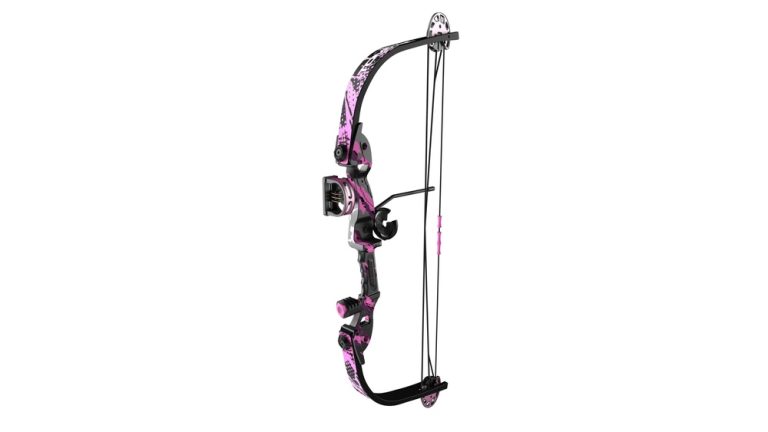
Compound archery uses bows with pulleys and release aids for greater accuracy. While not yet part of the Olympics, compound events are popular worldwide.
- World Archery Outdoor Distance: 50 meters for adults.
- Target Size: 80 cm diameter (only the central 6 rings are used/scored).
- Indoor Distance: 18 meters.
The 50-meter distance for compound bows reflects the high precision of this equipment. Indoors, both recurve and compound compete at 18 meters, but compound targets are smaller to increase difficulty.
Indoor Archery
Indoor competitions use much shorter distances, making them accessible year-round and in regions with harsh weather.
- Standard Distance: 18 meters for all age groups and bow types.
- Target Size: 40 cm for recurve, 40 cm triple-spot for compound.
This format levels the playing field and emphasizes consistency and form.
Field Archery
Field archery simulates hunting and uses varied terrain. Archers shoot at targets set at both marked and unmarked distances, often up or downhill.
- Marked Distances: From 5 to 60 meters (World Archery Field rounds).
- Unmarked Distances: Often between 10 and 55 meters.
Field archery distances test an archer’s ability to judge range and adjust for angles.
3d Archery
3D archery involves shooting at life-sized animal targets made of foam, often at unknown distances.
- Distances: Usually between 5 and 50 yards (about 4.5 to 46 meters), depending on age and class.
Estimating distance is a major part of the challenge in 3D competitions.

Credit: archerygb.org
Distance Requirements By Age, Gender, And Level
Competition distances are not the same for every group. Age, gender, and competition level all influence how far archers shoot.
Youth And Junior Archers
Younger archers start closer to the target to help them build skill and confidence. For example:
- Cadet (15-17 years): 60 meters (Olympic recurve)
- Junior (18-20 years): 70 meters (Olympic recurve)
- Younger age groups: 30-50 meters, depending on event and organization
Master And Senior Archers
Most adult competitions use the full standard distance (e. g. , 70 meters for Olympic recurve, 50 meters for compound). Master archers (age 50+) may shoot at slightly shorter distances in some events, but this is less common at the international level.
Para-archery
Para-archers compete at different distances based on classification and ability. For example, the Paralympic Games use:
- Recurve Open: 70 meters
- Compound Open: 50 meters
The rules are designed to allow maximum participation while keeping the challenge fair.
Comparison Of Distances Across Major Archery Styles
The table below highlights how different archery competitions set their shooting distances:
| Archery Style | Outdoor Distance | Indoor Distance | Target Size |
|---|---|---|---|
| Olympic (Recurve) | 70 m | 18 m | 122 cm (outdoor), 40 cm (indoor) |
| Compound | 50 m | 18 m | 80 cm (outdoor), 40 cm triple-spot (indoor) |
| Field Archery | 5, 60 m (marked/unmarked) | N/A | Varies (20, 80 cm) |
| 3D Archery | 5, 50 yd (4.5, 46 m) | N/A | 3D foam animals |
As you can see, distances vary widely. Even within the same style, tournament organizers may adjust distances for different skill levels.
Why Do Distances Vary So Much?
Some beginners wonder why archery competitions use so many different distances. There are several reasons:
- Skill Development: Shorter distances help new archers focus on form and accuracy without worrying about power.
- Equipment Differences: Recurve and compound bows have different capabilities. Compound bows are more accurate at longer ranges, so a slightly shorter distance balances the challenge.
- Age and Strength: Younger or older archers may not have the strength to shoot accurately at 70 meters.
- Type of Competition: Indoor events use shorter distances due to space and weather. Field and 3D events are designed to mimic real-world hunting or survival scenarios, so the distances and angles change constantly.
Pro Tip: When starting out, don’t worry about shooting Olympic distances right away. Begin at a comfortable range, focus on technique, and gradually move back as your skill improves.
How Distance Affects Equipment Choice
The distance you shoot in competition influences your equipment choices more than you might think. Here’s how:
Bow Type
- Recurve bows require more strength and skill at longer distances. They are standard for Olympic competition.
- Compound bows use a system of pulleys, making it easier to hold at full draw and shoot accurately at longer ranges.
Arrow Selection
Longer distances need stiffer, lighter arrows to reduce wind drift and maintain speed. Shorter distances allow for heavier arrows, which may offer better grouping and consistency.
Sight And Stabilizer Use
At 70 meters, even a 1 mm change in sight alignment can move your arrow several centimeters on the target. Longer stabilizers and precise sights are essential at greater distances.
Draw Weight
To reach 70 meters or more, most archers use a draw weight of at least 40 pounds. For indoor or short-range competitions, a lighter draw weight can still be effective.
Practical Example
In my experience, moving from 18 meters (indoor) to 70 meters (outdoor) required not just more power but a complete rethink of my stance, grip, and even arrow type. The wind at outdoor ranges quickly punishes any mistakes in form.
Measuring And Setting Up Distances
Accurate distance measurement is critical for competition fairness. Organizers use measuring tapes, rangefinders, and sometimes even GPS to ensure targets are set at the exact required distance. For field and 3D archery, part of the challenge is often not knowing the exact distance, so only the organizers have this information.
Official Guidelines
- World Archery mandates that distances must be measured from the shooting line to the target face along a straight line.
- Markers are placed to ensure all competitors shoot from the same spot.
- For field events, distances may be marked (known) or unmarked (unknown to the archer).
Home And Club Practice
If you’re practicing at home or at a local club, use a long measuring tape or a laser rangefinder to set your target correctly. Even a small error in measurement can affect your training results, especially at longer ranges.
Impact Of Distance On Scoring And Difficulty
Longer distances make scoring higher points more difficult. At 70 meters, the difference between a 10 and a 9 ring can be just a few millimeters in aim. Wind, light, and even humidity can change how the arrow flies.
Here’s a quick comparison of how distance affects scoring in two common formats:
| Distance | Target Size | Difficulty | Common Score Range (Top Archers) |
|---|---|---|---|
| 18 m (Indoor) | 40 cm | High | 580-600/600 |
| 50 m (Compound Outdoor) | 80 cm (central 6 rings) | Very High | 690-710/720 |
| 70 m (Olympic Recurve) | 122 cm | Extremely High | 660-690/720 |
A common beginner mistake is underestimating how much harder it is to shoot longer distances, even when the target is larger.

Credit: startarchery.co.uk
Non-obvious Insights About Archery Distances
Many archers and fans overlook the subtle effects of distance in competition. Here are two insights that often surprise beginners:
- Wind Sensitivity Increases Exponentially: At 70 meters, even a light breeze can push your arrow several inches off course. This is why outdoor scores are almost always lower than indoor ones, even though the targets are larger outdoors.
- Angle Matters as Much as Distance: In field and 3D archery, shooting uphill or downhill changes the effective distance. Arrows travel differently, and archers must adjust their aim. This skill is rarely needed in flat, Olympic-style competitions but is critical elsewhere.
How To Train For Longer Distances
Reaching longer distances takes more than just strength. Here’s how to build up to competition standards safely:
- Start Close: Begin at 10-15 meters to develop form and confidence.
- Move Back Gradually: Increase your distance by 5 meters at a time.
- Record Your Scores: Track your grouping and accuracy at each distance.
- Adjust Equipment: As you move back, you may need heavier arrows or a higher draw weight.
- Practice in Windy Conditions: If you plan to compete outdoors, don’t avoid windy days. Learn how your arrows behave in different weather.
Pro Tip: Many clubs set up “distance ladders” where archers can practice at every standard distance. Use these to spot weaknesses before entering a competition.

Credit: www.onlinearcheryacademy.com
The Psychological Impact Of Distance
Distance isn’t just a physical challenge. Shooting at longer ranges can be intimidating, especially in competition. The target looks small, and small mistakes are magnified. The mental pressure can cause even experienced archers to make errors they wouldn’t at closer ranges.
Visualization, breathing techniques, and regular competition practice can help. In my experience, the first time I shot at 70 meters in a tournament, my heart pounded just from the scale of the challenge. Over time, mental preparation became as important as technical skill.
Evolution Of Standard Distances
The distances used in archery have changed over time. Early competitions in England, for example, used distances up to 100 yards (about 91 meters). Modern Olympic archery settled on 70 meters in the 1980s to create more spectator-friendly events and to standardize training.
Different countries and organizations may have unique traditions. For example, Japan’s Kyudo uses ranges from 28 meters to 60 meters, reflecting its historical roots.
If you want to see the detailed rules and history of distances, the World Archery Rulebook is a reliable resource.
Frequently Asked Questions
What Is The Longest Distance Used In Archery Competitions?
Some traditional longbow competitions use distances over 100 yards (about 91 meters), especially in the UK. However, the longest distance in modern international target archery is 70 meters for Olympic recurve events. Certain field rounds or novelty events may go further, but these are less common.
Why Is 70 Meters The Standard Olympic Distance?
The 70-meter distance balances challenge and spectator visibility. It is long enough to test advanced skill but not so far that beginners cannot aspire to compete. The change from 90 meters to 70 meters in the 1980s also made TV coverage easier, as the entire range could fit in one camera shot.
How Do Archers Estimate Distance In Field And 3d Archery?
In field and 3D archery, archers often use visual clues, such as the size of the target or known distances between markers, to estimate range. Some use the “gap method,” comparing the apparent size of the target to a known object.
Range estimation is a skill that separates top field and 3D archers from casual shooters.
Do Weather And Altitude Affect Shooting Distance?
Yes, both weather and altitude can change how arrows fly. Wind is the biggest factor, especially at longer distances. Higher altitude means less air resistance, so arrows may fly further and with a flatter trajectory. Top archers adjust their aim and equipment settings for these conditions.