When Did Olympic Archery Commence: Unveiling Its Historic Start
The story of Olympic archery is long, complex, and full of interesting turns. Today, archery is one of the most recognized events at the Summer Games, but it was not always this way. The journey from early archery competitions to the modern Olympic arena shows how traditions, technology, and international cooperation shaped the sport. This article explores when Olympic archery began, the changes it underwent, and its ongoing role in the Olympic movement.
The Ancient Roots Of Archery
Long before archery became a sport, it was an essential skill for survival. Ancient civilizations such as Egypt, China, and Greece used the bow and arrow for hunting and warfare. In some regions, archery was also a part of ceremonies and contests of skill. The Greeks, for example, included archery in their mythology and legends, though not in the original Olympic Games of antiquity.
While the ancient Olympics featured running, wrestling, and chariot racing, there is no evidence that archery was an official event in these early Games. However, archery contests were held in other ancient festivals across Asia and Europe, laying the cultural groundwork for its later inclusion in sporting competitions.
The Modern Olympic Revival
The Birth Of The Modern Olympics
The modern Olympic Games began in Athens in 1896, thanks to Pierre de Coubertin’s vision. Early on, the organizing committees were free to choose which sports to include. This flexibility led to some unique experiments in the early Games, with various local sports making brief appearances.
Archery’s Olympic Debut
Archery first appeared at the 1900 Paris Olympics. This marked the beginning of Olympic archery, though the format was very different from today. The events were based on local French rules, and only men participated. The competitions were not standardized internationally, and the distance, targets, and scoring varied.
Key facts about 1900:
- Archery was one of the first sports to allow women to compete (from 1904).
- Only three nations competed in 1900: France, Belgium, and the Netherlands.
- There were seven archery events, each using distinct local formats.
This lack of standardization created confusion and made it difficult to compare results across years.
A Stop-and-start History
Archery was included in the 1904 St. Louis, 1908 London, and 1920 Antwerp Games. However, the sport was not present at every Olympics during this period. The main reason was the absence of international rules. Each host country used its own format, making it hard to organize fair, global competitions.
After 1920, archery disappeared from the Olympics for over fifty years. The International Olympic Committee (IOC) wanted sports with clear, worldwide standards, which archery lacked at that time.
The Return Of Olympic Archery
Formation Of The International Archery Federation (fita)
The turning point came in 1931 with the founding of the Fédération Internationale de Tir à l’Arc (FITA), now known as World Archery. This organization created a common set of rules and worked to promote archery worldwide. FITA standardized distances, target sizes, and scoring methods, making international competition possible.
The 1972 Munich Games
After decades of absence, archery returned to the Olympics in 1972. This time, the competitions followed FITA’s standardized rules, allowing both men and women to compete in individual events. The 1972 format included shooting at targets 70 meters away, and the results were easier to compare across nations.
Notable changes in 1972:
- Both men’s and women’s individual events were included.
- The competition was open to all countries with national archery federations.
- Electronic scoring and stricter judging improved fairness.
Archery has been a regular Olympic event since 1972, growing in popularity and participation.
Evolution Of Olympic Archery Events
Individual And Team Events
Initially, only individual competitions were held. In 1988, the team event was added for both men and women, reflecting the growing strength of archery programs worldwide. The team event requires three archers from each country to work together, combining their scores.
The Set System
In 2012, the set system was introduced for individual matches. Instead of total points, archers win sets by scoring higher than their opponent in a series of three arrows. The first to win three sets wins the match. This system makes matches more exciting and gives archers a chance to recover from a bad round.
Mixed Team Event
A major recent addition is the mixed team event, first held at the Tokyo 2020 Olympics. Each team consists of one man and one woman. This event promotes gender balance and highlights cooperation.
Overview Of Event Evolution
Below is a comparison of the main Olympic archery events over the years:
| Year | Individual | Team | Mixed Team |
|---|---|---|---|
| 1900, 1920 | Yes | No | No |
| 1972, 1984 | Yes | No | No |
| 1988, 2016 | Yes | Yes | No |
| 2020, present | Yes | Yes | Yes |

Credit: www.usarchery.org
Key Milestones In Olympic Archery
1900: The First Appearance
Archery’s Olympic story began in Paris in 1900. The events were heavily influenced by local traditions. For example, some used moving bird-shaped targets, while others focused on distance shooting.
1904: The First Women Competitors
Archery became one of the first Olympic sports to include women in 1904. This was a significant step forward for gender equality in sports.
1972: Standardization And Global Access
The return in 1972 was a game-changer for archery. The adoption of FITA rules meant that archers from all over the world could compete fairly.
1988: Team Events Begin
With the addition of team events in Seoul, archery became more dynamic. Team strategy and coordination added new excitement to the competitions.
2020: Mixed Teams Debut
The Tokyo Olympics introduced mixed teams, demonstrating the sport’s commitment to innovation and gender balance.
The Modern Olympic Archery Format
Equipment Regulations
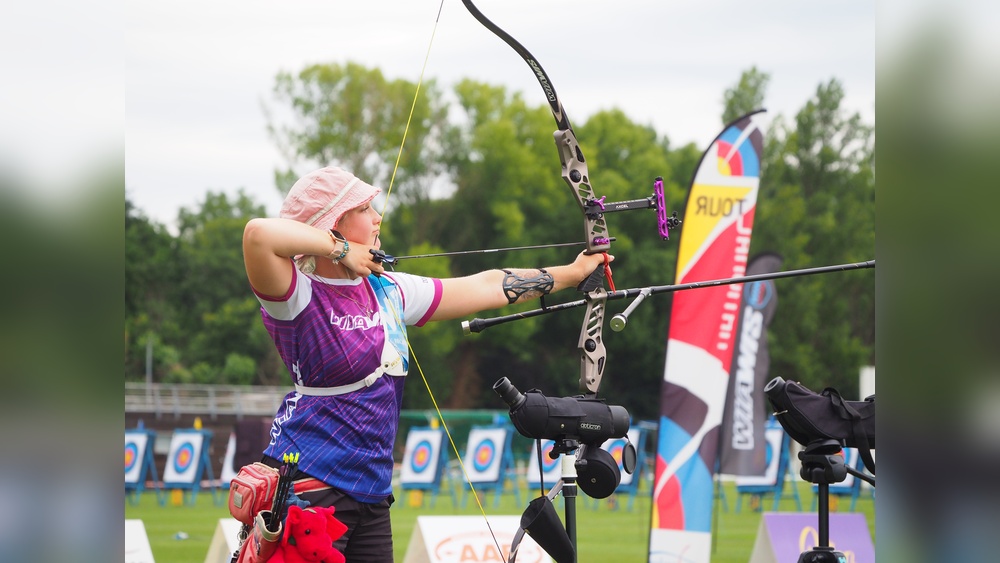
Olympic archers use recurve bows, which are standardized by World Archery. Compound bows, popular in other competitions, are not allowed in the Olympics. Arrow length, bow draw weight, and other equipment details are strictly regulated.
Competition Structure
The modern Olympic competition includes:
- Individual: 64 men and 64 women shoot a ranking round, then enter head-to-head elimination matches.
- Team: Teams of three compete in similar elimination rounds.
- Mixed Team: One man and one woman pair up for a combined score.
Each match is a test of skill, focus, and nerve. The set system keeps the action lively and unpredictable.
Example: The Set System In Practice
Suppose Archer A and Archer B are competing. In the first set, Archer A scores 29 and Archer B scores 27 with their three arrows. Archer A wins the set and earns two points. The first to reach six points wins the match.
If tied after five sets, a single-arrow shoot-off decides the winner.
Leading Countries In Olympic Archery
South Korea’s Dominance
Since the 1980s, South Korea has been the undisputed leader in Olympic archery. Their athletes have set world records and won the most gold medals in both men’s and women’s events. The country’s success is due to strong youth training programs, scientific coaching, and a national culture that values archery.
Other Strong Nations
The United States, China, and Italy have also won multiple medals. Each country brings its own strengths, whether in coaching styles, athlete development, or team strategy.
Here is a comparison of gold medal counts for the top Olympic archery nations (as of 2026):
| Country | Gold Medals | Total Medals |
|---|---|---|
| South Korea | 27 | 43 |
| United States | 8 | 21 |
| France | 5 | 7 |
| Italy | 4 | 9 |
| China | 3 | 10 |
*Source: World Archery, data as of 2026.*
The Role Of Technology And Training
Equipment Advances
Modern Olympic archery is as much about precision engineering as it is about skill. Recurve bows today use lightweight materials like carbon fiber and aluminum. Arrows are designed for maximum straightness and minimal wind resistance. Electronic scoring and slow-motion cameras have made judging more accurate.
Training Methods
Top archers train for years, focusing on both physical and mental skills. Video analysis, sports psychology, and custom equipment fitting are now standard. In my experience, even small changes in grip or posture can make a huge difference at the elite level.
Pro Tip: Beginners often focus only on hitting the target, but Olympic-level archers train their mind as much as their body. Techniques like visualization and breathing control are just as important as physical practice.
Weather And Outdoor Challenges
Olympic archery is held outdoors, often in unpredictable weather. Wind, rain, or heat can affect arrow flight. Successful archers learn to adjust quickly, reading the wind and staying focused under pressure.
Olympic Archery’s Impact On The Sport
Growing Global Participation
Since archery’s return in 1972, more countries have joined the competition. The sport is now practiced in over 160 countries, and Olympic exposure has helped grow youth programs worldwide. Many people try archery after seeing it on TV or online.
Inspiring Stories
Olympic archery has produced memorable moments, such as Italy’s surprise win in the 2012 men’s team event, or South Korea’s clean sweep of women’s medals in 2016. These stories inspire new generations to pick up a bow and aim for the podium.
Gender Balance And Inclusion
Archery stands out for its commitment to gender equality. Women have competed since 1904, and the mixed team event highlights partnership and teamwork. This inclusiveness has helped the sport remain modern and relevant.
The Evolution Of Rules And Scoring
From Distance Shooting To Set Play
Early Olympic competitions sometimes involved long-distance shooting or even moving targets. Today, the focus is on accuracy at 70 meters. The introduction of the set system shifted the emphasis from total score to head-to-head competition, making matches more dramatic.
Scoring Precision
Scoring is now electronic, with arrows measured to the millimeter. Judges use digital systems to track scores and resolve disputes quickly.
Penalties And Fair Play
Archers must follow strict rules on timing and conduct. A shot fired after the time limit, for example, scores zero. Drug testing and equipment checks ensure fair competition.

Credit: startarchery.co.uk
How Olympic Archery Differs From Other Formats
Recurve Vs Compound
Olympic archery only allows recurve bows. Other major events, like the World Archery Championships, include compound bows, which use pulleys to make drawing the string easier.
Distance And Target Size
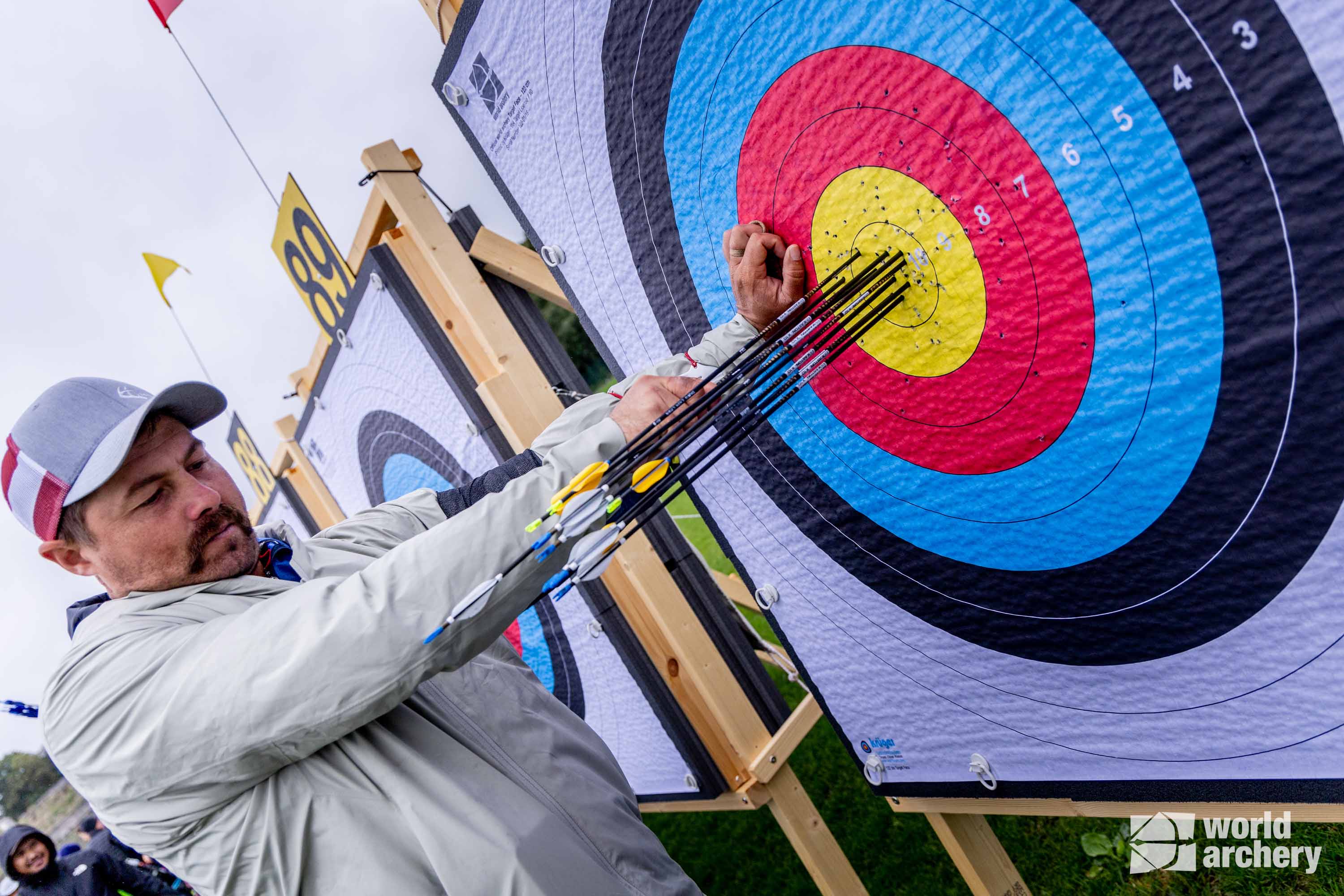
Olympic targets are 122 centimeters in diameter, placed 70 meters from the shooting line. Other competitions may use different distances or target sizes, but the Olympic format is considered the gold standard.
Number Of Arrows
In Olympic ranking rounds, each archer shoots 72 arrows. In head-to-head matches, sets of three arrows decide each round. This format tests both endurance and consistency.
The Road To The Olympics: Qualification And Selection
National Trials
Each country can send a limited number of archers. National federations hold trials to select their best athletes. This process is highly competitive, with only a few spots available.
International Qualification
Archers must also qualify through international tournaments. The World Archery Championships, continental qualifiers, and special Olympic qualification events decide which nations and athletes can compete.
Example: Qualification Path
Suppose a young archer in Germany dreams of the Olympics. She must first win at national trials, then perform well at European qualifiers. Only if she meets the international standard will she earn a place at the Games.
Credit: www.usarchery.org
Why Olympic Archery Matters
A Global Tradition
Archery connects people across cultures and generations. Olympic competition celebrates not just winning, but the values of focus, discipline, and respect.
Role Models For Youth
Successful Olympic archers often become role models. Their stories show that with patience and hard work, anyone can achieve excellence.
Continuous Innovation
The sport continues to evolve. From new training tools to fresh event formats, Olympic archery stays relevant and exciting for fans and athletes alike.
Frequently Asked Questions
When Did Archery First Become Part Of The Paralympics?
Archery was included in the first Paralympic Games in 1960 in Rome. It has been a core sport ever since, offering events for athletes with physical disabilities. This inclusion helped expand opportunities for many archers worldwide.
Are There Age Limits For Olympic Archers?
There is no official upper age limit for Olympic archery. However, athletes must be at least 16 years old in the year of the Games to compete. Some archers have competed in their 40s or older, showing the sport’s accessibility across ages.
How Do Olympic Archers Handle Nerves During Competition?
Many archers use techniques such as deep breathing, visualization, and routine practice to stay calm. Sports psychologists often work with Olympic teams to help athletes manage pressure and focus on each shot.
What Is The Difference Between Olympic And World Archery Championships Formats?
Olympic archery uses only recurve bows and features the set system for matches. The World Archery Championships include both recurve and compound events and may use different elimination formats or distances. The Olympics also have a stricter selection process and larger global audience.