What is the Most Popular Arrow for Indoor Archery Tournament?
Indoor archery tournaments are both a test of skill and a showcase of precision equipment. When the difference between first and second place can be just a millimeter, every detail matters, especially the arrow. Many newcomers think all arrows are alike, but seasoned competitors know the right arrow can make or break a performance.
So, what is the most popular arrow for indoor archery tournaments, and why do top archers rely on specific types? Let’s break down the facts, choices, and secrets that set winning arrows apart.
Why Arrow Choice Matters In Indoor Archery
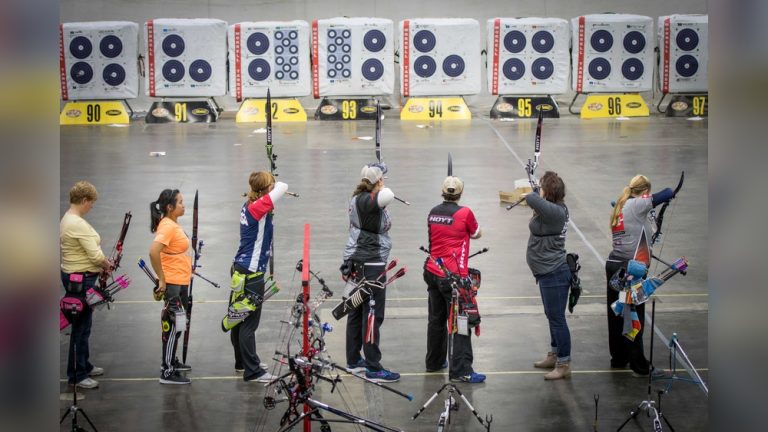
Indoor archery is typically shot at a distance of 18 meters (about 20 yards). The target face is smaller than outdoor targets, and the lighting is usually more consistent. Because of these conditions, arrow selection focuses on maximizing accuracy, forgiveness, and scoring potential.
Small changes in arrow weight, diameter, or spine can shift your grouping on the target. In my experience, switching from a narrow outdoor arrow to a wider indoor arrow improved my scores almost instantly. This is because indoor rounds reward arrows that can cut lines and score higher points, even if the shot is slightly off-center.
What Makes An Arrow “popular” In Tournaments?
Popularity in this context doesn’t simply mean “most sold.” Instead, it’s about what the top shooters, and the majority of competitive archers, actually use in high-level events. These choices are shaped by:
- Tournament rules: Some competitions have restrictions on arrow diameter or materials.
- Scoring advantages: Arrows that can “cut” the scoring lines are favored.
- Consistency: Reliable performance matters more than flashy marketing.
- Availability: Widely distributed arrows are more likely to be adopted.
Key Features Of Indoor Arrows
Before looking at specific models, it helps to understand the features that make some arrows dominate indoor tournaments.
Large Diameter
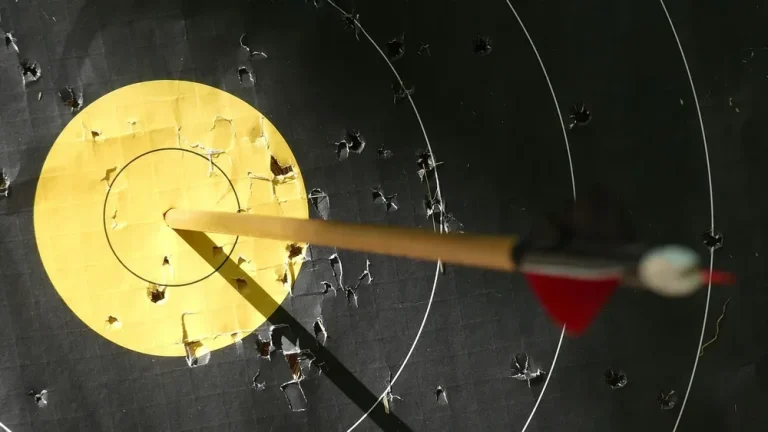
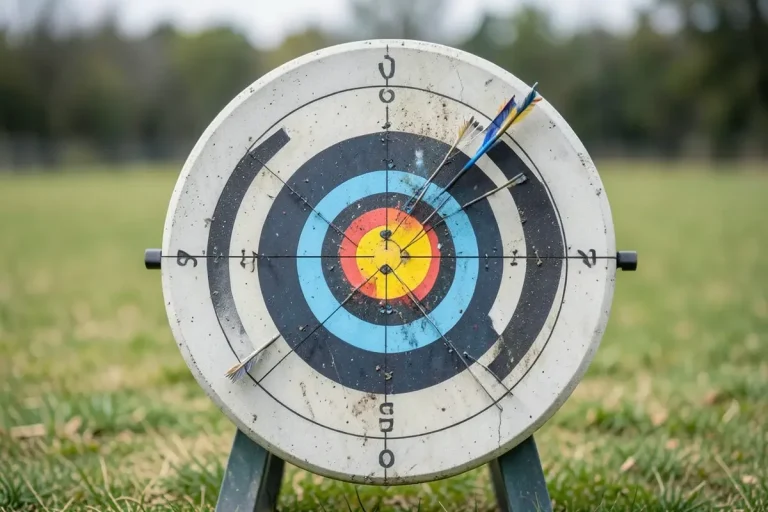
Most successful indoor archers use large-diameter shafts. These arrows, sometimes called “fat arrows,” have a bigger surface area. This increases the chance of touching a higher scoring ring, a practice known as “line cutting.” For instance, an arrow that barely catches the 10-ring scores higher than one just outside, even if both shots felt the same.
Heavier Weight
Heavier arrows are less affected by small inconsistencies in release or form. In indoor ranges, wind is not a factor, so the extra mass stabilizes the arrow and helps it punch clean holes in the paper target.
Straightness Tolerance
High-level indoor arrows are manufactured with extremely tight straightness tolerances, often ±0.001″ or better. This reduces variance and improves grouping, especially at short distances.
Material
Most popular indoor arrows use carbon, aluminum, or a combination called “carbon-aluminum hybrids.” Aluminum shafts tend to be heavier and are very consistent, while carbon offers strength and durability.
The Most Popular Arrow: Easton X7 Eclipse
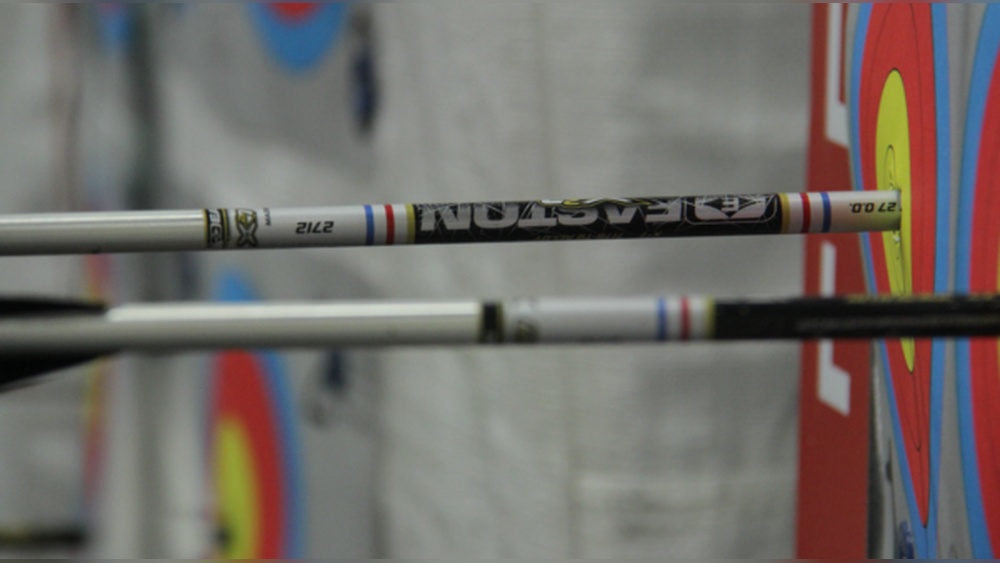
Across nearly every national and international indoor archery event, one arrow consistently stands out: the Easton X7 Eclipse. This aluminum arrow is the go-to choice for both compound and recurve archers aiming for the highest scores.
Why The X7 Eclipse Dominates
- Maximum Diameter: The X7 is available up to 27/64″ (commonly called “27s”). This is the largest legal diameter in most tournaments, maximizing line-cutting potential.
- Consistent Manufacturing: Easton’s process ensures each shaft is straight and consistent, which is crucial for tight groupings.
- Proven Track Record: Year after year, podium finishers at major events use X7s. This reputation builds trust among new and experienced archers.
- Easy to Tune: The heavier weight and stiffness make it easier for archers to achieve perfect flight with minimal tuning.
Common Variants
- X7 Eclipse 2315, 2312, 2712: The numbers refer to the arrow’s diameter and wall thickness. The 2315 and 2712 are most common for compound shooters, while recurve archers often choose slightly smaller versions.
Practical Example
At the Vegas Shoot, one of the world’s largest indoor tournaments, over 70% of compound shooters use Easton X7 arrows, according to published equipment surveys.
Comparison To Other Popular Models
Let’s compare the X7 Eclipse to other commonly used indoor arrows:
| Arrow Model | Diameter (inches) | Material | Straightness | Typical Use |
|---|---|---|---|---|
| Easton X7 Eclipse | 0.421, 0.421 (2712) | Aluminum | ±0.001″ | Compound/Recurve |
| Easton SuperDrive 27 | 0.421 | Carbon | ±0.002″ | Compound |
| Gold Tip Nine.3 Max | 0.366 | Carbon | ±0.006″ | Compound/Recurve |
Other Popular Indoor Arrows
While the X7 Eclipse is the clear favorite, several other arrows are also widely used, especially by archers with different needs or preferences.
Easton Superdrive 27
This is a carbon shaft with a large diameter, designed for indoor compound archers. It’s lighter than aluminum arrows, which can help archers with lower draw weights. However, carbon is more likely to “bounce out” if it hits hard surfaces or other arrows, so some prefer aluminum.
Gold Tip Nine.3 Max
Known for its durable carbon construction, this arrow is popular among both compound and recurve archers. Its slightly smaller diameter makes it less aggressive at cutting lines but offers more forgiveness on poorly tuned bows.
Easton X23
The X23 is another aluminum shaft that is slightly smaller than the X7 27 series. Some recurve shooters prefer the X23 for its balance between diameter and weight. It’s also legal in all competitions where 27s may be restricted.
Carbon Express X-buster
This arrow is made from high-modulus carbon and comes in a variety of spines. It’s chosen by archers who want a lighter feel but still need a wide shaft for line-cutting.
How To Choose The Right Indoor Arrow
The “most popular” arrow might not be the best for every archer. Choosing the right arrow depends on your equipment, competition level, and personal feel.
Step 1: Check Tournament Rules
Some tournaments limit arrow diameter to 23/64″ or 0. 366″. Always check before buying a set of 27s, as you don’t want to be disqualified for using oversized shafts.
Step 2: Match Arrow Spine To Draw Weight
Arrow spine measures stiffness. Too stiff or too flexible arrows will not group well. Most manufacturers have charts to help you select the right spine for your draw weight and arrow length.
Step 3: Consider Your Bow Type
- Compound archers: Typically use the largest diameter allowed, with heavy points for stable flight.
- Recurve archers: Sometimes prefer slightly lighter and smaller arrows for better control.
Step 4: Tune Your Setup
Even the best arrow won’t perform if it’s not tuned to your bow. Paper tuning and bare shaft tests help you find the right point weight and nock fit.
Step 5: Test Before Committing
Whenever possible, try a few arrows before buying a dozen. Many shops let you test different models. The best arrow is the one you shoot confidently and consistently.
Example:
When I switched from a 23-diameter to a 27-diameter arrow for my indoor league, my average score increased by four points per round. However, the larger arrow required more careful tuning to avoid odd impacts on the target face.
Credit: www.usarchery.org
Tips For Maximizing Indoor Arrow Performance
Even with the most popular arrow, your setup and habits will affect your results.
- Keep arrow shafts clean: Residue can affect flight and grouping.
- Rotate arrows: Use all your arrows equally in practice to avoid hidden damage.
- Check nocks often: Indoor shooting is hard on nocks due to tight groupings.
- Use high-visibility fletching: Easier to spot groups and makes arrow retrieval faster.
- Weigh your points: Consistent point weight helps arrows fly the same way each shot.
Arrow Component Choices For Indoor Tournaments
It’s not just about the shaft. Points, nocks, and fletching all play a role in indoor arrow performance.
Points
Heavy points (100, 200 grains) are common indoors. They move the balance point forward, stabilizing flight. Some archers use tungsten or brass for extra mass.
Nocks
Precision nocks ensure a snug, consistent fit on the string. “Pin nocks” are popular for their durability, as they protect the rear of the shaft from being damaged by other arrows.
Fletching
Shorter, higher-profile vanes stabilize arrows quickly at short distances. Some archers use “spin vanes” for recurve, while compound shooters often prefer 2, 3 inch plastic vanes.
Comparison Of Arrow Components
Here’s how common choices compare:
| Component | Popular Types | Advantages | Considerations |
|---|---|---|---|
| Points | 100, 200 grain screw-in | Stabilizes flight, improves grouping | Heavier points require stiffer spine |
| Nocks | Pin nocks, push-in nocks | Durable, consistent release | Must match string and shaft size |
| Fletching | 2″, 3″ vanes, spin vanes | Quick stabilization | Short vanes can be harder to install |
The Role Of Arrow Maintenance In Tournament Success
Even the best arrows lose their edge without proper care. Regular inspection and maintenance can prevent costly misses.
- Inspect for bends or cracks: Aluminum can bend, and carbon can splinter.
- Check for loose points or nocks: These can cause erratic flight.
- Replace damaged fletching: Torn vanes destabilize arrows.
- Store arrows properly: Keep them in a hard case to avoid warping.
Pro Tip: Always spin-test each arrow before competition. Place the tip on a smooth surface and roll the shaft, any wobble means the arrow isn’t perfectly straight.
How The Best Archers Fine-tune Their Arrows
Elite competitors don’t just buy the most popular arrow, they fine-tune every detail. This attention to detail sets them apart.
- Micro-tuning point weight: Adjusting by just 5 grains can change grouping.
- Experimenting with vane position: Small changes can affect arrow stabilization.
- Culling arrows: Pros shoot groups and only keep the best-performing shafts for tournaments, using others for practice.
In my experience, replacing just one arrow that consistently grouped low with a better-matched shaft boosted my confidence and my score.

Credit: startarchery.co.uk
Evolution Of Indoor Arrow Design
Over the last 20 years, indoor arrows have evolved significantly. Early tournaments saw many archers using smaller, outdoor-style arrows. As scoring techniques improved, manufacturers responded with larger, more forgiving shafts designed to maximize line-cutting.
The introduction of hybrid materials, like carbon-wrapped aluminum, has allowed for even more customization. While aluminum remains the standard for most top-level shooters, some manufacturers are experimenting with new blends for lighter, stronger arrows.
Common Mistakes Beginners Make In Choosing Indoor Arrows
- Buying the biggest arrow available without checking tournament rules or bow compatibility.
- Ignoring arrow spine: An arrow that’s too stiff or too soft for your setup won’t group well.
- Neglecting fletching choice: Using long, outdoor-style vanes indoors can slow stabilization.
- Skipping tuning: Assuming a popular arrow will perform perfectly out of the box.
- Overlooking maintenance: Shooting bent or cracked arrows can lead to frustration and lost points.
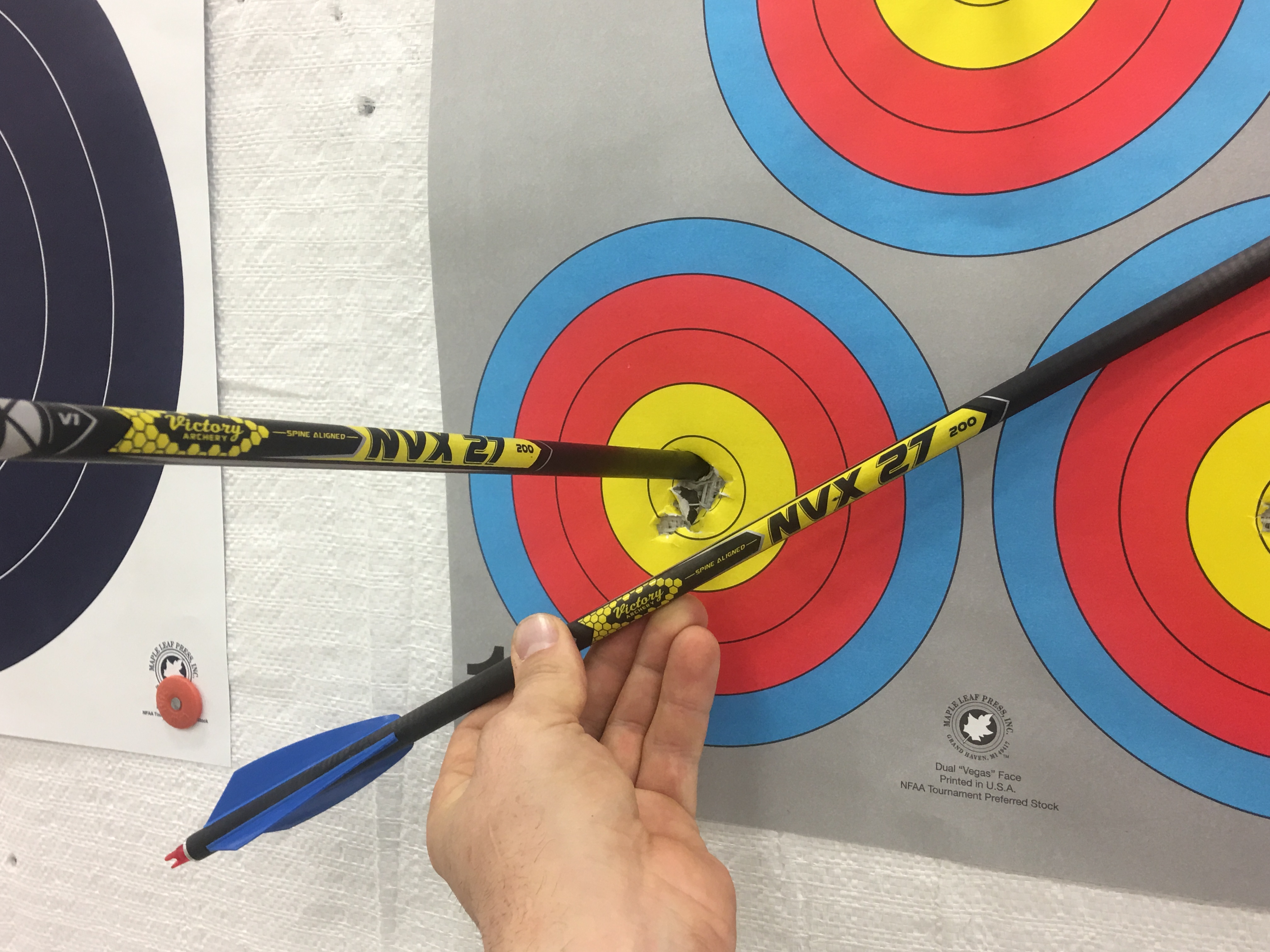
Credit: nfaausa.com
What Sets Popular Indoor Arrows Apart From Outdoor Arrows
Indoor and outdoor archery have very different demands. Outdoor arrows are usually:
- Thinner and lighter: To minimize wind drift over long distances.
- Longer fletching: For stabilization in variable conditions.
- Different point weights: Often lighter for faster flight.
Indoor arrows are:
- Thicker and heavier: For stable, accurate flight at short range.
- Shorter fletching: Quick stabilization is more important than long-range correction.
- Optimized for line-cutting: Wide shafts increase the odds of higher scores.
| Feature | Indoor Arrows | Outdoor Arrows |
|---|---|---|
| Diameter | Large (up to 27/64″) | Small (as low as 0.166″) |
| Weight | Heavy | Light |
| Fletching | Short, high-profile | Longer, low-profile |
| Primary Goal | Maximize score by line-cutting | Minimize wind drift, maximize range |
How To Test If An Arrow Is Right For You
Even if the X7 Eclipse is the “most popular,” your results may vary. The best way to know is to test different arrows with your own bow.
- Group testing: Shoot sets of three arrows from different brands/models and compare group sizes.
- Paper tuning: Shoot through paper at 5-10 yards to check for clean, round holes.
- Scoring simulation: Track your scores over several rounds to see which arrow performs best under pressure.