What is the Distance That Bow Shooters Shoot in Competition?
Archery is a sport that combines skill, focus, and tradition. When you watch an archery competition, you may wonder: how far do bow shooters actually shoot? The answer depends on the type of competition, the equipment, and even the age or gender of the archer. Understanding the distances involved gives a deeper appreciation for the sport’s difficulty and the precision required. Whether you are a beginner, a fan, or a competitor, knowing these details reveals why hitting the target is far more than just pulling a string and releasing an arrow.
The Basics Of Competitive Archery Distances
Competitive archery has grown over centuries, but distance to the target remains one of its most critical factors. The challenge increases as the target moves further away. In official competitions, distances are not random, they are carefully set by international and national governing bodies like World Archery (WA) and the National Field Archery Association (NFAA).
There are several main types of archery competitions:
- Target Archery
- Field Archery
- 3D Archery
- Indoor Archery
Each type has its own rules for shooting distances, which are sometimes fixed and sometimes variable. Understanding these categories is the first step to knowing what distances bow shooters face.
Target Archery: The Gold Standard
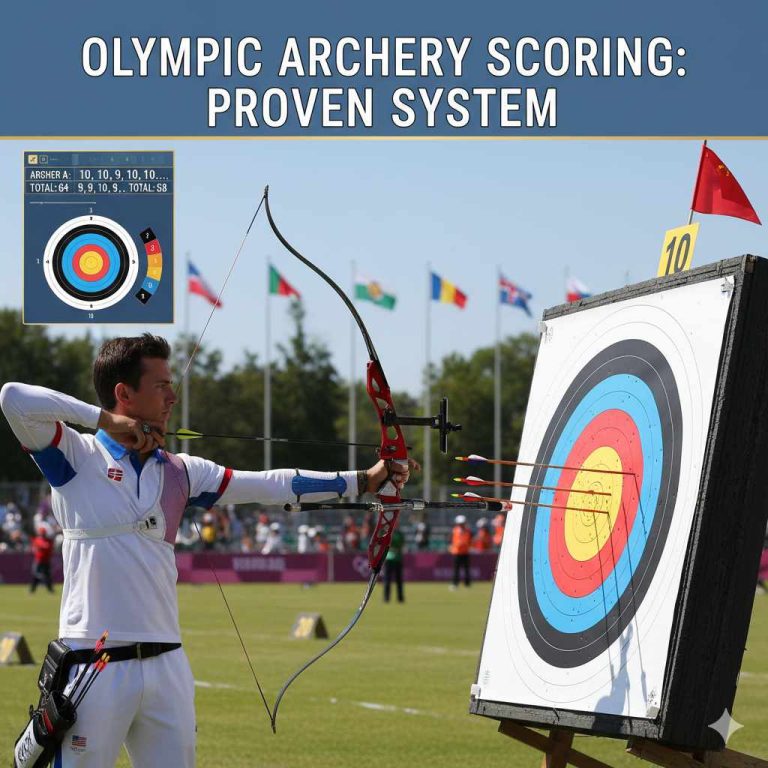
Target archery is the most recognized style, especially at the Olympic Games. In this format, archers shoot at circular targets with scoring rings from set distances.
Outdoor Target Archery
The classic image of archers lining up and shooting at colorful round targets comes from outdoor target archery. The distances here are some of the longest in the sport.
Olympic Distances
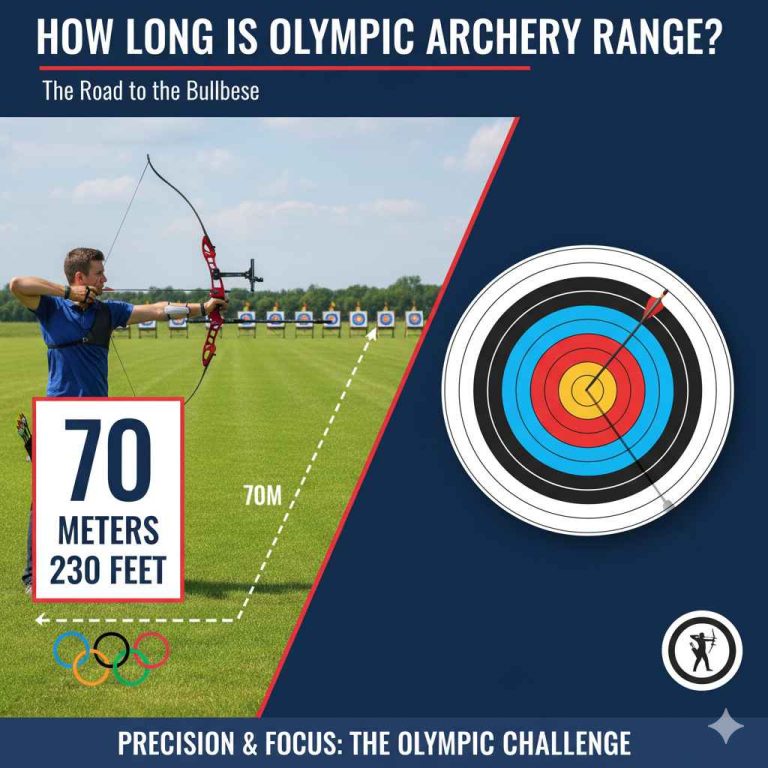
- Men and Women (Recurve Bow): 70 meters (76.5 yards)
- Team events: Also 70 meters
This 70-meter distance is standard for all Olympic recurve competitions. It might not sound far until you realize the center of the target (the “gold” or 10-point ring) is only 12. 2 centimeters (4. 8 inches) across.
World Archery (wa) Distances
For top-level World Archery events outside the Olympics, the maximum distance is:
- Recurve (Men): 90 meters (98.4 yards)
- Recurve (Women): 70 meters
- Compound (Both): 50 meters (54.7 yards)
Juniors and cadets shoot at shorter distances, usually 60 meters or less. The scoring target size also changes for each distance and category.
Para-archery
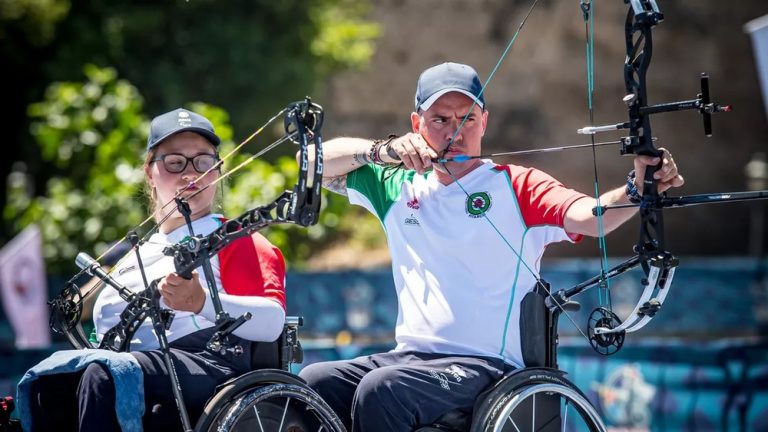
Archers with physical disabilities compete at distances set by their classification, but commonly at 70 meters for recurve and 50 meters for compound.
Youth And Novice Distances
- Cadet (Under 18): 60 meters
- Cub (Under 15): 50 meters
Some local clubs offer even shorter distances for beginners, making the sport accessible to all ages.
Indoor Target Archery
Indoor archery is popular in the winter and uses much shorter distances. The standard is:
- 18 meters (19.7 yards) for all age groups and bow types
At 18 meters, the 10-ring is just 4 centimeters (1. 57 inches) wide for compound bows, making accuracy the real test.
Target Size Comparison
To show how challenging these distances are, here’s a quick comparison of target face diameters used at key distances:
| Distance | Target Diameter (cm) | Bows Used |
|---|---|---|
| 90m | 122 | Recurve Men |
| 70m | 122 | Recurve Women/Men |
| 50m | 80 | Compound |
| 18m (Indoor) | 40 | All |
Pro Tip: Many beginners are surprised at how small the target actually appears at 70 meters. It looks about the size of a coin.
Field Archery: Varied Distances And Terrain
Field archery tests an archer’s ability in more natural settings. Instead of shooting from a flat line, archers walk through woods or fields, shooting at targets placed at different, often unmarked distances.
Standard Field Archery Distances
- Marked distances: Usually from 10 meters (11 yards) up to 60 meters (65.6 yards)
- Unmarked distances: Archers must judge ranges themselves, a unique skill
A typical field round has 24 targets, with distances that change at every station.
Nfaa Field Rounds
In the US, the National Field Archery Association sets field round distances from 20 feet (6.1 meters) up to 80 yards (73.2 meters).
Target Size And Terrain
Targets are often black and white or animal-shaped, and they vary in size depending on distance. Steep angles, uphill or downhill shots, and obstacles make field archery a true test of skill.
Example: You might shoot 35 meters uphill at one target, then 15 meters downhill at the next. No two shots are exactly the same.
3d Archery: Simulating The Hunt
3D archery uses life-sized animal targets made of foam. It’s popular with hunters but is also a competition style with its own rules.
Common Distances In 3d Archery
- Known Distance Classes: Often up to 50 yards (45.7 meters)
- Unknown Distance Classes: Range from 5 to 60 yards (4.6 to 54.8 meters), but archers must estimate the distance
Distances depend on the competition’s rules and the shooter’s age or division. Targets are placed in forests, fields, or sometimes even urban parks.
Unique Challenge
The challenge in 3D archery is not just the distance, but also the need to estimate range accurately. Lighting, shadows, and obstacles all play a role.
Pro Tip: In my experience, learning to judge distance in 3D archery is harder than hitting the target. Even seasoned shooters can misjudge by a few yards, which can mean missing the scoring “vitals” zone.
Indoor Archery: Short, Precise, And Popular
Indoor archery is shot at fixed distances, making it a favorite in colder climates or for training. The closer range means that precision matters more than power.
Standard Indoor Distances
- 18 meters (19.7 yards): Most common worldwide
- 25 meters (27.3 yards): Used in some events, mainly in Europe
All age groups and bow styles use the same distance, but target faces shrink to make scoring difficult.
Indoor Target Details
| Distance | Target Diameter (cm) | 10-Ring Size (cm) |
|---|---|---|
| 18m | 40 | 4 (compound) |
| 25m | 60 | 6 |
Because the target is so small, archers often shoot three arrows per end instead of six. A perfect score requires every arrow to land within a space smaller than a golf ball.
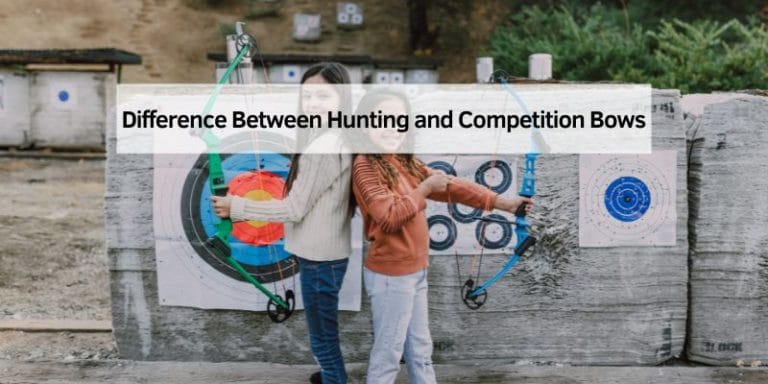
Bow Types And Their Competition Distances
Not all bows shoot the same distances in competition. Here’s a breakdown of the main types:
Recurve Bows
The only bow type used in the Olympics. Shoots at:
- 70 meters (Olympic and WA women/men)
- Up to 90 meters (WA men)
Compound Bows
These use cams and pulleys for more power and accuracy. In competition, the standard distance is:
- 50 meters (outdoor)
- 18 meters (indoor)
Barebow
Traditional design, no sights or stabilizers. Popular in field and 3D archery. Typical distances:
- 50 meters (outdoor, WA)
- Up to 50 meters (field/3D, often less for juniors)
Longbow And Traditional
Distances are usually shorter, often 30 to 50 meters, depending on the event and the archer’s age.
Credit: tenmileriver.org
How Distances Are Measured And Set
Accuracy in setting the distance is crucial in official competitions. Rangefinders and measuring tapes are used to ensure targets are placed at the correct mark. Even a small error can affect fairness.
Marked Vs. Unmarked Distances
- Marked: The exact distance is given to the archer.
- Unmarked: Archers must estimate the distance themselves.
Most beginner events use marked distances. Advanced field and 3D events often use unmarked distances to test judgment and experience.
Effects Of Distance On Difficulty
As distance increases:
- The target appears smaller.
- Wind, lighting, and terrain have a greater effect.
- Small errors in aim are magnified.
Hitting a 10-ring at 70 meters is much harder than at 18 meters, even for world-class shooters.
Why Distances Matter In Competition
The set distance is not just a rule; it shapes the entire competition. It impacts:
- Equipment Choice: Higher draw weight or specialized arrows may be needed for longer distances.
- Strategy: Wind reading, aiming technique, and even breathing change with distance.
- Scoring: Longer shots often have larger targets but are harder to score high.
A 90-meter shot in outdoor archery is a dramatic test of both equipment and nerves, while an 18-meter indoor shot is a test of consistency and focus.
Age, Gender, And Classification Differences
Archery is one of the most inclusive sports. Distances are adjusted to allow fair competition for all.
Breakdown By Category
| Category | Common Distance (meters) | Notes |
|---|---|---|
| Senior Men (Recurve) | 70-90 | Olympic/WA |
| Senior Women (Recurve) | 70 | Olympic/WA |
| Compound (All) | 50 | Outdoor |
| Junior/Cadet | 30-60 | Age-dependent |
| Para-archery | 50-70 | Classification-specific |
Example: At the World Archery Youth Championships, cadet girls shoot at 60 meters, while junior boys shoot at 70 meters.
Practice Vs. Competition Distances
In training, archers often shoot at a mix of distances. Practicing at longer ranges can improve performance at shorter competition distances. Coaches recommend this to build confidence and consistency.
Home Practice
Most archers don’t have a 70-meter range in their backyard. Many practice at 10 to 30 meters and focus on technique, then adjust when they access a full-sized range.
Club Rounds
Clubs may set up “mini-competitions” with distances of 18, 30, or 50 meters to accommodate space and skill levels.
Non-obvious Insights For Beginners
Some aspects of competition distances are not obvious at first:
- Wind and Weather Increase with Distance: Shooting at 70 or 90 meters means even a small breeze can move your arrow off course. Learning to adjust for wind is a skill that only comes with practice at these distances.
- Angle and Elevation Matter: In field and 3D archery, even a small change in uphill or downhill angle can change the point of impact. Many beginners forget to adjust their aim for elevation.
- Mental Focus Is Different: Shooting at close range means every shot is a test of consistency. At long range, the pressure can feel more intense because mistakes are magnified.
- Arrow Flight Time: At 70 meters, arrows take about one second to reach the target. This delay requires calm nerves, especially in windy conditions.
Choosing The Right Competition Distance
For those starting out, picking the right competition means choosing a distance you can shoot accurately and safely. Consider these factors:
- Age and Experience: Juniors and new shooters should start at shorter distances.
- Equipment: Not all bows can reliably shoot 70 meters.
- Goals: If you aim to compete at the Olympics, you’ll need to train for 70 meters.
Ask your local club or coach for advice on which events suit your current skill level.

Credit: trojanarchery.com
How Archery Distances Compare To Other Sports
Archery distances may seem long, but how do they compare with other target sports?
- Rifle Shooting (Olympics): 10 meters (air rifle), 50 meters (smallbore)
- Golf Hole (Average Par 4): 350-450 meters
- Soccer Penalty Kick: 11 meters
This comparison shows that while archery distances are not the furthest, the precision required is unmatched.
Where To Find Official Rules And Distances
To check the official distances for a specific competition or bow type, visit the World Archery website or your national archery federation. Rules are updated regularly and differ by country and organization.
A reliable reference is the World Archery Rulebook.
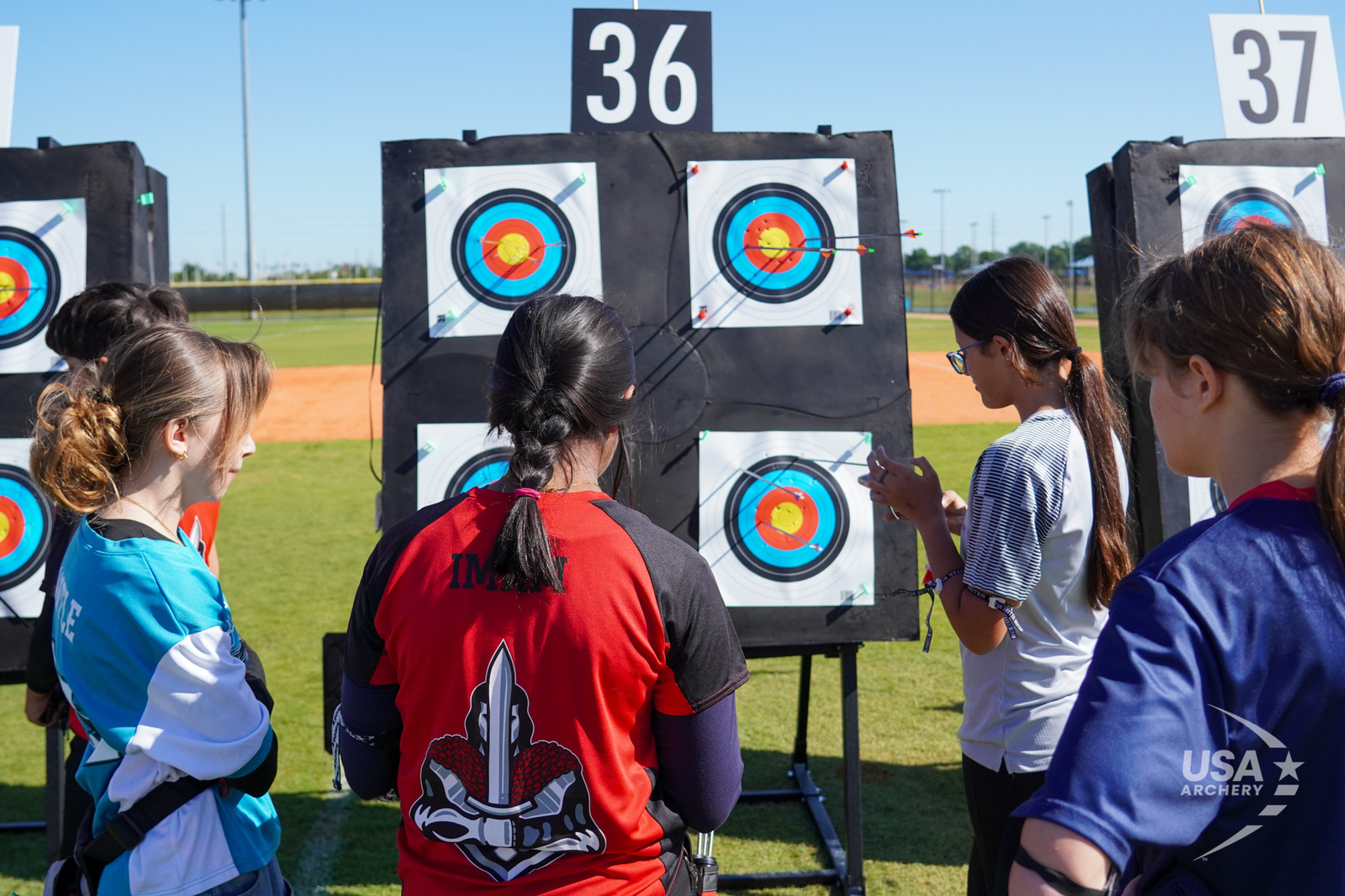
Credit: www.usarchery.org
Frequently Asked Questions
How Do Archers Judge Distance In Unmarked Competitions?
In unmarked field or 3D competitions, archers use visual clues, like the size of the target or familiar objects, to estimate distance. Some practice pacing out distances in training. Over time, experience and regular shooting help improve this skill. Range estimation is considered one of the hardest parts of field and 3D archery.
What Happens If A Target Is Set At The Wrong Distance In Competition?
If an official target is set at the wrong distance, the round may be stopped and the target reset. Archers may be allowed to reshoot, depending on the rules. Accuracy in measuring is very important to ensure fairness for all competitors.