How Far Away Do They Shoot in an Archery Competition?
Archery competition distances vary by discipline: 18 meters indoors, 70 meters for outdoor Olympic recurve target archery, and over 100 meters on some field archery courses. Shoot at the wrong distance for your event and your sight marks, arrow drop, and scoring will all be off. This guide breaks down the distances for every major type of competitive archery.

As an Amazon Associate I earn from qualifying purchases.
Don’t worry if it seems a bit complicated at first. We’re going to break down exactly how far archers shoot in various competitions, using simple terms. You’ll learn about the different types of archery events, the specific distances for each, and what makes them unique. Get ready to discover the exciting world of competitive archery distances!
Understanding Archery Competition Distances: A Beginner’s View
When we talk about “how far away do they shoot in an archery competition,” it’s important to know that there isn’t one single answer. Archery is a diverse sport with many different styles of competition, each with its own unique set of rules and distances. Think of it like different types of races in track and field – there are sprints, middle-distance runs, and marathons, all testing different skills.
For beginners, understanding these variations helps you choose events that might suit your interests and skill level. It also gives you a better appreciation for the incredible accuracy and consistency that competitive archers achieve, no matter the distance.
The main factors influencing competition distances are:
- Type of Competition: Is it indoor, outdoor, target archery, field archery, or something else?
- Skill Level/Age Class: Sometimes, distances are adjusted for younger or less experienced archers.
- Governing Body Rules: Organizations like World Archery, USA Archery, and others set the official standards.
Let’s dive into the specifics for the most common types of archery competitions.

Indoor Archery Competitions: Precision in Close Quarters
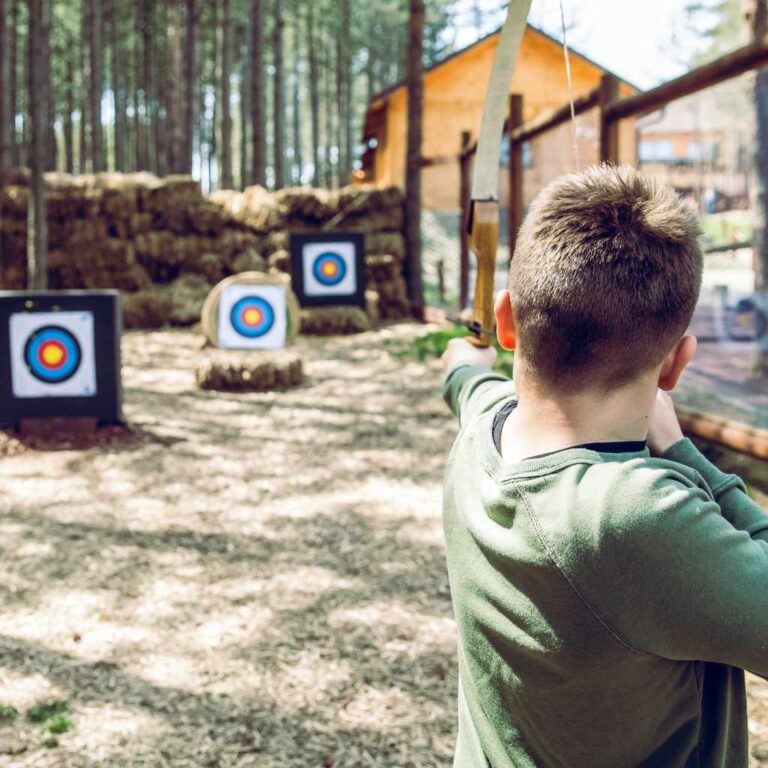
Indoor archery is often the first place many new archers experience competition. It’s popular because it can be done year-round, regardless of weather. The shorter distances mean that even with less powerful bows, archers can accurately hit the target.
The most common distance you’ll see in indoor target archery is 18 meters (approximately 20 yards). This distance is standard for many major indoor tournaments, including those sanctioned by World Archery and USA Archery.
Here’s why this distance is so popular for indoor events:
- Manageable for Beginners: 18 meters is close enough for new archers to see tangible improvement quickly, which is encouraging.
- Tests Fine Motor Skills: While the distance is shorter, the targets (often with smaller inner rings) demand extreme precision. A tiny deviation can mean missing a high score.
- Equipment Versatility: This distance is suitable for a wide range of bows, from beginner recurve and traditional bows to advanced compound bows.
- Spectator Friendly: The action is close and fast-paced, making it easy for viewers to follow.
The Target Face for 18-Meter Indoor Archery
The target used for 18-meter competitions is typically smaller than outdoor targets. It’s often referred to as a “10-ring” target, meaning the smallest, highest-scoring zone is the 10. The face size can vary slightly depending on the specific competition rules, but a common size used in many World Archery sanctioned events has a 10-ring diameter of 8 cm. The entire target face has 10 concentric rings of differing colors, with the center being gold (10 and 9 points), followed by red (8 and 7 points), blue (6 and 5 points), black (4 and 3 points), and white (2 and 1 point).
This smaller target size at 18 meters amplifies any slight inconsistency in an archer’s form, making it a true test of focus and control.
Outdoor Target Archery Competitions: The Olympic Challenge
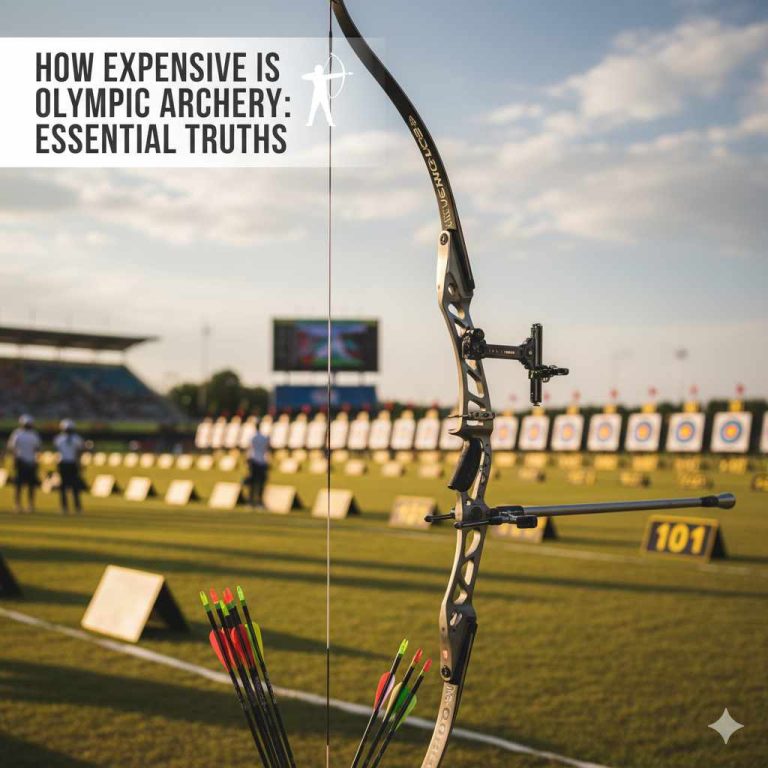
Outdoor target archery is perhaps the most recognized form of competitive archery, largely due to its presence in the Olympic Games. This discipline requires archers to shoot at longer distances, demanding not only precision but also a deep understanding of environmental factors like wind.
The standard distance for Olympic-style outdoor target archery matches is 70 meters (approximately 76.5 yards). This is the distance archers shoot during the ranking rounds and head-to-head elimination matches in the Olympics and most major international tournaments governed by World Archery.
Why 70 meters?
- Challenging but Achievable: It’s a distance that pushes the limits of human skill and equipment, yet is consistently achievable for elite archers.
- Tests Environmental Adjustments: Wind becomes a major factor at this distance. Archers must learn to read the wind and adjust their aim accordingly.
- Requires Bulletproof Form: Any flaw in an archer’s technique will be magnified significantly over 70 meters, leading to missed shots or low scores.
- Promotes Equipment Advancement: This distance encourages innovation in bow technology, arrow design, sights, and stabilizers to maximize performance.
The Target Face for 70-Meter Outdoor Archery
The target face for 70-meter outdoor archery is larger than the indoor face to accommodate the greater distance. It’s often called a “122 cm” target face by archers, referring to the total diameter of all scoring zones combined. The scoring rings are similar in color and point value as the indoor target, but the 10-ring has a diameter of 12.2 cm. The smallest, central ring (the bullseye) is worth 10 points, and the rings radiate outwards, with the outermost ring scoring 1 point. Again, the gold rings are worth 10 and 9 points, red 8 and 7, blue 6 and 5, black 4 and 3, and white 2 and 1.
Archers shoot a specific number of arrows at this distance during official ranking rounds. For example, in Olympic Recurve, archers shoot two ends (groups) of 6 arrows each, for a total of 12 arrows. The scores from these ranking rounds determine the seedings for the elimination matches, where archers often shoot head-to-head at increasing distances, or in a “total points” format. You can find detailed rules and specifications on the World Archery website, a great resource for understanding international competition standards.
Outdoor Archery – Beyond the Olympics
While 70 meters is the standard for elite Olympic recurve, other outdoor target archery formats exist with different distances. For instance, some national competitions or archery clubs might use varying distances to cater to different skill levels or equipment types.
Here’s a quick look at some common variations:
| Competition Format | Typical Archer Distances (Meters) | Notes |
|---|---|---|
| World Archery Junior Rounds | 70m (older juniors), 60m, 50m, 40m, 30m (younger juniors) | Distances decrease for younger age categories. |
| USA Archery Outdoor Target (Star/Nationals) | 90m, 70m, 50m, 30m (for Senior/Master divisions) | Often shoot at multiple distances in a single event. |
| Barebow Outdoor | 50m – 70m | Often similar distances to recurve but with different equipment rules. |
| Compound Bow Outdoor | 50m – 70m (with variations) | Compound bows, being more powerful and precise, may shoot at slightly different distances or have their own categories. |
Understanding these variations highlights how archery competitions can be tailored to suit different archers and bow types, making the sport accessible to a wider range of participants.
Field Archery Competitions: Navigating the Outdoors
Field archery is a different beast altogether. Instead of shooting at flat, stationary targets at set distances, field archery involves shooting at targets placed at various distances across natural terrain. This means archers must contend with uphill and downhill shots, uneven ground, and often, challenging natural lighting conditions.
The distances in field archery are much more varied. A typical field archery course will have multiple shooting stations, and each station will have a target at a specific distance. These distances can range significantly.
For a standard “field round” (often 14 targets):
- Shortest Distances: Can be as short as 10 meters (about 11 yards).
- Longest Distances: Can extend up to 60 meters (about 65 yards) for standard targets, and even further for specialized rounds or certain divisions.
- Mixed Distances: Archers might shoot a target at 25 meters, then the next at 45 meters, then 15 meters, and so on.
The Target Faces for Field Archery
Field archery often uses smaller targets than outdoor target archery, and sometimes uses multiple targets per shooting stake. The targets are round and feature concentric scoring rings, typically with 5 scoring zones. The colors usually are a central black circle (5 points), surrounded by white (4 points), black (3 points), white (2 points), and the outermost black ring (1 point). The size of the target face and its scoring rings depend on the distance. For example, a target used at 60 meters will be much larger than one used at 15 meters.
There are different types of field archery rounds:
- Hunter Round: Archers shoot at either two or four targets per setup. Distances are marked, and the targets are typically smaller (often red and white rings).
- Archery Golf (or Marked/Blank Rounds): Similar to golf, archers aim to get the fewest shots to hit the target. Marked rounds have visible distance markings, while blank rounds require archers to estimate distances. Distances can vary wildly.
- 3D Archery: This is a popular format where archers shoot at life-sized 3D animal targets. Distances are usually unmarked, requiring archers to estimate them. Distances can range from very close to over 80 yards for larger animal targets and powerful bows.
The USA Archery Field Archery page offers more details on their specific competition formats and rules.
Other Archery Competitions and Distances
Beyond the big three (indoor, outdoor target, and field), archery competitions can take many forms, each with its own set of distances suited to the challenge:
Bowhunting Competitions
These often mimic 3D archery, focusing on realistic scenarios for taking down game. Distances are typically unmarked, and archers must estimate them. The goal is to hit specific vital zones on the animal target. Distances can vary greatly, anywhere from 10 yards to 60 yards or more, depending on the target animal’s size and the competition’s intent. These competitions are great for practicing real-world hunting skills.
Clout Archery
This is a less common but fascinating archery discipline. Archers shoot arrows high into the air, aiming to land them within scoring zones laid out on the ground like a target. The “shooting up” aspect is unique. Distances are typically quite long, with archers shooting from 140 meters (about 153 yards) up to 180 meters (about 197 yards) for men, and shorter for women and juniors. The target is a flag or a mark on the ground, and scoring is based on how close the arrows land to it after their parabolic flight.
Traditional Archery Competitions
For archers using traditional bows (like longbows or recurves without sights), distances can vary. Some traditional classes might shoot at indoor distances (18m) or outdoor target distances (like 50m). Others might align more closely with field archery distances, testing accuracy across varied terrain. The emphasis here is often on shooting with instinctive aim and often, without the aid of advanced sights or stabilizers.
Archery GB’s Rules of Shooting provides comprehensive guidelines that cover many of these diverse disciplines and their associated distances, offering a good overview of established archery regulations.
How Factors Like Equipment and Wind Influence Distances
It’s not just the competition rules that determine how far archers shoot, but also the equipment they use and the environment they shoot in. Understanding these factors is crucial for both archers and spectators.
Equipment Differences
Different types of bows are designed for different purposes and have varying capabilities:
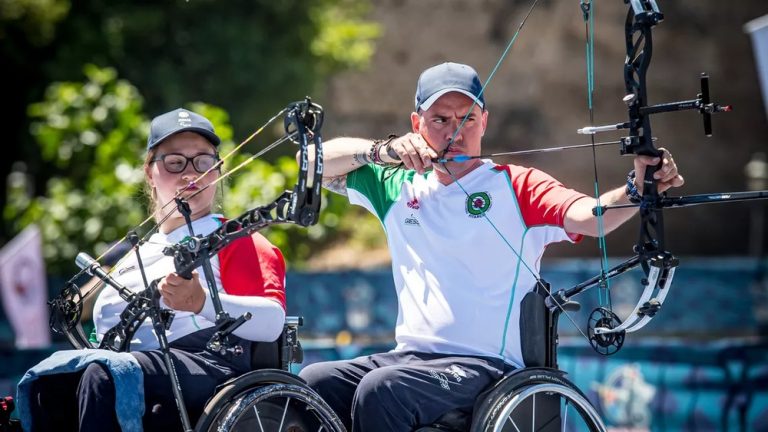
- Recurve Bows: These are the bows used in the Olympics. They are relatively simple in design but require a lot of skill to shoot accurately at range. At 70 meters, a skilled archer can achieve incredible accuracy, but they rely heavily on their form and precise aiming.
- Compound Bows: These bows use a system of pulleys (cams) to make them easier to draw and hold. They are more powerful and forgiving than recurve bows, allowing archers to shoot with greater stability and distance. In competitions where compound bows are allowed, distances can sometimes be extended, or they are used at standard distances with the expectation of higher scoring potential due to their forgiving nature. For example, compound archers often shoot at 50 meters in outdoor target archery, even though they are capable of shooting much further.
- Traditional Bows (Longbows, Stick Bows): These bows represent the earliest forms of archery. They typically lack sights, stabilizers, or other modern enhancements. Archers using these bows rely entirely on their fundamental skills. Competitions for traditional bows might use shorter distances than standard Olympic rounds, or have separate categories for them at longer distances to provide a unique challenge.
The Impact of Wind
For outdoor archery, wind is a significant factor, especially at longer distances like 70 meters. A seemingly light breeze can push an arrow off course considerably over that length of travel. Archers must develop the skill to:
- Read the Wind: Observing flags, grass, and water helps archers understand wind speed and direction.
- Aim Off: They learn to aim not directly at the target, but a specific point to the left or right, anticipating how the wind will carry the arrow.
- Adjust for Gusts: Sudden changes in wind can require rapid adjustments or waiting for a lull.
This adds a layer of tactical thinking and environmental adaptation to outdoor archery that isn’t present in indoor shooting.

Frequently Asked Questions (FAQ)
What is the most common distance archers shoot in competitions?
The most common distances depend on the type of competition. For indoor target archery, it’s typically 18 meters (20 yards). For outdoor Olympic-style target archery, it’s 70 meters (76.5 yards).
Are there different distances for different age groups?
Yes, absolutely. Competitions often adjust distances for younger archers or junior categories to be more appropriate for their strength and skill levels. Even within adult categories, distances can vary.
Do compound bows shoot further than recurve bows in competitions?
Yes, compound bows are generally more powerful and accurate than recurve bows, allowing them to shoot accurately at greater distances. However, in many major competitions like the Olympics, only recurve bows are used, and they shoot at standard distances like 70 meters.
What is the longest distance an arrow is shot in a competition?
Distances can get very long in specialized events. For example, in Clout archery, archers shoot at targets placed hundreds of meters away. Field archery can also involve shooting at targets well over 60 meters across varied terrain.
Does wind affect how far an arrow flies accurately?
Significantly, especially in outdoor archery. Wind can push arrows off course. Archers at long distances must learn to compensate for wind by aiming to the side of the target.
Are the targets the same size for all distances and competition types?
No. Target sizes vary greatly. Indoor targets are generally smaller than outdoor targets. Within outdoor archery, the target face size is also optimized for the shooting distance used in that specific competition to maintain a consistent level of challenge.
Related pick: Check today's price on Amazon