How Wide Is an Indoor Archery Lane? Standard Dimensions
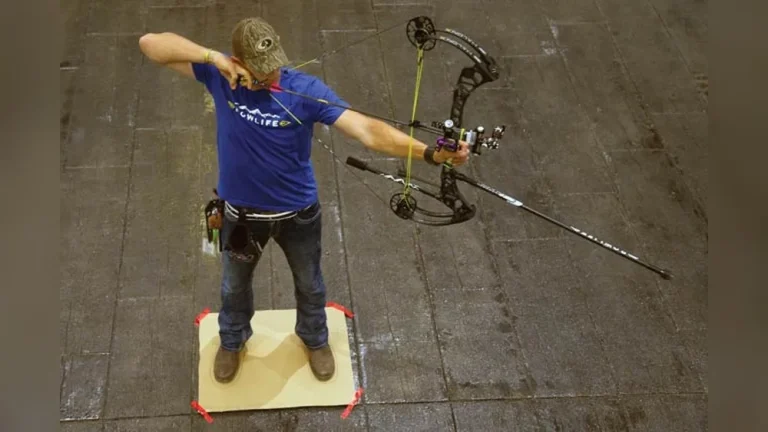
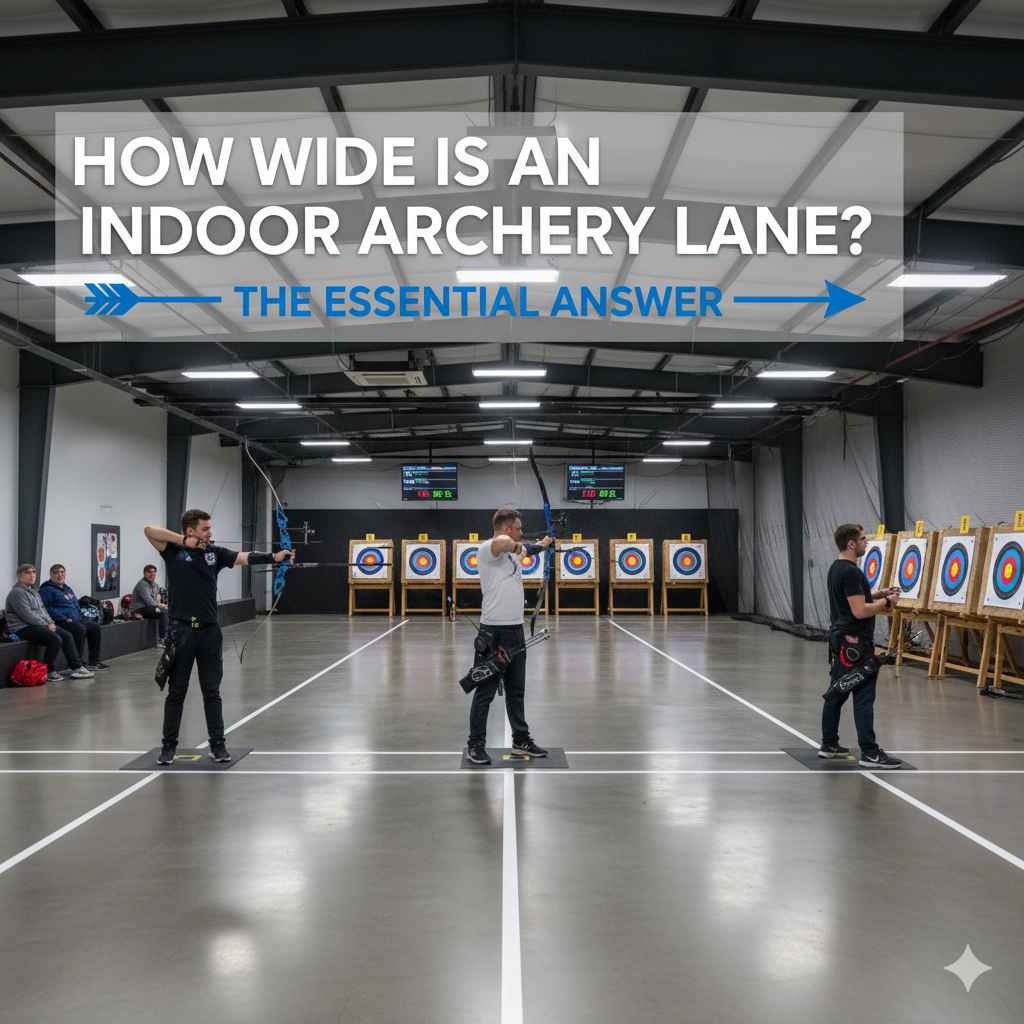
An official indoor archery lane, as defined by World Archery, requires a minimum width of 1.3 meters (about 4.3 feet) per archer. However, most local and commercial ranges provide more generous spacing, typically between 4 to 6 feet, to enhance safety, comfort, and provide ample room for equipment and movement.
Walking into an indoor archery range for the first time is exciting. You see the long lanes, the colorful targets, and hear the satisfying thwack of arrows hitting their mark. But you might also wonder, “Do I have enough space here?” It’s a common question, and feeling crowded can make anyone a little nervous. Don’t worry! Understanding how much room you have—and why—is a simple way to build confidence.
Knowing the standard width of an indoor archery lane helps you feel comfortable, shoot safely, and focus on what matters most: hitting your target. In this guide, I’ll break down everything you need to know about lane dimensions, from official rules to what you’ll find at your local range. Let’s get you ready to step up to the shooting line with complete peace of mind.
Understanding the “Official” Lane Width
When we talk about official rules, the main governing body for international archery is World Archery. Their guidelines set the standard for competitions around the globe, and these rules are often the starting point for how commercial ranges are designed. So, what do they say about lane width?
According to the World Archery rulebook, the minimum space allocated for each archer on the shooting line is crucial for safety and fairness in a competitive environment. This space is measured from the center of one archer’s position to the center of the next.
For indoor archery, the official standard is:
- Minimum Width Per Archer: 1.3 meters (approximately 4.3 feet).
This measurement ensures that every competitor has a standardized amount of space. It prevents archers from bumping elbows, interfering with each other’s shots, and provides enough room to safely draw a bow and release an arrow. While it might sound a bit snug, this minimum is designed for efficiency in tournament settings where many archers need to shoot at once.
Why Does a Standard Width Matter?
You might think a few inches here or there wouldn’t make a difference, but a standardized lane width is important for several reasons:
- Safety First: Archery is an incredibly safe sport when proper rules are followed. Adequate spacing is the most basic and critical safety rule. It prevents an archer’s bow or arm from making contact with the person next to them during a shot, which could cause the arrow to fly off course.
- Personal Space and Comfort: Feeling cramped is a distraction. When you have enough room, you can focus on your form, your breathing, and your anchor point without worrying about the person beside you. This mental comfort is key to consistent shooting.
- Room for Equipment: Archers don’t just stand there with a bow. You have a quiver of arrows, perhaps a bow stand, and maybe a spotting scope. A proper lane gives you space to place your gear without it becoming a tripping hazard for you or your neighbors.

What to Expect at Your Local Indoor Archery Range
Now, while the official rulebook says 1.3 meters is the minimum, you’ll be happy to know that most public and commercial ranges give you more room to breathe. They aren’t trying to cram in the maximum number of archers for a world championship; their goal is to provide a safe, comfortable, and enjoyable experience for everyone.
At a typical indoor range, you can expect the shooting lanes to be:
- Wider than the Minimum: Most ranges provide lanes that are between 4 and 6 feet wide. Some are even more generous.
- Clearly Marked: The floor will have clear markings indicating the center of your lane, helping you stay in your designated area.
- Well-Defined: Often, there are physical dividers between lanes, like a small table for gear or a short partition, which helps define each archer’s personal space.
This extra space is a huge benefit for beginners. It gives you plenty of “oops” room as you’re learning to handle your bow and find your rhythm. You won’t feel rushed or pressured by having someone right on top of you.
The Different Zones of an Archery Range
An indoor archery range is more than just the lane itself. It’s a carefully designed space with different zones, each with a specific purpose. Understanding these zones is part of learning range etiquette and safety.
Here’s a breakdown of the key areas and their typical dimensions:
| Zone | Description | Typical Dimension/Requirement |
|---|---|---|
| Shooting Lane | The designated area for a single archer, extending from the shooting line to the target butt. | 4 to 6 feet wide. |
| Shooting Line | The line you straddle or stand behind when you are actively shooting your bow. | Clearly marked on the floor. |
| Waiting Line | A line located behind the shooting line where archers and spectators must stand when the range is “hot” (when archers are shooting). | At least 10 feet (about 3 meters) behind the shooting line. |
| Equipment Area | The space between the shooting line and the waiting line where you can place bow stands, quivers, and other gear. | Part of the 10+ feet safety buffer. |
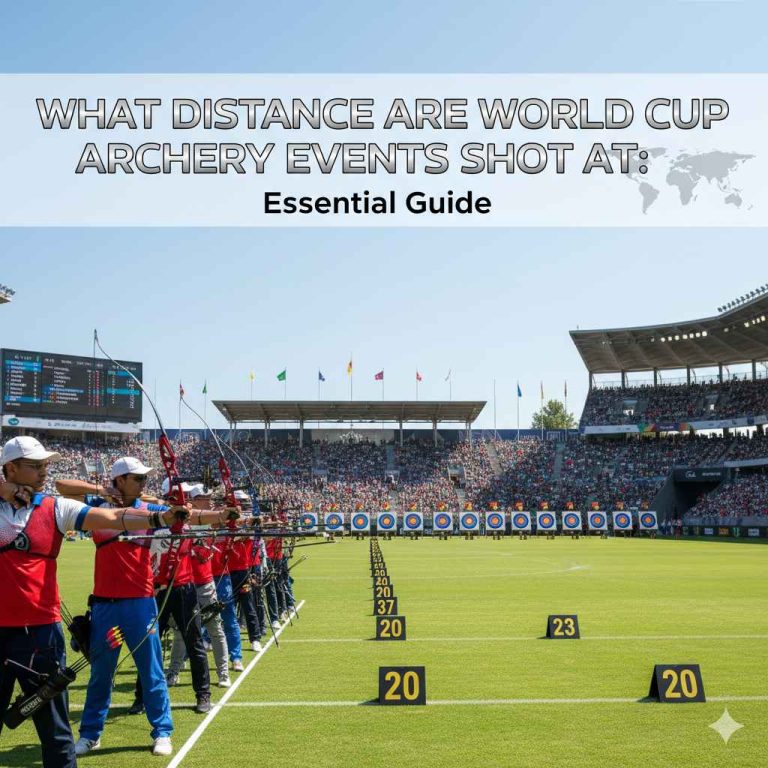
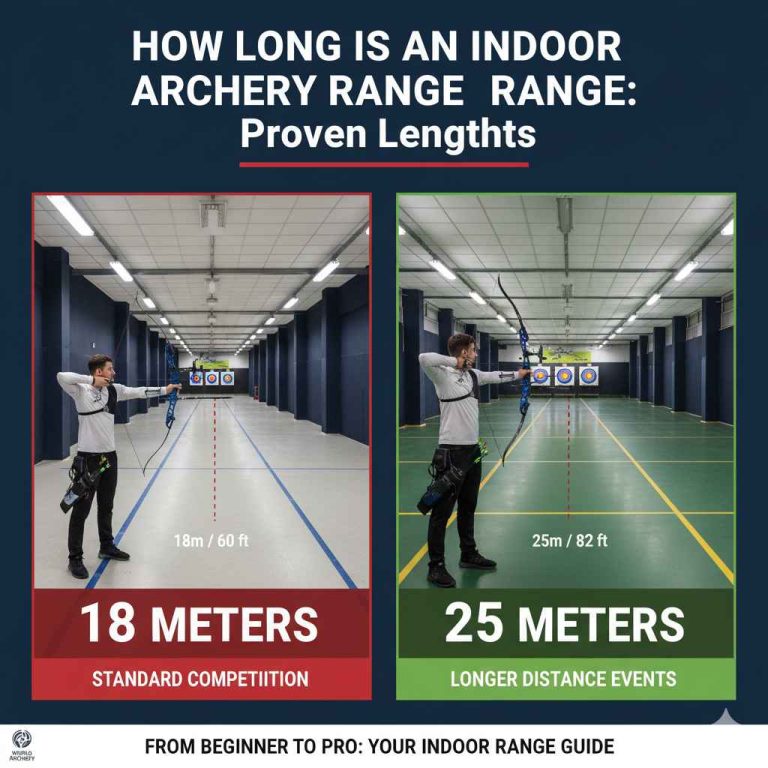
| Target Line | The line where the target butts are placed. The distance from the shooting line to the target line is the shooting distance. | Standard indoor distance is 18 meters (about 20 yards or 60 feet). |
The large buffer zone behind the shooting line is a critical safety feature. It keeps people who are not actively shooting far away from the archers’ bows and arrows. It also provides a clear walkway for people to move behind the line without disturbing those who are focused on their shot.
Factors That Influence Indoor Lane Width
While we’ve discussed the official minimums and the commercial averages, the actual width of a lane can sometimes vary based on a few other factors. It’s helpful to know what these are so you can understand why one range might feel different from another.
1. Type of Archery
The style of archery being practiced can influence space requirements. For example:
- Recurve & Compound Bows: These are the most common bows you’ll see indoors. The standard 4-to-6-foot lane is perfect for these.
- Traditional & Longbows: Archers using traditional bows without sights (a style called “barebow” or “instinctive” shooting) might move a bit more as they aim. While they don’t need a wider lane, a comfortable amount of space is always appreciated.
- Group Classes & Youth Programs: When a range hosts a beginner’s class or a youth league, they might use wider lanes or leave an empty lane between students to give the instructor more room to walk back and forth and provide hands-on coaching safely.
2. Accessibility Needs
Modern ranges are designed to be inclusive. This means providing adequate space for archers with different mobility needs. For example, a lane designed for wheelchair access needs to be wider to accommodate the chair’s footprint and allow for easy movement. Organizations like USA Archery provide resources for creating adaptive and accessible archery environments, which includes considerations for lane spacing.
3. Range-Specific Layout
Sometimes, the width of the lanes simply comes down to the physical dimensions of the building. A range owner will design the layout to maximize the number of lanes while adhering to all safety standards. They also have to account for support pillars, entryways, and emergency exits, which can sometimes result in a few lanes being slightly wider or narrower than others.
Setting Up Your Own Indoor Archery Lane at Home
For dedicated hobbyists, the idea of having a personal indoor range in a basement or garage is very appealing. If you’re considering this, safety becomes your number one responsibility. You need to think about more than just lane width—you need to consider length, height, and most importantly, what’s behind your target.
Here’s a basic checklist for a safe home setup:
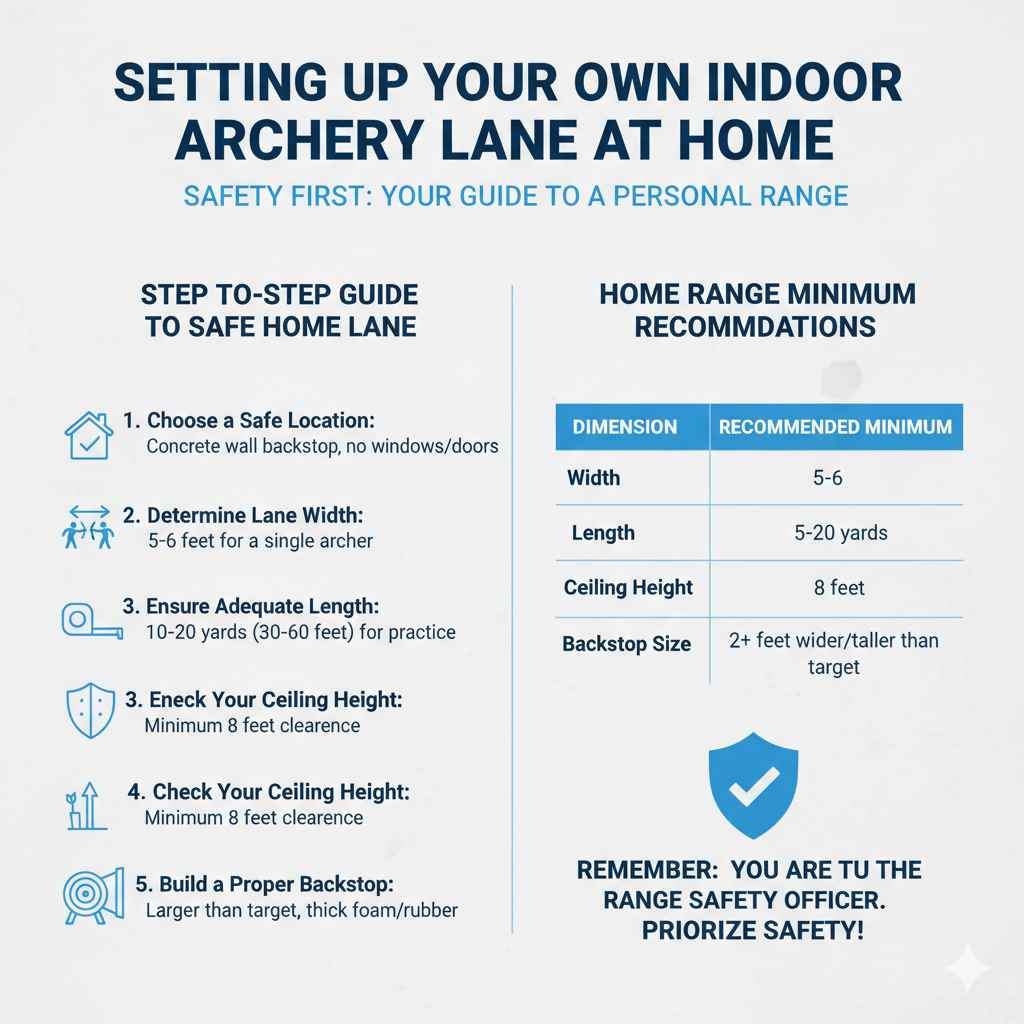
Step-by-Step Guide to a Safe Home Lane
- Choose a Safe Location: Your practice area must be in a place where there is absolutely no risk of anyone walking behind or near the target. A basement with a solid concrete wall behind the target is ideal. Never shoot in a direction where a missed arrow could go through a wall, door, or window.
- Determine Your Lane Width: For a single archer, you should give yourself at least 5 to 6 feet of width. This gives you plenty of elbow room and space for your gear. If you plan to have a friend shoot with you, you’ll need to double that.
- Ensure Adequate Length: The standard indoor distance is 18 meters (about 60 feet). However, most people don’t have that much space. A 10- or 15-yard range is still fantastic for practicing form and consistency. Make sure you have a few extra feet behind your shooting line for a safe waiting area.
- Check Your Ceiling Height: You need enough vertical clearance so your bow limbs don’t hit the ceiling when you draw. A minimum of 8 feet is recommended, but more is always better.
- Build a Proper Backstop: This is the most critical safety element. Your target butt alone is not enough. You need a reliable backstop behind and around your target to catch any stray arrows. Materials like rubber horse stall mats, specialized archery netting, or thick foam panels can work well. The backstop should be significantly larger than your target.
Here is a table summarizing the minimum space recommendations for a safe and functional home archery lane.
| Dimension | Recommended Minimum for Home Range | Notes |
|---|---|---|
| Width | 5 – 6 feet | Allows for comfortable movement and space for gear. |
| Length | 10 – 20 yards (30 – 60 feet) | Even short distances are great for form practice. |
| Ceiling Height | 8 feet | Prevents bow limbs from hitting the ceiling on the draw. |
| Backstop Size | At least 2 feet wider and taller than your target | Crucial for catching stray arrows and ensuring safety. |
Remember, when you build a home range, you are the range safety officer. Always prioritize safety over convenience. If you’re unsure, it’s better to stick to a professional range.
Frequently Asked Questions (FAQ)
1. How long is a standard indoor archery lane?
The standard competition distance for indoor archery is 18 meters, which is approximately 20 yards or 60 feet. Most indoor ranges are set up for this distance, though some may also have lines for shorter distances (like 10 or 15 yards) for beginners or youth archers.
2. Can two people share a single archery lane?
Generally, no. For safety reasons, only one archer should be on the shooting line in a single lane at a time. Sharing a lane typically means taking turns shooting. One person shoots their arrows, returns to the waiting line, and then the other person takes their turn. Never stand next to someone in the same lane while they are shooting.
3. What is the difference between the “shooting line” and the “waiting line”?
The “shooting line” is the marked line on the floor where you stand to shoot your arrows. The “waiting line” is another line set back at least 10 feet behind the shooting line. Everyone who is not actively shooting, including other archers and spectators, must stand behind the waiting line for safety.
4. Is 4 feet wide enough for an archery lane?
Yes, 4 feet is generally considered sufficient width for an archery lane, especially since the official minimum is about 4.3 feet (1.3 meters). Most commercial ranges offer lanes between 4 and 6 feet wide, which provides enough personal space for most archers to shoot safely and comfortably.
5. Do I need my own equipment to shoot at a public indoor range?
Not at all! Nearly all public archery ranges offer rental equipment, including bows, arrows, and safety gear like arm guards. This is a perfect way for beginners to try the sport without investing in their own gear right away. The range staff will help you get set up with equipment that fits you properly.
6. What is the most important safety rule for an indoor archery range?
The most important rule is to only “nock” (put an arrow on the bowstring) and draw your bow when you are standing on the shooting line and the range is declared “hot” or clear for shooting. Never point a drawn bow anywhere but downrange toward the target. Always listen to the commands of the range safety officer.
7. How much clear space should be behind the targets?
There should be a significant safety zone behind the targets, often called an “arrow curtain” or backstop wall, followed by a clear area. According to guidelines from organizations like the Archery Trade Association, this overshoot area should be clear of people and obstacles for a considerable distance, often 50 yards or more, even for an indoor range if there isn’t a solid structural wall like concrete or cinder block immediately behind the targets.
Final Thoughts: Comfort Is Key
So, how wide is an indoor archery lane? While the official rule is 1.3 meters, the practical answer you’ll find at most ranges is a comfortable 4 to 6 feet. This extra space isn’t just a luxury—it’s a fundamental part of creating a safe and encouraging environment where you can relax, focus, and enjoy the sport.
The next time you step into an archery range, take a moment to notice the space around you. See the clearly marked lines and the generous buffer zones. They are all there to help you succeed. Embrace your space, trust in the safety rules, and let your arrows fly. The more comfortable you feel on the line, the more consistent and accurate your shots will become. Happy shooting!