What Size Fiber for Indoor Archery: Expert Guide to Precision
Indoor archery is a sport where precision matters more than almost anything else. Archers spend hours perfecting their stance, release, and aiming technique. But even the best archer can miss the mark if their equipment is not suited for the environment. One piece of gear that often gets overlooked is the fiber optic sight pin, especially its size. Choosing the right fiber size can make a surprising difference to your accuracy, consistency, and confidence on the range. If you’ve ever wondered what size fiber you should use for indoor archery, this guide will help you make an informed and confident choice.
Why Fiber Size Matters In Indoor Archery
Most indoor archery takes place at a fixed distance, usually 18 meters (about 20 yards). The lighting is controlled, the targets are smaller, and the scoring rings are tighter. In this setting, your sight picture must be as clear as possible. The fiber in your sight pin determines how bright and large your aiming point appears.
A fiber that’s too thick can cover too much of the target, making it hard to aim precisely at the center. A fiber that’s too thin may be hard to see, especially under low lighting or for archers with weaker eyesight.
Getting the right balance is key.
How Fiber Optic Sights Work
Fiber optic pins gather light from the environment and concentrate it into a bright, visible dot at the tip of your sight pin. This bright spot is what you use to aim at the target. The diameter of the fiber, usually measured in thousandths of an inch (like .010″, .019″, .029″), affects both the brightness and the size of the dot you see.
In indoor archery, where targets are close and lighting is consistent, the ideal fiber size is different from what you might use outdoors.
Common Fiber Sizes For Indoor Archery
Archery manufacturers typically offer fiber pins in three main sizes:
- .010 inch (0.25 mm): Thinest, smallest dot
- .019 inch (0.48 mm): Medium, balanced size
- .029 inch (0.74 mm): Thickest, brightest dot
Here’s a quick comparison:
| Fiber Size | Dot Appearance | Visibility | Precision | Common Use |
|---|---|---|---|---|
| .010″ | Very small | Low | Very high | Indoor, advanced |
| .019″ | Medium | Good | High | Indoor/outdoor, versatile |
| .029″ | Large | Very high | Low | Outdoor, beginners |
Pro Tip: The smaller the fiber, the finer your aiming point. But if it’s too small to see clearly, your accuracy can actually suffer.
Factors That Influence Fiber Size Choice
Picking the right fiber size is not just about copying what others use. Several personal and technical factors play a role:
1. Target Size And Distance
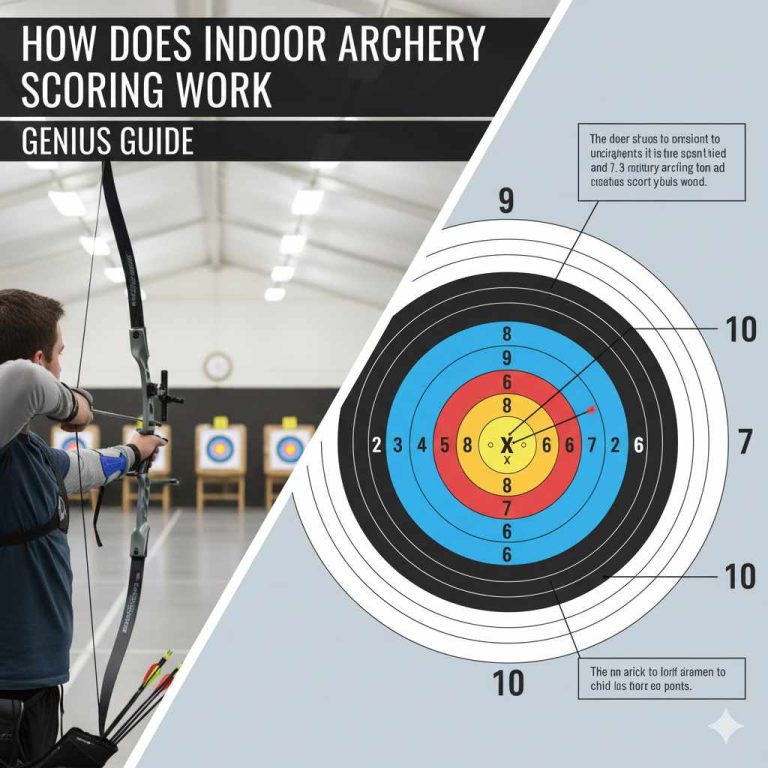
Indoor archery targets are usually 40 cm in diameter, with the 10-ring being just 2 cm wide. At 18 meters, a large fiber can cover the entire 10-ring, making it difficult to aim at the center. Smaller fibers (.010″ or .019″) allow you to see the gold and still have a clear aiming point.
2. Lighting Conditions
Indoor ranges often have steady, even lighting. A thinner fiber (. 010″) can work well because you don’t need extra brightness. If the range is dim or the lighting is inconsistent, a. 019″ fiber may help you see the pin more clearly.
3. Archer’s Vision
If you have strong eyesight, you may prefer a thin fiber for maximum precision. If you struggle to see small details or shoot with glasses, a. 019″ fiber might be easier to see.
4. Bow Type And Draw Weight
Compound archers often use scopes with fiber pins, while recurve shooters may use stick-on fiber pins or just a ring. Heavier draw weights can cause the bow to shake more, making a tiny dot harder to hold steady on target.
5. Experience Level
Beginners often feel more confident with a larger, brighter dot. Advanced archers may sacrifice some brightness for better precision.
Pros And Cons Of Different Fiber Sizes
Let’s break down the main advantages and disadvantages of each common size for indoor archery.
.010″ Fiber
Pros:
- Offers the most precise aiming point
- Covers less of the target center
- Reduces “halo” effect on small targets
Cons:
- Can be hard to see, especially for older eyes
- May disappear in poor light
- Harder to find in a hurry during tournaments
.019″ Fiber
Pros:
- Good balance between precision and visibility
- Works for most lighting conditions
- Popular with both recurve and compound shooters
Cons:
- Slightly larger dot, may still cover some of the 10-ring
- Not as precise as .010″ for aiming at very small spots
.029″ Fiber
Pros:
- Extremely bright and easy to see
- Great for beginners or those with vision challenges
Cons:
- Covers most or all of the 10-ring at 18 meters
- Reduces ability to aim at precise spot
- Not recommended for competitive indoor archery
How Fiber Size Affects Your Sight Picture
Your sight picture is what you see when you line up your bow, peep, and sight pin with the target. The fiber size changes this picture dramatically.
A. 010″ pin gives a sharp, small dot that lets you “float” the pin inside the 10-ring. This is ideal for archers who want to aim at the absolute center. A. 019″ pin creates a slightly bigger dot, which can help your eye focus but may begin to cover the 10-ring.
A. 029″ pin can almost blot out the gold, making it difficult to aim precisely.
Example: When I tested a .010″ fiber during a tournament, I found my groups became tighter because I could see the whole 10-ring. However, one must be careful with lighting; if the range is a bit dark, the dot can be lost completely.
Fiber Size And Scoring Potential
Aiming is all about reducing margin for error. If your fiber covers the 10-ring, you’re guessing where the center is, which can lead to more 9s than 10s. If your fiber is too small to see clearly, you might hesitate or rush your shot.
Archers shooting for high scores, like those chasing a perfect 600 indoor round, almost always choose the smallest fiber size they can see reliably. A. 010″ or. 015″ is common among professionals. For club-level or newer archers, a. 019″ is usually a safe bet.
Adjusting To A New Fiber Size
Switching fiber sizes is not just a matter of swapping a pin. Your brain and eyes need time to adjust to the new sight picture. Here’s how to make the transition smoother:
- Shoot practice ends with both your old and new fiber, comparing group size and comfort.
- Adjust your peep sight if needed. A smaller pin may need a slightly smaller peep for best focus.
- Give it time. Your sight picture may look strange at first, but after a week of shooting, it will feel natural.
Does Fiber Color Matter For Indoor Archery?
While fiber size is the main focus, color also plays a role. Most archers use green or red fibers. Green is generally brighter and easier to see in most lighting, but some people’s eyes pick up red or even blue better.
The best way to choose a color is to try a few at your local shop or club. If you notice eye fatigue or trouble focusing, try a different color or even a different fiber brand.
The Role Of Fiber Length And Light Gathering
Many archers focus only on the diameter, but the length of fiber exposed to light affects brightness, too. A longer fiber gathers more light, making the dot brighter. Some sights let you adjust this by coiling more fiber around the scope housing. Indoors, too much brightness can cause a distracting “halo” or blurry dot.
Pro Tip: Shorten your exposed fiber length indoors if your dot looks too bright or fuzzy. This will give you a crisper aiming point.
Comparison: Indoor Vs. Outdoor Fiber Size
Is there a difference in fiber size choice between indoor and outdoor archery? Absolutely. Outdoors, you’re dealing with more variables, changing light, longer distances, and sometimes larger targets.
Here’s a side-by-side look:
| Condition | Recommended Fiber Size | Reason |
|---|---|---|
| Indoor (18m, 40cm target) | .010″ or .019″ | Precision needed for small target, controlled light |
| Outdoor (50m+, large target) | .019″ or .029″ | Need more brightness, target looks smaller |
When To Consider A Non-fiber Sight Pin
Not all indoor archers use fiber pins. Some prefer a solid metal pin or even a small scope dot (especially in recurve). These options eliminate the variable brightness of fiber and provide a consistent sight picture. However, they lack the brightness advantage, so they’re best in well-lit ranges.
Real-world Examples: What Top Archers Use
Many competitive indoor archers share their setups in forums or interviews. While preferences vary, a few patterns emerge:
- Recurve archers often use a .010″ or .015″ fiber, or a 1.0 mm solid dot.
- Compound archers typically choose .010″ or .019″ fibers for a balance of clarity and precision.
- Archers with vision challenges may use .019″ or larger, accepting a small loss in aiming precision for better visibility.
If you’re unsure, start with a. 019″ fiber. It offers a good compromise and is widely available.
Common Mistakes When Choosing Fiber Size
- Copying another archer’s setup without considering your own needs.
- Going too small and losing your aiming point under range lighting.
- Going too large and covering the 10-ring, hurting your scores.
- Ignoring fiber length, too much exposed fiber can cause a blurry, oversized dot.
- Forgetting to test, always try before committing for competition.
How To Experiment And Find Your Best Fiber Size
Finding your ideal fiber size is a personal process. Here’s a step-by-step approach:
- Try multiple sizes at your local range, ideally under real competition lighting.
- Record your group sizes and scores with each fiber size over several sessions.
- Ask for feedback from experienced archers or coaches.
- Trust your comfort, if you’re always searching for the dot, it’s too small; if you can’t see the center ring, it’s too big.
Practical Tips For Maximizing Performance
- Clean your fiber regularly to prevent dust or residue from blocking light.
- Check for nicks or cracks, damaged fiber can scatter light and create a fuzzy dot.
- Bring spare fibers to tournaments in case of breakage.
- Adjust your peep sight to match your pin size for best clarity.
- Practice with your competition setup, last-minute changes can hurt confidence and results.
Fiber Size And Sight Scope Compatibility
Not all scopes can accept every fiber size. Some have preset holes or channels sized for. 019″ or. 029″. Before buying new fiber, check your sight’s manual or ask at your local shop.
Example: I once bought a .010″ fiber for my older scope, only to find it was too loose in the pin channel. Switching to a .019″ fiber is necessary to achieve a snug, secure fit.
Are There Advanced Options?
Some archery sights allow you to swap fibers quickly, or use a combo of fiber plus a solid dot for backup. Others have variable brightness controls to adjust for changing conditions. If you shoot both indoor and outdoor, consider a sight with these features for maximum flexibility.
Summary Table: Quick Guide For Fiber Size Selection
Here’s a reference for quick decision-making:
| Situation | Recommended Fiber Size | Comments |
|---|---|---|
| Indoor, 18m, good lighting | .010″ | For most advanced/competitive archers |
| Indoor, 18m, poor lighting | .019″ | Better visibility, slight loss of precision |
| Beginner or vision issues | .019″ or .029″ | Confidence and visibility outweigh precision |
| Switching between indoor/outdoor | .019″ | Versatile for all conditions |
Frequently Asked Questions
What Is The Most Popular Fiber Size For Indoor Archery Tournaments?
The .010″ fiber is the most popular among elite indoor archers because it allows precise aiming at the small 10-ring without covering it. However, club and recreational archers often use a .019″ for easier visibility, especially in less-than-ideal lighting.
Can I Use The Same Fiber Size For Both Indoor And Outdoor Archery?
You can, but it’s not always optimal. Many archers use a .019″ fiber as a compromise for both environments. For best results, use a smaller fiber indoors and a larger one outdoors where targets are farther and need a brighter dot.
How Do I Change The Fiber In My Sight Pin?
Most fiber optic sights let you remove and replace the fiber by unscrewing the sight pin assembly. Thread the new fiber through the pin, secure it, and trim to the correct length. Always follow your sight manufacturer’s instructions to avoid damaging the pin.
Will The Color Of My Fiber Affect My Score?
Fiber color can affect your ability to focus,