What is a Good Indoor Archery Score: Benchmarks and Tips
Indoor archery is a sport that blends precision, focus, and consistency. For many archers, the journey starts with one key question: what is a good indoor archery score? Whether you shoot for fun or aim for medals, understanding what counts as “good” can help set realistic goals and track progress. But the answer isn’t always simple. Indoor archery has different scoring systems, equipment types, and experience levels. What’s impressive for a beginner might be average for a seasoned competitor. This article breaks down scoring standards, explains how scores are calculated, and compares what’s considered good across age groups, bow types, and competition levels. You’ll also find data tables, expert tips, and answers to questions new archers often miss.
How Indoor Archery Scoring Works
Before you can judge what makes a “good” score, it’s important to know how indoor archery scoring actually works. Most indoor competitions use standard distances and targets, but the scoring details can vary.
Standard Indoor Rounds
The two most popular indoor rounds are the World Archery 18-meter round and the NFAA 20-yard round.
- World Archery (WA) 18m Round: Archers shoot from 18 meters at a 40 cm target face. Each round consists of 60 arrows. The center ring scores 10 points, with scores decreasing by one point per ring, down to 1 point for the outer ring.
- NFAA 20yd Round: Mostly used in the US, this round uses a 40 cm blue/white target at 20 yards. It also scores up to 5 points per arrow.
Scoring Example
If you shoot 60 arrows and hit the very center each time in a WA round, your maximum score is 600. In reality, even top archers rarely achieve a perfect score.
Scorecard Breakdown
Here’s how a typical scorecard might look for the World Archery 18m round:
| End | Arrows (Score) | Total for End | Cumulative Total |
|---|---|---|---|
| 1 | 10, 9, 10, 8, 9, 9 | 55 | 55 |
| 2 | 10, 10, 9, 9, 8, 10 | 56 | 111 |
| 3 | 9, 10, 9, 10, 8, 9 | 55 | 166 |
This pattern continues for 10 ends, with a final total out of 600.
What Is A “good” Indoor Archery Score?
The idea of a “good” score depends on experience, bow type, and competition level. Here’s what you need to know.
Factors That Influence A Good Score
- Bow Type: Compound bows are more accurate than recurve or barebow, so average scores are higher.
- Experience Level: Beginners have different standards than advanced archers.
- Age Category: Juniors and seniors have different expectations.
- Competition Standards: Club, national, and world levels each raise the bar.
Typical Score Ranges
Let’s break down what’s generally considered “good” for different archers in the World Archery 18m round (out of 600 points):
| Level | Recurve | Compound | Barebow |
|---|---|---|---|
| Beginner | 350, 450 | 400, 500 | 250, 350 |
| Intermediate | 450, 530 | 500, 570 | 350, 450 |
| Advanced | 530, 580 | 570, 595 | 450, 530 |
| Elite | 580, 600 | 595, 600 | 530, 600 |
Pro Tip: Many archers are surprised by how much scores can jump with focused training, even within a few months.

Credit: www.usarchery.org
How Scores Differ By Bow Type
Different bows offer different levels of precision and support, which impacts scoring potential.
Compound Bow
Compound bows have sights, release aids, and let-off (reduced holding weight at full draw). This technology makes them the most accurate bow type. In international competitions, world-class compound shooters often score above 590/600. Even club-level shooters can reach 540, 570 with regular practice.
Recurve Bow
Recurve bows (used in the Olympics) are less mechanically advanced but still precise. Scores above 550 are excellent at the club level. Top international recurve archers often shoot 585 or more.
Barebow
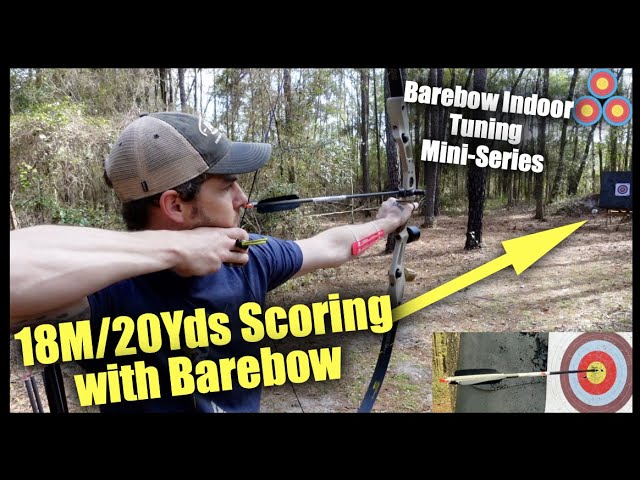
Barebow archers use the same bow as recurve but without sights or stabilizers. This style is more challenging, so scores are lower. Anything above 500 is impressive, even for advanced shooters.
Comparing Bow Types
Here’s a quick comparison of top achievable scores by bow:
| Bow Type | Typical Elite Score (18m) | Max Possible |
|---|---|---|
| Compound | 595, 600 | 600 |
| Recurve | 585, 600 | 600 |
| Barebow | 550, 600 | 600 |
Scoring Standards By Competition Level
The expectations for a good score change dramatically depending on where you shoot.
Club Level
At a local club, a “good” score is one that shows progress from your starting point. For recurve beginners, hitting 400 is a great milestone. Compound shooters might aim for 450. Most clubs celebrate personal bests more than absolute numbers.
National Level
To compete at the national level (such as USA Archery Indoor Nationals), scores need to be much higher. For example, reaching the top 10 in recurve might require 570+ for men and 560+ for women. In compound, 585+ is often needed to be competitive.
International Level
At international events (like the World Archery Indoor Championships), the standard is even higher. Qualifying rounds often see top recurve and compound archers scoring 590 or more. Even a small drop (one or two points) can make the difference between medals and missing the finals.
Age And Gender Categories
Scores can also vary by age group and gender. Juniors and masters (archers over 50) often have lower top scores, but the ranges are still close for advanced shooters.
Credit: www.youtube.com
How To Improve Your Indoor Archery Score
A good score is not just about talent, it’s about consistent practice and smart technique. Here’s how you can raise your scores over time.
Focus On Form
Perfecting the basics, stance, grip, anchor point, and release, builds a strong foundation. Even minor changes here can boost your accuracy.
Practice With Purpose
Instead of shooting dozens of arrows without a plan, set specific goals. For example, focus on grouping arrows tightly or hitting a certain score for each end. In my experience, tracking ends (groups of 3 or 6 arrows) helps spot patterns and areas to improve.
Use Feedback And Video
Filming your shot process can reveal issues you might not feel, like dropping your bow arm or inconsistent anchor. Many top archers watch their own videos to fine-tune technique.
Equipment Matters
Well-tuned equipment reduces errors. For beginners, it’s easy to overlook simple things like loose nocks or poorly adjusted sights, which can hurt scores. Regularly check your bow and arrows.
Manage Nerves
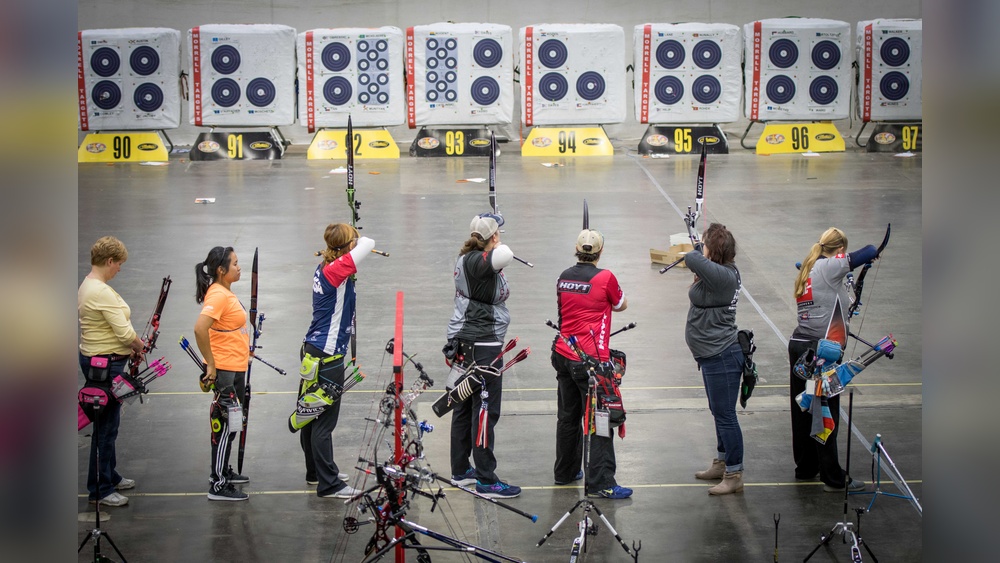
Indoor events often feel more intense than outdoor competitions due to close quarters and spectators. Practicing under mild pressure (like mock tournaments or friendly challenges) can help you perform your best on competition day.
Track Progress
Keep a shooting diary or digital log. Record scores, conditions, and feelings after each session. This helps you see improvement over weeks and months.
Common Mistakes That Lower Scores
Even experienced archers make errors that cost points. Knowing what to avoid is just as important as knowing what to do.
Over-aiming
Trying too hard to keep the sight perfectly steady can lead to “target panic” and rushed shots. It’s better to accept small movements and focus on a smooth release.
Inconsistent Anchor Point
If your anchor point (where your hand touches your face) changes, so does your arrow flight. Consistency is key.
Ignoring Warm-ups
Skipping warm-up shots can lead to poor early performance. Muscles need a few ends to settle in, especially in cold indoor ranges.
Equipment Neglect
Not checking for worn-out strings, loose screws, or damaged arrows can lead to surprises during scoring rounds.

Credit: www.usarchery.org
Setting Realistic Goals
It’s tempting to compare your scores with elite archers, but improvement is personal. Here’s how to set goals that keep you motivated.
Short-term Goals
Set targets for each session, like improving your average per end or reducing “bad” shots. For example, aim to score at least 8 points on every arrow for one end.
Medium-term Goals
Work toward consistent personal bests over a month or season. Hitting a new high score in practice is just as valuable as a competition result.
Long-term Goals
Plan for milestones like breaking 500, 550, or even 580. Celebrate each achievement, and use it as motivation to reach the next level.
Avoiding Score Obsession
Remember, archery is a process. Focusing only on numbers can create stress and reduce enjoyment. Balance goal-setting with the love of the sport.
How Indoor Scores Compare To Outdoor Scores
Indoor scores are often higher than outdoor scores, even for the same archers. Here’s why:
- No wind: Indoor ranges are wind-free, so arrows fly straighter.
- Shorter distance: Most indoor rounds use 18m or 20yd distances, while outdoor rounds can be 70m or more.
- Consistent lighting: No sun or shadows to distract or affect aiming.
For example, a recurve archer who shoots 550 indoors might only score 600/720 outdoors at 70m due to more challenging conditions.
Recognizing Excellence: National And World Records
Looking at top scores can inspire and provide benchmarks. According to World Archery, the men’s recurve indoor world record is 599/600, while the compound men’s record is a perfect 600/600. Women’s records are only a few points lower. These scores show what’s possible at the very highest level (World Archery Records).
What Beginners Often Miss About Indoor Archery Scores
Many new archers focus only on the final number, but there’s more to scoring than meets the eye.
- Improvement is not linear: It’s normal to hit plateaus. Sometimes, your score will stay the same for weeks before jumping up.
- Scoring is only one measure: Grouping arrows tightly, even if not always in the center, is a sign of progress. Over time, tight groups can be moved into the bullseye.
- Every arrow counts: A single miss can drop you several places in a competition. Learning to recover from a bad shot is crucial for high scores.
- Scoring rings are small: At 18 meters, the 10-ring is only 4 cm wide. Hitting it consistently takes more than luck.
Sample Progression For A New Archer
Here’s an example of how a new recurve archer might improve over their first year:
- First month: Scores between 300, 350, with many arrows missing the gold.
- Three months: Scores rise to 380, 420 as form improves.
- Six months: Consistent 450+ as technique and confidence build.
- One year: Reaching 500+ with regular practice and occasional coaching.
Example: I’ve seen club members start at 350, feel stuck for months, and then break 500 after focusing on anchor point and mental routine. Consistency, not just talent, drives improvement.
Indoor Archery Score Classifications
Some countries and organizations offer classification badges for reaching score milestones.
- Archery GB (UK): Offers “Classified Archer” badges for scores achieved at registered shoots.
- USA Archery: Has “JOAD Stars” and “Adult Achievement” awards for hitting certain scores.
These programs give archers clear goals and celebrate progress at every level.
How To Use Your Score For Self-improvement
Your indoor archery score is a tool, not just a number. Here’s how to use it wisely.
- Analyze ends: Look for patterns, are low scores clustered in early ends? Maybe you need a better warm-up.
- Compare by conditions: Note if scores drop when you’re tired or the lighting is different.
- Set process goals: Instead of “score 550,” aim for “keep my anchor steady on every shot.”
- Ask for feedback: Share your scorecards with a coach or experienced friend for targeted advice.
Frequently Asked Questions
What’s The Difference Between A Perfect End And A Perfect Score In Indoor Archery?
A perfect end means you shoot the highest possible score for one round of arrows (usually 30 points for 3 arrows or 60 points for 6 arrows). A perfect score means you shoot the maximum on every arrow for the entire round, 600/600 for 60 arrows at 18m. Achieving a perfect score is extremely rare, even among elite archers.
How Can I Estimate My Outdoor Score Based On My Indoor Performance?
There’s no exact formula, but outdoor scores are usually lower due to longer distances, wind, and weather. If you shoot 550