Who Invented Olympic Archery: Uncovering the Origins
The Olympic Games have always been a stage where history meets modern sport, and archery is a perfect example of this blend. Watching athletes pull their bows with precision and composure, many people wonder: Who invented Olympic archery? The answer is not a single name or moment, but a fascinating journey that connects ancient traditions, international cooperation, and the evolution of the Olympic movement. In this article, you’ll discover how archery became an Olympic sport, who played key roles in its Olympic history, and how its rules and image have changed over time.
The Ancient Roots Of Archery
Archery is one of the oldest skills known to humans, stretching back tens of thousands of years. Long before there were Olympic stadiums, people used bows and arrows for hunting and warfare. Ancient cultures such as the Egyptians, Persians, Greeks, and Chinese all developed their own styles of archery. In some societies, being skilled with a bow was a matter of survival or honor.
Despite this long history, ancient archery was very different from what we see at the Olympic Games. There were no standardized targets, no official rules, and no global competitions. Instead, archery was deeply connected to local traditions and needs. For example, in England, the legendary tales of Robin Hood made the longbow famous, while in Japan, kyudo became a spiritual discipline.
Archery And The Birth Of Modern Sports
The journey from ancient skill to Olympic sport did not happen overnight. In the 19th century, archery began to change as societies in Europe and North America became more interested in organized recreation. Archery clubs started to appear, and people began to develop rules for friendly competition.
One of the first recorded modern archery tournaments took place in England in the late 1700s. By the mid-1800s, the sport was spreading across Europe and the United States. These early competitions often included both men and women, making archery one of the first sports to encourage female participation.
In 1844, the Grand National Archery Society (now Archery GB) held its first meeting in York, England. The rules they developed, such as shooting at fixed distances and scoring by rings, became the basis for future competitions. Archery was no longer just about survival or ceremony. It was becoming a true sport.
The First Olympic Archery Competitions
When the modern Olympic Games began in 1896, archery was not included in the first program. It made its Olympic debut at the 1900 Paris Games, thanks to the influence of French organizers who wanted to showcase local sports and traditions.
The first Olympic archery events were quite different from today’s competitions. They featured unusual formats, such as shooting at moving targets or at varying distances, and the rules changed from one Olympics to another.
| Year | Host City | Archery Events | Key Features |
|---|---|---|---|
| 1900 | Paris | 7 | Multiple target types, local styles |
| 1904 | St. Louis | 5 | Included team and women’s events |
| 1908 | London | 3 | Standardized British rules |
| 1920 | Antwerp | 10 | Last appearance before long break |
These early Olympic archery contests were often dominated by host nations, as the formats were unfamiliar to athletes from other countries. There was no international agreement on rules or equipment, which led to confusion and limited participation.
Why Archery Disappeared From The Olympics
After 1920, archery vanished from the Olympic Games for more than 50 years. The main reason was the lack of standardized rules. Each country had its own style, distances, and scoring systems, making it impossible to create fair, international competitions. Without a central governing body, the International Olympic Committee (IOC) could not include archery as a regular sport.
During this time, archery continued to grow in popularity at the local and national levels. Clubs and associations worked to unify rules, but progress was slow. It would take a new generation of leaders and a global vision to bring archery back to the Olympic stage.

Credit: en.wikipedia.org
The Founding Of The World Archery Federation
The real breakthrough for Olympic archery came in 1931, when representatives from seven countries gathered in Lwow, Poland (now Lviv, Ukraine) to form the Fédération Internationale de Tir à l’Arc (FITA), which is now called the World Archery Federation (WA). This organization aimed to standardize rules, promote international competitions, and work with the IOC to restore archery to the Olympics.
| Founding Countries | Year | Current Name |
|---|---|---|
| France, Poland, Sweden, Czech Republic, United States, Hungary, Belgium | 1931 | World Archery Federation (WA) |
FITA’s creation marked a turning point. By introducing unified rules, such as consistent shooting distances and target sizes, the group made it possible for athletes from any country to compete under the same conditions. They also organized the first World Archery Championships in 1931, which became an important annual event.
The Return Of Archery To The Olympic Games
It took several decades of lobbying and organizing by FITA before archery was readmitted to the Olympics. In 1972, at the Munich Games, Olympic archery finally returned with a clear set of international rules. This was a major step forward, as it allowed the sport to grow in both prestige and popularity.
The 1972 format included an individual competition for men and women, with athletes shooting at targets from a distance of 70 meters. The scoring system was based on a 10-ring target, with points awarded for accuracy. This format created a fair and exciting competition that was easy for both athletes and spectators to understand.
Since then, Olympic archery has continued to evolve, with new events (such as team and mixed team competitions) and improvements in equipment and training.

Credit: www.youtube.com
Key Figures In Olympic Archery’s History
Although no single person can claim to have “invented” Olympic archery, several individuals and organizations have played critical roles in its development:
- Pierre de Coubertin, The founder of the modern Olympics was a strong supporter of including traditional sports. While he did not invent Olympic archery, his vision made it possible for sports like archery to be part of the Games.
- FITA / World Archery Federation leaders, Figures such as Inger Frith (first female president of FITA) and Tom Dielen (current Secretary General) have worked tirelessly to promote the sport and maintain its Olympic status.
- Host nation organizers, In the early 20th century, local Olympic committees in France, the UK, and the USA were key in bringing archery into the Games, even if the rules varied widely.
- Innovative athletes, Champions like Darrell Pace (USA), who won gold in 1976 and 1984, and Kim Soo-Nyung (South Korea), one of the most decorated archers, have inspired new generations and helped raise the sport’s profile.
How Olympic Archery Rules Have Changed
The rules of Olympic archery have changed many times since the sport first appeared at the Games. The most important changes include:
- Standardized distances: Early Olympics used many different distances, but now all Olympic archers shoot from 70 meters.
- Target size and scoring: The official target is 122 cm in diameter with ten scoring rings.
- Match format: In the past, archers shot hundreds of arrows over several days. Today, the competition uses a knockout format, making it more exciting and TV-friendly.
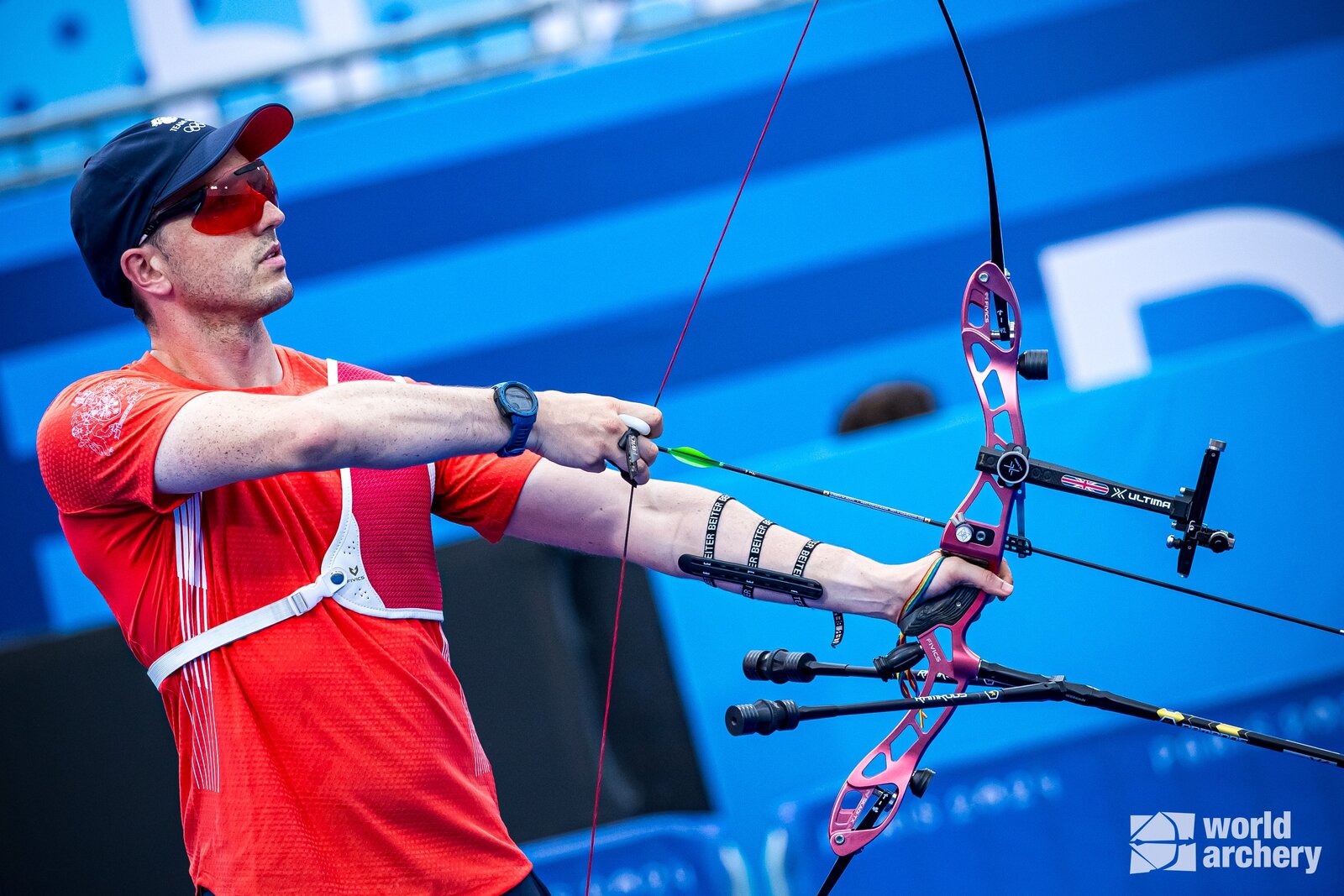
- Equipment regulations: Only recurve bows are allowed in the Olympics (compound bows are used in other competitions). There are strict rules about arrow length, bow weight, and accessories.
Let’s compare the key differences between early and modern Olympic archery:
| Aspect | Early Olympic Archery | Modern Olympic Archery |
|---|---|---|
| Distances | Varied (28m to 100m) | Fixed at 70m |
| Target Types | Multiple, often local | Standard 122cm round |
| Scoring | Varied systems | 10-point rings |
| Format | Long, multi-day totals | Elimination matches |
| Allowed Bows | Any type | Only recurve |
These changes have helped archery become a fair, exciting, and accessible sport on the Olympic stage.
Notable Olympic Archery Moments
Olympic archery has produced many memorable moments that show both the skill of the athletes and the drama of competition. Some highlights include:
- South Korea’s dominance: Since the 1980s, South Korea has become the powerhouse in Olympic archery, winning more than half of all available gold medals since 1984. Their success is often linked to their rigorous training system and national investment in the sport.
- First mixed team event: The 2020 Tokyo Olympics introduced the mixed team event, where one male and one female archer compete together. This format encourages gender equality and adds a new layer of strategy.
- Record-breaking scores: In 1996, South Korea’s Kim Kyung-wook set a record with a perfect 10 in the gold medal match, showing the high level of skill in modern Olympic archery.
How Olympic Archery Differs From Other Archery Sports
While Olympic archery is the most well-known form, it is not the only style of competitive archery. Here are some key differences:
- Recurve vs. compound bows: Olympic archers use only recurve bows. In other international competitions, compound bows (with pulleys and sights) are allowed.
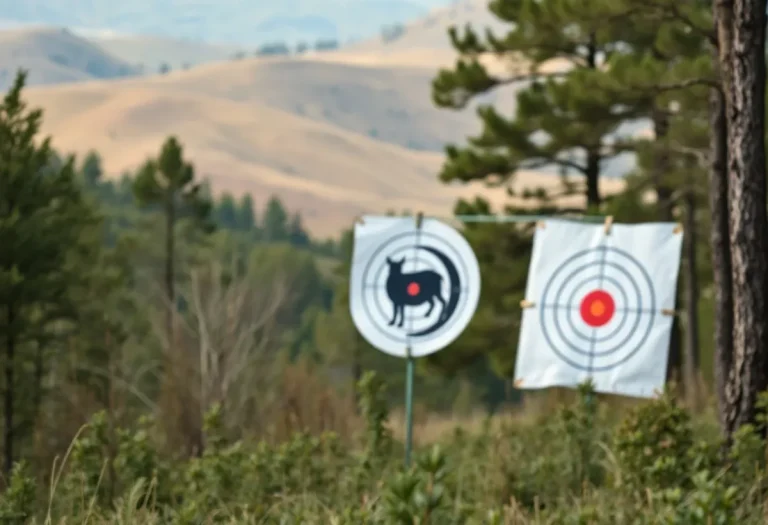
- Distances and targets: Olympic events always use a 70-meter distance and 122cm targets. Other competitions may use different distances, smaller targets, or even 3D animal shapes.
- Scoring formats: The Olympic set system (best-of-five sets) is unique. Other tournaments may use cumulative scoring or different elimination formats.
Pro Tip: If you are thinking about trying archery, start with a recurve bow and learn the basics of form and safety. This will give you a strong foundation whether you want to compete or just enjoy the sport.
Credit: archerygb.org
The Growth Of Archery Worldwide
Since its Olympic return, archery has grown rapidly around the world. According to the World Archery Federation, there are now over 160 national federations and millions of active archers. Countries like South Korea, the USA, Italy, and China have strong national teams and youth programs.
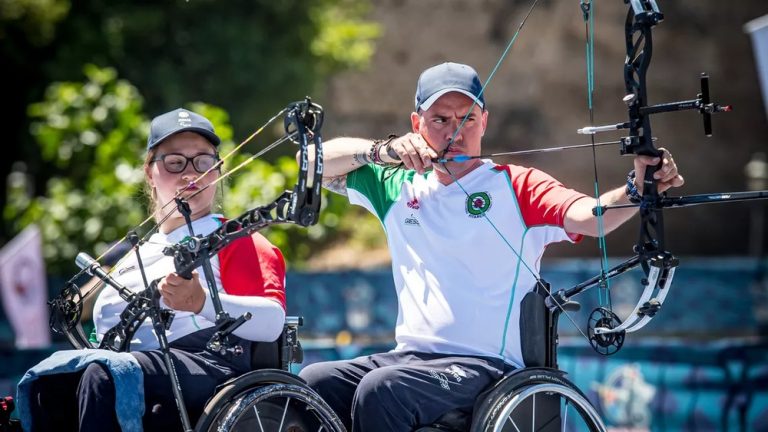
Archery’s popularity is helped by its accessibility. It is one of the few sports where people of all ages, genders, and physical abilities can compete together. Archery is also featured in the Paralympics, where athletes with disabilities compete at the highest level.
The Role Of Technology In Modern Olympic Archery
Technology has changed almost every part of Olympic archery, from equipment to training:
- Bows and arrows: Modern recurve bows use lightweight materials such as carbon fiber and aluminum, making them both strong and precise. Arrows are made from carbon or aluminum for better flight.
- Shooting aids: Stabilizers, sights, and finger tabs help archers achieve better accuracy and consistency.
- Training tools: High-speed cameras, sensors, and apps allow coaches and athletes to analyze form and make improvements.
- Broadcasting: Advances in TV and online streaming have made it possible for millions to watch Olympic archery live, increasing its global following.
In my experience attending international archery events, it is clear that technology helps athletes reach new heights, but the heart of the sport is still the same: focus, control, and the satisfying “thwack” of an arrow hitting the target.
The Olympic Archery Experience For Athletes
For athletes, competing in Olympic archery is the result of years of dedication. The path to the Olympics usually involves:
- National championships: Archers must perform well in their country’s top events.
- International tournaments: Competing at World Cups and World Championships is often required to qualify for the Olympics.
- Qualification rounds: Only a limited number of spots are available for each country, so competition is fierce.
The Olympic Games offer a unique pressure, with large crowds, worldwide attention, and the knowledge that one arrow can decide a lifetime dream. Many archers describe the experience as both thrilling and deeply challenging.
Debunking Common Myths About Olympic Archery
There are a few misconceptions about the sport that beginners should know:
- Myth: Only young, strong people can succeed.
- Reality: Archery relies on technique and mental focus more than brute strength. Athletes as young as 16 and as old as 40+ have won Olympic medals.
- Myth: Expensive equipment is the key to winning.
- Reality: While quality equipment helps, the best archers succeed through training, discipline, and experience.
- Myth: Archery is slow and boring to watch.
- Reality: Modern Olympic archery uses a fast-paced match format. Each arrow can shift the outcome, keeping fans on the edge of their seats.
Olympic Archery’s Impact On Popular Culture
Olympic archery has influenced movies, TV, and video games. Characters like Katniss Everdeen in “The Hunger Games” and Legolas in “The Lord of the Rings” have sparked interest among young fans. This has led to more people trying archery at local clubs, boosting the sport’s profile.
The Olympics also give archery a global platform every four years. When viewers see the focus, calm, and skill of Olympic archers, many are inspired to pick up a bow themselves.