What Type of Arrows for Youth Archery: A Complete Guide
Youth archery is more than just a hobby, it teaches focus, patience, and discipline. For young archers, choosing the right type of arrows is a crucial first step. The wrong arrow can make shooting difficult, reduce safety, or even discourage a child from continuing the sport. Parents and coaches often ask: What type of arrows should youth archers use? The answer depends on several factors, including age, draw weight, material, length, and the type of archery. This article breaks down everything you need to know, with specific tips, examples, and comparison tables to help you make an informed decision.
Why Arrow Choice Matters For Youth Archery
The right arrow makes a dramatic difference in a young archer’s experience. Arrows that are too heavy or long can cause poor form and missed shots. Too short, and they become a safety risk. Well-matched arrows help build confidence and proper technique.
In my experience as a coach, I have seen children improve quickly when using arrows suited to their size and skill level.
Youth archers often have lighter draw weights and shorter arms than adults. Arrows designed for adults can be difficult for them to manage. For beginners, using correct arrows prevents frustration and keeps archery fun, a key factor in encouraging continued participation.
Key Factors In Choosing Arrows For Youth
Several aspects influence the best arrow choice for young archers. Each factor below plays a role in safety and performance.
Draw Weight And Arrow Spine
Draw weight is the amount of force needed to pull back the bowstring. Youth bows typically range from 10 to 25 pounds. The arrow’s spine refers to how much it flexes when shot. Arrows with the wrong spine (too stiff or too flexible) will not fly straight.
- Lighter draw weights require arrows with softer (lower) spine ratings.
- Heavier draw weights need stiffer arrows.
Manufacturers list spine ratings, usually as a number (e. g. , 600, 800, 1200). The higher the number, the softer the spine.
Arrow Length
The arrow must be long enough to extend beyond the bow when drawn, but not so long that it becomes unwieldy. A simple method is to measure the archer’s draw length (from the nock point to the grip at full draw) and add 1-2 inches.
For most youth, arrows between 24 and 28 inches are common.
Warning: Never use arrows that are too short, this is a major safety risk.
Arrow Material
The most common materials for youth arrows are wood, aluminum, carbon, and fiberglass. Each has unique pros and cons.
- Wood: Traditional, affordable, but less durable and consistent.
- Aluminum: Lightweight, straight, and affordable. Good for beginners.
- Carbon: Strong, light, and durable. Popular for performance, but more expensive.
- Fiberglass: Very durable, often used in low-cost sets, but can splinter if damaged.
Arrow Weight
A heavier arrow provides more stability but needs more force to shoot. A lighter arrow is easier for youth to handle but may be blown off course by wind. Most youth archery programs recommend arrows weighing between 300 and 400 grains.
Fletching And Nocks
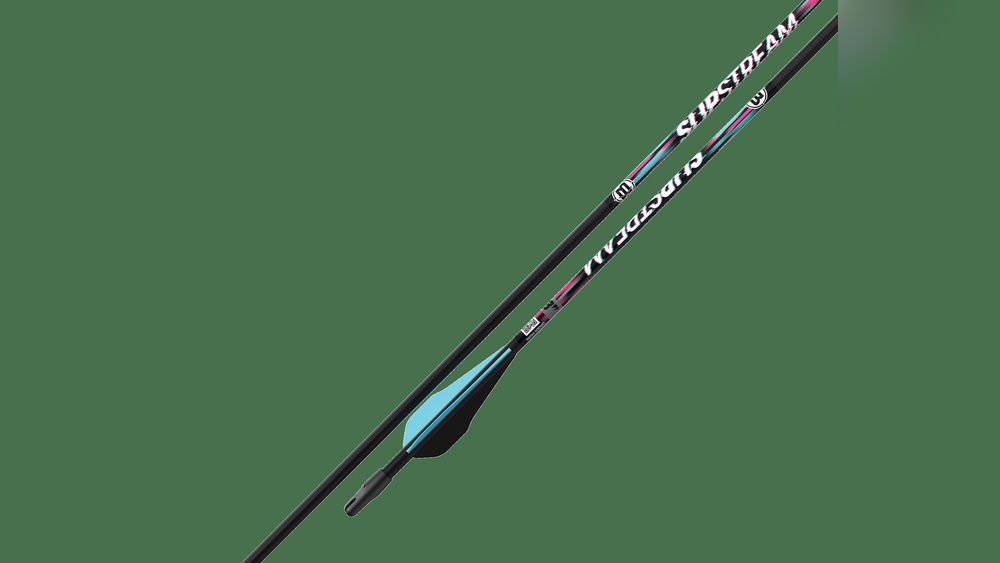
Fletching (the feathers or vanes) helps stabilize the arrow in flight. Plastic vanes are durable for outdoor use, while feathers are preferred for indoor or traditional archery. The nock (the notch at the end) should fit the bowstring snugly, not too tight or loose.
Arrow Point Type
Youth arrows generally come with glue-on field points or bullet points. These are safer and easier to remove from targets than broadheads or hunting tips.
Types Of Arrows For Youth Archery
Let’s compare the main types of arrows available for young archers. This overview focuses on what works best for different ages, skills, and budgets.
| Arrow Type | Material | Best For | Pros | Cons |
|---|---|---|---|---|
| Wood | Wood | Traditional archery, indoor | Affordable, classic look | Less durable, can warp |
| Aluminum | Aluminum | Beginners, target archery | Lightweight, straight | Bends under heavy use |
| Carbon | Carbon | Intermediate, outdoor, performance | Strong, durable, accurate | Higher cost |
| Fiberglass | Fiberglass | Very young beginners | Inexpensive, tough | Can splinter, heavier |
Example: For a 10-year-old beginner with a 15-pound draw weight, lightweight aluminum or carbon arrows, 26 inches long, with a soft spine (around 1000-1500), are often a safe bet.
Matching Arrow To Age And Draw Weight
Selecting arrows by age alone is not enough. Body size, arm length, and bow strength matter more. Still, the following guidelines can help as a starting point.
Ages 5, 8 (very Young Archers)
- Recommended arrows: Fiberglass or wood
- Length: 22, 24 inches
- Spine: 1500, 1800 (very soft)
- Point: Bullet/field
These arrows are forgiving and can withstand rough handling.
Ages 9, 12 (elementary School)
- Recommended arrows: Aluminum or carbon
- Length: 24, 26 inches
- Spine: 1000, 1500
- Point: Bullet/field
At this age, archers begin to develop better form, so lighter and straighter arrows improve performance.
Ages 13, 15 (middle School)
- Recommended arrows: Carbon or aluminum
- Length: 26, 28 inches
- Spine: 800, 1200
- Point: Bullet/field
As draw weights increase, stiffer arrows are needed for accuracy.
Customizing Arrow Selection
No two young archers are the same. Measure their draw length and bow weight before buying. Many archery shops offer test kits or allow you to try different arrows before purchasing.
Sizing Arrows For Youth: Step-by-step
Getting the right arrow size is essential. Here’s a proven method for sizing arrows correctly.
- Have the youth hold the bow and draw an arrow (with supervision).
- Measure from the nock groove (where the string sits) to the front of the riser (the main grip).
- Add 1, 2 inches for safety.
- Choose the closest available arrow length above this measurement.
For example, a child with a 22-inch draw length should use 24-inch arrows.
Pro Tip: Always round up, not down, when choosing between two arrow lengths.
Understanding Arrow Spine And Youth Bows
Arrow spine is often confusing for beginners. The spine must match the bow’s draw weight and the arrow’s length. If the spine is too stiff, the arrow won’t flex properly. Too soft, and it will wobble in flight.
Most youth recurve bows have draw weights under 25 pounds. For these, look for arrows with spine ratings of 1000, 1800. Many brands publish spine charts. If in doubt, ask an archery shop for advice.
Here’s a quick reference guide:
| Draw Weight (lbs) | Recommended Spine | Typical Arrow Length (inches) |
|---|---|---|
| 10, 15 | 1500, 1800 | 22, 24 |
| 15, 20 | 1200, 1500 | 24, 26 |
| 20, 25 | 800, 1200 | 26, 28 |
Example: A 12-year-old with a 20-pound recurve bow and a 25-inch draw length would do best with a 26-inch, 1200-spine aluminum or carbon arrow.
Arrow Fletching: Feathers Vs. Vanes
Fletching keeps arrows stable in flight. Youth arrows usually have either plastic vanes or feathers.
- Plastic vanes: Durable, water-resistant, and good for outdoor shooting. Most youth arrows come with 2, 3 inch vanes.
- Feathers: Traditional look, lighter, and good for indoor or barebow archery. They are more fragile and affected by wet weather.
For beginners, plastic vanes are often easier to maintain. As skills develop, archers can experiment with feather fletching for different styles.
Arrow Nocks And Points: Small Details, Big Impact
Arrow nocks should fit the bowstring snugly. Too tight, and the arrow can be hard to release; too loose, and it may fall off before shooting. Most youth arrows have snap-on nocks that can be rotated or replaced if damaged.
Points for youth arrows are usually bullet or field tips. These are safer and easier to pull from targets. Avoid hunting broadheads for youth, they are dangerous and not allowed in most junior competitions.
Arrow Sets Vs. Custom Arrow Builds
Parents often ask whether to buy pre-made arrow sets or build custom arrows for their child.
Pre-made Sets
- Advantages: Affordable, convenient, matched for most youth bows
- Disadvantages: Limited options for length, spine, or material
Custom Builds
- Advantages: Can match arrow exactly to the child’s draw length, bow weight, and style
- Disadvantages: Higher cost, requires more knowledge or help from a pro shop
If your child is just starting, a pre-made set is usually fine. For competitive or growing archers, custom arrows provide better results.
Safety Considerations For Youth Arrows
Safety is always the top priority. Poorly matched arrows can break or misfire, leading to injury.
- Inspect arrows before each session for cracks or splinters.
- Never use damaged arrows.
- Store arrows in a tube or quiver to prevent bending.
- Supervise young archers at all times, especially when retrieving arrows.
Warning: Fiberglass arrows can splinter if they hit hard surfaces. Always check for loose pieces before use.
Common Mistakes When Choosing Arrows For Youth
Many beginners make similar errors when buying arrows for kids. Avoiding these pitfalls saves money and frustration.
- Buying arrows that are too long or heavy. This makes it hard for children to aim or build proper form.
- Ignoring spine ratings. Mismatched spine leads to poor flight and accuracy.
- Choosing by price alone. Cheap arrows may not last or perform well.
- Using adult arrows. Even if they fit the bow, they often don’t match young archers’ needs.
- Skipping regular inspections. Damaged arrows are a safety risk.
Best Brands And Models For Youth Arrows
While there are many brands, a few stand out for quality and value in the youth archery market:
- Easton: Known for aluminum and carbon arrows like the Easton Genesis, used in NASP (National Archery in the Schools Program).
- Gold Tip: Offers youth carbon arrows with consistent spine ratings.
- PSE: Makes beginner sets with safe, durable arrows.
- Bear Archery: Fiberglass arrows designed for very young shooters.
Always check that arrows are labeled for youth or beginner use.
How To Maintain Youth Arrows
Good care extends arrow life and keeps shooting safe.
- Wipe arrows clean after use, especially if shooting outdoors.
- Check fletching for tears or loose vanes; replace if needed.
- Spin test arrows on a flat surface, wobble means they may be bent or warped.
- Store arrows vertically in a quiver or tube.
Pro Tip: Teach young archers to inspect and care for their own arrows. It builds responsibility and awareness.
Matching Arrows To Bow Types
The type of bow affects the best arrow choice:
- Recurve bows: Most common in youth archery. Match arrows by spine and length.
- Compound bows: Require stiffer arrows; check manufacturer’s charts.
- Longbows: Traditional wood arrows often used, but less common for youth.
For most beginners, recurve-friendly arrows are easiest to find and use.
Comparing Youth Arrow Materials: Cost, Weight, Durability
Different arrow materials offer different advantages. Here’s a direct comparison:
| Material | Average Cost (per arrow) | Weight | Durability |
|---|---|---|---|
| Wood | $2, $4 | Medium | Low |
| Aluminum | $3, $6 | Light | Medium |
| Carbon | $5, $10 | Very light | High |
| Fiberglass | $2, $3 | Heavy | Medium |
For most families, aluminum and carbon arrows balance price, performance, and durability.
How To Test Arrows Before Buying
Whenever possible, test arrows at an archery range or shop. Most stores allow you to try a few shots with different arrows. Pay attention to:
- How easy the arrow is to draw and shoot
- If the arrow flies straight and hits near the target center
- How the nock fits the string