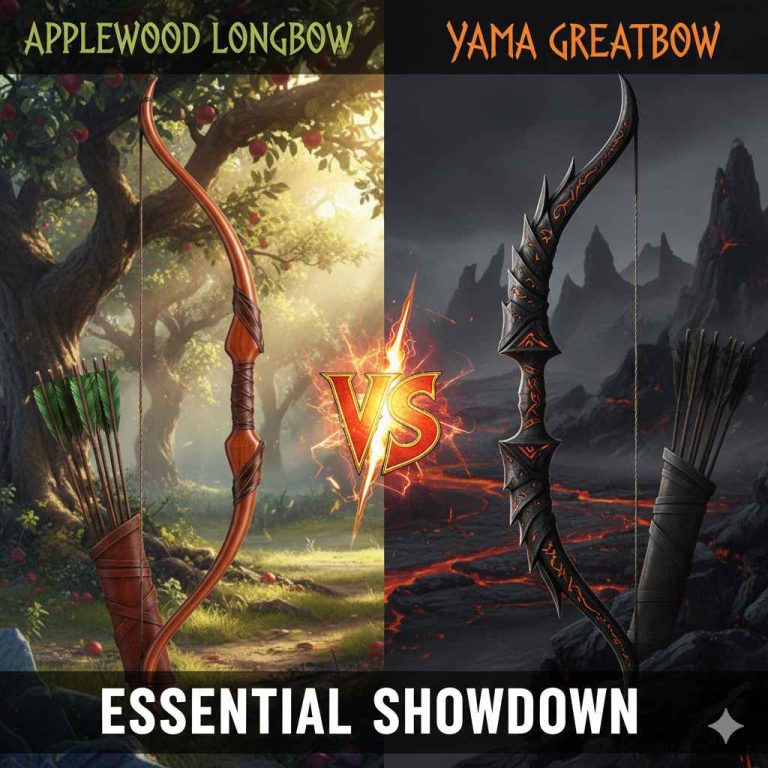
Arbalest vs Longbow: Essential Weapon Showdown
The arbalest vs Longbow debate often confuses beginners. Simply put, the Longbow offers faster shooting speed and easier handling for new archers, while the arbalest delivers superior, easier-to-achieve power (draw weight) with slower reload times. Understanding these differences helps you choose the right weapon for your shooting style and goals.
Welcome, friends, to the archery range! Choosing your first weapon can feel like stepping into a history book filled with confusing names and powerful-looking tools. You’ve likely heard about the legendary Longbow and the formidable Arbalest (a type of crossbow). Many beginners wonder which one they should pick up. Is one always better than the other? Not really! It all depends on what you want to achieve, your physical comfort, and where you plan to shoot. Don’t worry about the complicated history or jargon. I’m here to break down the arbalest vs Longbow matchup into simple, clear pieces. We will look at how they feel, how they work, and which one might be the perfect fit for you to start hitting those targets safely and having fun.
Understanding the Core Difference: Muscle Power vs. Mechanical Advantage
Before we dive into pros and cons, let’s clear up the biggest conceptual difference between these two fascinating weapons. Think of it like comparing a sprinter to a heavy-lifter.
The Longbow: Relying on Pure Archer Strength
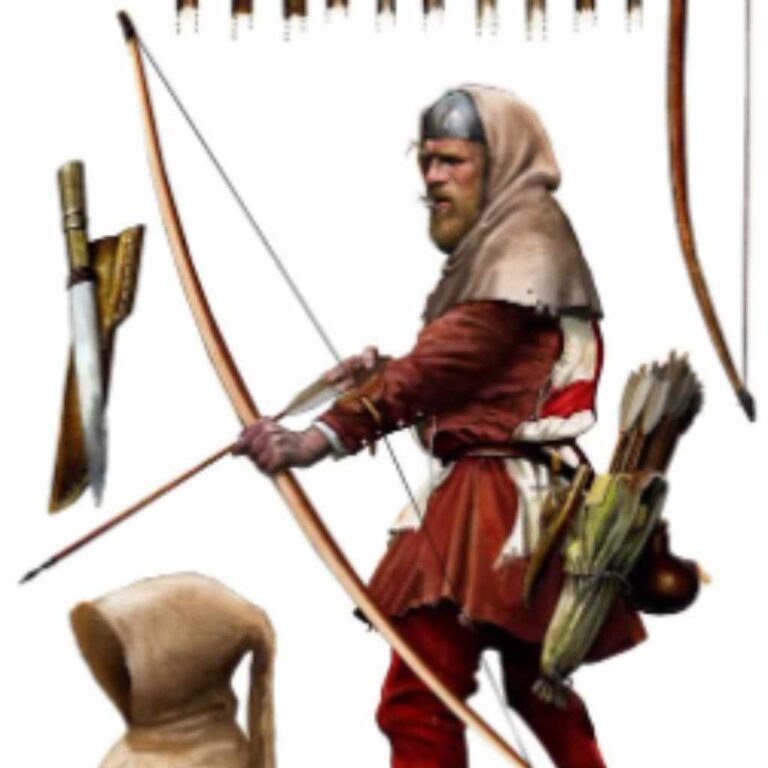
The Longbow is the classic tool of medieval archers. It relies entirely on the strength of the person holding it. When you draw a Longbow, you are using your back, shoulder, and arm muscles to bend the stave (the bow itself) and hold that tension until you release the string.
- Power Source: Human muscle strength only.
- Operation: Requires consistent physical training to draw and hold accurately.
- Feel: Immediate feedback; you feel every bit of the pull and release.
The Arbalest (Crossbow): Harnessing Mechanical Advantage
The Arbalest is fundamentally different because it uses a mechanical system—a trigger and stock—to hold the immense energy of the drawn string. While the initial cocking (loading) can be hard, once loaded, the tension is held by the trigger mechanism, not the archer’s muscles.
- Power Source: Human strength to cock, mechanical lock to hold.
- Operation: The archer aims and releases the bolt (quarrel) using a trigger squeeze.
- Feel: Less physical strain during the aiming phase, focusing more on trigger control.

Arbalest vs Longbow: A Head-to-Head Comparison for Beginners
For a new shooter, the choice often comes down to immediate usability versus long-term training commitment. Let’s compare them across the areas that matter most to hobbyists: ease of use, learning curve, and safety.
The Learning Curve: Getting Started Safely
When you first pick up any bow, safety and consistency are key. This is where the differences become very apparent for a beginner.
Longbow Learning Journey
Learning the Longbow involves mastering a complex set of motions. You need to learn how to anchor the string consistently, manage the draw weight smoothly, and release without torqueing the bow handle. This takes dedicated practice.
- Stance and Form: Establishing the right body position is critical from day one.
- Drawing Consistency: Ensuring you pull the string to the exact same spot (your anchor point) every time is challenging but vital for accuracy.
- Release Smoothness: A clean release prevents the bow from jerking, which ruins the shot.
Arbalest Learning Journey
The Arbalest simplifies the drawing and holding process dramatically, but introduces mechanical mastery.
- Loading (Cocking): This is often the hardest physical part, sometimes requiring a separate crank or foot stirrup, depending on the power.
- Aiming: Because you don’t hold the tension, you can focus solely on aligning the sight or sights with the target.
- Trigger Control: The main skill becomes squeezing the trigger gently, similar to a firearm, to avoid jerking the shot off target.
Speed and Rate of Fire
How fast can you get follow-up shots off? This is a major deciding factor, especially in historical contexts or dynamic shooting games.
The Longbow is the undisputed champion of speed here. A highly trained longbowman could often shoot 10 to 12 arrows per minute. This speed comes from the natural motion of drawing, nocking, and releasing in sequence.
The Arbalest is much slower. The process of cocking the bow, loading the bolt, applying the safety, and finally shooting takes significantly longer. Reload rates are often 1 to 3 bolts per minute, depending on the model and the archer’s efficiency.
Power, Penetration, and Ease of Achievement
Many beginners want power right away. This is where the Arbalest shines for someone without years of dedicated strength training.
With a Longbow, achieving 100 lbs of draw weight requires incredible, consistent upper body strength. Most beginner Longbows start around 25–35 lbs. If you buy a Longbow that is too heavy, your form will break down immediately, leading to frustration and potential injury.
With an Arbalest, mechanical leverage (like a stirrup or crank) allows even a relatively slight person to cock a bow rated at 150 lbs or more. This high draw weight translates directly into higher bolt velocity and greater kinetic energy upon impact, making the Arbalest much easier to “power up” quickly.
Table 1: Key Beginner Metrics Comparison
| Feature | Longbow (Traditional Recurve/Self Bow) | Arbalest (Modern Crossbow Style) |
|---|---|---|
| Ease of Initial Shooting | Moderate to Difficult (Requires core form) | Easier (Leverages mechanical aid for power) |
| Rate of Fire | Fast (10+ shots/minute possible) | Slow (1–3 shots/minute typical) |
| Physical Strength Required | High (Must hold draw weight) | Low during aiming; High during cocking |
| Noise Level (When Fired) | Moderate to Loud Thwack | Quiet Click/Thud (Less string slap noise) |
| Aiming System | Instinctive or simple pins | Often features scopes or dedicated rails |
Practical Considerations for the Modern Hobbyist
Today, most people aren’t using these weapons for hunting or combat; they are for target practice, field archery, or historical reenactment. Let’s look at how these differences play out on a modern range.
Portability and Storage
Longbows are typically long (often 5 to 6 feet or more) and lack complex moving parts, making them relatively simple to transport in a long case. They are often taken apart (if they are modern takedown models) or carried whole.
Arbalests, while sometimes shorter than Longbows, are bulkier. They have a large stock, a bolted-on prod (the bow part), and often include accessories like a scope, bipod, or crank assembly. They usually require a dedicated, hard-shell case for safe transport.
Maintenance and Durability
In terms of straightforward maintenance, the Longbow often wins. You clean the wood, check the string, and wax it. Simple! If a string breaks, it’s usually a quick, field-repairable fix.
Arbalests have more moving parts: the trigger mechanism, the string latch, and sometimes complex cocking aids. While modern crossbows are robust, if the trigger or latch system fails, repairs often require specialized gunsmithing tools or sending the unit back to the manufacturer. For reference, maintenance guides from reputable sporting goods associations often detail required cleaning procedures for mechanical archery equipment.
Safety First: Handling Unique Risks
Both weapons demand respect, but their safety risks differ based on their design.
Longbow Safety Focus
- String Slap: Improper form can lead to the string hitting the inside of your forearm, which is painful and can cause injury.
- Over-drawing: Pulling the string beyond the bow’s designed draw length can cause the limbs to snap catastrophically.
Arbalest Safety Focus
- Dry Firing: Firing an Arbalest (or any crossbow) without a bolt loaded is extremely dangerous. The energy has nowhere to go, often causing the prod to break violently, sending debris toward the shooter.
- Accidental Discharge: Since the trigger mechanism is designed to hold high tension, always ensure the safety is engaged when loading or carrying, and never point it downrange until ready to fire.
Archery Style Deep Dive: Instinctive vs. Sighted Shooting
How you aim deeply influences your choice. This is a key difference in the arbalest vs Longbow debate for accuracy.
The Longbow and Instinctive Aiming
The traditional Longbow relies on “instinctive” aiming. This doesn’t mean closing your eyes; it means developing such familiarity with the bow’s trajectory that you intuitively know where the arrow will land based on how you hold and release it.
It’s a dance between your eye, your draw length, and your anchor point. This method is deeply rewarding but takes significant time to build muscle memory. For many hobbyists, this connection to the weapon is the primary appeal of traditional archery.
The Arbalest and Precision Aiming
Because the Arbalest is mechanically stable when aimed, it pairs beautifully with optical sights, much like a rifle. You can mount scopes, red dots, or use a simple peep sight system on the rail.
This allows beginners to achieve tighter groupings much faster. You zero the sight at 20 yards, and if you aim correctly, the bolt will hit near the center. The skill shifts from muscle control to precise sight alignment and trigger squeeze.
Which Weapon is Right for YOU? A Decision Guide
Now that we’ve compared the mechanics, let’s make this practical. Use this guide to see which path best suits your archery goals.
Choose the Longbow If:
- You enjoy the challenge of developing your own physical skill and muscle memory.
- You prefer a simpler, lighter piece of equipment that requires minimal specialized maintenance.
- You are interested in traditional archery techniques, historical context, or shooting sports that prohibit mechanical sights.
- You want the fastest possible rate of fire for practice games.
Choose the Arbalest If:
- You want high power output immediately without years of intensive strength training.
- You prioritize pinpoint accuracy aided by modern optics (scopes).
- You have physical limitations that prevent you from drawing or holding a high-poundage traditional bow for extended periods.
- You enjoy the mechanical aspects of reloading and trigger control.
Remember, regardless of your choice, always start with a lower-poundage model than you think you need. Safety and good habits are built on a foundation of comfort. For resources on proper form, many university physical education departments offer excellent free guides on basic archery stance that apply to both disciplines, focusing on core stability.
Essential Gear Checklist: Beyond the Weapon Itself
Whether you choose the elegant curve of the Longbow or the sturdy stock of the Arbalest, you cannot shoot safely or enjoyably without the right accessories. Here is a quick gear checklist for beginners.
For the Longbow Shooter:
- Armguard: Absolutely essential to protect your bow arm forearm from string slap.
- Finger Protection: A shooting glove or three-finger tab to protect your drawing fingers.
- Quiver: To hold your arrows safely while you walk the range.
- Bow Stringer: A specialized tool that allows you to safely string and unstring the bow without stressing the limbs—do not attempt to string a Longbow by stepping on it!
For the Arbalest Shooter:
- Cocking Device: Depending on the draw weight, you might need a rope cocker or a full stirrup/crank system.
- Bolts (Quarrels): These are shorter and heavier than arrows. Ensure they are the correct spine/weight rating for your crossbow.
- Rail Lubricant: Keeping the track (rail) clean and lightly waxed prevents friction and wear on the string and reduces bolt wear.
- Scope/Sights: Depending on what came with the unit, you may need batteries or adjustments for optics.
Understanding Draw Weight vs. Cocking Weight
This is a technical detail that trips up newcomers when comparing these two systems:
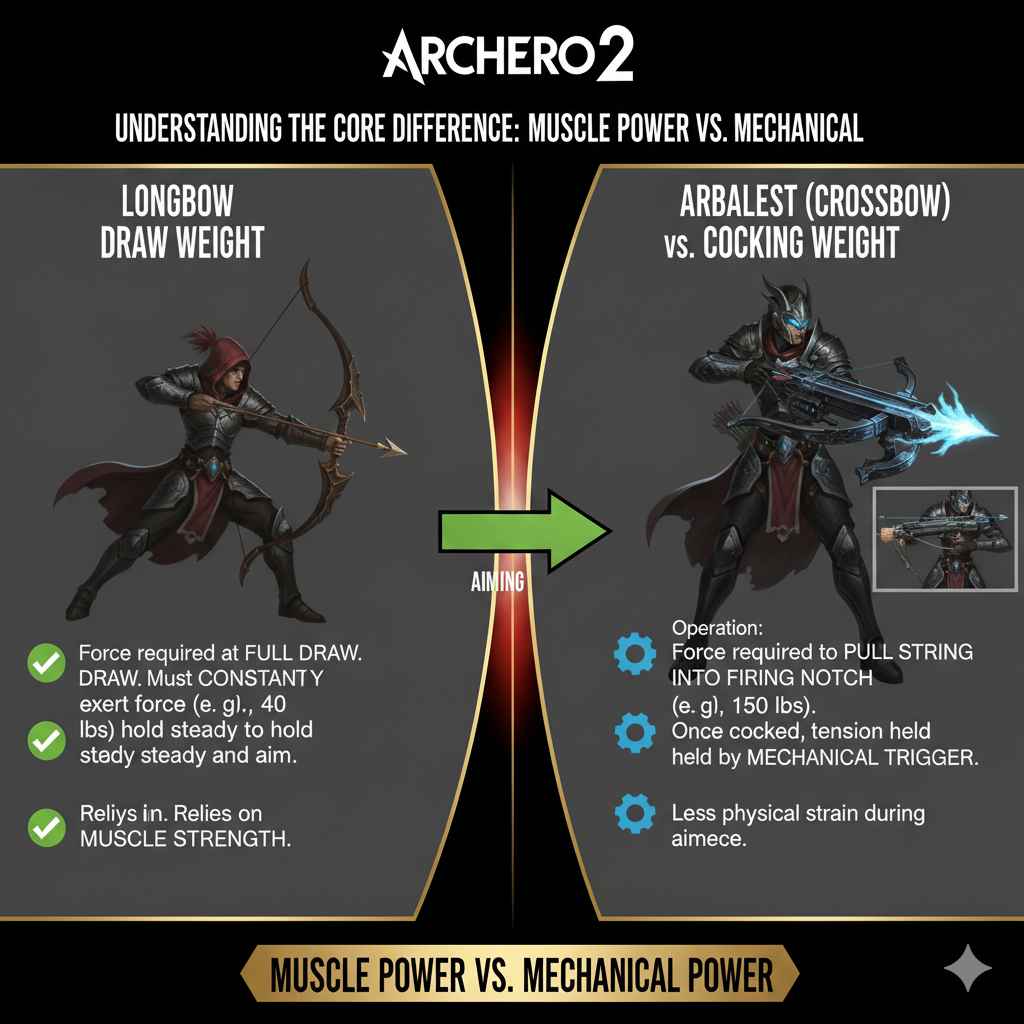
Longbow Draw Weight: This is the force required at the full draw to keep the string back. If you have a 40 lb Longbow, you must constantly exert 40 lbs of force to hold it steady while aiming.
Arbalest Cocking Weight: This is the force required to pull the string back into the firing notch. An Arbalest might have a cocking weight of 150 lbs. However, once cocked, the actual force held by the trigger is only the tension of the string against the latch, which is usually much less noticeable than holding 150 lbs of draw weight!
This difference is why a person with less upper body strength can shoot a very powerful Arbalest much more effectively than they could shoot an equally powerful Longbow.
FAQ: Arbalest vs Longbow for New Archers
Q1: Which weapon is easier to learn aiming with?
A: The Arbalest is generally easier for beginners to aim accurately right away because it often uses mechanical sights or scopes, allowing you to focus purely on alignment without managing the physical strain of holding the draw weight.
Q2: Is a Longbow inherently safer than an Arbalest?
A: Neither is inherently safer; they have different risks. Longbows risk string slap and over-drawing. Arbalests pose a high risk from “dry firing” (shooting without a bolt) and mechanical failure if not maintained. Both require strict adherence to range safety rules.
Q3: Can I use the same arrows for both?
A: No. Longbows use arrows, which are longer, lighter, and typically have fletching (vanes) on the back. Arbalests use shorter, heavier projectiles called bolts or quarrels, which often have nocks designed to fit into the crossbow rail mechanism.
Q4: Which one costs more to start with?
A: Generally, a quality beginner Longbow package (bow, stringer, armguard, basic arrows) is less expensive than a quality entry-level Arbalest package, which includes more complex machinery and necessary cocking aids.
Q5: Which requires less physical space to shoot effectively?
A: The Longbow requires a much longer clear field of fire (for the full length of the bow plus the draw length). A modern, compact Arbalest often requires less physical space behind the shooter because you are only aiming along the stock length, making it better for smaller backyards or indoor ranges (when using appropriate gear).
Q6: If I train with a Longbow, can I easily switch to an Arbalest?
A: Yes, if you have good upper body form from the Longbow, transitioning to an Arbalest is relatively smooth, as your trigger control will be disciplined. However, if you train only with an Arbalest, switching to a Longbow will require significant physical conditioning.
The Final Shot: Making Your Choice with Confidence
We have covered a lot of ground today, examining the arbalest vs Longbow comparison from the perspective of a beginner archer. The core takeaway is this: your weapon should match your ambition and your physical comfort level right now.
If your dream involves the historical romance of the English archer, the graceful arc of the arrow, and the satisfaction of building raw strength, the Longbow path is calling you. It demands patience, but the rewards in physical mastery are immense. Be sure to start light—perhaps a 25 lb beginner recurve—and focus entirely on form. Consult resources from organizations like the National Archery in the Schools Program (NASP) for basic safety and stance fundamentals, even if you are shooting a traditional style.
If, however, you want to experience immediate power, enjoy modern aiming technology, and prefer mechanical reliability over pure physical exertion, the Arbalest is an excellent choice. It allows you to focus on precision sight alignment and trigger discipline, getting satisfying results faster while you build up strength for other archery disciplines later if you choose.
No matter which direction you lean, remember the most important rule of archery: safety first. Always have a safe