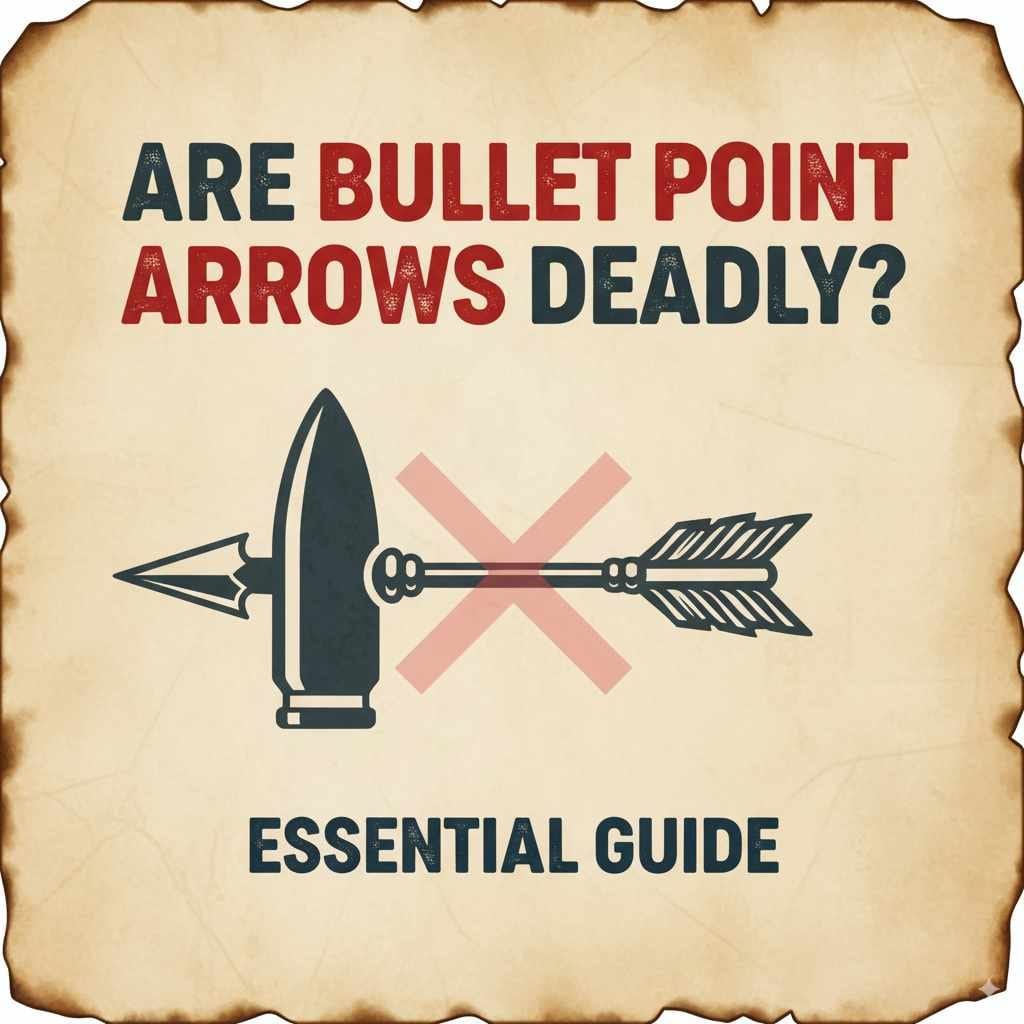
Are bullet point arrows deadly? Yes, when used in archery for hunting or sport, arrows are designed to be lethal. This guide covers essential knowledge for safe and responsible archery.
Many beginners in archery have this burning question: “Are bullet point arrows deadly?” It’s a common thought, especially when you’re just starting and seeing these sharp tips. The answer is a straightforward yes. Arrows, with their pointed tips, are indeed designed to pierce and can be very dangerous if not handled with the utmost respect and caution. Understanding this is the first step to becoming a safe and confident archer. This guide will walk you through everything you need to know about arrowheads for archery, ensuring you practice responsibly and enjoy this fantastic sport.
Understanding Arrow Points: More Than Just “Bullet Points”
When people talk about “bullet point arrows,” they are usually referring to broadheads, which are common for hunting. However, not all arrow points are the same, and they serve different purposes. For beginners, most practice arrows will have tips that are blunted or designed for target shooting, rather than lethality. It’s crucial to distinguish between these types to understand arrow safety and their intended use.
Practice Points: For Learning and Fun
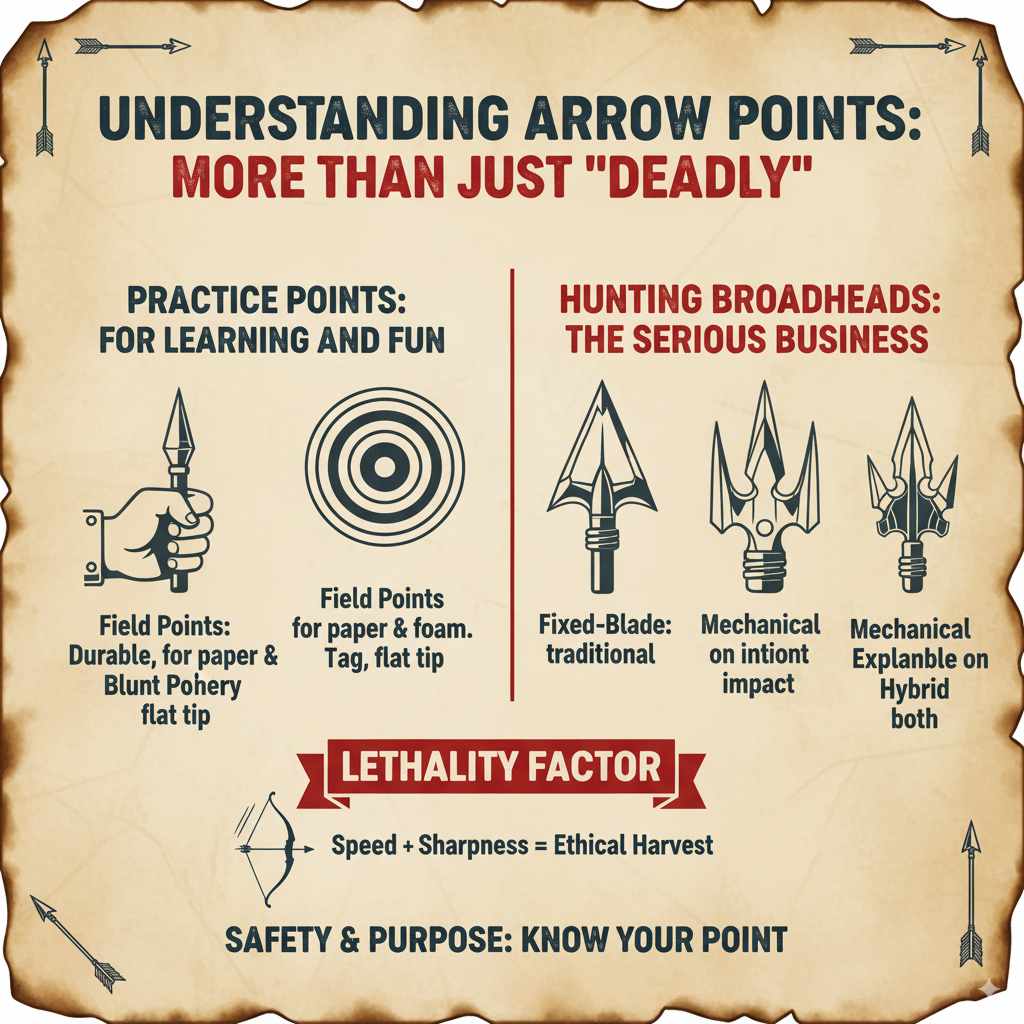
For those just starting out, the arrows you’ll be using will most likely have practice points, often called field points. These are designed for punching through paper targets and durable foam without causing excessive damage, ensuring longevity for your targets and your arrows. They are typically made of solid metal and have a relatively simple, rounded-off point. Their primary function is accuracy and durability during practice sessions.
- Field Points: The most common type for target practice. They are durable and designed to penetrate paper and foam targets.
- Blunt Points: Sometimes used for specific activities like archery tag or for very young beginners. They have a flat or very rounded tip and are not meant for penetration.
- Judget (or Jam) Points: These are often used in competitive archery for precision shooting on specific targets.
Hunting Broadheads: The Serious Business
When archery moves from practice to hunting, the arrow points change dramatically. These are the “deadly” points that people often imagine when they hear about archery. Broadheads are designed for one purpose: to ethically and effectively harvest game animals. They are razor-sharp and engineered to create significant wound channels, promoting a quick and humane kill. Because of their sharpness and destructive capability, broadheads require a much higher level of respect and safety awareness.
Types of Broadheads:
- Fixed-Blade Broadheads: These are the most traditional type, with blades that are permanently attached to the head. They are known for their durability and reliability, often favored by hunters for their simplicity.
- Mechanical (or Expandable) Broadheads: These broadheads have blades that deploy upon impact with the target. This allows for a smaller cutting diameter during flight (improving aerodynamics) and a larger cutting diameter upon impact.
- Hybrid Broadheads: These combine features of both fixed and mechanical broadheads, often with a fixed blade for initial penetration and expanding blades for increased cutting diameter.
The Lethality Factor: Design and Purpose
The lethality of an arrow point comes down to its design and intended purpose. A broadhead’s sharp blades are engineered to cut through flesh and vital organs, causing rapid blood loss and incapacitation. This is why responsible hunting practices emphasize proper shot placement and ethical considerations. The power comes from a combination of the arrow’s speed, the bow’s draw weight, and the sharp, precise cutting surface of the broadhead.
For context on the force involved, consider that even a moderately powerful bow can propel an arrow at speeds well over 200 feet per second. Coupled with a broadhead designed for cutting, this force can indeed be fatal to an animal. This is precisely why archery, especially hunting, is treated with such seriousness and requires extensive training and adherence to regulations. You can learn more about the physics of archery and arrow dynamics from resources like Purdue University’s Archery Club and Training, which often delves into the science behind effective shooting.
Safety First: The Archery Mantra
Regardless of whether you’re using practice points or broadheads, safety is paramount in archery. Unintentional injuries can happen easily if proper procedures aren’t followed. Archery itself is not inherently dangerous when you understand and practice the safety rules. It’s about respecting the equipment and the potential it holds.
The Four Pillars of Archery Safety
These fundamental rules apply to every archer, every time they pick up a bow:
- Always Know Your Target and What’s Beyond It: This is perhaps the most critical rule. Before you draw your bow, be absolutely sure of what you are aiming at, and be aware of anything that might be behind your target. Stray arrows can travel significant distances and cause unforeseen harm.
- Never Nock, Draw, or Shoot an Arrow Unless You Are on the Archery Range and Ready to Shoot: Avoid “dry firing” your bow (drawing and releasing the string without an arrow), as this can damage your bow. Also, don’t casually nock an arrow and point it around. Treat every drawn bow as if it’s loaded.
- Always Wear Proper Safety Gear: This includes an armguard to protect your forearm from string slap and a finger tab or release aid to protect your drawing fingers. Eye protection is also highly recommended, especially when shooting broadheads.
- Always Treat Your Bow and Arrows with Respect: This means storing them properly, inspecting them for damage before each use, and handling them with care. Never point a nocked arrow at anyone or use your bow as a toy.
Handling Broadheads Safely
Because broadheads are so sharp, they require extra care. They are not something you want to handle carelessly or leave lying around.
- Use a Broadhead Wrench: When screwing broadheads onto your arrows or removing them, use a specific broadhead wrench. This prevents you from having to touch the blades directly.
- Store Broadheads Securely: Always keep broadheads in their protective sleeves or cases when not in use. This is crucial for safety both on and off the range.
- Never Touch the Blades: Even “used” broadheads can retain their sharpness. Always assume they are razor-sharp and avoid direct contact with the blades.
- Transporting Broadheads: When transporting arrows with broadheads attached, ensure they are in a quiver designed for broadheads, usually with blade protectors.
Choosing the Right Arrow for Your Needs
Your choice of arrow and arrowhead will depend on what you want to do with archery. Are you just starting and want to hit targets? Or are you looking towards hunting? Your bow’s draw weight and your own physical capabilities also play a role.
Arrow Components: A Quick Look
An arrow consists of several parts, and the point is just one of them. The other components also influence flight and performance:
- Shaft: The main body of the arrow, typically made of carbon, aluminum, or wood.
- Nock: The small plastic piece at the rear of the arrow that attaches to the bowstring.
- Fletching: The vanes or feathers at the rear that stabilize the arrow in flight.
- Insert: A component in the front of the shaft that allows you to screw in different points.
- Point: The arrowhead itself.
Matching Arrows to Your Bow
It’s important that your arrows are spined correctly for your bow. “Spine” refers to an arrow’s stiffness. An arrow that is too stiff or too flexible for your bow will fly erratically, affecting accuracy and potentially causing unsafe situations. Your local archery shop or a knowledgeable instructor can help you choose the right spine.
Arrow Weights and Energetics
The weight of your arrow, including the point, contributes to its momentum. Heavier arrows hold their momentum better and can be more forgiving in flight, while lighter arrows fly faster. For hunting, there’s a minimum arrow weight recommendation that is often dictated by hunting regulations and discussed by wildlife agencies. For example, the U.S. Fish and Wildlife Service website provides a wealth of information on regulations and ethical hunting practices, which often include guidelines on equipment. An arrow’s kinetic energy is a key factor in its effectiveness for hunting.
Here’s a simplified look at how arrow component choices affect performance:
| Component | Impact on Arrow | Considerations for Beginners |
|---|---|---|
| Arrow Point Weight (Field Points) | Heavier points generally increase momentum and can improve penetration on targets. Lighter points can increase speed. | Start with standard weights (e.g., 100-125 grains) recommended for your bow. |
| Arrow Shaft Material & Spine | Carbon arrows are common, durable, and offer good spine options. Spine must match bow’s draw weight and length for stable flight. | Ask for advice at your pro shop to ensure correct spine. Beginners often benefit from forgiving carbon shafts. |
| Fletching Size/Shape | Larger fletching provides more stabilization for slower arrows or those with broadheads. Smaller fletching is often used for faster target arrows. | Standard-sized vanes (e.g., 2-inch) are a good all-around choice for practice. |
The “How-To” of Arrow Handling and Use
Now that we understand the types of points and safety, let’s talk about the practical aspects of using arrows, from setting them up to shooting them.
Setting Up Your Arrows
If you’re buying pre-assembled arrows, they’re ready to go. However, if you’re building your own or changing points, it’s fairly straightforward:
- Attach the Insert: If your shafts don’t have them pre-installed, a dab of insert glue will secure the metal insert at the front of the shaft.
- Screw in the Point: Once the insert is in place (and glue is cured if used), simply screw your chosen point (field point or broadhead) into the insert. Make sure it’s snug but don’t overtighten.
- Nock Your Arrow: Place the nock on the bowstring in the designated spot (nocking point). Then, slide the arrow’s nock onto the string. Ensure the “index vane” (usually a different color) is facing outwards or upwards, depending on your bow’s design.
The Shooting Process: A Gentle Walkthrough
For beginners, focusing on technique is key. This is where you’ll see consistent improvement.
- Stance: Stand with your feet shoulder-width apart, perpendicular to your target.
- Grip: Hold the bow loosely in your bow hand. Let the bow rest in the crook of your thumb and index finger. Don’t squeeze the grip.
- Draw: Use your back muscles, not just your arm. Draw the bowstring back smoothly to your anchor point (a consistent spot on your face or jaw).
- Aim: Align your sights (if using them) or your front sight pin with the target.
- Release: When ready, relax the fingers of your drawing hand or use your release aid smoothly. Don’t “punch” the string or trigger.
- Follow-Through: Maintain your form after the arrow has been released. This helps ensure a clean shot.
Where to Shoot Safely
Archer’s paradox, a term describing the bending of an arrow as it passes the bow, is a fascinating aspect of archery. Understanding where and how you should be shooting is vital for safety and skill development. Always shoot in designated archery ranges or safe areas.
- Archery Ranges: These are designed for safe shooting with backstops to catch arrows not hitting the target.
- Backyard Archery: If shooting in your backyard, use a high-quality archery target with a durable backstop. Ensure you have a clear shooting lane and a safe area beyond the target. Never shoot towards houses, roads, or where people might be.
- Hunting Fields: When hunting, always be aware of your surroundings. Know your target and be sure of a clean background.
The National Target & Field Archery Association (NTFCA) provides extensive resources on safe shooting practices and finding ranges. They are a great authority for expanding your knowledge.
Broadheads vs. Field Points: A Direct Comparison
To solidify the understanding of different arrow points, let’s compare the two main categories:
| Feature | Field Points | Broadheads |
|---|---|---|
| Primary Use | Target practice, practice scoring | Hunting game animals |
| Sharpness | Blunted, designed for penetration of targets, not flesh | Razor-sharp blades designed for cutting flesh and vital organs |
| Lethality | Non-lethal for hunting purposes | Designed to be lethal, requiring ethical use and proper technique |
| Aerodynamics | Generally more aerodynamic and consistent flight | Can be less aerodynamic, especially mechanical broadheads before deployment |
| Cost | Typically less expensive | More expensive due to complexity and sharpness |
| Safety Handling | Relatively safe to handle | Requires extreme caution due to sharp blades |
Choosing between them is dictated by your activity. You would never hunt with field points because they won’t create the necessary wound channel for a humane harvest. Conversely, you wouldn’t practice with broadheads because they will shred your vital targets and are needlessly dangerous for regular practice.

Frequently Asked Questions (FAQ)
Here are some common questions beginners have about arrow points and their dangers:
Q1: Can an arrow point really hurt me?
A: Absolutely. Even a practice field point can cause a nasty puncture wound if it hits you. Broadheads, which are extremely sharp, can cause severe injury or death if they penetrate deeply.
Q2: Is it safe to shoot arrows with broadheads around other people?
A: No. Broadheads should only be used in controlled hunting environments or on specialized ranges with extreme caution and supervision. Never point a nocked broadhead arrow at anyone, even if you think it’s not dangerous.
Q3: How do I make sure my broadheads are safe to transport?
A: Always use a quiver with blade inserts or protective covers for your broadheads. Store them in their original packaging or a dedicated broadhead case when not in use. Never leave them exposed.
Q4: Will field points hurt me if I accidentally get poked?
A: While not as dangerous as broadheads, field points can still cause puncture wounds that may require medical attention. They are sharp enough to break the skin. Always handle arrows with respect.
Q5: What is the ethical way to hunt with arrows if they are deadly?
A: Ethical hunting with archery involves extensive practice to ensure accuracy, understanding animal anatomy for humane shot placement, using appropriate equipment (like properly sharpened broadheads), and adhering to all hunting laws and regulations. The goal is always a quick, humane harvest.
Q6: Can a beginner use arrows with broadheads?
A: It is generally not recommended for absolute beginners to start shooting with broadheads. It’s best to master your shooting form, accuracy, and safety protocols with field points first. Once you are consistent and comfortable, under the guidance of an experienced mentor, you can transition to broadheads for hunting.
Q7: How far can an arrow travel?
A: This varies greatly based on the bow’s power, the arrow’s weight and aerodynamics, and the angle of release. However, arrows can travel hundreds of yards. This is why it’s critical to always be aware of your surroundings and know what is beyond your target.
Conclusion: Archery is About Respect and Skill
So, to circle back to our initial question: are bullet point arrows deadly? Yes, they are, when they are broadheads designed for hunting. This inherent potential for harm is precisely why archery, especially when it involves hunting, is approached with such discipline and respect. For those just starting, your focus should be on mastering the fundamentals with practice points on a safe range. Understand the difference between practice and hunting ammunition, and always prioritize safety.