Are Smaller Spine Arrows Heavier? Debunking Archery Myths
Are Smaller Spine Arrows Heavier
Archery brings together science, skill, and subtle details that can change your shot. Among these, arrow spine stands out as a critical factor for both accuracy and safety. If you’ve ever browsed through arrow specifications, you’ve likely seen numbers like 300, 400, or 500 next to the word “spine.” But what do these numbers really mean? And more importantly for today’s question: Are smaller spine arrows heavier?
Many archers, especially those new to tuning, assume that a “smaller” spine (meaning a lower number, like 300) must mean the arrow is lighter, simply because the number is smaller. However, the reality is more nuanced. Understanding this can help you choose arrows that fit your bow, your draw weight, and your style, whether you’re competing, hunting, or just practicing in the backyard.
This article breaks down the science behind arrow spine, explains how it affects arrow weight, and explores all the factors that influence the relationship between spine and mass.
What Is Arrow Spine?
The term arrow spine refers to how much an arrow shaft bends under pressure. In technical terms, it is a measure of stiffness. The lower the spine number, the stiffer the arrow.
Arrow spine is measured according to standards set by the Archery Trade Association (ATA). The test involves suspending a 28-inch shaft between two supports and hanging a 1.94-pound weight in the center. The amount the shaft bends (in thousandths of an inch) is the arrow’s spine rating.
For example:
- A 300 spine arrow bends 0.300 inches
- A 500 spine arrow bends 0.500 inches
A smaller number means the shaft bends less and is stiffer.
Why Spine Matters
Matching your arrow spine to your bow setup is essential. If the spine is too soft or too stiff, the arrow won’t fly straight. This can cause poor accuracy or even damage to your equipment.
- Stiffer (lower number) arrows are needed for higher draw weights.
- Softer (higher number) arrows suit lighter bows.
Arrow Weight: Components And Influences
Arrow weight isn’t determined by spine alone. Let’s look at what makes up the total arrow mass:
- Shaft weight: Measured in grains per inch (GPI), depends on material and diameter.
- Point weight: The tip, often 75, 150 grains.
- Insert/Outsert: Connects point to shaft, adds a few grains.
- Fletching: Vanes or feathers, usually 6, 15 grains total.
- Nock: The rear piece, about 6, 12 grains.
The shaft itself is where spine plays a role, but not in the way you might expect.
How Spine Relates To Arrow Weight
Here’s the central question: Are smaller spine arrows heavier? The answer is usually yes, but not because of the spine number directly.
Why Stiffer Arrows Tend To Be Heavier
A stiffer arrow (smaller spine number) must resist more flex. To achieve this, manufacturers often:
- Use thicker walls
- Use denser materials
- Increase shaft diameter (sometimes)
All these design changes add mass. So, a 300 spine arrow and a 500 spine arrow of the same brand and model, both cut to the same length, will almost always see the 300 spine being heavier.
Example:
Imagine a popular carbon shaft model offered in different spine ratings:
- 300 spine: 9.3 GPI
- 400 spine: 8.2 GPI
- 500 spine: 7.1 GPI
If each arrow is 29 inches long, their shaft weights are:
- 300 spine: 269.7 grains
- 400 spine: 237.8 grains
- 500 spine: 205.9 grains
So, the lower the spine number, the heavier the shaft, for the same shaft model.
Exceptions And Complications
Not all arrows follow this pattern perfectly. Some manufacturers use different materials or construction methods for stiffer spines. Two arrows from different brands may have similar spine numbers but very different weights. Also, micro-diameter shafts can change the equation by using different wall thicknesses or resins.
Pro Tip: Always check the manufacturer’s grains per inch (GPI) specification for each spine rating before making a decision.
Comparing Arrow Spine And Weight: Real Data
To clarify the relationship, let’s compare data from major arrow brands.
| Brand/Model | Spine | Shaft GPI | Material |
|---|---|---|---|
| Easton Axis 5mm | 300 | 9.5 | Carbon |
| Easton Axis 5mm | 340 | 8.9 | Carbon |
| Easton Axis 5mm | 400 | 8.2 | Carbon |
| Gold Tip Hunter XT | 300 | 8.2 | Carbon |
| Gold Tip Hunter XT | 400 | 7.4 | Carbon |
| Gold Tip Hunter XT | 500 | 6.3 | Carbon |
As shown above, across different brands and models, stiffer spines (lower numbers) almost always mean heavier shafts.
Common Misunderstandings About Arrow Spine And Weight
Many archers, especially those starting out, assume that a higher spine number (like 500) is “better” or “stronger.” In fact, it’s the opposite: lower numbers are stiffer.
Another misconception is that arrow weight is only about spine. In reality, shaft diameter, material, and wall thickness all contribute. For instance, two 400 spine arrows from different manufacturers can have very different weights. Always look at the GPI, not just the spine rating.
Some archers believe lighter arrows (higher spine, higher number) will always shoot faster and flatter. While this is often true, it can lead to issues with penetration, noise, and bow efficiency if the arrow is too light for your bow’s draw weight.
How Arrow Spine Impacts Performance
The relationship between spine and weight is not just about numbers, it changes how your arrow behaves in flight.
Heavier, Stiffer Arrows
- Pros: More kinetic energy, better for penetration (especially in hunting), quieter release, less affected by wind.
- Cons: Slower speed, more drop at distance, can be tiring to shoot repeatedly.
Lighter, Softer Arrows
- Pros: Higher speed, flatter trajectory, easier to tune for lower draw weights.
- Cons: Less penetration, noisier shot, can be unstable if too soft for the bow.
Matching To Your Bow
Your bow’s draw weight and draw length determine the best arrow spine. For example, a 70-lb compound bow with a 30-inch draw requires a much stiffer (lower spine number, heavier shaft) arrow than a 40-lb recurve at 26 inches.
How To Choose The Right Spine And Weight
Getting the right match is crucial for safety and accuracy.
- Check manufacturer charts: Most arrow makers publish spine selection charts. Find your draw weight and length on the chart, then match to the recommended spine.
- Factor in point weight: Heavier tips require a stiffer spine.
- Consider your use: Hunters often prefer heavier arrows for better penetration. Target shooters may go lighter for speed and flatter trajectory.
- Test and tune: In my experience, the chart is a starting point. Shooting and tuning your arrows often reveals what works best with your bow.

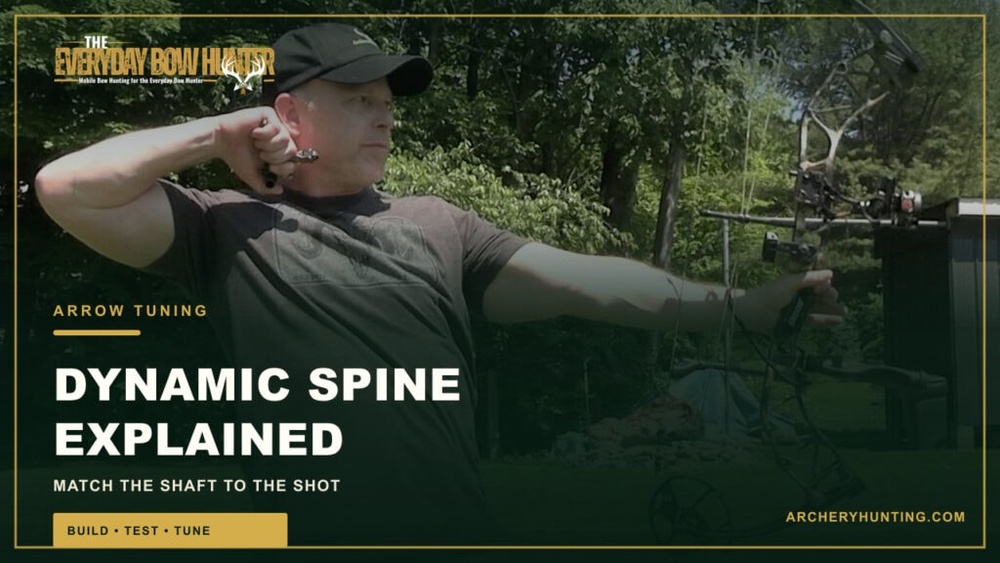
Credit: archeryhunting.com
Visualizing The Difference: Shaft Weight Vs. Spine
Here’s a simple comparison using a single arrow brand (Easton Axis 5mm):
| Spine Rating | Shaft GPI | Shaft Weight (29″) |
|---|---|---|
| 300 | 9.5 | 275.5 grains |
| 340 | 8.9 | 258.1 grains |
| 400 | 8.2 | 237.8 grains |
This makes it clear: stiffer (smaller spine) arrows are heavier, all else equal.
Factors That Can Change The Relationship
While the general rule holds, a few less obvious factors can change the outcome:
1. Different Arrow Materials
- Carbon arrows can be made with thinner walls and still remain stiff.
- Aluminum arrows may need thicker walls for the same stiffness, making them heavier for the same spine.
- Hybrid (carbon/aluminum) shafts can have unique properties.
2. Micro-diameter And Specialized Shafts
Micro-diameter arrows (like Easton Deep Six or Victory VAP) are built for minimal wind drift and penetration. They may use dense carbon or other methods to keep stiffness high, but sometimes at the cost of added weight.
3. Custom Arrow Builds
Some archers build arrows with heavy inserts, outserts, or brass weights. These can make a lighter-spined arrow heavier than a stiffer one, depending on the setup.
4. Length Of The Shaft
Longer shafts are less stiff, so sometimes manufacturers adjust wall thickness or material density to keep a longer arrow at the correct spine. This can also change the weight.
Pro Tip: When comparing arrow spines and weights, always compare shafts of the same length and model for an apples-to-apples result.

Credit: www.huntersfriend.com
Real-world Examples From The Field
For a 60-lb hunting bow, 300 spine arrows typically weigh about 20 to 30 grains more per shaft than the 400 spine version of the same model. The heavier arrows penetrated better on 3D targets and animals, but the lighter arrows shot flatter and grouped tighter at 40 yards.
A friend shooting a 45-lb recurve found that going from a 500 spine to a 400 spine increased his arrow mass and improved arrow flight, reducing fishtailing. The extra weight also made his bow quieter.
Common Mistakes When Choosing Arrow Spine And Weight
- Ignoring arrow charts: Skipping the manufacturer’s chart can lead to mismatched gear.
- Assuming all brands are equal: GPI varies widely by brand and model.
- Focusing only on speed: Light arrows can damage your bow or reduce penetration.
- Over-spining: Choosing too stiff an arrow can cause poor arrow flight and accuracy loss.
Safety Notes
Using an arrow that is too light for your bow can cause dry-fire like effects, damaging limbs or cams. Too soft a spine can result in erratic flight or breakage. Always consult with a professional before switching spine or weight, especially if you shoot high-poundage bows or compete.
When To Choose A Heavier Arrow
- Big game hunting: Deeper penetration is more reliable.
- Windy conditions: Heavier arrows are less affected by wind drift.
- Noisy bows: Added mass reduces shot noise.
When To Choose A Lighter Arrow
- Target archery: Flatter trajectory helps at long distances.
- Lower draw weights: Easier to tune for lighter bows.
- Speed-focused competitions: Higher speed can be an advantage.
How To Calculate Your Arrow’s Weight
To find the total weight:
- Multiply the shaft’s GPI by its length in inches.
- Add the tip, insert, nock, and fletching weights.
Example:
- Shaft: 8.9 GPI, 29 inches = 258.1 grains
- Tip: 100 grains
- Insert: 10 grains
- Fletching: 12 grains
- Nock: 8 grains
Total: 258.1 + 100 + 10 + 12 + 8 = 388.1 grains
How Gpi And Spine Are Listed
Manufacturers often list GPI and spine for each shaft model. Here’s a typical specification:
- Model: Gold Tip Hunter XT
- Spine: 300 / 400 / 500
- GPI: 8.2 / 7.4 / 6.3
This makes it clear how weight increases as spine gets stiffer.
Arrow Spine And Bow Efficiency
A well-matched spine not only ensures safety and accuracy but also maximizes the efficiency of energy transfer from the bow to the arrow. Too light or too stiff, and you lose power, speed, or both. Matching your arrow to your bow’s needs means getting the best results from your shooting.
Expert Guidance
For most shooters, especially beginners, it’s best to:
- Consult your bow manufacturer’s recommendations
- Use the arrow manufacturer’s selection chart
- Get advice from a qualified archery pro shop
You can find more detailed technical standards and advice from the Wikipedia article on Arrow Spine.
Frequently Asked Questions
What Happens If I Use An Arrow With The Wrong Spine?
Using the wrong spine can cause poor accuracy, erratic arrow flight, and even dangerous situations. If the spine is too soft, the arrow may flex too much and break; if too stiff, it may not clear the bow properly. Always match your arrow spine to your bow’s draw weight and length.
Is Arrow Spine The Same As Arrow Weight?
No, arrow spine is a measure of stiffness, not weight. While stiffer arrows tend to be heavier, the two are not interchangeable. Always check both the spine and the grains per inch (GPI) when choosing arrows.
Can I Make A Softer Spine Arrow Heavier?
Yes, you can add weight by using heavier tips or inserts, but this does not make the shaft itself stiffer. Adding too much weight to a soft-spined arrow can cause it to fly poorly