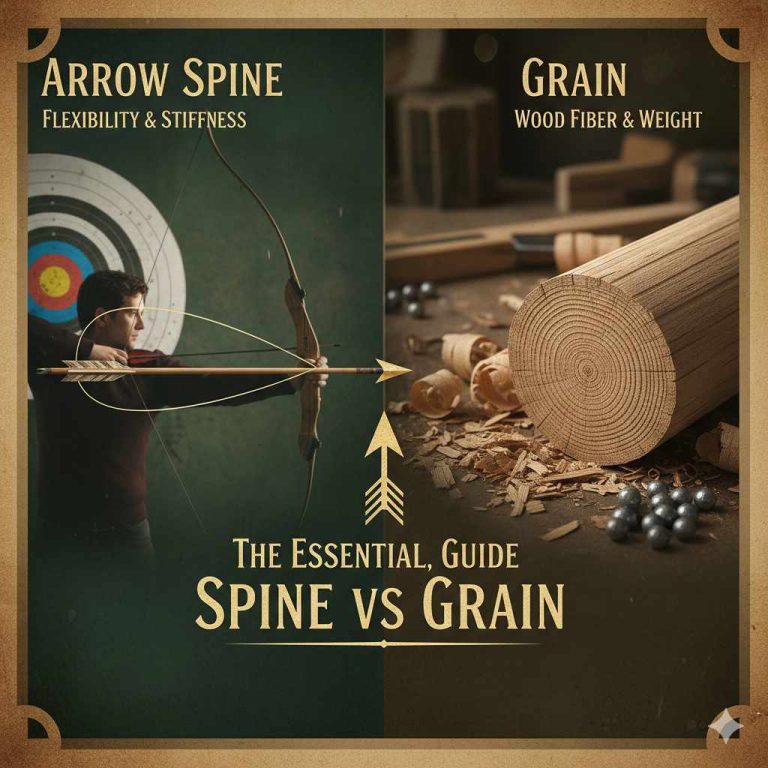
Arrow Shaft Length vs Draw Length for Youth Archers
Measure youth arrow shaft length from the nock groove to a little past full draw, then pick the shortest shaft that still gives safe clearance and the right spine. Cut too short and the arrow can drop off the rest or leave the point inside the shelf. Cut too long and you lose speed, tune, and room to grow. I’ll lay out the simple sizing steps, the safety margin I use, and how I adjust for recurve and compound bows.
What you’ll need

- Measuring tape or an arrow scale
- The bow, the child’s arrows, and a safe place to draw
- Pen, paper, or a worksheet for current draw length, growth buffer, and cut decision
- Paper towel or tape for marking shaft length
- If needed, access to a pro shop for cutting from the point end
| Decision factor | Arrow Shaft Length | Draw Length for Youth Archers: How to Match Them | Winner |
|---|---|---|---|
| Safety at full draw | Safer when left long enough to stay past the draw reference | Safer when measured first, because the arrow is sized to the child’s actual draw | Draw Length for Youth Archers: How to Match Them |
| Tuning flexibility | Longer shafts are easier to start with, but can weaken dynamic spine | Draw length changes with form, so the arrow must be checked again as the child grows | Arrow Shaft Length |
| Growth room | Can be left long and trimmed later | Must be remeasured after growth spurts and form changes | Arrow Shaft Length |
| Best first step for parents | Buy long enough to be safe, then fine-tune | Measure full-draw length before any cutting decision | Tie |
Safety at full draw
Draw length wins here because it tells me where the arrow must clear the rest, shelf, and hand. I have watched beginners rush this step and cut arrows by guesswork. That leaves you with a shaft that looks fine on paper and fails on the line.
Tuning flexibility
Arrow shaft length wins because a longer shaft gives me room to tune for a youth recurve or compound without boxing myself in.
Growth room
Shaft length wins because children do not stay the same for long. I recheck every season, and I expect the arrow to stay usable as the child grows. A shaft that starts a little long is easier to live with than one that is cut short and cannot be saved.
How do you measure a youth archer’s draw length at home?
Measure at full draw, not at rest, and use the child’s normal anchor point each time. Draw length is the distance the archer reaches while shooting with settled form, so the number changes if the anchor, posture, or bow hand changes. I write it down twice if the child is still learning.
Step 1: record the archer’s full-draw measurement
- Stand the child in a safe area with an unloaded bow.
- Have them draw to the same anchor they will use when shooting.
- Measure from the correct reference point and write the number down.
- Repeat the draw once more to confirm the result.
For recurve, I care about a clean anchor and fingers past the rest. For compound, I care about a solid wall and consistent release hand position. If the second draw is different, I trust the repeat, not the first guess.

How long should a youth arrow be compared with draw length?
A youth arrow should stay longer than draw length, with enough shaft past full draw to keep the point safely forward of the bow and allow for small form changes. I like to start with a minimum margin of 1 to 1.5 inches past full draw, then decide whether that extra length still tunes well for the bow.
Measure shaft length the right way
Arrow shaft length is usually measured from the nock groove to the end of the shaft, not to the point tip. That matters because point length can fool parents into thinking the arrow is longer than it really is. The shaft is the part that controls safety clearance and most of the tune.
Use the right margin for the bow type
On a youth recurve, I leave enough shaft to keep fingers, fletching, and the point safely past the rest at full draw. On a compound with a release aid, I still want clearance for draw creep and any small collapse at anchor. Compound draw length is more precise, but the arrow still needs margin.
Does shaft length affect spine for youth recurve bows?
Yes. In general, longer shafts act weaker in dynamic spine, so the same static spine rating can behave softer when the arrow is left long. That matters a lot on light-draw youth recurves, where the bow is already forgiving and the wrong shaft length can push the tune off fast.
Step 2: choose a safe starting shaft length
- Compare current draw length to shaft length with the full-draw safety margin in place.
- Keep the shaft long enough to clear the rest and stay forward of the bow hand.
- Leave extra room if the child is still changing form or strength.
Heavier points make the arrow act weaker again, so a long shaft plus a heavy point can be too soft for a small recurve. The final tune comes from the whole system, not one number.
How much extra arrow length should beginners have?
Beginners should have enough extra length to cover full-draw safety and a little growth, but not so much that the arrow becomes hard to tune. I usually start with a shaft that gives about 1 to 1.5 inches past full draw, then add only as much growth buffer as the bow can still handle without making the spine too weak.
Step 3: check spine, point weight, and tune
- Check the arrow’s static spine against the bow’s draw weight.
- Remember that longer shafts weaken dynamic spine.
- Adjust point weight only after you know the shaft length is safe.
Beginner point weights are often in the light-to-moderate range, but a heavier point changes tune quickly. On a youth recurve, that can help a stiff shaft behave better. On a compound, heavy front weight can make broadhead prep and clearance more finicky later.
Should I cut arrows to full draw length or longer for a youth archer?
Longer is usually the better starting point for a child, because you can cut later but you cannot add material back. I cut from the point end only after the child has shown stable form and the bow seems close to final tuning. If the child is growing fast, I wait and recheck before trimming.
Step 4: decide whether to cut now or wait
- Choose “cut now” only if the shaft is safely long and the tune is clearly too weak.
- Choose “wait” if the child is still growing or the form is still changing.
- Use a pro shop if you need a clean cut from the point end.
If you are unsure, buying long now is the safer parent decision. Then I recheck after the child settles into a repeatable anchor. That approach kept me from over-cutting more than once with young archers at the club.
What happens if an arrow is too short for a beginner archer?
A too-short arrow can drop off the rest, sit too far back at full draw, or leave the point too close to the shelf area. On release, that raises the chance of contact and bad clearance. On a compound, short arrows can also make draw creep or sloppy anchor changes more costly.
If that didn’t work, try this next
- Stop shooting that arrow.
- Measure the child at full draw again with the normal anchor.
- Compare the measured length to shaft length from nock groove to shaft end.
- Move to a longer shaft or have a pro shop verify the setup.
Short arrows are not a “shoot it carefully” problem. They are a setup problem. The fix is length, clearance, and tune, in that order.
How do I choose arrow length for a growing child?
Choose a shaft that is safe now and still usable after the next growth spurt. I like a buy-long-now approach for younger archers, then a trim-later plan once the child’s draw length settles. Recheck every season, because growth and form changes can move the numbers more than parents expect.
Youth-arrow sizing checklist and worksheet
| Current draw length | Recommended minimum shaft margin | Growth buffer | Cut-or-wait decision | Setup note |
|---|---|---|---|---|
| Under 20 in. | 1 to 1.5 in. past full draw | Leave extra if the child is growing fast | Wait for form to settle if tune is still changing | Common on light youth recurve setups |
| 20 to 24 in. | 1 to 1.5 in. past full draw | Keep enough length for next season | Cut only after two or three stable sessions | Often works for both recurve and low-draw compound |
| Over 24 in. | 1 in. minimum, more if form is inconsistent | Smaller buffer if growth has slowed | Cut sooner if spine is too weak | Compound draw-length precision matters more here |
Prevention
Write the draw length on the box or shaft note after every recheck. That keeps you from forgetting the last safe measurement when the child grows again.
Common mistakes
The biggest mistake is cutting arrows to exact draw length. That leaves no safety margin, no room for small form errors, and no growth room. The second mistake is ignoring nock fit and rest clearance, which matters a lot when the shaft is short.
The third mistake is forgetting that longer shafts weaken dynamic spine. I see parents assume “longer is always safer,” then wonder why the group opens up. The safer move is a long-enough shaft with a tune that still works.
Verdict: Arrow Shaft Length or Draw Length for Youth Archers: How to Match Them?
Choose Arrow Shaft Length if you are buying long now for a growing child, want room to trim later, or need the extra length that keeps a youth recurve or low-draw compound usable while the child’s form and strength are still changing.
Choose Draw Length for Youth Archers: How to Match Them if you are measuring at home at full draw with the child’s normal anchor point, checking safe clearance before any cutting decision, or confirming the length after a beginner’s form changes.
Frequently asked questions
How long should a youth archer’s arrow be compared with draw length?
Start with the shaft 1 to 1.5 inches longer than full draw measured from the nock groove. That gives room for safety clearance, a little form change, and normal release variation. If the bow is a compound, I still keep a small cushion because anchor creep happens.
Can an arrow be shorter than a child’s draw length?
No, not if you want a safe beginner setup. A short arrow can move back behind the rest or shelf area at full draw and create contact on release. If the current shaft is short, replace it or have a pro shop check whether a different shaft length is needed.