Arrow Spine for a 70 lb Draw: 300 or 340 for Elk
I’d generally start elk hunters on about a 300 spine at around 70 pounds if the arrow is roughly 29 inches or longer, or if you’re using 125-grain heads or fixed-blade broadheads; in my experience, 340 fits shorter shafts with lighter points. Pick wrong and you buy tuning problems, broadhead planing, and a hunt arrow that groups fine at target distance but drifts when it matters. I’ll show you how I choose between 300 and 340 by shaft length, point weight, broadhead type, and a simple paper-and-tune check before buying arrows.
What changes the answer more: draw weight or arrow setup?
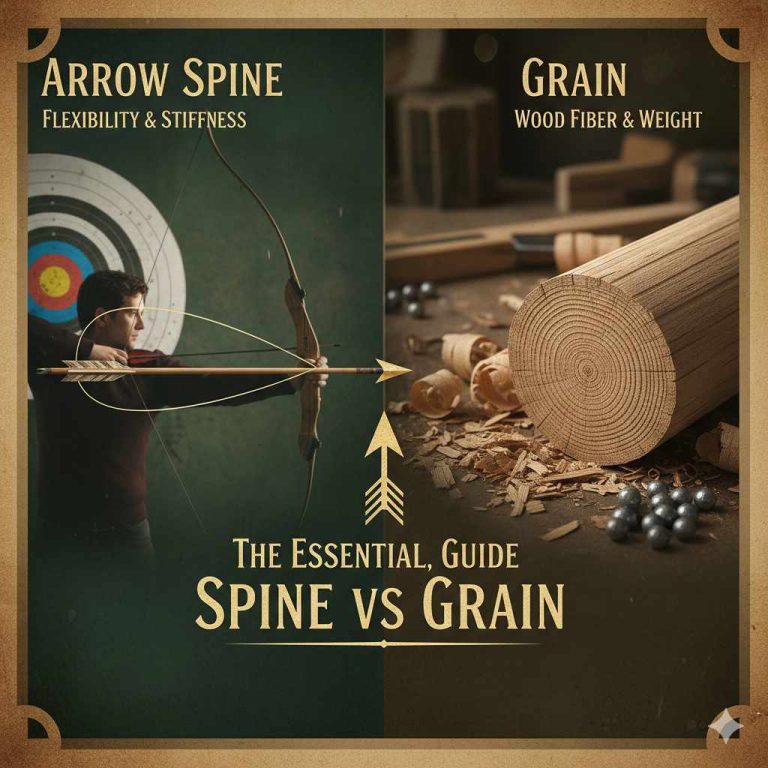
Draw weight matters, but it does not choose spine by itself. At 70 pounds, I still look at the whole arrow: shaft length, point weight, insert mass, broadhead type, and vane size. Static spine is the shaft’s stiffness rating. Dynamic spine is what the bow actually sees when the arrow leaves.
How I think about static spine versus dynamic spine
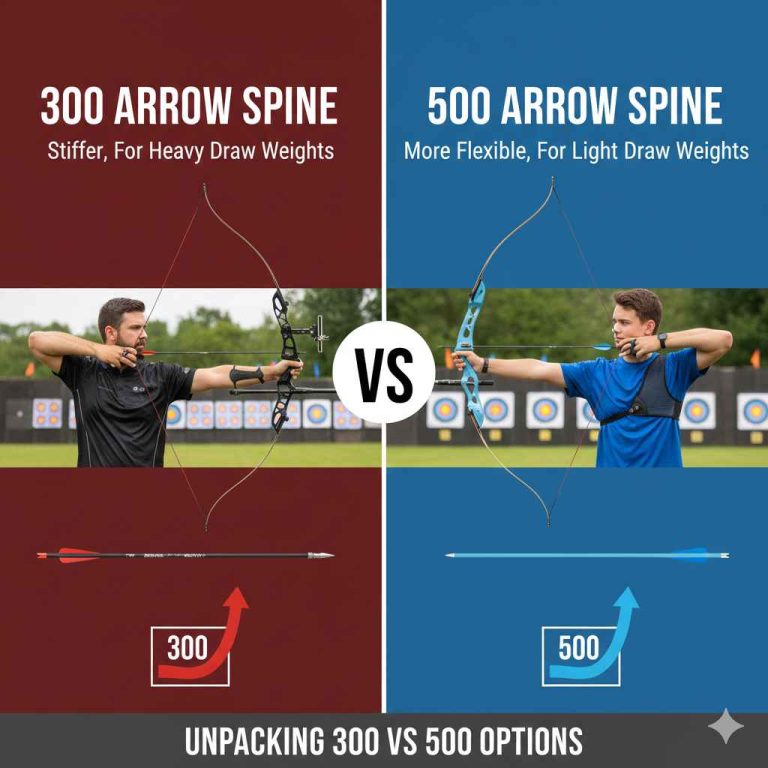
A 300 spine is generally stiffer than a 340 spine. That part is simple. In the shop, I care about how much the arrow bends on launch. Longer shafts act weaker. Heavier points act weaker. More front-end mass acts weaker. A stiff shaft can behave weak, and a weaker shaft can tune clean if the setup matches the bow.
That is why I do not buy arrows from draw weight alone. I measure the finished setup I plan to hunt with, then tune around that exact build.
The parts of the arrow that change the result
The front of the arrow changes dynamic spine the most. Point weight, insert weight, outsert weight, wraps, and broadhead design all matter. So does shaft length. Fletching weight matters too, but less than the front end when you are deciding between 300 and 340.
If you keep the same bow and change from a short field-point setup to a long fixed-blade elk setup, you can move the tune enough to flip the answer.
According to Hunting Arrow Weight Guide: 5 Keys to the Perfect Setup – — A Gold Tip Hunter in the same spine runs closer to 8.2 GPI.
300 vs 340: what each spine means for elk hunters
For a 70 lb elk bow, I’d treat 300 as the safer stiff choice and 340 as the more forgiving lighter-stiff choice. A 300 gives more room for long arrows, heavier points, and fixed-blade heads. A 340 can absolutely work, but it needs the rest of the arrow to stay on the stiffer side of the window.
When a 340 can work on a 70 lb bow
A 340 can work if the arrow is shorter, the point is lighter, and the front-end stack stays modest. That setup is common when a hunter wants a clean-tuning arrow without piling on extra point mass. If your finished elk arrow is not especially long and you are not using a heavy insert or outsert, 340 is worth testing.
When a 300 is the safer pick
I lean 300 when the arrow is long, the head is 125 grains, or the broadhead is fixed blade. I also lean 300 when the front end includes a heavier insert or outsert system. That extra stiffness gives you more margin when the bow is sensitive to form, rest timing, or broadhead steering.
How arrow length changes spine on a 70 lb compound
Arrow length changes effective spine more than most hunters expect. A shorter shaft behaves stiffer. A longer shaft behaves weaker. That is why two arrows with the same static spine can act differently on the same bow. At 70 pounds, an inch or two can matter once you add hunting point weight and a fixed blade.
How to measure arrow length the right way
I measure from the throat of the nock to the end of the shaft, not to the tip of the broadhead. That gives me the working shaft length the bow sees. If I am comparing 300 and 340, I want the actual arrow length on paper, because the wrong measurement leads to the wrong spine choice.
If you are trimming arrows, measure after the cut. Do not guess.
Short shafts behave stiffer
Shortening an arrow can make a 340 behave more like the spine you wanted. That is why some shorter elk builds tune well with 340 at 70 pounds, especially with 100-grain points and standard inserts. The same bow with a longer shaft may need 300 to stay clean.
Long shafts behave weaker
Once the shaft gets longer, the arrow bends more on launch. A long hunting shaft can push a 340 into weak flight quickly, especially if you add a heavier point or a fixed-blade head. If I know the arrow is on the long side, I stop thinking about speed and start thinking about control.
Does point weight and insert weight push you toward 300 or 340?
Yes. Point weight and insert mass are often the tie-breakers. A 100-grain head is generally easier on spine than a 125-grain head. A standard insert is around 50 grains, while weighted inserts can be 100+ grains. That extra front-end mass weakens dynamic spine and can make a borderline 340 act too soft.
100 grain vs 125 grain points
When I’m deciding between 300 and 340, 100 grains gives me more room to use 340 on a shorter setup. Move to 125 grains and I start asking whether the shaft is long enough to need the stiffer option. That is especially true if the bow will shoot fixed blades in the field.
How insert and outsert weight changes dynamic spine
The insert is not dead weight. It changes how hard the arrow has to recover after launch. A standard insert around 50 grains is easier to manage. Once you move into weighted inserts at 100+ grains, you can push a 340 out of its comfortable window and make a 300 the better call.
Why front-end weight can make a weak shaft fail
Front-end mass can turn a “paper-tuned” arrow into a broadhead problem. The shaft may clear paper, then show steering or tail kick with a fixed blade. That is one reason I do not choose spine from bare shaft alone. I want the actual hunting head on the arrow before I trust it.
| Finished setup | Arrow length | Point / head | Insert / front-end mass | Recommended spine |
|---|---|---|---|---|
| Short elk arrow | 28 inches or less | 100 grains, field point or forgiving head | Standard insert, light front end | 340 |
| Mid-length hunting arrow | 29 to 30 inches | 125 grains, fixed blade | Standard insert or modest outsert | 300 |
| Long elk arrow | 30 inches or longer | 125 grains, fixed blade | Heavy insert or outsert system | 300 |
| Short arrow, heavier front end | 28 to 29 inches | 125 grains, fixed blade | Weighted insert or added front mass | 300 |
Fixed-blade broadheads change the spine test
Fixed-blade broadheads are less forgiving than field points. They steer the arrow more, which means they expose spine mismatch faster. A setup that groups well with field points can still plane with broadheads if the arrow is too weak, too stiff, or built with a front end that does not match the bow.
What broadhead flight says about spine
If the broadhead hits left or right of your field points, I do not blame the head first. I check arrow length, front-end mass, rest setup, and tune. Broadhead flight is a warning light. It tells me the bow and arrow are not recovering the same way with hunting heads as they do with points.
Why field-point success can still fail on elk
I have seen arrows paper-tune clean and still act wrong with a fixed blade. That matters on elk because you want predictable penetration after impact, not a setup that only looks good on the target line. Field points hide bad dynamics. Broadheads expose them.
Use this 300-vs-340 elk decision matrix
Here is the framework I use when a hunter asks me to choose between 300 and 340 for a 70 lb elk bow. I start with arrow length, then point weight, then broadhead type, then front-end mass. If two boxes point toward the stiffer option, I go 300 and tune down only if the bow proves it likes the weaker shaft.
| Arrow length | Point weight | Broadhead type | Front-end mass | Call |
|---|---|---|---|---|
| Short, under 29 inches | 100 grains | Field point or forgiving head | Standard insert | 340 is a strong test candidate |
| Short to medium, under 30 inches | 125 grains | Fixed blade | Standard insert | 300 is the better starting point |
| Medium, around 29 to 30 inches | 100 grains | Fixed blade | Modest outsert or standard insert | Either can work; start with 300 if tune is unknown |
| Long, 30 inches or more | 125 grains | Fixed blade | Heavy insert or outsert | 300 |
What total arrow weight and FOC should elk hunters aim for?
For elk, I like a finished hunting arrow that lands in the heavy hunting range and carries enough front balance to keep broadheads honest. Heavy hunting arrows are often recommended at 450–500 grains total. For hunting, an FOC between 11% and 15% is commonly recommended, and for elk and large-bodied deer, 13–16% FOC is suggested.
Practical total weight for elk arrows
I do not chase weight for the sake of weight. I want a finished arrow that carries well, penetrates well, and still tunes. One ounce equals 437.5 grains, so those weight jumps are bigger than they sound.
In real hunting use, I would rather see an arrow that tunes clean at a sensible hunting weight than a light arrow that only looks good on a chronograph.
Why FOC matters for penetration and tune
FOC changes how the arrow carries mass forward. That helps fixed-blade heads stabilize and can aid penetration on elk-sized game. Below 10% FOC can cause poor broadhead flight and reduced penetration. Above 19% FOC sacrifices trajectory for penetration. For most elk bows, I stay in the middle, then verify with broadhead tuning.
Where fixed-blade hunting setups usually land
With 100 or 125 grain heads, standard inserts around 50 grains, and a normal hunting shaft, many elk setups land near the middle of that recommended FOC range. If I add a heavier insert or wrap, I watch the tune closely, because the front of the arrow can change both balance and dynamic spine at the same time.
How I would tune before buying a dozen arrows
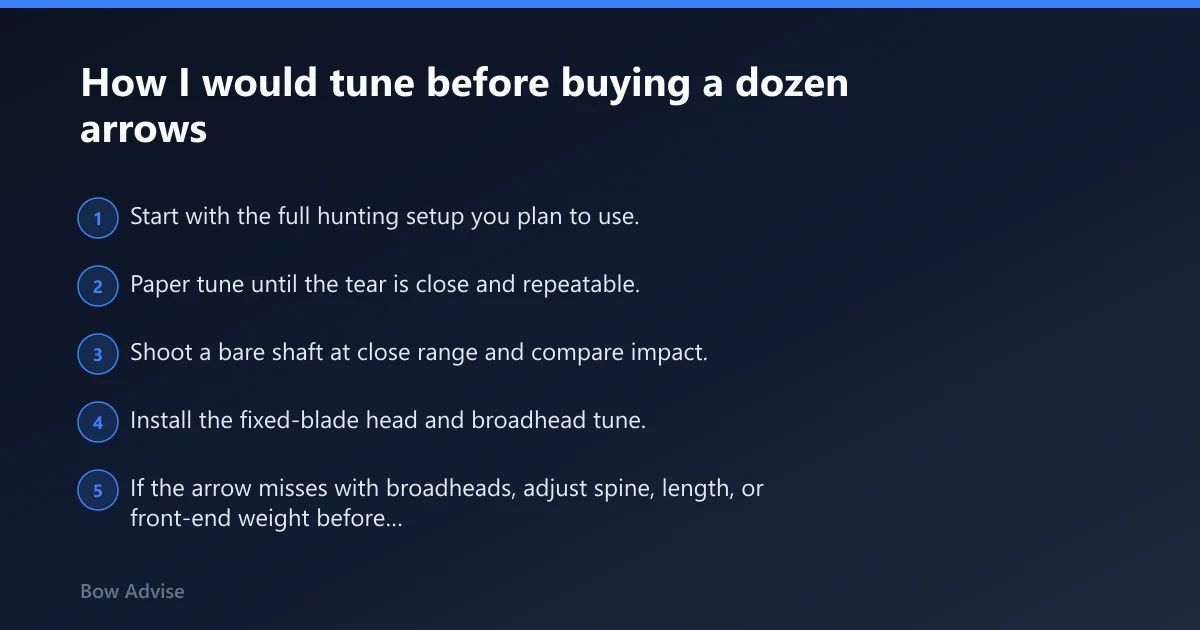
I never buy a full dozen until I know the bow likes the arrow. I start with paper tuning, then bare shaft tuning, then broadhead tuning. That order tells me whether I am close, weak, or stiff. It also tells me whether the spine choice is right before I spend money on a dozen shafts.
Paper tune first
Paper tune gets me into the neighborhood. A clean tear tells me the bow and arrow are close, but it does not end the discussion for elk. If the tear is messy, I check rest timing, nock fit, and center shot before I blame the spine. Paper is the first pass, not the final word.
Bare shaft tune next
A bare shaft shows me how the arrow wants to recover without vane help. If the bare shaft refuses to group with fletched arrows at close range, I look at spine, point weight, and draw length. This step is where the 300-versus-340 decision gets clearer for me.
Broadhead tune last
Broadhead tune is the test that matters for elk. If the fixed blade and the field point both print the same way, I trust the setup. If they do not, I change the weak link. Sometimes that is spine. Sometimes it is point weight. Sometimes it is arrow length.
- Start with the full hunting setup you plan to use.
- Paper tune until the tear is close and repeatable.
- Shoot a bare shaft at close range and compare impact.
- Install the fixed-blade head and broadhead tune.
- If the arrow misses with broadheads, adjust spine, length, or front-end weight before buying a dozen.
What each test tells you about spine choice
If paper is clean but the bare shaft is weak, I usually look at a stiffer shaft or a lighter front end. If the bare shaft is stiff and broadheads still group poorly, I look at tune and launch, not just the spine number. A 300 can be too stiff if the arrow is short and light up front. A 340 can be too weak if the arrow is long with a heavy head.
Frequently asked questions
For a 70 lb draw weight, is a 300 spine or 340 spine better for elk?
I usually start elk hunters on 300 if the arrow is 29 inches or longer, or if they want 125-grain heads or fixed blades. I start with 340 when the shaft is shorter and the front end stays lighter. The bow weight matters, but the finished arrow decides it.
How does arrow length change the effective spine on a 70 lb compound?
Shorter arrows behave stiffer. Longer arrows behave weaker. That means a 340 can work on a shorter elk setup, while the same shaft may go soft once you stretch the length and add a heavier head. I measure the real hunting arrow, not a chart-only guess.
What total arrow weight should I use for elk hunting?
I like finished elk arrows in the heavy hunting range, and heavy hunting arrows are often recommended at 450–500 grains total. That gives a good balance of penetration and practical field use. I still tune the arrow first, because an untuned heavy arrow is still an untuned arrow.
What FOC is best for elk hunting with fixed-blade broadheads?
For hunting, an FOC between 11% and 15% is commonly recommended. For elk and large-bodied deer, 13–16% FOC is suggested. I stay near that window, then broadhead tune. Below 10% can hurt broadhead flight and penetration, while above 19% starts giving up too much trajectory.
Can a 340 spine work if I use a shorter arrow or heavier point?
Yes, a 340 can work if the shaft is short enough and the front end does not get too heavy. A 100-grain head with a standard insert is easier to manage than a 125-grain fixed blade with extra front mass. The shorter the shaft, the more room a 340 has.
What components matter most when choosing between 300 and 340 spine?
Arrow length, point weight, insert or outsert mass, and broadhead type matter most. I look at the full hunting arrow before I pick a spine. A 300 gives me more margin for long arrows and fixed blades. A 340 can be right for shorter, lighter-front setups that still tune clean.