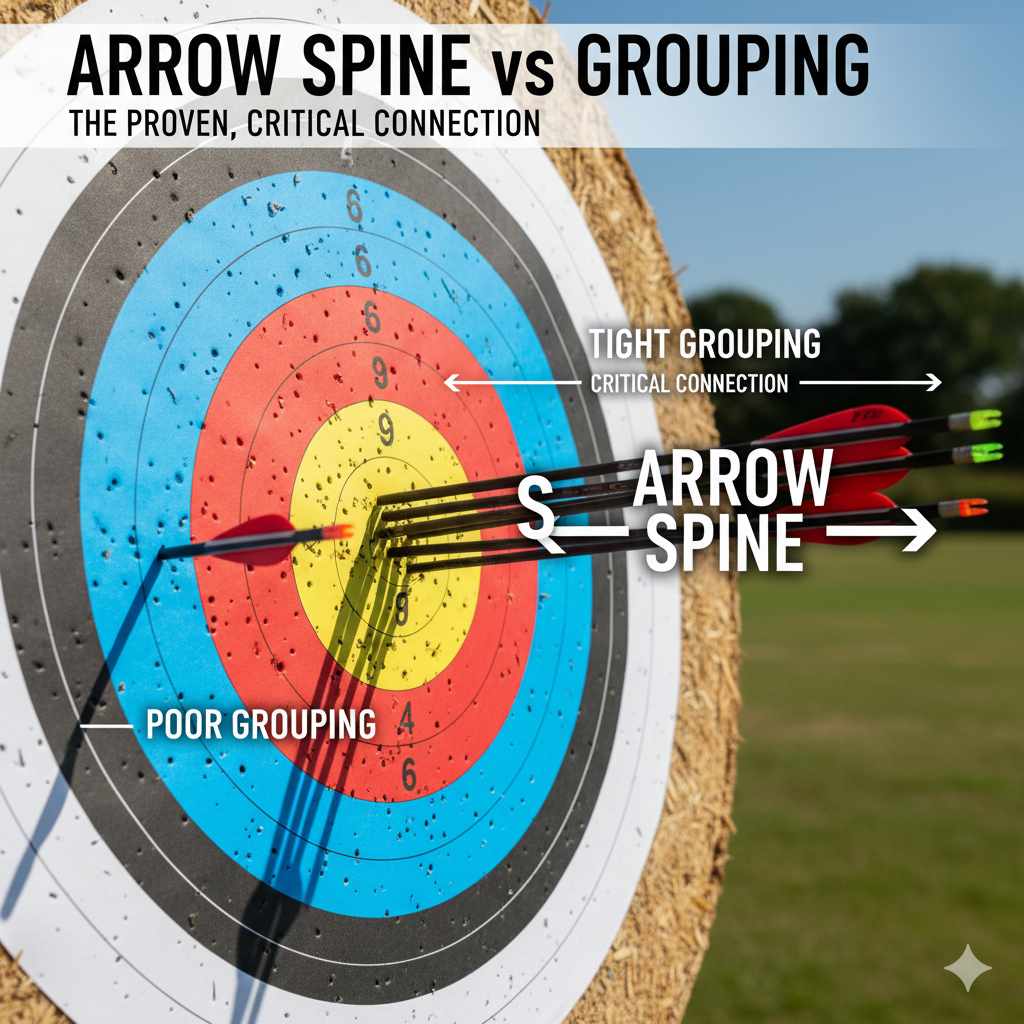
Proper arrow spine is the single most important factor for tight, consistent arrow groups. An arrow with the correct stiffness (spine) will fly straight and true from your bow. An incorrectly spined arrow will wobble erratically, destroying accuracy and making it impossible to group shots, no matter how good your form is.
Are you hitting the target but your arrows are scattered all over the place? It’s one of the most common frustrations in archery. You practice your form, you aim carefully, but your groups just won’t tighten up. It can feel like you’re doing something wrong, but the problem might not be you at all. It could be your arrows.
Many beginners overlook a key detail: arrow spine. This simple concept is the secret behind why some arrows fly like darts and others fly like confused bees. Getting it right is a game-changer for your accuracy.
In this guide, I’ll walk you through exactly what arrow spine is, why it’s so critical for good grouping, and how you can choose the perfect arrows for your bow. Let’s solve this mystery together and get your arrows flying straight to the bullseye.
What Is Arrow Spine? A Super Simple Guide
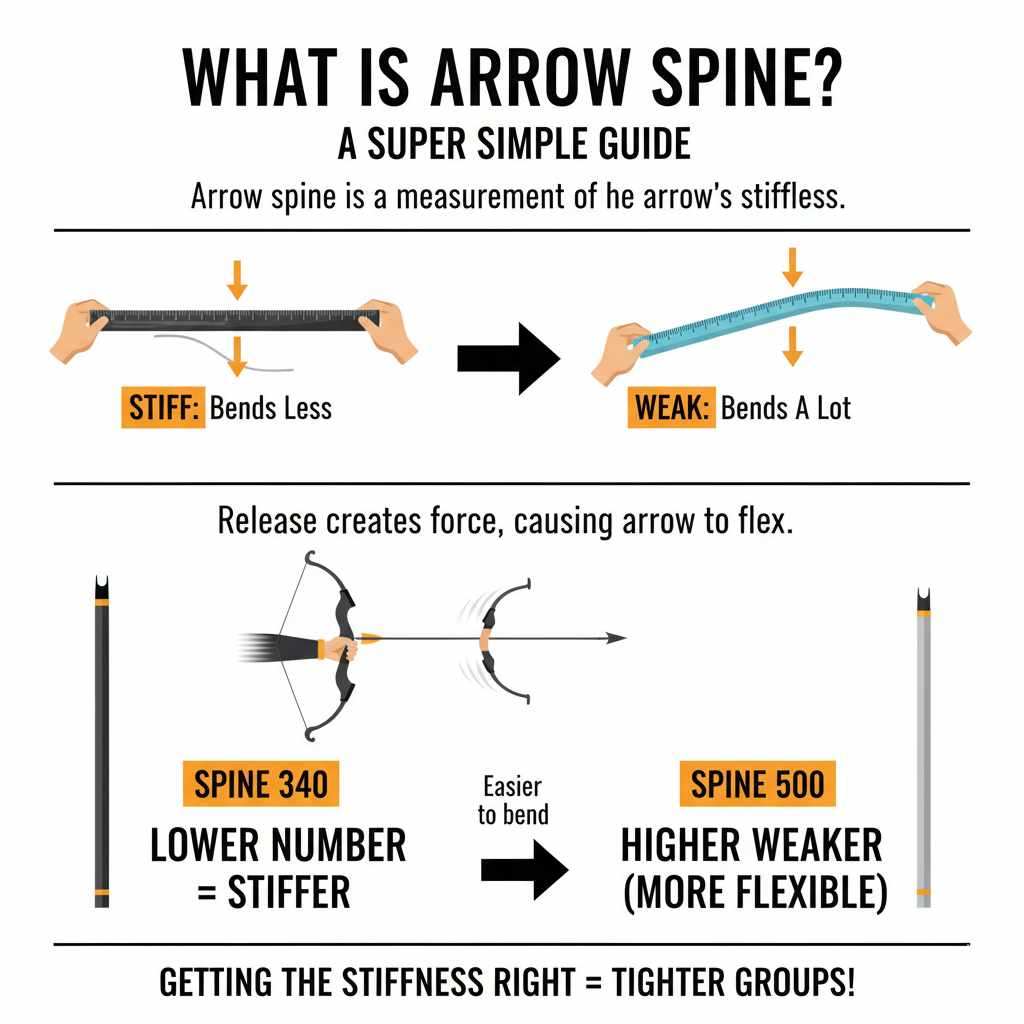
Let’s keep this simple. Arrow spine is just a measurement of an arrow’s stiffness. That’s it! Imagine holding a ruler between your hands. If you push on the middle, it bends. A thick yardstick bends less, while a thin plastic ruler bends a lot. Arrow spine is the same idea.
When you release the bowstring, a huge amount of energy pushes the arrow forward. This force causes the arrow to bend or flex. The amount it bends is determined by its spine.
- A “weak” spine (more flexible) arrow bends a lot.
- A “stiff” spine (less flexible) arrow bends very little.
Arrow manufacturers label spine with numbers like 340, 400, or 500. It can be a little confusing, but here’s the key takeaway:
A lower number (like 340) means a STIFFER arrow.
A higher number (like 500) means a WEAKER (more flexible) arrow.
This seems backward, but it’s just how the industry measures it. Think of it like this: a 500-spine arrow bends more easily than a 340-spine arrow. Getting this stiffness right is the first step to amazing groups.
Why Spine Is the Secret to Tight Arrow Groups
So, why does a little bit of flex matter so much? It all comes down to something called the “Archer’s Paradox.” This sounds complicated, but the idea is simple.
When you shoot, your arrow has to bend around the bow’s riser (the handle part) to start flying straight. If it doesn’t bend, it will hit the riser and fly off-course. The arrow spine determines if it bends the perfect amount.
- If the spine is correct: The arrow flexes just enough to clear the bow, stabilizes quickly, and flies straight to your target. Your arrows will land where you aim them, creating a tight group.
- If the spine is too weak (too flexible): The arrow over-bends. It wobbles too much, like a fish flopping out of water. It never stabilizes properly and will often hit to the right for a right-handed archer. Your groups will be wide and inconsistent.
- If the spine is too stiff (not flexible enough): The arrow doesn’t bend enough. It “kicks” off the riser as it leaves the bow. This sends it flying off-course, often to the left for a right-handed archer. Again, your groups will be poor.
Think of it like throwing a football. A perfect spiral goes exactly where you want it. A wobbly, end-over-end throw is impossible to aim. A correctly spined arrow is like that perfect spiral—stable, predictable, and accurate.
Static vs. Dynamic Spine: What You Really Need to Know
You might hear archers talk about two types of spine: static and dynamic. Don’t let the terms intimidate you. Here’s all you need to know as a beginner.
Static Spine is the number printed on the arrow shaft (e.g., 400). It’s the arrow’s stiffness when it’s just sitting there. This is the number you’ll use when looking at a spine chart to buy arrows.
Dynamic Spine is how the arrow actually bends when you shoot it. This can change based on a few things:
- Your Bow’s Draw Weight: More power requires a stiffer arrow.
- Your Arrow Length: A longer arrow is more flexible (weaker spine). A shorter arrow is stiffer.
- The Weight of Your Arrowhead (Point): A heavier point makes the arrow act weaker because there’s more weight at the front causing it to flex.
You don’t need to be an expert on dynamic spine. Just remember that these factors work together. That’s why using a spine chart is so important—it does all the hard work for you!
How to Choose the Perfect Arrow Spine for Your Bow
Finding the right spine isn’t guesswork. It’s a simple, step-by-step process. All you need to do is follow a manufacturer’s arrow spine chart. Every major arrow brand, like Easton Archery or Gold Tip, provides these for free on their websites.
Step 1: Gather Your Bow’s Information
Before you look at a chart, you need two key pieces of information:
- Your Bow’s Peak Draw Weight: This is the maximum weight you pull back. If you shoot a 50-pound compound bow, your peak draw weight is 50 lbs. For recurve bows, it’s the weight at your specific draw length.
- Your Arrow Length: This is NOT your draw length. To find your arrow length, draw your bow with a full-length arrow on the rest. Have a friend mark the arrow about one inch in front of where it contacts the arrow rest. The measurement from the bottom of the nock groove to that mark is your arrow length.
Step 2: Read an Arrow Spine Chart
Spine charts look like a grid. You find your draw weight along one axis and your arrow length along the other. Where they meet, the chart gives you a recommended spine group.
Let’s look at a simplified example to see how it works.
| Arrow Length (inches) | 30-40 lbs Draw Weight | 40-50 lbs Draw Weight | 50-60 lbs Draw Weight |
|---|---|---|---|
| 26″-27″ | 600 Spine | 500 Spine | 400 Spine |
| 28″-29″ | 500 Spine | 400 Spine | 340 Spine |
| 30″-31″ | 400 Spine | 340 Spine | 300 Spine |
How to use it: If you shoot a 45-pound bow (so you’re in the “40-50 lbs” column) and your arrow length is 28 inches (so you’re in the “28”-29″” row), the chart recommends a 400 spine arrow. It’s that easy!
Always use the specific chart from the arrow brand you plan to buy. Different brands can have slight variations.
Step 3: Fine-Tune with Point Weight
Most beginners start with a standard 100-grain field point, and spine charts are usually based on this. If you decide to use a heavier point (like 125 grains), it will make your arrow act weaker. In that case, you might need to choose a slightly stiffer arrow (a lower spine number) to compensate.
For now, stick with 100-grain points. It keeps things simple while you are learning.
The Ultimate Test: Bare Shaft Tuning for Perfect Groups
Once you have arrows that the chart says are correct, you can do a fun and easy test to see if they are truly perfect for your bow. This is called “bare shaft tuning.” It sounds technical, but it’s just shooting one arrow without feathers (fletching) next to your regular fletched arrows.
The fletching on an arrow corrects its flight, like the feathers on a badminton shuttlecock. By removing them from one arrow, you can see exactly how the arrow wants to fly out of your bow. This tells you if your spine is perfect.
How to Bare Shaft Tune:
- Stand Close: Start by standing only 10-15 yards from the target. Safety is key, as a bare shaft can fly erratically if it’s way off.
- Shoot a Group: Shoot three of your regular, fletched arrows at the bullseye. Try to make a nice, tight group.
- Shoot the Bare Shaft: Now, carefully aim at the same spot and shoot your bare shaft.
- Analyze the Results: Look at where the bare shaft landed in relation to your fletched arrow group.
This simple test gives you all the information you need to perfect your setup. Here’s a guide to what the results mean (for a right-handed archer):
| Where the Bare Shaft Hits | What It Means | How to Fix It |
|---|---|---|
| With the group | Perfect spine! | Go celebrate! No changes needed. |
| Left of the group | Arrow spine is too stiff. | Increase point weight (e.g., 100 to 125 grains) OR get a weaker spine arrow (e.g., go from 400 to 500). |
| Right of the group | Arrow spine is too weak. | Decrease point weight (e.g., 125 to 100 grains) OR get a stiffer spine arrow (e.g., go from 500 to 400). |
| High or Low | Nocking point needs adjustment. | Move your nocking point on the string slightly down if the arrow hits high, or up if it hits low. |
(For left-handed archers, the left/right results are reversed.)
Bare shaft tuning is the final confirmation that you’ve mastered the connection between arrow spine and grouping. When your bare shaft flies straight and true into the same group as your other arrows, you know your equipment is perfectly matched to you.
Common Beginner Mistakes with Arrow Spine
Getting the spine right is a huge confidence booster. To help you succeed, here are a few common pitfalls to avoid:
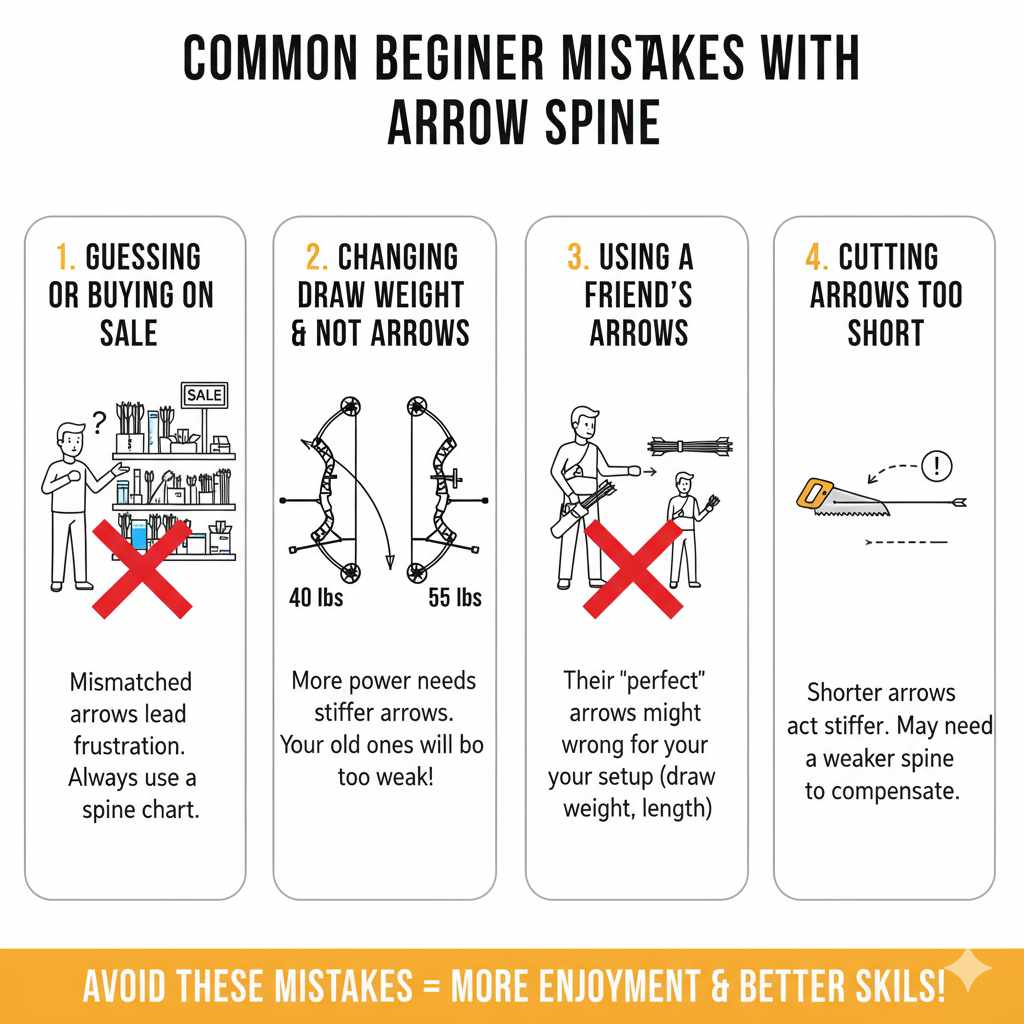
- Guessing or Buying What’s on Sale: It’s tempting to grab any arrows, but mismatched arrows will only lead to frustration. Always use a spine chart.
- Changing Draw Weight and Not Arrows: If you start at 40 lbs and later increase your bow to 55 lbs, your old arrows will now be too weak. You will need stiffer arrows to match the new power.
- Using a Friend’s Arrows: Your friend might have a different draw weight or arrow length. Their “perfect” arrows might be completely wrong for your setup.
- Cutting Arrows Too Short: Remember, a shorter arrow acts stiffer. If you cut your arrows shorter, you may need to switch to a weaker spine to compensate.
Avoiding these simple mistakes will save you a lot of time and help you focus on what really matters: enjoying archery and improving your skills.
Frequently Asked Questions (FAQ)
What happens if my arrow spine is too weak?
If your arrow spine is too weak (too flexible), it will over-flex when shot. This causes erratic, unstable flight. For a right-handed archer, a weak arrow will typically impact the target to the right of where you were aiming. It makes tight grouping impossible.
What happens if my arrow spine is too stiff?
If your arrow spine is too stiff (not flexible enough), it won’t bend enough to get around the bow’s riser cleanly. It will “kick out” upon release. For a right-handed archer, a stiff arrow will typically impact the target to the left of where you were aiming, leading to poor groups.
Can I use the same arrows if I increase my draw weight?
Usually not. Increasing your draw weight puts more force into the arrow, which requires a stiffer spine to handle it. If you increase your draw weight by more than 5 pounds, you should re-check an arrow spine chart. Your old arrows will likely be too weak for the new weight.
Is a higher spine number stiffer or weaker?
This is a common point of confusion! A higher spine number (e.g., 500, 600) means the arrow is WEAKER or more flexible. A lower spine number (e.g., 340, 300) means the arrow is STIFFER. Just remember: low number = stiff, high number = flexible.
How much does point weight affect arrow spine?
Point weight has a significant effect. A heavier point makes an arrow act dynamically weaker because the weight at the tip causes it to flex more easily. A lighter point makes it act stiffer. A change of just 25 grains (e.g., going from a 100-grain to a 125-grain point) can be enough to change an arrow from perfectly tuned to slightly weak.
Does arrow length change the spine I need?
Yes, absolutely. A longer arrow of the same spine is effectively weaker (more flexible) than a shorter one. This is why arrow length is a critical piece of information on every spine selection chart. Cutting an arrow makes it stiffer.
Do I need expensive arrows to get the right spine?
No. Every arrow, from budget-friendly options to high-end tournament shafts, has a spine rating. The most important thing is that the spine rating matches your bow setup. More expensive arrows may offer better weight consistency and straightness, which helps with precision, but a correctly spined budget arrow will always outperform an incorrectly spined expensive arrow.
Conclusion: Your Path to Tighter Groups
The connection between arrow spine and grouping isn’t just a theory—it’s the foundation of accuracy in archery. While things like stance, anchor point, and release are vital, they can only take you so far if your arrows are fighting against your bow. An improperly spined arrow will never fly true, no matter how perfect your form is.
By taking a few moments to understand your bow’s specs, consult a spine chart, and select the right arrows, you are setting yourself up for success. You’re removing the guesswork and ensuring your equipment is working with you, not against you. The confidence you’ll feel when you see your groups shrink is incredible.
So next time you head to the range, be proud that you understand one of archery’s most important secrets. You have the knowledge to build a perfectly tuned system, and that is a major step toward becoming a more consistent and confident archer. Now go enjoy that satisfying “thwack” of arrows hitting the bullseye, one after another.