Costco Kitchen Cabinets Vs Ikea: Which Is Better?
Choosing kitchen cabinets is a big decision. They are the backbone of your kitchen. They need to be strong, stylish, and fit your life.
Many people wonder if they should look at warehouse clubs like Costco or big box furniture stores like IKEA. Both offer ways to update your kitchen without the huge price tag of custom-built ones. But they work in very different ways.
Costco doesn’t sell cabinets directly in their stores or online like they do other home goods. Instead, they partner with cabinet companies. This means the cabinets you buy through Costco often come from a specific manufacturer.
IKEA, on the other hand, designs and makes its own cabinets. This difference is key. It changes how you shop, what you get, and how much work you do yourself.
We’ll break down the big points: price, quality, how you get them, and what they look like. This will help you see which one might be the better fit for your home. We want you to feel confident in your choice.
This way, your new kitchen will be a place you love for years to come. It’s about finding the right balance for you.
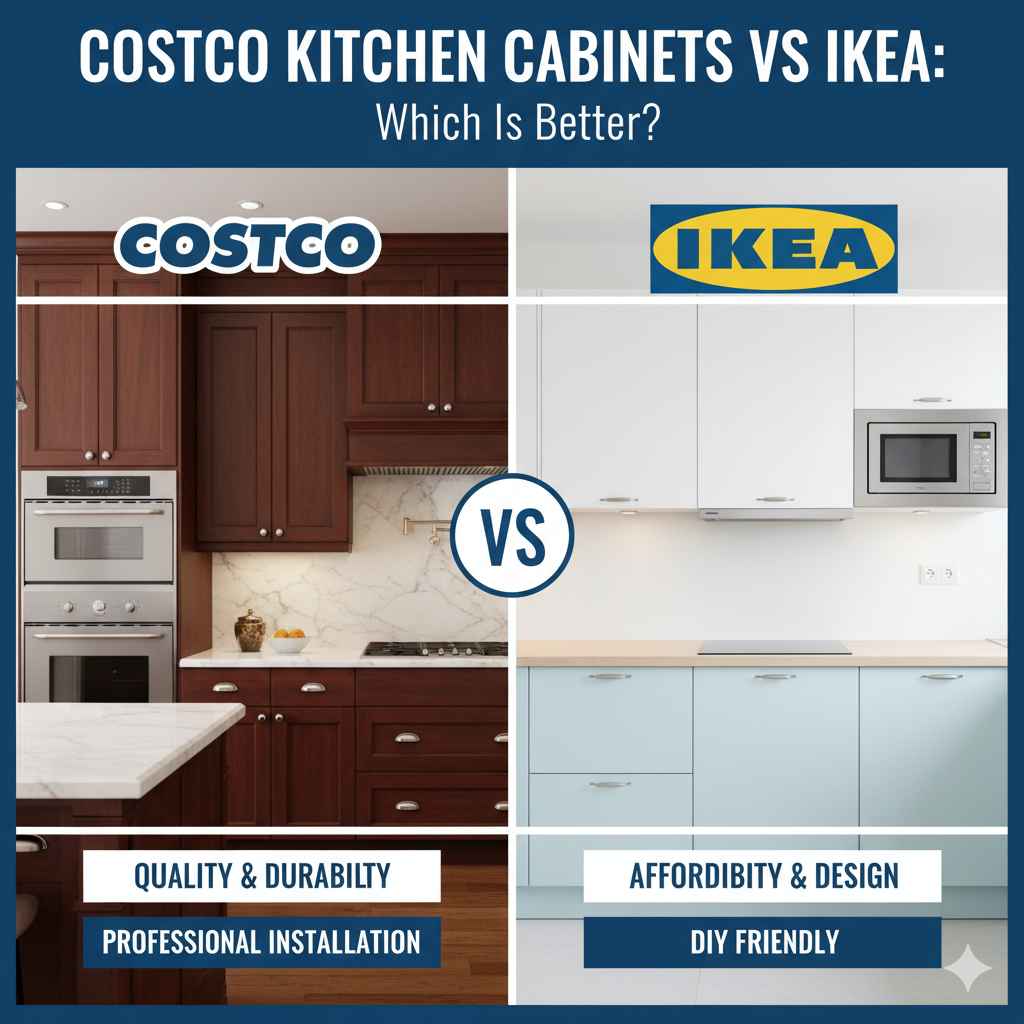
Choosing between Costco and IKEA for kitchen cabinets involves looking at their unique offerings. Costco partners with cabinet makers, providing access to ready-made or semi-custom options, often with a focus on traditional styles and a simpler buying process. IKEA offers a modular, DIY-friendly system with a wide range of modern designs, requiring more planning and assembly from the homeowner.
Understanding Costco Cabinet Offerings
When you think of Costco, you probably think of bulk buys and great deals. For kitchen cabinets, it’s a bit different. Costco doesn’t stock cabinets on their shelves.
Instead, they work with a few different cabinet manufacturers. These are companies that make good quality cabinets, often in more traditional styles. You usually see these options on the Costco website.
You might also find special promotions or packages.
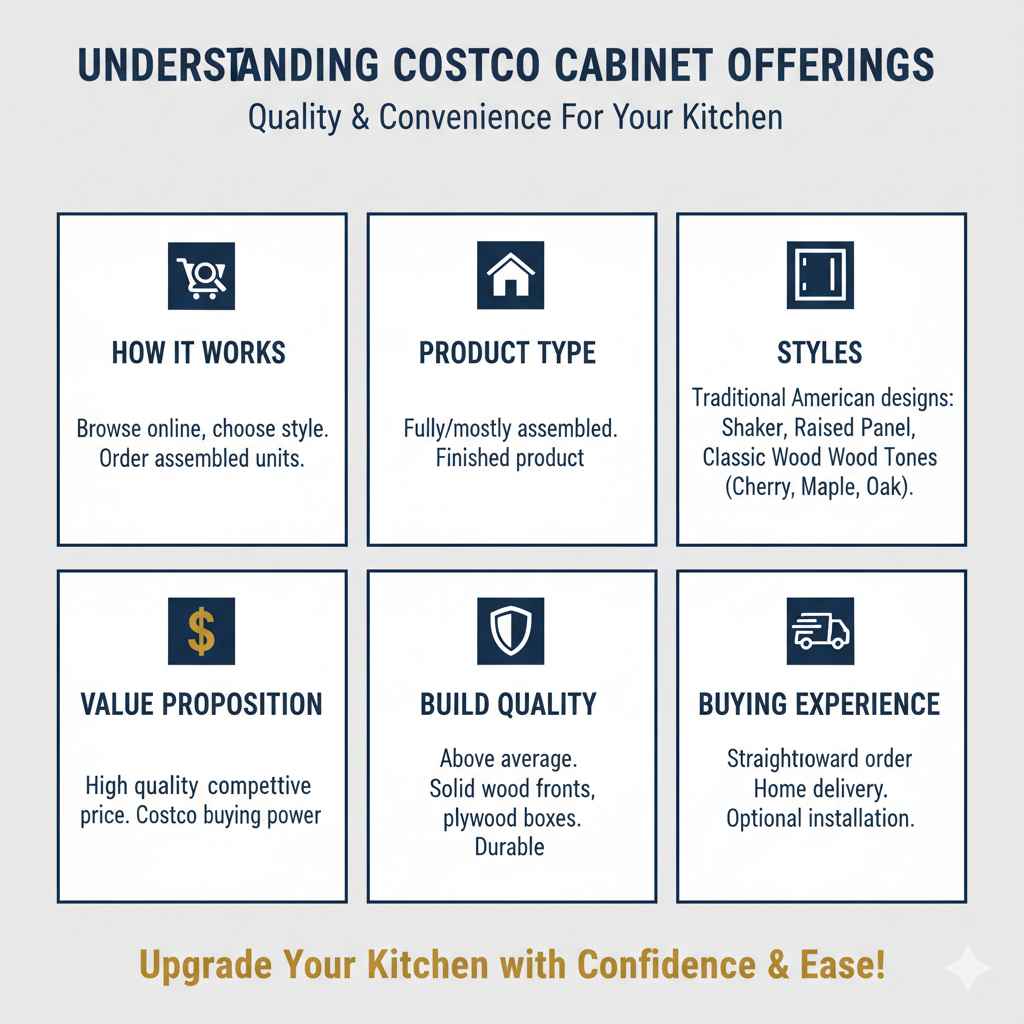
The process often feels more like buying other home goods from Costco. You browse online, choose a style and finish, and then order. The cabinets usually come fully assembled or mostly assembled.
This can save you a lot of time and effort. You’re buying a finished product. The styles tend to be what many American homeowners expect: Shaker doors, raised panels, and classic wood tones like cherry, maple, or oak.
They aim for a look that is timeless and fits into many home decors.
One of the main appeals of going through Costco is the potential for a good value. Because Costco has buying power, they can negotiate prices. This often means you get a higher quality cabinet for a price that’s competitive with what you might pay for lower-end options elsewhere.
Plus, if you’re a Costco member, you can expect the usual member benefits, though this might not always translate to direct discounts on cabinets themselves, but rather the overall package value.
The quality is generally considered to be above average for the price point. These are not particleboard cabinets with thin veneers. They are often made with solid wood fronts and plywood boxes.
This means they are built to last. They can hold up to daily use in a busy kitchen. It’s important to check the specific manufacturer Costco is working with at the time, as this can vary.
The buying experience is usually straightforward. You pick a style, a finish, and sizes. Then, you place your order.
Shipping is typically included or a flat rate. Delivery to your home is common. Some options might even include installation services through a third party, which can be a big plus if you don’t want to manage that yourself.
This ease of purchase is a major draw for many.
Exploring IKEA’s Kitchen Cabinet System
IKEA is famous for its flat-pack furniture and do-it-yourself approach. Their kitchen system, called SEKTION, is no different. It’s a modular system.
This means you build your kitchen from a lot of different pieces. You choose cabinet boxes, drawer fronts, doors, shelves, and hardware. You can design almost anything you can imagine.
The biggest difference is that IKEA cabinets come flat-packed. You have to assemble every single cabinet box. Then you have to attach the doors, drawer fronts, and internal organizers.
This takes time. It also requires some basic tools and patience. Many people find it a rewarding project.
Others prefer to hire someone to do the assembly for them.
IKEA cabinets are known for their modern and often minimalist styles. They offer a huge range of colors, finishes, and door styles. You can get sleek, handle-less fronts or more traditional looks, but their strength is in contemporary design.
This allows for a lot of personalization. You can create a kitchen that truly reflects your personal taste. They also have clever internal storage solutions.
When it comes to quality, IKEA cabinets are generally considered good for their price point, especially for the DIY market. The cabinet boxes are made from particleboard or fiberboard with a laminate or foil finish. The doors and drawer fronts can be made from various materials, including foil, wood veneer, or painted MDF.
For everyday use, they hold up well, but they might not be as robust as solid wood or high-end plywood options. However, the SEKTION system is designed for durability and is often seen in busy homes.
The shopping experience at IKEA is interactive. You can use their online kitchen planner tool. This helps you map out your kitchen.
You can see what fits and how much it costs. In the store, you can see displays and talk to kitchen planning specialists. You then pick up your items from the warehouse or have them delivered.
The delivery cost can add up. Assembly is almost always on you, or an extra paid service.
Cost vs. Price: What You Actually Pay
When comparing Costco and IKEA cabinets, the sticker price isn’t the whole story. You have to think about everything that goes into the final cost. Costco cabinets often come with a more upfront price.
You see a price for the cabinet unit. Shipping might be included or a set fee. If they offer installation, that’s an extra cost, but it’s usually a straightforward quote.
For IKEA, the base price is for the cabinet boxes and fronts. You then add all the internal organizers, shelves, drawer slides, and hardware. Each of these adds to the total.
The assembly cost is a major factor. If you do it yourself, the cost is your time and a few tools. If you hire someone, this can easily add 20-30% to the total cost of the cabinets themselves.
Delivery fees also need to be factored in, and these can be significant depending on your location and order size.
Let’s consider an example. A common configuration like a 10-foot by 10-foot kitchen might have a base price from Costco that includes doors and basic interior fittings. The price you see is pretty close to what you pay, minus tax and perhaps installation.
For IKEA, that same 10×10 kitchen would require careful planning of every single box, drawer, door, and internal shelf. The price would be calculated based on all these individual items. Then you add the cost of assembly and delivery.
It’s possible that IKEA could be cheaper if you do all the work yourself. But if you factor in hiring help, Costco might offer a better value for a comparable quality and finish.
Also, think about the lifespan and repairability. Costco cabinets, often made with more solid materials, might last longer, reducing the need for replacement sooner. IKEA cabinets, while durable, might show wear and tear more quickly depending on usage and material.
Replacing a single IKEA door or drawer front might be easier than trying to match a discontinued Costco cabinet style later on.
It’s also worth looking at warranties. Both companies offer warranties, but they can differ. Costco cabinets usually come with a manufacturer’s warranty.
IKEA offers its own warranty on SEKTION components. Understand the terms of these warranties, especially what they cover and for how long. This is part of the long-term cost of ownership.
Quality and Materials: What’s Inside and Out
When we talk about cabinet quality, we’re looking at the materials used and how they are put together. This affects how they look, how they feel, and how long they will last. For Costco cabinets, you’re generally getting what’s considered “semi-custom” or “stock” cabinetry from established brands.
This often means:
- Cabinet Boxes: Plywood is common. This is strong and stable. It holds screws well and doesn’t warp easily. Some may use furniture-grade particleboard or MDF, but plywood is a good sign of quality.
- Drawer Construction: Dovetail joints are a hallmark of good drawers. They are strong and interlock well. Full-extension drawer slides are usually standard, allowing you to pull the drawer out completely.
- Door and Drawer Fronts: Solid wood is often used for the frames of doors. The center panels might be a matching veneer or plywood. Finishes are typically applied with good durability in mind.
- Finishes: High-quality paints or stains are used. These are applied evenly and are meant to resist chipping and fading.
IKEA’s SEKTION system uses a different approach. The cabinet boxes are typically made from particleboard or fiberboard. These are covered with a laminate or foil wrap.
This is a common practice for budget-friendly and modern furniture. The advantage is that these materials can be very consistent and easy to clean. However, they are not as strong as solid wood or plywood.
They can be more susceptible to damage from moisture or impact. The drawer boxes are often made of metal, which is very durable.
The doors and drawer fronts at IKEA come in a huge variety. You can get foil-wrapped fronts, which are very affordable and come in many colors. You can also opt for painted MDF or wood veneers.
The painted options can look very sleek and modern. However, the quality of the finish can vary, and they can chip over time, especially around edges or frequently used areas like drawer pulls.
One key difference is the warranty. Costco cabinets typically come with a manufacturer warranty that might be 10 years or even lifetime for certain components. IKEA offers a 25-year limited warranty on SEKTION cabinet boxes, drawer runners, and hinges.
This long warranty on the core components is impressive. However, it’s important to read the fine print for both. It’s about understanding what is covered.
In summary, if you’re prioritizing robust, traditional materials like solid wood and plywood throughout, Costco cabinets often have an edge. If you’re looking for modern aesthetics, a wide range of finishes, and good durability for the price, IKEA’s system is a strong contender, especially with its excellent drawer and hinge hardware.
Costco vs. IKEA: Key Material Differences
Cabinet Boxes:
- Costco: Often high-quality plywood.
- IKEA: Particleboard or fiberboard with laminate/foil wrap.
Drawer Construction:
- Costco: May feature dovetail joints; full-extension slides common.
- IKEA: Metal drawer boxes are very durable; full-extension slides standard.
Door/Drawer Fronts:
- Costco: Solid wood frames, wood veneer or plywood panels.
- IKEA: Wide range – foil, painted MDF, wood veneer.
Styles and Customization Options
When you’re picking out cabinets, how they look is a huge part of the decision. You want them to match your style and the overall feel of your home. Costco cabinets tend to stick to more classic and popular kitchen styles.
This is often a good thing for resale value and broad appeal. You’ll commonly find:
- Shaker Style: This is a very popular choice with a clean, simple design. It has a flat center panel and raised or recessed framing.
- Raised Panel: These doors have a center panel that is raised, giving them a more traditional and formal look.
- Slab Doors: Simple, flat doors without any panels or ornamentation. These can lean modern or transitional.
The color and finish options at Costco are usually focused on wood tones like maple, cherry, oak, or painted finishes in white, gray, or cream. They aim for a look that is timeless. While customization is limited compared to full custom cabinetry, you can often choose different door styles and finishes within the brands Costco partners with.
IKEA takes customization to another level with its SEKTION system. Because it’s modular, you can design almost any layout. But the style options for the doors and drawer fronts are even more diverse.
You can find:
- Ultra-modern: High gloss, matte finishes, handle-less designs.
- Farmhouse: Painted finishes in various colors, shaker styles, and even some beadboard options.
- Transitional: A mix of classic and contemporary elements.
IKEA has a vast array of colors, from bold to muted pastels, and different textures. You can mix and match different door styles and colors within the same kitchen. This allows for a highly personalized look.
They also offer a wide variety of hardware, handles, and knobs to complete the look. The ability to create unique configurations is a major selling point for IKEA.
For those who like a very specific aesthetic, like minimalist Scandinavian or bold contemporary, IKEA offers more flexibility. For those who prefer a safer, more traditional route that appeals to the broadest audience, Costco cabinets might be a better fit. It’s about matching the visual outcome to your personal vision for your kitchen.
Installation and Assembly: The DIY Factor
This is often the biggest differentiator between Costco and IKEA kitchen cabinets. The amount of work you have to do yourself is vastly different.
Costco Cabinets: When you order cabinets through Costco, they generally arrive pre-assembled or mostly assembled. This is a huge time saver. The boxes are already built.
You might just need to attach door hinges or drawer pulls. This significantly reduces the complexity of the installation. If installation services are offered, it’s usually handled by a third-party professional.
This means you can have your cabinets installed with minimal effort on your part. The main tasks for you are preparing the space, making sure the measurements are correct, and accepting the delivery. The installation process is closer to what you’d expect from a traditional cabinet dealer, just at a potentially lower price point.
IKEA Cabinets: IKEA SEKTION cabinets are designed for the DIYer. They come flat-packed. This means you are responsible for assembling every single cabinet box.
You have to screw together the sides, top, and bottom. Then you attach the back panel. You install the drawer slides and shelf pins.
Finally, you attach the doors and drawer fronts. This assembly process can be time-consuming, especially for a whole kitchen. It requires patience, precision, and a good set of tools.
IKEA provides detailed instructions, but it’s still a labor-intensive task.
The upside of IKEA’s DIY approach is that you have complete control over the assembly. You can ensure everything is built precisely. You also save money if you can do it yourself.
However, mistakes can happen, and they can be costly in terms of time and materials. Many people opt to hire a handyman or a contractor to assemble IKEA cabinets, which adds significantly to the overall cost, potentially making it comparable to or even more expensive than Costco’s offerings depending on the installer’s rates.
The hanging and leveling of cabinets is also a critical part of installation. Both systems require proper wall mounting and leveling. IKEA’s system has specific mounting rails that are designed to be very secure and allow for easy adjustment.
Costco cabinets, being pre-assembled, might require more direct mounting to studs or using heavier-duty hardware, depending on the manufacturer.
If you have limited DIY experience or are short on time, the Costco route is likely much easier. If you enjoy hands-on projects, have the time, and are looking to save money through your own labor, IKEA can be a great option.
Installation Effort: A Quick Glance
Costco Cabinets:
- Assembly: Mostly pre-assembled.
- Installation: Simpler, often DIY-friendly or professional install.
- Time Commitment: Lower.
IKEA SEKTION Cabinets:
- Assembly: Full DIY assembly required for all boxes.
- Installation: Requires careful measurement and mounting; DIY or professional.
- Time Commitment: Higher.
Real-World Context and User Experiences
I’ve seen many kitchens come to life with both types of cabinets. My friend Sarah, who is very budget-conscious and enjoys a challenge, went with IKEA. She spent a whole weekend assembling her kitchen.
It was a lot of work. She said the instructions were clear but tedious. She made a few small mistakes, like putting a drawer slide on backward.
But she fixed them. Her kitchen looks very modern and sleek now. She loves the clean lines and the handle-less drawers.
She was able to fit everything perfectly because she planned it out so meticulously.
On the other hand, my cousin Mark needed to update his kitchen quickly before selling his house. He chose a Costco cabinet package. He said the process was so much easier.
He picked a style online, ordered it, and it arrived mostly built. His contractor installed them in just two days. The cabinets looked very traditional and well-made.
They gave his kitchen a solid, high-end feel that buyers loved. He didn’t have to worry about assembly or complex design choices.
Many people on online forums share similar stories. Those who opt for IKEA often mention the satisfaction of building their own kitchen and the amazing customization. They also warn about the time and potential frustration.
They suggest watching YouTube videos to get extra tips. People who choose Costco cabinets often highlight the convenience and the perceived higher quality for the price. They appreciate not having to deal with assembly.
Some mention that the style choices are more limited, but they find that the quality makes up for it.
One thing that stands out is the expectation management. If you expect a fully custom, high-end cabinet experience from either, you might be disappointed. Costco offers a great value in semi-custom or stock options.
IKEA offers incredible flexibility and modern design at a DIY price point. The “best” choice really depends on your priorities: budget, time, DIY skill, and desired style.
For example, a young couple buying their first home might find IKEA’s flexibility and lower upfront cost (if they DIY) very appealing. They can customize their look and save money. An older couple looking to update their long-time family kitchen before retirement might prefer the ease and quick transformation offered by Costco’s pre-assembled options.
They value their time and want a reliable, traditional look.
What This Means for Your Kitchen Project
So, how do you decide? It really boils down to what’s most important to you for your kitchen renovation.
When Costco Cabinets Might Be Better:
- You value your time: If you don’t have the hours or inclination to assemble cabinets, Costco is a clear winner.
- You prefer traditional styles: If your home has a more classic or transitional design, Costco’s offerings will likely align better.
- You want a simpler buying process: Less planning, fewer pieces to track, and often a more straightforward delivery and installation.
- You are concerned about the longevity of materials: If you prefer the feel and durability of plywood and solid wood, Costco cabinets often provide this.
When IKEA Cabinets Might Be Better:
- You have a tight budget and are willing to DIY: The cost savings from doing assembly yourself can be substantial.
- You want a highly modern or unique look: IKEA’s vast range of styles, colors, and configurations offers unparalleled design freedom.
- You need to fit a very specific or unusual space: The modular nature of SEKTION allows for highly customized layouts.
- You enjoy the process of building and organizing: It can be a very satisfying project for hands-on individuals.
Consider the long term. Will the style you choose from IKEA still be what you love in 10 years? Will the materials from Costco hold up as well as you hope?
Think about the total cost, including any hidden fees or the cost of your own time. Sometimes the cheapest option upfront ends up costing more in the long run if it requires more repairs or doesn’t meet your needs.
It’s also wise to visit both IKEA and a showroom that displays the brands Costco partners with if possible. Seeing the quality and feel of the materials in person can make a big difference. Touch the doors, open the drawers, and imagine them in your own kitchen.
This hands-on experience is invaluable.
Choosing Your Path: Key Questions to Ask
Your Time: How much time can you realistically dedicate to assembly and installation?
Your Style: Do you prefer modern, sleek lines or more traditional, classic designs?
Your Budget: Are you looking for the lowest upfront cost, or the best overall value including labor?
Your DIY Skills: How comfortable are you with tools and detailed assembly instructions?
Your Space: Do you have standard kitchen dimensions, or do you need highly customizable solutions?
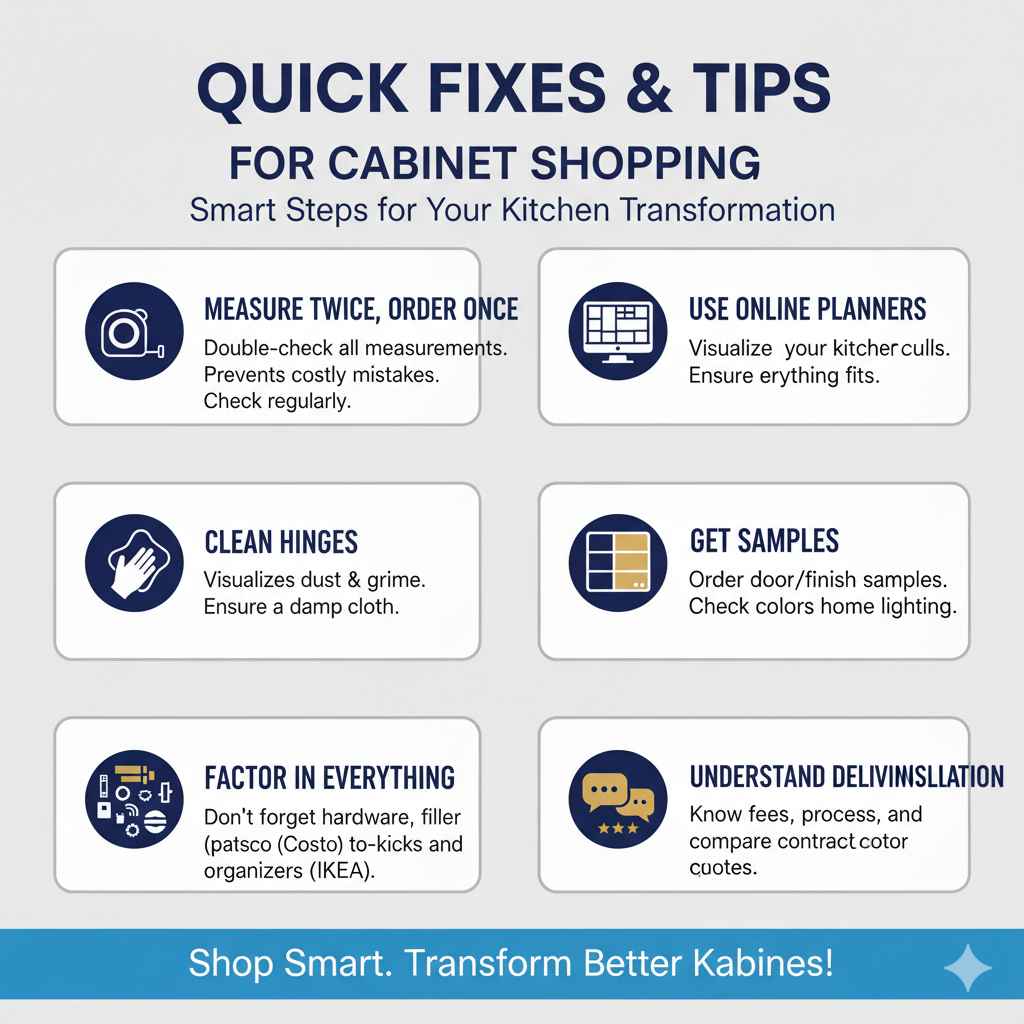
Quick Fixes and Tips for Cabinet Shopping
Regardless of whether you lean towards Costco or IKEA, there are some universal tips for cabinet shopping.
- Measure Twice, Order Once: This is the golden rule. Double-check all your measurements. Use a measuring tape. Sketch out your kitchen layout. This prevents costly mistakes.
- Use Online Planners: Both IKEA and many Costco cabinet partners offer online planning tools. Use them! They help visualize your kitchen and ensure everything fits.
- Get Samples: If possible, order door or finish samples. Colors can look very different on screen versus in your home’s lighting.
- Factor in Everything: Don’t forget hardware (knobs, pulls), filler panels, toe kicks, and any specialized organizers like lazy Susans or pull-out trash bins. These are often separate costs.
- Check Reviews: Look for reviews of the specific cabinet brands Costco offers. For IKEA, search for SEKTION system reviews and assembly tips.
- Understand Delivery: What is the delivery process? Is it curbside? Will they bring it inside? What are the fees?
- Consider Installation Costs: Get quotes from local contractors if you plan to hire someone for assembly or installation. Compare these to any professional services offered.
These small steps can save you a lot of headaches and money. They ensure you’re getting exactly what you need for your kitchen transformation.
Frequently Asked Questions
Can I get custom sizes with Costco kitchen cabinets?
Costco cabinets are typically standard sizes offered by their partner manufacturers. While you can get a good variety of widths and heights, they are not custom-made to the inch like a full custom cabinet shop. You’ll choose from a range of pre-set dimensions.
Is IKEA’s SEKTION system durable enough for a busy family kitchen?
Yes, the SEKTION system is designed for durability and is used in many homes. The metal drawer boxes and sturdy hinges are very reliable. While the cabinet boxes are particleboard, they are well-constructed.
With proper care, they can hold up well even in a busy family environment.
Does Costco offer installation services for their kitchen cabinets?
Sometimes. Costco often partners with third-party installation companies. These services are usually optional and come at an additional cost.
You would typically arrange this through Costco’s website or customer service when you place your order.
Can I mix and match IKEA cabinet doors with boxes from another brand?
No, IKEA’s SEKTION system is designed to work specifically with IKEA doors and drawer fronts. The mounting systems and dimensions are proprietary. Similarly, Costco cabinets will work with the doors and hardware provided by the specific manufacturer they are partnered with at the time.
What is the biggest advantage of choosing Costco cabinets?
The biggest advantage is often the convenience and speed of installation. Costco cabinets typically come pre-assembled or mostly assembled, saving you significant time and labor compared to IKEA. The quality is also generally considered very good for the price.
What is the biggest advantage of choosing IKEA cabinets?
The biggest advantage of IKEA cabinets is the extreme customization and modern design options available. The modular SEKTION system allows you to create unique layouts and styles that are hard to achieve with standard or semi-custom cabinets. The ability to personalize is unmatched.
Are Costco kitchen cabinets considered “real wood”?
Costco cabinets often use solid wood for door frames and sometimes for drawer fronts. The cabinet boxes are frequently made from high-quality plywood, which is a composite wood product. Veneers might be used on some panels.
They are generally constructed with more substantial materials than budget builder-grade cabinets.
Conclusion: Making the Final Choice
Deciding between Costco and IKEA for kitchen cabinets isn’t about one being definitively better. It’s about finding the best match for your specific needs, budget, and DIY spirit. Costco offers convenience and a more traditional, solid build.
IKEA provides incredible flexibility and modern design at a DIY-friendly price. Both can lead to a beautiful and functional kitchen. Weigh your priorities carefully, do your research, and trust your gut to pick the path that feels right for your home.